

Cinv Treatment Market Report
First published: 20 October 2024 | Last updated: 25 May 2026 | Report Code: cinv-treatment
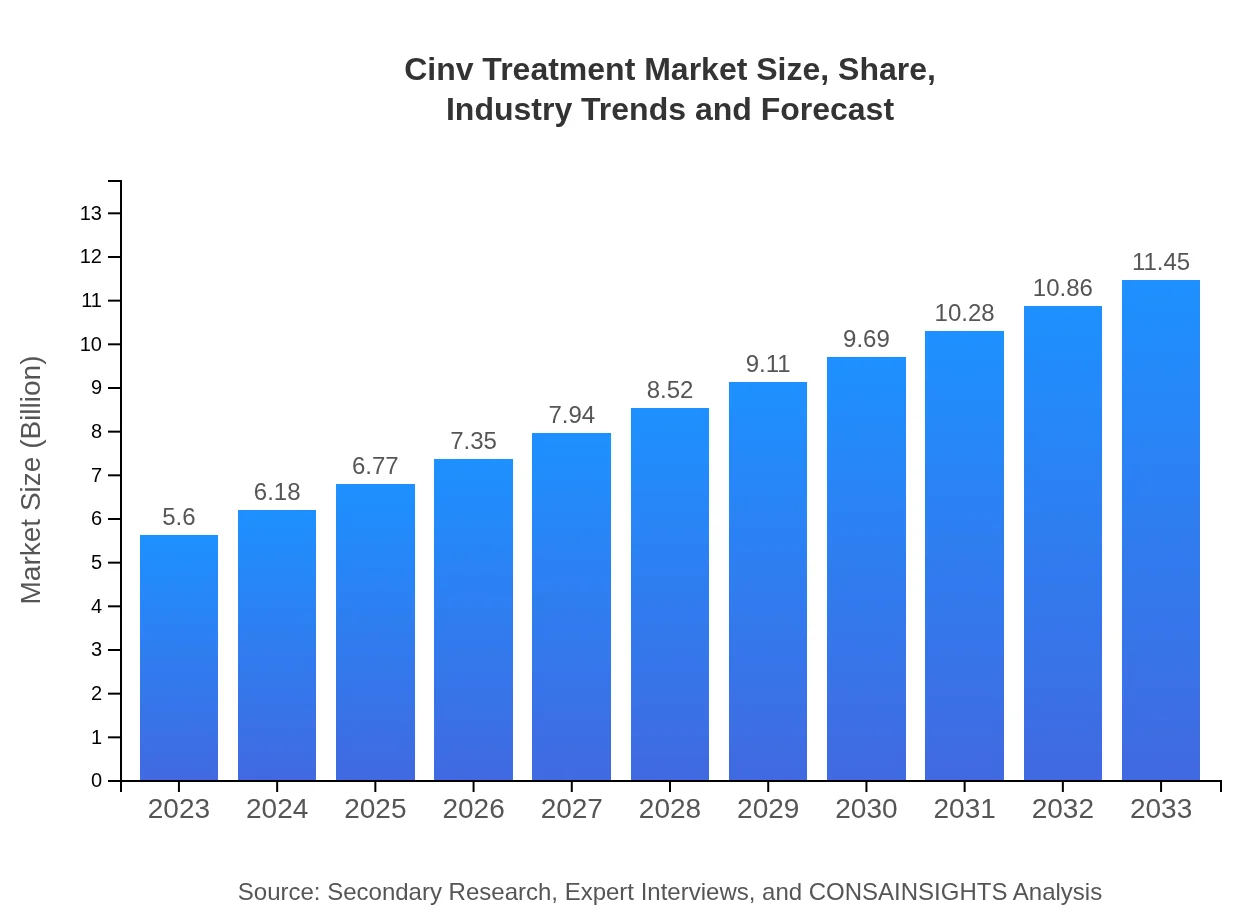
Cinv Treatment Market — USD 5.6 billion in 2023, Growing to USD 11.45B by 2033 at 7.2% CAGR
This report provides a comprehensive analysis of the CINV Treatment market from 2023 to 2033, focusing on market trends, segmentation, regional insights, and key players. It aims to deliver actionable insights and forecasts for stakeholders and industry professionals.
Key Takeaways
- Global market expands from $5.60 Billion in 2023 to $11.45 Billion by 2033 with a 7.2% CAGR for 2023 to 2033.
- North America is largest regional market, while no single fastest-growing region is stated because regional CAGR differences remain within 0.15 percentage points.
- Therapy mix includes monotherapy and combination approaches across oral, intravenous and subcutaneous routes.
- Major companies active in the space include Roche, Merck & Co., Eli Lilly and Johnson & Johnson.
- Segment diversity spans drug classes (5-HT3 antagonists, NK1 antagonists, corticosteroids) and end-users including hospitals and home care.
Cinv Treatment Market Report — Executive Summary
North America remains largest market by forecast-period value, while no single fastest-growing region is stated because top regional growth rates are separated by less than 0.15 percentage points. The report outlines a steadily expanding Cinv treatment market driven by rising oncology treatment rates, improved regimen protocols and heightened patient focus on supportive care. Market size increases from $5.60 Billion in 2023 to $11.45 Billion in 2033, reflecting a 7.2% CAGR for 2023 to 2033. Growth is supported by advancements in combination therapies, formulation improvements and wider adoption of patient-centric care pathways. Regional dynamics vary: North America leads in absolute value, while other regions show notable expansion. Product segmentation covers 5-HT3 antagonists, NK1 antagonists and corticosteroids across oral, intravenous and subcutaneous administration. End-user channels include hospitals, clinics and home care services. Competitive activity centers on established pharmaceutical firms—Roche, Merck & Co., Eli Lilly and Johnson & Johnson—pursuing R&D and partnerships to enhance efficacy and access. Ongoing trends include greater use of multimodal regimens, emphasis on tolerability and integration with supportive digital tools to improve adherence and monitoring.
Key Growth Drivers
- Increasing volumes of oncology treatments create sustained demand for effective antiemetic therapies.
- Advances in combination regimens and formulations boost clinical effectiveness and adoption.
- Greater patient awareness and emphasis on supportive care increase uptake across care settings.
- Strategic investments and R&D by leading pharmaceutical companies accelerate product innovation.
- Expansion of home-care and outpatient oncology services shifts demand toward convenient administration routes.
| Metric | Value |
|---|---|
| Study Period | 2023 - 2033 |
| 2023 Market Size | $5.60 Billion |
| CAGR (2023-2033) | 7.2% |
| 2033 Market Size | $11.45 Billion |
| Top Companies | Roche, Merck & Co., Eli Lilly, Johnson & Johnson |
| Published Date | 20 October 2024 |
| Last Modified Date | 25 May 2026 |
CINV Treatment Market Overview
Customize Cinv Treatment Market Report market research report
- ✔ Get in-depth analysis of Cinv Treatment market size, growth, and forecasts.
- ✔ Understand Cinv Treatment's regional dynamics and industry-specific trends.
- ✔ Identify potential applications, end-user demand, and growth segments in Cinv Treatment
What is the Market Size & CAGR of Cinv Treatment Market Report market in 2023?
CINV Treatment Industry Analysis
CINV Treatment Market Segmentation and Scope
Tell us your focus area and get a customized research report.
Cinv Treatment Market Report Market Analysis Report by Region
Europe Cinv Treatment Market Report:
Europe grows from $1.53 Billion in 2023 to $3.13 Billion in 2033. The regional trajectory is influenced by established cancer care infrastructure, reimbursement frameworks and adoption of multimodal antiemetic strategies.Asia Pacific Cinv Treatment Market Report:
Asia Pacific grows from $1.12 Billion in 2023 to $2.29 Billion in 2033. Growth drivers include rising incidence of cancer treatments, expanding healthcare access and growing awareness of supportive care options.North America Cinv Treatment Market Report:
North America is largest regional market, rising from $1.8 Billion in 2023 to $3.68 Billion in 2033. This regional expansion reflects high oncology service availability, extensive uptake of advanced antiemetic protocols and strong commercial activity by major pharmaceutical players.South America Cinv Treatment Market Report:
Latin America grows from $0.53 Billion in 2023 to $1.08 Billion in 2033. Market expansion is tied to improving oncology treatment access, evolving care delivery models and gradual uptake of advanced antiemetic therapies.Middle East & Africa Cinv Treatment Market Report:
Middle East and Africa grows from $0.62 Billion in 2023 to $1.27 Billion in 2033. Drivers include scaling oncology services, growing investment in healthcare infrastructure and increased focus on symptom management in cancer care.Tell us your focus area and get a customized research report.
Research Methodology
Cinv Treatment Market Analysis By Drug Class
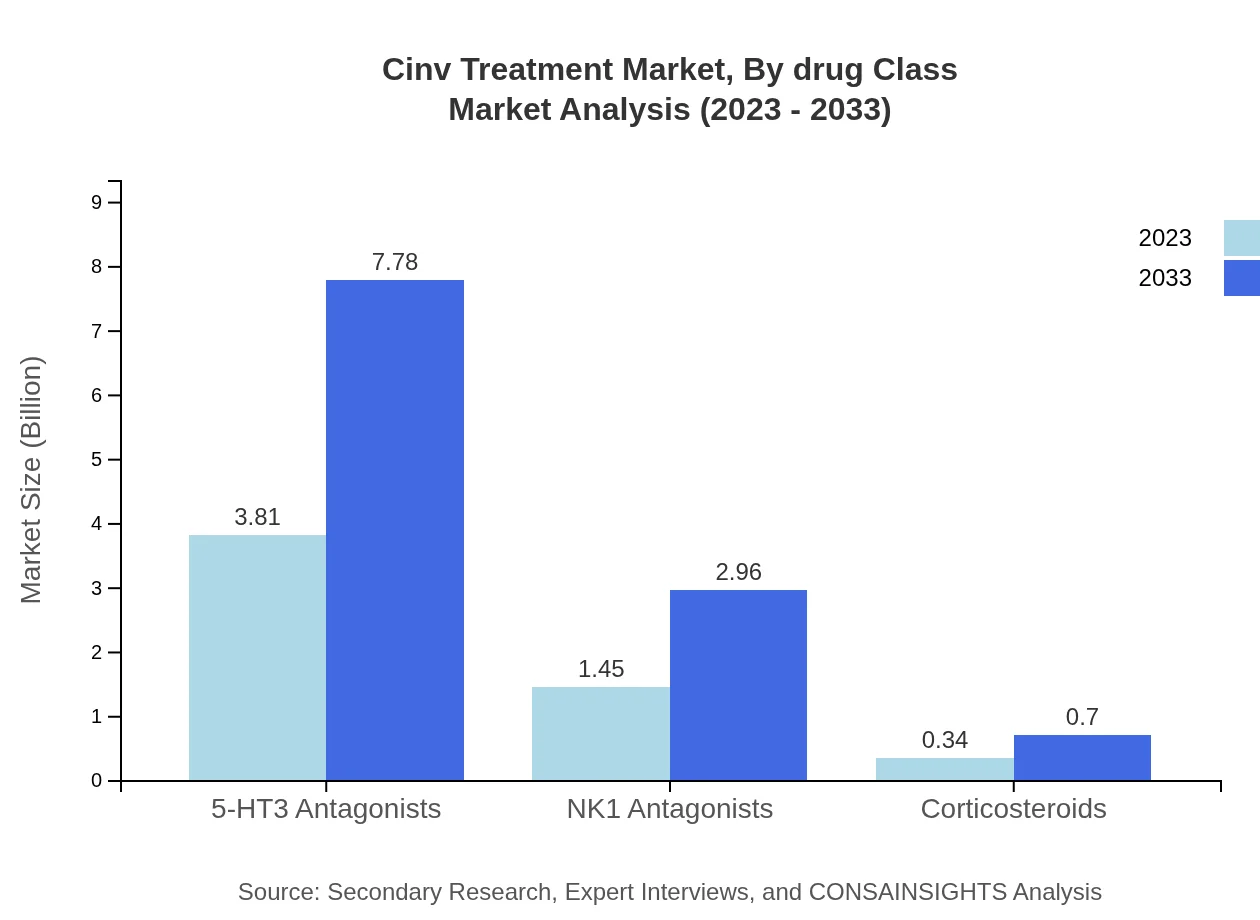
The CINV Treatment market, categorized by drug class, shows strong performance from 5-HT3 antagonists, which accounted for approximately $3.81 billion in 2023 and are expected to rise to $7.78 billion by 2033. NK1 antagonists and corticosteroids are also key contributors, with NK1 antagonists projected to grow from $1.45 billion to $2.96 billion by 2033, and corticosteroids moving from $0.34 billion to $0.70 billion.
Cinv Treatment Market Analysis By Route Of Administration
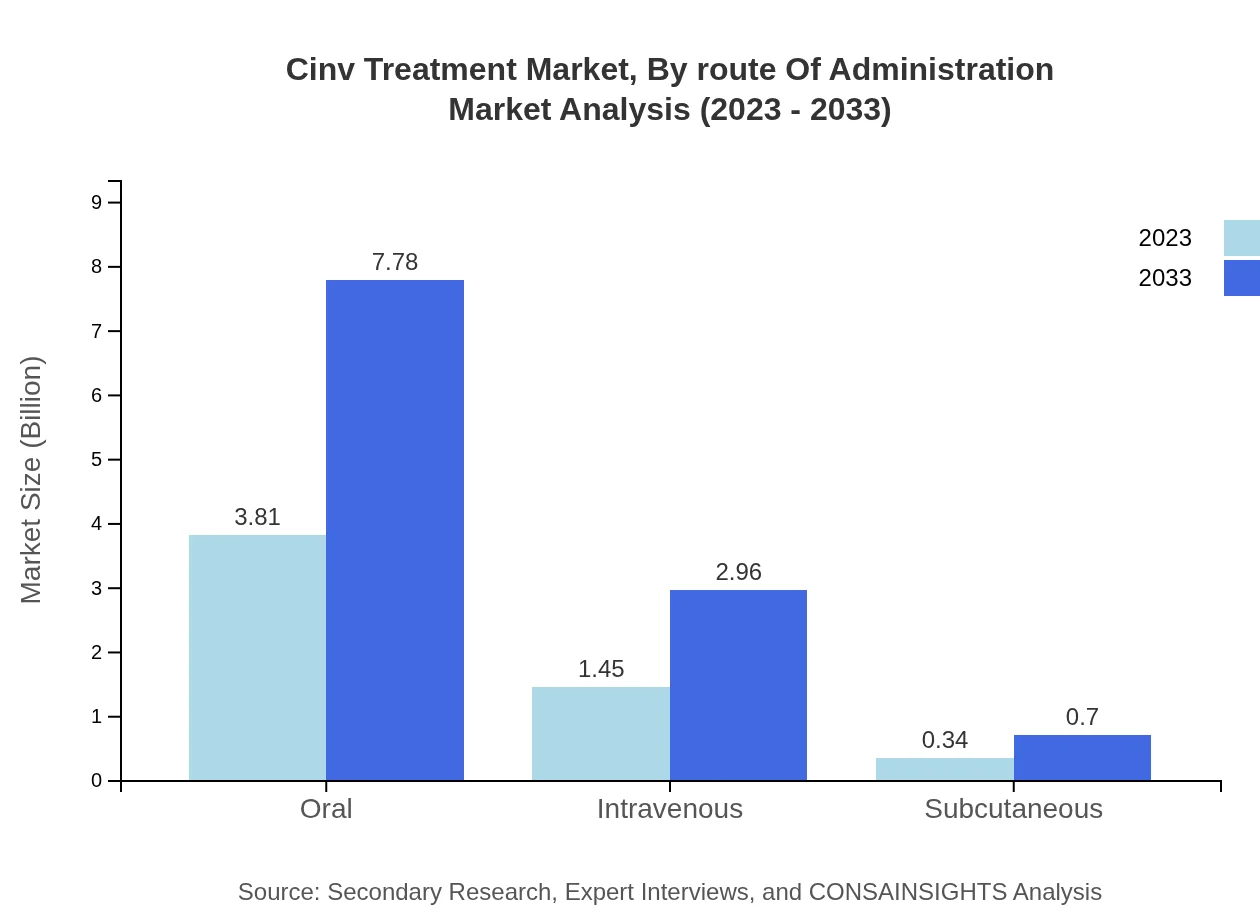
Oral administration leads the CINV Treatment market with a size of $3.81 billion in 2023, growing to $7.78 billion by 2033 due to patient preference for non-invasive treatment. Intravenous and subcutaneous routes follow, with intravenous therapies advancing from $1.45 billion to $2.96 billion, indicating a balanced growth across administration methods.
Cinv Treatment Market Analysis By Indication
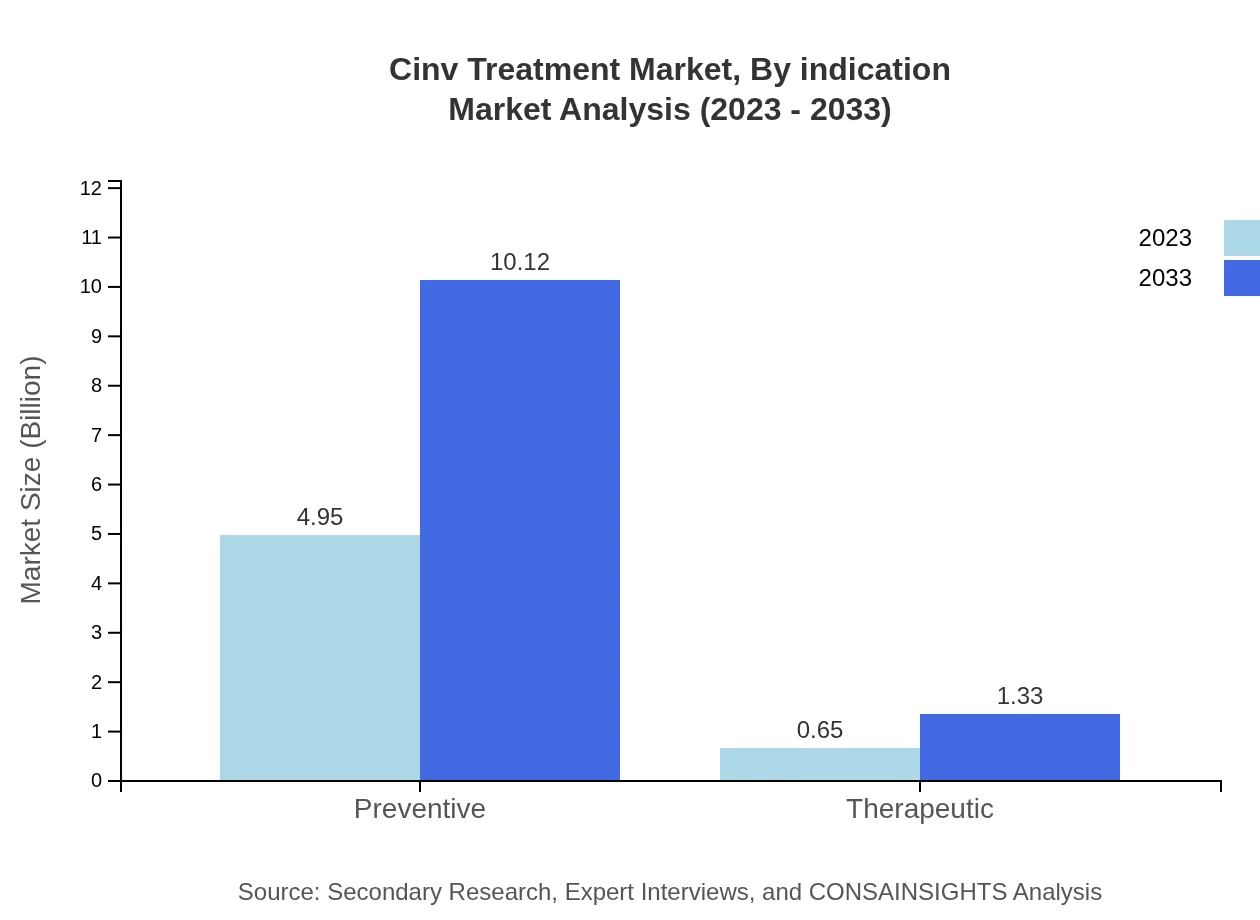
The CINV Treatment market by indication shows a substantial focus on preventive measures, which dominate the sector with a market size expected to expand from $4.95 billion in 2023 to $10.12 billion by 2033, capturing approximately 88.38% of the share. Therapeutic measures represent a smaller segment, expected to grow modestly alongside general awareness of CINV management.
Cinv Treatment Market Analysis By End User
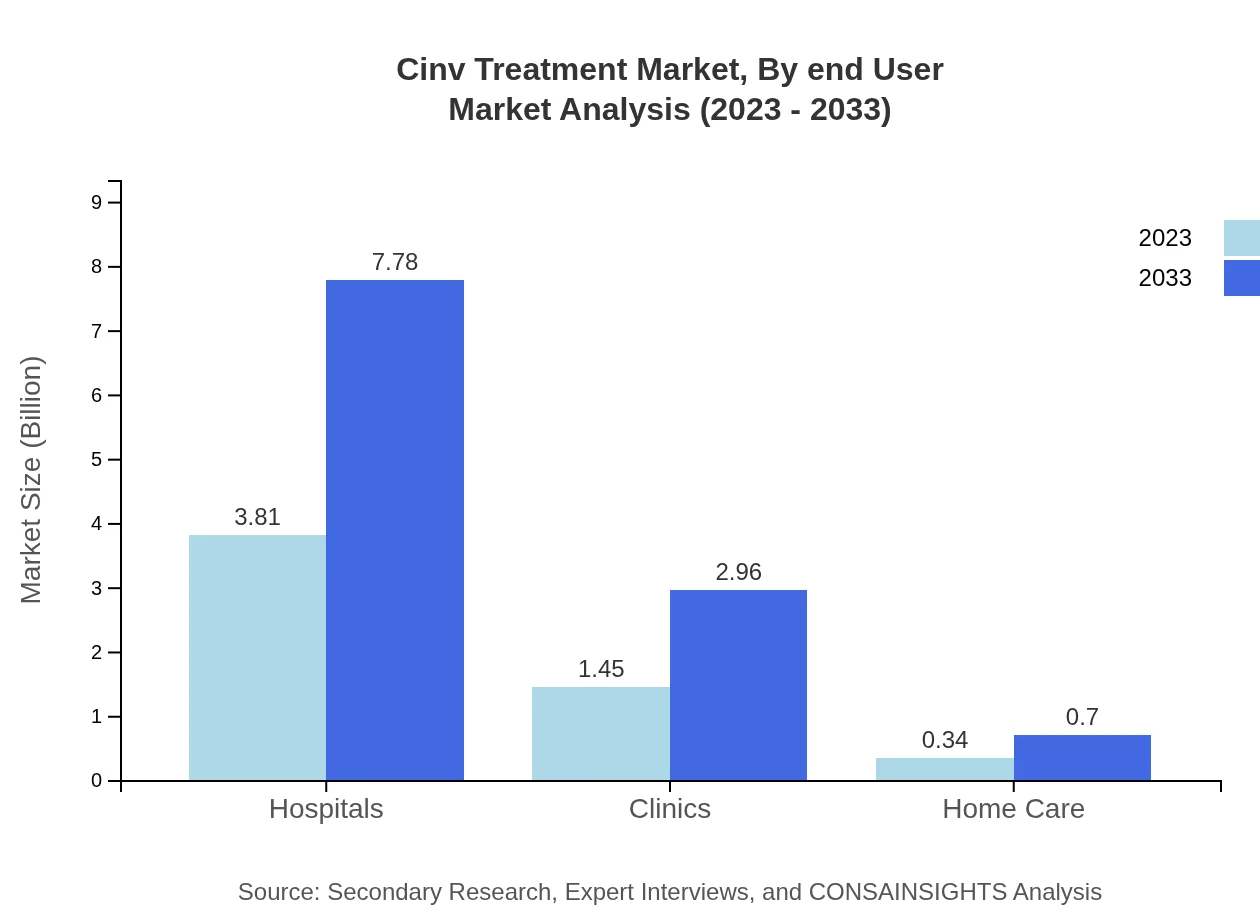
Hospitals remain the primary end-users, represented by a market size projected to grow from $3.81 billion to $7.78 billion by 2033, holding a consistent 67.99% share. Clinics and home care settings also show significant growth, particularly clinics rising from $1.45 billion to $2.96 billion, reflecting a growing need for outpatient treatment options.
Cinv Treatment Market Analysis By Therapy Type
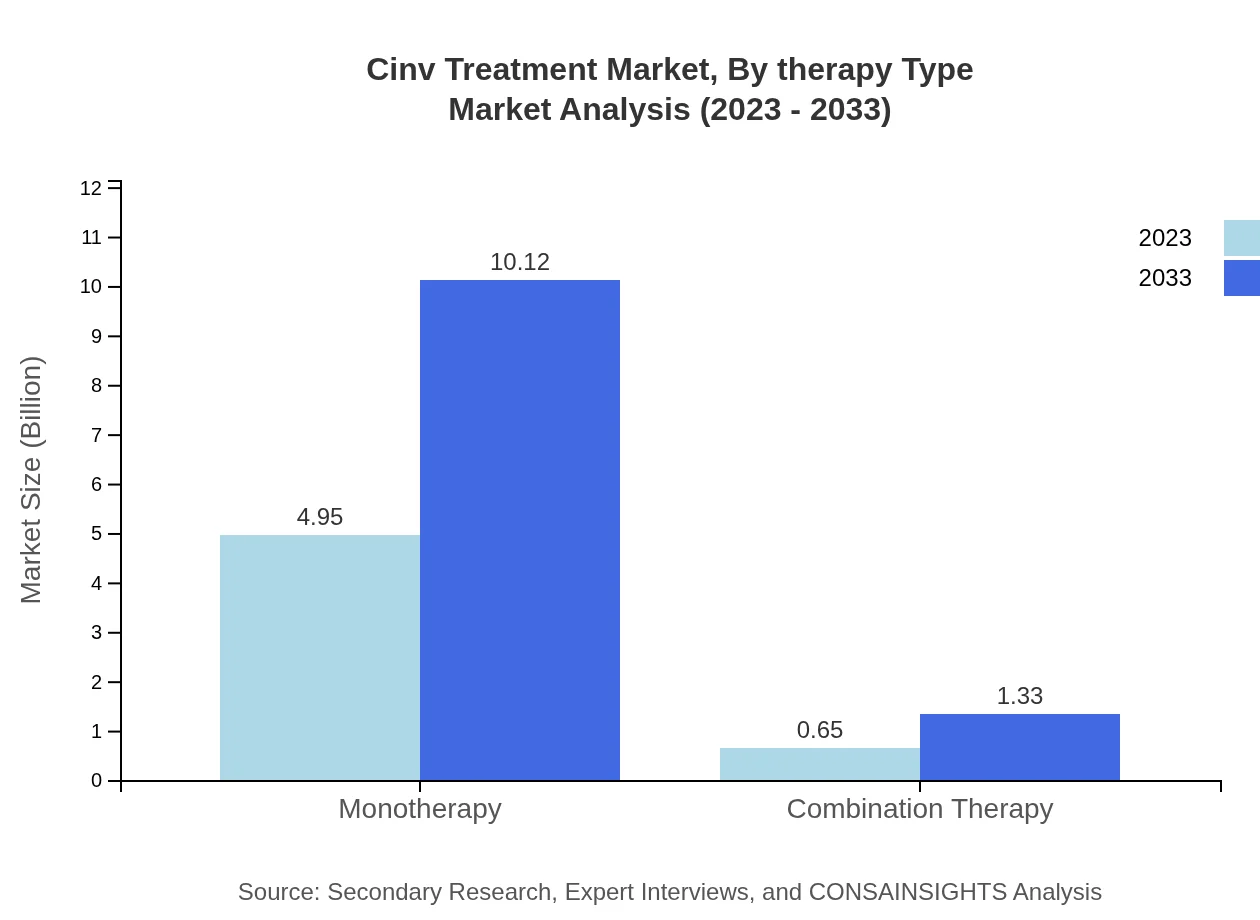
Monotherapy continues to dominate the market with a substantial share, expected to remain steady at 88.38%, while combination therapies grow from $0.65 billion to $1.33 billion by 2033, reflecting a trend towards integrated and tailored treatment approaches that enhance effectiveness in managing CINV.
CINV Treatment Market Trends and Future Forecast
Tell us your focus area and get a customized research report.
Global Market Leaders and Top Companies in CINV Treatment Industry
Roche:
Roche is a leading player in the CINV Treatment market, focusing on innovative pharma solutions and personalized healthcare strategies aimed at enhancing patient outcomes.Merck & Co.:
Merck & Co. specializes in developing groundbreaking therapeutics for CINV, investing heavily in research to improve efficacy and patient compliance.Eli Lilly:
Eli Lilly is notable for its commitment to oncology research, delivering effective solutions in the CINV space through novel drug development.Johnson & Johnson:
Johnson & Johnson contributes significantly to CINV Treatment, leveraging its extensive portfolio in antiemetics and promoting patient-centered care.We're grateful to work with incredible clients.






FAQs
What is the market size of the Cinv treatment market in 2023?
$5.60 Billion is the reported market size for 2023 according to the provided data.
How big will the Cinv treatment market be in 2033?
$11.45 Billion is the projected market size for 2033 as stated in the input data.
What is CAGR for the Cinv treatment market?
The compound annual growth rate for 2023 to 2033 is specified as 7.2% in the input dataset.
Is there a single fastest Growing region in the Cinv Treatment Market Report market?
No single fastest-growing region is stated for the Cinv Treatment Market Report market because the top regional implied CAGR values are within 0.15 percentage points of each other, making the ranking too close to call reliably.
Why are combination therapies influential in this market?
Combination therapies are driving uptake by improving symptom control and complementing existing drug classes, supporting broader clinical adoption.
Who are the prominent companies in the Cinv treatment space?
Top companies listed in the input are Roche, Merck & Co., Eli Lilly and Johnson & Johnson.
What end Users does the market serve?
Key end-users include hospitals, clinics and home care settings, reflecting diverse points of service delivery.
How are routes of administration represented?
Administration modes include oral, intravenous and subcutaneous routes, supporting different clinical needs and care settings.
What drives regional market differences?
Regional variation is influenced by oncology treatment volumes, healthcare infrastructure and adoption of patient-centric care models.
Which drug classes are central in this market?
Primary drug classes noted are 5-HT3 antagonists, NK1 antagonists and corticosteroids as core therapeutic categories.