

Proton Pump Inhibitors Market Report
First published: 20 October 2024 | Last updated: 25 May 2026 | Report Code: proton-pump-inhibitors
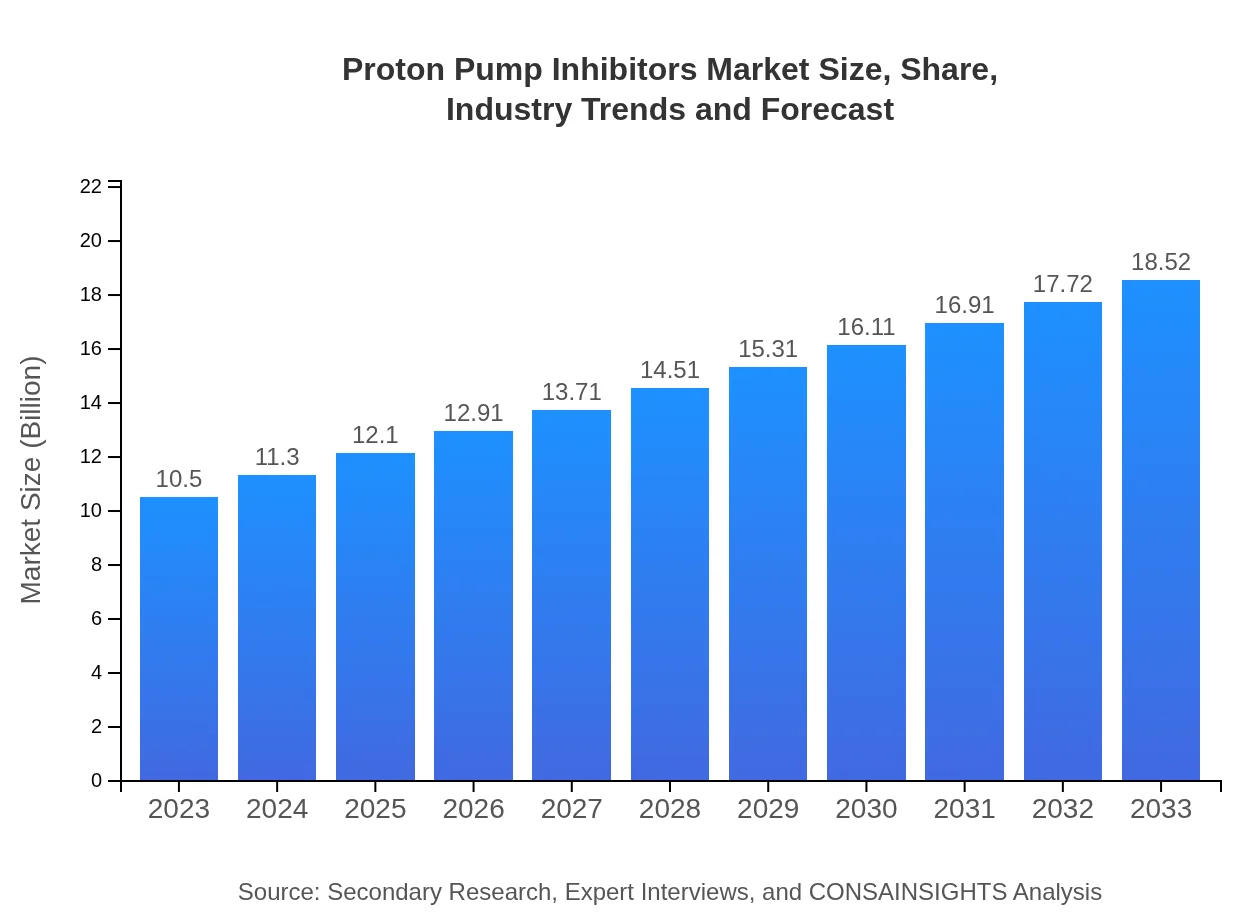
Proton Pump Inhibitors Market — USD 10.5 billion in 2023, Growing to USD 18.52B by 2033 at 5.7% CAGR
This report provides an in-depth analysis of the Proton Pump Inhibitors market from 2023 to 2033, focusing on market trends, size, growth opportunities, regional insights, and competitive landscape.
Key Takeaways
- Global market value rises from $10.50 Billion in 2023 to $18.52 Billion by 2033, at a 5.7% CAGR.
- North America is largest regional market, while no single fastest-growing region is stated because regional CAGR differences remain within 0.15 percentage points.
- North America is the largest region, expanding from $3.78 Billion in 2023 to $6.66 Billion in 2033.
- Oral and injectable forms, branded and generic categories, and hospital and pharmacy channels shape the market structure.
- Leading companies include AstraZeneca, Bayer AG, Takeda Pharmaceutical Company, and Johnson & Johnson.
- Regional markets such as Europe ($2.67B to $4.71B) and Asia Pacific ($2.11B to $3.71B) show meaningful expansion between 2023 and 2033.
Proton Pump Inhibitors Market Report — Executive Summary
North America remains largest market by forecast-period value, while no single fastest-growing region is stated because top regional growth rates are separated by less than 0.15 percentage points. The Proton Pump Inhibitors Market Report outlines growth propelled by rising prevalence of acid-related gastrointestinal disorders, higher healthcare spending, and an aging population. Market composition spans oral and injectable formulations, branded and generic offerings, and distribution through hospitals, pharmacies, clinics, home care, and long-term care facilities. Innovation in formulations and delivery, alongside patent cycles and regulatory developments, influence competitive positioning. Major firms such as AstraZeneca, Bayer AG, Takeda Pharmaceutical Company, and Johnson & Johnson maintain significant presence. Regional variation is notable: North America is the largest market, and Europe, Asia Pacific, Latin America, and Middle East & Africa each contribute to overall expansion. The study leverages expert interviews and published sources to present a balanced view of opportunities and challenges to 2033.
Key Growth Drivers
- Rising incidence of gastroesophageal reflux disease and peptic ulcer conditions increases treatment demand.
- Growing elderly population leads to higher prevalence of acid-related disorders and consistent PPI usage.
- Advances in drug formulation and delivery improve patient adherence and broaden therapeutic options.
- Expanding healthcare expenditure in several regions supports greater access to prescription and generic PPI products.
| Metric | Value |
|---|---|
| Study Period | 2023 - 2033 |
| 2023 Market Size | $10.50 Billion |
| CAGR (2023-2033) | 5.7% |
| 2033 Market Size | $18.52 Billion |
| Top Companies | AstraZeneca, Bayer AG, Takeda Pharmaceutical Company, Johnson & Johnson |
| Published Date | 20 October 2024 |
| Last Modified Date | 25 May 2026 |
Proton Pump Inhibitors Market Overview
Customize Proton Pump Inhibitors Market Report market research report
- ✔ Get in-depth analysis of Proton Pump Inhibitors market size, growth, and forecasts.
- ✔ Understand Proton Pump Inhibitors's regional dynamics and industry-specific trends.
- ✔ Identify potential applications, end-user demand, and growth segments in Proton Pump Inhibitors
What is the Market Size & CAGR of Proton Pump Inhibitors Market Report market in 2023?
Proton Pump Inhibitors Industry Analysis
Proton Pump Inhibitors Market Segmentation and Scope
Tell us your focus area and get a customized research report.
Proton Pump Inhibitors Market Report Market Analysis Report by Region
Europe Proton Pump Inhibitors Market Report:
Europe grows from $2.67 Billion in 2023 to $4.71 Billion in 2033. Regional drivers include aging demographics, sustained healthcare expenditure, and demand for both branded and generic proton pump inhibitors.Asia Pacific Proton Pump Inhibitors Market Report:
Asia Pacific grows from $2.11 Billion in 2023 to $3.71 Billion in 2033. Growth reflects increased healthcare access, higher prevalence of gastrointestinal conditions, and adoption of modern formulations and distribution channels.North America Proton Pump Inhibitors Market Report:
North America is largest regional market, rising from $3.78 Billion in 2023 to $6.66 Billion in 2033. Market expansion is linked to established healthcare systems, broad treatment adoption, and significant presence of leading pharmaceutical companies.South America Proton Pump Inhibitors Market Report:
Latin America grows from $0.66 Billion in 2023 to $1.16 Billion in 2033. Market progress is supported by improving healthcare infrastructure and rising treatment uptake for acid-related disorders.Middle East & Africa Proton Pump Inhibitors Market Report:
Middle East and Africa grows from $1.29 Billion in 2023 to $2.27 Billion in 2033. Expansion is driven by growing healthcare investment, demographic trends, and increased availability of PPI therapies.Tell us your focus area and get a customized research report.
Research Methodology
Proton Pump Inhibitors Market Analysis By Category
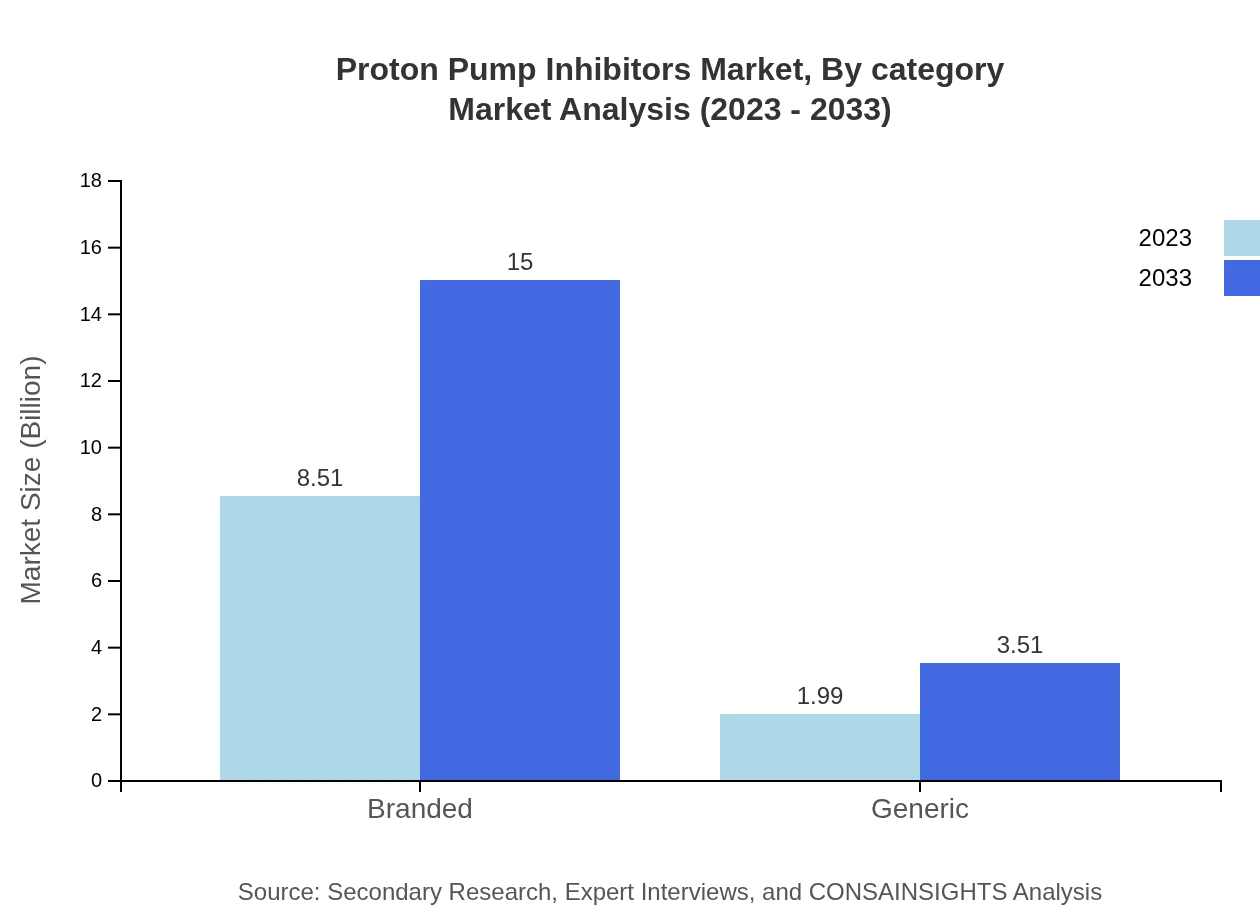
The market is divided into oral and injectable categories. The oral segment dominates, accounting for $8.51 billion in 2023 and expected to rise to $15.00 billion by 2033, which reflects an 81.02% market share. The injectable segment, while smaller, is anticipated to grow from $1.99 billion in 2023 to $3.51 billion in 2033, holding a share of 18.98%.
Proton Pump Inhibitors Market Analysis By Therapy
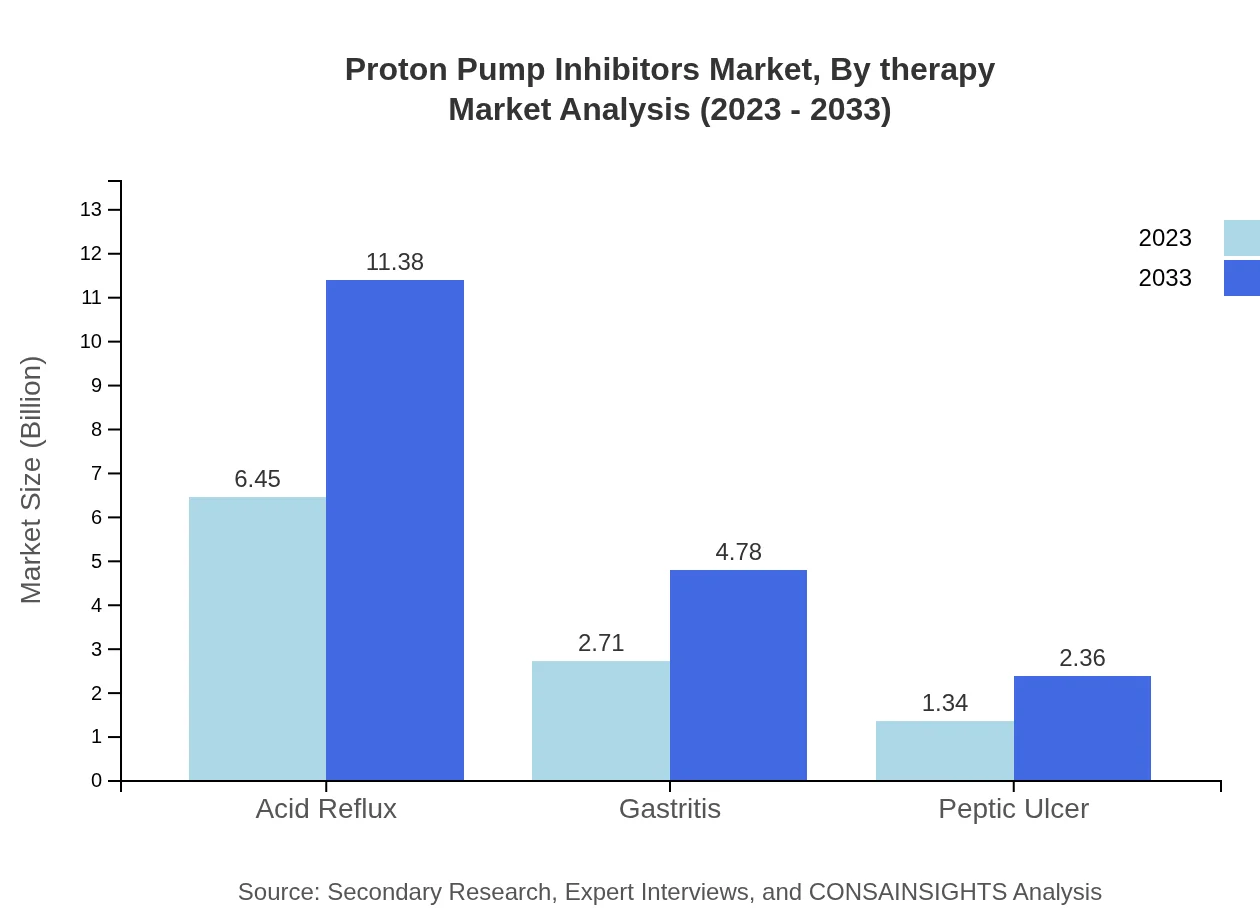
The therapeutic applications of PPIs are primarily in treating acid reflux, gastritis, and peptic ulcers. Acid reflux treatment is the largest segment at $6.45 billion in 2023, projected to reach $11.38 billion by 2033. Gastritis and peptic ulcer markets are smaller but critical, with sizes of $2.71 billion and $1.34 billion in 2023, respectively.
Proton Pump Inhibitors Market Analysis By Distribution Channel
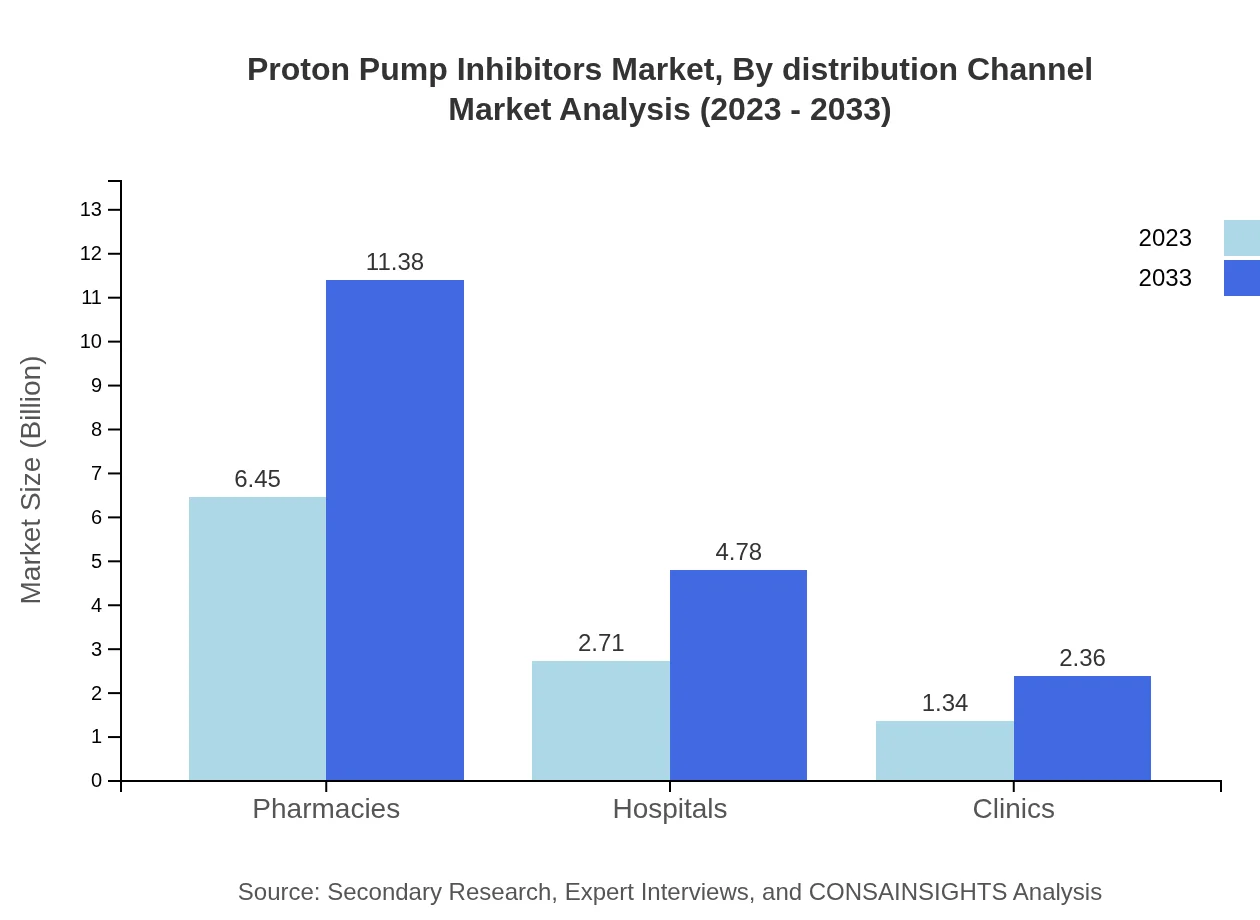
Distribution channels include hospitals, pharmacies, home care, and clinics. Hospitals represent the key channel, with a market size of $6.45 billion in 2023, growing to $11.38 billion by 2033. This segment signifies the significant role of acute care in the administration of PPIs.
Proton Pump Inhibitors Market Analysis By Forms
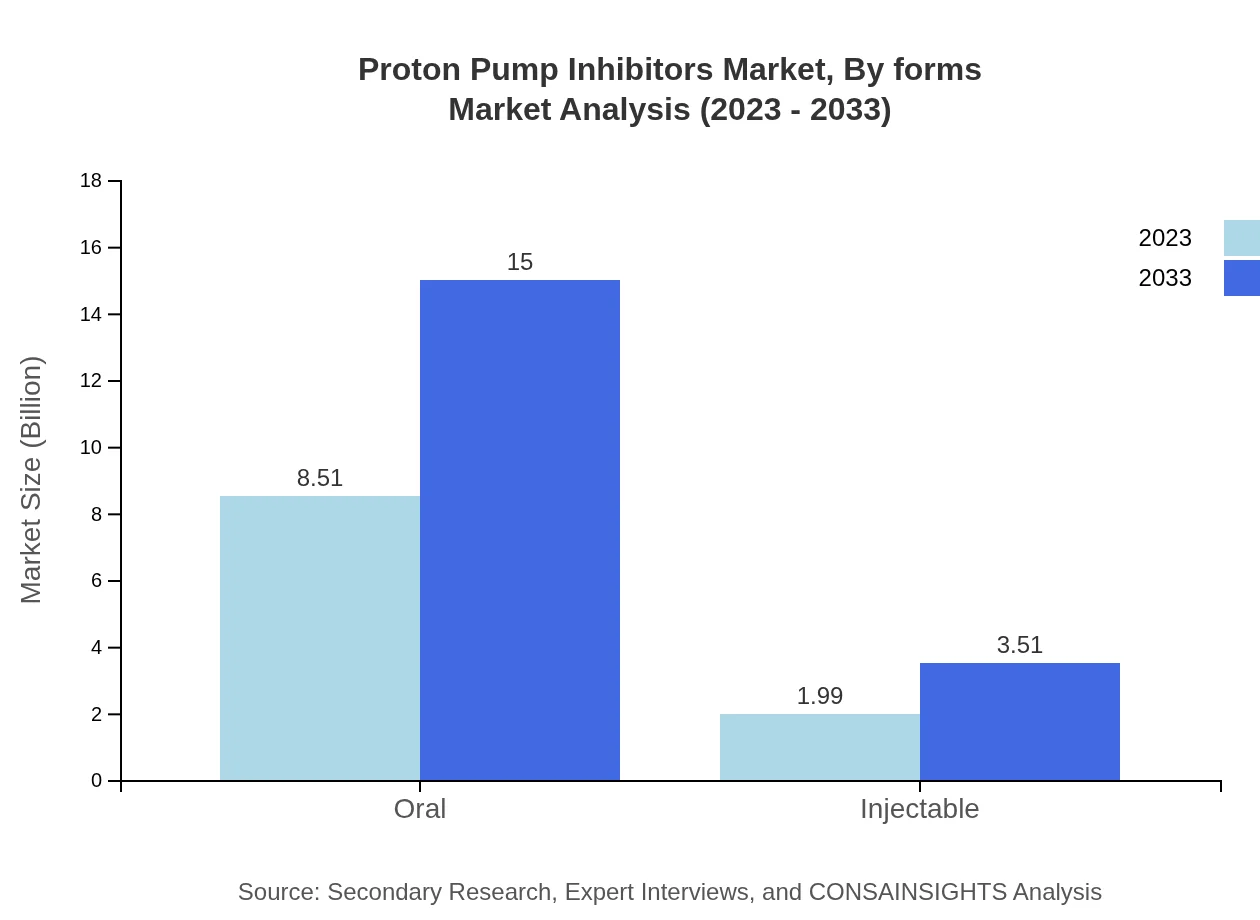
PPIs are administered primarily in oral and injectable forms. Oral forms dominate the market attributed to patient convenience and adherence, while injectable forms are essential for severe cases requiring immediate reduction of acid secretion.
Proton Pump Inhibitors Market Analysis By End User
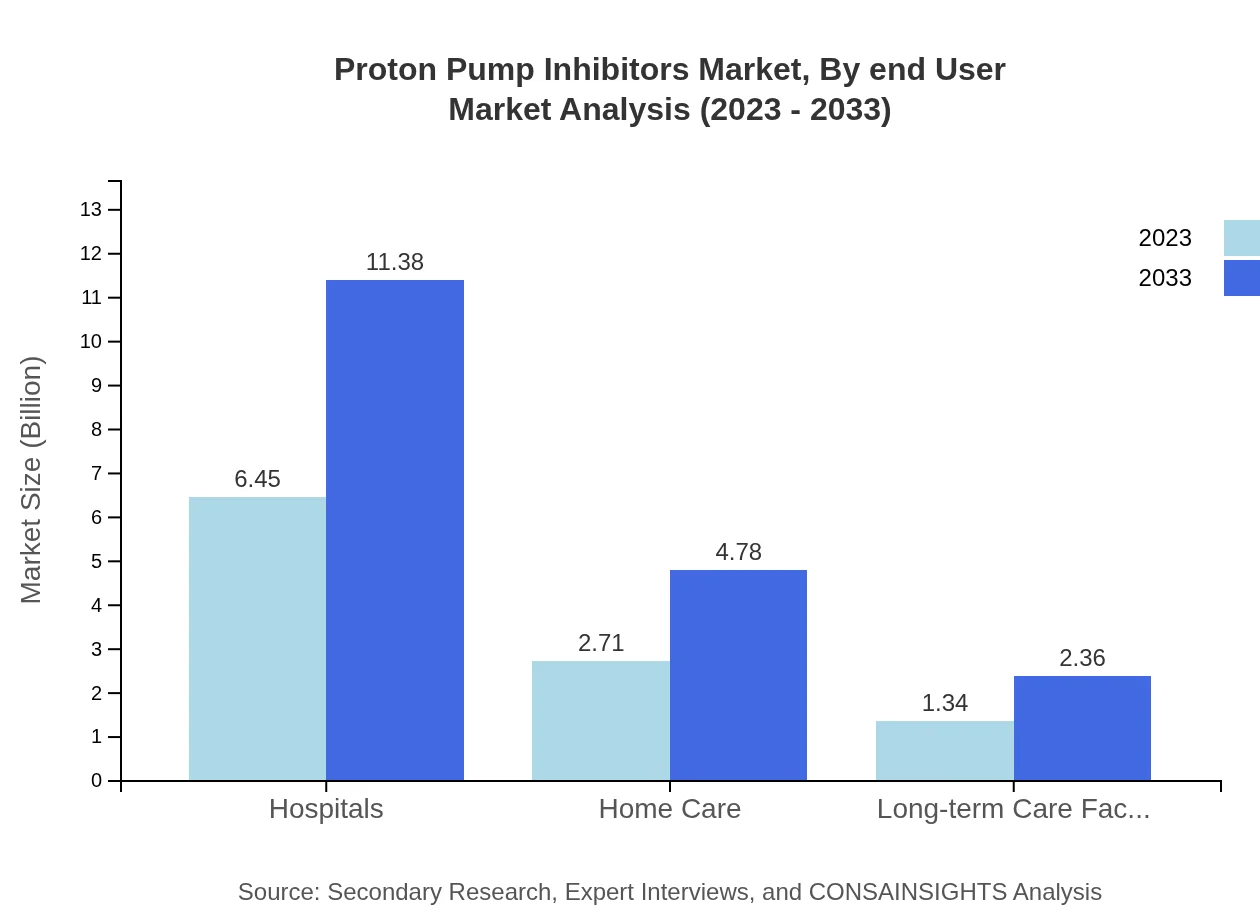
The end-users of PPIs include hospitals, home care services, and long-term care facilities. Hospitals hold a significant share, expected to generate a total of $6.45 billion by 2033, while home care services are projected at $2.71 billion due to the rise in at-home treatments.
Proton Pump Inhibitors Market Trends and Future Forecast
Tell us your focus area and get a customized research report.
Global Market Leaders and Top Companies in Proton Pump Inhibitors Industry
AstraZeneca:
AstraZeneca is known for its strong presence in the PPI market, offering Omeprazole, a widely used PPI. The company invests heavily in R&D to develop new gastrointestinal therapies.Bayer AG:
Bayer offers high-quality PPIs, including Esomeprazole, focusing on innovative treatment options through extensive clinical research and development.Takeda Pharmaceutical Company:
Takeda provides strong PPI brands like Lansoprazole and is committed to improving patient outcomes with its advanced formulations and strategic partnerships.Johnson & Johnson:
Johnson & Johnson plays a significant role in the PPI space, known for its innovation in both branded and generic formulations that cater to various market segments.We're grateful to work with incredible clients.








FAQs
What is the market size of the Proton Pump Inhibitors market in 2023?
The market size for Proton Pump Inhibitors in 2023 is $10.50 Billion, according to the report’s base-year data and regional breakdowns provided for that period.
How big will the Proton Pump Inhibitors market be by 2033?
By 2033 the market is projected to reach $18.52 Billion, reflecting growth across multiple regions and product segments tracked through the forecast horizon.
What is CAGR for the forecast period?
The forecast period 2023 to 2033 is associated with a 5.7% compound annual growth rate, as reported for the overall market trajectory.
Is there a single fastest Growing region in the Proton Pump Inhibitors Market Report market?
No single fastest-growing region is stated for the Proton Pump Inhibitors Market Report market because the top regional implied CAGR values are within 0.15 percentage points of each other, making the ranking too close to call reliably.
Which product forms are included in the segmentation?
Segmentation covers oral and injectable forms. These modalities reflect how proton pump inhibitors are administered across inpatient and outpatient care settings.
Who are the top companies operating in this market?
Top companies listed in the report are AstraZeneca, Bayer AG, Takeda Pharmaceutical Company, and Johnson & Johnson, reflecting prominent manufacturer participation.
What drives demand for branded and generic PPIs?
Demand is influenced by patent expirations, cost considerations, and prescriber preferences, resulting in continued use of both branded and generic proton pump inhibitor options.
How are distribution channels represented in the market?
Distribution includes pharmacies, hospitals, and clinics, as well as home care and long-term care facilities, supporting access across outpatient and institutional settings.