

B Cell Lymphomas Market Report
First published: 20 October 2024 | Last updated: 25 May 2026 | Report Code: b-cell-lymphomas
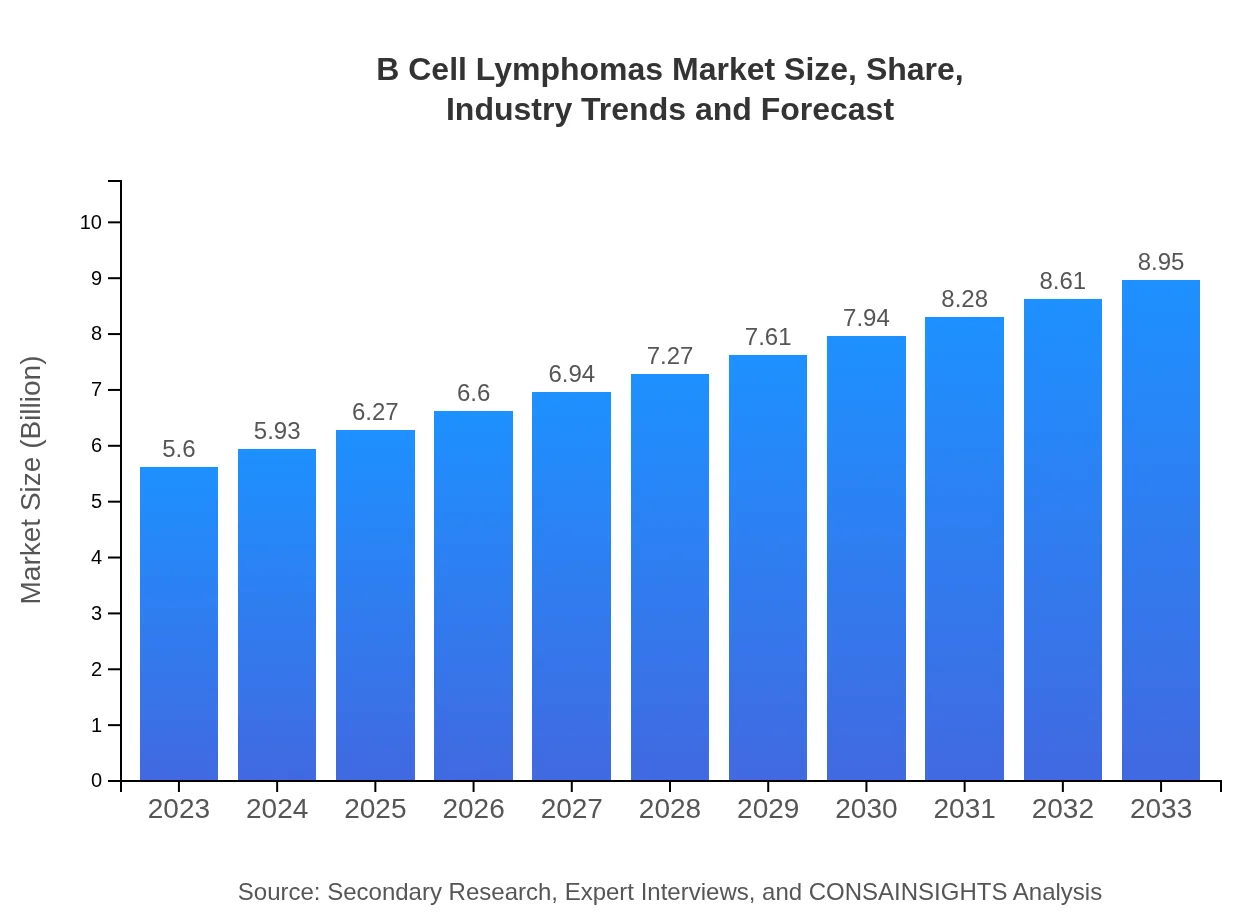
B Cell Lymphomas Market — USD 5.6 billion in 2023, Growing to USD 8.95B by 2033 at 4.7% CAGR
This report presents a comprehensive analysis of the B Cell Lymphomas market, offering insights into market trends, sizes, and growth forecasts for the period 2023 - 2033. It includes regional analyses and segments for treatments and therapies.
Key Takeaways
- Global market expands from $5.60 Billion in 2023 to $8.95 Billion in 2033 at a 4.7% CAGR.
- North America is largest regional market, while no single fastest-growing region is stated because regional CAGR differences remain within 0.15 percentage points.
- North America leads regionally, rising from $1.94 Billion in 2023 to $3.1 Billion in 2033.
- Europe grows from $1.46 Billion to $2.33 Billion between 2023 and 2033; Asia Pacific advances from $1.07 Billion to $1.71 Billion.
- Therapeutic mix includes chemotherapy, immunotherapy, and radiation therapy; hospitals and pharmacies drive distribution.
- Key players cited include Roche, Celgene, AbbVie, Novartis, and Gilead Sciences.
B Cell Lymphomas Market Report — Executive Summary
North America remains largest market by forecast-period value, while no single fastest-growing region is stated because top regional growth rates are separated by less than 0.15 percentage points. This report reviews the market for B cell lymphoma therapies, documenting growth from $5.60 Billion in 2023 to $8.95 Billion by 2033 at a 4.7% CAGR. Expansion is supported by greater diagnostic reach, demographic trends, and ongoing therapeutic innovation including immunotherapies and targeted agents. Treatment pathways covered include chemotherapy, immunotherapy, and radiation therapy across first-line, second-line, and maintenance settings. Distribution channels span hospitals, retail and online pharmacies. Regional performance shows North America as the largest market, with Europe, Asia Pacific, Latin America, and Middle East & Africa also demonstrating steady increases. Major industry participants identified are Roche, Celgene, AbbVie, Novartis, and Gilead Sciences. Research methods combined expert interviews, company reports, and data triangulation to validate findings and trends.
Key Growth Drivers
- Improved diagnostic capabilities leading to earlier detection and treatment initiation.
- Rising patient populations in aging demographics increasing demand for therapeutic options.
- Advances in targeted and immunotherapy research expanding clinically effective regimens.
- Wider access to care through hospital networks and diversified pharmacy channels.
- Sustained R&D investment and collaborations among pharmaceutical companies and healthcare institutions.
| Metric | Value |
|---|---|
| Study Period | 2023 - 2033 |
| 2023 Market Size | $5.60 Billion |
| CAGR (2023-2033) | 4.7% |
| 2033 Market Size | $8.95 Billion |
| Top Companies | Roche, Celgene, AbbVie, Novartis, Gilead Sciences |
| Published Date | 20 October 2024 |
| Last Modified Date | 25 May 2026 |
B Cell Lymphomas Market Overview
Customize B Cell Lymphomas Market Report market research report
- ✔ Get in-depth analysis of B Cell Lymphomas market size, growth, and forecasts.
- ✔ Understand B Cell Lymphomas's regional dynamics and industry-specific trends.
- ✔ Identify potential applications, end-user demand, and growth segments in B Cell Lymphomas
What is the Market Size & CAGR of B Cell Lymphomas Market Report market in 2023?
B Cell Lymphomas Industry Analysis
B Cell Lymphomas Market Segmentation and Scope
Tell us your focus area and get a customized research report.
B Cell Lymphomas Market Report Market Analysis Report by Region
Europe B Cell Lymphomas Market Report:
Europe grows from $1.46 Billion in 2023 to $2.33 Billion in 2033. Regional progress is supported by improving diagnostic networks, investments in oncology research, and uptake of advanced therapies across national health systems.Asia Pacific B Cell Lymphomas Market Report:
Asia Pacific grows from $1.07 Billion in 2023 to $1.71 Billion in 2033. Expansion is tied to growing healthcare access, rising awareness, and expanding clinical development and market entry for innovative treatment options.North America B Cell Lymphomas Market Report:
North America is largest regional market, rising from $1.94 Billion in 2023 to $3.1 Billion in 2033. This regional performance reflects strong healthcare infrastructure, broad access to novel therapeutics, active clinical research, and significant participation by leading pharmaceutical companies.South America B Cell Lymphomas Market Report:
Latin America grows from $0.41 Billion in 2023 to $0.66 Billion in 2033. Market growth is associated with incremental improvements in diagnosis, expanding hospital services, and gradual uptake of newer therapeutic regimens.Middle East & Africa B Cell Lymphomas Market Report:
Middle East and Africa grows from $0.72 Billion in 2023 to $1.15 Billion in 2033. Drivers include enhanced diagnostic reach, developing oncology services, and increasing availability of treatment through hospitals and pharmacy channels.Tell us your focus area and get a customized research report.
Research Methodology
B Cell Lymphomas Market Analysis By Treatment Type
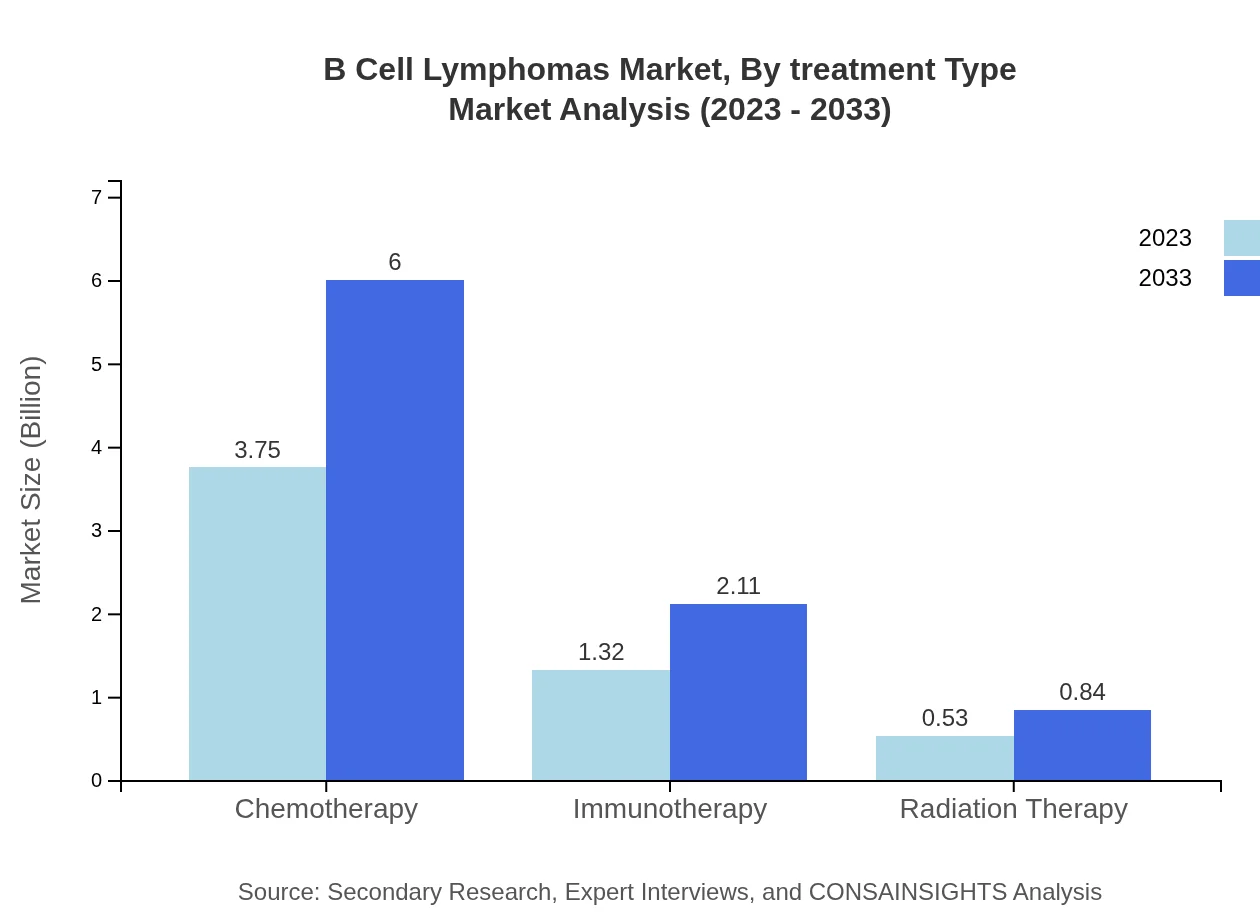
The B Cell Lymphomas market by treatment type reveals a significant reliance on chemotherapy, projected to grow from 3.75 billion USD in 2023 to 6.00 billion USD by 2033, retaining a substantial market share of 67.03%. Immunotherapy follows, with market growth from 1.32 billion USD to 2.11 billion USD, maintaining a share of 23.54%. This indicates shifting preferences towards advanced and targeted therapies as clinical efficacy becomes the primary consideration in treatment decisions.
B Cell Lymphomas Market Analysis By Distribution Channel
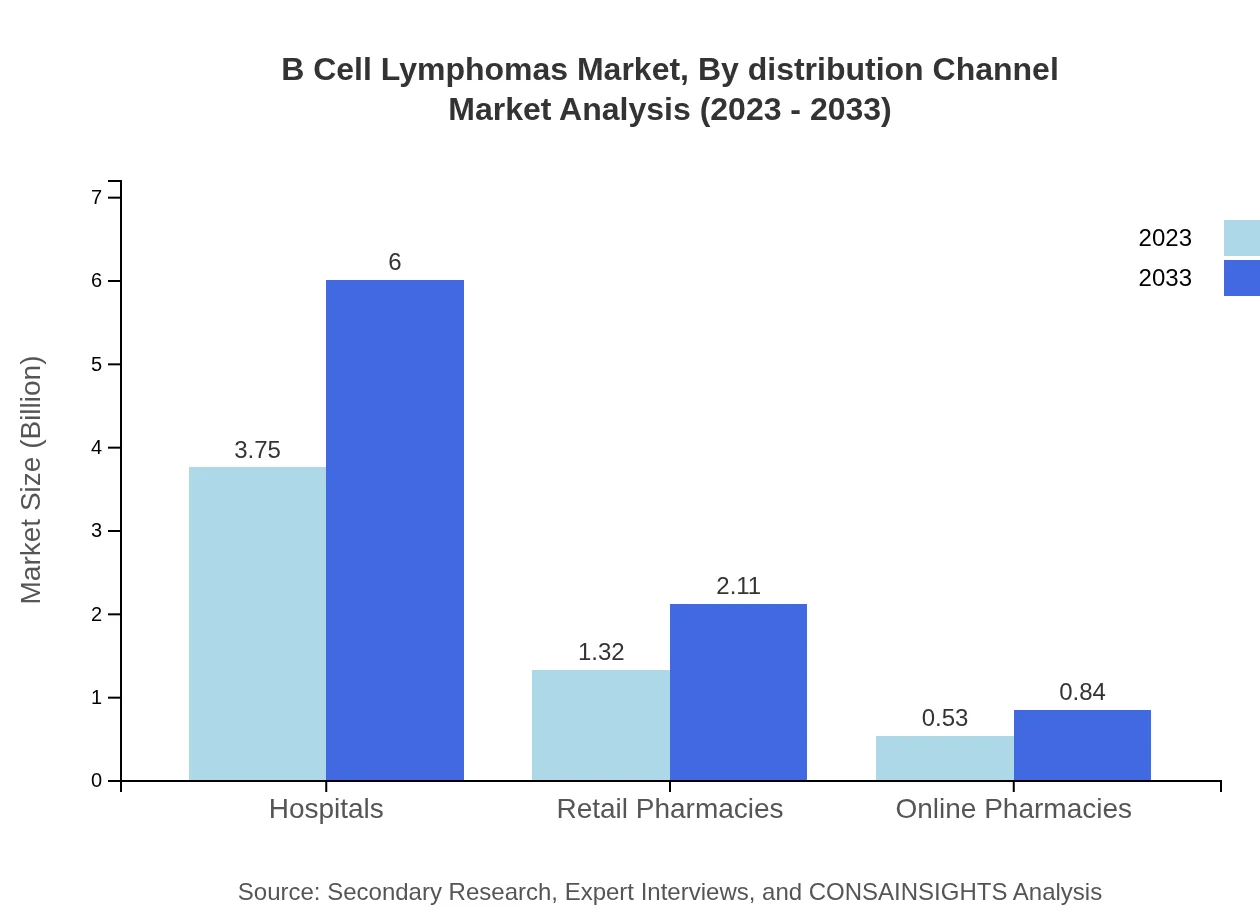
Distribution channels indicate that hospitals will dominate this sector, with a market size forecast of 3.75 billion USD in 2023 up to 6.00 billion USD by 2033, representing a consistent share of 67.03%. Retail pharmacies and online pharmacies contribute significantly, anticipated to reach 1.32 billion USD and 0.53 billion USD respectively, reflecting the growing trend of home healthcare and easy access to medications.
B Cell Lymphomas Market Analysis By Stage
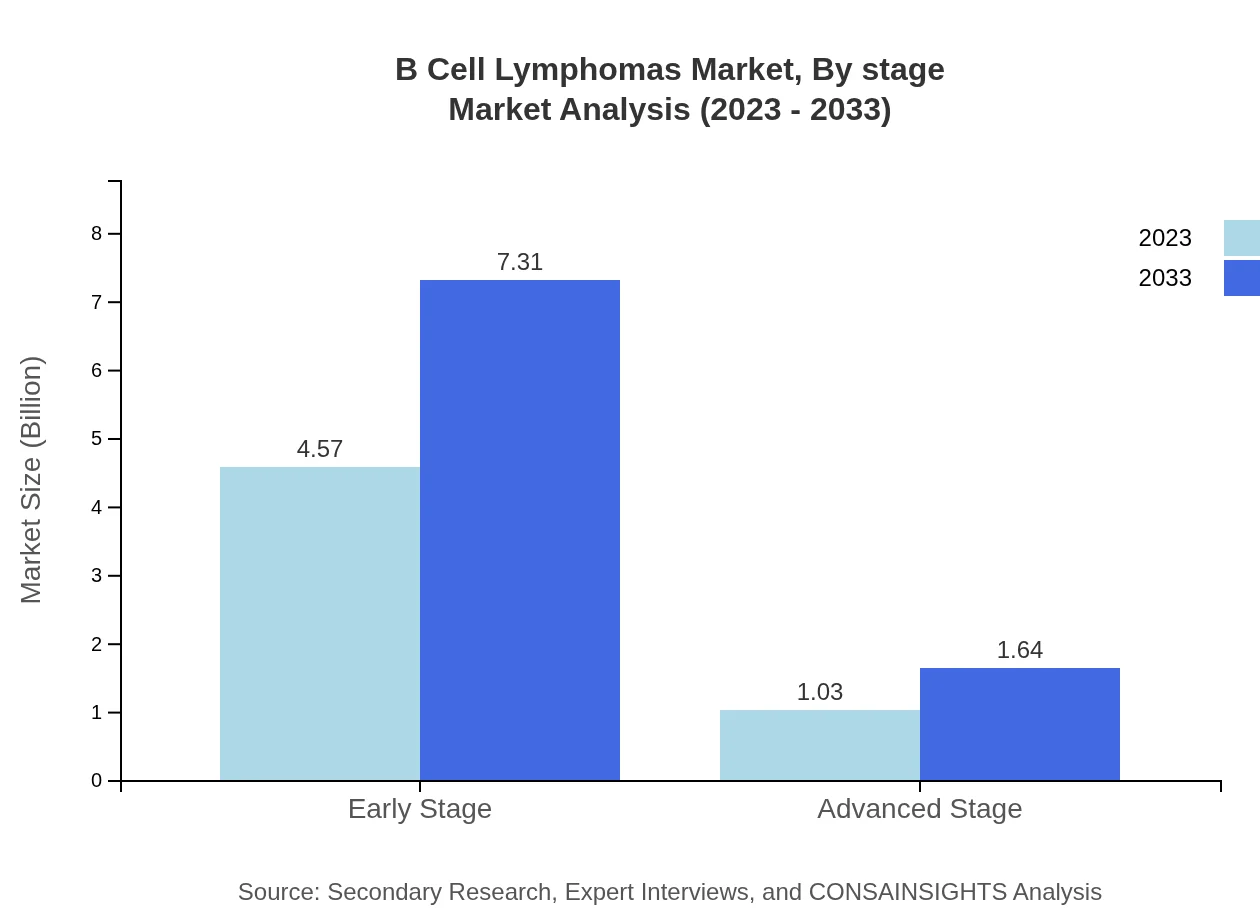
In terms of disease stage, the early stage of B Cell Lymphomas is projected to grow from 4.57 billion USD in 2023 to 7.31 billion USD by 2033, maintaining an impressive share of 81.68%. Advanced stage treatments are also crucial, with forecasts of increasing from 1.03 billion USD to 1.64 billion USD, emphasizing the continuous need for effective management strategies across all stages.
B Cell Lymphomas Market Analysis By Patient Type
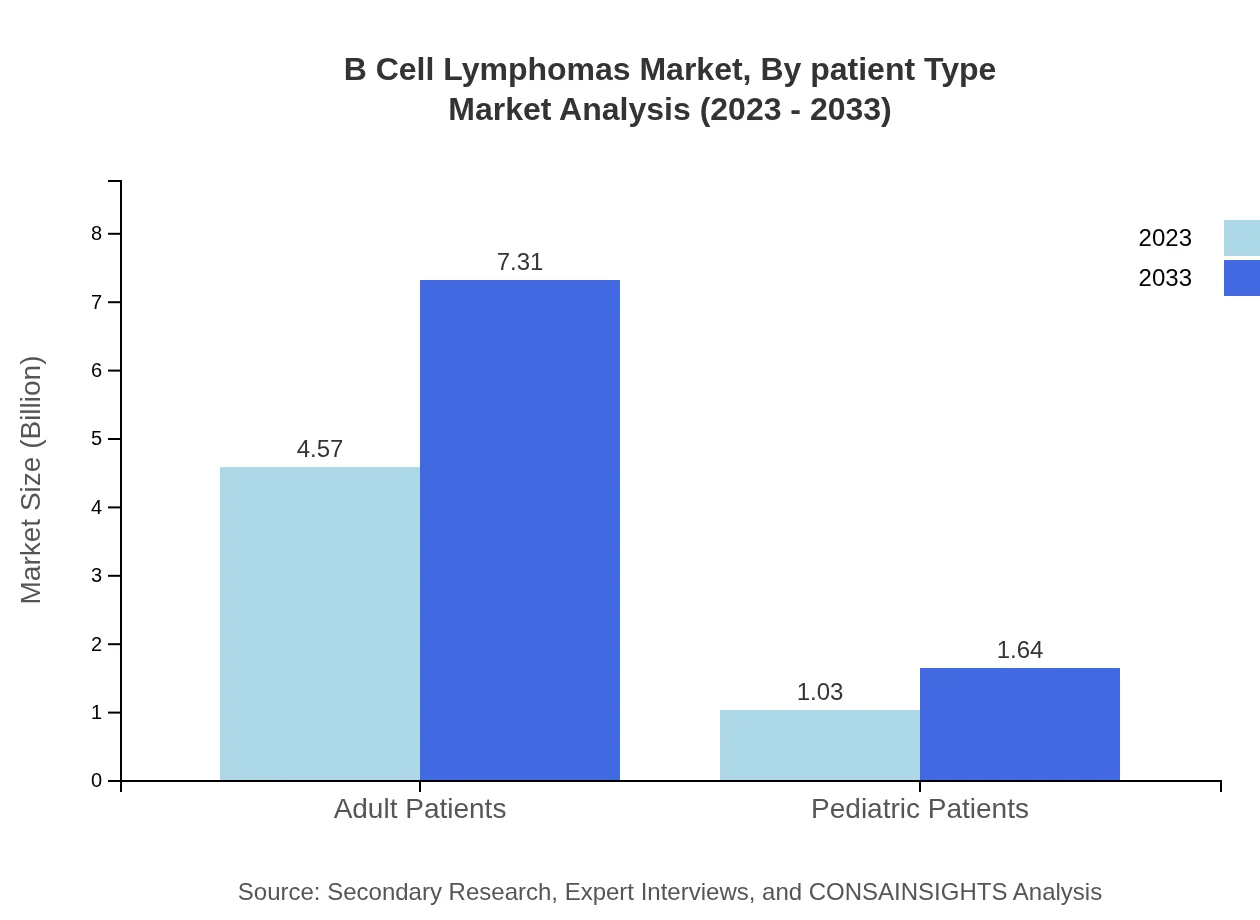
Adult patients form the largest segment, with the market for adult B Cell Lymphomas projected to sustain its size of 4.57 billion USD in 2023 and reach 7.31 billion USD by 2033, holding an 81.68% market share. Pediatric cases, although smaller, exhibit growth, from 1.03 billion USD to 1.64 billion USD, marking an increasing awareness of B Cell Lymphomas in younger demographics.
B Cell Lymphomas Market Analysis By Therapy Regimen
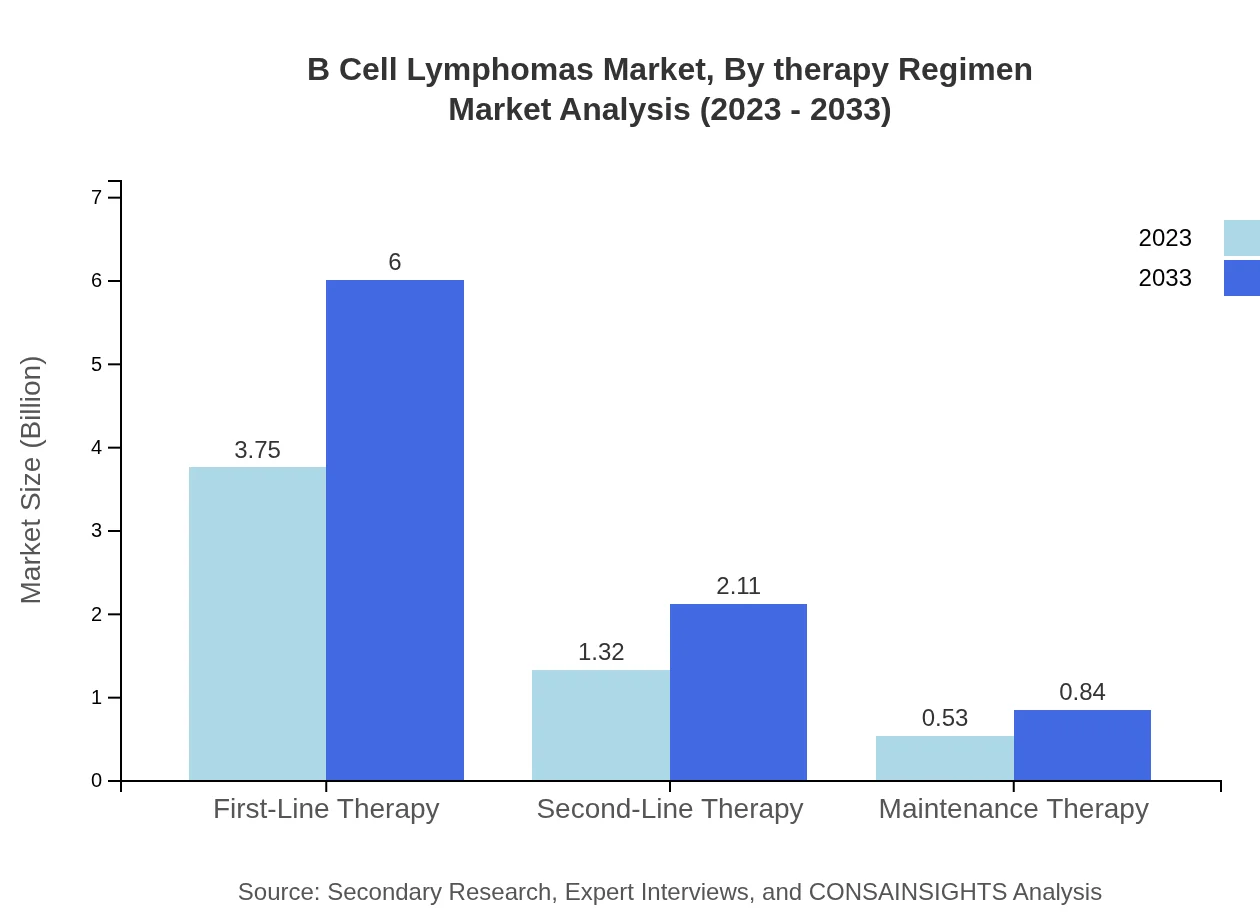
The therapy regimen analysis showcases the importance of first-line therapies, projected to grow from 3.75 billion USD in 2023 to 6.00 billion USD, maintaining a market share of 67.03%. Second-line therapies, although smaller in size, from 1.32 billion USD to 2.11 billion USD highlight their critical role in relapsed cases. Maintenance therapy remains essential but captures a smaller segment, reflecting its strategic positioning in the treatment continuum.
B Cell Lymphomas Market Trends and Future Forecast
Tell us your focus area and get a customized research report.
Global Market Leaders and Top Companies in B Cell Lymphomas Industry
Roche:
Roche is a global pioneer in the field of oncology, particularly B Cell Lymphomas, with a wide range of innovative therapies and diagnostics that drive the evolution of patient care.Celgene:
Celgene specializes in innovative and affordable cancer therapies, particularly in the field of hematological malignancies, pushing forward the boundaries of treatment for B Cell Lymphomas.AbbVie:
AbbVie is known for its sophisticated approach to treating B Cell Lymphomas with advanced therapies that focus on both efficacy and patient outcomes, demonstrating a commitment to oncology.Novartis:
With a strong focus on breakthrough therapies, Novartis is committed to addressing complex needs in the B Cell Lymphomas market through targeted and personalized therapies.Gilead Sciences:
Gilead Sciences has been a prominent player in oncology, focusing on developing innovative therapies for a range of hematological malignancies including B Cell Lymphomas.We're grateful to work with incredible clients.









FAQs
What is the market size of the B Cell Lymphomas Market Report in 2023?
The market size for 2023 is $5.60 Billion, as provided in the report's base-year data and used as the starting point for the 2023 to 2033 forecast.
How big will the market be in 2033?
The projected market value for 2033 is $8.95 Billion, reflecting expected growth across treatment modalities and expanded access over the 2023 to 2033 period.
What is CAGR for the forecast period?
The compound annual growth rate for the 2023 to 2033 forecast period is 4.7%, based on the reported market trajectory from $5.60 Billion to $8.95 Billion.
Is there a single fastest Growing region in the B Cell Lymphomas Market Report market?
No single fastest-growing region is stated for the B Cell Lymphomas Market Report market because the top regional implied CAGR values are within 0.15 percentage points of each other, making the ranking too close to call reliably.
Which companies are highlighted as key players?
The report names Roche, Celgene, AbbVie, Novartis, and Gilead Sciences as principal companies active in the B cell lymphomas market landscape.
What are the main treatment categories included?
Primary treatment categories covered are chemotherapy, immunotherapy, and radiation therapy, alongside therapy-regimen distinctions like first-line, second-line, and maintenance therapies.
How are distribution channels characterized?
Distribution is described through hospitals, retail pharmacies, and online pharmacies, reflecting multiple points of patient access for treatments and supportive care.
What research methods were used in this report?
The study used primary interviews with industry experts, secondary sources including company reports and publications, plus data triangulation and internal validation for trend analysis.