

Closed System Transfer Devices Market Report
First published: 08 October 2024 | Last updated: 25 May 2026 | Report Code: closed-system-transfer-devices
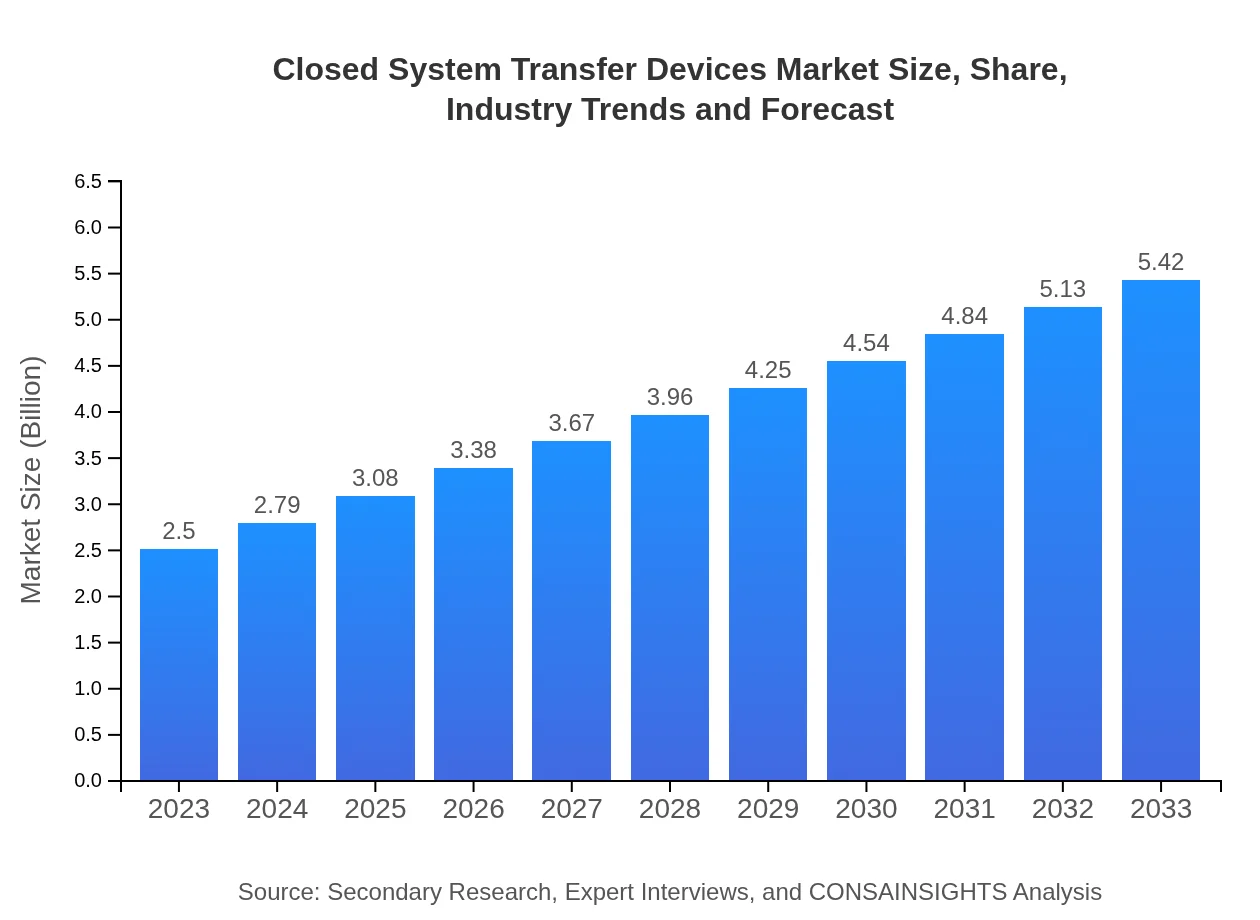
Closed System Transfer Devices Market — USD 2.5 billion in 2023, Growing to USD 5.42B by 2033 at 7.8% CAGR
This report provides a comprehensive analysis of the Closed System Transfer Devices market, including insights into market size, growth trends, and forecasts for the years 2023 to 2033, covering key aspects like segmentation and regional insights.
Key Takeaways
- Global market expands from $2.50 Billion in 2023 to $5.42 Billion in 2033 at a 7.8% CAGR
- North America is largest regional market, while no single fastest-growing region is stated because regional CAGR differences remain within 0.15 percentage points.
- Europe grows from $0.8 Billion in 2023 to $1.74 Billion in 2033, reflecting sustained demand in clinical settings
- Asia Pacific rises from $0.49 Billion in 2023 to $1.07 Billion in 2033, driven by expanding hospital adoption
- Market segmentation covers end-users, materials, applications, design types and product types to guide supplier strategies
Closed System Transfer Devices Market Report — Executive Summary
North America remains largest market by forecast-period value, while no single fastest-growing region is stated because top regional growth rates are separated by less than 0.15 percentage points. This market assessment highlights drivers, structure, and competitive dynamics for closed system transfer devices. The market value advances from $2.50 Billion in 2023 to $5.42 Billion by 2033, supported by a 7.8% CAGR across the 2023 to 2033 period. Growth is underpinned by heightened safety regulations, rising use of oncology and antiviral therapies, and increased adoption in hospitals, pharmacies, and homecare settings. Product diversity spans passive and active systems, vial-to-vial, syringe-based, and bag-based devices, while materials include plastics, metals, and other substrates. Key firms profiled include Baxter International Inc., B. Braun Melsungen AG, CareFusion, and MediDose. The report combines interviews with industry experts, company disclosures, and triangulated secondary sources to map trends and inform procurement and R&D priorities for manufacturers, health systems, and investors.
Key Growth Drivers
- Stricter occupational safety regulations prompting facility-level adoption of containment devices
- Expanding oncology and antiviral therapy volumes increasing demand for safe drug handling
- Hospitals scaling procurement to reduce hazardous drug exposure for healthcare staff
- Product innovation improving usability and compatibility across delivery systems
- Broader awareness among clinicians and pharmacists of contamination risks
| Metric | Value |
|---|---|
| Study Period | 2023 - 2033 |
| 2023 Market Size | $2.50 Billion |
| CAGR (2023-2033) | 7.8% |
| 2033 Market Size | $5.42 Billion |
| Top Companies | Baxter International Inc., B. Braun Melsungen AG, CareFusion, MediDose |
| Published Date | 08 October 2024 |
| Last Modified Date | 25 May 2026 |
Closed System Transfer Devices Market Overview
Customize Closed System Transfer Devices Market Report market research report
- ✔ Get in-depth analysis of Closed System Transfer Devices market size, growth, and forecasts.
- ✔ Understand Closed System Transfer Devices's regional dynamics and industry-specific trends.
- ✔ Identify potential applications, end-user demand, and growth segments in Closed System Transfer Devices
What is the Market Size & CAGR of Closed System Transfer Devices Market Report market in 2023?
Closed System Transfer Devices Industry Analysis
Closed System Transfer Devices Market Segmentation and Scope
Tell us your focus area and get a customized research report.
Closed System Transfer Devices Market Report Market Analysis Report by Region
Europe Closed System Transfer Devices Market Report:
Europe grows from $0.8 Billion in 2023 to $1.74 Billion in 2033. Adoption is supported by regulatory initiatives and rising clinical use of hazardous drug therapies, prompting hospitals and pharmacies to increase containment device purchases.Asia Pacific Closed System Transfer Devices Market Report:
Asia Pacific grows from $0.49 Billion in 2023 to $1.07 Billion in 2033. Growth is linked to increasing hospital capacity, broader access to oncology and antiviral treatments, and greater awareness of occupational safety in clinical environments.North America Closed System Transfer Devices Market Report:
North America is largest regional market, rising from $0.81 Billion in 2023 to $1.76 Billion in 2033. Regional momentum reflects strong institutional procurement, regulatory focus on worker safety, and high utilization in hospital and pharmacy settings.South America Closed System Transfer Devices Market Report:
Latin America grows from $0.05 Billion in 2023 to $0.1 Billion in 2033. Market expansion is influenced by gradual clinical adoption and incremental investment in healthcare safety measures across hospitals and pharmacies.Middle East & Africa Closed System Transfer Devices Market Report:
Middle East and Africa grows from $0.35 Billion in 2023 to $0.75 Billion in 2033. Uptake is supported by rising regulatory attention, expanding healthcare infrastructure, and growing emphasis on protecting healthcare workers handling hazardous drugs.Tell us your focus area and get a customized research report.
Research Methodology
Closed System Transfer Devices Market Analysis By Product Type
The Closed System Transfer Devices market by product type reveals that passive systems dominate, expected to increase from USD 2.21 billion in 2023 to USD 4.78 billion by 2033, holding an 88.21% market share. Active systems, while smaller, are also projected to grow from USD 0.29 billion to USD 0.64 billion, capturing 11.79% of the market.
Closed System Transfer Devices Market Analysis By Application
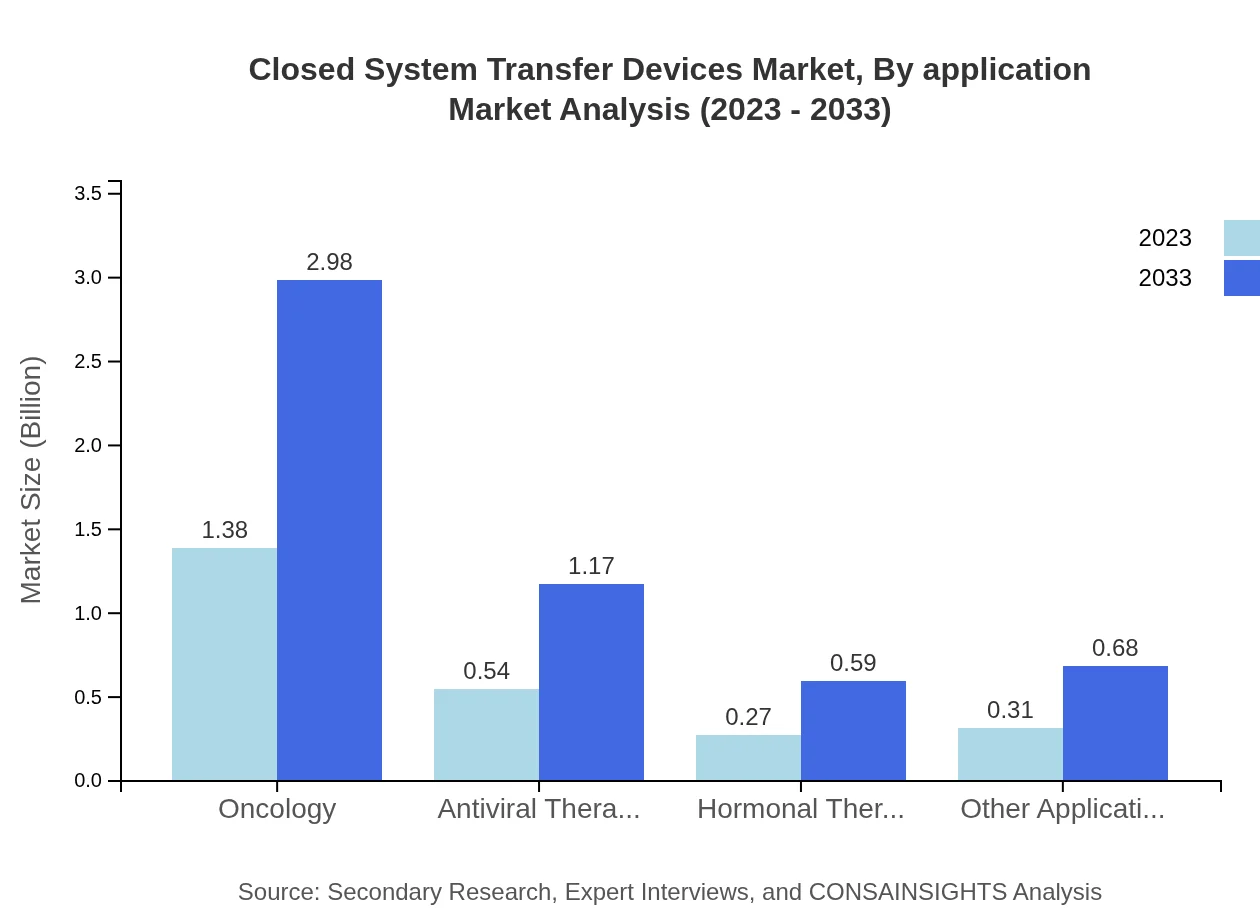
By application, oncology remains the largest segment, predicted to grow from USD 1.38 billion in 2023 to USD 2.98 billion by 2033, with a steady market share of 55.06%. Other segments, including antiviral and hormonal therapies, will see growth, but oncology is expected to remain the leader due to increasing cancer cases.
Closed System Transfer Devices Market Analysis By End User
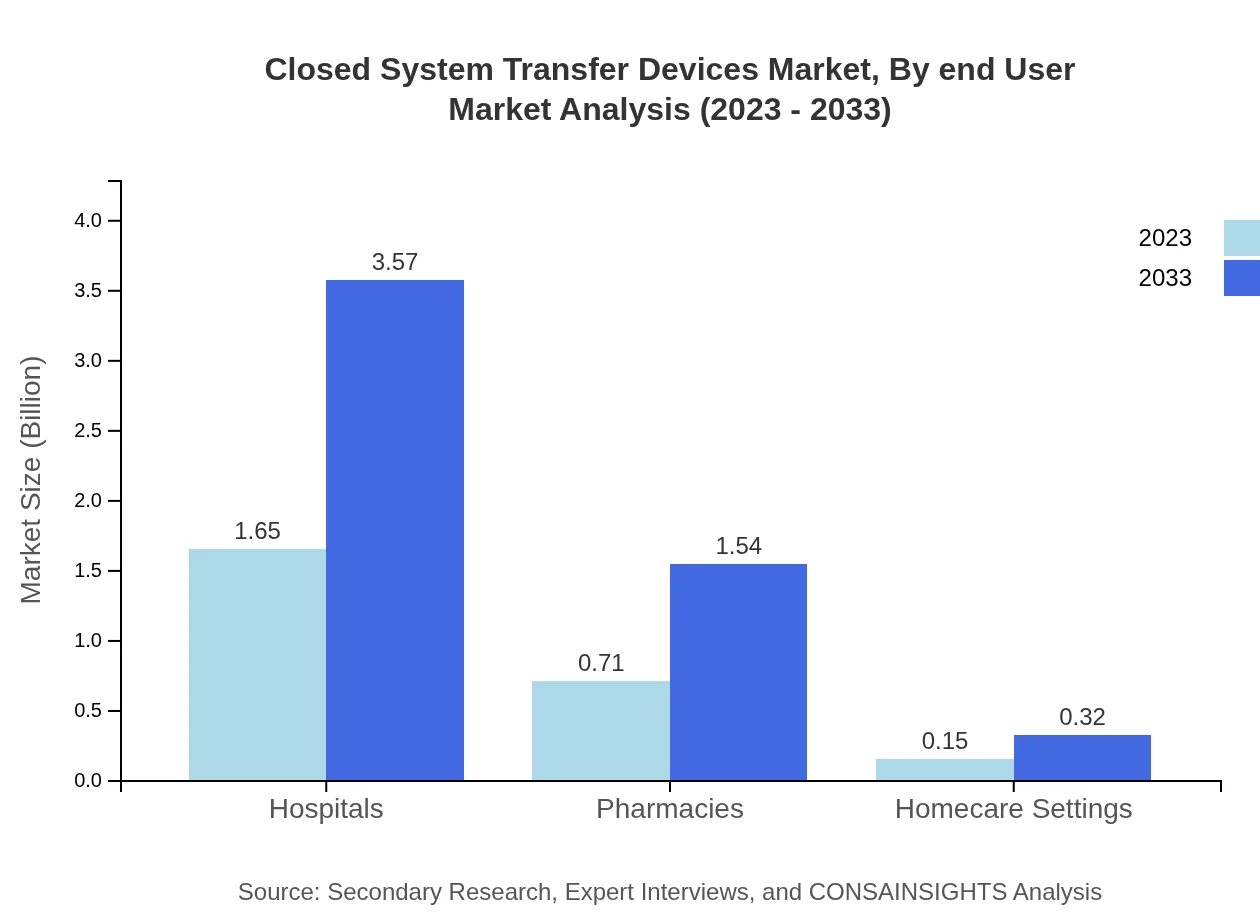
Hospitals are the largest end-user segment in the Closed System Transfer Devices market, anticipated to grow from USD 1.65 billion in 2023 to USD 3.57 billion by 2033, maintaining a consistent 65.83% market share. Pharmacies and homecare settings are also important, with expected growth in their respective segments.
Closed System Transfer Devices Market Analysis By Material
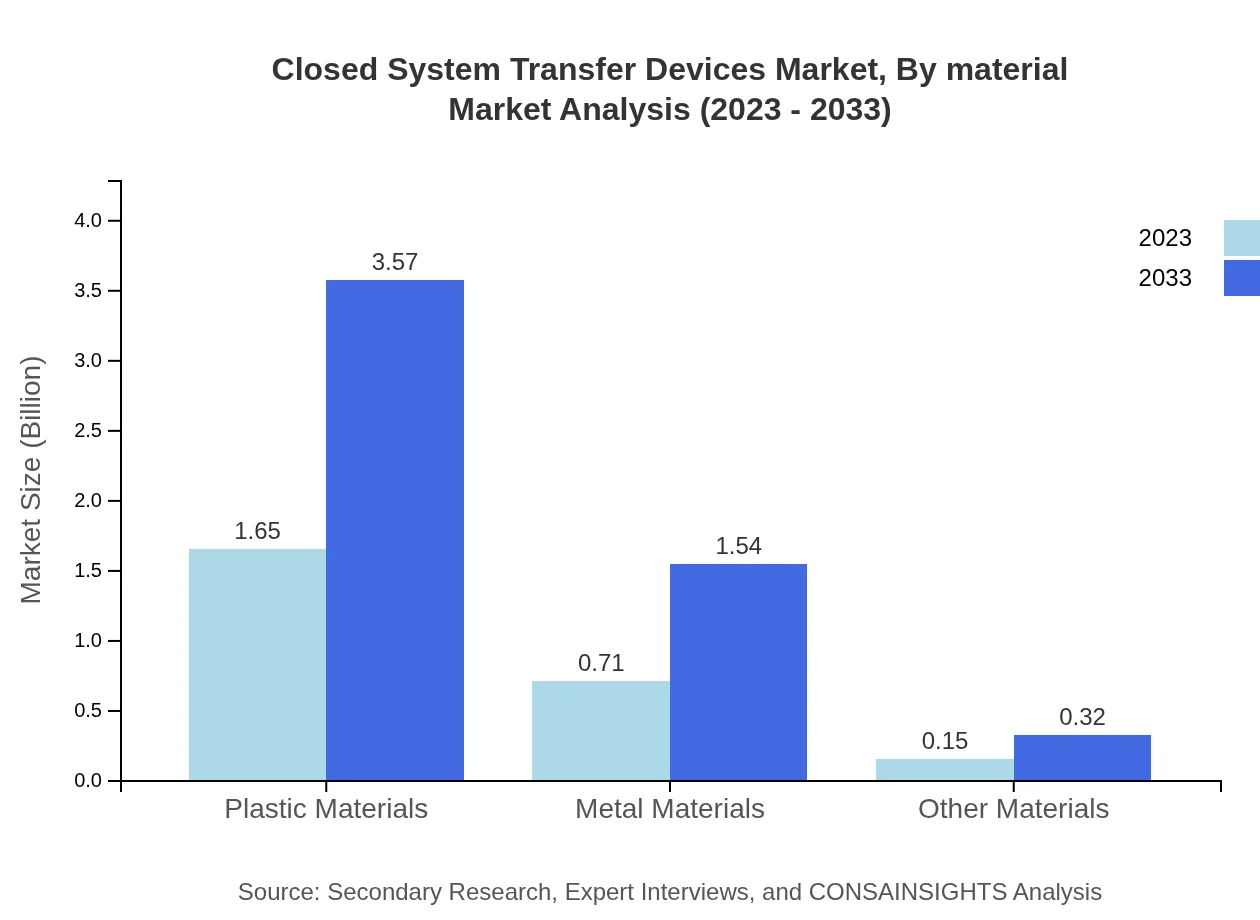
The materials segment shows plastic materials leading the market, projected to grow from USD 1.65 billion in 2023 to USD 3.57 billion by 2033, keeping the same market share of 65.83%. Metal materials and other materials are smaller segments but are growing as manufacturers explore various applications.
Closed System Transfer Devices Market Analysis By Design Type
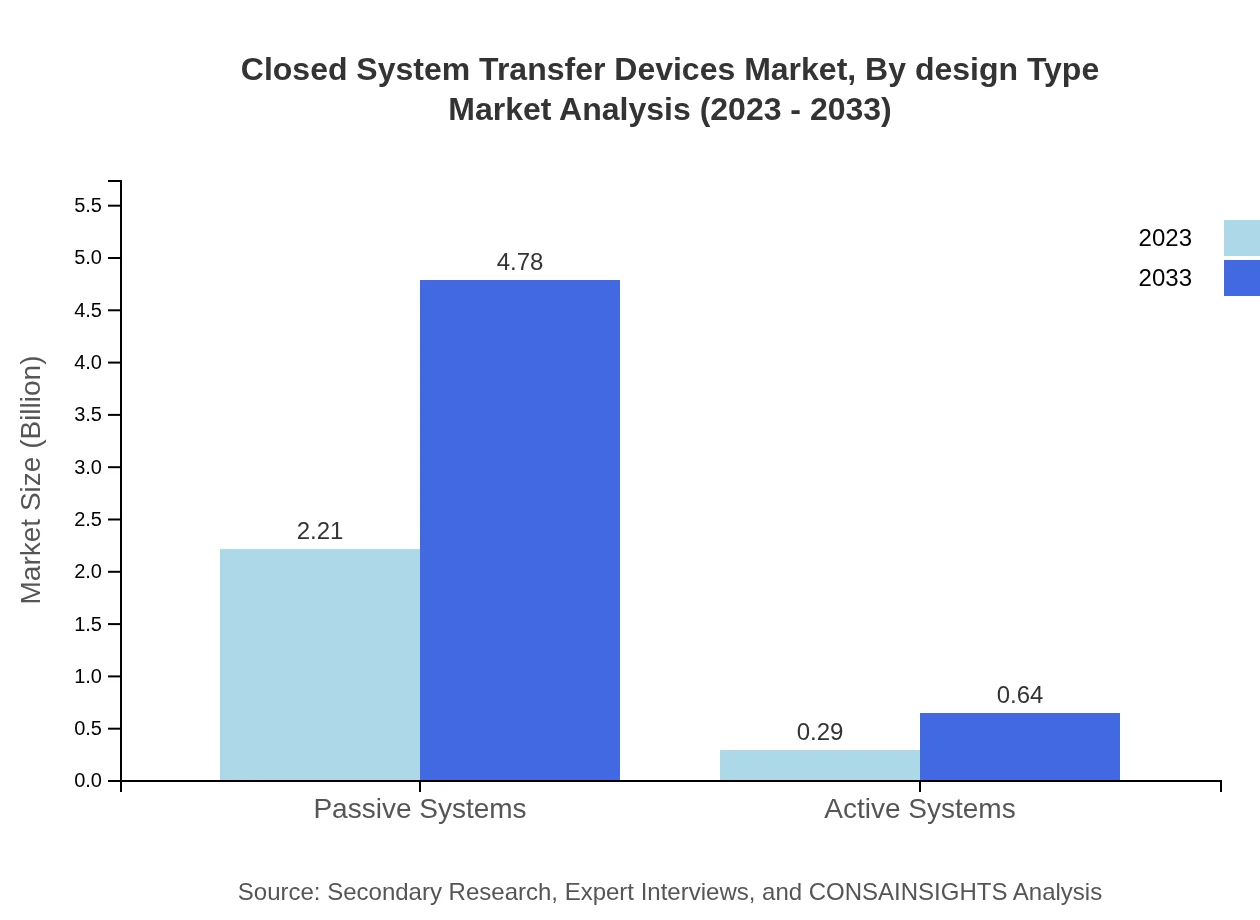
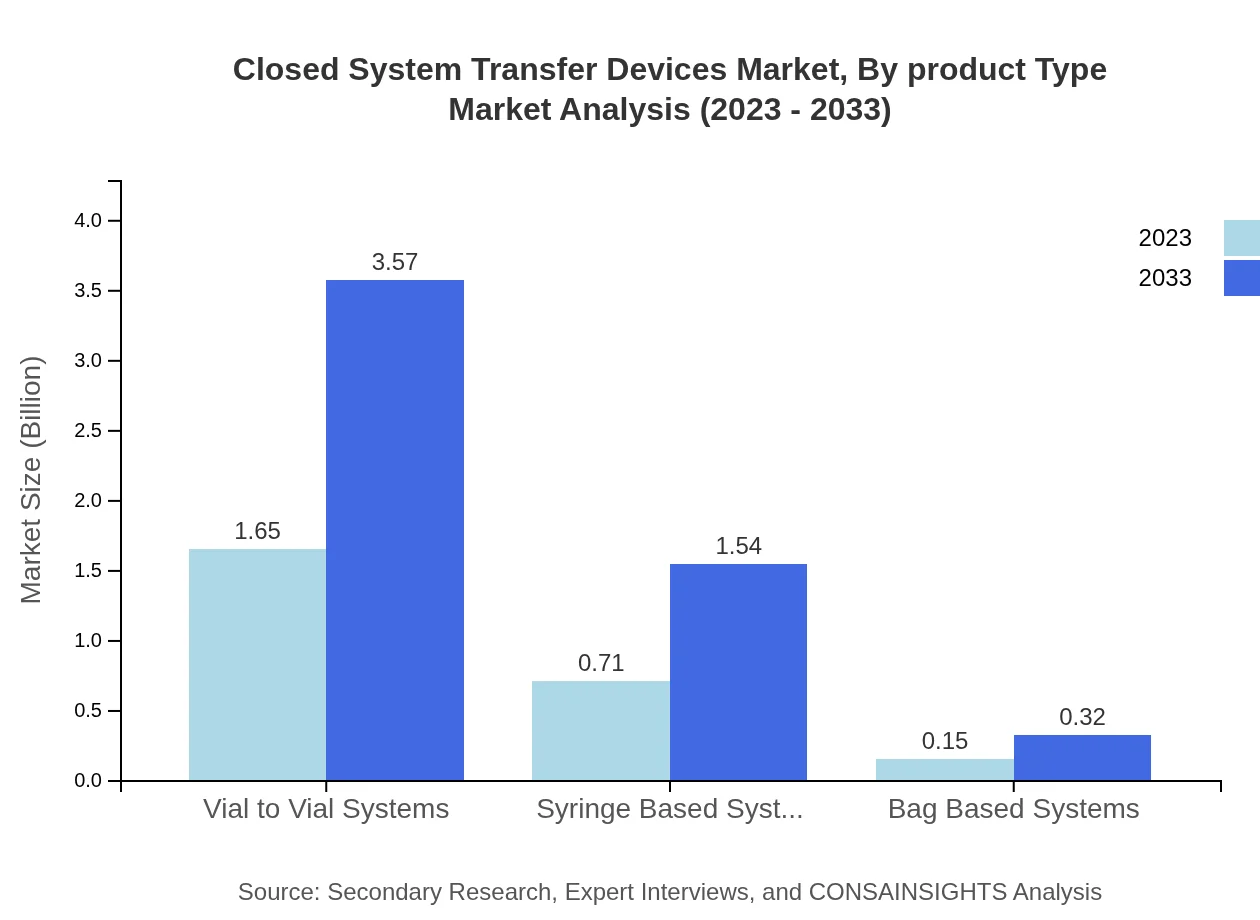
Design type segmentation reveals that vial-to-vial systems are expected to maintain a large share, growing from USD 1.65 billion in 2023 to USD 3.57 billion by 2033 (65.83% share). Syringe based systems also represent a significant market, projected to grow from USD 0.71 billion to USD 1.54 billion.
Closed System Transfer Devices Market Trends and Future Forecast
Tell us your focus area and get a customized research report.
Global Market Leaders and Top Companies in Closed System Transfer Devices Industry
Baxter International Inc.:
Baxter is a renowned healthcare company specializing in products that address complex medical needs, including advanced CSTDs that enhance safety in drug delivery.B. Braun Melsungen AG:
B. Braun is a global leader in medical devices and solutions, focusing on closed systems for drug delivery, ensuring quality and safety in patient care.CareFusion:
CareFusion specializes in innovative healthcare technologies, providing CSTDs that ensure safe handling of hazardous drugs, significantly contributing to overall healthcare safety.MediDose:
MediDose is known for its commitment to medication safety, producing CSTDs aimed at minimizing risks associated with drug administration and protecting healthcare workers.We're grateful to work with incredible clients.









FAQs
What is the market size of the closed system transfer devices market in 2023?
The market size in 2023 is $2.50 Billion according to the provided report data, serving as the baseline for the 2023 to 2033 forecast period.
How big is the market expected to be in 2033?
The market is projected to reach $5.42 Billion in 2033 based on the report's forecast for the 2023 to 2033 period.
What is CAGR of the market for the forecast period?
The compound annual growth rate (CAGR) for the 2023 to 2033 forecast period is 7.8%, as specified in the input data.
Is there a single fastest Growing region in the Closed System Transfer Devices Market Report market?
No single fastest-growing region is stated for the Closed System Transfer Devices Market Report market because the top regional implied CAGR values are within 0.15 percentage points of each other, making the ranking too close to call reliably.
Which companies are listed as top players in the market?
Top companies named in the report include Baxter International Inc., B. Braun Melsungen AG, CareFusion, and MediDose.
Who are the primary end Users of closed system transfer devices?
Primary end-users identified are hospitals, pharmacies, and homecare settings, reflecting use across clinical and outpatient care environments.
What are the main product types covered in the segmentation?
Product types detailed include passive and active systems, vial-to-vial systems, syringe-based systems, and bag-based systems.
How big is the European market in 2023 and 2033?
Europe's market value is listed as $0.8 Billion in 2023 and is expected to grow to $1.74 Billion in 2033.
What drives adoption in Asia Pacific?
Adoption in Asia Pacific is tied to growing hospital procurement and clinical demand, with market values rising from $0.49 Billion in 2023 to $1.07 Billion in 2033.
Why does the report include multiple material categories?
Materials such as plastic, metal, and other materials are included to reflect device construction differences that affect compatibility, durability, and cost across use cases.