
Reports >
Life Sciences
>
Cryogenic Equipment Market Report

Cryogenic Equipment Market Report
First published: 11 October 2024 | Last updated: 25 May 2026 | Report Code: cryogenic-equipment
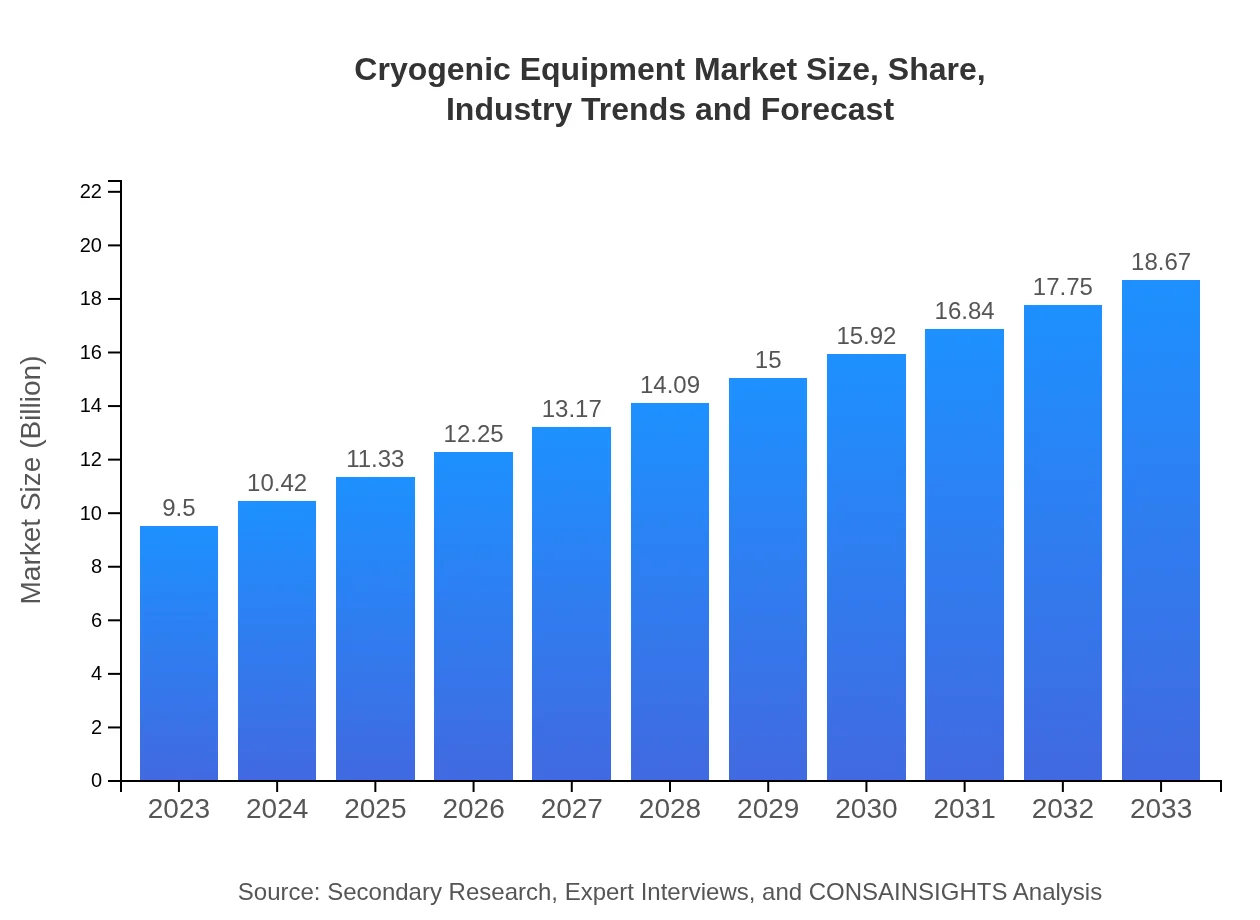
Cryogenic Equipment Market — USD $9.5 Billion in 2023, Growing to USD 18.67null by 2033 at 6.8% CAGR
This report provides a comprehensive analysis of the Cryogenic Equipment market, offering insights into its current status, projected growth, and technological advancements from 2023 to 2033.
Key Takeaways
- Market expands from $9.50 Billion in 2023 to $18.67 Billion by 2033 at a 6.8% CAGR.
- North America is largest regional market, while no single fastest-growing region is stated because regional CAGR differences remain within 0.15 percentage points.
- Europe grows from $3.16 Billion in 2023 to $6.20 Billion in 2033, supported by industrial and healthcare demand.
- Asia Pacific moves from $1.66 Billion in 2023 to $3.26 Billion in 2033 driven by LNG and research applications.
Cryogenic Equipment Market Report — Executive Summary
North America remains largest market by forecast-period value, while no single fastest-growing region is stated because top regional growth rates are separated by less than 0.15 percentage points. The Cryogenic Equipment Market Report outlines steady expansion driven by rising liquefied natural gas usage, growing healthcare cryopreservation needs, and demand from research institutions. The market is forecast to grow from $9.50 Billion in 2023 to $18.67 Billion in 2033 at a 6.8% CAGR. North America is the largest regional market, with notable increases in Europe and Asia Pacific. Key product categories include cryogenic tanks, pumps, valves, cryocoolers and freezers; leading firms listed include Air Products and Chemicals, Inc., Linde plc, Parker Hannifin Corporation and Chart Industries, Inc. Market dynamics reflect investment in low-temperature storage and transport technologies, regulatory and safety considerations, and technology-driven efficiency gains across end users such as industrial, healthcare, energy and research sectors.
Key Growth Drivers
- Rising LNG production and transport requirements increasing demand for cryogenic storage and transport solutions.
- Healthcare sector expansion and the need for cryopreservation boosting sales of low-temperature freezers and related equipment.
- Research institutions scaling activities that require reliable cryogenic infrastructure for experimentation and sample storage.
- Ongoing material and design innovations improving efficiency and safety of cryogenic equipment, encouraging adoption.
| Metric | Value |
|---|---|
| Study Period | 2023 - 2033 |
| 2023 Market Size | $9.50 Billion |
| CAGR (2023-2033) | 6.8% |
| 2033 Market Size | $18.67 Billion |
| Top Companies | Air Products and Chemicals, Inc., Linde plc, Parker Hannifin Corporation, Chart Industries, Inc. |
| Published Date | 11 October 2024 |
| Last Modified Date | 25 May 2026 |
Cryogenic Equipment Market Overview
Customize Cryogenic Equipment Market Report market research report
- ✔ Get in-depth analysis of Cryogenic Equipment market size, growth, and forecasts.
- ✔ Understand Cryogenic Equipment's regional dynamics and industry-specific trends.
- ✔ Identify potential applications, end-user demand, and growth segments in Cryogenic Equipment
What is the Market Size & CAGR of Cryogenic Equipment Market Report market in 2023?
Cryogenic Equipment Industry Analysis
Cryogenic Equipment Market Segmentation and Scope
Tell us your focus area and get a customized research report.
Cryogenic Equipment Market Report Market Analysis Report by Region
Europe Cryogenic Equipment Market Report:
Europe grows from $3.16 Billion in 2023 to $6.2 Billion in 2033. Growth is supported by industrial consumption, healthcare infrastructure upgrades, and investment in cryogenic technologies for energy and research applications.Asia Pacific Cryogenic Equipment Market Report:
Asia Pacific grows from $1.66 Billion in 2023 to $3.26 Billion in 2033. Regional momentum is linked to expanding LNG projects, rising research activities, and growing healthcare-sector needs for low-temperature equipment.North America Cryogenic Equipment Market Report:
North America is largest regional market, rising from $3.35 Billion in 2023 to $6.59 Billion in 2033. 35 Billion in 2023 and grows to $6.59 Billion in 2033. The region’s expansion is attributed to demand for LNG storage and transport, healthcare cryopreservation services, and industrial applications that require advanced cryogenic systems.South America Cryogenic Equipment Market Report:
Latin America grows from $0.48 Billion in 2023 to $0.94 Billion in 2033. 48 Billion in 2023 and expands to $0.94 Billion by 2033. Drivers include increased energy sector investments and the gradual adoption of cryogenic storage and transport solutions across industrial and research users.Middle East & Africa Cryogenic Equipment Market Report:
Middle East and Africa grows from $0.85 Billion in 2023 to $1.68 Billion in 2033. Regional drivers include LNG-related infrastructure, industrial demand for low-temperature systems, and emerging healthcare and research requirements.Tell us your focus area and get a customized research report.
Research Methodology
Cryogenic Equipment Market Analysis By Equipment Type
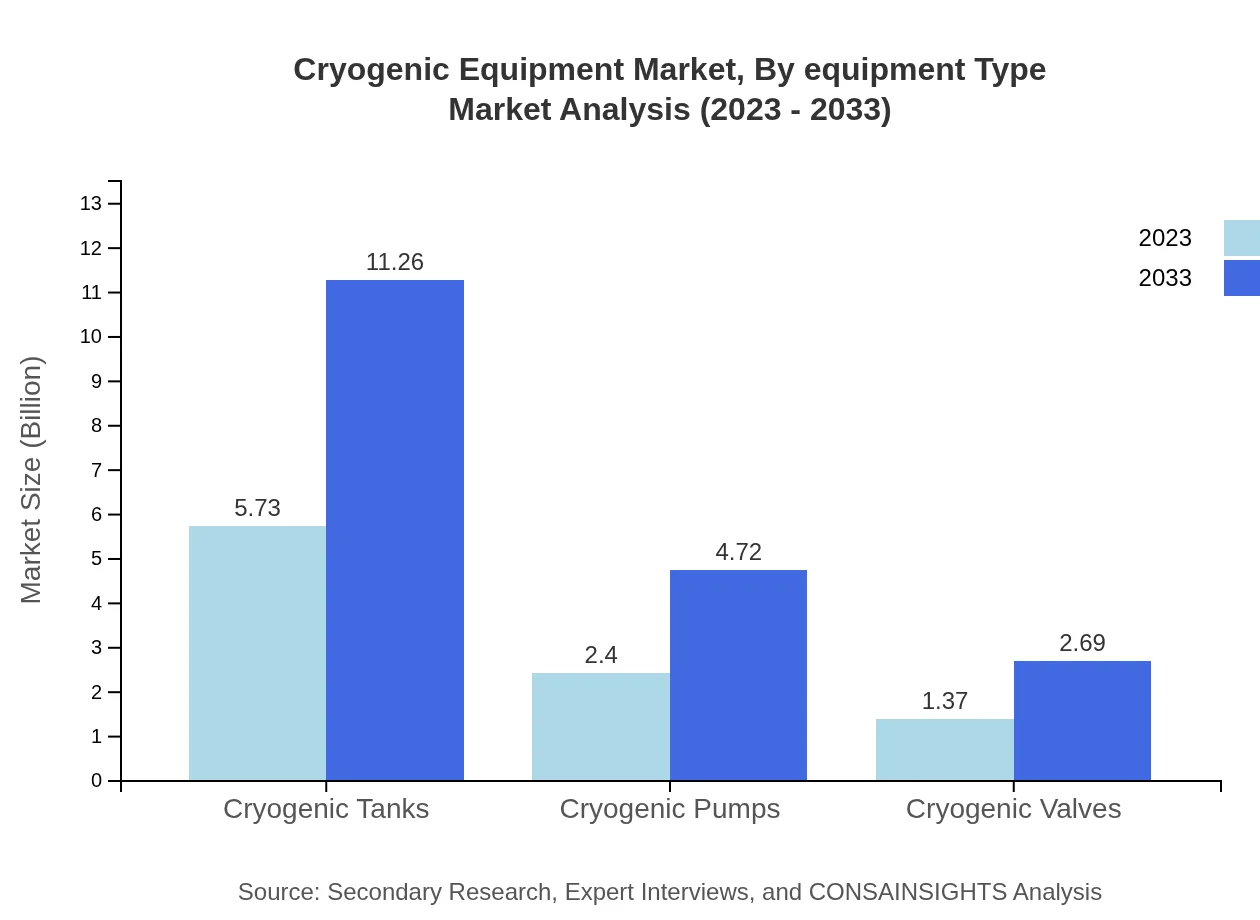
In 2023, the Gas Cylinders segment accounted for a significant market size of $7.89 billion, expected to grow to $15.50 billion by 2033. Cryogenic Freezers and Transport Vehicles are other crucial segments, showing steady growth, supported by various industries requiring safe storage and transport solutions.
Cryogenic Equipment Market Analysis By Application
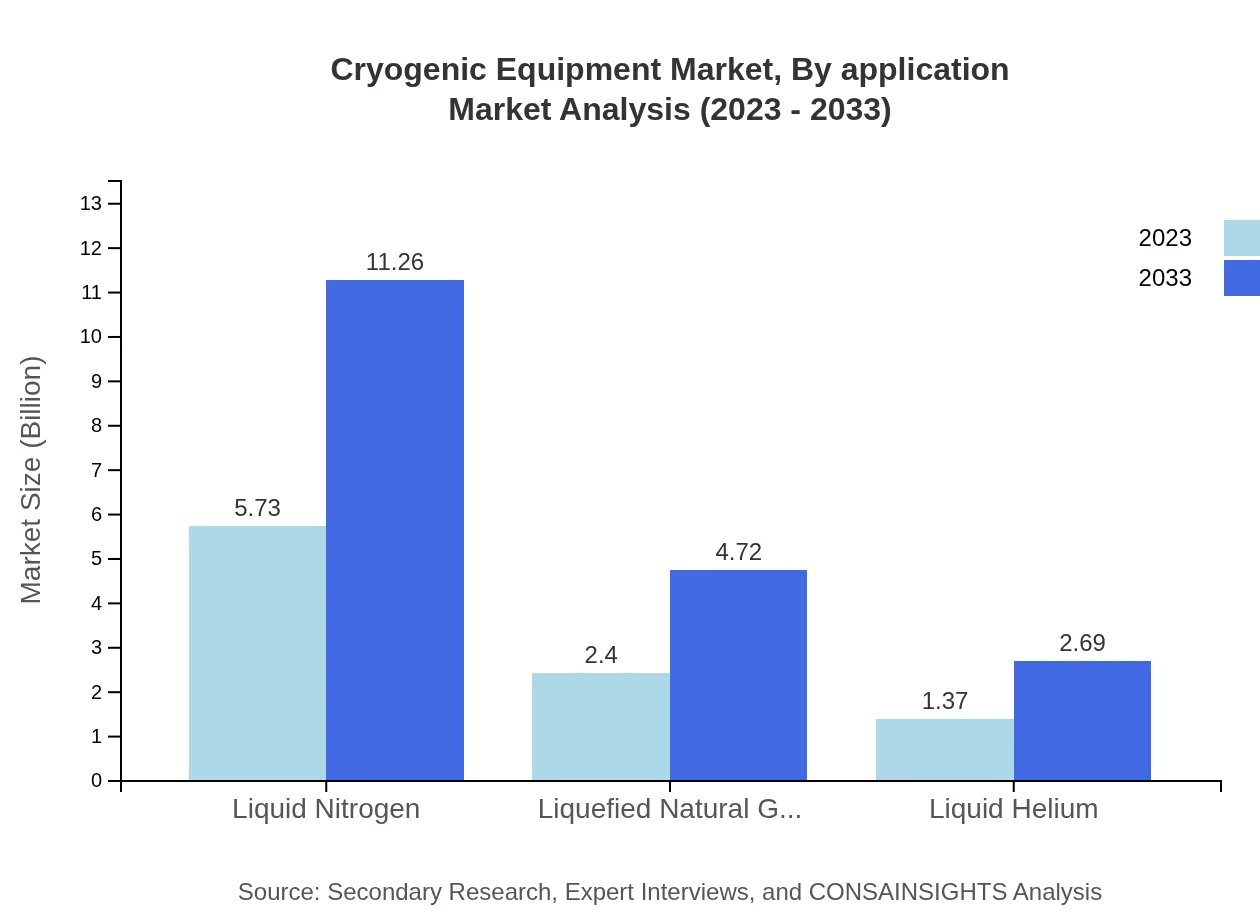
The application segment shows varying trends among industries. The industrial sector, valued at $4.98 billion in 2023, projects continued growth. Healthcare applications also play a vital role, with a notable share of 24.11% in the market, highlighting their significance.
Cryogenic Equipment Market Analysis By End User
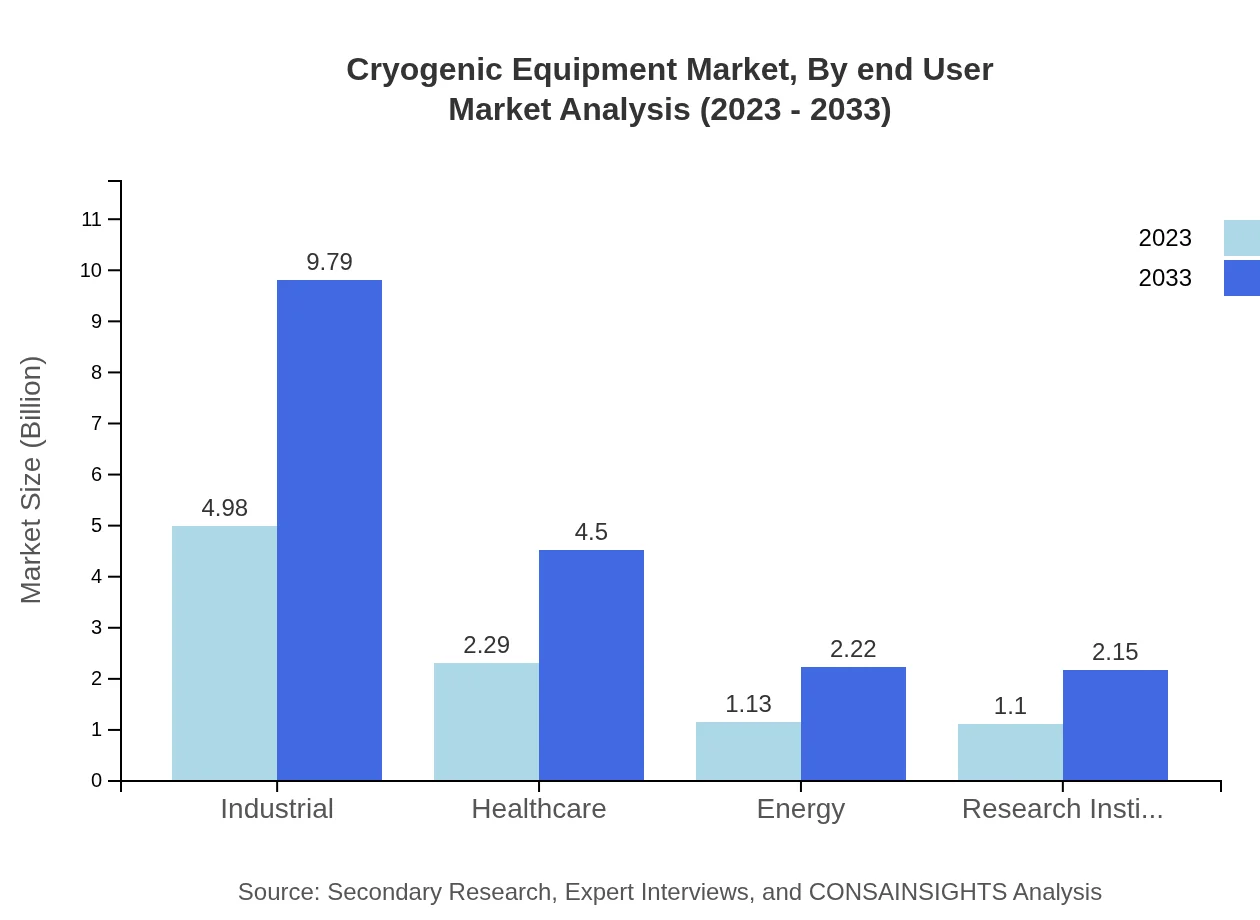
The Energy sector commands a market share of 11.9% and is expected to grow, while research institutions hold 11.54%. These sectors reflect how crucial cryogenic technology is to current scientific and energy demands.
Cryogenic Equipment Market Analysis By Product
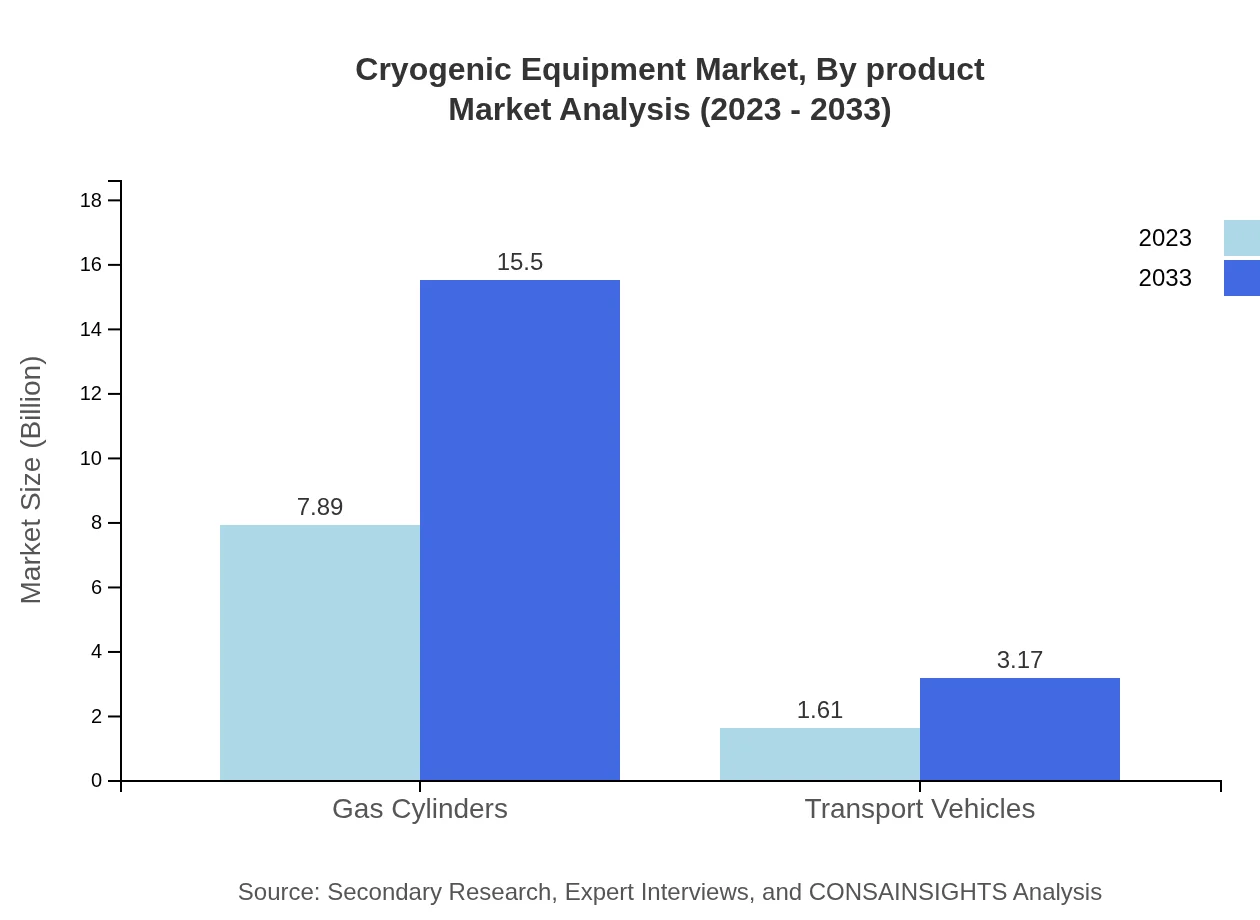
Liquid Nitrogen leads the market with a robust share of 60.28%, indicative of its broad usage in various applications. Other products like LNG and Liquid Helium also represent significant shares and forecasted growth.
Cryogenic Equipment Market Analysis By Technology
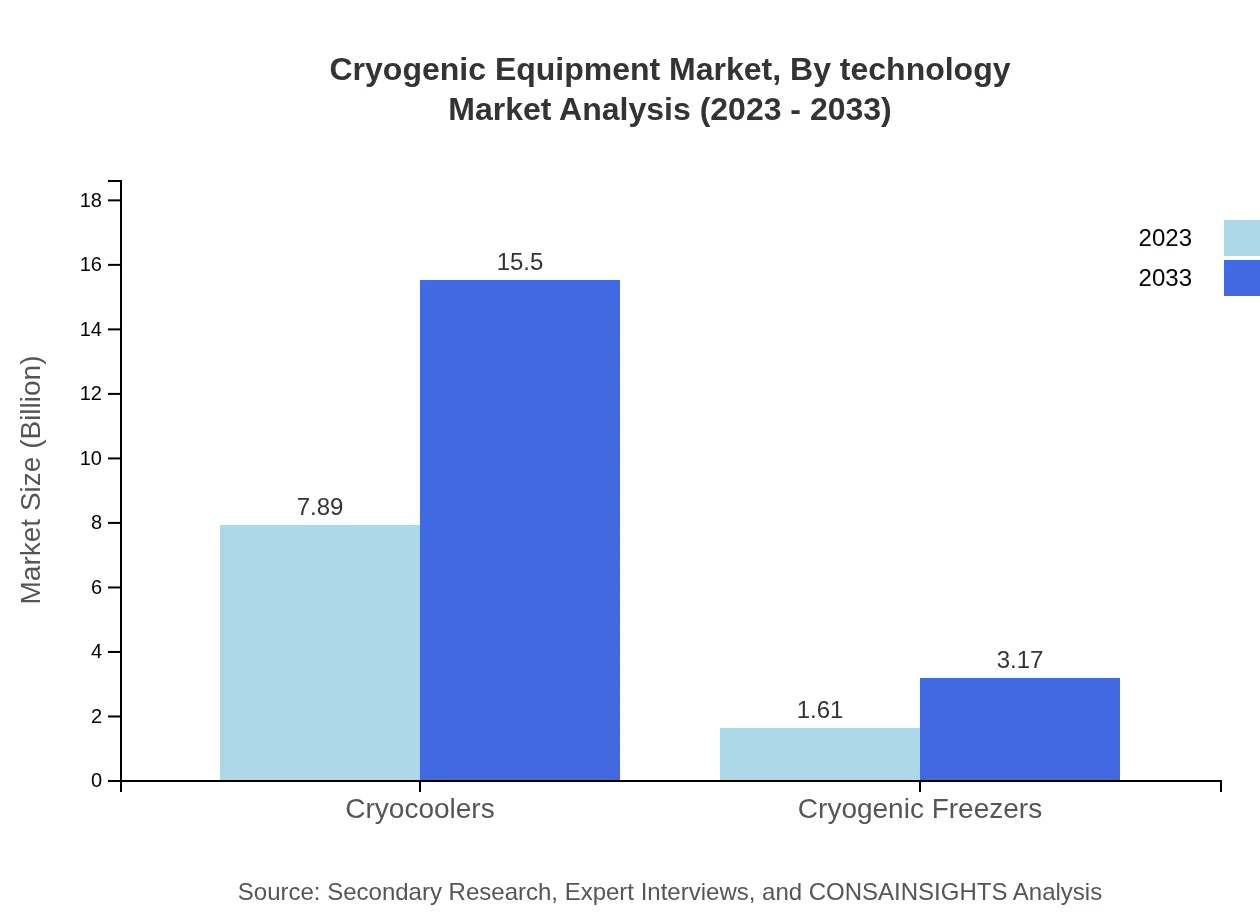
Recent technological advancements in cryogenic equipment focus on improving energy efficiency and lowering operational costs. Innovations such as improved thermal insulation and advanced monitoring systems are gaining traction, driving market expansion.
Cryogenic Equipment Market Trends and Future Forecast
Tell us your focus area and get a customized research report.
Global Market Leaders and Top Companies in Cryogenic Equipment Industry
Air Products and Chemicals, Inc.:
A leading company in industrial gases and cryogenic technology, providing solutions for energy and healthcare applications.Linde plc:
A major player in the market, Linde focuses on developing valves, tanks, and other equipment essential for cryogenic applications.Parker Hannifin Corporation:
Known for its expertise in motion and control technologies, Parker offers a range of cryogenic equipment designed for efficient performance.Chart Industries, Inc.:
Chart specializes in cryogenic storage and equipment solutions, contributing to various applications including LNG and industrial gas.We're grateful to work with incredible clients.









FAQs
What is the market size of the Cryogenic Equipment Market Report in 2023?
The reported market size for 2023 is $9.50 Billion, as provided in the report data.
What is the expected market size of the Cryogenic Equipment Market Report in 2033?
The market is projected to reach $18.67 Billion by 2033, according to the supplied forecast figures.
What is CAGR of the Cryogenic Equipment Market Report for the forecast period?
The compound annual growth rate (CAGR) for the forecast period 2023 to 2033 is 6.8% per the input data.
Is there a single fastest Growing region in the Cryogenic Equipment Market Report market?
No single fastest-growing region is stated for the Cryogenic Equipment Market Report market because the top regional implied CAGR values are within 0.15 percentage points of each other, making the ranking too close to call reliably.
Which companies are listed as top players in the report?
Top companies named in the input include Air Products and Chemicals, Inc., Linde plc, Parker Hannifin Corporation and Chart Industries, Inc.
Why is LNG mentioned as a growth factor in the report?
LNG demand supports expansion of cryogenic storage and transport equipment, directly influencing market growth as noted in the contextual drivers.
What are common equipment types highlighted in the market segments?
Highlighted equipment types include cryogenic tanks, pumps and valves, along with cryocoolers and cryogenic freezers according to segment data.
How big is the Europe market in 2023 and 2033?
Europe is listed at $3.16 Billion for 2023 and is expected to grow to $6.20 Billion by 2033 in the regional facts.
What drives adoption of cryogenic solutions in healthcare?
Healthcare adoption is driven by cryopreservation needs and storage requirements for biological materials, increasing demand for freezers and related equipment.
Who contributed to the research methodology for this report?
The research included primary interviews with industry experts and secondary research from company reports and publications, plus internal validation and triangulation.