
Reports >
Life Sciences
>
Female Contraceptive Market Report

Female Contraceptive Market Report
First published: 11 October 2024 | Last updated: 25 May 2026 | Report Code: female-contraceptive
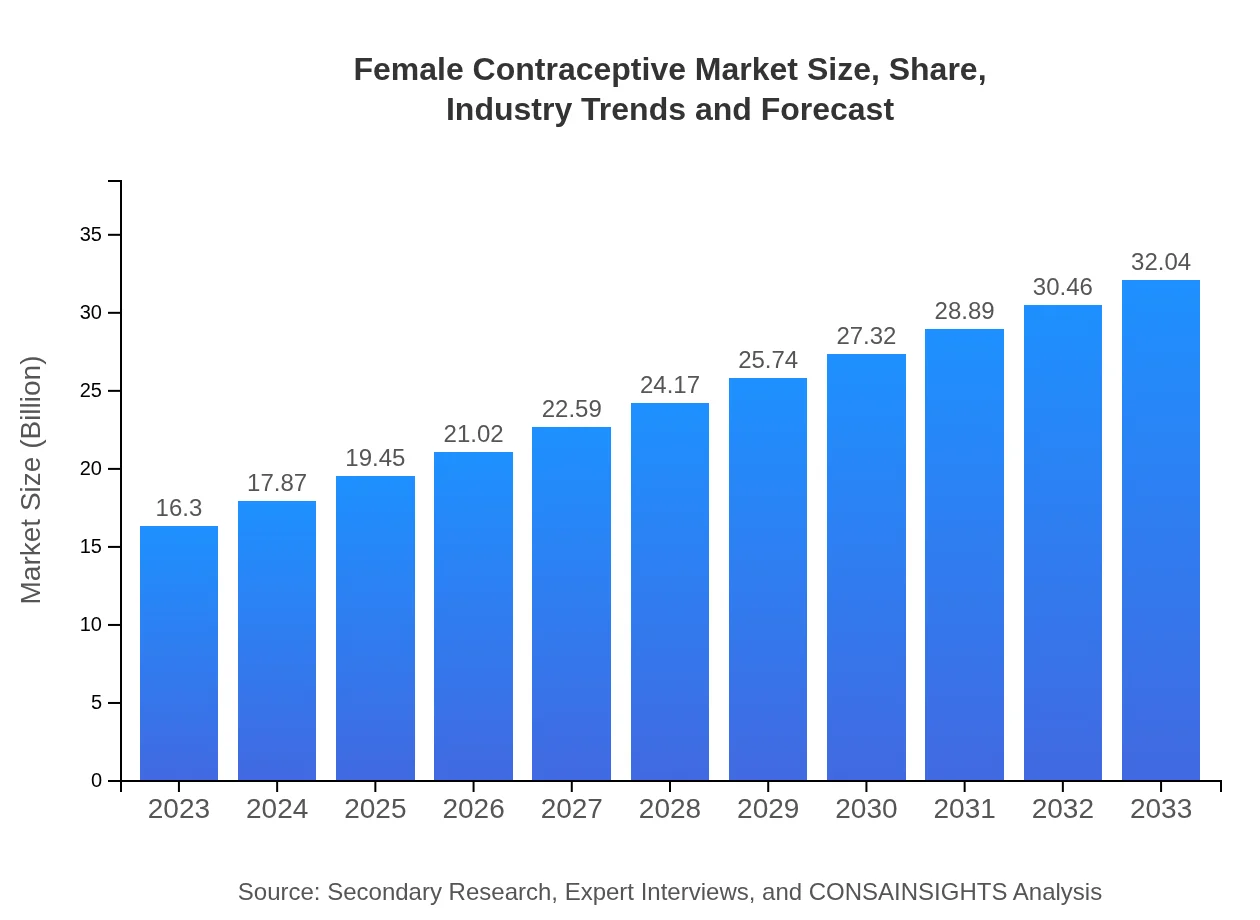
Female Contraceptive Market — USD 16.3 billion in 2023, Growing to USD 32.04B by 2033 at 6.8% CAGR
This report offers a comprehensive analysis of the female contraceptive market from 2023 to 2033, covering market size, industry analysis, regional insights, technology trends, and market forecasts.
Key Takeaways
- Global market projected from $16.30 Billion in 2023 to $32.04 Billion by 2033 at a 6.8% CAGR.
- North America is largest regional market, while no single fastest-growing region is stated because regional CAGR differences remain within 0.15 percentage points.
- Europe grows from $5.08 Billion in 2023 to $9.98 Billion in 2033, reflecting strong regional adoption.
- Asia Pacific expands from $2.57 Billion in 2023 to $5.05 Billion in 2033, driven by increased access and awareness.
- Top companies include Bayer AG, Pfizer Inc., Merck & Co., Inc., and HRA Pharma, shaping innovation and distribution.
Female Contraceptive Market Report — Executive Summary
North America remains largest market by forecast-period value, while no single fastest-growing region is stated because top regional growth rates are separated by less than 0.15 percentage points. The Female Contraceptive Market Report presents a structured view of a market that moves from $16.30 Billion in 2023 to $32.04 Billion by 2033, reflecting a 6.8% CAGR during 2023 to 2033. Growth is supported by rising awareness of reproductive health, broader availability across online and offline channels, and continued investment by major pharmaceutical companies such as Bayer AG, Pfizer Inc., Merck & Co., Inc., and HRA Pharma. Product diversity—oral contraceptives, IUDs, implants, injectables and barrier methods—combined with both hormonal and non-hormonal technologies, underpins expanding choice for users. Regional dynamics show North America as the largest market, with Europe and Asia Pacific also making substantial contributions. The report examines segmentation by brand, method, age group, technology and distribution channel, and highlights long-acting reversible contraceptives and digital distribution as influential trends. Regulatory environments and policy shifts remain important to market access and adoption rates. The analysis is aimed at stakeholders seeking actionable insights on market structure, growth drivers and competitive positioning.
Key Growth Drivers
- Increased awareness and education on reproductive health boosting demand for diverse contraceptive options.
- Wider availability across online and offline sales channels improving access and convenience for consumers.
- Investment and product development by major pharmaceutical firms expanding method options and efficacy.
- Rising preference for long-acting reversible contraceptives and improvements in delivery technologies.
- Regulatory support and public health initiatives facilitating broader adoption and market penetration.
| Metric | Value |
|---|---|
| Study Period | 2023 - 2033 |
| 2023 Market Size | $16.30 Billion |
| CAGR (2023-2033) | 6.8% |
| 2033 Market Size | $32.04 Billion |
| Top Companies | Bayer AG, Pfizer Inc., Merck & Co., Inc., HRA Pharma |
| Published Date | 11 October 2024 |
| Last Modified Date | 25 May 2026 |
Female Contraceptive Market Overview
Customize Female Contraceptive Market Report market research report
- ✔ Get in-depth analysis of Female Contraceptive market size, growth, and forecasts.
- ✔ Understand Female Contraceptive's regional dynamics and industry-specific trends.
- ✔ Identify potential applications, end-user demand, and growth segments in Female Contraceptive
What is the Market Size & CAGR of Female Contraceptive Market Report market in 2023?
Female Contraceptive Industry Analysis
Female Contraceptive Market Segmentation and Scope
Tell us your focus area and get a customized research report.
Female Contraceptive Market Report Market Analysis Report by Region
Europe Female Contraceptive Market Report:
Europe grows from $5.08 Billion in 2023 to $9.98 Billion in 2033. Growth reflects supportive public health programs, access to a range of hormonal and non-hormonal options, and increasing preference for long-acting methods alongside digital and traditional channels.Asia Pacific Female Contraceptive Market Report:
Asia Pacific grows from $2.57 Billion in 2023 to $5.05 Billion in 2033. Rising awareness, improved healthcare access, and expanding online sales contribute to market gains as product diversity and availability improve across markets.North America Female Contraceptive Market Report:
North America is largest regional market, rising from $6.28 Billion in 2023 to $12.34 Billion in 2033. This region is identified as the largest regional market by end-period value, supported by strong clinical adoption, established distribution channels, and significant activity from major pharmaceutical firms.South America Female Contraceptive Market Report:
Latin America grows from $1.38 Billion in 2023 to $2.71 Billion in 2033. Regional expansion is influenced by enhanced access to contraception, evolving attitudes toward family planning, and greater penetration of both online and offline distribution networks.Middle East & Africa Female Contraceptive Market Report:
Middle East and Africa grows from $1 Billion in 2023 to $1.96 Billion in 2033. Growth is supported by increasing reproductive health initiatives, gradual market development, and expanded availability of hormonal and non-hormonal contraceptive options.Tell us your focus area and get a customized research report.
Research Methodology
Female Contraceptive Market Analysis By Method
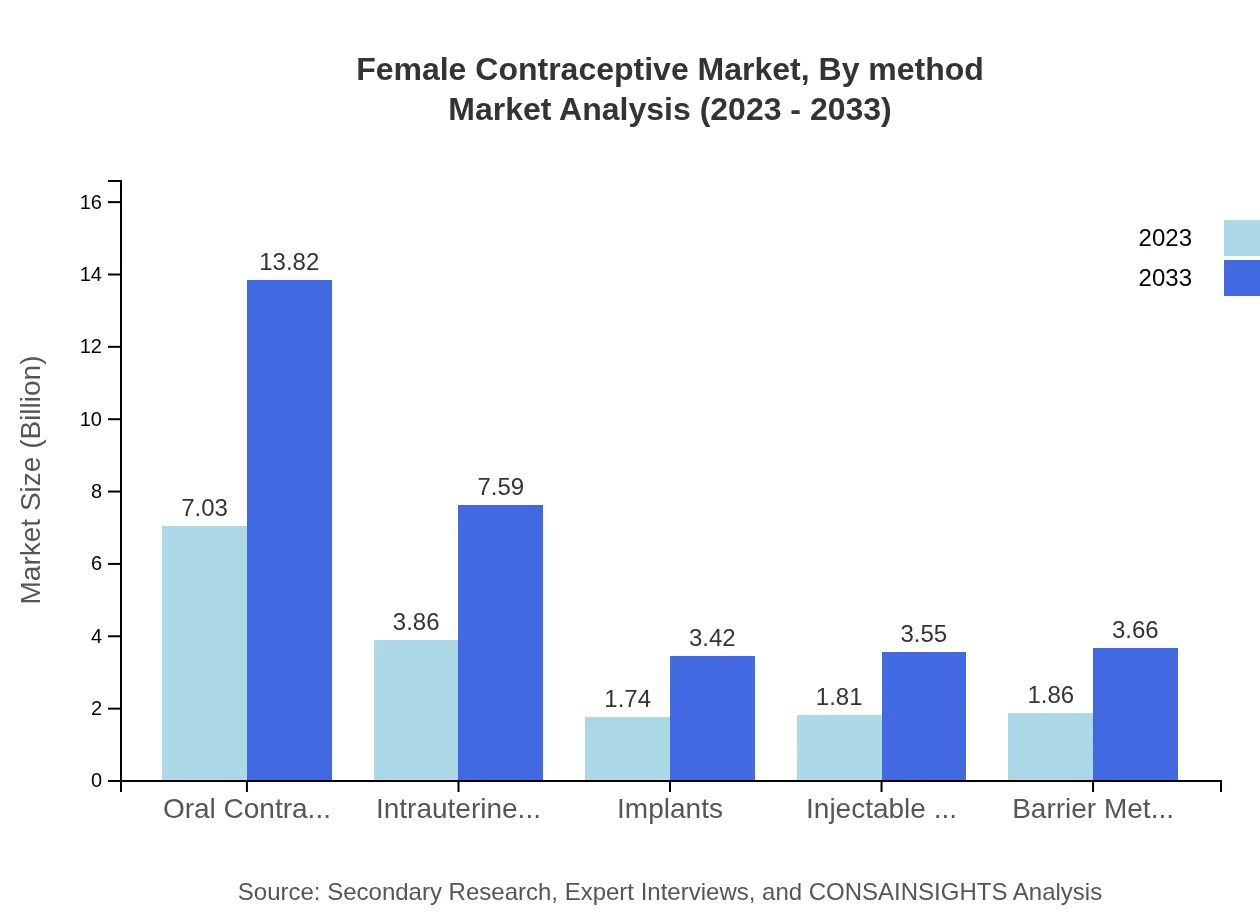
The Female Contraceptive Market is segmented by method into hormonal and non-hormonal contraceptives. Hormonal methods, including oral contraceptives, IUDs, and implants, dominate with a market size of USD 14.25 billion in 2023, expected to grow to USD 28.01 billion by 2033. Non-hormonal methods comprise a smaller share but are gaining traction, valued at USD 2.05 billion in 2023 and projected at USD 4.03 billion by 2033.
Female Contraceptive Market Analysis By Technology
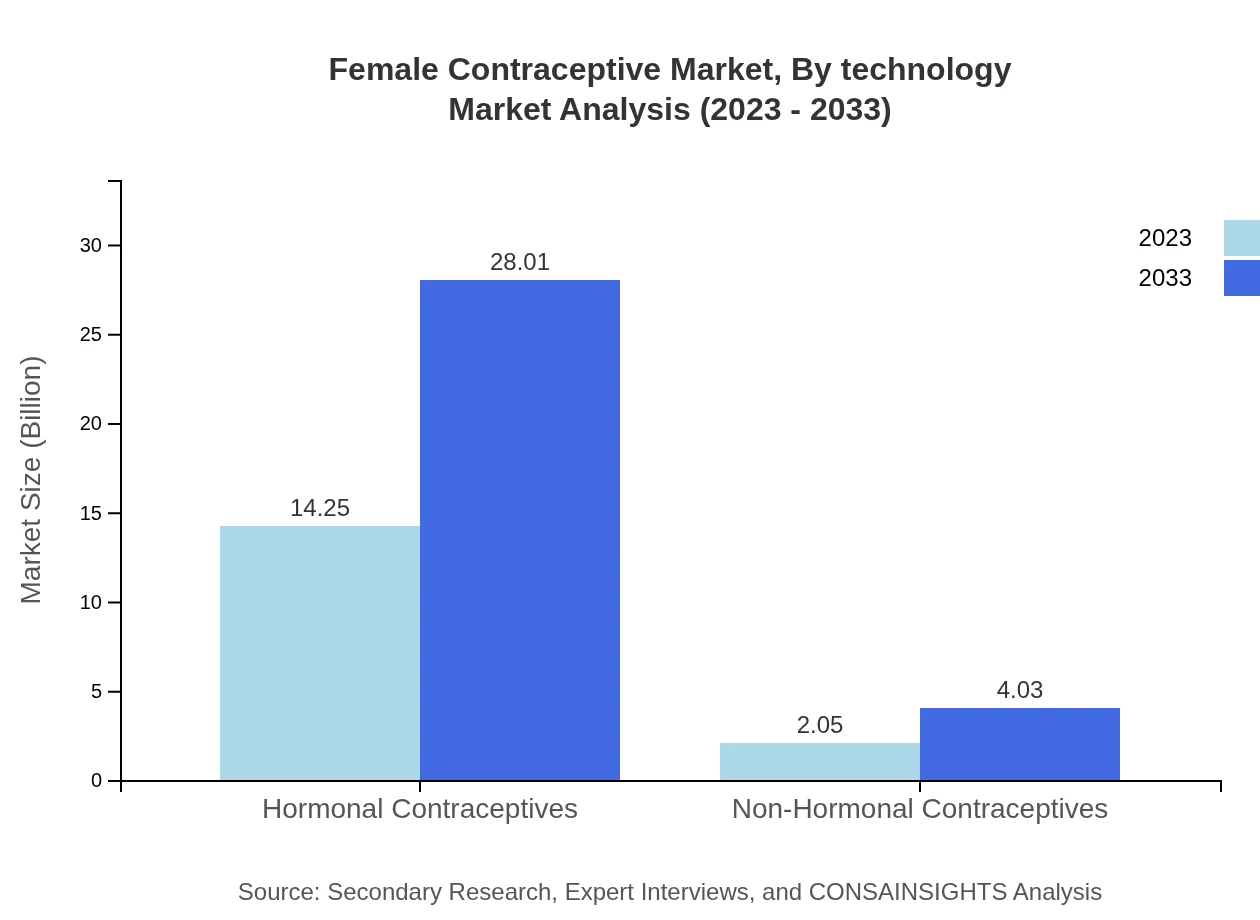
The market includes traditional contraceptive technologies and innovative solutions, with a focus on user-friendly, effective options. Innovations in delivery systems and telehealth platforms are reshaping the market, indicating a growing trend towards personalized healthcare solutions.
Female Contraceptive Market Analysis By Distribution Channel
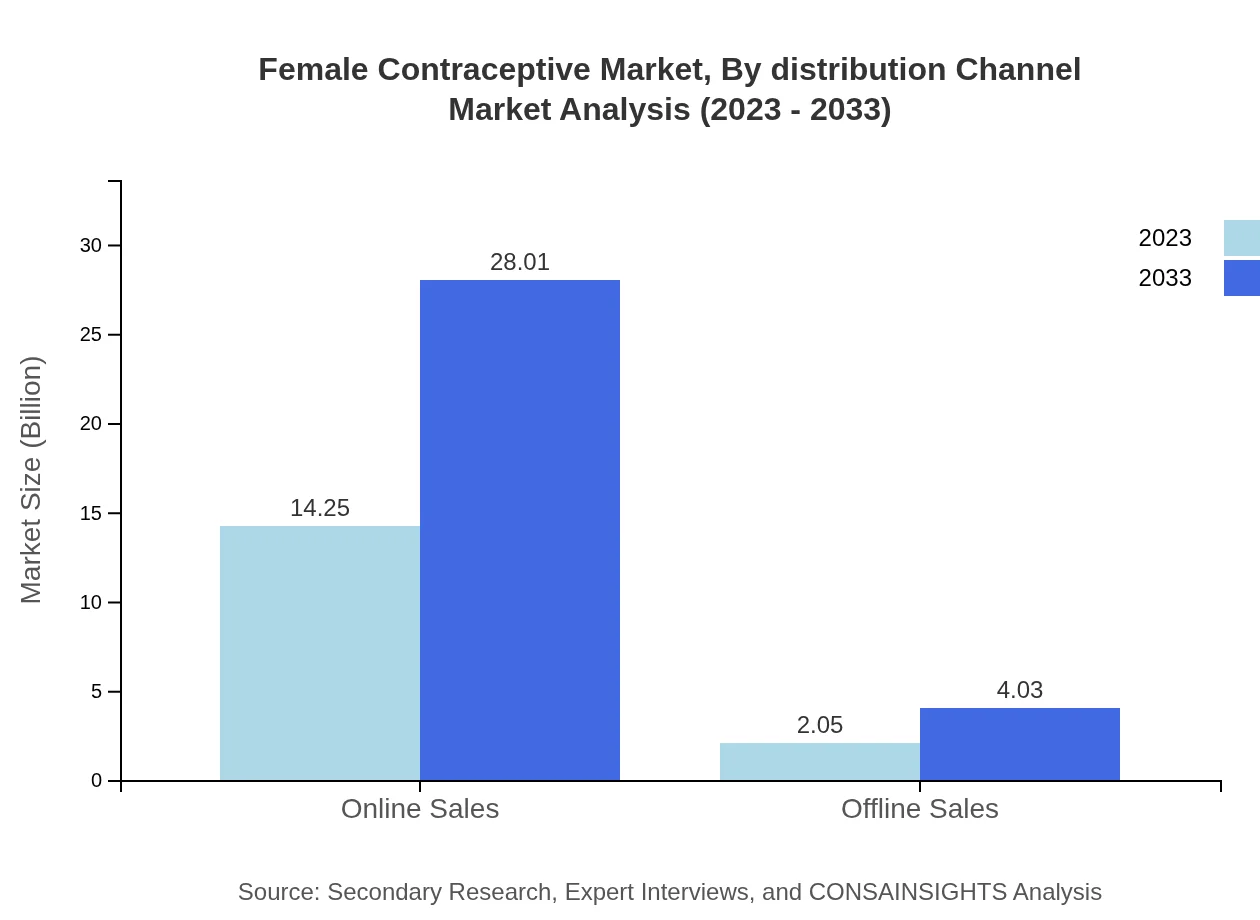
Distribution channels for female contraceptives are classified into online and offline sales. Online channels are dominating with a market value of USD 14.25 billion in 2023, projected to reach USD 28.01 billion by 2033 as digital platforms ease access to various products.
Female Contraceptive Market Analysis By Age Group
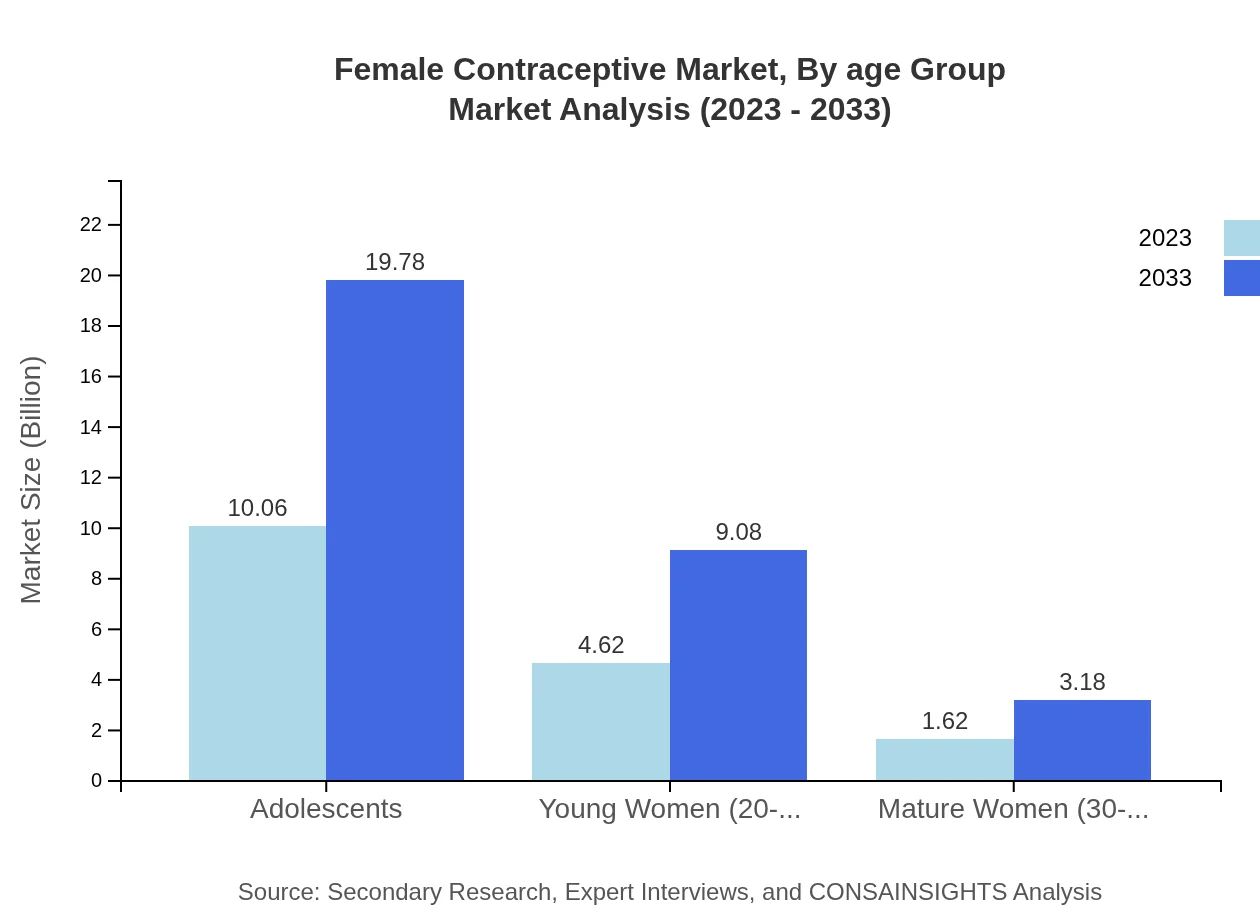
Segmenting the market by age group reveals considerable variations in preference and usage. Adolescents account for a significant share of the market with USD 10.06 billion in 2023, expected to reach USD 19.78 billion by 2033. Young women (20-29 years) and mature women (30-45 years) also represent critical demographics influencing market trends.
Female Contraceptive Market Analysis By Brand
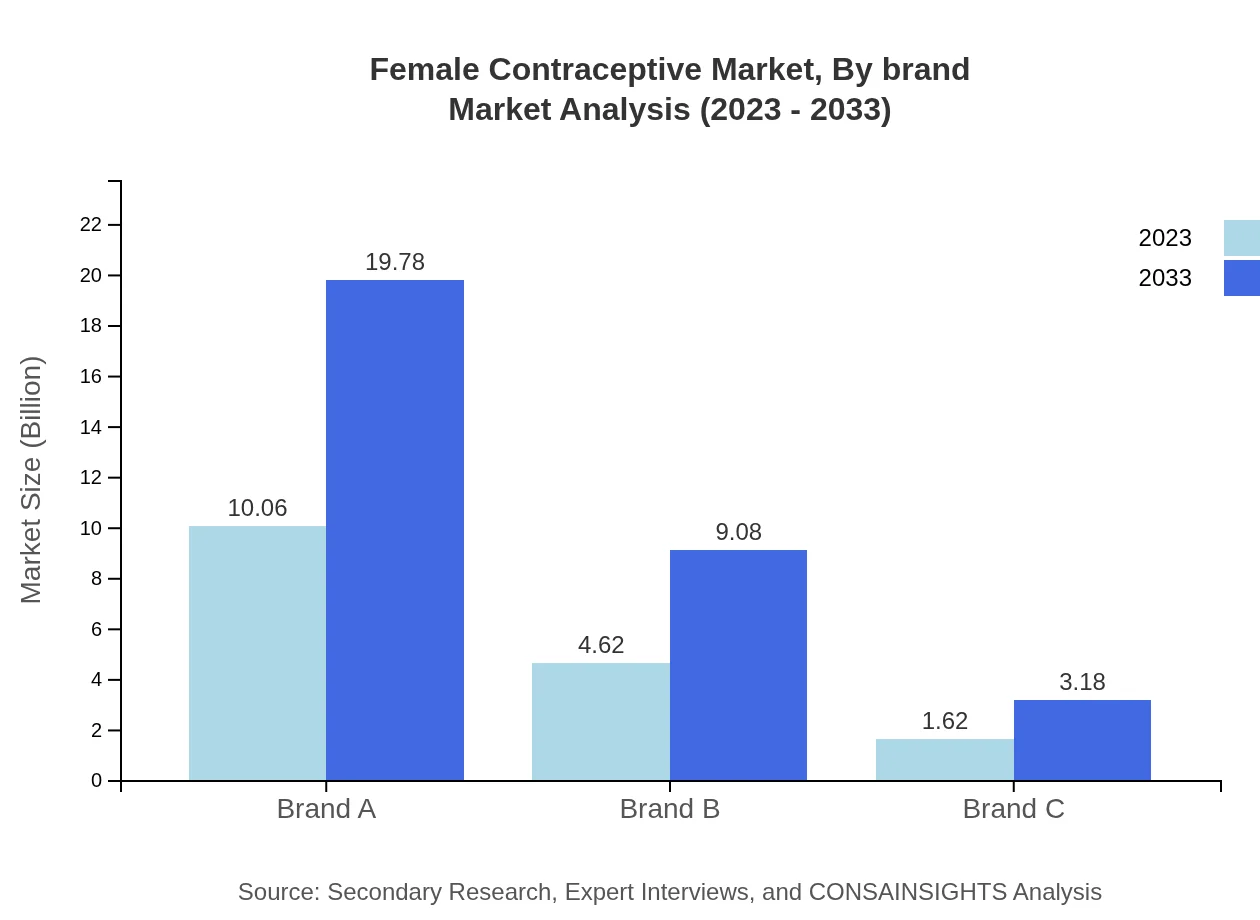
Brand performance is crucial in driving market dynamics. Brand A leads the market with a size of USD 10.06 billion in 2023, maintaining a significant market share. Brand B and Brand C are also notable players, continually innovating to keep up with consumer needs.
Female Contraceptive Market Trends and Future Forecast
Tell us your focus area and get a customized research report.
Global Market Leaders and Top Companies in Female Contraceptive Industry
Bayer AG:
A prominent global player in the pharmaceutical industry, Bayer AG offers a diverse range of contraceptive products, including popular oral contraceptives and IUDs, known for their efficacy and user satisfaction.Pfizer Inc.:
Pfizer Inc. is recognized for advancing women's health with innovative contraceptives and continues to invest in research to develop new solutions, focusing on safety and effectiveness.Merck & Co., Inc.:
Merck is renowned for its commitment to improving reproductive health through a comprehensive portfolio of contraceptive products, including implants and injectables.HRA Pharma:
HRA Pharma specializes in over-the-counter contraceptive solutions, leading the way in enhancing accessibility and consumer awareness regarding contraceptive options.We're grateful to work with incredible clients.








FAQs
What is the market size of the female contraceptive market in 2023?
The market size in 2023 is $16.30 Billion as stated in the report, reflecting current global demand and available market data for that year.
What is the projected market size for 2033?
The projected market size for 2033 is $32.04 Billion, based on the report's forecast for the 2023 to 2033 period and anticipated market developments.
What is CAGR for the forecast period?
The Compound Annual Growth Rate (CAGR) for the forecast period 2023 to 2033 is 6.8%, as specified in the market data.
Is there a single fastest Growing region in the Female Contraceptive Market Report market?
No single fastest-growing region is stated for the Female Contraceptive Market Report market because the top regional implied CAGR values are within 0.15 percentage points of each other, making the ranking too close to call reliably.
Which companies are identified as top players?
Top companies listed include Bayer AG, Pfizer Inc., Merck & Co., Inc., and HRA Pharma, noted for product development and market presence.
Why is online distribution important for this market?
Online distribution increases accessibility and convenience, expanding reach to consumers and complementing traditional offline channels to support market growth.
What are the main product method categories covered?
Key method categories include oral contraceptives, intrauterine devices (IUDs), implants, injectable contraceptives and barrier methods, reflecting product diversity.
How does regional variation affect market outlook?
Regional differences in access, regulations and consumer preferences influence adoption rates; North America is largest, while other regions show steady expansion.
Who conducted the research behind this report?
Research included primary interviews with industry experts and secondary analysis of company reports and publications, supplemented by data triangulation and validation.