

Deep Vein Thrombosis Market Report
First published: 21 October 2024 | Last updated: 25 May 2026 | Report Code: deep-vein-thrombosis
Deep Vein Thrombosis Market — USD 5.2 billion in 2023, Growing to USD 10.22B by 2033 at 6.8% CAGR
This market report provides a comprehensive analysis of the Deep Vein Thrombosis (DVT) market, covering key insights and data from 2023 to 2033, including market size, growth rates, segmentation, and regional analysis.
Key Takeaways
- Global market grows from $5.20 Billion in 2023 to $10.22 Billion in 2033 at a 6.8% CAGR.
- North America is largest regional market, while no single fastest-growing region is stated because regional CAGR differences remain within 0.15 percentage points.
- Segment coverage includes treatment type, diagnosis methods, end-user, prevention strategies, and technology.
- Top companies featured include Bayer AG, Boehringer Ingelheim, and Medtronic plc.
- Regional expansion is supported by improved diagnostics, treatment advances, and increasing awareness of DVT risks.
Deep Vein Thrombosis Market Report — Executive Summary
North America remains largest market by forecast-period value, while no single fastest-growing region is stated because top regional growth rates are separated by less than 0.15 percentage points. This report outlines market dynamics for deep vein thrombosis, where global value increases from $5.20 Billion in 2023 to $10.22 Billion in 2033 at a 6.8% CAGR. Growth is driven by enhanced diagnostic capabilities, wider adoption of pharmacological and non-pharmacological preventive measures, and technological innovations such as wearable devices and e-health solutions. The analysis covers treatment types, diagnosis methods, end-user categories, prevention strategies, and technology-based offerings. North America is identified as the largest regional market with a clear rise in value over the forecast. The competitive landscape highlights established firms including Bayer AG, Boehringer Ingelheim, and Medtronic plc. Research combines expert interviews, company reports, and data validation to present actionable insights for stakeholders.
Key Growth Drivers
- Advances in diagnostic imaging and rehabilitation techniques increasing detection and management of DVT.
- Rising awareness of DVT complications and risk factors among patients and clinicians driving demand for prevention and treatment.
- Development and uptake of novel pharmacological therapies and supportive technologies such as wearables and e-health platforms.
- Expansion of care settings, including hospitals and home care, supporting broader access to DVT services.
- Collaboration between healthcare providers and technology firms accelerating product innovation and patient-centric care models.
| Metric | Value |
|---|---|
| Study Period | 2023 - 2033 |
| 2023 Market Size | $5.20 Billion |
| CAGR (2023-2033) | 6.8% |
| 2033 Market Size | $10.22 Billion |
| Top Companies | Bayer AG, Boehringer Ingelheim, Medtronic plc |
| Published Date | 21 October 2024 |
| Last Modified Date | 25 May 2026 |
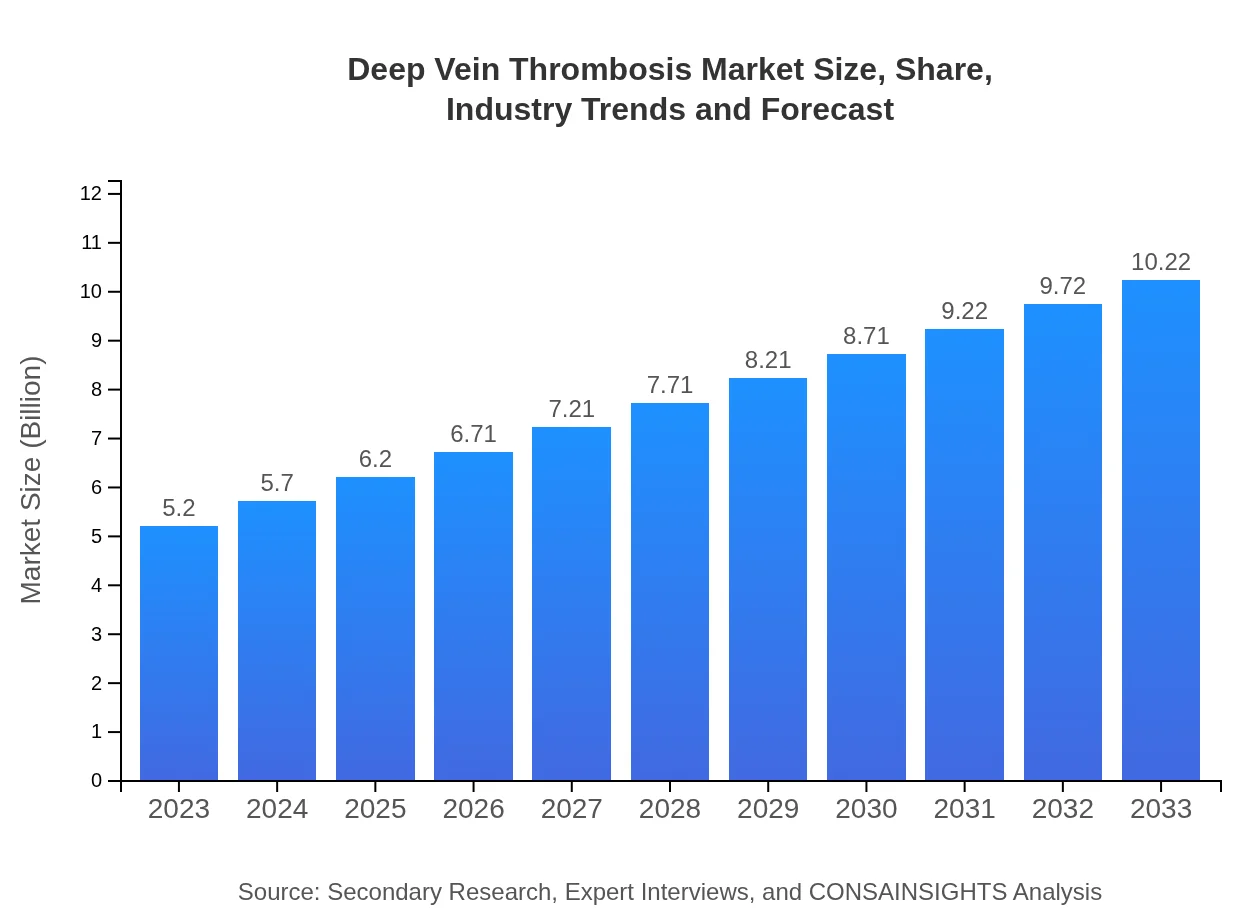
Deep Vein Thrombosis Market Overview
Customize Deep Vein Thrombosis Market Report market research report
- ✔ Get in-depth analysis of Deep Vein Thrombosis market size, growth, and forecasts.
- ✔ Understand Deep Vein Thrombosis's regional dynamics and industry-specific trends.
- ✔ Identify potential applications, end-user demand, and growth segments in Deep Vein Thrombosis
What is the Market Size & CAGR of Deep Vein Thrombosis Market Report market in 2023?
Deep Vein Thrombosis Industry Analysis
Deep Vein Thrombosis Market Segmentation and Scope
Tell us your focus area and get a customized research report.
Deep Vein Thrombosis Market Report Market Analysis Report by Region
Europe Deep Vein Thrombosis Market Report:
Europe grows from $1.28 Billion in 2023 to $2.52 Billion in 2033. Growth is underpinned by enhanced clinical awareness, accessibility to diagnostic imaging, and wider implementation of prevention and treatment protocols across healthcare systems.Asia Pacific Deep Vein Thrombosis Market Report:
Asia Pacific grows from $1 Billion in 2023 to $1.96 Billion in 2033. Regional drivers include rising awareness of risk factors, expansion of care delivery settings, and adoption of digital health tools and diagnostics improving early detection and treatment.North America Deep Vein Thrombosis Market Report:
North America is largest regional market, rising from $1.86 Billion in 2023 to $3.66 Billion in 2033. Regional expansion reflects improved diagnostic infrastructure, clinical adoption of novel therapies, and concentrated healthcare investment supporting DVT detection and management.South America Deep Vein Thrombosis Market Report:
Latin America grows from $0.48 Billion in 2023 to $0.94 Billion in 2033. Market movement is influenced by increasing healthcare access, growing recognition of DVT risks, and gradual uptake of diagnostic and therapeutic options.Middle East & Africa Deep Vein Thrombosis Market Report:
Middle East and Africa grows from $0.58 Billion in 2023 to $1.15 Billion in 2033. Growth is supported by investment in diagnostic services, expanding care settings, and heightened focus on managing DVT risk factors across patient populations.Tell us your focus area and get a customized research report.
Research Methodology
Deep Vein Thrombosis Market Analysis By Treatment Type
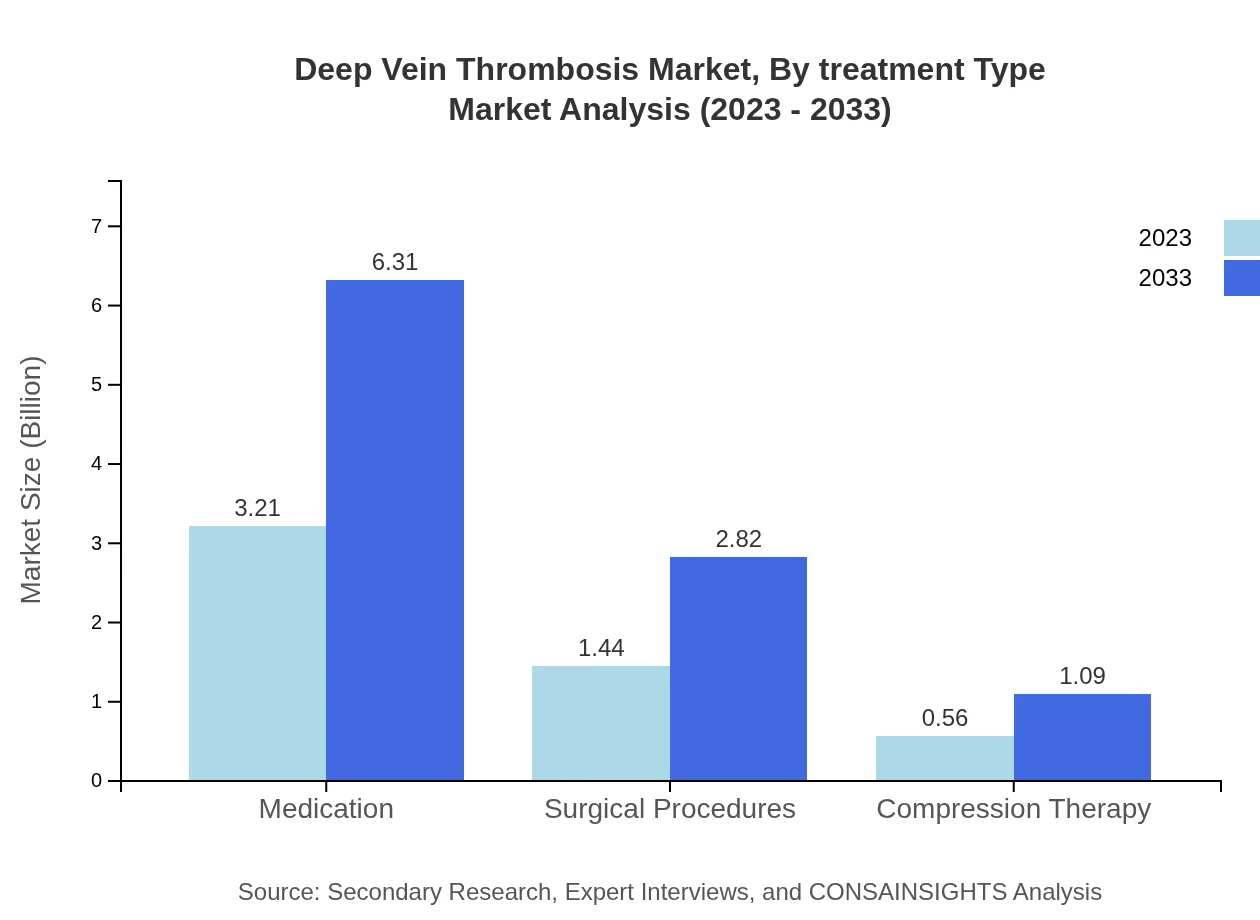
The treatment type segment reveals significant revenue generation, with pharmacological preventive measures showing dominance at $4.59 billion in 2023, anticipated to double by 2033. Surgical procedures follow, allowed growth due to rising cases requiring surgical intervention.
Deep Vein Thrombosis Market Analysis By Diagnosis Methods
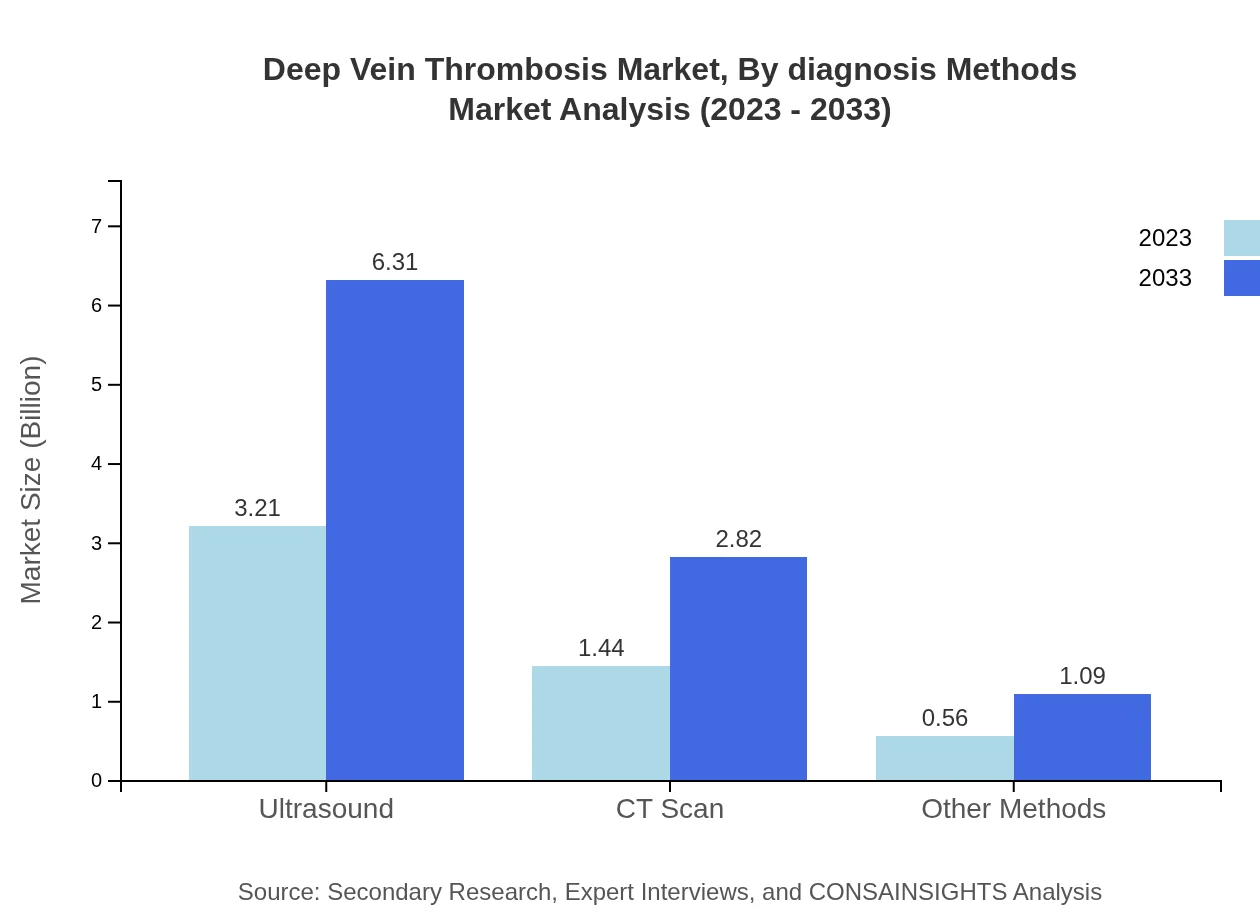
Among diagnosis methods, ultrasound represents the leading technology with a market size of $3.21 billion in 2023, while the CT scan segment is also noteworthy. These advancements provide accurate risk assessment, crucial in managing DVT.
Deep Vein Thrombosis Market Analysis By End User
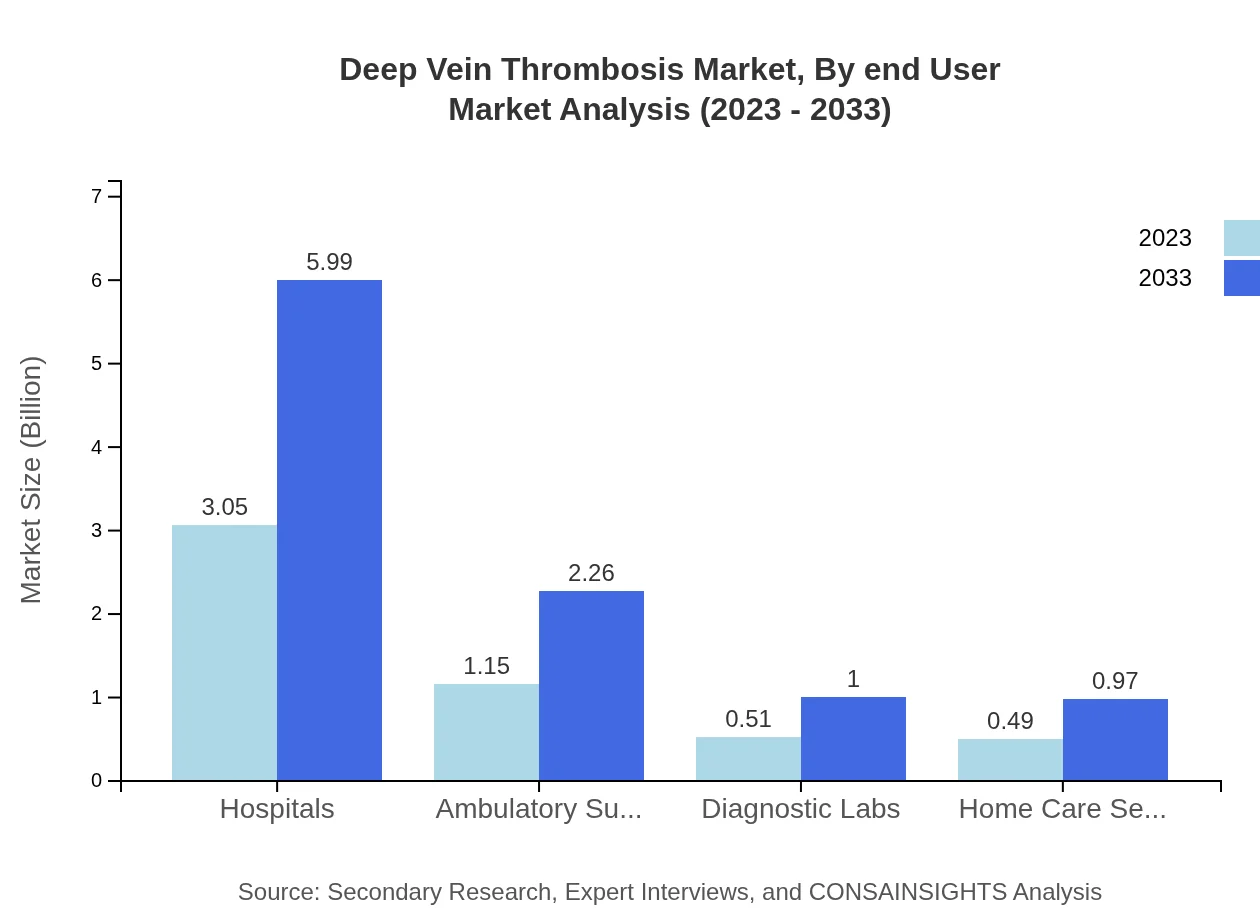
The market by end-users is significantly dominated by hospitals, accounting for $3.05 billion in 2023, indicating the pivotal role hospitals play in DVT management and the broad spectrum of services offered.
Deep Vein Thrombosis Market Analysis By Prevention
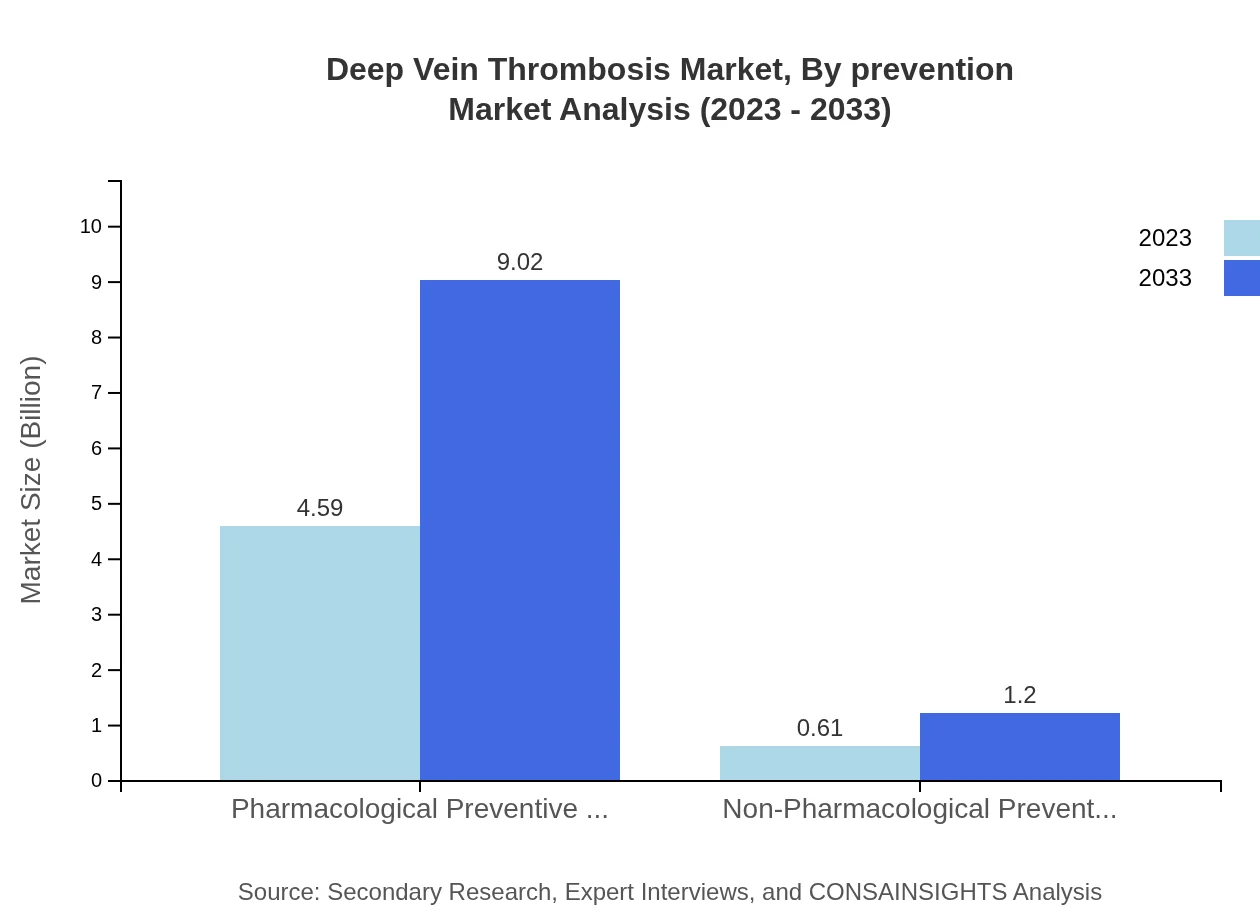
Pharmacological preventive measures lead this segment at $4.59 billion in 2023, representing 88.22% market share, emphasizing the focus on drug interventions for DVT prevention.
Deep Vein Thrombosis Market Trends and Future Forecast
Tell us your focus area and get a customized research report.
Global Market Leaders and Top Companies in Deep Vein Thrombosis Industry
Bayer AG:
Bayer AG is a global leader in pharmaceuticals, providing various antithrombotic drugs and contributing to DVT management through innovation and patient education.Boehringer Ingelheim:
Known for its novel oral anticoagulants, Boehringer Ingelheim continues to make significant impacts in the DVT treatment landscape through research and development.Medtronic plc:
Medtronic specializes in innovative medical technologies, focusing on devices and therapies that are essential to the management of DVT.We're grateful to work with incredible clients.









FAQs
What is the market size of the Deep Vein Thrombosis Market Report in 2023?
The market size in 2023 is $5.20 Billion as stated in the report, representing the baseline value for the 2023 to 2033 forecast period.
How big will the Deep Vein Thrombosis Market Report be in 2033?
By 2033 the market is projected to reach $10.22 Billion according to the forecast provided, reflecting growth across treatments, diagnostics, and technologies.
What is CAGR for the Deep Vein Thrombosis Market Report?
The reported compound annual growth rate (CAGR) for the 2023 to 2033 period is 6.8%, describing the average annual expansion of market value.
Is there a single fastest Growing region in the Deep Vein Thrombosis Market Report market?
No single fastest-growing region is stated for the Deep Vein Thrombosis Market Report market because the top regional implied CAGR values are within 0.15 percentage points of each other, making the ranking too close to call reliably.
Which companies are highlighted in the competitive landscape?
The report lists Bayer AG, Boehringer Ingelheim, and Medtronic plc among top companies shaping the Deep Vein Thrombosis market through products and partnerships.
Who contributed to the research methodology?
Research incorporates primary interviews with industry experts and secondary sources such as company reports and publications, combined with data triangulation and validation.
What are primary prevention categories covered?
Prevention strategies in the report include pharmacological preventive measures and non-pharmacological preventive measures as distinct subsegments.
How are diagnosis methods categorized in the report?
Diagnosis methods are grouped by Ultrasound, CT Scan, and Other Methods, reflecting common clinical approaches included in the segmentation.
What end User segments does the report examine?
End-user segmentation covers Hospitals, Ambulatory Surgical Centers, Diagnostic Labs, and Home Care Settings to map where DVT services are delivered.
Why are technology solutions included in the analysis?
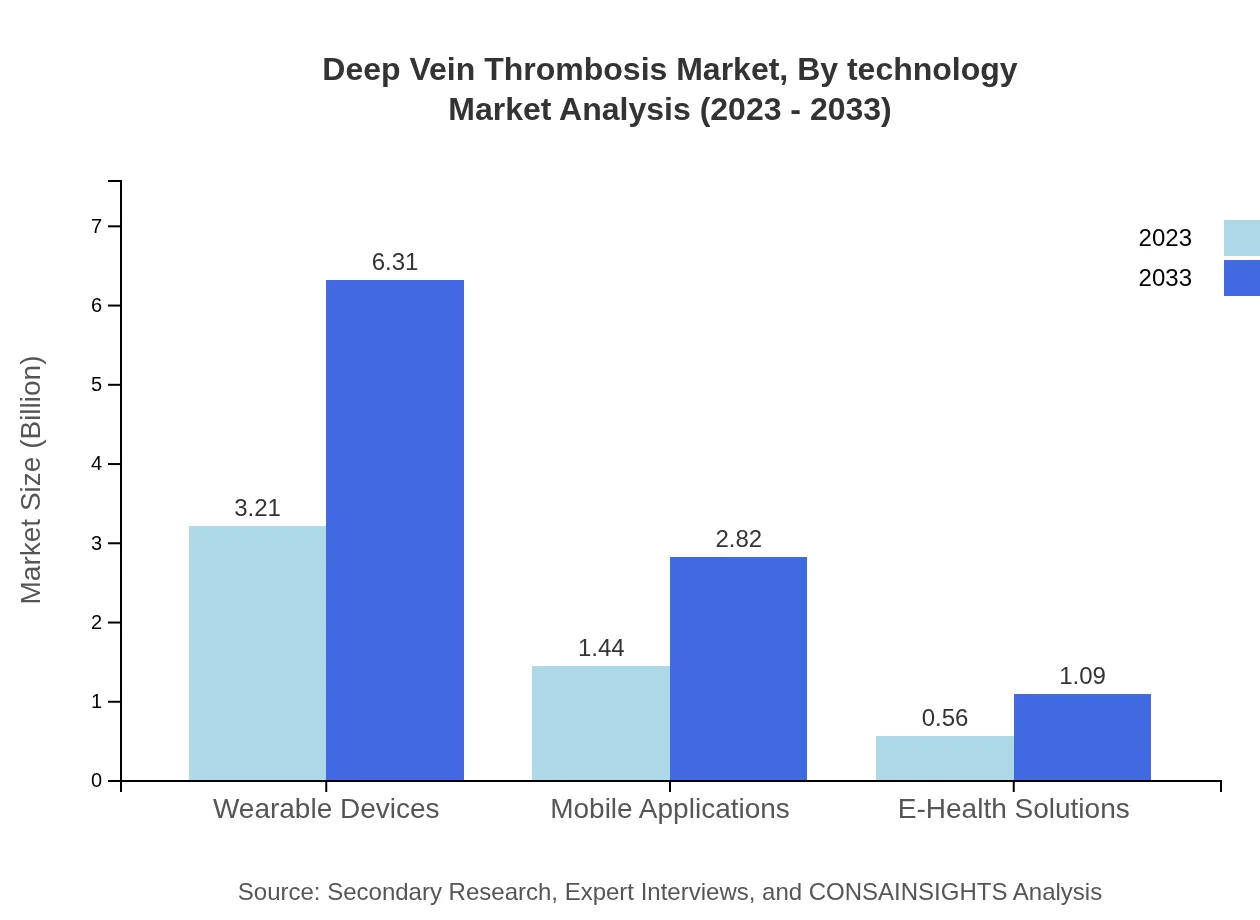
The inclusion of wearable devices, mobile applications, and e-health solutions reflects their growing role in monitoring, prevention, and patient engagement for DVT care.