

Infertility Drugs Market Report
First published: 21 October 2024 | Last updated: 25 May 2026 | Report Code: infertility-drugs
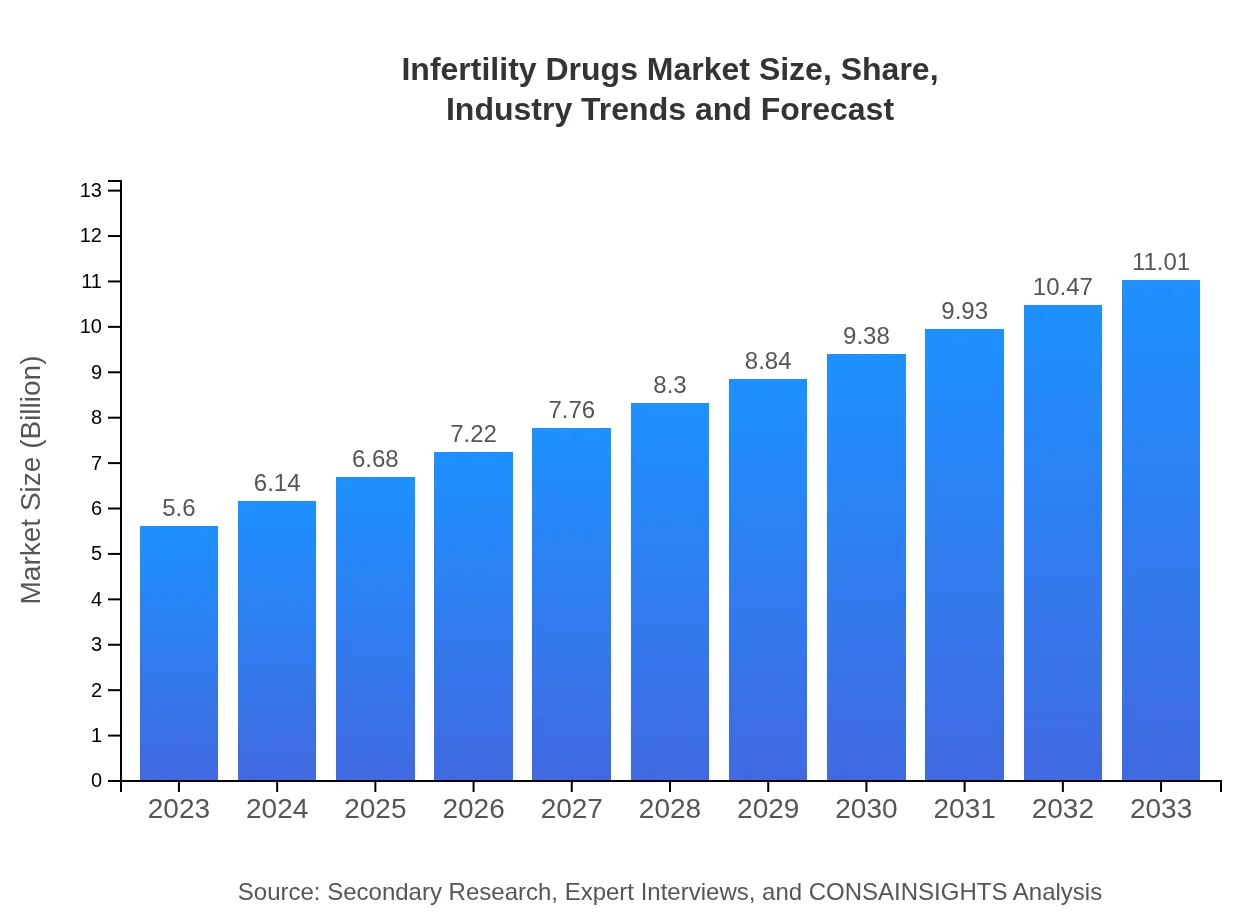
Infertility Drugs Market — USD 5.6 billion in 2023, Growing to USD 11.01B by 2033 at 6.8% CAGR
This report explores the Infertility Drugs market, providing insights into its size, growth trends, and forecasts from 2023 to 2033, along with analyses of industry performance and leading players.
Key Takeaways
- Global market value rising from $5.60 Billion in 2023 to $11.01 Billion in 2033, with a CAGR of 6.8%.
- Europe is largest regional market, while no single fastest-growing region is stated because regional CAGR differences remain within 0.15 percentage points.
- North America grows from $1.92 Billion in 2023 to $3.76 Billion in 2033, reflecting strong regional demand.
- Segmentation spans hormonal and non-hormonal drugs, IUI and IVF treatments, and multiple administration routes.
- Leading companies active include Merck KGaA, Ferring Pharmaceuticals, Bristol-Myers Squibb, Teva Pharmaceuticals and AbbVie.
Infertility Drugs Market Report — Executive Summary
Europe remains largest market by forecast-period value, while no single fastest-growing region is stated because top regional growth rates are separated by less than 0.15 percentage points. This report examines the Infertility Drugs Market from 2023 to 2033, documenting growth from $5.60 Billion to $11.01 Billion at a 6.8% CAGR. Expansion is driven by a rising need for reproductive healthcare, wider awareness of infertility treatments, and technological progress in fertility therapeutics and clinic capabilities. The analysis covers product types (hormonal and non-hormonal), treatment approaches (IUI and IVF), administration routes (oral, injection, nasal), and end-users such as hospitals and home care. Geographic breakdown highlights Europe as the largest market, with detailed figures for North America, Asia Pacific, Latin America, and Middle East & Africa. Competitive assessment profiles major players including Merck KGaA, Ferring Pharmaceuticals, Bristol-Myers Squibb, Teva Pharmaceuticals and AbbVie. Methodology blends expert interviews, company documentation and data triangulation to validate trends and regional dynamics, while also noting challenges like regulatory complexity and treatment costs that could influence adoption rates.
Key Growth Drivers
- Increasing awareness and diagnosis of infertility driving higher demand for pharmaceutical interventions.
- Technological improvements and treatment protocols enhancing the effectiveness of assisted reproductive therapies.
- Expansion of fertility services and clinic capabilities supporting greater drug utilization across regions.
- Ongoing R&D and regulatory approvals enabling new therapeutic options and broader patient access.
- Rising patient preference for outpatient and home-based care influencing distribution and administration patterns.
| Metric | Value |
|---|---|
| Study Period | 2023 - 2033 |
| 2023 Market Size | $5.60 Billion |
| CAGR (2023-2033) | 6.8% |
| 2033 Market Size | $11.01 Billion |
| Top Companies | Merck KGaA, Ferring Pharmaceuticals, Bristol-Myers Squibb, Teva Pharmaceuticals, AbbVie |
| Published Date | 21 October 2024 |
| Last Modified Date | 25 May 2026 |
Infertility Drugs Market Overview
Customize Infertility Drugs Market Report market research report
- ✔ Get in-depth analysis of Infertility Drugs market size, growth, and forecasts.
- ✔ Understand Infertility Drugs's regional dynamics and industry-specific trends.
- ✔ Identify potential applications, end-user demand, and growth segments in Infertility Drugs
What is the Market Size & CAGR of Infertility Drugs Market Report market in 2023?
Infertility Drugs Industry Analysis
Infertility Drugs Market Segmentation and Scope
Tell us your focus area and get a customized research report.
Infertility Drugs Market Report Market Analysis Report by Region
Europe Infertility Drugs Market Report:
Europe is largest regional market, rising from $1.96 Billion in 2023 to $3.85 Billion in 2033. Growth reflects expanding access to reproductive healthcare, evolving treatment protocols and investments in fertility clinics across multiple countries.Asia Pacific Infertility Drugs Market Report:
Asia Pacific grows from $0.96 Billion in 2023 to $1.89 Billion in 2033. This expansion is driven by rising awareness of fertility options, improving healthcare access, and increased availability of assisted reproductive services in urban centers.North America Infertility Drugs Market Report:
North America grows from $1.92 Billion in 2023 to $3.76 Billion in 2033. Regional demand is supported by advanced fertility services, significant clinic infrastructure, and awareness that encourages utilization of pharmacological treatments and assisted reproduction.South America Infertility Drugs Market Report:
Latin America grows from $0.52 Billion in 2023 to $1.03 Billion in 2033. Market expansion is linked to growing patient awareness, gradual improvements in fertility service availability, and wider adoption of clinical treatment pathways.Middle East & Africa Infertility Drugs Market Report:
Middle East and Africa grows from $0.24 Billion in 2023 to $0.47 Billion in 2033. Growth factors include improving reproductive health services, expanding clinic networks in key markets, and rising recognition of infertility treatment options.Tell us your focus area and get a customized research report.
Research Methodology
Infertility Drugs Market Analysis By Drug Type
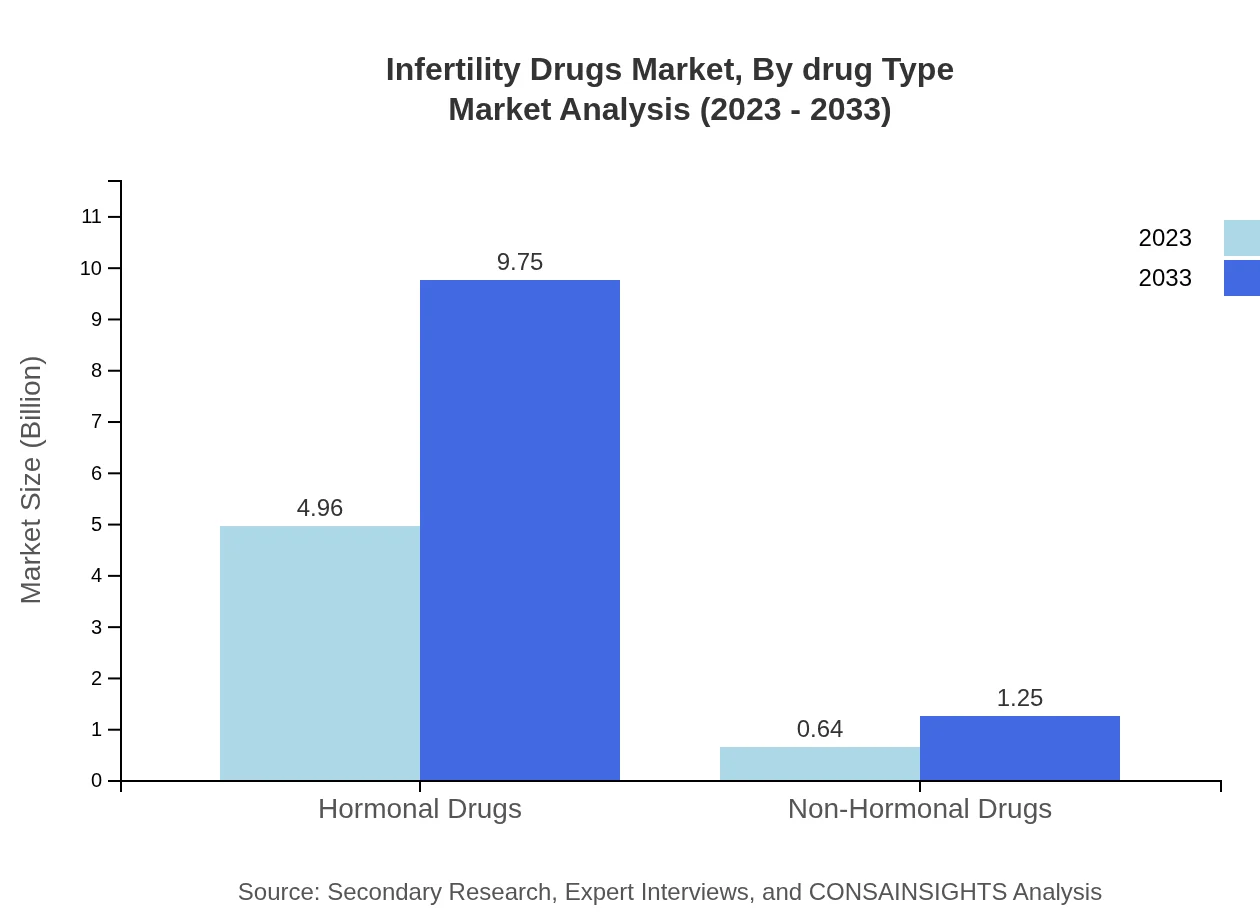
The infertility drugs are primarily segmented into hormonal and non-hormonal types. Hormonal drugs represent a significant share, poised to grow from 4.96 billion USD in 2023 to 9.75 billion USD by 2033, accounting for 88.61% of the market share. Non-hormonal drugs are also gaining traction, with their market size expected to increase from 0.64 billion USD to 1.25 billion USD over the same period, representing 11.39% market share.
Infertility Drugs Market Analysis By Treatment Type
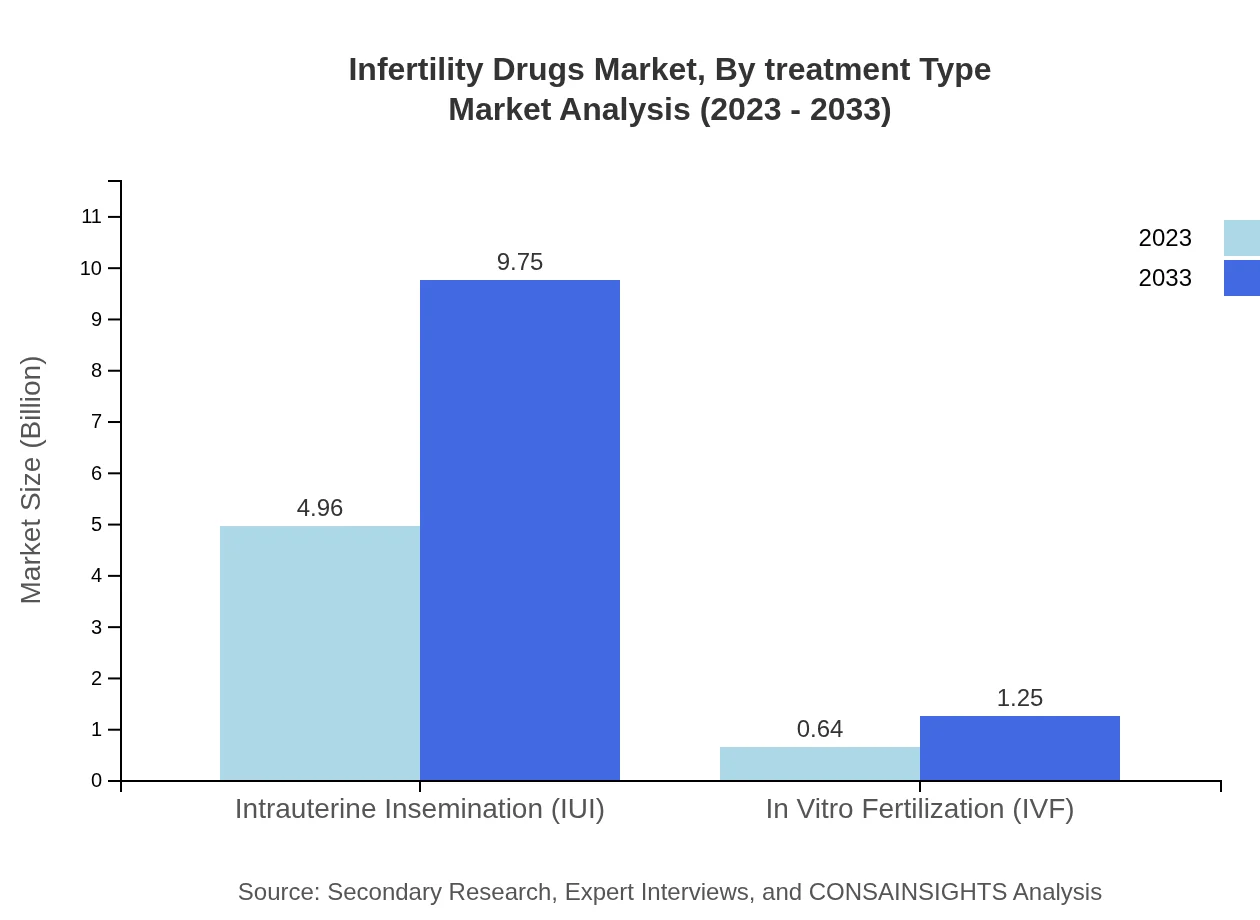
Intrauterine Insemination (IUI) will continue to dominate the market, moving from 4.96 billion USD in 2023 to 9.75 billion USD by 2033, capturing 88.61% of the treatment share. In Vitro Fertilization (IVF) treatment, although smaller, is emerging, with projections of growth from 0.64 billion USD to 1.25 billion USD, accounting for 11.39% share.
Infertility Drugs Market Analysis By Route Of Administration
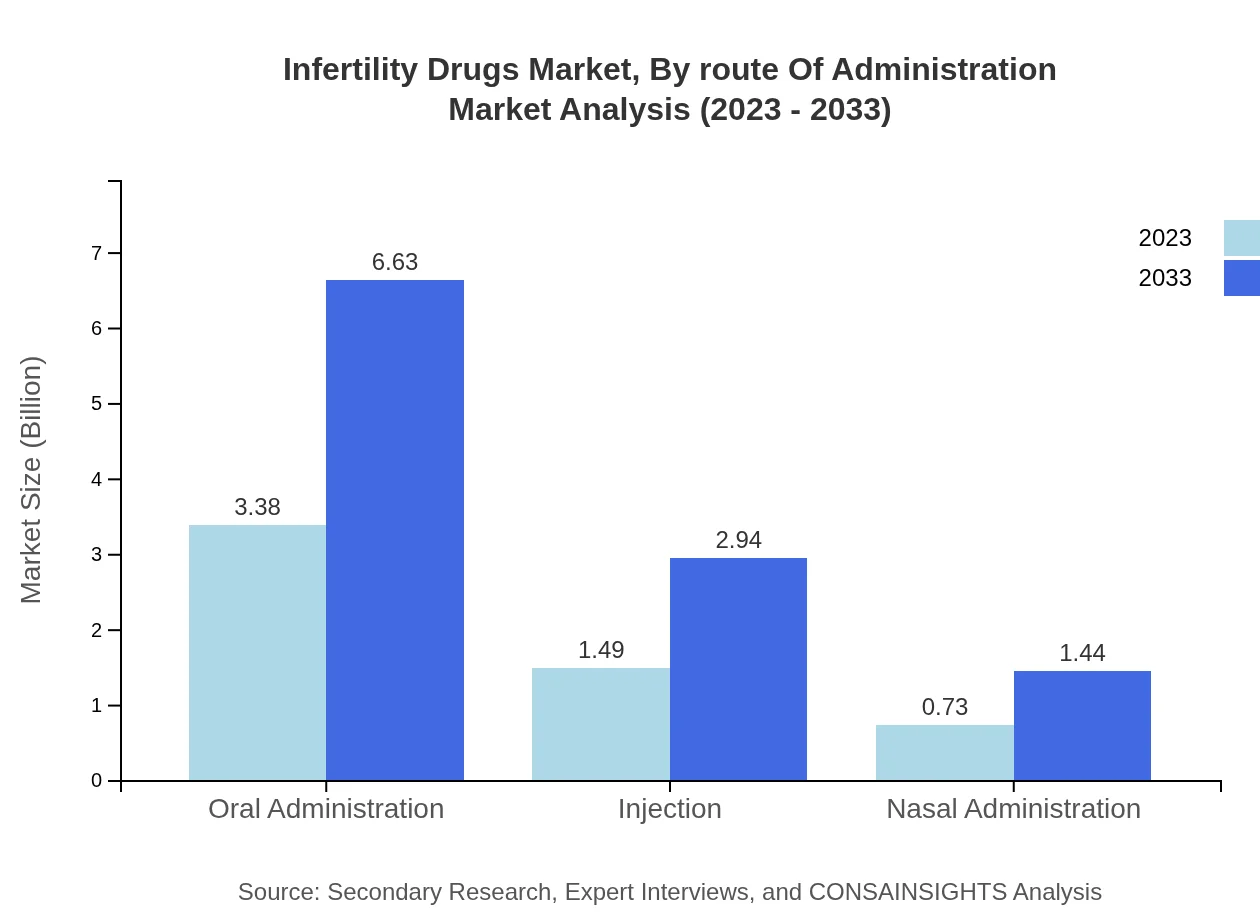
The oral administration route is expected to maintain its lead, growing from 3.38 billion USD in 2023 to 6.63 billion USD in 2033, representing a 60.27% market share. The injection route is anticipated to grow moderately, projected to rise from 1.49 billion USD to 2.94 billion USD, accounting for 26.68% share. Nasal administration is growing steadily, from 0.73 billion USD to 1.44 billion USD, encompassing 13.05% of the market.
Infertility Drugs Market Analysis By End User
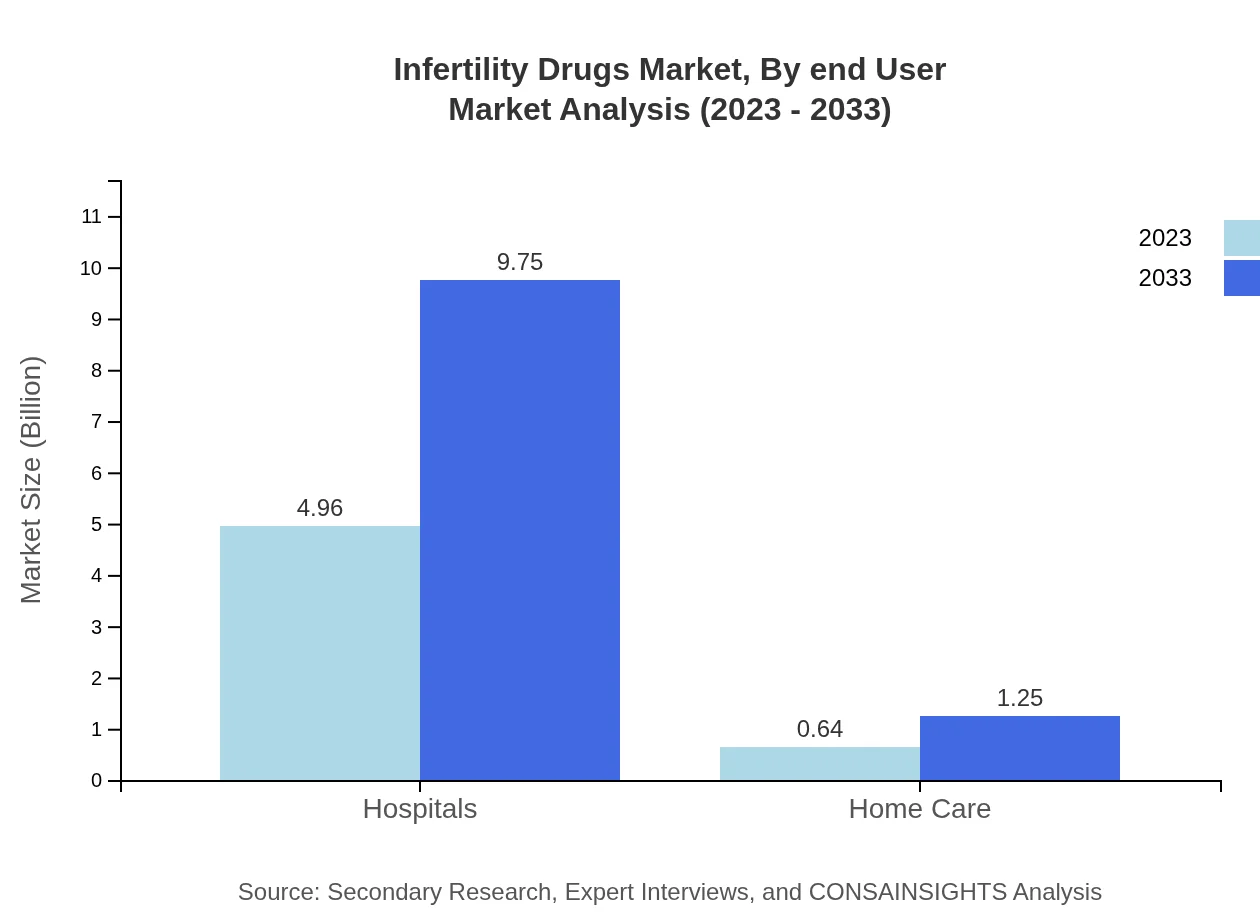
Hospitals are the leading end-users, with market sizes expected to rise from 4.96 billion USD in 2023 to 9.75 billion USD by 2033, maintaining 88.61% share. Home care settings are also anticipated to grow, with projected revenue increases from 0.64 billion USD to 1.25 billion USD, holding a share of 11.39%.
Infertility Drugs Market Analysis By Region Impact
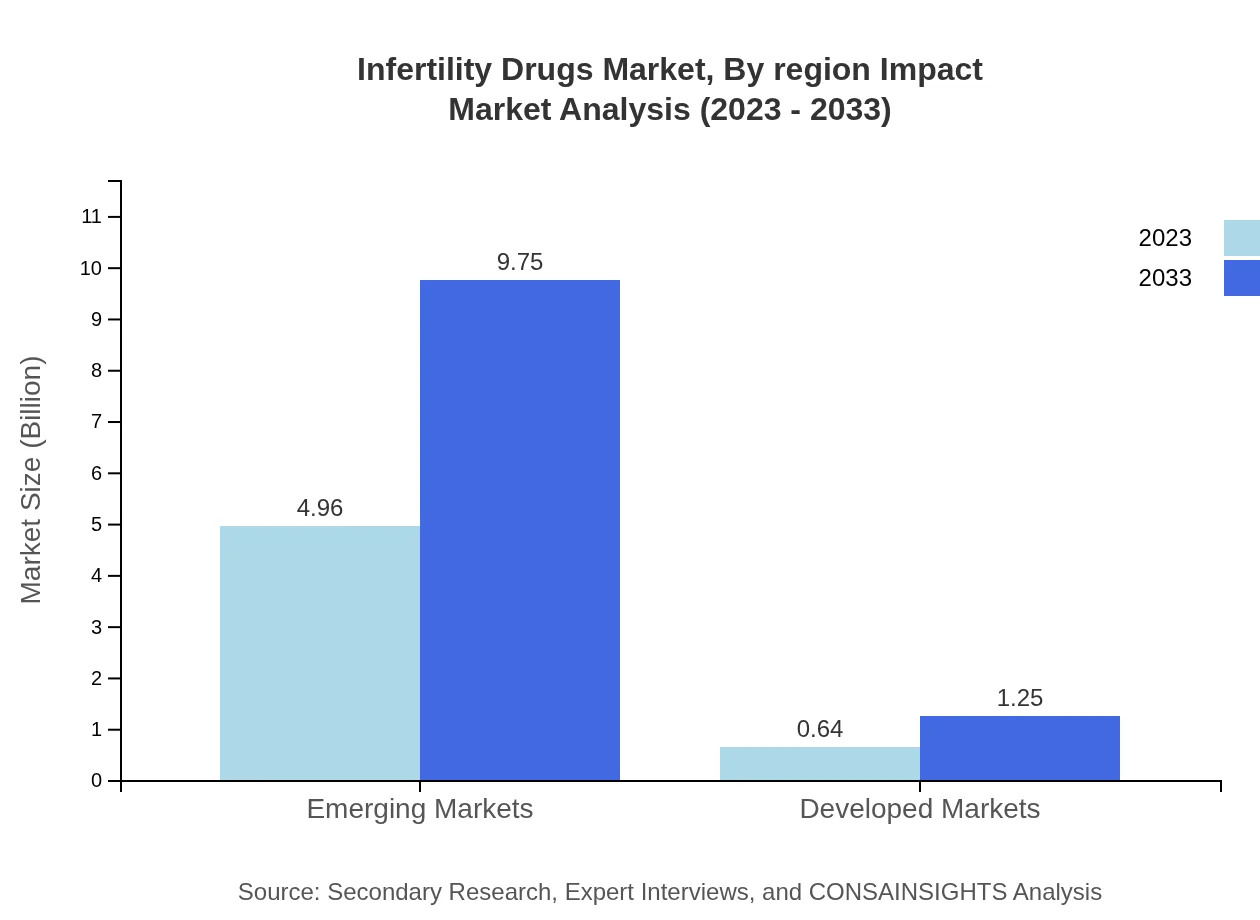
The regional impact on the infertility drugs market varies significantly, influenced by factors such as socio-cultural attitudes towards fertility, healthcare policy, availability of advanced reproductive technologies, and economic conditions. North America and Europe lead due to advanced health infrastructure, while regions like Asia Pacific are rapidly catching up due to improved access and growing awareness.
Infertility Drugs Market Trends and Future Forecast
Tell us your focus area and get a customized research report.
Global Market Leaders and Top Companies in Infertility Drugs Industry
Merck KGaA:
A leading global player in reproductive health, offering a range of fertility medications and innovative solutions to enhance fertility treatments.Ferring Pharmaceuticals:
Specializes in reproductive medicine and women’s health, committed to improving treatment for infertility through research and extensive product offerings.Bristol-Myers Squibb:
Develops a range of infertility drugs, focusing on emerging therapies that address major causes of infertility.Teva Pharmaceuticals:
Notable for their extensive portfolio in hormonal treatments, Teva is a prominent supplier in the infertility drug market.AbbVie:
Offers unique solutions in fertility treatments and continues to invest in R&D to provide innovative therapies.We're grateful to work with incredible clients.









FAQs
What is the market size of the Infertility Drugs Market Report in 2023?
The market size in 2023 is $5.60 Billion, as reported for the Infertility Drugs Market Report and used as the baseline for the 2023 to 2033 projection period.
What is the projected market size of the Infertility Drugs Market Report in 2033?
By 2033 the market is projected to reach $11.01 Billion according to the report’s forecast covering the 2023 to 2033 period and noted growth drivers.
What is CAGR of the Infertility Drugs Market Report for 2023 to 2033?
The reported compound annual growth rate (CAGR) for the 2023 to 2033 forecast is 6.8%, reflecting the market trajectory between the stated start and end values.
Is there a single fastest Growing region in the Infertility Drugs Market Report market?
No single fastest-growing region is stated for the Infertility Drugs Market Report market because the top regional implied CAGR values are within 0.15 percentage points of each other, making the ranking too close to call reliably.
Which companies lead the Infertility Drugs Market Report landscape?
Top companies listed in the report include Merck KGaA, Ferring Pharmaceuticals, Bristol-Myers Squibb, Teva Pharmaceuticals and AbbVie among others active in this sector.
Why is demand rising in the Infertility Drugs Market Report?
Demand is increasing due to broader awareness of reproductive health, advancements in fertility treatments, and greater availability of assisted reproductive services globally.
What treatment types are covered in the Infertility Drugs Market Report?
The report covers treatment types including Intrauterine Insemination (IUI) and In Vitro Fertilization (IVF), as well as related pharmacological approaches.
Who are the primary end Users in the Infertility Drugs Market Report?
Primary end-users identified include hospitals and home care settings, which are noted as key channels for drug administration and patient management.
How big is North America in the Infertility Drugs Market Report?
North America is reported to grow from $1.92 Billion in 2023 to $3.76 Billion in 2033, reflecting its quantified regional development over the forecast interval.