

Fetal Labor Delivery And Neonatal Care Equipment Market Report
First published: 21 October 2024 | Last updated: 25 May 2026 | Report Code: fetal-labor-delivery-and-neonatal-care-equipment
Fetal Labor Delivery And Neonatal Care Equipment Market — USD 12.3 billion in 2023, Growing to USD 23.94B by 2033 at 6.7% CAGR
This report provides a comprehensive analysis of the Fetal Labor Delivery and Neonatal Care Equipment market, including market trends, segmentation, regional insights, and forecasts from 2023 to 2033.
Key Takeaways
- Global market expands from $12.30 Billion in 2023 to $23.94 Billion in 2033 at a 6.7% CAGR.
- North America is largest regional market, while no single fastest-growing region is stated because regional CAGR differences remain within 0.15 percentage points.
- Europe moves from $3.41 Billion in 2023 to $6.64 Billion in 2033, reflecting steady investment in maternal and neonatal care.
- Asia Pacific grows from $2.35 Billion in 2023 to $4.58 Billion in 2033, supported by rising healthcare access.
- Key industry participants include General Electric Company, Philips Healthcare, Medtronic, Siemens Healthineers, and Fisher & Paykel Healthcare.
Fetal Labor Delivery And Neonatal Care Equipment Market Report — Executive Summary
North America remains largest market by forecast-period value, while no single fastest-growing region is stated because top regional growth rates are separated by less than 0.15 percentage points. Demand for fetal monitoring, delivery apparatus, and neonatal support systems is reinforcing market expansion between 2023 and 2033. The sector is propelled by heightened awareness of maternal and infant health, advancements in digital monitoring technologies, and public-private initiatives supporting maternal care infrastructure. Product categories span monitoring devices, delivery equipment, and neonatal care devices, while end users include hospitals, maternity clinics, and home care settings. Distribution channels comprise direct sales, distributors, and online retail. Regulatory scrutiny and ongoing innovation are shaping competitive dynamics; leading vendors such as General Electric Company, Philips Healthcare, Medtronic, Siemens Healthineers, and Fisher & Paykel Healthcare are focusing on research and product enhancements to address clinical needs and integration of digital platforms.
Key Growth Drivers
- Rising awareness of maternal and neonatal health increases demand for monitoring and neonatal care equipment.
- Advances in digital technologies enable more accurate fetal monitoring and integrated data for clinicians.
- Government programs and public-private collaborations expand access to maternal healthcare infrastructure.
- Shift toward outpatient and home care settings fuels demand for portable and user-friendly devices.
- Continuous R&D by major suppliers enhances product capabilities and clinical adoption.
| Metric | Value |
|---|---|
| Study Period | 2023 - 2033 |
| 2023 Market Size | $12.30 Billion |
| CAGR (2023-2033) | 6.7% |
| 2033 Market Size | $23.94 Billion |
| Top Companies | General Electric Company, Philips Healthcare, Medtronic , Siemens Healthineers, Fisher & Paykel Healthcare |
| Published Date | 21 October 2024 |
| Last Modified Date | 25 May 2026 |
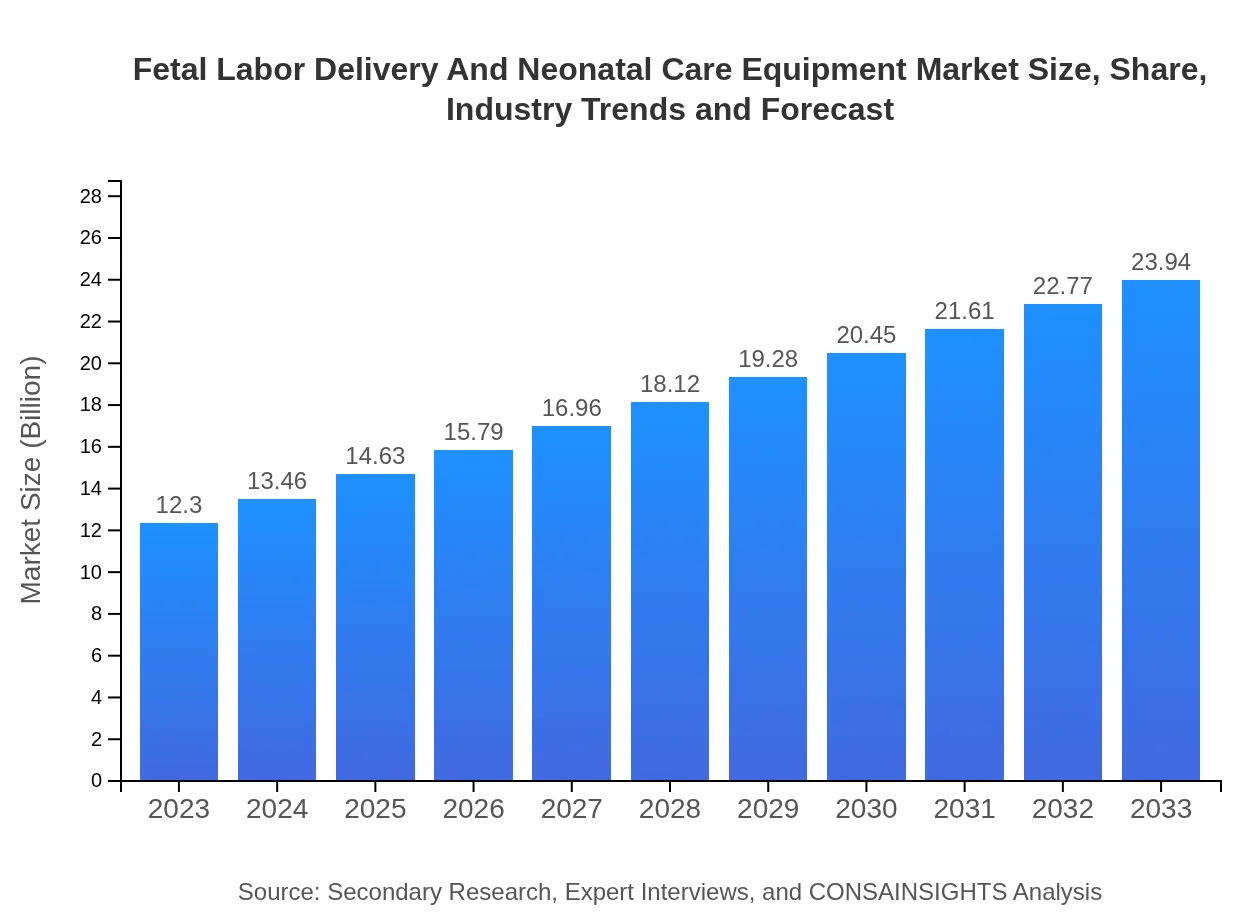
Fetal Labor Delivery And Neonatal Care Equipment Market Overview
Customize Fetal Labor Delivery And Neonatal Care Equipment Market Report market research report
- ✔ Get in-depth analysis of Fetal Labor Delivery And Neonatal Care Equipment market size, growth, and forecasts.
- ✔ Understand Fetal Labor Delivery And Neonatal Care Equipment's regional dynamics and industry-specific trends.
- ✔ Identify potential applications, end-user demand, and growth segments in Fetal Labor Delivery And Neonatal Care Equipment
What is the Market Size & CAGR of Fetal Labor Delivery And Neonatal Care Equipment Market Report market in 2023?
Fetal Labor Delivery And Neonatal Care Equipment Industry Analysis
Fetal Labor Delivery And Neonatal Care Equipment Market Segmentation and Scope
Tell us your focus area and get a customized research report.
Fetal Labor Delivery And Neonatal Care Equipment Market Report Market Analysis Report by Region
Europe Fetal Labor Delivery And Neonatal Care Equipment Market Report:
Europe grows from $3.41 Billion in 2023 to $6.64 Billion in 2033. Regional drivers include enhanced maternal healthcare programs, regulatory frameworks promoting device safety, and investments in neonatal care technologies.Asia Pacific Fetal Labor Delivery And Neonatal Care Equipment Market Report:
Asia Pacific grows from $2.35 Billion in 2023 to $4.58 Billion in 2033. Growth is influenced by expanding healthcare access, rising awareness of maternal health, and greater adoption of monitoring and neonatal care equipment.North America Fetal Labor Delivery And Neonatal Care Equipment Market Report:
North America is largest regional market, rising from $4.65 Billion in 2023 to $9.05 Billion in 2033. The region’s expansion reflects investment in advanced fetal and neonatal monitoring, strong hospital infrastructure, and adoption of integrated clinical technologies; it is identified as the largest regional market.South America Fetal Labor Delivery And Neonatal Care Equipment Market Report:
Latin America grows from $1.16 Billion in 2023 to $2.26 Billion in 2033. Local expansion is tied to improving healthcare delivery, increased investment in maternal and neonatal services, and growing demand for clinical monitoring solutions.Middle East & Africa Fetal Labor Delivery And Neonatal Care Equipment Market Report:
Middle East and Africa grows from $0.73 Billion in 2023 to $1.41 Billion in 2033. Drivers include targeted public health initiatives, strengthened maternal care programs, and gradual adoption of neonatal support technologies.Tell us your focus area and get a customized research report.
Research Methodology
Fetal Labor Delivery And Neonatal Care Equipment Market Analysis By Product
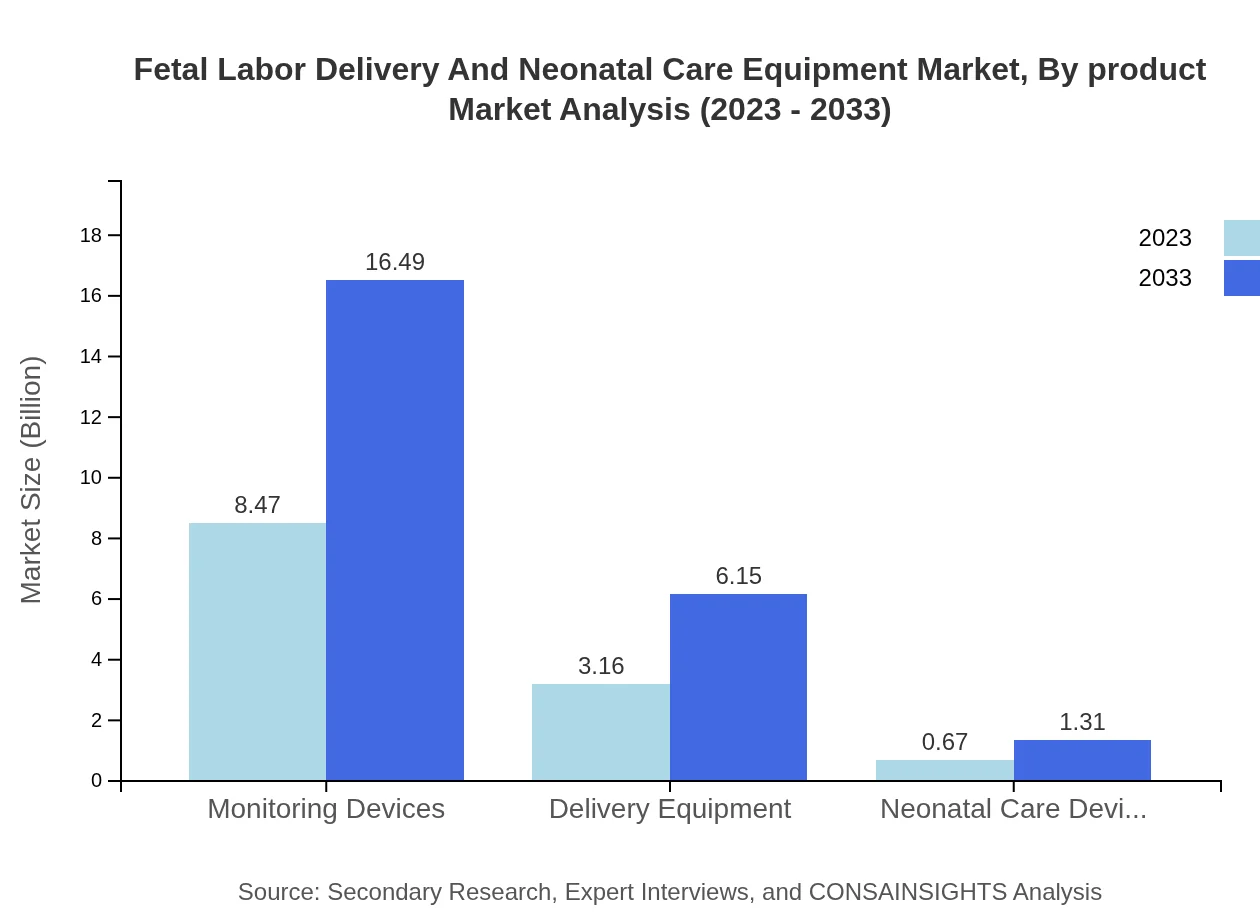
The product segment is led by monitoring devices, valued at $8.47 billion in 2023, and expected to reach $16.49 billion by 2033. Delivery equipment follows, valued at $3.16 billion in 2023, projected to grow to $6.15 billion by 2033. Neonatal care devices, although smaller, are increasingly recognized for their potential, growing from $0.67 billion to $1.31 billion in 10 years.
Fetal Labor Delivery And Neonatal Care Equipment Market Analysis By Application
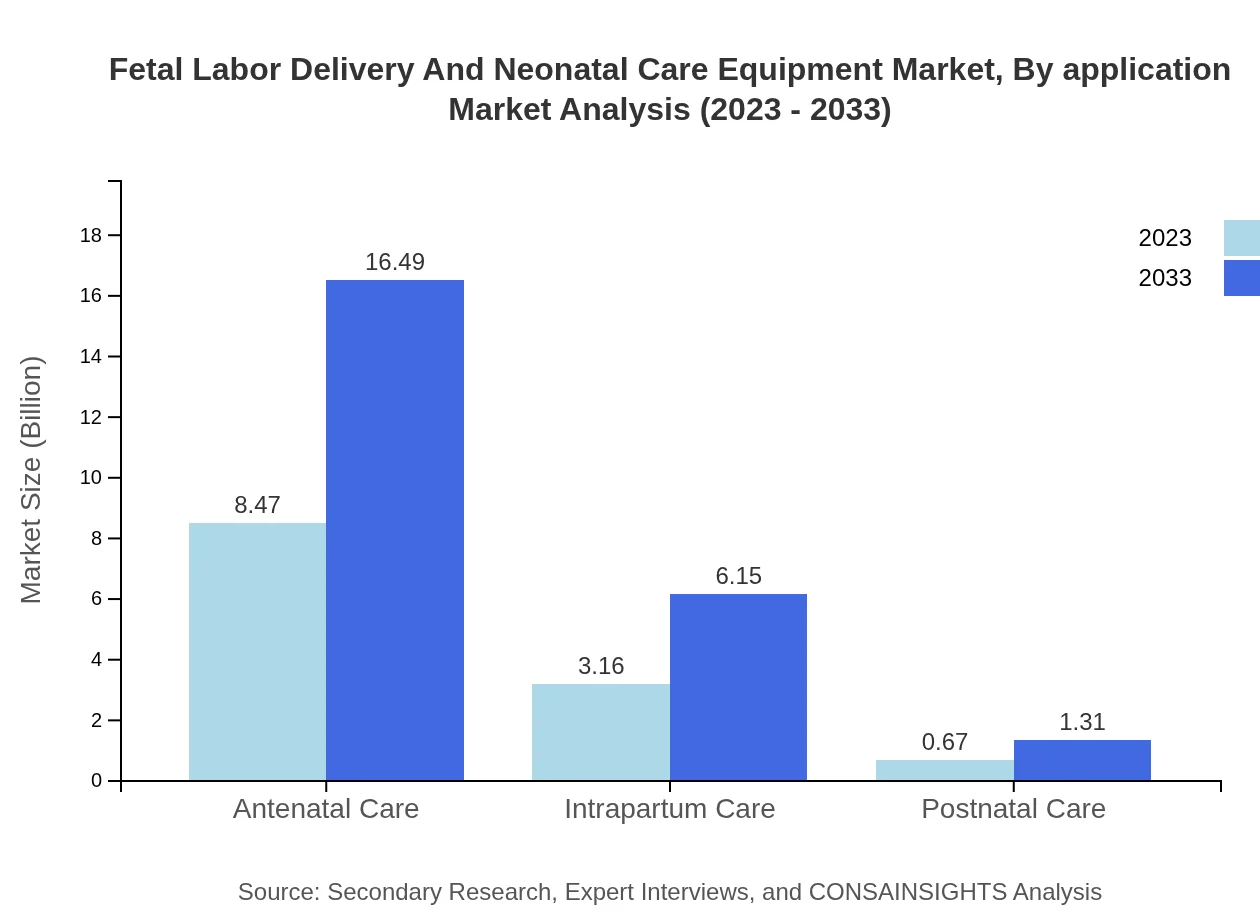
Antenatal care holds a significant portion of the market, generating $8.47 billion in 2023, and growing to $16.49 billion by 2033. Intrapartum care and postnatal care are also critical, with projected growth reflecting increasing healthcare investment and technology integration.
Fetal Labor Delivery And Neonatal Care Equipment Market Analysis By End User
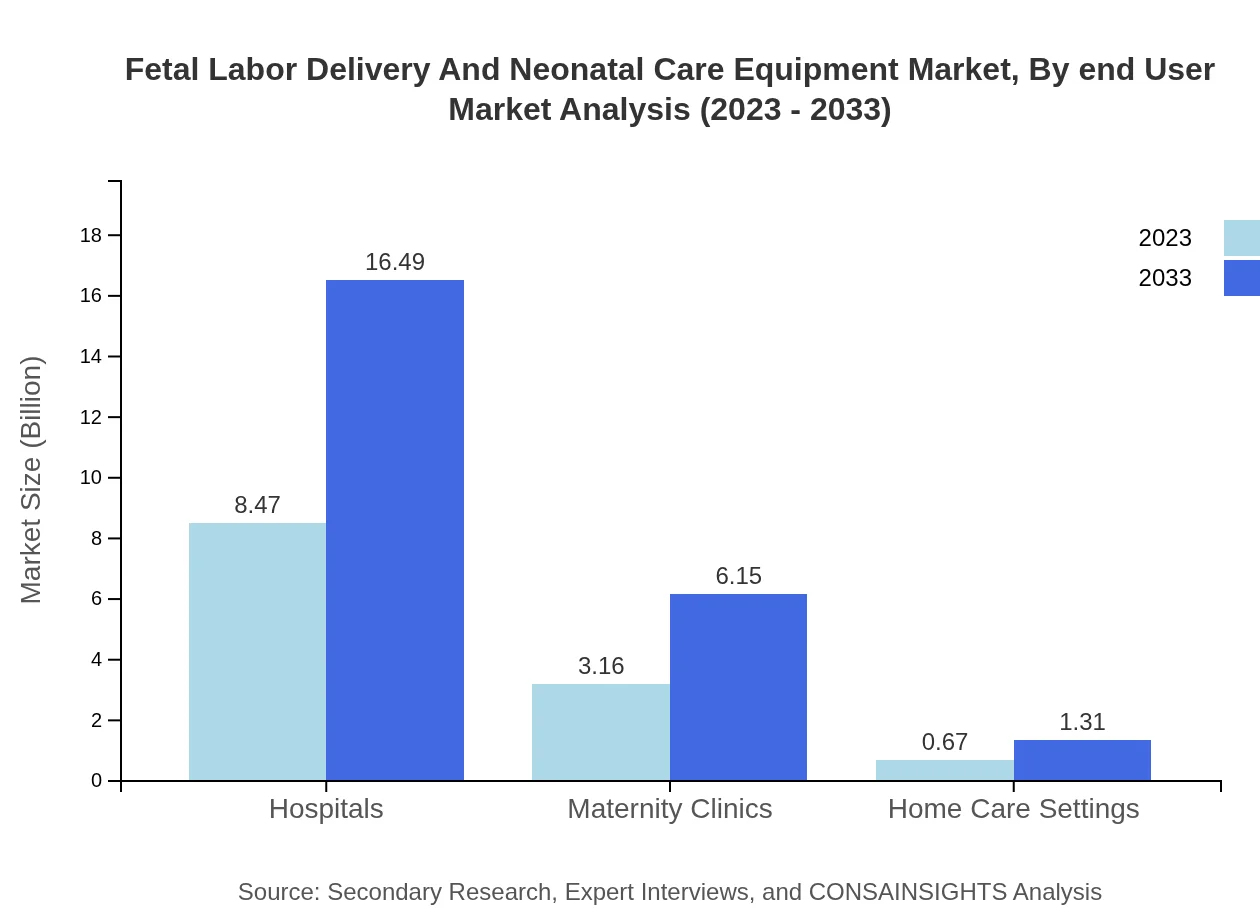
Hospitals dominate the end-user segment, accounting for $8.47 billion in 2023, with an expectation to rise to $16.49 billion by 2033. Maternity clinics and home care settings also exhibit strong growth, reflecting shifting trends in patient care preferences.
Fetal Labor Delivery And Neonatal Care Equipment Market Analysis By Technology
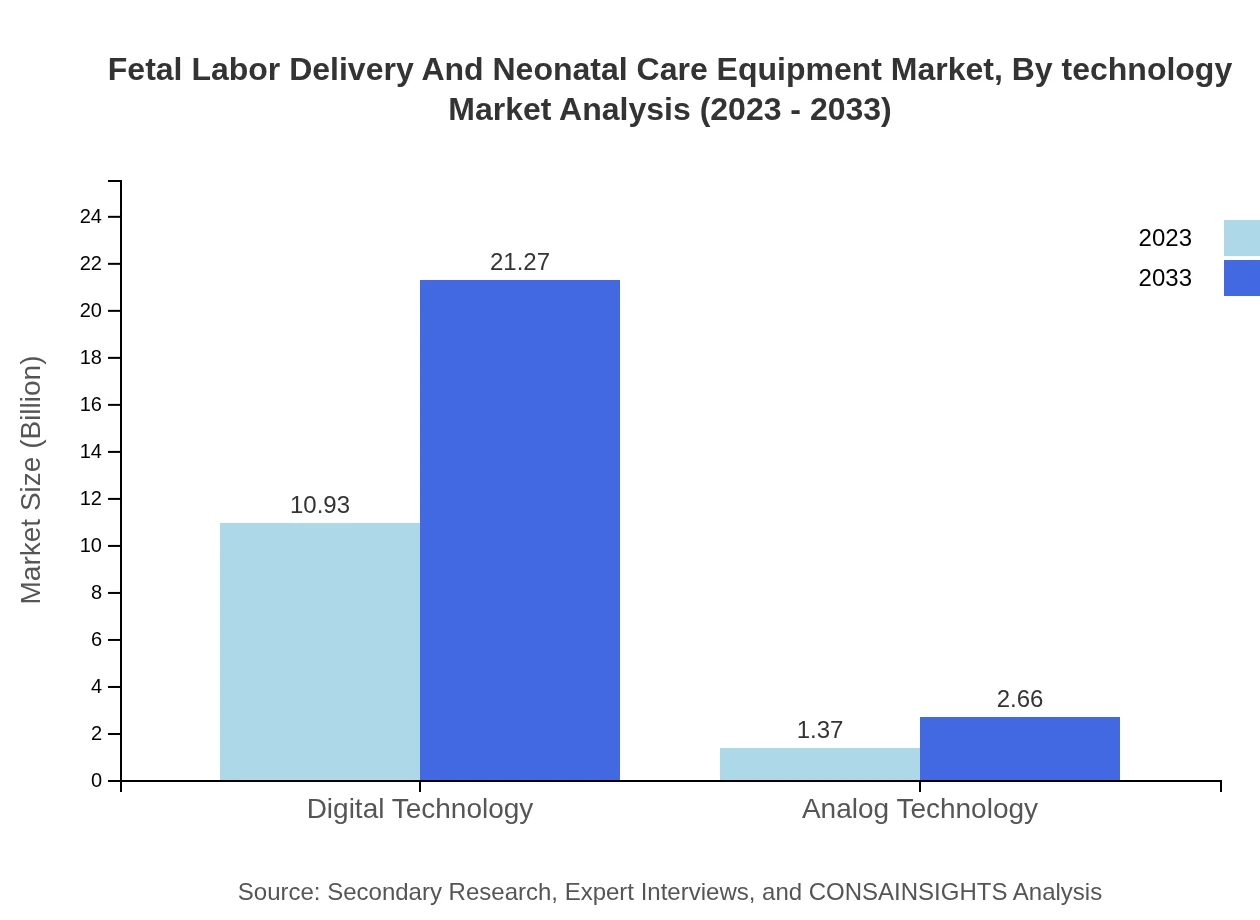
Digital technology represents 88.87% of the market, valued at $10.93 billion in 2023 and expected to expand to $21.27 billion by 2033. Simultaneously, analog technology continues to hold a smaller market share, yet still reflects a demand of $1.37 billion in 2023.
Fetal Labor Delivery And Neonatal Care Equipment Market Analysis By Distribution Channel
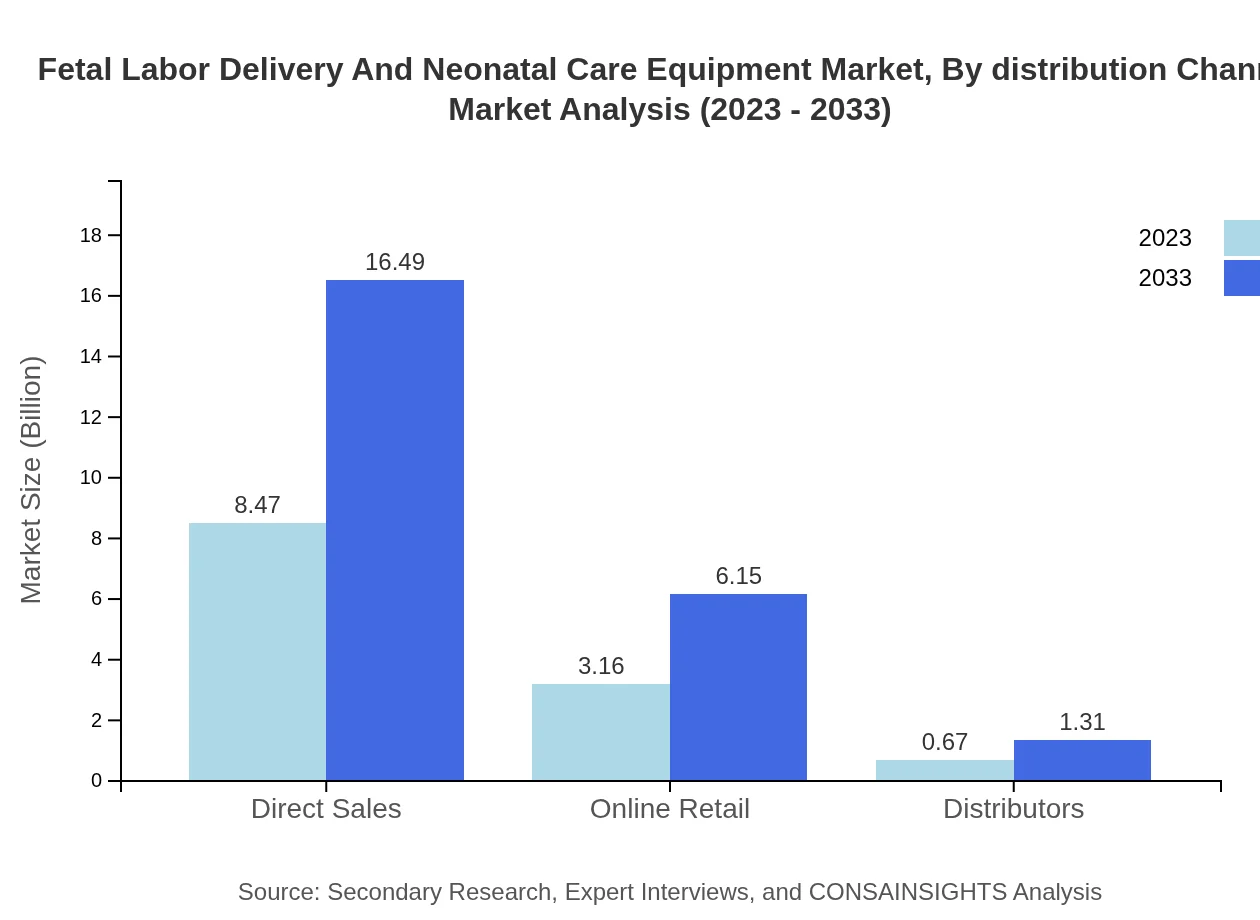
Direct sales channel remains the largest segment at $8.47 billion in 2023, anticipated to reach $16.49 billion by 2033. Online retail and distributors are also gaining momentum, indicating consumer preference changes towards digital purchasing avenues.
Fetal Labor Delivery And Neonatal Care Equipment Market Trends and Future Forecast
Tell us your focus area and get a customized research report.
Global Market Leaders and Top Companies in Fetal Labor Delivery And Neonatal Care Equipment Industry
General Electric Company:
A leading provider of medical imaging and monitoring equipment, General Electric focuses on innovation in maternal and neonatal solutions.Philips Healthcare:
Philips is known for its advanced healthcare technologies, producing a wide range of fetal monitoring and neonatal care devices.Medtronic :
Medtronic offers various products for labor, delivery, and neonatal care, emphasizing patient safety and effective medical solutions.Siemens Healthineers:
With a strong commitment to research and development, Siemens Healthineers is recognized for its medical imaging and laboratory diagnostics.Fisher & Paykel Healthcare:
Fisher & Paykel specializes in respiratory care and neonatal support equipment, driving innovations in care for newborns.We're grateful to work with incredible clients.









FAQs
What is the market size in 2023?
The market size in 2023 is $12.30 Billion, as reported for the Fetal Labor Delivery And Neonatal Care Equipment Market Report.
What is the expected market size in 2033?
The market is projected to reach $23.94 Billion by 2033, according to the forecast presented in the report.
What is CAGR for the forecast period?
The forecast period from 2023 to 2033 carries a compound annual growth rate (CAGR) of 6.7% for this market.
Is there a single fastest Growing region in the Fetal Labor Delivery And Neonatal Care Equipment Market Report market?
No single fastest-growing region is stated for the Fetal Labor Delivery And Neonatal Care Equipment Market Report market because the top regional implied CAGR values are within 0.15 percentage points of each other, making the ranking too close to call reliably.
How big is the Europe market in 2033?
Europe is reported to reach $6.64 Billion by 2033, up from $3.41 Billion in 2023.
Who are the leading companies in this market?
Top companies listed include General Electric Company, Philips Healthcare, Medtronic, Siemens Healthineers, and Fisher & Paykel Healthcare.
Why is demand rising for monitoring devices?
Demand for monitoring devices grows due to technological improvements, increased clinical adoption, and greater emphasis on maternal and neonatal outcomes.
Which end users are covered in the report?
The report covers hospitals, maternity clinics, and home care settings as primary end-user categories.
What distribution channels are included?
Distribution channels in the study encompass direct sales, distributors, and online retail platforms.
How is technology segmented in the market?
Technology segmentation includes digital technology and analog technology as primary categories within the market.