
Reports >
Life Sciences
>
Stem Cell Assay Market Report

Stem Cell Assay Market Report
First published: 21 October 2024 | Last updated: 28 May 2026 | Report Code: stem-cell-assay
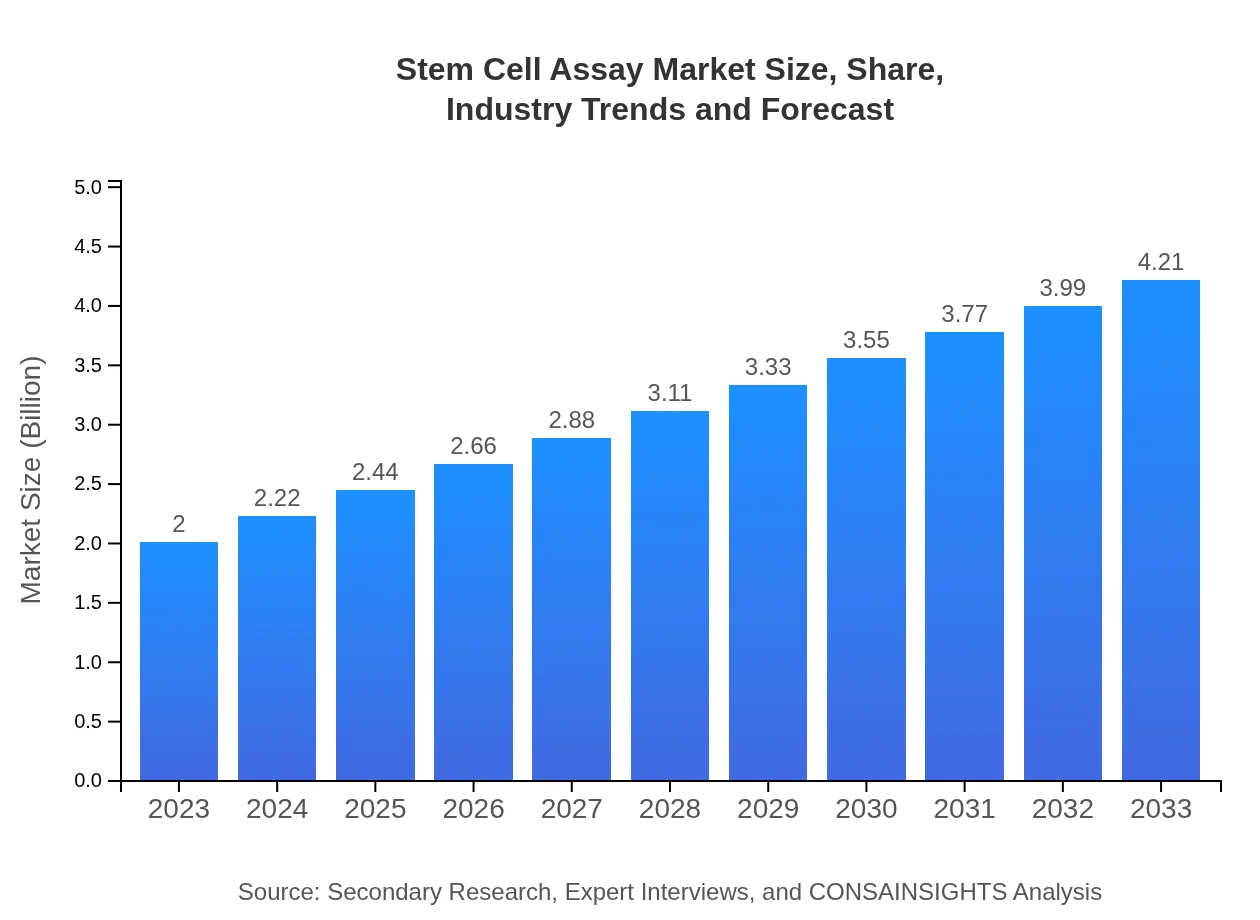
Stem Cell Assay Market — USD 2 billion in 2023, Growing to USD 4.21B by 2033 at 7.5% CAGR
This report provides a comprehensive analysis of the Stem Cell Assay market from 2023 to 2033, highlighting key trends, market size, segments, regional insights, and future forecasts.
Key Takeaways
- Global market expands from $2.00 Billion in 2023 to $4.21 Billion in 2033, reflecting a 7.5% CAGR over 2023 to 2033.
- North America is largest regional market, while no single fastest-growing region is stated because regional CAGR differences remain within 0.15 percentage points.
- Europe grows from $0.5 Billion to $1.05 Billion between 2023 and 2033, indicating sustained research and clinical demand.
- Asia Pacific increases from $0.42 Billion to $0.88 Billion from 2023 to 2033, supported by expanding biotech investments.
- Key suppliers include Thermo Fisher Scientific, Inc., Merck KGaA, BD Biosciences, and Stemcell Technologies Inc.
Stem Cell Assay Market Report — Executive Summary
North America remains largest market by forecast-period value, while no single fastest-growing region is stated because top regional growth rates are separated by less than 0.15 percentage points. The Stem Cell Assay Market Report outlines growth driven by expanding regenerative medicine research, increased drug discovery applications, and broader adoption of high-throughput and automated assay systems. Market value moves from $2.00 Billion in 2023 to $4.21 Billion in 2033 at a 7.5% CAGR across the 2023 to 2033 forecast period. Regional patterns show North America as the largest market, with notable increases in Europe and Asia Pacific reflecting rising R&D investment and collaborations between academic and industry players. Product and technique diversity—such as assays for embryonic, adult and induced pluripotent stem cells, flow cytometry, microplate reader assays, immunofluorescence, and genetic manipulation methods—support varied end users including academic research institutes, biotech and pharmaceutical companies, contract research organizations, and diagnostic laboratories. Leading firms such as Thermo Fisher Scientific, Inc., Merck KGaA, BD Biosciences, and Stemcell Technologies Inc. are actively shaping the competitive environment through innovation and partnerships.
Key Growth Drivers
- Rising investment in regenerative medicine and cell-based therapeutics increases demand for advanced assays.
- Expanding drug discovery and toxicity testing programs require reliable stem cell assay platforms and high-throughput capabilities.
- Greater collaboration between academia and industry accelerates assay development and validation for clinical and preclinical applications.
- Technological advances in flow cytometry, imaging, and genetic manipulation enable more precise assessment of stem cell behavior.
- Growing diagnostic and biomarker discovery initiatives expand use cases for stem cell assays across research and clinical settings.
| Metric | Value |
|---|---|
| Study Period | 2023 - 2033 |
| 2023 Market Size | $2.00 Billion |
| CAGR (2023-2033) | 7.5% |
| 2033 Market Size | $4.21 Billion |
| Top Companies | Thermo Fisher Scientific, Inc., Merck KGaA, BD Biosciences, Stemcell Technologies Inc. |
| Published Date | 21 October 2024 |
| Last Modified Date | 28 May 2026 |
Stem Cell Assay Market Overview
Customize Stem Cell Assay Market Report market research report
- ✔ Get in-depth analysis of Stem Cell Assay market size, growth, and forecasts.
- ✔ Understand Stem Cell Assay's regional dynamics and industry-specific trends.
- ✔ Identify potential applications, end-user demand, and growth segments in Stem Cell Assay
What is the Market Size & CAGR of Stem Cell Assay Market Report market in 2023?
Stem Cell Assay Industry Analysis
Stem Cell Assay Market Segmentation and Scope
Tell us your focus area and get a customized research report.
Stem Cell Assay Market Report Market Analysis Report by Region
Europe Stem Cell Assay Market Report:
Europe grows from $0.5 Billion in 2023 to $1.05 Billion in 2033. Regional expansion reflects sustained public and private research investment, regulatory focus on advanced therapies, and collaboration between research institutions and industry players.Asia Pacific Stem Cell Assay Market Report:
Asia Pacific grows from $0.42 Billion in 2023 to $0.88 Billion in 2033. Growth is underpinned by expanding biotech investment, increasing clinical research activity, and broader adoption of assay platforms across research institutes and commercial labs.North America Stem Cell Assay Market Report:
North America is largest regional market, rising from $0.76 Billion in 2023 to $1.6 Billion in 2033. This increase is supported by concentrated research funding, extensive biotech and pharmaceutical activity, and strong presence of leading suppliers, which together drive demand for diverse assay technologies.South America Stem Cell Assay Market Report:
Latin America grows from $0.09 Billion in 2023 to $0.19 Billion in 2033. Market growth is influenced by developing research infrastructures, growing interest in regenerative medicine applications, and partnerships that facilitate technology transfer and assay adoption.Middle East & Africa Stem Cell Assay Market Report:
Middle East and Africa grows from $0.23 Billion in 2023 to $0.49 Billion in 2033. Regional gains are linked to rising research initiatives, emerging clinical trial activity, and investments aimed at strengthening life-sciences capabilities.Tell us your focus area and get a customized research report.
Research Methodology
Stem Cell Assay Market Analysis By Type
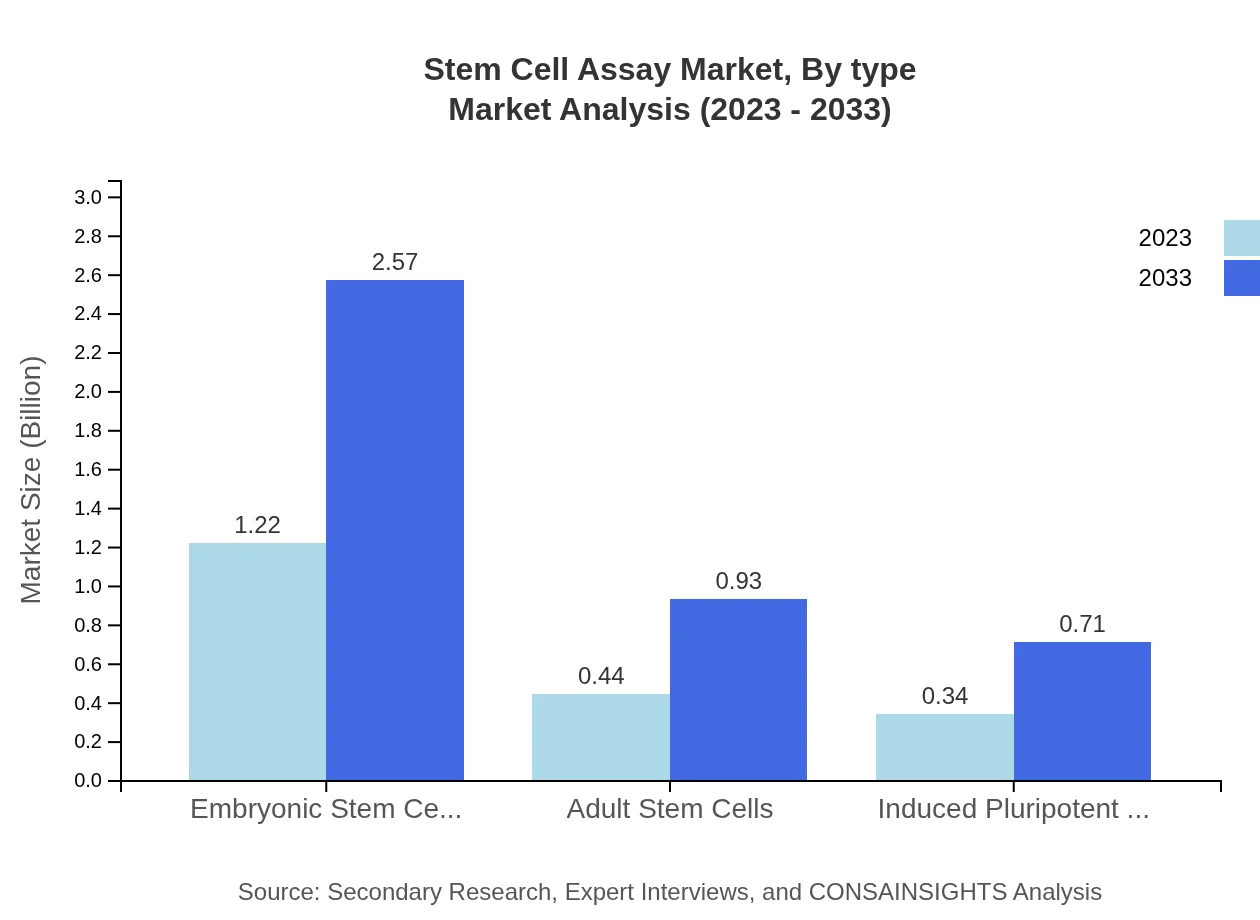
The market segments by type include: - Embryonic Stem Cells: Size in 2023 is $1.22 billion, growing to $2.57 billion by 2033, holding a 61% share. - Adult Stem Cells: Size in 2023 is $0.44 billion, growing to $0.93 billion by 2033, accounting for 22.2% share. - Induced Pluripotent Stem Cells (iPSCs): Size in 2023 is $0.34 billion, expanding to $0.71 billion by 2033, with a 16.8% share.
Stem Cell Assay Market Analysis By Application
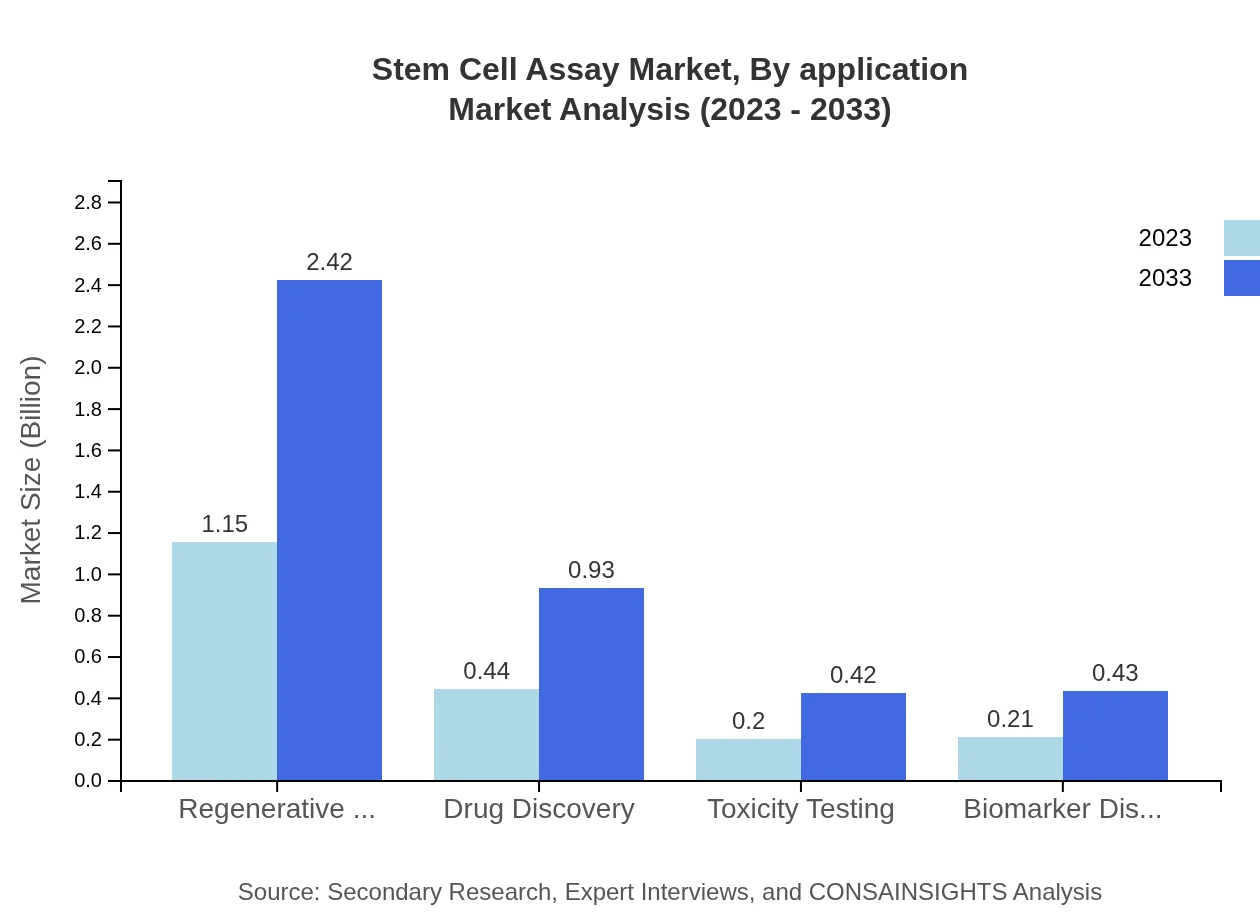
Applications of stem cell assays are segmented as follows: - Academic Research Institutes: Market size in 2023 is $1.15 billion, expected to reach $2.42 billion by 2033, capturing 57.58% of the share. - Biotechnology & Pharmaceutical Companies: Size in 2023 is $0.44 billion, projected to grow to $0.93 billion by 2033, with a 22.09% share. - Contract Research Organizations: Market size in 2023 is $0.20 billion and forecasted to grow to $0.42 billion by 2033, maintaining a 10% share.
Stem Cell Assay Market Analysis By End User
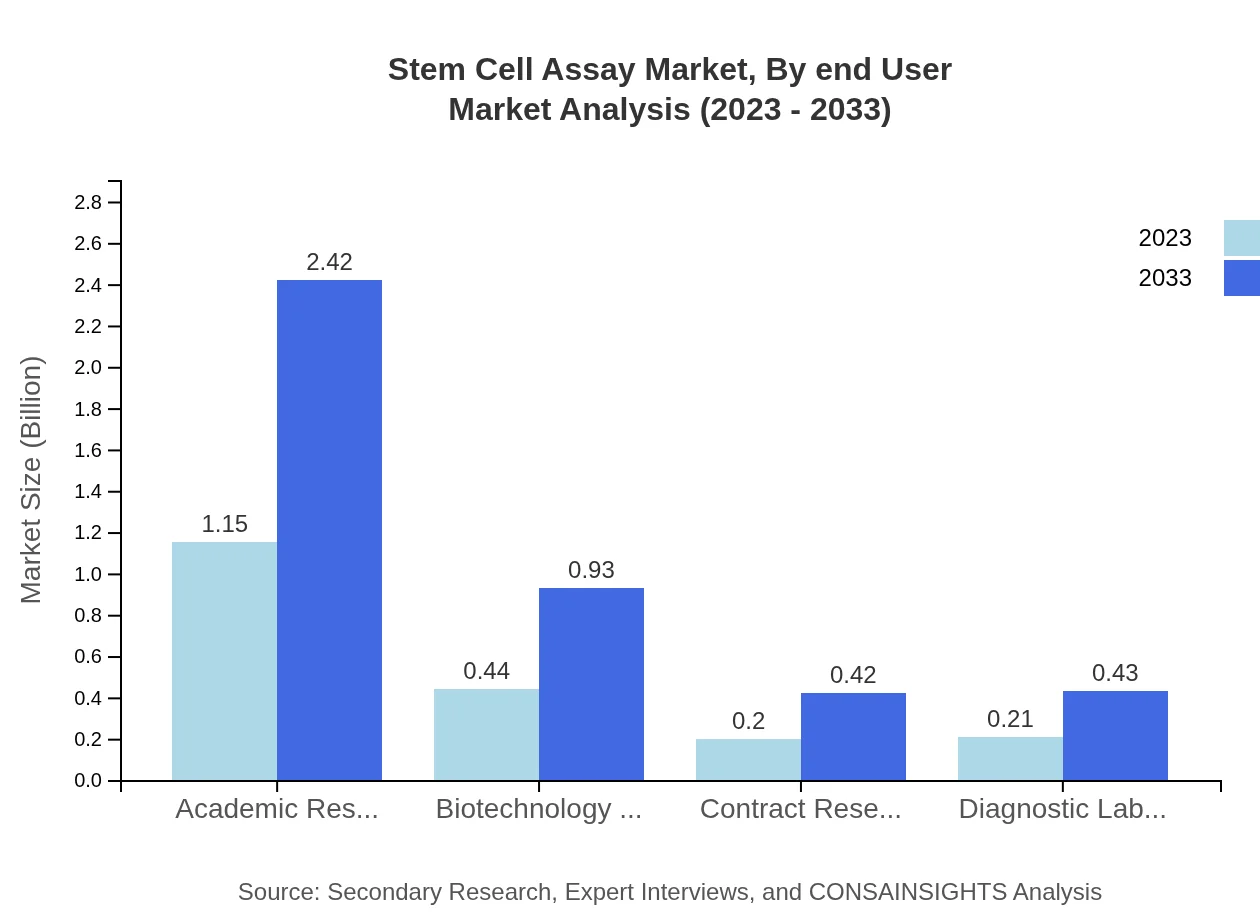
End-users of stem cell assays include: - Diagnostic Laboratories: Starting with $0.21 billion in 2023, forecasted to reach $0.43 billion by 2033, with a 10.33% market share.
Stem Cell Assay Market Analysis By Technique
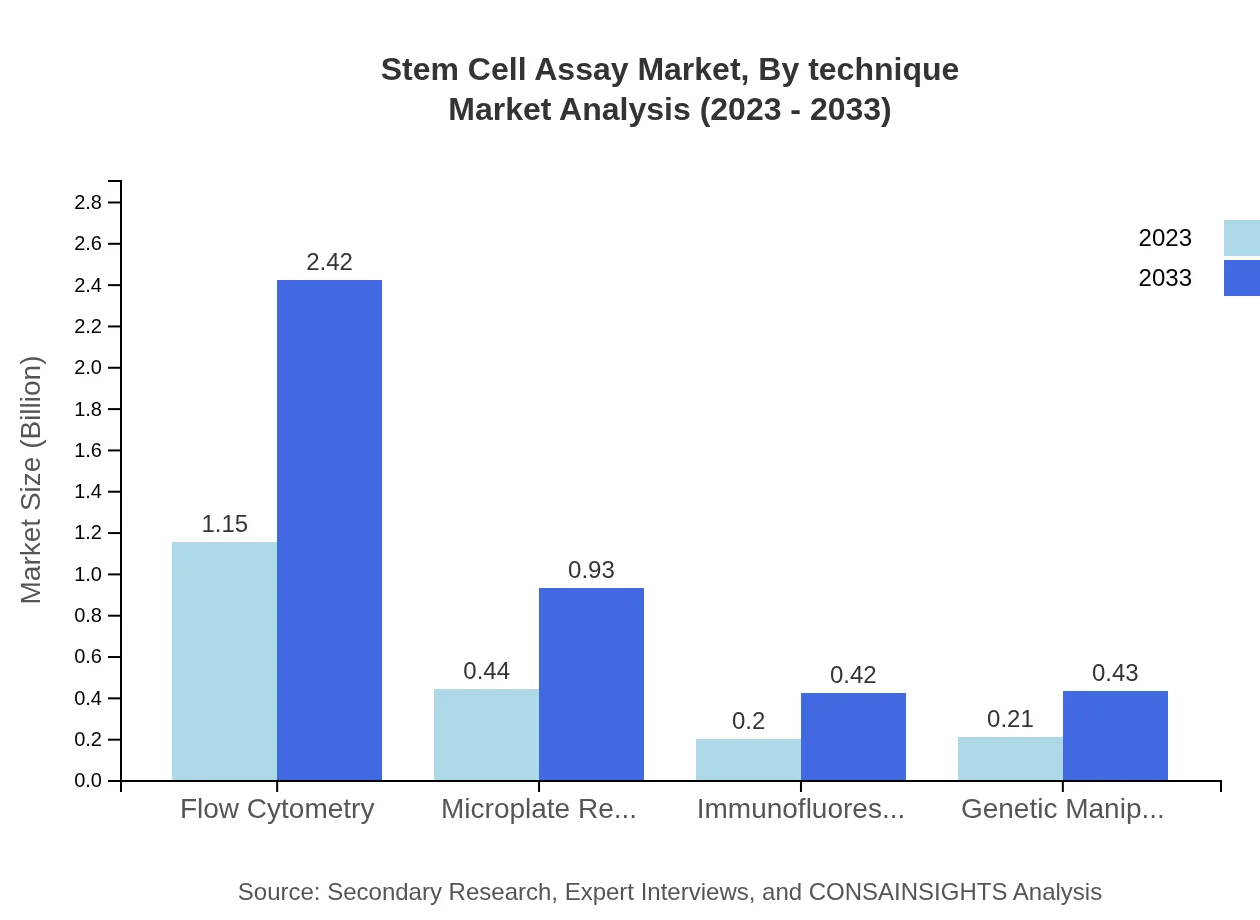
Techniques in the market are segmented into: - Flow Cytometry: Size in 2023 is $1.15 billion, anticipated to grow to $2.42 billion by 2033, holding 57.58% of the market share. - Microplate Reader Assays: Estimated to grow from $0.44 billion in 2023 to $0.93 billion by 2033, accounting for 22.09% of the market. - Immunofluorescence, Genetic Manipulation Techniques: Both set to grow from $0.20 billion to $0.42 billion in the same period, maintaining a 10% share each.
Stem Cell Assay Market Trends and Future Forecast
Tell us your focus area and get a customized research report.
Global Market Leaders and Top Companies in Stem Cell Assay Industry
Thermo Fisher Scientific, Inc.:
A leader in laboratory equipment and reagents, Thermo Fisher is instrumental in providing advanced stem cell assays, aiding researchers in the analysis of stem cell behavior.Merck KGaA:
Known for innovative technologies, Merck offers a robust portfolio of stem cell assay products, supporting pharmaceutical research and development.BD Biosciences:
A pioneer in cell analysis, BD Biosciences develops tools for stem cell research, facilitating advancements in regenerative medicine.Stemcell Technologies Inc.:
Specializing in stem cell research products, Stemcell Technologies focuses on providing innovative solutions for researchers globally.We're grateful to work with incredible clients.









FAQs
What is the current market size of the stem cell assay market?
The market size in 2023 is $2.00 Billion. This figure represents the baseline for the 2023 to 2033 forecast and informs investment and product planning.
How big will the market be in 2033?
By 2033 the market is projected to reach $4.21 Billion, reflecting expansion driven by increased research activity and adoption across multiple end users.
What is CAGR for the forecast period?
The forecast CAGR for 2023 to 2033 is 7.5%, representing the annualized growth rate used to model market expansion over the period.
Is there a single fastest Growing region in the Stem Cell Assay Market Report market?
No single fastest-growing region is stated for the Stem Cell Assay Market Report market because the top regional implied CAGR values are within 0.15 percentage points of each other, making the ranking too close to call reliably.
Why is the Asia Pacific region important?
Asia Pacific grows from $0.42 Billion to $0.88 Billion from 2023 to 2033, driven by rising biotech investments, expanding clinical research, and increased assay adoption.
Who are the leading companies in this market?
Top companies identified include Thermo Fisher Scientific, Inc., Merck KGaA, BD Biosciences, and Stemcell Technologies Inc., active in product development and partnerships.
What end users drive demand for assays?
Academic research institutes, biotechnology and pharmaceutical companies, contract research organizations, and diagnostic laboratories are primary end users fueling assay demand.
Why are technological advances influencing growth?
Improvements in flow cytometry, microplate readers, immunofluorescence, and genetic manipulation techniques increase assay precision and throughput, expanding applications in research and testing.
What role do collaborations play in market development?
Collaborations between academic institutions and biotech firms accelerate assay validation, commercialization, and broader adoption across preclinical and clinical workflows.
Which applications are expanding assay use?
Regenerative medicine, drug discovery, toxicity testing, and biomarker discovery are key applications pushing demand for robust stem cell assays.