

Dermatology Devices Market Report
First published: 10 October 2024 | Last updated: 25 May 2026 | Report Code: dermatology-devices
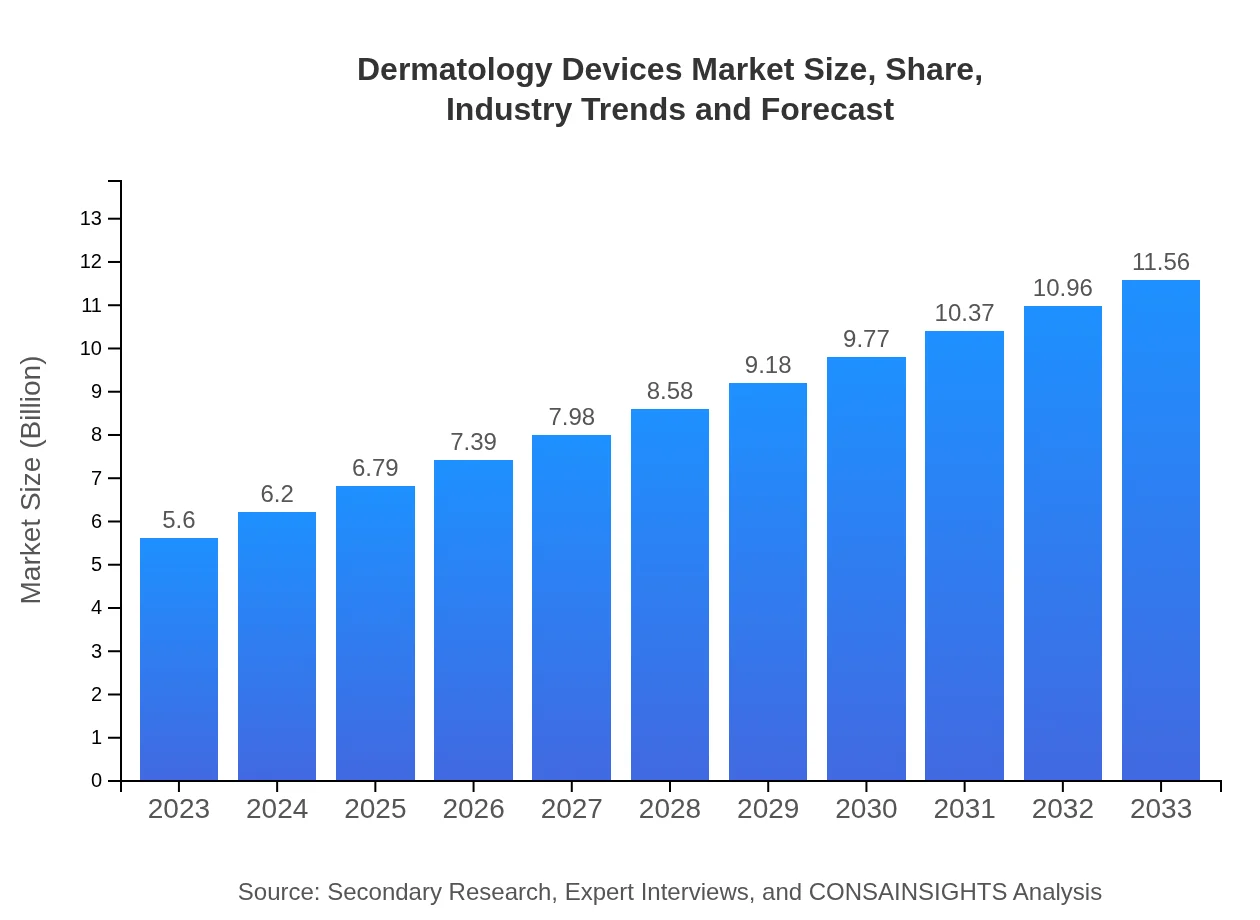
Dermatology Devices Market — USD 5.6 billion in 2023, Growing to USD 11.56B by 2033 at 7.3% CAGR
This report provides a comprehensive analysis of the dermatology devices market, focusing on trends, segmentation, and growth forecasts for the period 2023 to 2033. Insights into regional dynamics and key players are also included.
Key Takeaways
- Global market projected to increase from $5.60 Billion in 2023 to $11.56 Billion in 2033 at a 7.3% CAGR.
- North America is largest regional market, while no single fastest-growing region is stated because regional CAGR differences remain within 0.15 percentage points.
- Europe’s market grows from $1.72 Billion to $3.55 Billion over the forecast, reflecting strong clinical adoption and aesthetic demand.
- Asia Pacific expands from $0.96 Billion in 2023 to $1.98 Billion in 2033 amid rising healthcare access and technology uptake.
- Leading companies include Allergan, AbbVie, Cutera, and Syneron Candela, focusing on product enhancement and minimally invasive solutions.
Dermatology Devices Market Report — Executive Summary
North America remains largest market by forecast-period value, while no single fastest-growing region is stated because top regional growth rates are separated by less than 0.15 percentage points. The dermatology devices market is on a clear upward trajectory driven by rising patient demand for aesthetic and therapeutic procedures, ongoing technological improvements, and increased clinical and home-care device adoption. Market size advances from $5.60 Billion in 2023 to $11.56 Billion in 2033 with a 7.3% CAGR. Product innovation in lasers, radio frequency, and skin-scanning tools is reshaping treatment options and clinician workflows. Manufacturers and clinics are prioritizing minimally invasive therapies and devices that support outpatient or home settings. Regional dynamics vary: North America is the largest market, while Europe and Asia Pacific show meaningful expansion supported by rising healthcare spending and greater awareness of dermatological care. Competitive activity centers on portfolio diversification and regulatory alignment; Allergan, AbbVie, Cutera, and Syneron Candela are noted market participants. The report segments the market by device type, technology, application area, and end use to clarify adoption patterns and investment priorities for stakeholders.
Key Growth Drivers
- Rising demand for aesthetic and therapeutic dermatology procedures fuels device adoption across clinical and outpatient settings.
- Advances in laser, radio frequency, and skin-scanning technologies expand treatment capability and clinician confidence.
- Growing patient awareness and willingness to pursue minimally invasive treatments increase market acceptance and procedure volumes.
- Expanded access to dermatology services in developing markets supports device sales, especially for portable and home-use solutions.
- Regulatory approvals and product refinements encourage manufacturers to broaden portfolios and reach new clinical segments.
| Metric | Value |
|---|---|
| Study Period | 2023 - 2033 |
| 2023 Market Size | $5.60 Billion |
| CAGR (2023-2033) | 7.3% |
| 2033 Market Size | $11.56 Billion |
| Top Companies | Allergan, AbbVie, Cutera, Syneron Candela |
| Published Date | 10 October 2024 |
| Last Modified Date | 25 May 2026 |
Dermatology Devices Market Overview
Customize Dermatology Devices Market Report market research report
- ✔ Get in-depth analysis of Dermatology Devices market size, growth, and forecasts.
- ✔ Understand Dermatology Devices's regional dynamics and industry-specific trends.
- ✔ Identify potential applications, end-user demand, and growth segments in Dermatology Devices
What is the Market Size & CAGR of Dermatology Devices Market Report market in 2023?
Dermatology Devices Industry Analysis
Dermatology Devices Market Segmentation and Scope
Tell us your focus area and get a customized research report.
Dermatology Devices Market Report Market Analysis Report by Region
Europe Dermatology Devices Market Report:
Europe grows from $1.72 Billion in 2023 to $3.55 Billion in 2033. Regional expansion is supported by rising demand for aesthetic treatments, broader availability of dermatology services, and continued integration of minimally invasive device technologies in clinics.Asia Pacific Dermatology Devices Market Report:
Asia Pacific grows from $0.96 Billion in 2023 to $1.98 Billion in 2033. Market gains are driven by improving access to dermatology care, heightened awareness of skin health, and increasing uptake of both clinic-based and portable home-care devices.North America Dermatology Devices Market Report:
North America is largest regional market, rising from $2.09 Billion in 2023 to $4.32 Billion in 2033. This expansion reflects robust clinical adoption, established cosmetic procedure volumes, and ongoing investment in advanced laser and diagnostic systems across healthcare settings.South America Dermatology Devices Market Report:
Latin America grows from $0.32 Billion in 2023 to $0.66 Billion in 2033. Growth is linked to improving healthcare infrastructure, rising patient interest in aesthetic procedures, and gradual adoption of new dermatology device technologies.Middle East & Africa Dermatology Devices Market Report:
Middle East and Africa grows from $0.51 Billion in 2023 to $1.05 Billion in 2033. Enhancements in regional healthcare capacity, greater procedural awareness, and selective adoption of non-invasive technologies underpin market development.Tell us your focus area and get a customized research report.
Research Methodology
Dermatology Devices Market Analysis By Device Type
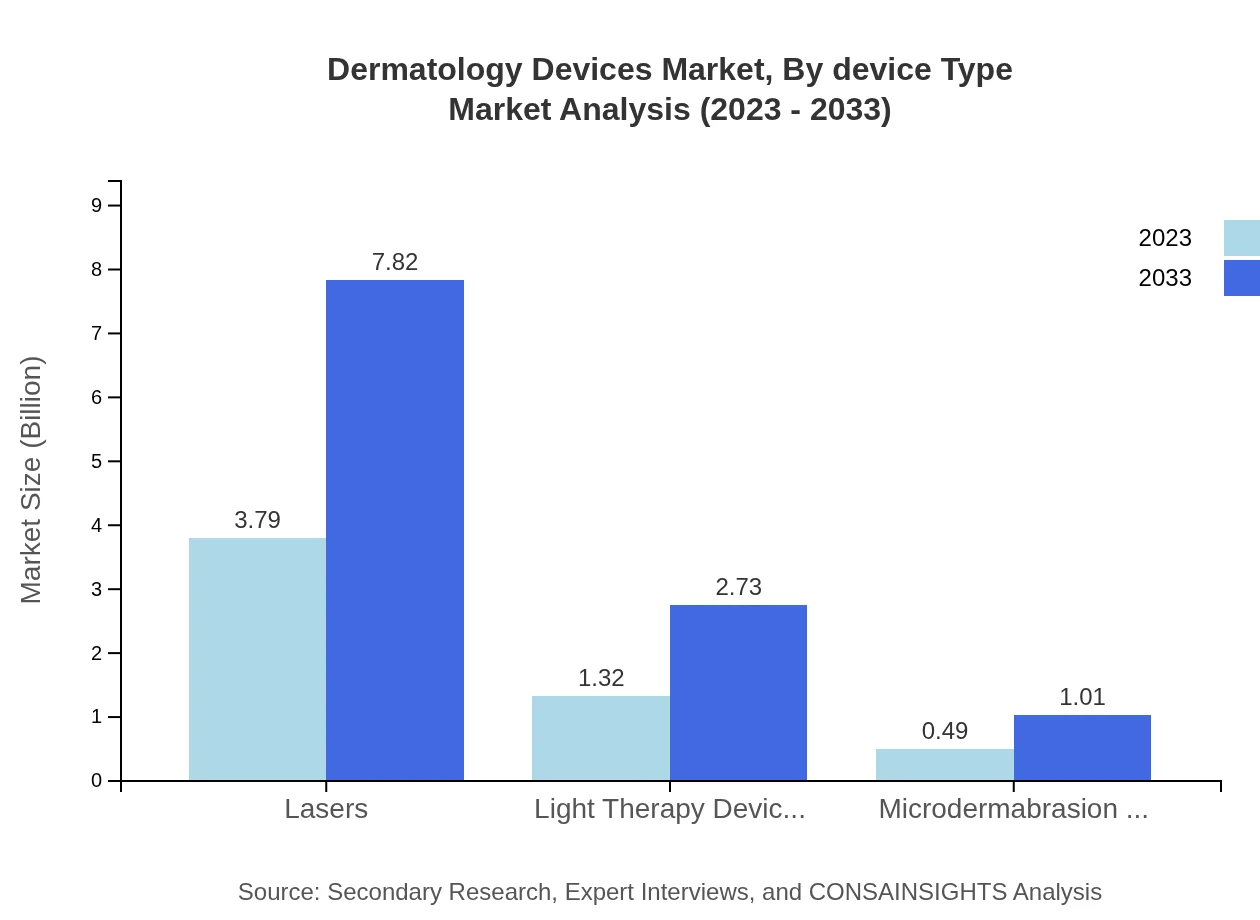
In 2023, the hospital segment leads the market with a size of USD 3.79 billion, expected to rise to USD 7.82 billion by 2033, accounting for approximately 67.66% share overall. Dermatology clinics follow with USD 1.32 billion in 2023, projected to reach USD 2.73 billion by 2033, holding 23.58% market share.
Dermatology Devices Market Analysis By Application Area
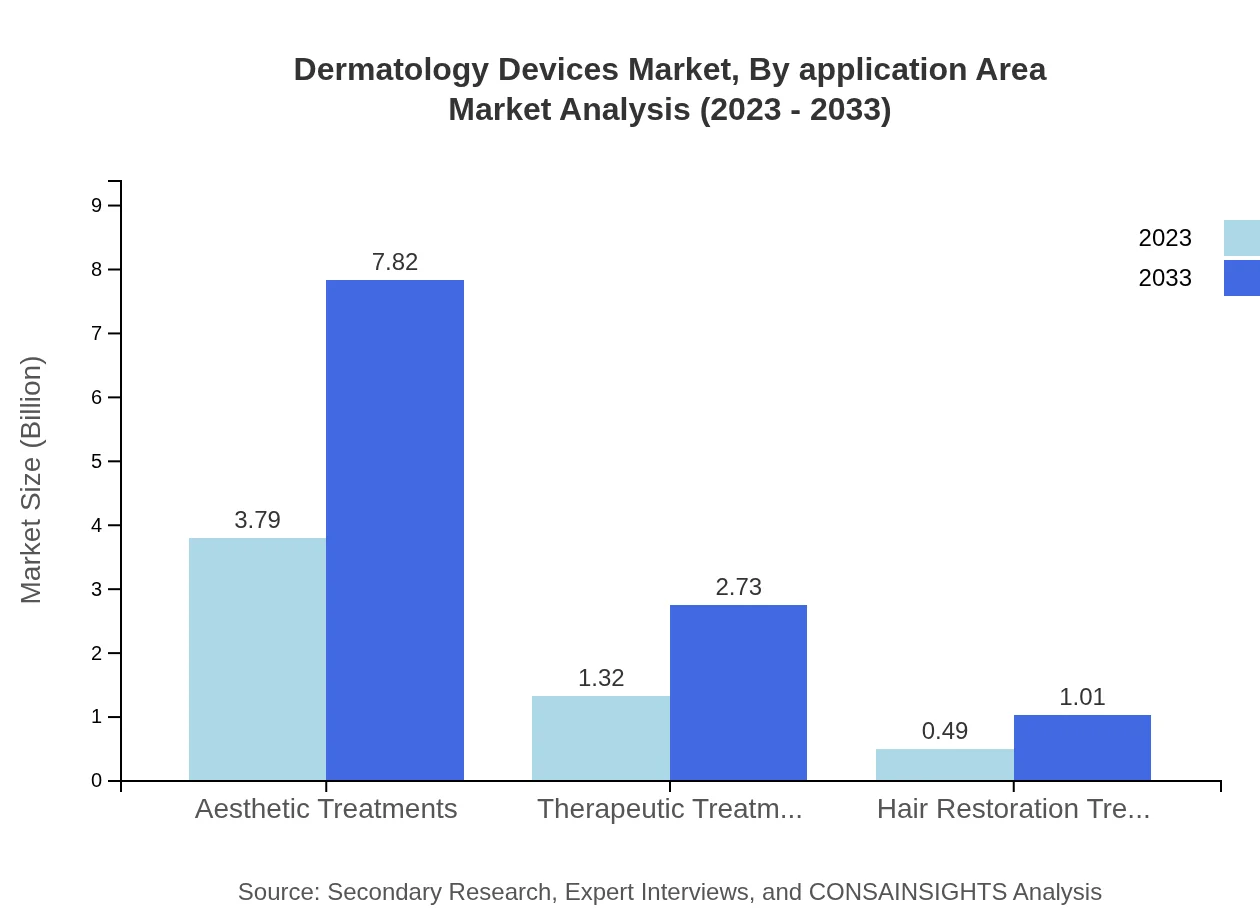
The market for aesthetics treatments is anticipated to dominate with USD 3.79 billion in size in 2023, witnessing growth to USD 7.82 billion by 2033. Therapeutic applications take a secondary position, beginning at USD 1.32 billion in 2023 and reaching USD 2.73 billion by the forecast period's end.
Dermatology Devices Market Analysis By End Use
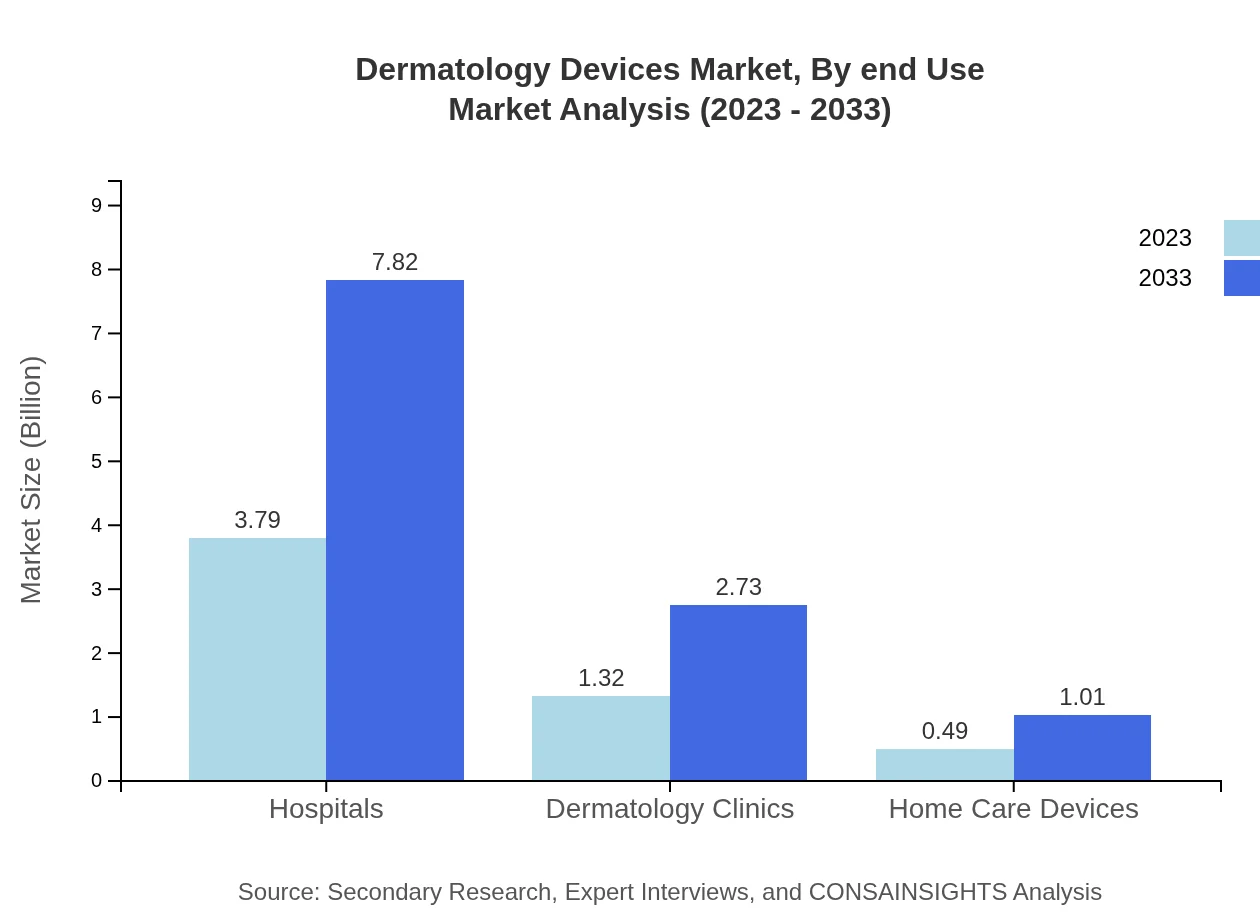
Hospitals continue to hold the highest share in market revenues at 67.66% in 2023, a trend expected to remain consistent through 2033. Meanwhile, the home care device segment is anticipated to grow from USD 0.49 billion in 2023 to USD 1.01 billion by 2033.
Dermatology Devices Market Analysis By Technology
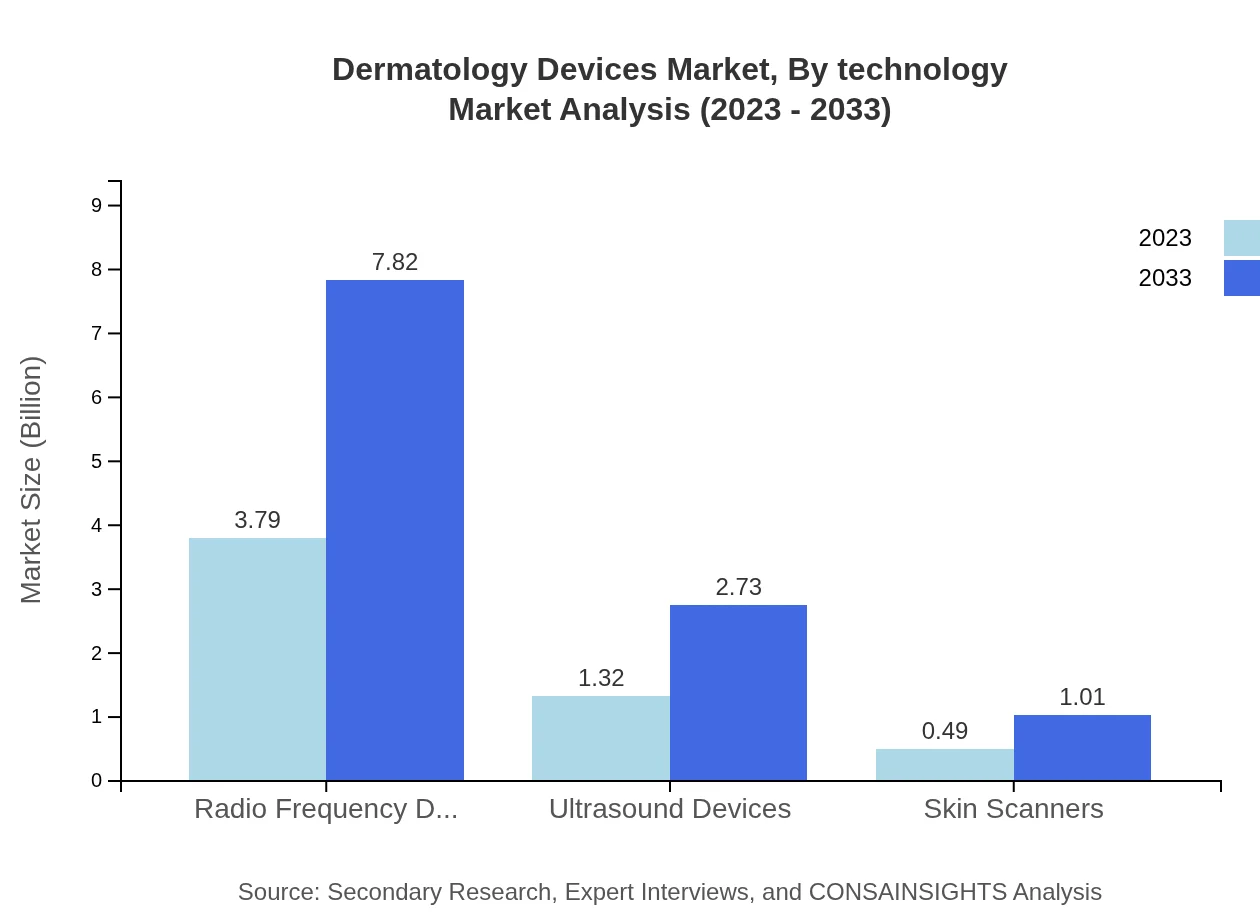
In terms of technology, radiofrequency devices command a strong market presence with a size of USD 3.79 billion in 2023, growing to USD 7.82 billion by 2033. Other segments like lasers and ultrasound devices follow suit, supporting a robust technology-driven growth trajectory in the dermatology devices market.
Dermatology Devices Market Trends and Future Forecast
Tell us your focus area and get a customized research report.
Global Market Leaders and Top Companies in Dermatology Devices Industry
Allergan:
A leader in aesthetic medicine, specializing in anti-aging products and treatments. They focus on innovative dermatological solutions.AbbVie:
Known for advanced skin treatment options, AbbVie develops a range of products to treat skin disorders while emphasizing patient-centered care.Cutera:
Specializes in aesthetic and laser technologies, offering innovative solutions for various dermatological applications including hair removal and skin rejuvenation.Syneron Candela:
Provides advanced aesthetic and therapeutic light-based devices, renowned for their laser and radiofrequency technologies in dermatology.We're grateful to work with incredible clients.







FAQs
What is the current market size of the dermatology devices market?
The market size is $5.60 Billion in 2023, based on the provided report data covering the 2023 to 2033 forecast period.
How big will the market be in 2033?
The dermatology devices market is projected to reach $11.56 Billion by 2033 according to the report figures for the 2023 to 2033 period.
What is CAGR of the market during the forecast period?
The report cites a compound annual growth rate (CAGR) of 7.3% for the 2023 to 2033 forecast period.
Is there a single fastest Growing region in the Dermatology Devices Market Report market?
No single fastest-growing region is stated for the Dermatology Devices Market Report market because the top regional implied CAGR values are within 0.15 percentage points of each other, making the ranking too close to call reliably.
Which companies are identified as top participants?
Top companies listed in the report include Allergan, AbbVie, Cutera, and Syneron Candela as notable market players.
What key device categories are included in the market segmentation?
Device categories highlighted include lasers, light therapy devices, and microdermabrasion systems, each cited as distinct device-type subsegments.
How do technology subsegments feature in the market?
Technology subsegments identified include radio frequency devices, ultrasound devices, and skin scanners, underscoring diagnostic and treatment innovation.
Why is there increased focus on home Care devices?
Home-care devices gain attention due to greater patient preference for at-home management and innovations enabling safe, user-friendly remote treatments.
What drives demand for aesthetic versus therapeutic applications?
Demand stems from growing cosmetic procedure interest for aesthetics and ongoing prevalence of skin conditions that require therapeutic interventions in clinical settings.
Who performs the research and validation for the report?
Research includes primary interviews with industry experts and secondary analysis of company reports and publications, combined through data triangulation and internal validation.