

Diagnostic Specialty Antibodies Market Report
First published: 22 October 2024 | Last updated: 25 May 2026 | Report Code: diagnostic-specialty-antibodies
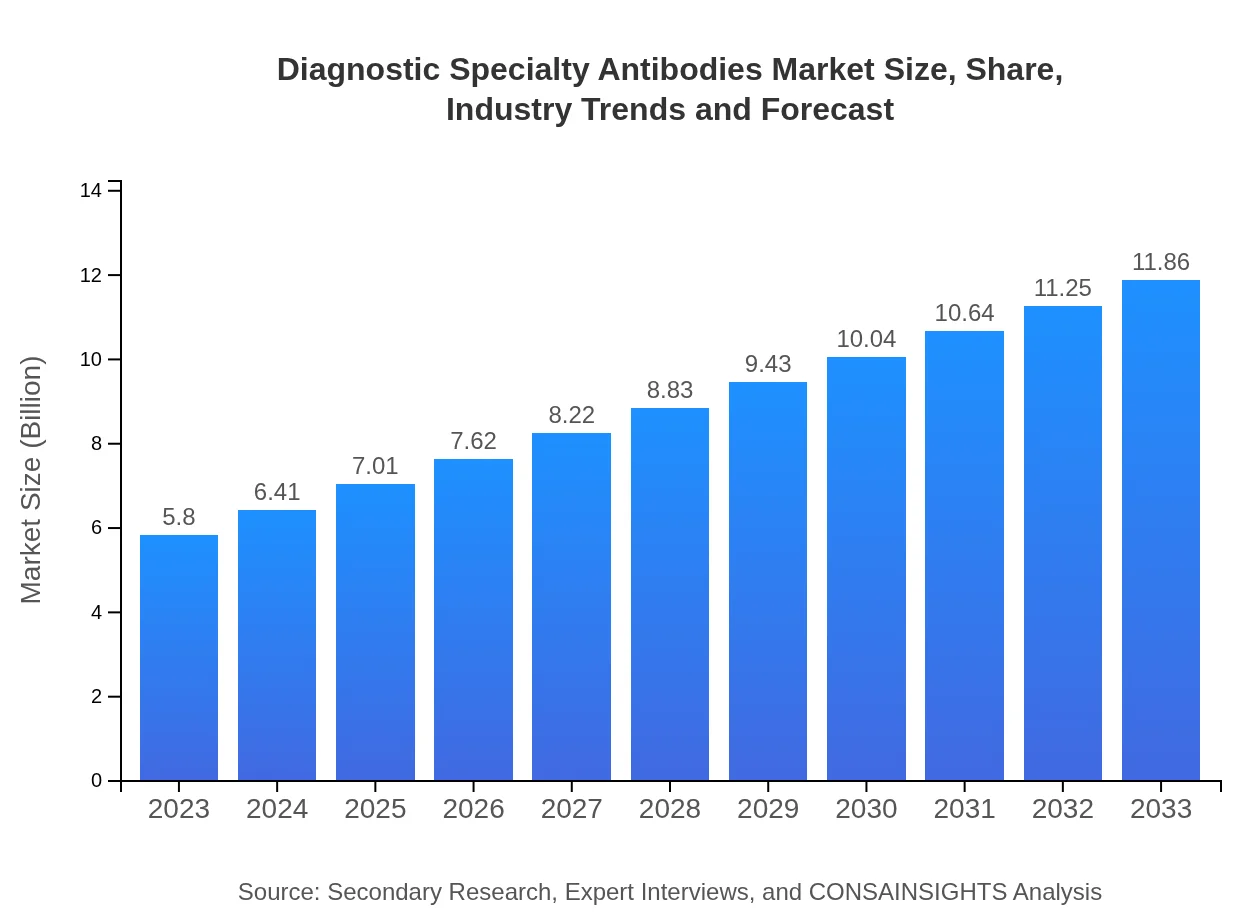
Diagnostic Specialty Antibodies Market — USD 5.8 billion in 2023, Growing to USD 11.86B by 2033 at 7.2% CAGR
This report provides an in-depth analysis of the Diagnostic Specialty Antibodies market, including insights on market size, growth trends, segmentation, and forecasts from 2023 to 2033.
Key Takeaways
- Global market value rises from $5.80 Billion in 2023 to $11.86 Billion by 2033 at a 7.2% CAGR.
- North America is largest regional market, while no single fastest-growing region is stated because regional CAGR differences remain within 0.15 percentage points.
- Europe grows from $1.45 Billion in 2023 to $2.96 Billion in 2033 while Asia Pacific expands from $1.11 Billion to $2.27 Billion.
- Top firms include Roche Diagnostics, AbbVie, Thermo Fisher Scientific and Merck Group, reflecting established industry participation.
- Key market forces include demand for targeted diagnostics, advances in antibody technologies, and collaborations between industry and research institutions.
Diagnostic Specialty Antibodies Market Report — Executive Summary
North America remains largest market by forecast-period value, while no single fastest-growing region is stated because top regional growth rates are separated by less than 0.15 percentage points. The Diagnostic Specialty Antibodies market is forecast to grow from $5.80 Billion in 2023 to $11.86 Billion by 2033, at a 7.2% CAGR during 2023 to 2033. Growth is driven by expanding need for precise diagnostic tools, increased prevalence of chronic diseases, and technological innovations in antibody development. The market structure includes multiple product types, end users such as hospitals and diagnostic laboratories, and diverse sourcing approaches. Regional dynamics show North America as the largest market. Leading companies—Roche Diagnostics, AbbVie, Thermo Fisher Scientific and Merck Group—play significant roles through product portfolios and partnerships. The report synthesizes primary interviews, company reports, and internal validation to present trend analysis and practical insights for stakeholders evaluating investment and commercialization strategies.
Key Growth Drivers
- Rising requirement for targeted and early diagnostic assays prompting demand for specialty antibodies.
- Technological advances in antibody design and recombinant production improving specificity and scalability.
- Collaboration between industry players and research institutions accelerating product development and validation.
- Growing prevalence of chronic and complex diseases increasing diagnostic testing volumes.
- Industry focus on sustainability and optimized sourcing supporting long-term supply chain resilience.
| Metric | Value |
|---|---|
| Study Period | 2023 - 2033 |
| 2023 Market Size | $5.80 Billion |
| CAGR (2023-2033) | 7.2% |
| 2033 Market Size | $11.86 Billion |
| Top Companies | Roche Diagnostics, AbbVie, Thermo Fisher Scientific, Merck Group |
| Published Date | 22 October 2024 |
| Last Modified Date | 25 May 2026 |
Diagnostic Specialty Antibodies Market Overview
Customize Diagnostic Specialty Antibodies Market Report market research report
- ✔ Get in-depth analysis of Diagnostic Specialty Antibodies market size, growth, and forecasts.
- ✔ Understand Diagnostic Specialty Antibodies's regional dynamics and industry-specific trends.
- ✔ Identify potential applications, end-user demand, and growth segments in Diagnostic Specialty Antibodies
What is the Market Size & CAGR of Diagnostic Specialty Antibodies Market Report market in 2023?
Diagnostic Specialty Antibodies Industry Analysis
Diagnostic Specialty Antibodies Market Segmentation and Scope
Tell us your focus area and get a customized research report.
Diagnostic Specialty Antibodies Market Report Market Analysis Report by Region
Europe Diagnostic Specialty Antibodies Market Report:
Europe grows from $1.45 Billion in 2023 to $2.96 Billion in 2033. Market drivers include strong clinical adoption of specialty diagnostics, collaborations among industry and academia, and investment in precision diagnostic technologies.Asia Pacific Diagnostic Specialty Antibodies Market Report:
Asia Pacific grows from $1.11 Billion in 2023 to $2.27 Billion in 2033. Growth reflects expanding healthcare access, rising diagnostic testing demand and greater research activity focused on region-specific disease burdens.North America Diagnostic Specialty Antibodies Market Report:
North America is largest regional market, rising from $2.19 Billion in 2023 to $4.48 Billion in 2033. Regional growth is underpinned by extensive clinical infrastructure, high diagnostic testing volumes and active participation from major suppliers and research centers.South America Diagnostic Specialty Antibodies Market Report:
Latin America grows from $0.27 Billion in 2023 to $0.55 Billion in 2033. Local expansion is supported by gradual improvements in diagnostic infrastructure and growing attention to targeted testing in key urban centers.Middle East & Africa Diagnostic Specialty Antibodies Market Report:
Middle East and Africa grows from $0.78 Billion in 2023 to $1.6 Billion in 2033. Regional adoption is influenced by investments in healthcare capacity, partnerships with global suppliers and an increasing focus on improved diagnostic services.Tell us your focus area and get a customized research report.
Research Methodology
Diagnostic Specialty Antibodies Market Analysis By Antibody Type
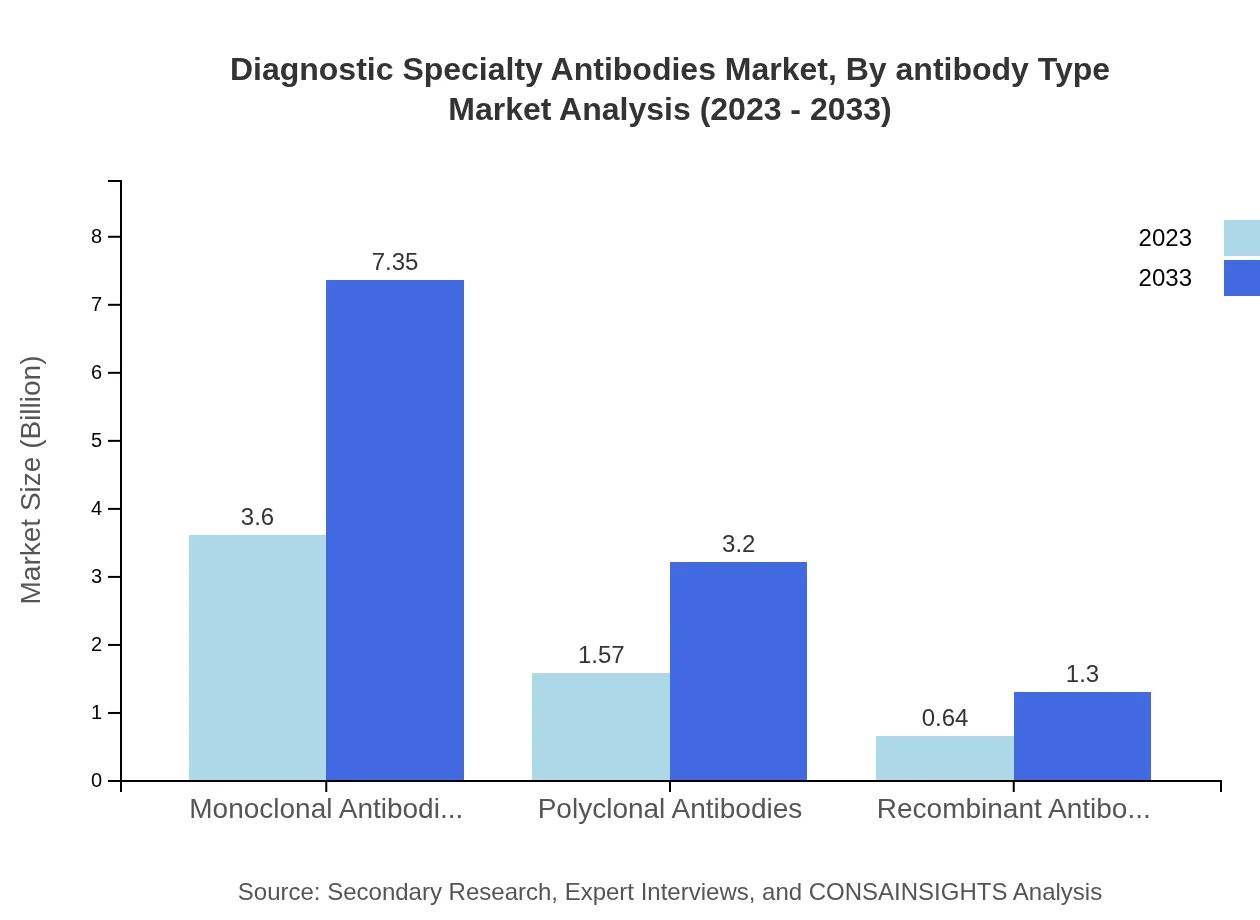
The market segmentation based on antibody type reveals that monoclonal antibodies represent the largest share at 62.01% in 2023, growing significantly to 62.01% in 2033. Polyclonal antibodies account for 26.99% in 2023, with projections suggesting stability in demand due to their widespread use in diagnostics and therapy. Recombinant antibodies are expected to grow from a 11% share in 2023 to the same share in 2033, indicating steady interest but lesser growth compared to other types.
Diagnostic Specialty Antibodies Market Analysis By Application
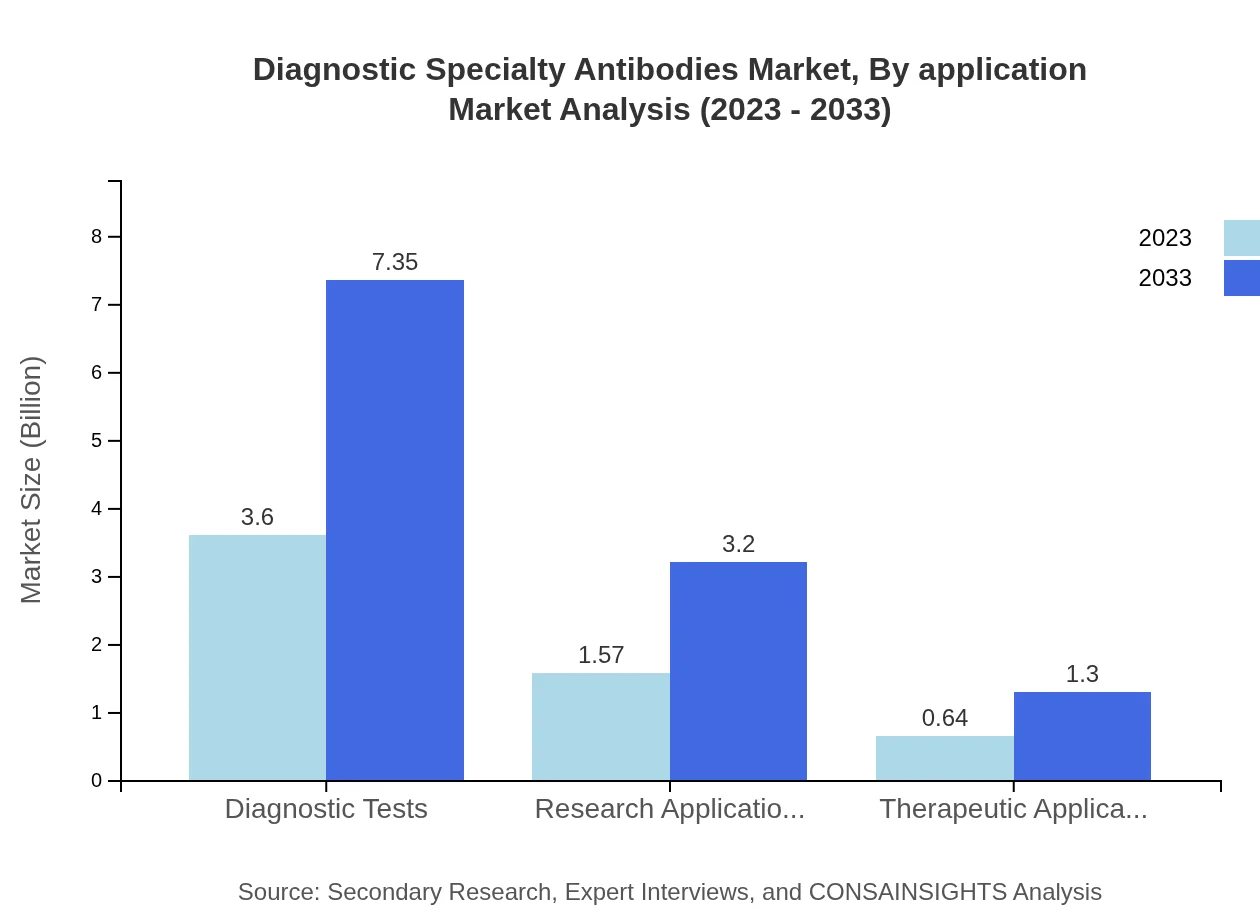
The Diagnostic Tests segment, crucial for clinical diagnostics, comprises 62.01% of the market share in 2023, expected to reach 62.01% by 2033. Research Applications hold a share of 26.99% in 2023 and will maintain this proportion, underscoring the importance of antibodies in advancing scientific research. Therapeutic Applications, although smaller at 11% in 2023, are projected to grow steadily, reflecting evolving therapeutic landscapes.
Diagnostic Specialty Antibodies Market Analysis By Source
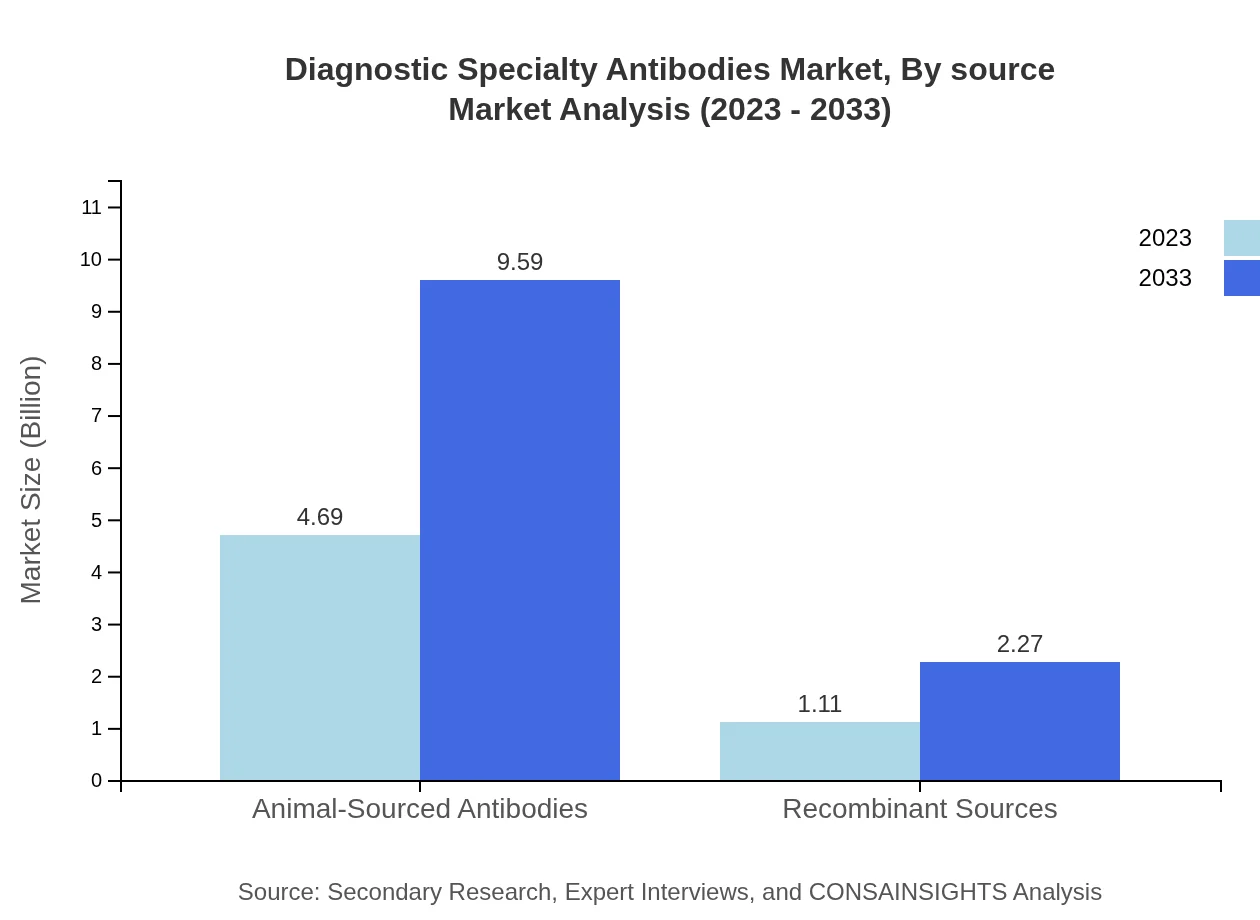
Animal-sourced antibodies dominate the market, accounting for 80.85% in 2023, expected to maintain the same share by 2033. Recombinant sources represent a growing segment, currently at 19.15% in 2023 and projected to remain constant, indicating a stable demand for genetically engineered solutions due to their specificity and lower production issues.
Diagnostic Specialty Antibodies Market Analysis By End User
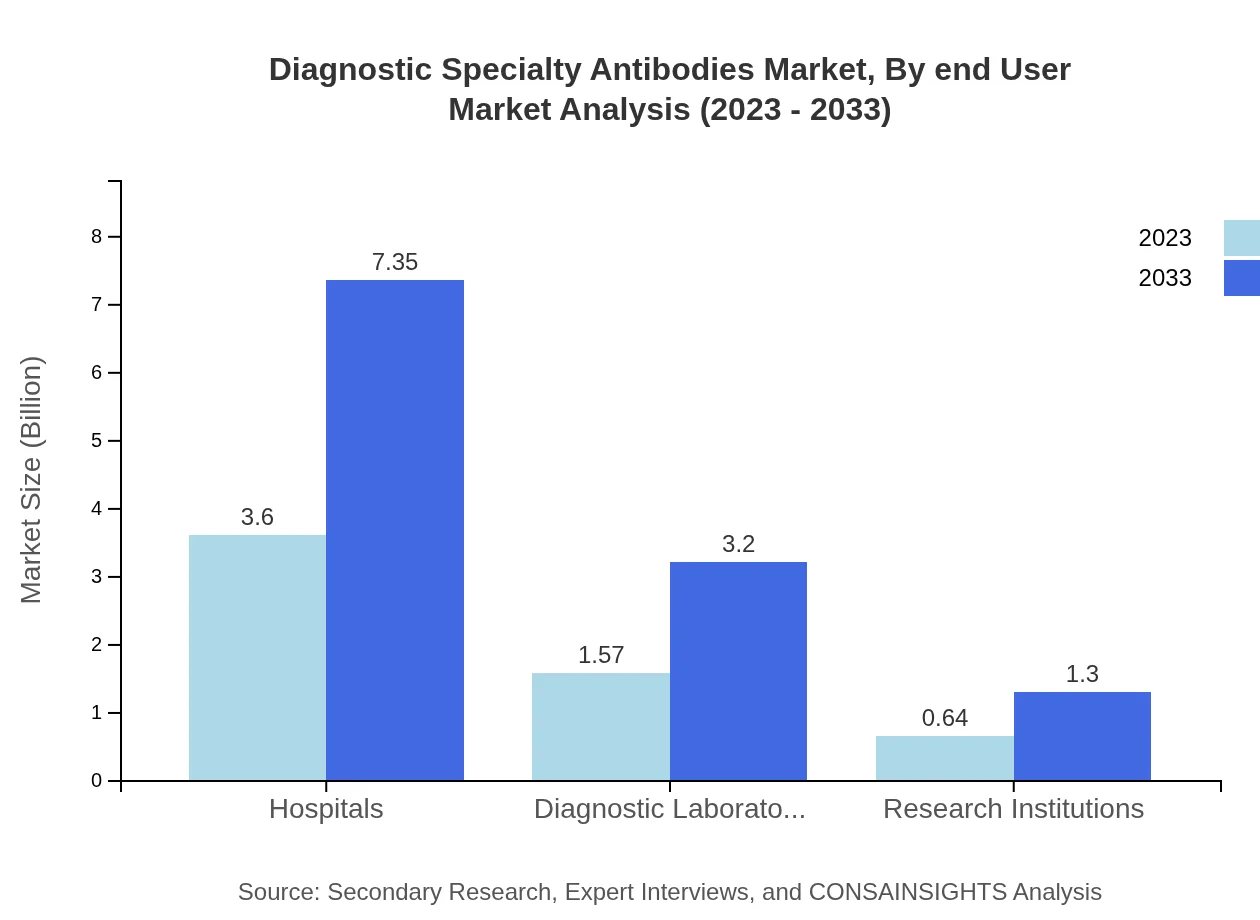
Hospitals are the key end-user segment, commanding a market share of 62.01% in 2023 and projected to remain at that level through 2033. Diagnostic laboratories follow closely with a share of 26.99%, reflecting their critical role in disease identification. Research institutions, while holding a smaller share of 11% in 2023, highlight their importance in innovation and development within the industry.
Diagnostic Specialty Antibodies Market Analysis By Region Type
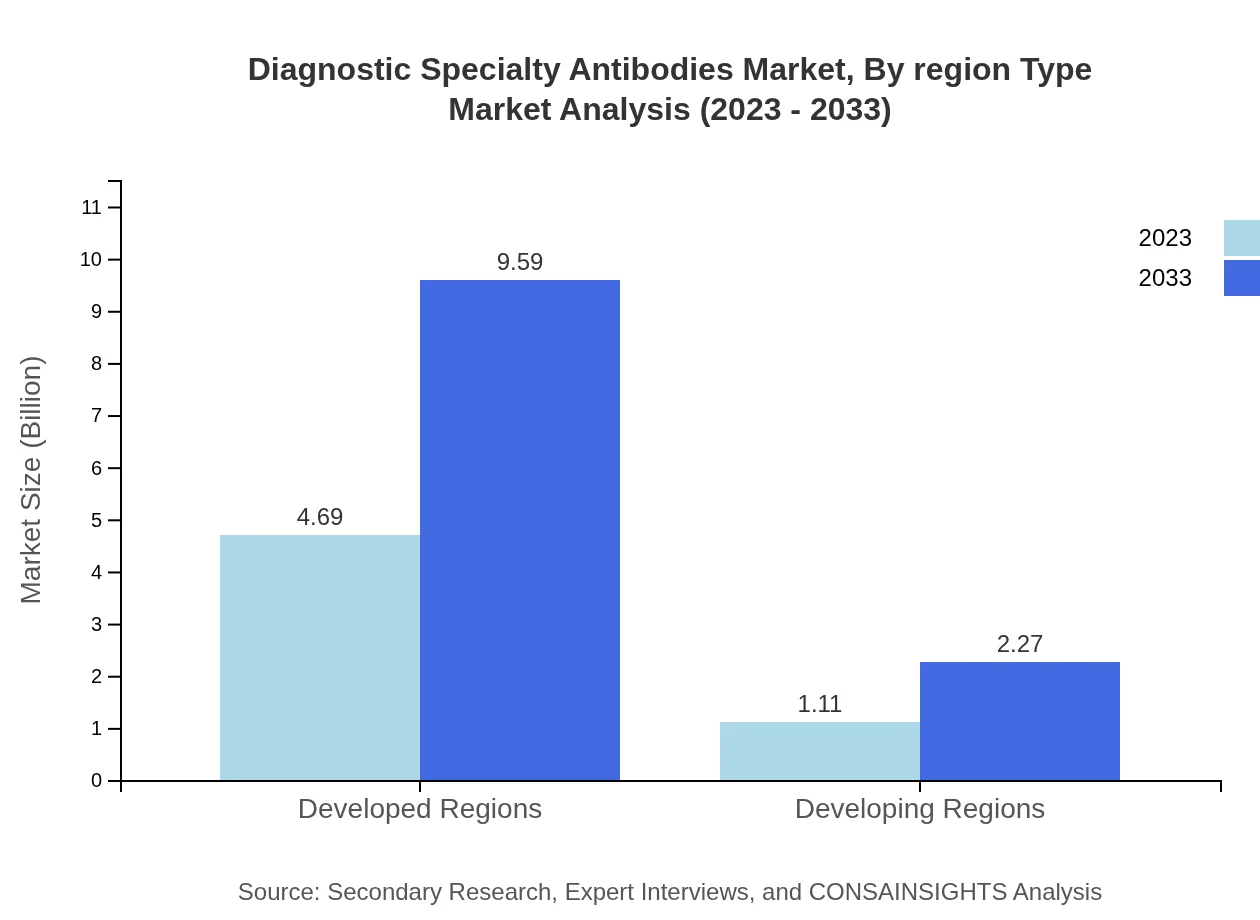
The differentiated analysis by region highlights that developed regions, which account for 80.85% of the market share in 2023, are expected to keep this proportion in 2033. Developing regions currently at 19.15% indicate a promising upward trend as healthcare advancements penetrate these markets.
Diagnostic Specialty Antibodies Market Trends and Future Forecast
Tell us your focus area and get a customized research report.
Global Market Leaders and Top Companies in Diagnostic Specialty Antibodies Industry
Roche Diagnostics:
Roche is a leading player in the diagnostics market with a strong portfolio in monoclonal antibodies, significantly contributing to advancements in diagnostic testing.AbbVie:
AbbVie focuses on bio-pharmaceuticals, offering innovative diagnostic solutions including various specialty antibodies.Thermo Fisher Scientific:
A major player in providing high-quality laboratory products, including diagnostic specialty antibodies for clinical and research applications.Merck Group:
Merck provides a wide array of diagnostic and therapeutic antibodies, leveraging biotechnology for specific disease diagnostics.We're grateful to work with incredible clients.








FAQs
What is the current market size of the Diagnostic Specialty Antibodies Market Report?
The market size for 2023 is $5.80 Billion, as reported, reflecting the baseline for the forecast period of 2023 to 2033 and industry analysis.
How big will the market be in 2033?
The market is projected to reach $11.86 Billion in 2033, based on the provided forecast covering 2023 to 2033 and the stated growth trajectory.
What is the CAGR for the forecast period?
The market is expected to grow at a compound annual growth rate (CAGR) of 7.2% over the 2023 to 2033 forecast period.
Is there a single fastest Growing region in the Diagnostic Specialty Antibodies Market Report market?
No single fastest-growing region is stated for the Diagnostic Specialty Antibodies Market Report market because the top regional implied CAGR values are within 0.15 percentage points of each other, making the ranking too close to call reliably.
Which companies are leading the Diagnostic Specialty Antibodies market?
Top companies listed include Roche Diagnostics, AbbVie, Thermo Fisher Scientific and Merck Group, representing established presence and broad portfolios.
What factors are driving market growth?
Drivers include demand for precise diagnostics, advancements in antibody technologies, collaborations with research institutions, and rising chronic disease prevalence.
Who are the primary end users of diagnostic specialty antibodies?
Primary end users include hospitals, diagnostic laboratories and research institutions, as noted in the segmentation details provided.
What research methods were used for this report?
The study used primary interviews with industry experts and secondary research from company reports and publications, followed by data triangulation and validation.