
Reports >
Life Sciences
>
Oncology Anticancer Drugs Market Report
Oncology Anticancer Drugs Market Report
First published: 22 October 2024 | Last updated: 25 May 2026 | Report Code: oncology-anticancer-drugs
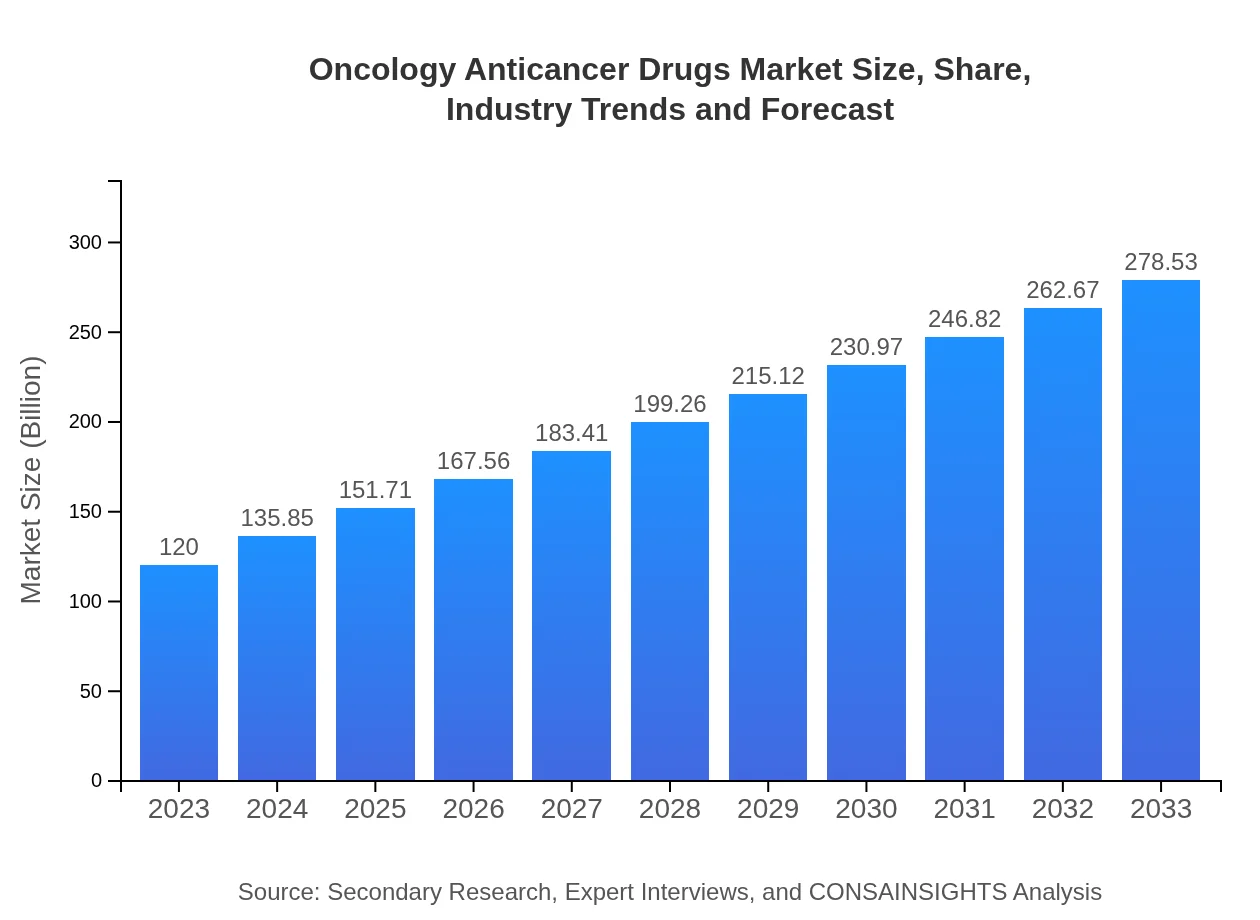
Oncology Anticancer Drugs Market — USD 120 billion in 2023, Growing to USD 278.53B by 2033 at 8.5% CAGR
This report provides comprehensive insights into the Oncology Anticancer Drugs market, including market size, growth trends, segmentation analysis, and regional insights. Forecasting the market from 2023 to 2033, it elaborates on industry dynamics and future opportunities in this critical healthcare segment.
Key Takeaways
- Global market expands from $120.00 Billion in 2023 to $278.53 Billion by 2033, at a CAGR of 8.5% over 2023 to 2033.
- North America is largest regional market, while no single fastest-growing region is stated because regional CAGR differences remain within 0.15 percentage points.
- Europe grows from $32.57 Billion in 2023 to $75.59 Billion in 2033, supported by therapeutic innovation and regulatory activity.
- Asia Pacific rises from $23.28 Billion in 2023 to $54.03 Billion in 2033, driven by rising treatment adoption and expanded access.
- Middle East and Africa moves from $13.62 Billion in 2023 to $31.61 Billion in 2033; Latin America advances from $8.34 Billion to $19.36 Billion in the same period.
Oncology Anticancer Drugs Market Report — Executive Summary
North America remains largest market by forecast-period value, while no single fastest-growing region is stated because top regional growth rates are separated by less than 0.15 percentage points. This report examines the Oncology Anticancer Drugs market from 2023 to 2033, quantifying a rise from $120.00 Billion in 2023 to $278.53 Billion in 2033 at a CAGR of 8.5%. Growth is underpinned by increased demand for novel therapies, sustained R&D investments, and collaborative strategies among major industry players such as Roche, Novartis, Bristol-Myers Squibb, Pfizer, and Merck & Co. The analysis covers product categories including chemotherapy, targeted therapy, and immunotherapy; administration routes such as oral and injectable; and end users like hospitals, oncology clinics, and home care. Regional breakdowns detail market movements across North America, Europe, Asia Pacific, Latin America, and Middle East and Africa. Research methods include primary interviews, secondary company and publication review, data triangulation, and expert-led trend interpretation. The report highlights strategic priorities including partnerships, mergers and acquisitions, and research investments influencing competitive positioning and pipeline development.
Key Growth Drivers
- Rising incidence of cancer and expanding patient pools increasing demand for established and novel anticancer agents.
- Sustained R&D spending and clinical development accelerating introduction of targeted therapies and immunotherapies.
- Strategic collaborations, mergers and acquisitions, and licensing deals broadening product portfolios and geographic reach.
- Regulatory pathways and expedited approvals enabling faster market access for innovative treatments.
- Growing adoption of outpatient and home care delivery models supporting increased use of oral and injectable anticancer agents.
| Metric | Value |
|---|---|
| Study Period | 2023 - 2033 |
| 2023 Market Size | $120.00 Billion |
| CAGR (2023-2033) | 8.5% |
| 2033 Market Size | $278.53 Billion |
| Top Companies | Roche, Novartis, Bristol-Myers Squibb, Pfizer , Merck & Co. |
| Published Date | 22 October 2024 |
| Last Modified Date | 25 May 2026 |
Oncology Anticancer Drugs Market Overview
Customize Oncology Anticancer Drugs Market Report market research report
- ✔ Get in-depth analysis of Oncology Anticancer Drugs market size, growth, and forecasts.
- ✔ Understand Oncology Anticancer Drugs's regional dynamics and industry-specific trends.
- ✔ Identify potential applications, end-user demand, and growth segments in Oncology Anticancer Drugs
What is the Market Size & CAGR of Oncology Anticancer Drugs Market Report market in 2023?
Oncology Anticancer Drugs Industry Analysis
Oncology Anticancer Drugs Market Segmentation and Scope
Tell us your focus area and get a customized research report.
Oncology Anticancer Drugs Market Report Market Analysis Report by Region
Europe Oncology Anticancer Drugs Market Report:
Europe grows from $32.57 Billion in 2023 to $75.59 Billion in 2033. Growth drivers include regulatory support for innovation, significant clinical development activity, and healthcare systems facilitating access to newer oncology treatments.Asia Pacific Oncology Anticancer Drugs Market Report:
Asia Pacific grows from $23.28 Billion in 2023 to $54.03 Billion in 2033. Expansion is supported by rising treatment uptake, improving healthcare infrastructure, and greater availability of novel therapeutics across key markets.North America Oncology Anticancer Drugs Market Report:
North America is largest regional market, rising from $42.19 Billion in 2023 to $97.93 Billion in 2033. Regional momentum is linked to concentrated R&D activity, established commercialization channels, and broad adoption of advanced anticancer therapies.South America Oncology Anticancer Drugs Market Report:
Latin America grows from $8.34 Billion in 2023 to $19.36 Billion in 2033. Market progression is influenced by expanding access to oncology care, growing awareness, and incremental investments in therapeutic availability.Middle East & Africa Oncology Anticancer Drugs Market Report:
Middle East and Africa grows from $13.62 Billion in 2023 to $31.61 Billion in 2033. Regional growth reflects increasing healthcare investment, enhanced diagnostic and treatment capacity, and gradual adoption of innovative anticancer agents.Tell us your focus area and get a customized research report.
Research Methodology
Oncology Anticancer Drugs Market Analysis By Drug Type
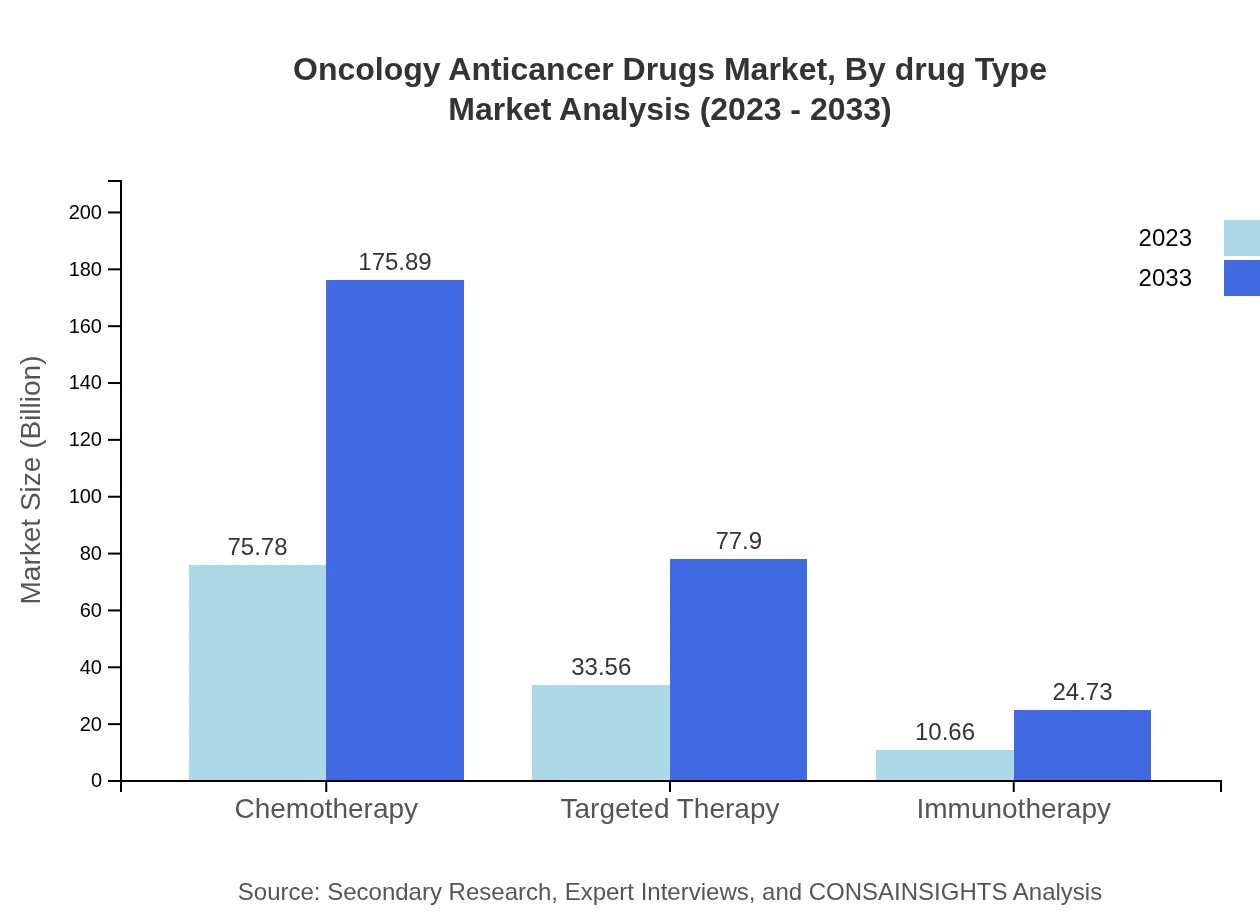
The drug type segment is crucial, comprising chemotherapy, targeted therapy, and immunotherapy. Chemotherapy continues to account for a significant portion of the market share, reaching $75.78 billion in 2023 and expected to grow to $175.89 billion by 2033. Targeted therapies, valued at $33.56 billion in 2023, are anticipated to expand to $77.90 billion, reflecting a growing preference for precision medicine. Immunotherapy, although currently smaller at $10.66 billion, is expected to double by 2033, showcasing its rising importance in cancer treatment paradigms.
Oncology Anticancer Drugs Market Analysis By Cancer Type
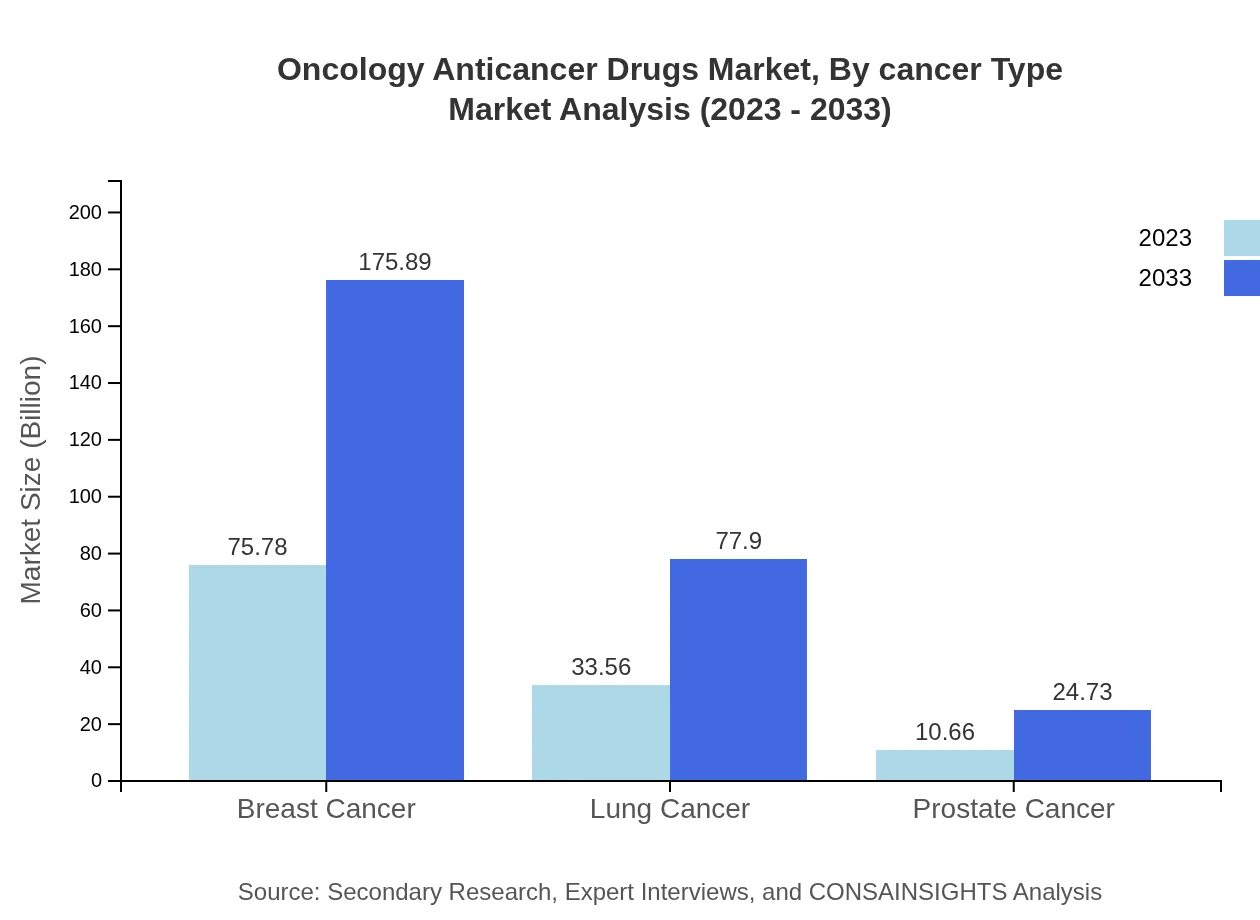
The market segmentation by cancer type includes breast, lung, and prostate cancers. Breast cancer treatments dominate the market, with revenues predicted to increase from $75.78 billion in 2023 to $175.89 billion by 2033. Lung cancer treatments will also gain momentum, rising from $33.56 billion to $77.90 billion over the same period. Prostate cancer therapies, while smaller at $10.66 billion in 2023, are set to expand to $24.73 billion, reflecting an overall trend towards enhanced cancer care and expanded treatment options.
Oncology Anticancer Drugs Market Analysis By Admin Method
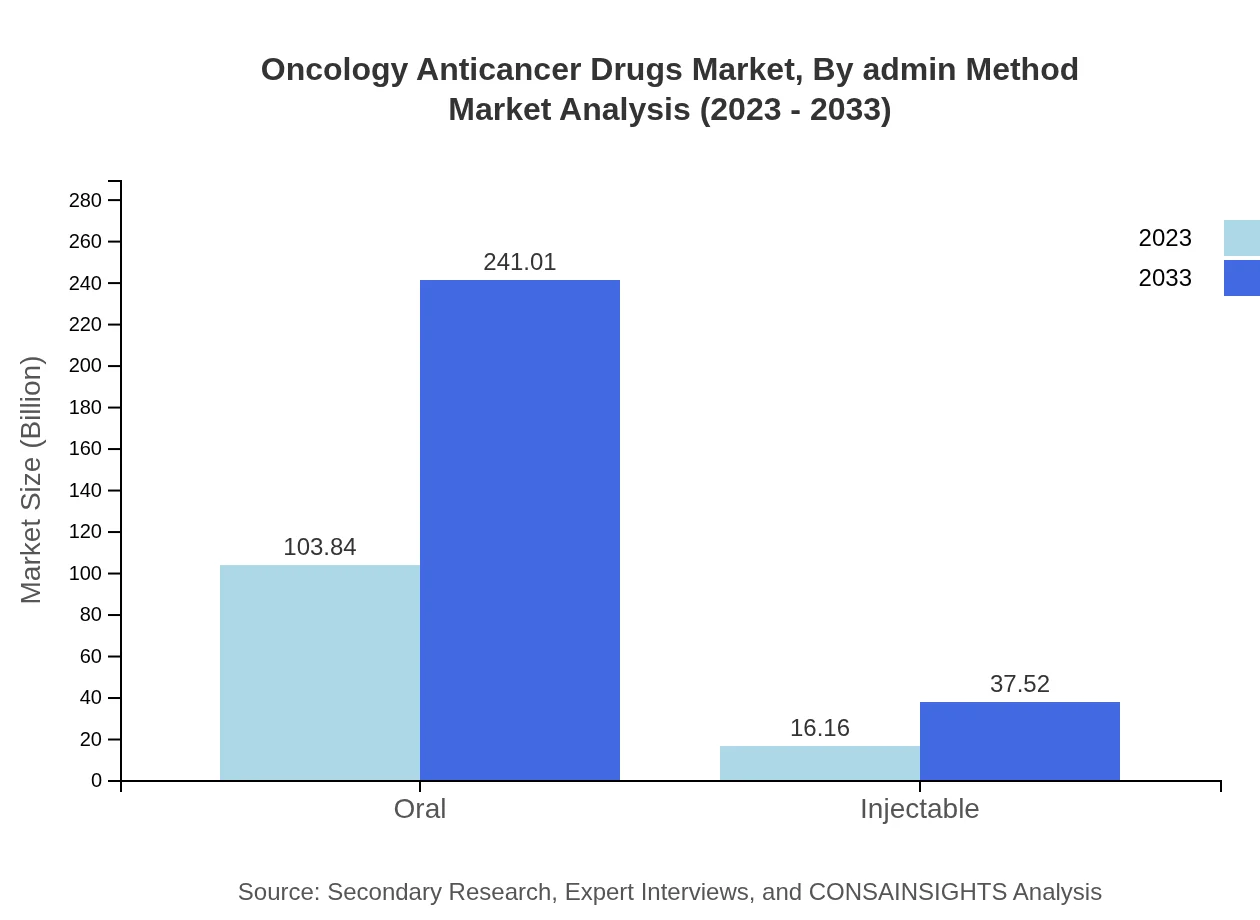
In terms of administration methods, oral and injectable drugs represent significant segments of the market. Oral formulations account for a significant share due to patient convenience, projected to reach $103.84 billion in 2023 and grow to $241.01 billion by 2033. Injectable medications are also vital, growing from $16.16 billion to $37.52 billion, highlighting the need for diverse administration routes to cater to varied patient preferences and clinical settings.
Oncology Anticancer Drugs Market Analysis By End User
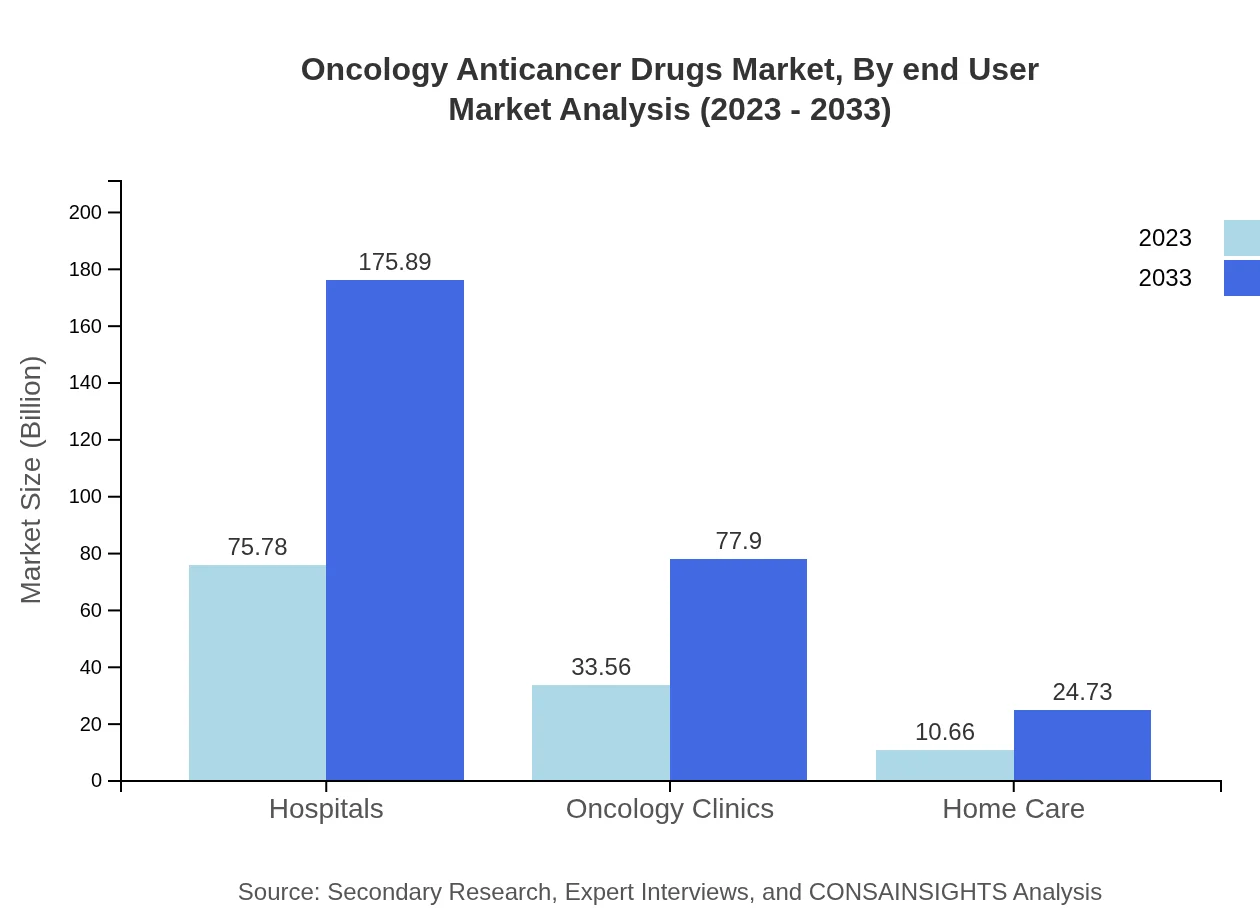
Hospitals represent the largest end-user category, expected to grow from $75.78 billion in 2023 to $175.89 billion by 2033, owing to their comprehensive patient care services. Oncology clinics are also crucial, growing from $33.56 billion to $77.90 billion, as specialized treatment centers gain traction. Home care services, although smaller at $10.66 billion, will increase significantly to $24.73 billion, showing a shift towards outpatient treatment methodologies.
Oncology Anticancer Drugs Market Analysis By Region Strategy
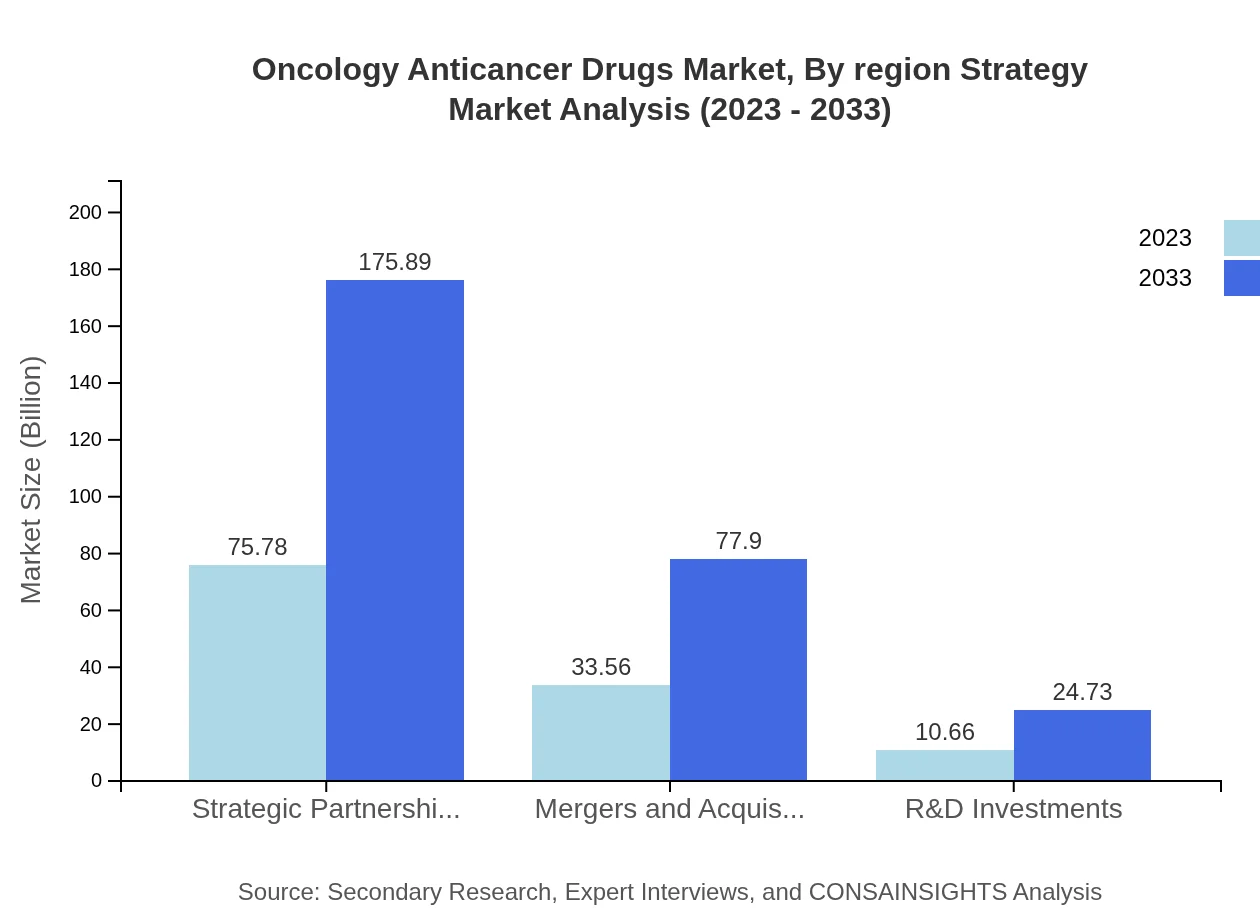
Regional strategies play an essential role in market dynamics. In North America, companies are focusing on strategic partnerships and collaborations to drive innovation. In Europe, regulatory strategies are tailored to ensure fast-track approvals for breakthrough therapies. Meanwhile, in emerging markets such as Asia-Pacific and Africa, collaborative efforts with governments and local firms are prevalent to enhance drug accessibility and affordability, responding to the unique challenges of these markets.
Oncology Anticancer Drugs Market Trends and Future Forecast
Tell us your focus area and get a customized research report.
Global Market Leaders and Top Companies in Oncology Anticancer Drugs Industry
Roche:
A leader in cancer therapies known for its innovative treatments in immunotherapy and targeted drug development.Novartis:
Offers an extensive range of oncology medications, emphasizing research-driven solutions for challenging cancers.Bristol-Myers Squibb:
Pioneers in immunotherapies and combination treatments that have reshaped cancer treatment protocols globally.Pfizer :
Notable for its diverse oncology portfolio and commitment to discovering new therapeutic pathways.Merck & Co.:
Known for its groundbreaking immunotherapy, providing innovative options for various cancer types.We're grateful to work with incredible clients.

FAQs
What is the market size of the Oncology Anticancer Drugs Market Report in 2023?
The market size in 2023 is $120.00 Billion, reported as the baseline value for the 2023 to 2033 forecast period in this report.
How big will the market be by 2033?
By 2033 the Oncology Anticancer Drugs market is projected to reach $278.53 Billion, reflecting growth measured across the stated forecast period.
What is CAGR for the forecast period?
The forecast period from 2023 to 2033 carries a compound annual growth rate (CAGR) of 8.5% as stated in the report.
Is there a single fastest Growing region in the Oncology Anticancer Drugs Market Report market?
No single fastest-growing region is stated for the Oncology Anticancer Drugs Market Report market because the top regional implied CAGR values are within 0.15 percentage points of each other, making the ranking too close to call reliably.
Which companies are highlighted in the report?
Top companies listed include Roche, Novartis, Bristol-Myers Squibb, Pfizer, and Merck & Co., noted for their R&D and portfolio strategies in anticancer therapies.
Who were the primary information sources for this research?
Primary inputs include interviews with industry experts, supported by secondary research via company reports and publications plus internal data validation and triangulation.
What are the main product categories covered?
The report covers drug types such as chemotherapy, targeted therapy, and immunotherapy, along with administration routes categorized as oral and injectable.
How are end users segmented in the report?
End-user segments include hospitals, oncology clinics, and home care settings, each examined for demand patterns and delivery model implications.