
Reports >
Life Sciences
>
Eye Care Surgical Market Report

Eye Care Surgical Market Report
First published: 12 October 2024 | Last updated: 25 May 2026 | Report Code: eye-care-surgical
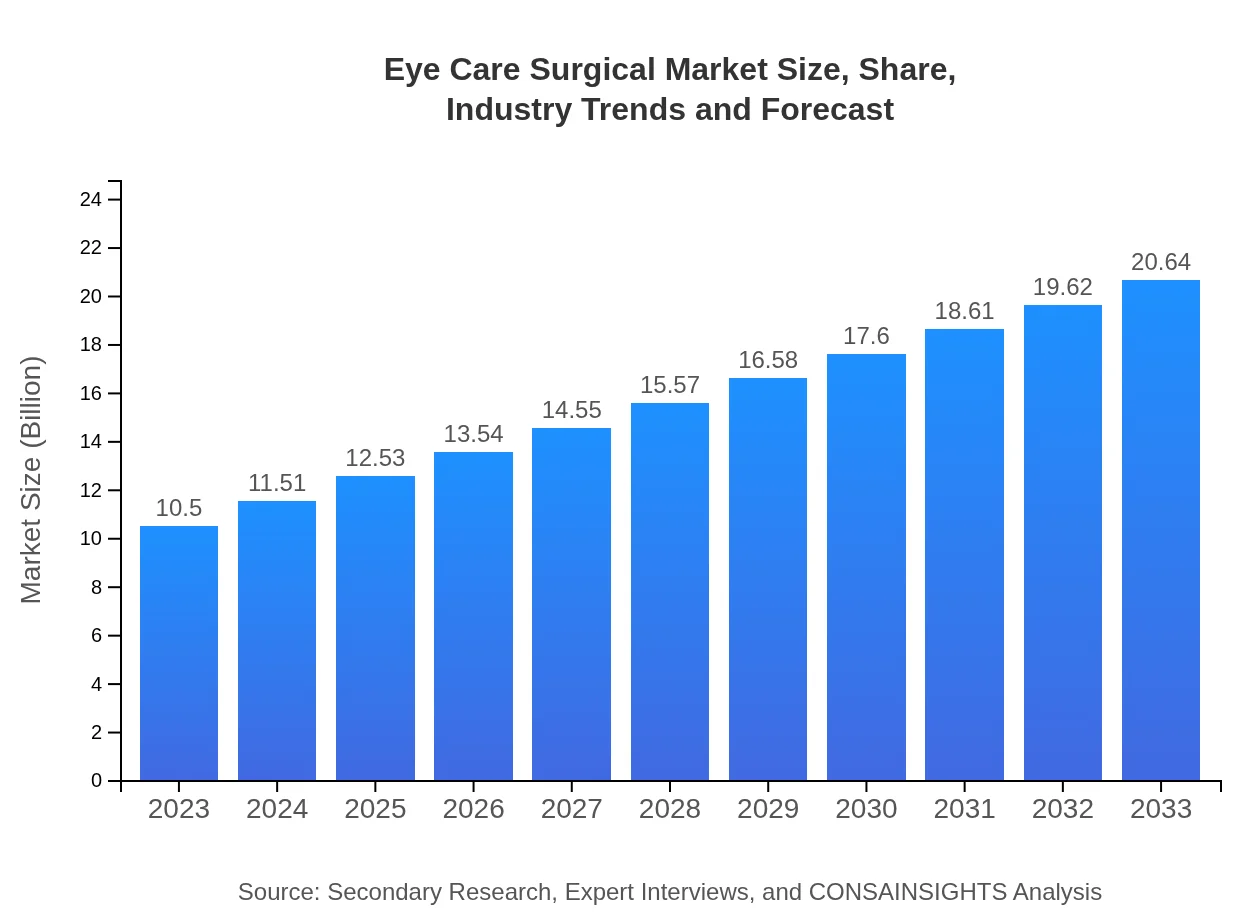
Eye Care Surgical Market — USD 10.5 billion in 2023, Growing to USD 20.64B by 2033 at 6.8% CAGR
This report provides comprehensive insights into the Eye Care Surgical market, examining trends, critical metrics, and regional dynamics to forecast growth from 2023 to 2033.
Key Takeaways
- Global market expands from $10.50 Billion in 2023 to $20.64 Billion in 2033 at a 6.8% CAGR.
- North America is largest regional market, while no single fastest-growing region is stated because regional CAGR differences remain within 0.15 percentage points.
- Technology shifts toward minimally invasive procedures and advanced instruments are central growth factors.
- Hospitals, eye clinics, and ambulatory surgery centers remain key end-user segments supporting procedure uptake.
Eye Care Surgical Market Report — Executive Summary
North America remains largest market by forecast-period value, while no single fastest-growing region is stated because top regional growth rates are separated by less than 0.15 percentage points. This report outlines the Eye Care Surgical market’s projected progression from $10.50 Billion in 2023 to $20.64 Billion in 2033, at a 6.8% CAGR for the forecast period 2023 to 2033. Growth is driven by demographic trends, rising incidence of cataracts and glaucoma, and investment in surgical technologies that improve precision and recovery. The landscape includes major manufacturers such as Johnson & Johnson Vision, Alcon Inc., Bausch + Lomb, Novartis AG and ZEISS International. Key developments include adoption of minimally invasive techniques, expanded outpatient surgical capacity, and enhanced surgical instruments and implants. The report segments the market by device, procedure, technology and end user, and provides regional breakdowns to highlight where market value is concentrated. Regulatory standards and training of skilled practitioners are emphasized as necessary enablers, while cost and access considerations remain constraints. Overall, the document synthesizes primary expert interviews and secondary literature to present validated insights for stakeholders and investors.
Key Growth Drivers
- Aging populations increasing demand for cataract and glaucoma surgeries.
- Advances in minimally invasive surgical techniques improving patient recovery and procedure adoption.
- Investment in precision surgical instruments and ophthalmic lasers enhancing outcomes.
- Expansion of outpatient and ambulatory surgery capacity supporting higher procedure volumes.
| Metric | Value |
|---|---|
| Study Period | 2023 - 2033 |
| 2023 Market Size | $10.50 Billion |
| CAGR (2023-2033) | 6.8% |
| 2033 Market Size | $20.64 Billion |
| Top Companies | Johnson & Johnson Vision, Alcon Inc., Bausch + Lomb, Novartis AG, ZEISS International |
| Published Date | 12 October 2024 |
| Last Modified Date | 25 May 2026 |
Eye Care Surgical Market Overview
Customize Eye Care Surgical Market Report market research report
- ✔ Get in-depth analysis of Eye Care Surgical market size, growth, and forecasts.
- ✔ Understand Eye Care Surgical's regional dynamics and industry-specific trends.
- ✔ Identify potential applications, end-user demand, and growth segments in Eye Care Surgical
What is the Market Size & CAGR of Eye Care Surgical Market Report market in 2023?
Eye Care Surgical Industry Analysis
Eye Care Surgical Market Segmentation and Scope
Tell us your focus area and get a customized research report.
Eye Care Surgical Market Report Market Analysis Report by Region
Europe Eye Care Surgical Market Report:
Europe grows from $2.67 Billion in 2023 to $5.25 Billion in 2033. Market expansion is supported by aging populations, regulatory emphasis on safety and standards, and steady uptake of advanced ophthalmic devices and minimally invasive approaches.Asia Pacific Eye Care Surgical Market Report:
Asia Pacific grows from $2.29 Billion in 2023 to $4.5 Billion in 2033. Growth drivers include rising awareness of eye health, expanding healthcare access, and adoption of improved surgical techniques and instruments across hospitals and specialty clinics.North America Eye Care Surgical Market Report:
North America is largest regional market, rising from $3.78 Billion in 2023 to $7.43 Billion in 2033. Local demand is supported by advanced clinical infrastructure, investment in new surgical technologies, and a high prevalence of age-related eye conditions that increase surgical procedure volumes.South America Eye Care Surgical Market Report:
Latin America grows from $0.37 Billion in 2023 to $0.72 Billion in 2033. Regional expansion reflects growing demand for vision-restoring surgeries, improving healthcare infrastructure, and gradual adoption of modern surgical devices and outpatient services.Middle East & Africa Eye Care Surgical Market Report:
Middle East and Africa grows from $1.39 Billion in 2023 to $2.74 Billion in 2033. Drivers include increasing investments in healthcare facilities, improved access to ophthalmic specialists, and the uptake of minimally invasive surgical technologies.Tell us your focus area and get a customized research report.
Research Methodology
Eye Care Surgical Market Analysis By Procedure
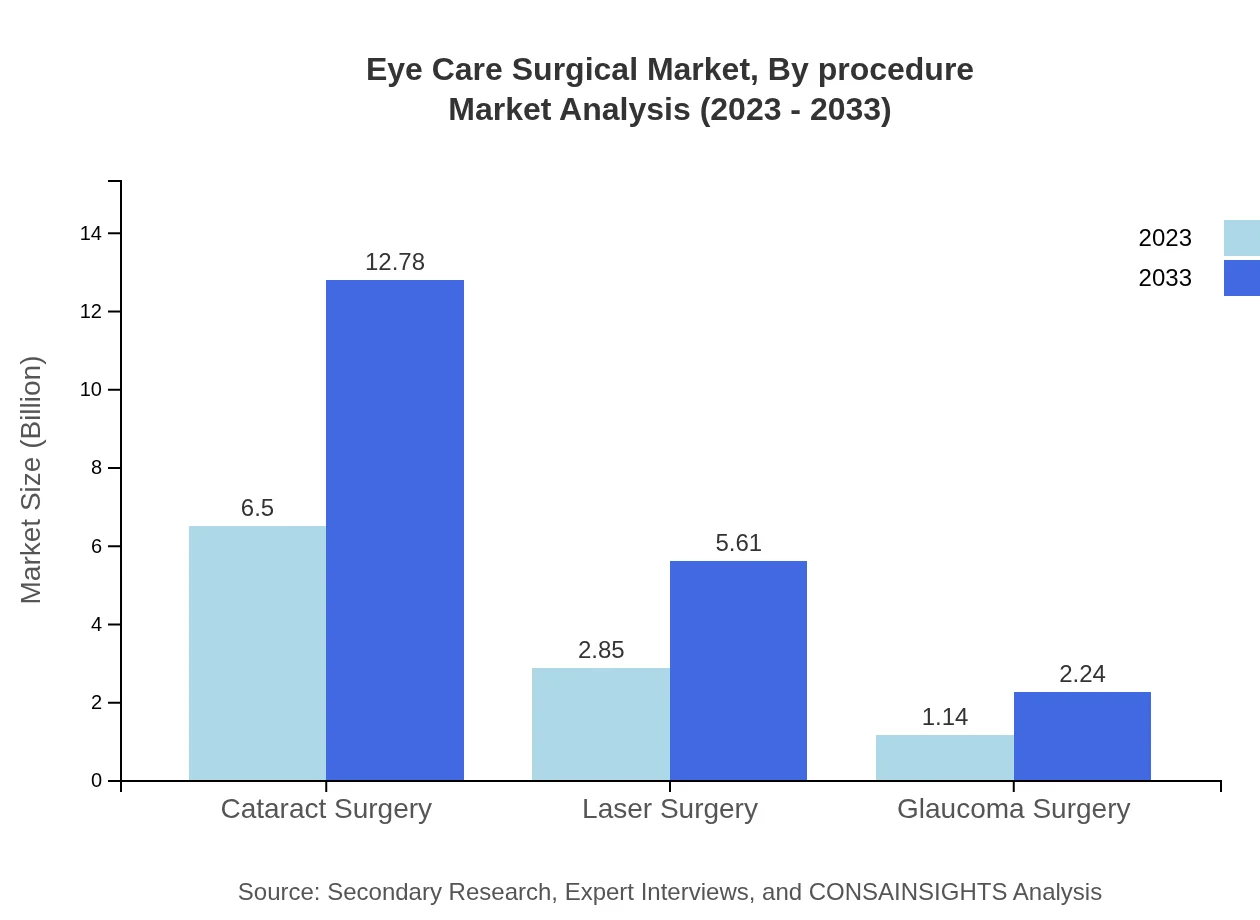
The Eye Care Surgical market by procedure is dominated by cataract surgery, which holds a significant market share due to the high prevalence of cataracts globally. Laser surgery, including refractive surgeries, is also notable for its rapid growth driven by technological advancements. Glaucoma surgery, while smaller in market size, is gaining traction due to increasing awareness and diagnosis. The traditional surgical methods maintain significant share, driven by established practices in various regions.
Eye Care Surgical Market Analysis By Device
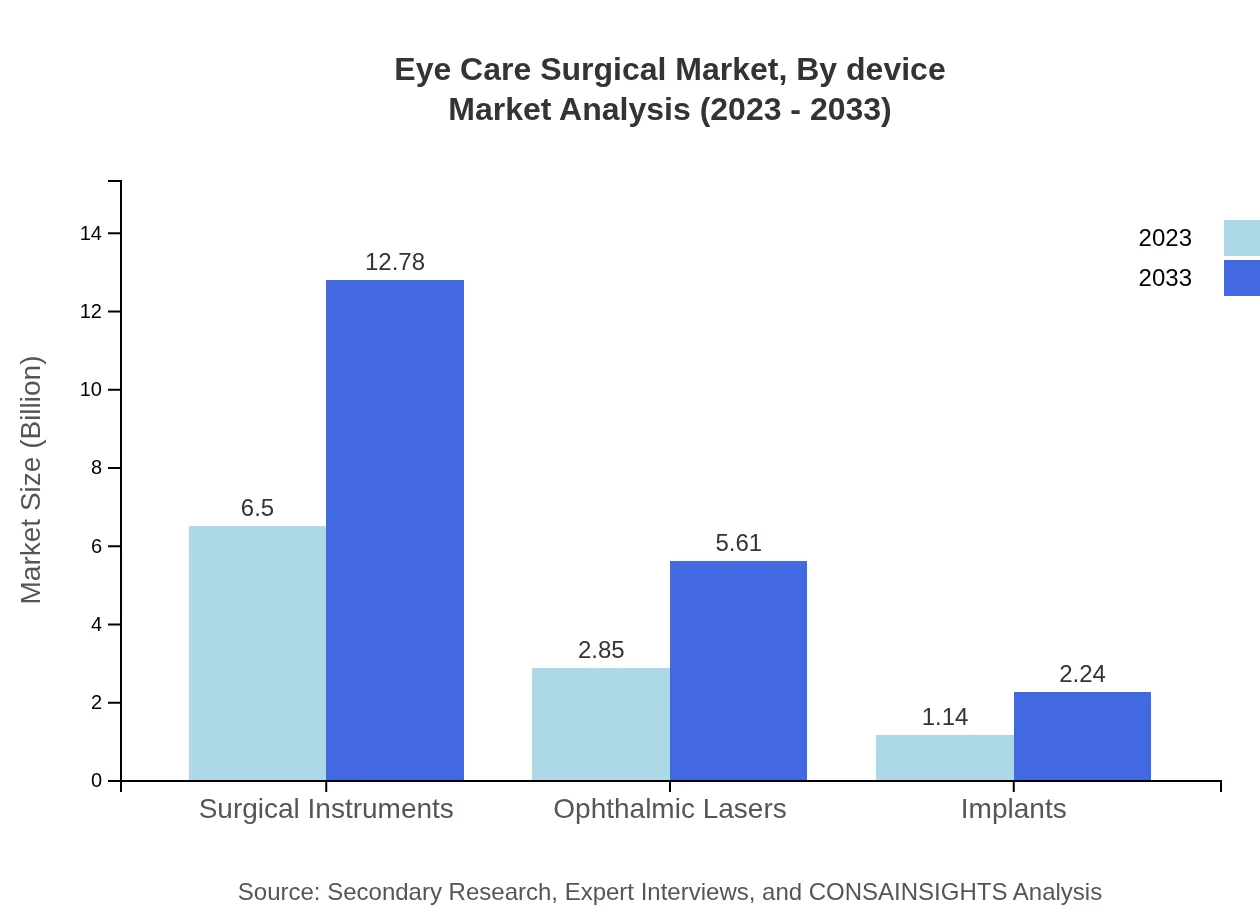
The market by device is largely led by surgical instruments, which are essential for various eye surgeries. Ophthalmic lasers are another crucial segment, enjoying significant growth as innovative laser technologies improve surgical outcomes. Implants, particularly intraocular lenses, play a vital role in cataract surgeries and are contributing to the expanding market share.
Eye Care Surgical Market Analysis By Technology
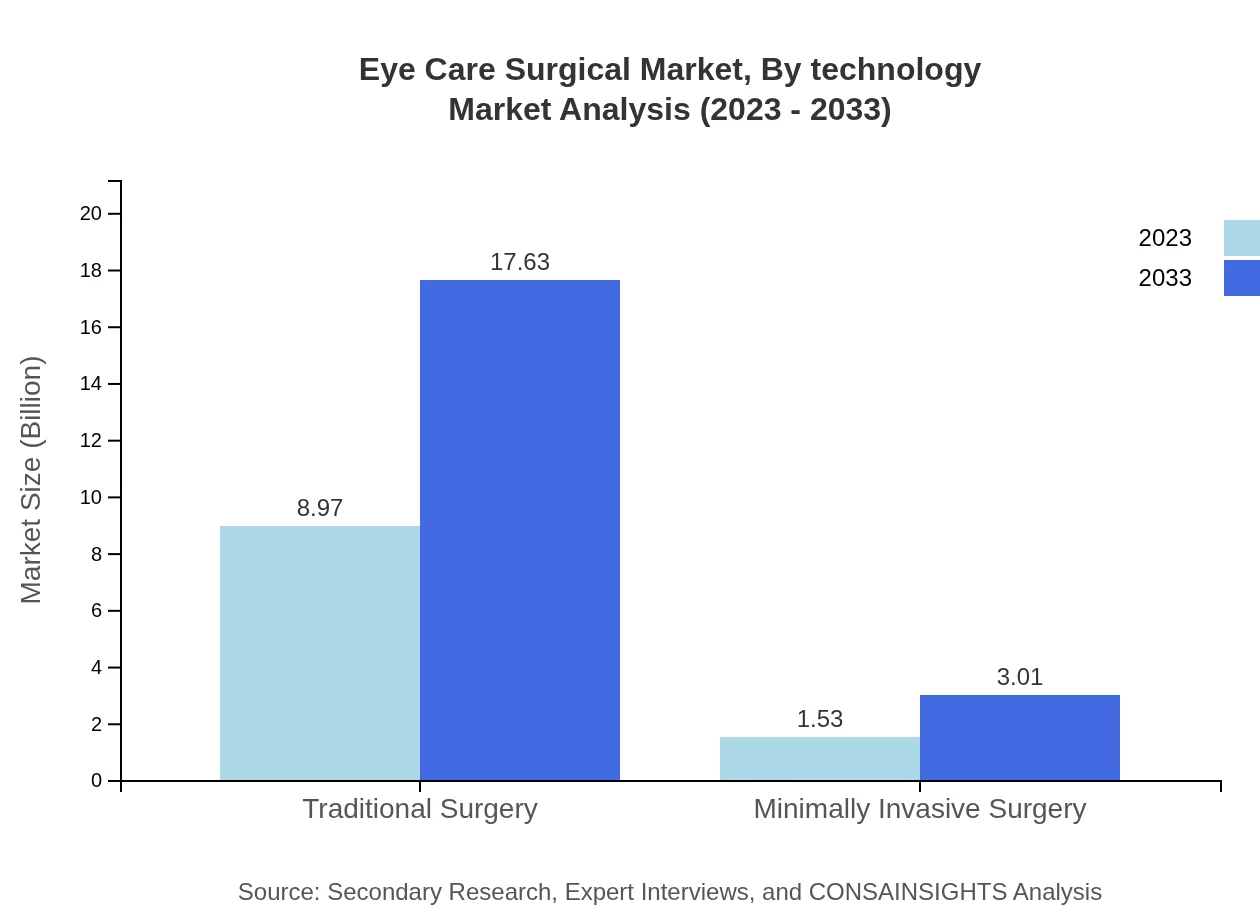
The Eye Care Surgical market by technology primarily comprises traditional surgery, which still dominates due to established practices and familiarity among surgeons. However, minimally invasive surgical techniques are rapidly gaining acceptance due to benefits such as reduced recovery times and lower risk of complications, driving progressive shifts within the market.
Eye Care Surgical Market Analysis By End User
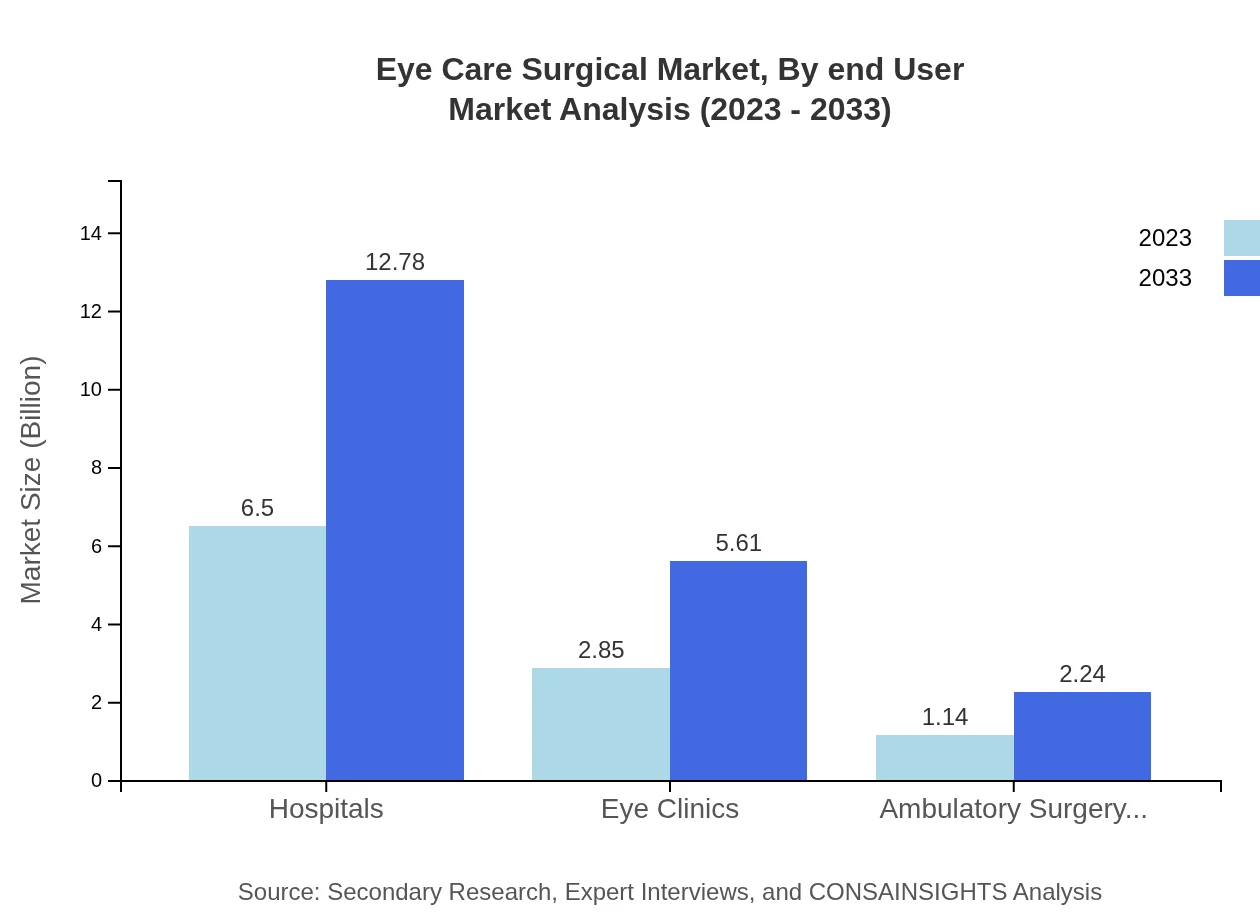
Hospitals represent the largest segment in the Eye Care Surgical market due to their capacity to provide comprehensive surgical care. Eye clinics and ambulatory surgery centers are growing segments, reflecting trends towards specialized eye care services and outpatient procedures, which cater to patient preferences for convenience and lower costs.
Eye Care Surgical Market Analysis By Region Type
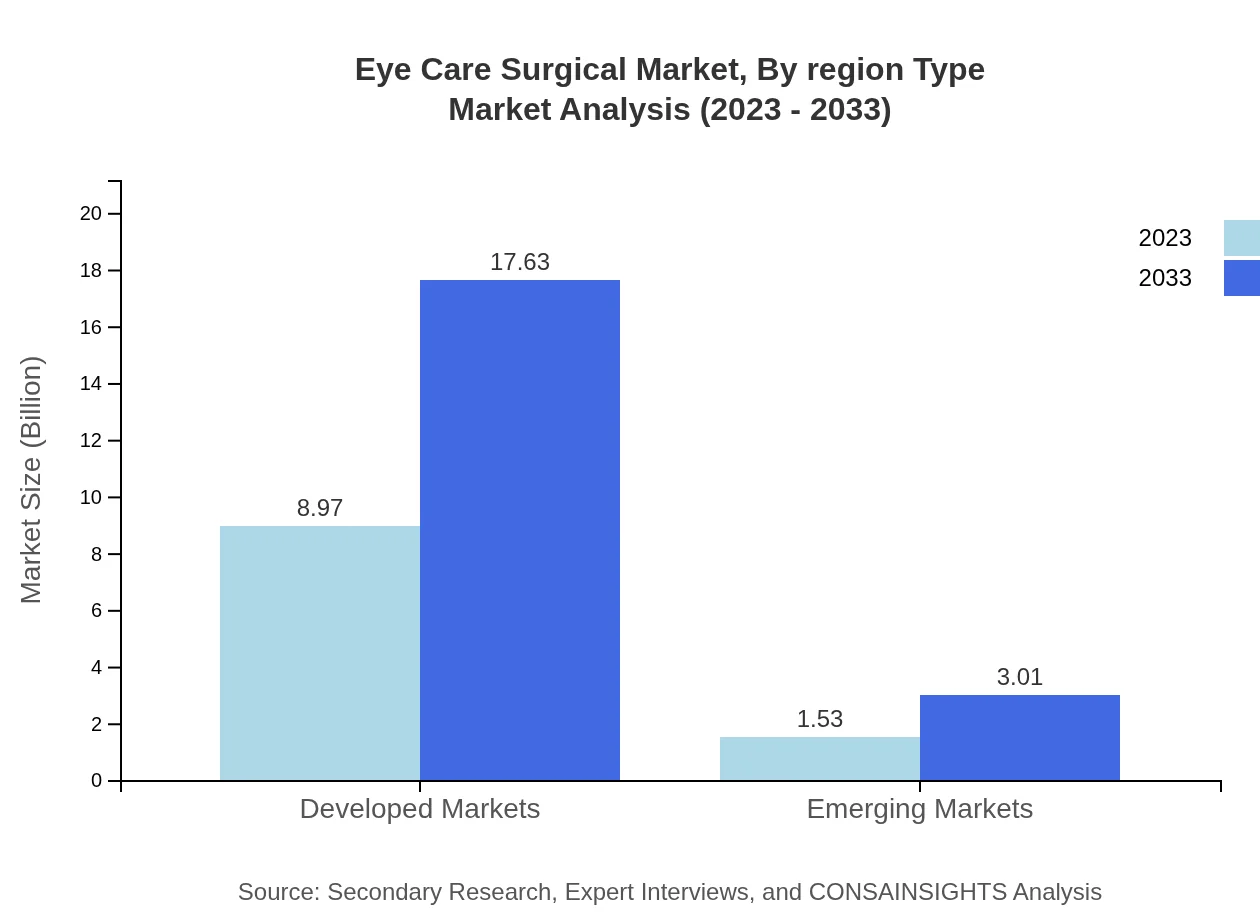
The market's regional segmentation underscores the uneven growth patterns across geographies, with developed markets like North America and Europe leading while emerging markets in Asia Pacific and Latin America display strong growth potential as healthcare access improves and awareness of eye health increases.
Eye Care Surgical Market Trends and Future Forecast
Tell us your focus area and get a customized research report.
Global Market Leaders and Top Companies in Eye Care Surgical Industry
Johnson & Johnson Vision:
A leading company in the Eye Care Surgical industry, offering a broad portfolio of surgical products including ophthalmic surgical instruments and technologies, particularly for cataract and refractive surgeries.Alcon Inc.:
Specializing in ocular pharmaceuticals and surgical equipment, Alcon is a major player known for innovations in eye surgery equipment, including advanced cataract surgery tools and intraocular lenses.Bausch + Lomb:
A long-established leader in the vision care industry, Bausch + Lomb offers a range of surgical and vision care products, focusing on cataracts and refractive surgery, enhancing patient outcomes.Novartis AG:
Through its subsidiary Alcon, Novartis is heavily invested in advancing eye health technologies, particularly in surgical solutions that address various eye conditions.ZEISS International:
ZEISS is renowned for its high precision optics, providing eye surgeons with innovative instruments and microscopes used in various eye surgical procedures.We're grateful to work with incredible clients.









FAQs
What is the market size of the Eye Care Surgical market in 2023?
The market size in 2023 is $10.50 Billion, based on the provided report figures for the global Eye Care Surgical sector.
How big will the Eye Care Surgical market be in 2033?
The projected market value for 2033 is $20.64 Billion, as stated in the report’s forecast for the 2023 to 2033 period.
What is CAGR for the forecast period?
The compound annual growth rate for the forecast period 2023 to 2033 is 6.8%, according to the report’s supplied data.
Is there a single fastest Growing region in the Eye Care Surgical Market Report market?
No single fastest-growing region is stated for the Eye Care Surgical Market Report market because the top regional implied CAGR values are within 0.15 percentage points of each other, making the ranking too close to call reliably.
Why are minimally invasive procedures important for market growth?
Minimally invasive procedures shorten recovery times and lower costs, encouraging wider adoption and contributing to increased procedural volumes across health systems.
Which companies are named as leading players in the report?
Top companies listed include Johnson & Johnson Vision, Alcon Inc., Bausch + Lomb, Novartis AG and ZEISS International.
What end users drive demand in the Eye Care Surgical market?
Hospitals, eye clinics, and ambulatory surgery centers are primary end users that sustain demand for surgical devices and procedures.
How is regulatory oversight affecting the market?
Regulatory frameworks enhance patient safety and standardization, supporting market confidence but also requiring compliance investments from manufacturers and providers.