

Fetal Monitoring Market Report
First published: 22 October 2024 | Last updated: 25 May 2026 | Report Code: fetal-monitoring
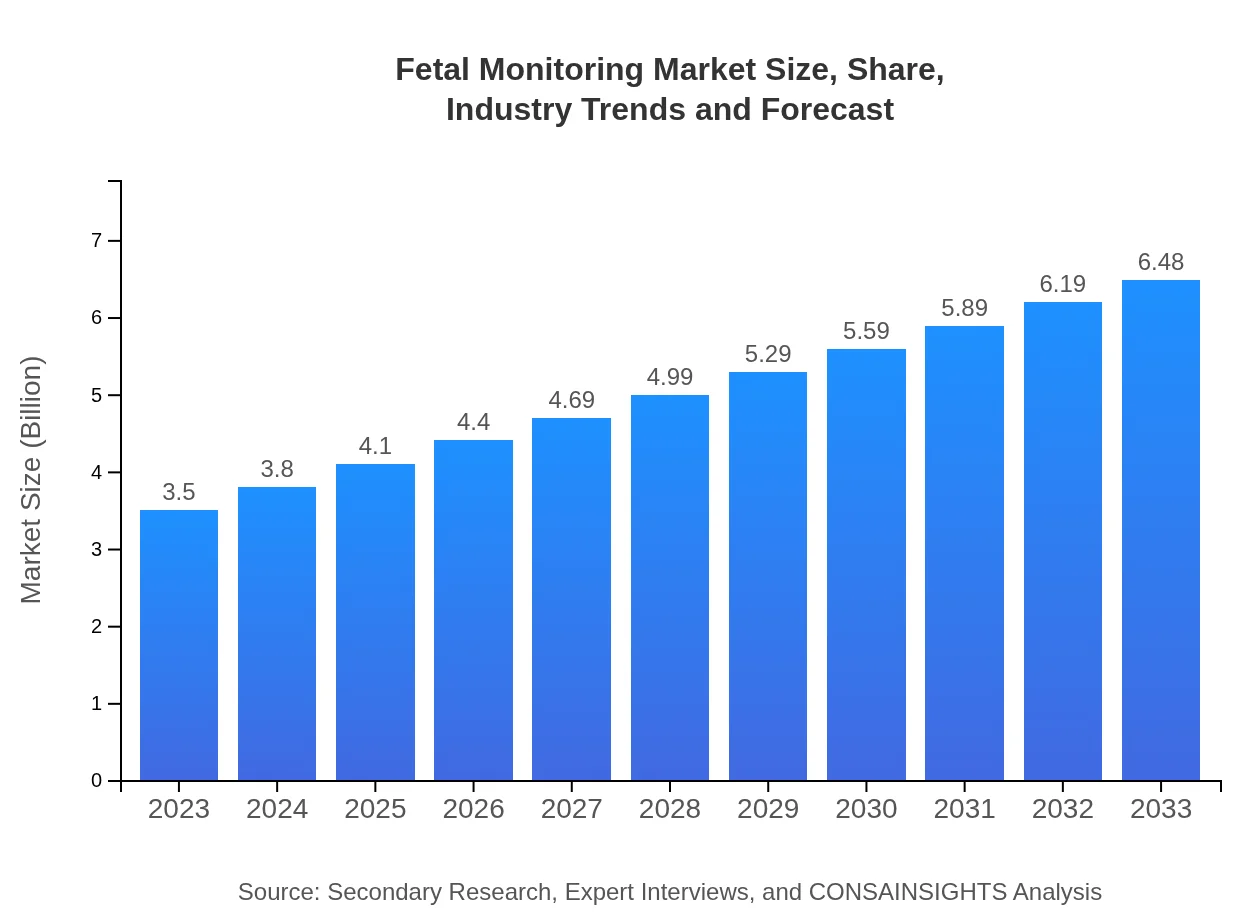
Fetal Monitoring Market — USD 3.5 billion in 2023, Growing to USD 6.48B by 2033 at 6.2% CAGR
This report provides an in-depth analysis of the Fetal Monitoring market from 2023 to 2033. It includes insights into market size, growth trends, technological advancements, regional analysis, and profiles of key players, offering a comprehensive view of the industry landscape.
Key Takeaways
- Global market expands from $3.50 Billion (2023) to $6.48 Billion (2033) with a 6.2% CAGR over 2023 to 2033.
- North America is largest regional market, while no single fastest-growing region is stated because regional CAGR differences remain within 0.15 percentage points.
- North America is the largest region, increasing from $1.22 Billion in 2023 to $2.27 Billion in 2033.
- Non-invasive and invasive monitoring technologies and software form key product groupings driving adoption.
- Hospitals, clinics, home care and others comprise end-user segments with rising demand for integrated solutions.
- Leading companies named include GE Healthcare, Philips Healthcare, Medtronic and Natus Medical.
Fetal Monitoring Market Report — Executive Summary
North America remains largest market by forecast-period value, while no single fastest-growing region is stated because top regional growth rates are separated by less than 0.15 percentage points. The fetal monitoring market is poised for steady expansion, rising from $3.50 Billion in 2023 to $6.48 Billion in 2033 at a 6.2% CAGR over the forecast period 2023 to 2033. Growth is supported by technological progress across non-invasive and invasive monitoring, expanded software capabilities, and greater emphasis on maternal-fetal health. Demand in hospital and clinic settings, together with emerging home care deployment, is shaping product development and service models. Regional performance varies: North America is the largest regional market, while other regions register notable gains. Established vendors such as GE Healthcare, Philips Healthcare, Medtronic and Natus Medical remain influential through product innovation and partnerships. Regulatory requirements, telehealth integration, and staff training considerations are ongoing implementation factors. The report synthesizes primary interviews, company disclosures, and expert validation to offer a structured view of opportunities across technologies, applications, and end users.
Key Growth Drivers
- Advances in monitoring technology, including enhanced sensors and connected software, increase clinical utility and adoption.
- Rising focus on maternal and fetal health encourages investments in monitoring equipment across hospitals and clinics.
- Expansion of home care and remote monitoring capabilities supports demand for portable and user-friendly products.
- Integration of fetal monitoring software with clinical workflows and telehealth services improves care coordination.
- Regulatory emphasis on perinatal safety and standardization drives procurement of validated monitoring solutions.
| Metric | Value |
|---|---|
| Study Period | 2023 - 2033 |
| 2023 Market Size | $3.50 Billion |
| CAGR (2023-2033) | 6.2% |
| 2033 Market Size | $6.48 Billion |
| Top Companies | GE Healthcare, Philips Healthcare, Medtronic , Natus Medical |
| Published Date | 22 October 2024 |
| Last Modified Date | 25 May 2026 |
Fetal Monitoring Market Overview
Customize Fetal Monitoring Market Report market research report
- ✔ Get in-depth analysis of Fetal Monitoring market size, growth, and forecasts.
- ✔ Understand Fetal Monitoring's regional dynamics and industry-specific trends.
- ✔ Identify potential applications, end-user demand, and growth segments in Fetal Monitoring
What is the Market Size & CAGR of Fetal Monitoring Market Report market in 2023?
Fetal Monitoring Industry Analysis
Fetal Monitoring Market Segmentation and Scope
Tell us your focus area and get a customized research report.
Fetal Monitoring Market Report Market Analysis Report by Region
Europe Fetal Monitoring Market Report:
Europe grows from $0.99 Billion in 2023 to $1.83 Billion in 2033. Adoption is supported by strong clinical standards, emphasis on perinatal safety, and rising integration of monitoring systems in hospitals and clinics.Asia Pacific Fetal Monitoring Market Report:
Asia Pacific grows from $0.74 Billion in 2023 to $1.37 Billion in 2033. Growth reflects increasing healthcare investment, wider access to diagnostics, and growing demand for maternal health services across both developed and emerging markets.North America Fetal Monitoring Market Report:
North America is largest regional market, rising from $1.22 Billion in 2023 to $2.27 Billion in 2033. Regional strength is linked to advanced healthcare infrastructure, high adoption of clinical technologies, and investment in maternal-fetal care solutions.South America Fetal Monitoring Market Report:
Latin America grows from $0.28 Billion in 2023 to $0.51 Billion in 2033. Market gains are associated with improved healthcare delivery, greater availability of monitoring equipment, and focus on reducing perinatal risks.Middle East & Africa Fetal Monitoring Market Report:
Middle East and Africa grows from $0.27 Billion in 2023 to $0.5 Billion in 2033. Expansion is tied to ongoing healthcare infrastructure development, increased awareness of maternal health, and gradual adoption of monitoring technologies.Tell us your focus area and get a customized research report.
Research Methodology
Fetal Monitoring Market Analysis By Product Type
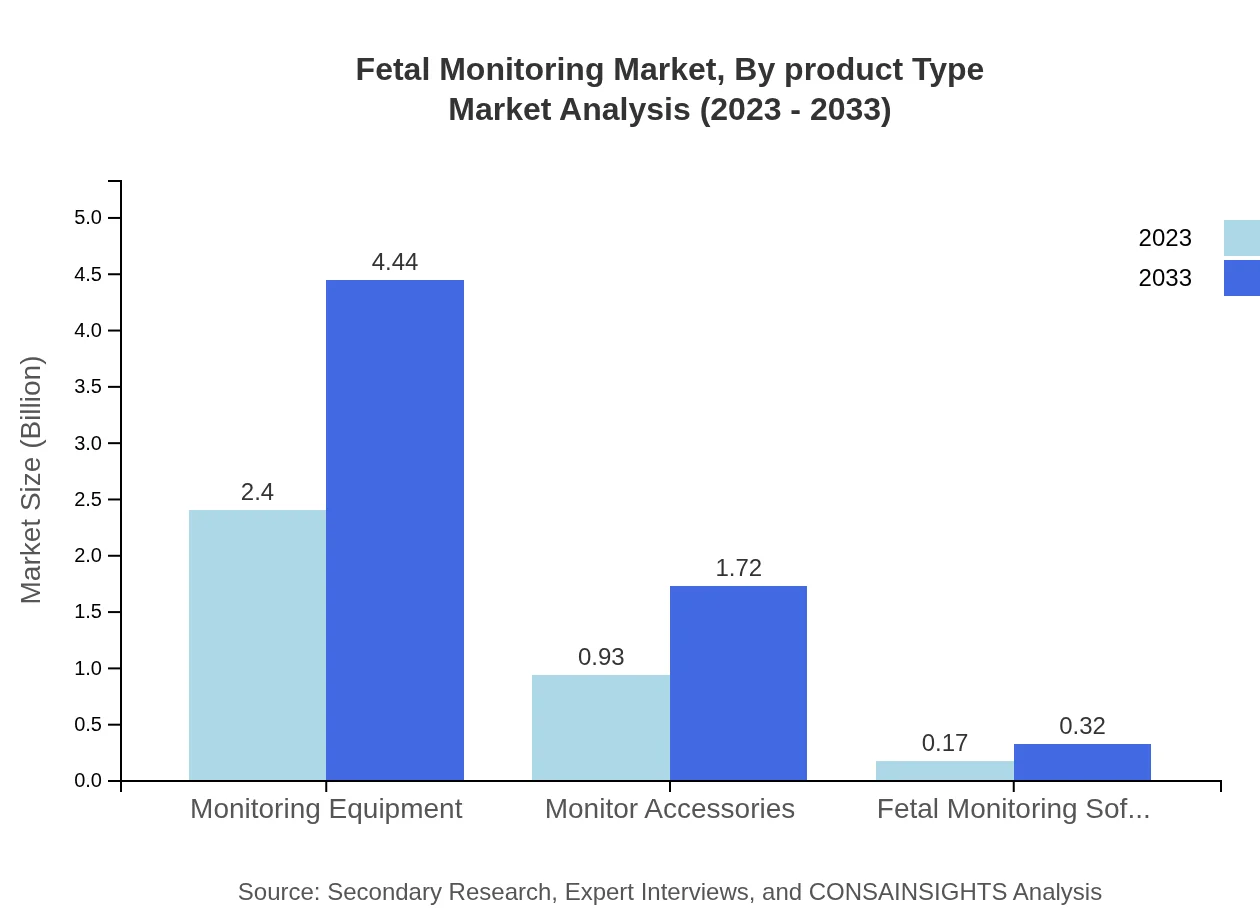
The product type segmentation highlights Monitoring Equipment, which accounts for the largest market share, valued at $2.40 billion in 2023 and projected to increase to $4.44 billion by 2033. Monitor Accessories and fetal monitoring software have relatively smaller market sizes, indicating growing reliance on comprehensive monitoring solutions.
Fetal Monitoring Market Analysis By Application
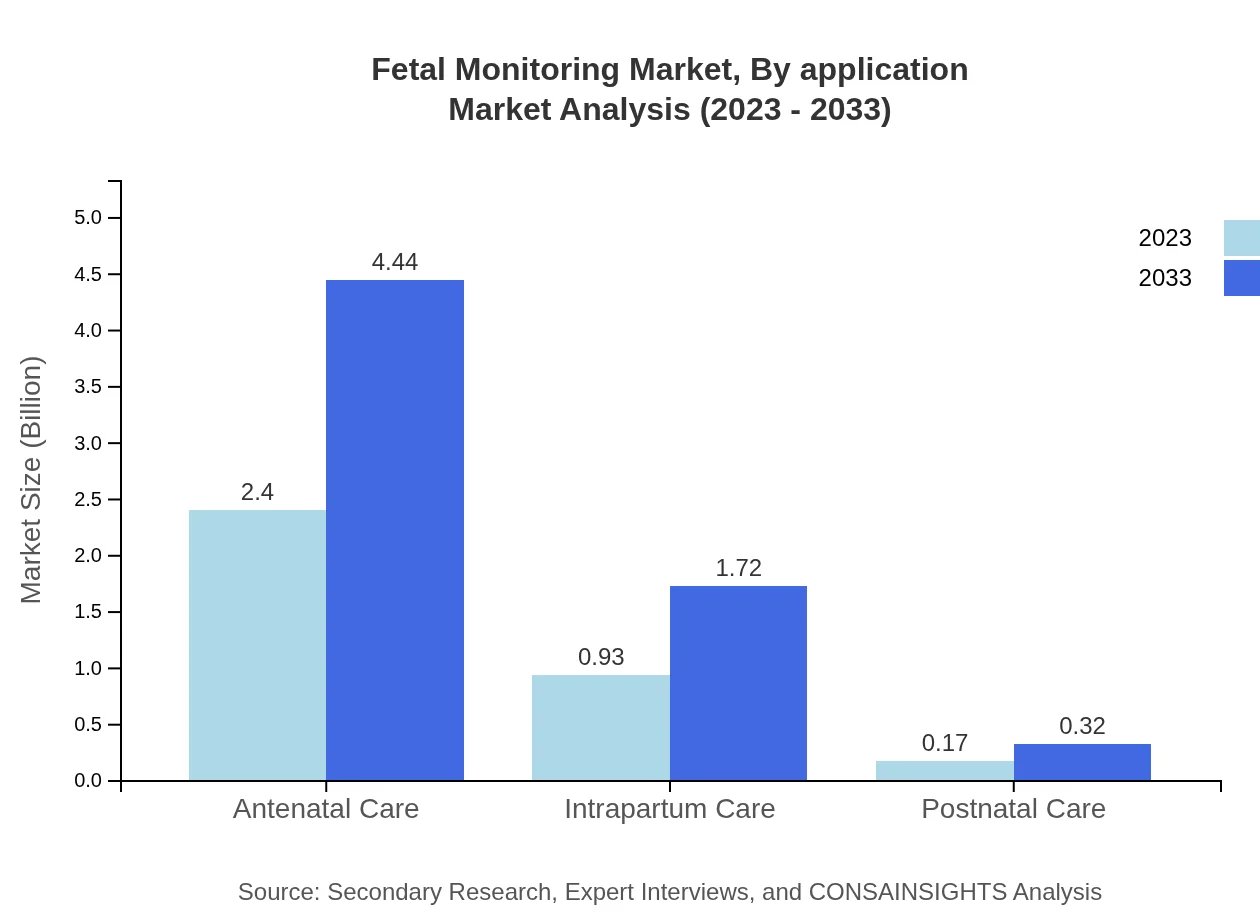
In terms of applications, Antenatal Care dominates the market with revenues of $2.40 billion in 2023 and expected to rise to $4.44 billion by 2033. Intrapartum and postnatal care applications are also growing but present smaller segments, emphasizing the increasing importance of monitoring throughout pregnancy.
Fetal Monitoring Market Analysis By Technology
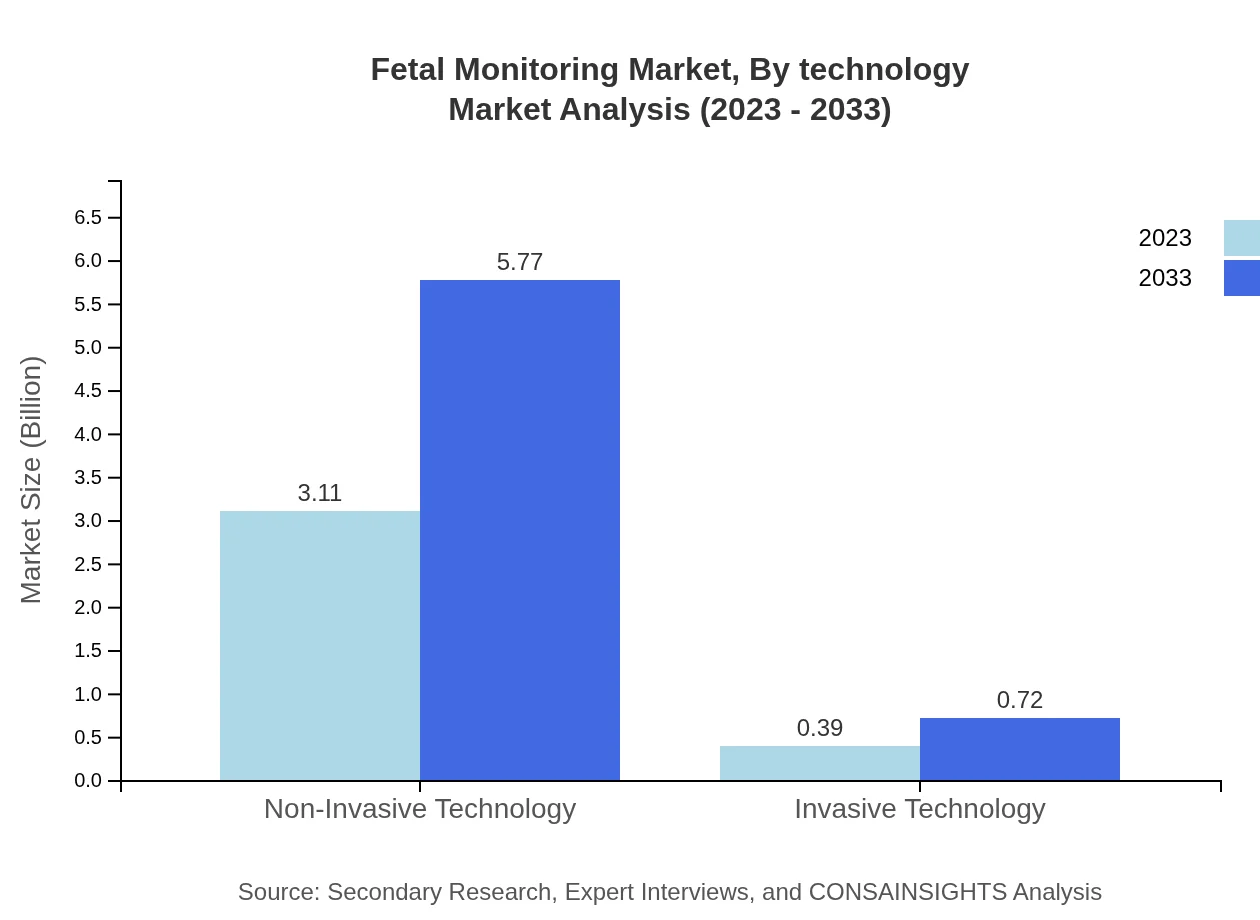
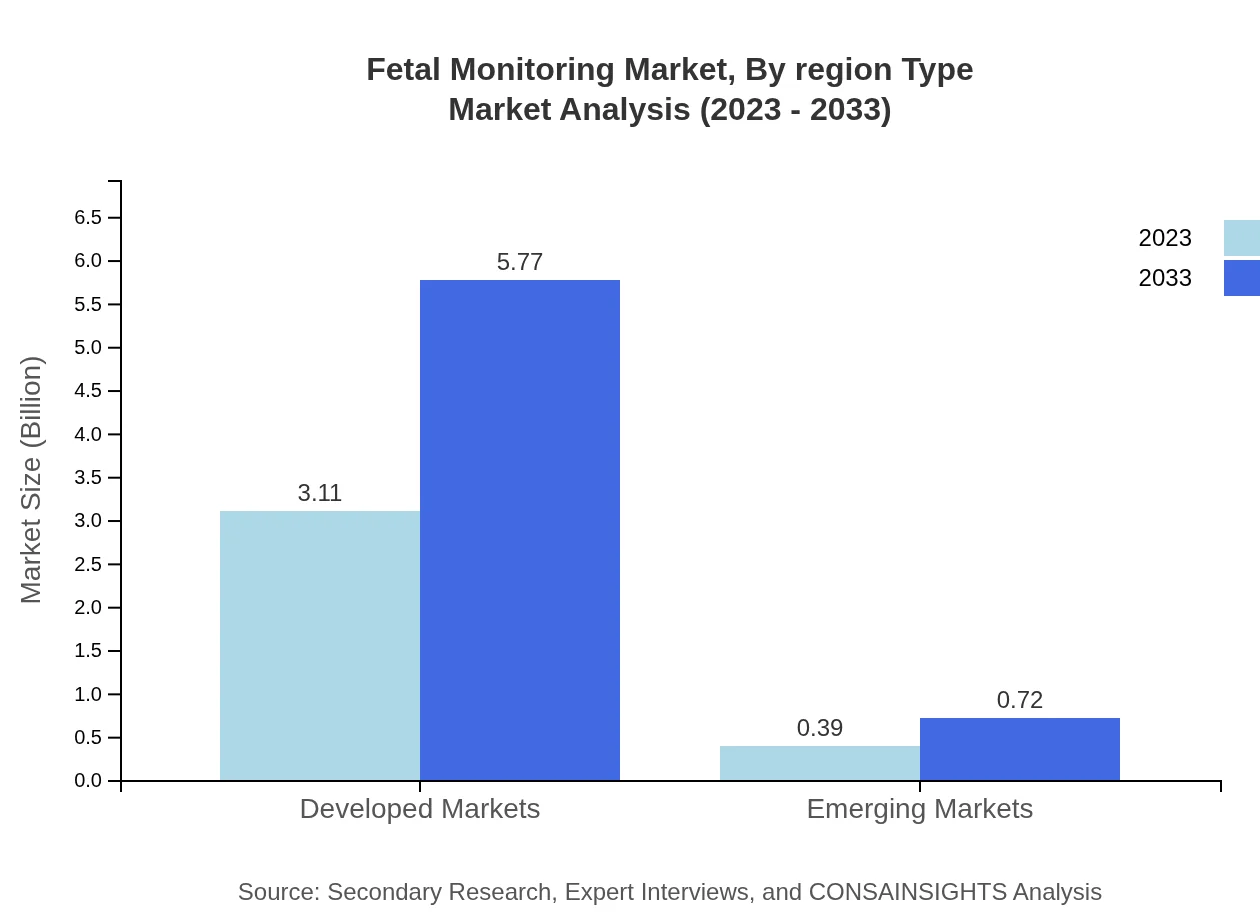
Non-invasive technology holds a substantial market share, representing $3.11 billion in 2023 and projected to reach $5.77 billion by 2033. This reflects a significant trend towards user-friendly and less intrusive methods of monitoring compared to invasive technology.
Fetal Monitoring Market Analysis By End User
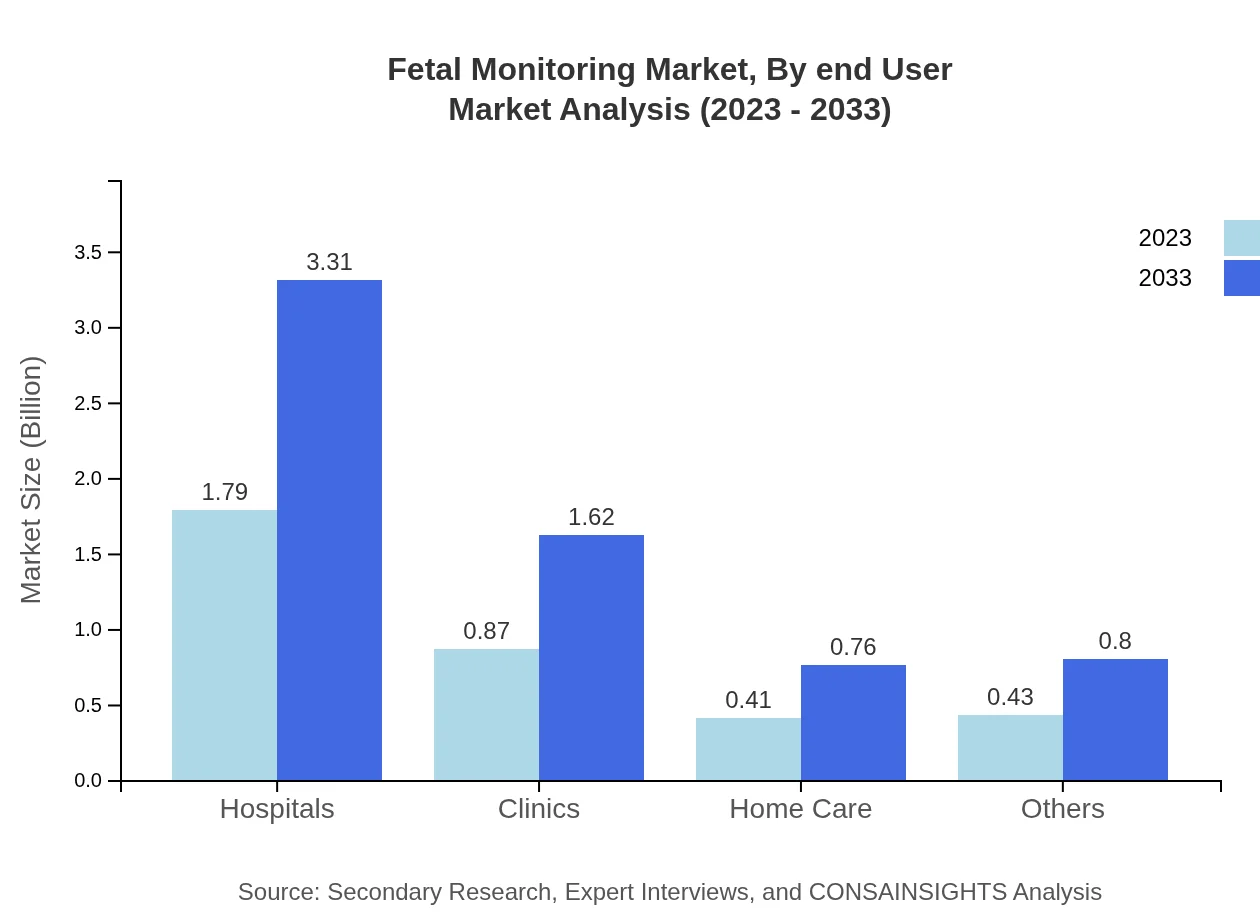
Hospitals are the leading end-user segment of the Fetal Monitoring market, valued at $1.79 billion in 2023 and forecasted to grow to $3.31 billion by 2033. Clinics and home care services also account for considerable shares, allowing for flexible patient care across various settings.
Fetal Monitoring Market Trends and Future Forecast
Tell us your focus area and get a customized research report.
Global Market Leaders and Top Companies in Fetal Monitoring Industry
GE Healthcare:
An industry leader in medical imaging and healthcare technologies, GE Healthcare provides advanced fetal monitoring equipment that enhances patient care and outcomes.Philips Healthcare:
Philips Healthcare offers innovative fetal monitoring solutions emphasizing patient-centered care and technological integration to streamline healthcare processes.Medtronic :
Medtronic specializes in minimally invasive technologies and has expanded its portfolio to include advanced fetal monitoring systems, focusing on improving maternal and fetal health.Natus Medical:
Natus Medical is committed to advancing newborn and maternal health with its comprehensive fetal monitoring devices and solutions targeted at clinical efficacy.We're grateful to work with incredible clients.









FAQs
What is the market size of the fetal monitoring market in 2023?
The fetal monitoring market size in 2023 is $3.50 Billion, based on the provided market estimates and regional breakdowns.
How big will the market be in 2033?
The market is projected to reach $6.48 Billion by 2033 according to the supplied forecast figures.
What is CAGR for the forecast period?
The Compound Annual Growth Rate (CAGR) for the forecast period 2023 to 2033 is 6.2% as stated in the report data.
Is there a single fastest Growing region in the Fetal Monitoring Market Report market?
No single fastest-growing region is stated for the Fetal Monitoring Market Report market because the top regional implied CAGR values are within 0.15 percentage points of each other, making the ranking too close to call reliably.
Which companies lead the fetal monitoring market?
Top companies listed in the input include GE Healthcare, Philips Healthcare, Medtronic and Natus Medical as key industry participants.
What are the main product categories covered?
Product categories include monitoring equipment, monitor accessories and fetal monitoring software, per the provided segment information.
How are end users categorized in the report?
End-user segments specified are hospitals, clinics, home care and others, reflecting clinical and non-clinical deployment environments.
What research methods were used for the report?
The methodology includes primary interviews with industry experts, secondary research of company reports and data triangulation with internal validation.
What applications are examined in the market?
Applications listed in the input are antenatal care, intrapartum care and postnatal care, covering monitoring across pregnancy and delivery stages.
Which technology types are included in the segmentation?
The segmentation by technology includes non-invasive technology and invasive technology, as specified in the input.