

Frontotemporal Disorders Treatment Market Report
First published: 11 October 2024 | Last updated: 25 May 2026 | Report Code: frontotemporal-disorders-treatment
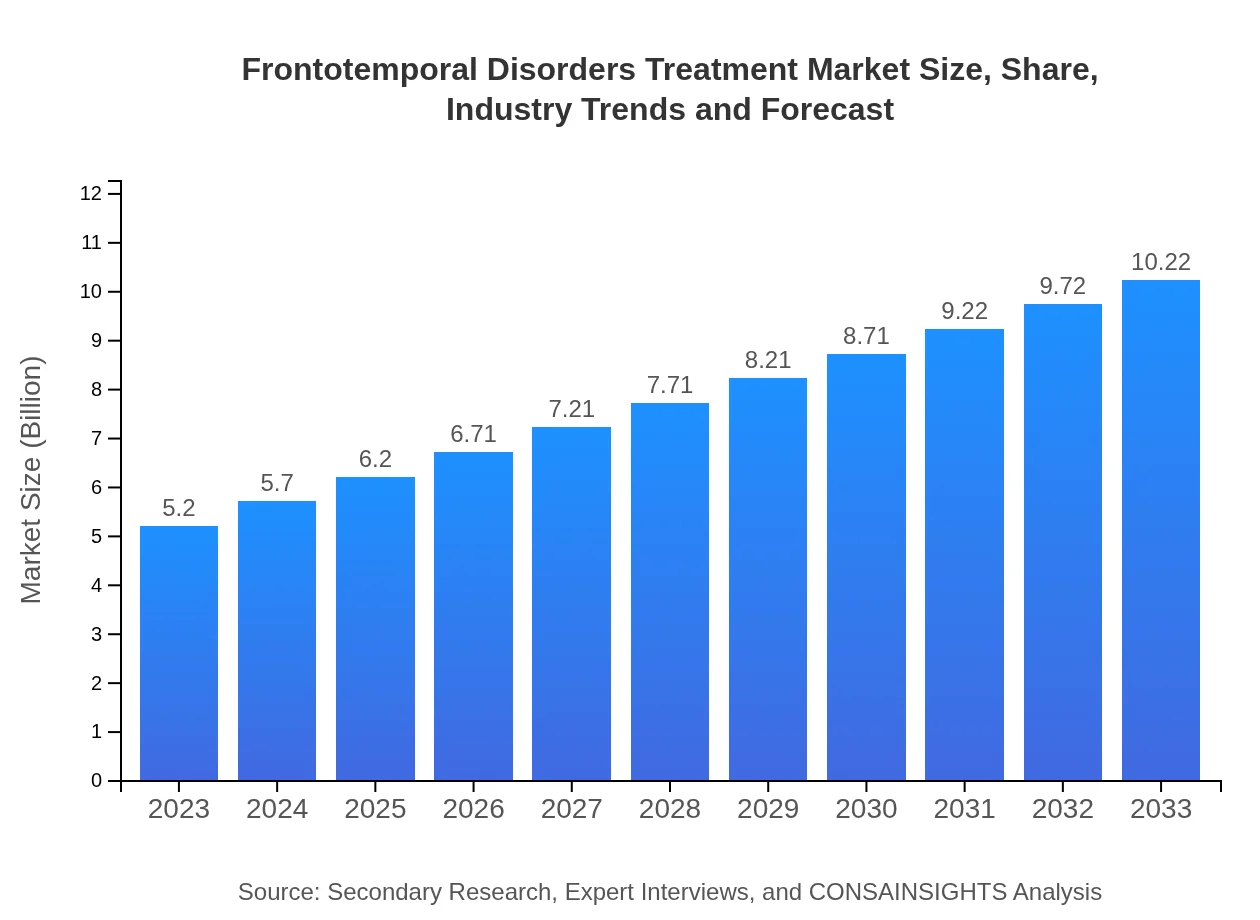
Frontotemporal Disorders Treatment Market — USD 5.2 billion in 2023, Growing to USD 10.22B by 2033 at 6.8% CAGR
This report provides a comprehensive analysis of the Frontotemporal Disorders Treatment market, including insights on market size, industry trends, segmentation, and forecasts from 2023 to 2033.
Key Takeaways
- Global market expands from $5.20 Billion (2023) to $10.22 Billion (2033) at a 6.8% CAGR.
- North America is largest regional market, while no single fastest-growing region is stated because regional CAGR differences remain within 0.15 percentage points.
- North America is the largest region, increasing from $1.94 Billion to $3.81 Billion over the forecast period.
- Europe rises from $1.48 Billion to $2.90 Billion, while Asia Pacific grows from $1.00 Billion to $1.96 Billion.
- Market segmentation includes drug type, patient type, treatment setting, and treatment approach.
- Top companies active in the market include Eli Lilly and Company, Johnson & Johnson, and Roche.
Frontotemporal Disorders Treatment Market Report — Executive Summary
North America remains largest market by forecast-period value, while no single fastest-growing region is stated because top regional growth rates are separated by less than 0.15 percentage points. The Frontotemporal Disorders Treatment Market Report outlines sustained expansion driven by advances in pharmacological and non-pharmacological interventions, rising diagnostic capability, and intensified research activity. The market value increases from $5.20 Billion in 2023 to $10.22 Billion by 2033, supported by investment from major firms such as Eli Lilly and Company, Johnson & Johnson, and Roche. Regional demand varies, with North America holding the largest share. Key structural segments include drug categories (antidepressants, antipsychotics, other drug types), patient stages (early, middle, late), care settings (hospitals, outpatient clinics, home care), and treatment approaches. Continued clinical research, improved awareness, and expanding healthcare infrastructure are primary forces shaping adoption and treatment availability over the forecast period.
Key Growth Drivers
- Expansion of clinical research and trials focused on novel therapies and supportive care.
- Improved diagnostic techniques enabling earlier identification and tailored treatment plans.
- Increased healthcare spending and investment from established pharmaceutical firms.
- Growing awareness among clinicians and caregivers about frontotemporal disorder management.
- Broader availability of treatment settings, including hospitals, outpatient clinics, and home care.
| Metric | Value |
|---|---|
| Study Period | 2023 - 2033 |
| 2023 Market Size | $5.20 Billion |
| CAGR (2023-2033) | 6.8% |
| 2033 Market Size | $10.22 Billion |
| Top Companies | Eli Lilly and Company, Johnson & Johnson, Roche |
| Published Date | 11 October 2024 |
| Last Modified Date | 25 May 2026 |
Frontotemporal Disorders Treatment Market Overview
Customize Frontotemporal Disorders Treatment Market Report market research report
- ✔ Get in-depth analysis of Frontotemporal Disorders Treatment market size, growth, and forecasts.
- ✔ Understand Frontotemporal Disorders Treatment's regional dynamics and industry-specific trends.
- ✔ Identify potential applications, end-user demand, and growth segments in Frontotemporal Disorders Treatment
What is the Market Size & CAGR of Frontotemporal Disorders Treatment Market Report market in 2023?
Frontotemporal Disorders Treatment Industry Analysis
Frontotemporal Disorders Treatment Market Segmentation and Scope
Tell us your focus area and get a customized research report.
Frontotemporal Disorders Treatment Market Report Market Analysis Report by Region
Europe Frontotemporal Disorders Treatment Market Report:
Europe grows from $1.48 Billion in 2023 to $2.9 Billion in 2033. Growth aligns with enhanced diagnostic capabilities, growing clinical trials, and expanding treatment availability across pharmacological and supportive care settings.Asia Pacific Frontotemporal Disorders Treatment Market Report:
Asia Pacific grows from $1 Billion in 2023 to $1.96 Billion in 2033. The region’s progression is linked to expanding healthcare resources, rising awareness of frontotemporal disorders, and broader access to treatment settings.North America Frontotemporal Disorders Treatment Market Report:
North America is largest regional market, rising from $1.94 Billion in 2023 to $3.81 Billion in 2033. The region’s scale reflects concentrated clinical research, strong healthcare infrastructure, and active participation by top companies, supporting treatment adoption across hospitals, clinics, and home care.South America Frontotemporal Disorders Treatment Market Report:
Latin America grows from $0.5 Billion in 2023 to $0.99 Billion in 2033. This growth corresponds with increasing healthcare investment, improved diagnostic reach, and gradual expansion of treatment services in hospitals and outpatient facilities.Middle East & Africa Frontotemporal Disorders Treatment Market Report:
Middle East and Africa grows from $0.28 Billion in 2023 to $0.55 Billion in 2033. The region’s increase is associated with growing healthcare infrastructure, heightened disease awareness, and enhanced access to both pharmacological and non-pharmacological care.Tell us your focus area and get a customized research report.
Research Methodology
Frontotemporal Disorders Treatment Market Analysis By Treatment Approach
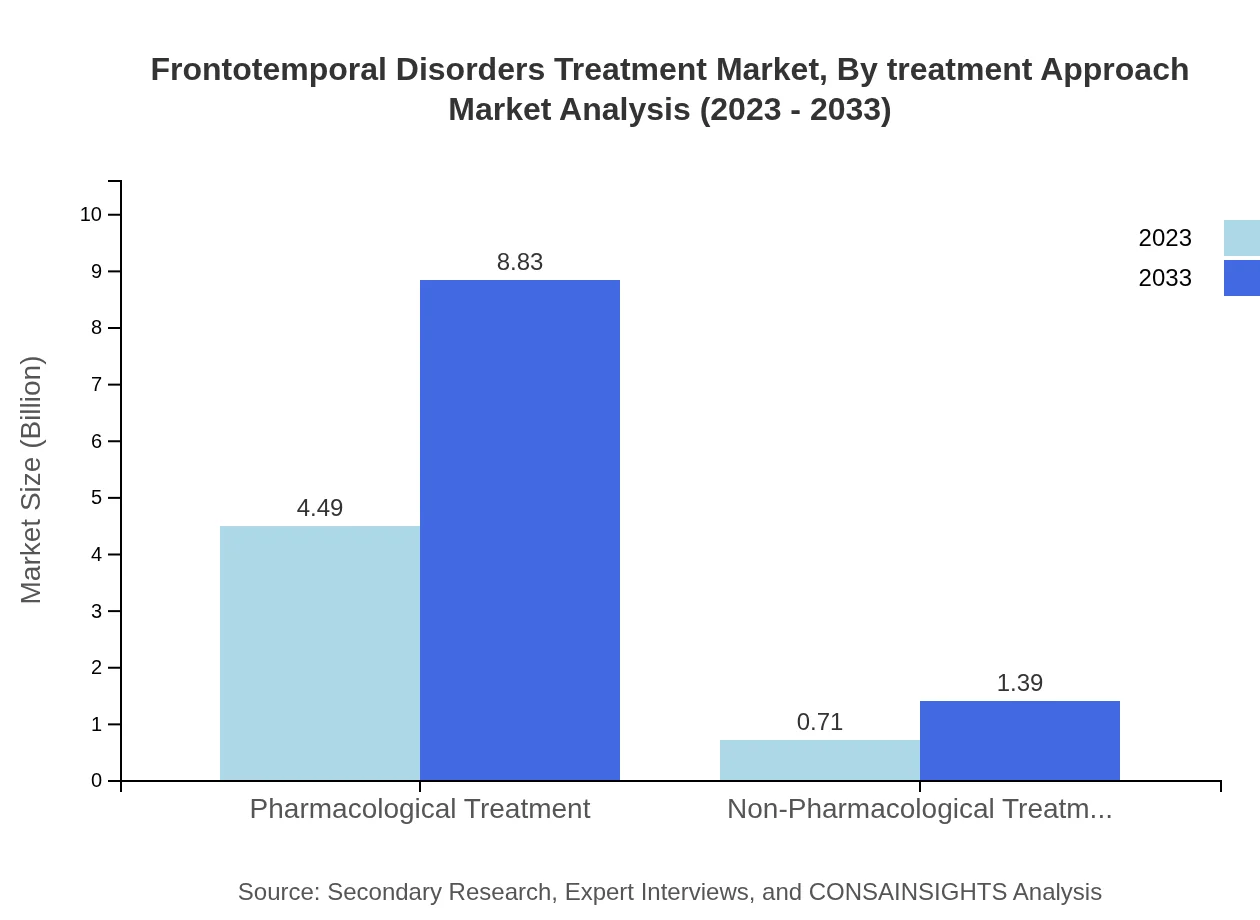
The market segments by treatment approach are divided into pharmacological and non-pharmacological treatments. In 2023, pharmacological treatment constitutes a market size of $4.49 billion, accounting for 86.4% of the market share. Antidepressants dominate the category, with a market value of $3.45 billion and a market share of 66.42%. Non-pharmacological treatments, though smaller, are important as they complement pharmacological strategies.
Frontotemporal Disorders Treatment Market Analysis By Patient Type
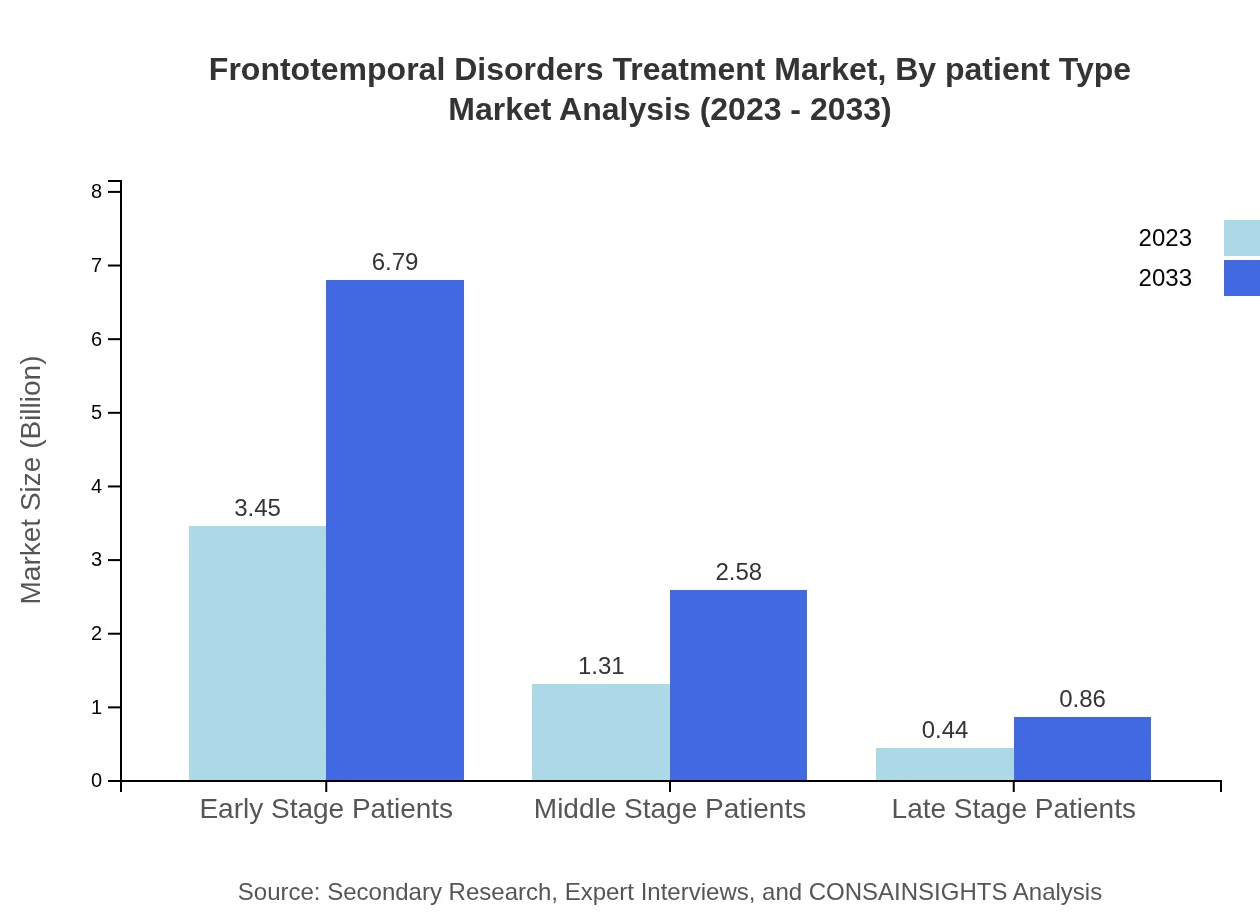
Market segmentation by patient type includes early stage, middle stage, and late stage patients. Early stage patients account for the largest share, valued at $3.45 billion in 2023, with a share of 66.42%. The middle stage patient segment is valued at $1.31 billion and consists of 25.21% of the market, while the late stage holds a value of $0.44 billion, contributing 8.37%.
Frontotemporal Disorders Treatment Market Analysis By Treatment Setting
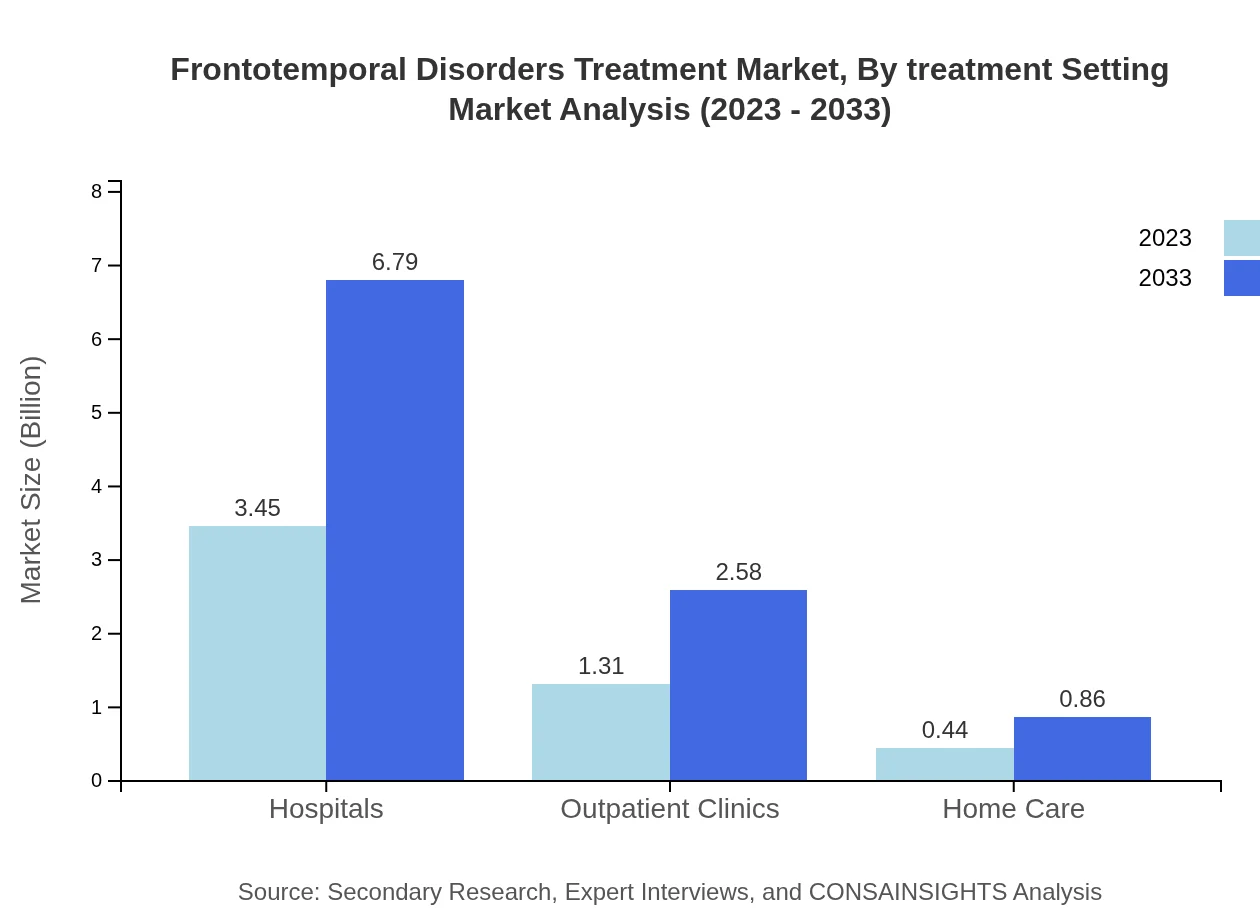
The treatment setting segments include hospitals, outpatient clinics, and home care. Hospitals lead the market with a value of $3.45 billion in 2023, representing 66.42% of the market share. Outpatient clinics follow at $1.31 billion with 25.21%, and home care services hold a modest $0.44 billion, accounting for 8.37%.
Frontotemporal Disorders Treatment Market Analysis By Drug Type
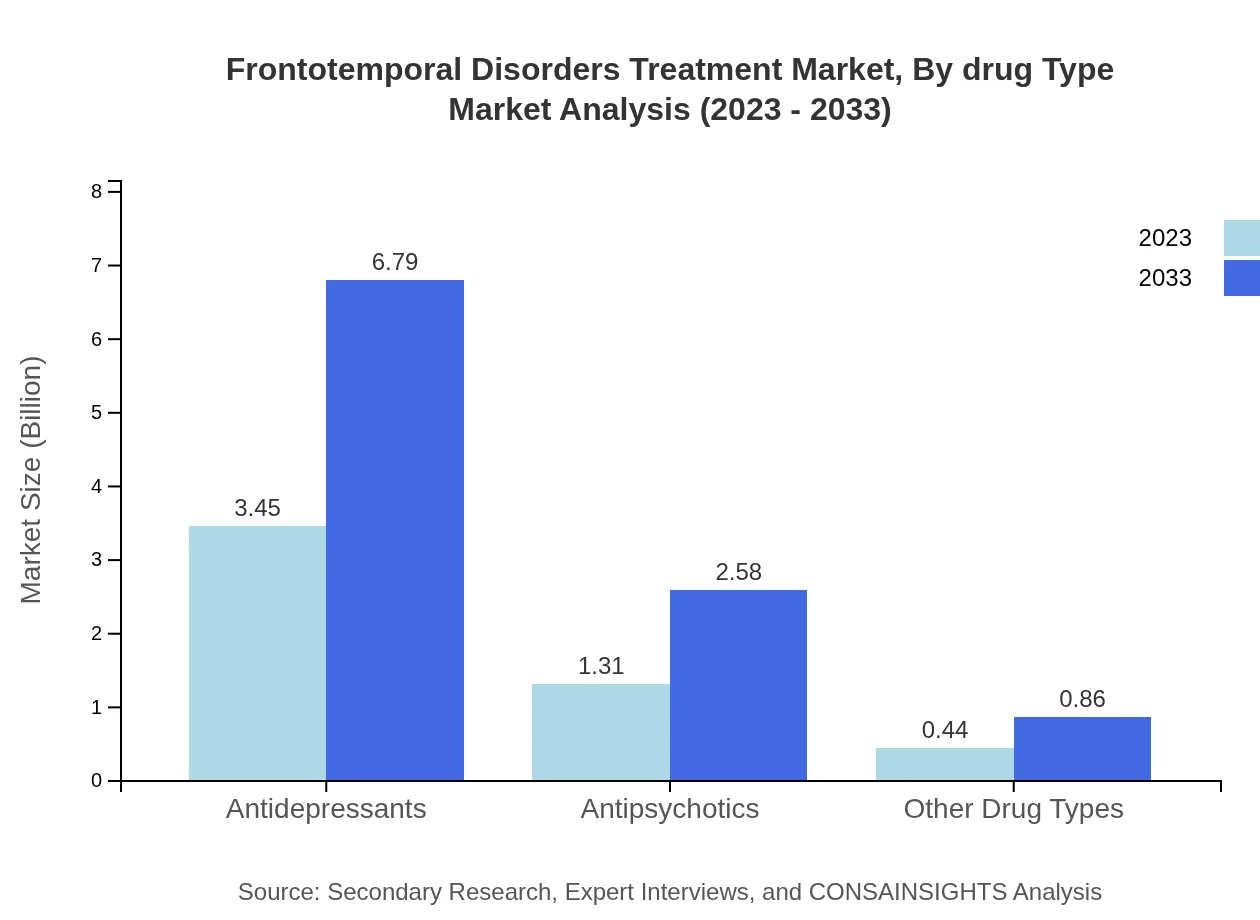
Pharmacological treatment, including antidepressants and antipsychotics, showcases substantial values in the market. For instance, antidepressants valued at $3.45 billion reflect a strong reliance on medication for treatment. Conversely, antipsychotics are valued at $1.31 billion. Other drug types contribute significantly, with a value of $0.44 billion, thereby shaping the comprehensive landscape of FTD treatment.
Frontotemporal Disorders Treatment Market Trends and Future Forecast
Tell us your focus area and get a customized research report.
Global Market Leaders and Top Companies in Frontotemporal Disorders Treatment Industry
Eli Lilly and Company:
A leader in the development of drugs for neurological disorders, Eli Lilly contributes significantly through its research and innovative treatment options for FTD.Johnson & Johnson:
This multinational corporation is involved in various aspects of healthcare, producing effective drugs targeted towards treating FTD.Roche:
Roche is recognized for its groundbreaking research in neurological therapies; its contributions help push the boundaries of FTD treatments.We're grateful to work with incredible clients.








FAQs
What is the market size of the Frontotemporal Disorders Treatment Market Report in 2023?
The market size in 2023 is $5.20 Billion as reported for the Frontotemporal Disorders Treatment Market Report.
How big will the market be in 2033?
By 2033 the market is reported to reach $10.22 Billion, reflecting growth across regions and treatment segments over the forecast period.
What is CAGR for the forecast period?
The reported compound annual growth rate for 2023 to 2033 is 6.8%, based on the market values provided for the period.
Is there a single fastest Growing region in the Frontotemporal Disorders Treatment Market Report market?
No single fastest-growing region is stated for the Frontotemporal Disorders Treatment Market Report market because the top regional implied CAGR values are within 0.15 percentage points of each other, making the ranking too close to call reliably.
Which companies are named as top players?
The report lists Eli Lilly and Company, Johnson & Johnson, and Roche as leading companies operating in the Frontotemporal Disorders treatment market.
What are the main treatment approach segments?
Treatment approaches are divided into pharmacological treatment and non-pharmacological treatment, reflecting therapeutic and supportive care strategies used clinically.
How big is the Europe market over the forecast period?
Europe grows from $1.48 Billion in 2023 to $2.90 Billion in 2033, indicating rising demand and increased provision of care in that region.
What role do treatment settings play in market structure?
Treatment settings include hospitals, outpatient clinics, and home care, each shaping access, delivery models, and resource allocation across patient stages.
Who are the primary beneficiaries of improved diagnostics?
Clinicians and patients benefit from improved diagnostics, enabling earlier intervention and tailored therapies across early, middle, and late patient stages.
What is the Asia Pacific market progression?
Asia Pacific is reported to increase from $1.00 Billion in 2023 to $1.96 Billion in 2033, reflecting growing healthcare capacity and awareness.