
Reports >
Life Sciences
>
Genomic Biomarkers Market Report

Genomic Biomarkers Market Report
First published: 11 October 2024 | Last updated: 25 May 2026 | Report Code: genomic-biomarkers
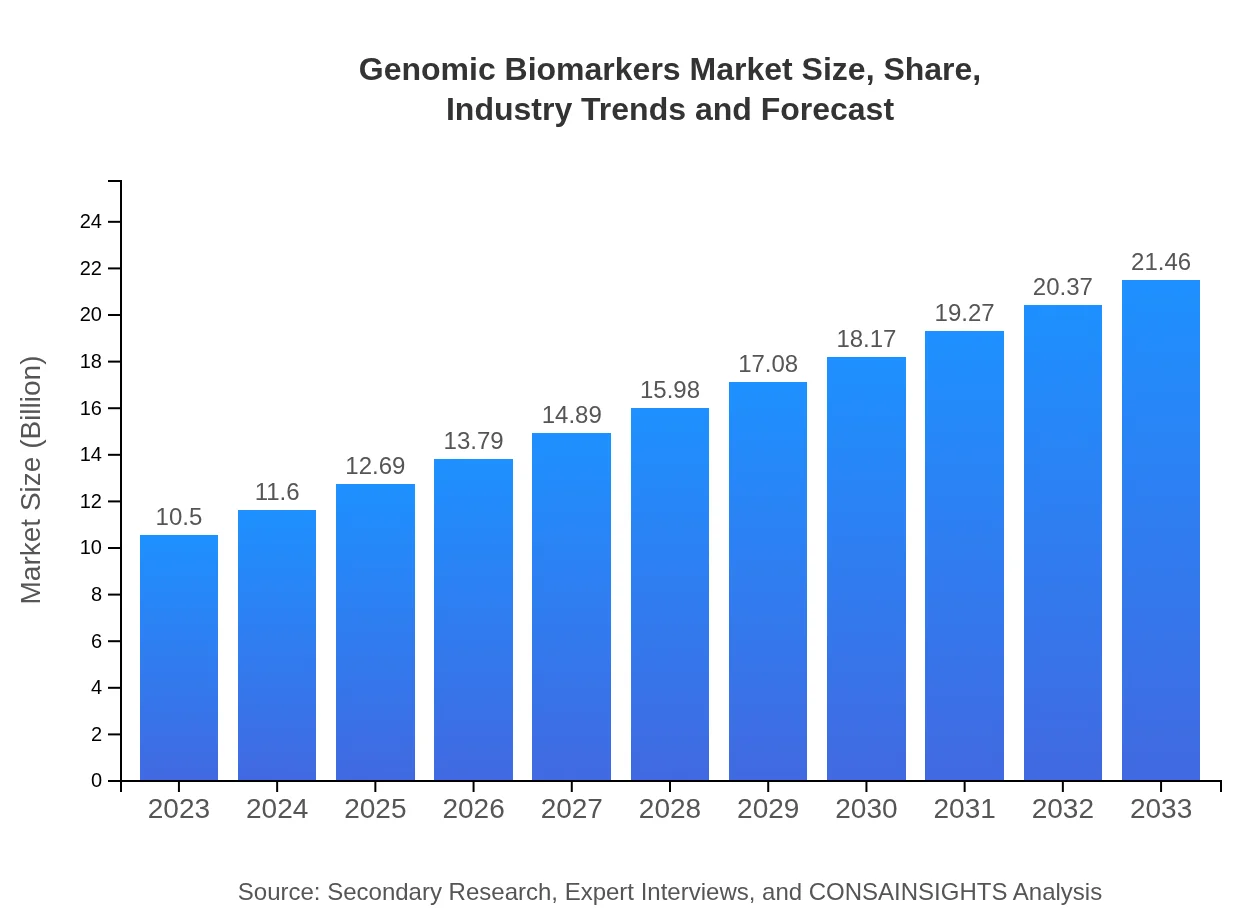
Genomic Biomarkers Market — USD 10.5 billion in 2023, Growing to USD 21.46B by 2033 at 7.2% CAGR
This report provides an in-depth analysis of the Genomic Biomarkers market from 2023 to 2033, covering market trends, regional insights, segmentation, technology advancements, and competitive landscape, enabling stakeholders to make informed decisions.
Key Takeaways
- Global market expands from $10.50 Billion in 2023 to $21.46 Billion in 2033 at a 7.2% CAGR.
- North America is largest regional market, while no single fastest-growing region is stated because regional CAGR differences remain within 0.15 percentage points.
- Europe and Asia Pacific show substantial growth: Europe from $2.69 Billion to $5.51 Billion; Asia Pacific from $2.05 Billion to $4.19 Billion.
- Technologies such as Next-Generation Sequencing (NGS) and PCR are central to market adoption across applications like oncology and infectious diseases.
- Key players include Illumina, Inc., Thermo Fisher Scientific, Inc., Roche Diagnostics, QIAGEN N.V., and Agilent Technologies, Inc.
Genomic Biomarkers Market Report — Executive Summary
North America remains largest market by forecast-period value, while no single fastest-growing region is stated because top regional growth rates are separated by less than 0.15 percentage points. The Genomic Biomarkers market is forecast to nearly double between 2023 and 2033, expanding from $10.50 Billion to $21.46 Billion at a 7.2% CAGR. Growth is supported by technological advances in sequencing and molecular diagnostics, broader use in precision oncology, and integration into clinical trials and drug development. Demand spans diagnostics, prognostics, and predictive biomarker applications, with users including biopharmaceutical firms, clinical laboratories, research institutes, and hospitals. Market activity is concentrated around technologies such as NGS, PCR, microarray, and SNP genotyping. Leading suppliers named in the report include Illumina, Inc., Thermo Fisher Scientific, Inc., Roche Diagnostics, QIAGEN N.V., and Agilent Technologies, Inc. Regulatory and reimbursement considerations remain important factors shaping adoption and commercial strategy.
Key Growth Drivers
- Advances in sequencing platforms and assay technologies expanding biomarker discovery and testing capacity.
- Rising use of genomic biomarkers in precision oncology and targeted therapeutics development.
- Increased incorporation of genomic data in clinical trials and drug safety/efficacy assessment.
- Growing demand from biopharmaceutical companies, clinical laboratories, and research institutes for molecular diagnostics.
- Ongoing collaborations between industry, research organizations, and regulatory stakeholders supporting validation and commercialization.
| Metric | Value |
|---|---|
| Study Period | 2023 - 2033 |
| 2023 Market Size | $10.50 Billion |
| CAGR (2023-2033) | 7.2% |
| 2033 Market Size | $21.46 Billion |
| Top Companies | Illumina, Inc., Thermo Fisher Scientific, Inc., Roche Diagnostics, QIAGEN N.V., Agilent Technologies, Inc. |
| Published Date | 11 October 2024 |
| Last Modified Date | 25 May 2026 |
Genomic Biomarkers Market Overview
Customize Genomic Biomarkers Market Report market research report
- ✔ Get in-depth analysis of Genomic Biomarkers market size, growth, and forecasts.
- ✔ Understand Genomic Biomarkers's regional dynamics and industry-specific trends.
- ✔ Identify potential applications, end-user demand, and growth segments in Genomic Biomarkers
What is the Market Size & CAGR of Genomic Biomarkers Market Report market in 2023?
Genomic Biomarkers Industry Analysis
Genomic Biomarkers Market Segmentation and Scope
Tell us your focus area and get a customized research report.
Genomic Biomarkers Market Report Market Analysis Report by Region
Europe Genomic Biomarkers Market Report:
Europe grows from $2.69 Billion in 2023 to $5.51 Billion in 2033. 69 Billion in 2023 to $5.51 Billion in 2033, supported by expanding genomic research, increased use of biomarkers in therapeutic development, and adoption of molecular diagnostics in clinical settings.Asia Pacific Genomic Biomarkers Market Report:
Asia Pacific grows from $2.05 Billion in 2023 to $4.19 Billion in 2033. 05 Billion in 2023 to $4.19 Billion in 2033, driven by growing research funding, expanding diagnostic capacity, and rising implementation of precision medicine approaches across major healthcare markets.North America Genomic Biomarkers Market Report:
North America is largest regional market, rising from $3.94 Billion in 2023 to $8.05 Billion in 2033. Growth reflects strong research infrastructure, high adoption of sequencing platforms, substantial clinical trial activity, and significant industry and healthcare investment.South America Genomic Biomarkers Market Report:
Latin America grows from $0.54 Billion in 2023 to $1.1 Billion in 2033. 54 Billion in 2023 to $1.1 Billion in 2033, with growth underpinned by gradual uptake of molecular diagnostics, participation in global clinical research, and expanding laboratory capabilities.Middle East & Africa Genomic Biomarkers Market Report:
Middle East and Africa grows from $1.28 Billion in 2023 to $2.62 Billion in 2033. 28 Billion in 2023 to $2.62 Billion in 2033, influenced by increasing investment in genomics, growing diagnostic infrastructure, and partnerships that support biomarker-based clinical practices.Tell us your focus area and get a customized research report.
Research Methodology
Genomic Biomarkers Market Analysis By Type
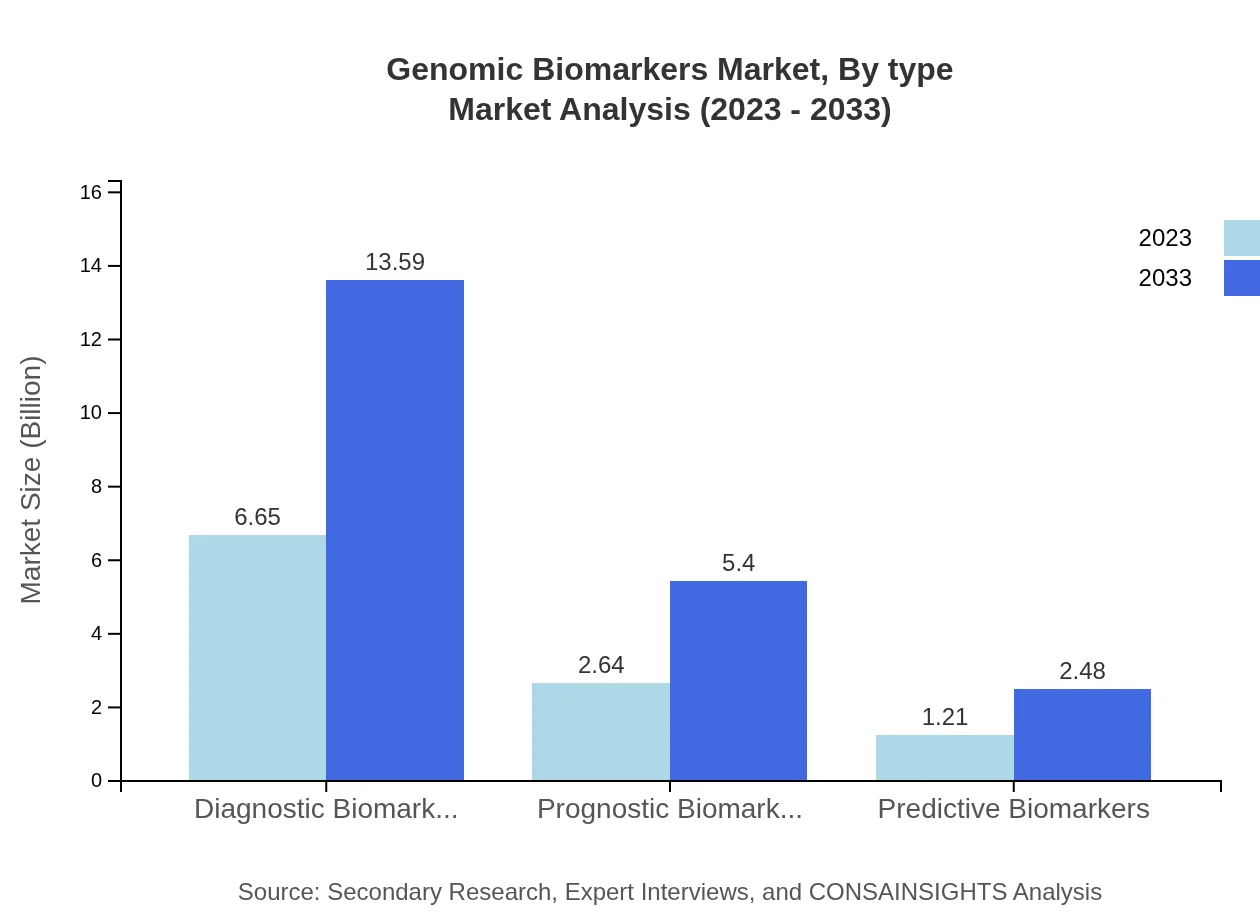
The Diagnostic Biomarkers segment holds the largest market share, accounting for $6.65 billion in 2023, projected to grow to $13.59 billion by 2033, making up 63.3% of the market. Prognostic Biomarkers follow, valued at $2.64 billion in 2023, growing to $5.40 billion, holding a 25.15% share. Predictive Biomarkers represent $1.21 billion in 2023 with a growth to $2.48 billion, comprising 11.55% of the market share.
Genomic Biomarkers Market Analysis By Application
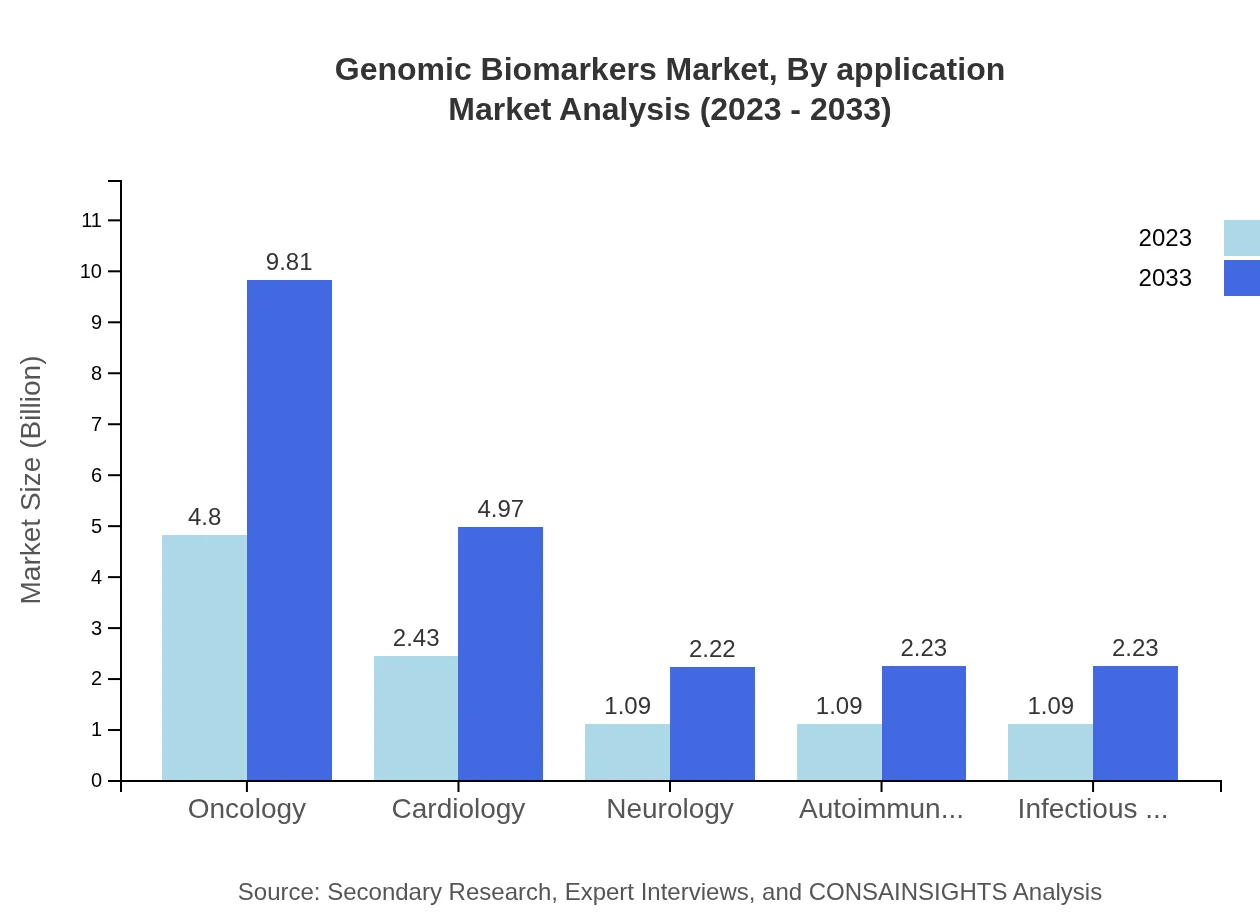
In terms of applications, oncology remains the largest segment, projected to grow from $4.80 billion in 2023 to $9.81 billion by 2033. Following are cardiology and neurology, which are projected to grow in response to rising incidences of heart diseases and neurological disorders. Novel biomarkers for autoimmune and infectious diseases are also gaining attention for their relevance in clinical applications.
Genomic Biomarkers Market Analysis By Technology
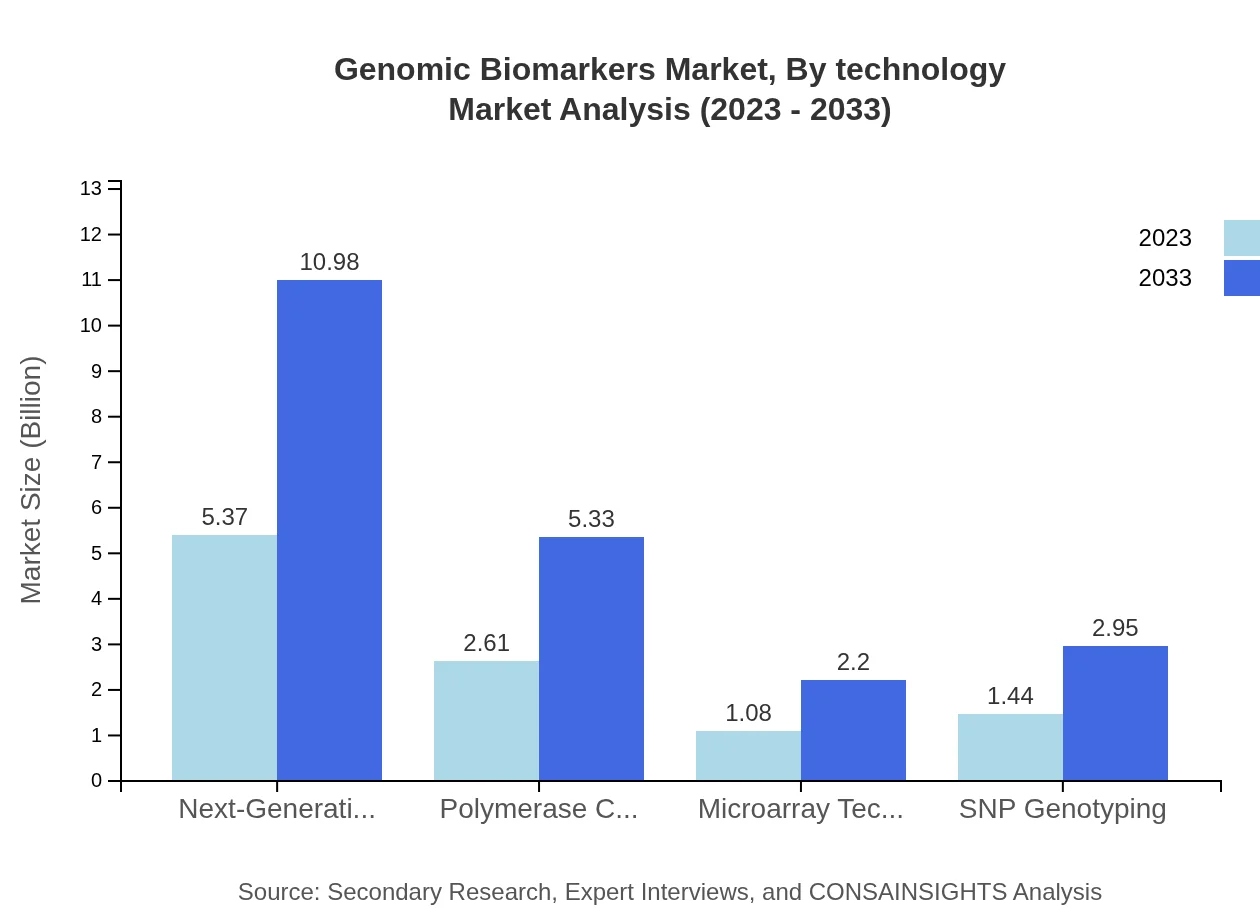
Next-Generation Sequencing (NGS) dominates market technology share with $5.37 billion in 2023, expected to reach $10.98 billion by 2033. Other significant technologies include PCR, representing $2.61 billion to $5.33 billion, and Microarray Technology, estimated at $1.08 billion evolving to $2.20 billion. Each technology is pivotal for various genomic applications.
Genomic Biomarkers Market Analysis By End User
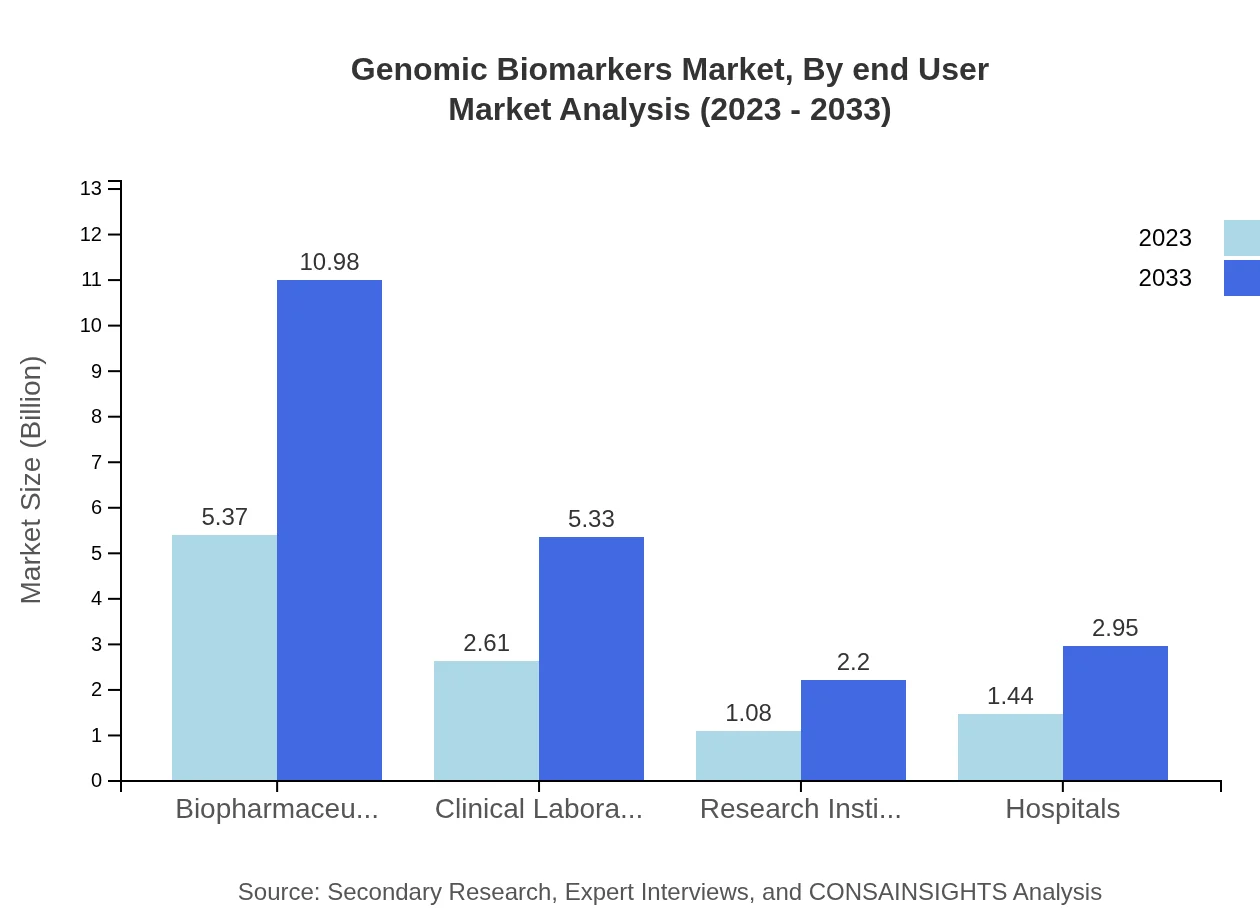
The market is segmented by end-user into biopharmaceutical companies, clinical laboratories, research institutes, and hospitals. Biopharmaceutical companies lead with $5.37 billion in 2023, projected to reach $10.98 billion by 2033. Clinical laboratories and hospitals are crucial for translating genomic research into clinical practice, holding significant market shares.
Genomic Biomarkers Market Analysis By Region Market
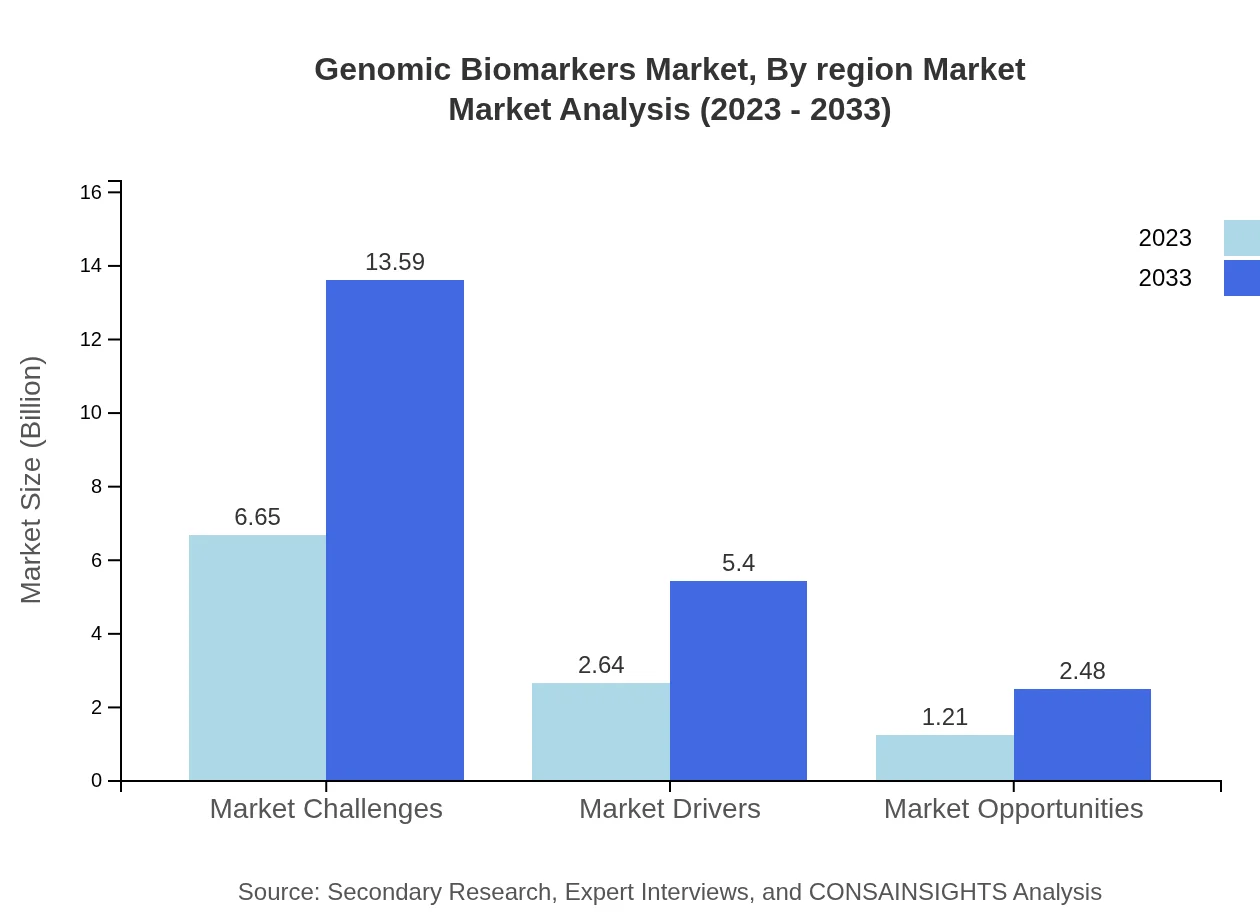
Market trends indicate an increasing emphasis on precision medicine, with a notable rise in targeted therapies driven by genomic insights. Challenges such as regulation, reimbursement policies, and the integration of genomics into routine diagnostics persist but are being addressed through collaborations and technological advancements.
Genomic Biomarkers Market Trends and Future Forecast
Tell us your focus area and get a customized research report.
Global Market Leaders and Top Companies in Genomic Biomarkers Industry
Illumina, Inc.:
Illumina is a global leader in genomics, specializing in the development, manufacturing, and marketing of integrated systems for the analysis of genetic variation and function.Thermo Fisher Scientific, Inc.:
Thermo Fisher Scientific provides a comprehensive range of genomic instruments and reagents, enabling researchers and clinicians to leverage genomics for precision medicine across multiple applications.Roche Diagnostics:
A pioneer in diagnostics, Roche develops and provides innovative diagnostic information solutions, particularly in the field of personalized healthcare through genomic biomarkers.QIAGEN N.V.:
QIAGEN specializes in providing sample and assay solutions, offering tools essential for obtaining genetic insights that lead to enhanced patient treatment options.Agilent Technologies, Inc.:
Agilent is known for its innovative tools and technologies that support genomic analysis, delivering high-quality products to customers in life sciences and diagnostics sectors.We're grateful to work with incredible clients.









FAQs
What is the market size of the Genomic Biomarkers market in 2023?
The market size in 2023 is $10.50 Billion, reflecting current adoption across diagnostics, research, and clinical applications driven by genomics-based testing.
How big will the market be in 2033?
By 2033 the market is projected to reach $21.46 Billion, based on ongoing technology adoption and expanded use in precision medicine and clinical development.
What is CAGR for the forecast period?
The specified compound annual growth rate for 2023 to 2033 is 7.2%, reflecting sustained expansion driven by sequencing and diagnostic innovation.
Is there a single fastest Growing region in the Genomic Biomarkers Market Report market?
No single fastest-growing region is stated for the Genomic Biomarkers Market Report market because the top regional implied CAGR values are within 0.15 percentage points of each other, making the ranking too close to call reliably.
Which technologies are central to the market?
Core technologies include Next-Generation Sequencing (NGS), Polymerase Chain Reaction (PCR), microarray platforms, and SNP genotyping, which enable diverse biomarker applications.
Who are the leading companies in this market?
Top companies listed include Illumina, Inc., Thermo Fisher Scientific, Inc., Roche Diagnostics, QIAGEN N.V., and Agilent Technologies, Inc., active across platforms and assays.
What applications drive demand for genomic biomarkers?
Primary applications include oncology, cardiology, neurology, autoimmune and infectious diseases, with oncology being a major area for biomarker use and development.
How do regulatory and reimbursement issues affect the market?
Regulatory and reimbursement frameworks influence development timelines and commercial uptake, affecting how quickly novel genomic biomarker tests reach clinical practice.
What end users adopt genomic biomarker solutions?
End users encompass biopharmaceutical companies, clinical laboratories, research institutes, and hospitals, all driving demand for diagnostic and prognostic tests.
Why are collaborations important in this sector?
Collaborations among industry, academia, and regulators accelerate validation, standardization, and commercialization of genomic biomarker tests and associated therapies.