

Hepatitis Therapeutics Market Report
First published: 14 October 2024 | Last updated: 25 May 2026 | Report Code: hepatitis-therapeutics
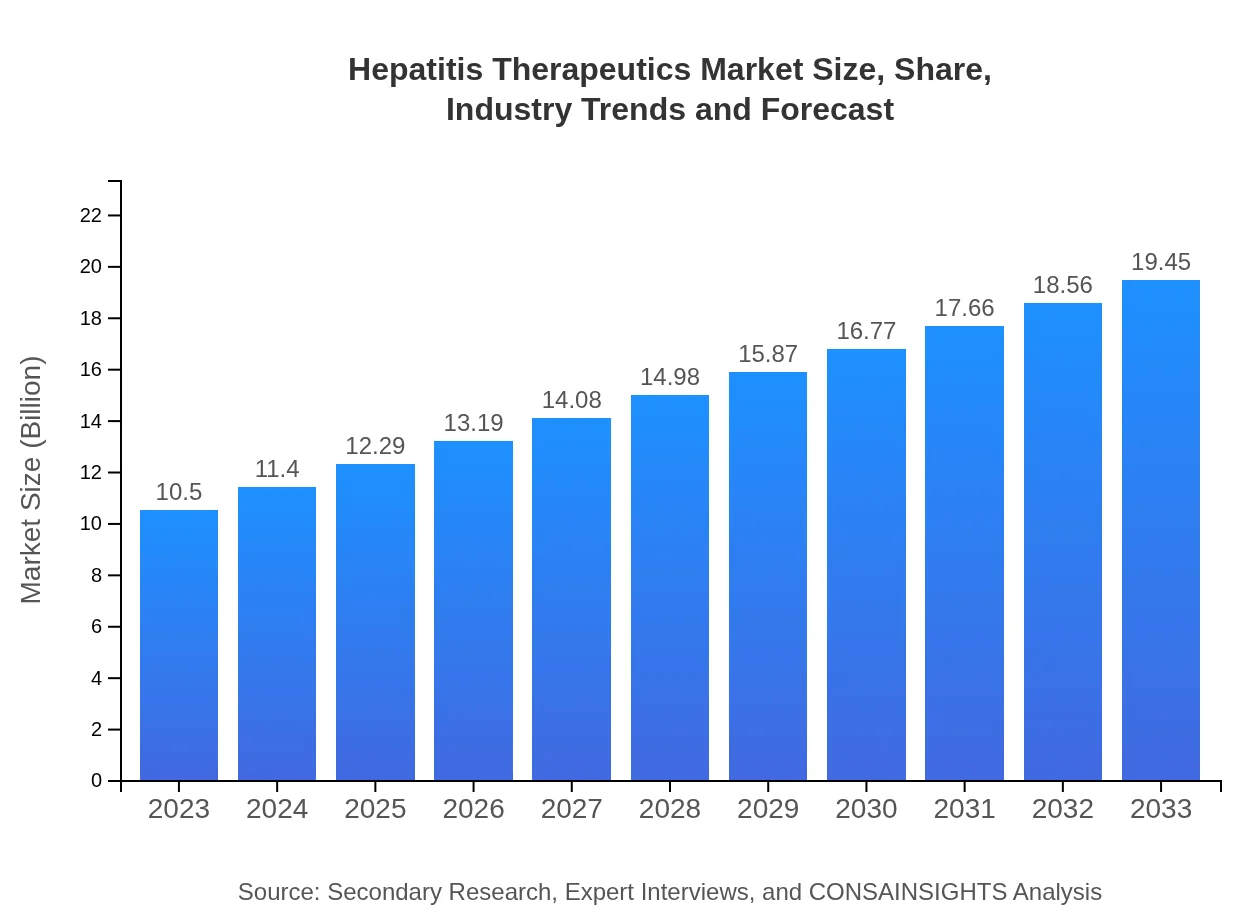
Hepatitis Therapeutics Market — USD 10.5 billion in 2023, Growing to USD 19.45B by 2033 at 6.2% CAGR
This report on the Hepatitis Therapeutics market provides a comprehensive analysis of current trends, market size, segmentation, and regional insights from 2023 to 2033, offering valuable data for stakeholders in the healthcare industry.
Key Takeaways
- Global market expands from $10.50 Billion in 2023 to $19.45 Billion in 2033, reflecting a 6.2% CAGR over the forecast period.
- North America is largest regional market, while no single fastest-growing region is stated because regional CAGR differences remain within 0.15 percentage points.
- North America leads regionally, rising from $3.4 Billion in 2023 to $6.3 Billion in 2033, holding the highest end-period value.
- Europe grows from $2.97 Billion to $5.5 Billion between 2023 and 2033, supported by advanced healthcare infrastructure.
- Asia Pacific increases from $2.14 Billion in 2023 to $3.97 Billion in 2033, driven by expanding access and treatment uptake.
Hepatitis Therapeutics Market Report — Executive Summary
North America remains largest market by forecast-period value, while no single fastest-growing region is stated because top regional growth rates are separated by less than 0.15 percentage points. The Hepatitis Therapeutics market is positioned for sustained expansion, moving from $10.50 Billion in 2023 to $19.45 Billion by 2033 at a 6.2% CAGR. Growth is fueled by advancements in antiviral and antifibrotic agents, improved diagnostics, and broader healthcare access. Key segments include drug class (antivirals, interferons, antifibrotic agents), indications such as hepatitis B, C and D, and routes spanning oral, injectable and transdermal therapies. Geographic dynamics are notable: North America registers the highest 2033 value at $6.3 Billion, while Europe and Asia Pacific show significant increases. Leading companies—Gilead Sciences, Inc., AbbVie Inc., Merck & Co., Inc., GSK, and Bristol-Myers Squibb—are active through product development and strategic partnerships. The outlook highlights continued investment in combination therapies, a move toward more personalized approaches, and ongoing regulatory support for therapeutic innovation.
Key Growth Drivers
- Rising adoption of advanced antiviral treatments and antifibrotic therapies increasing clinical uptake and market demand.
- Improved diagnostic capabilities enabling earlier detection and initiation of therapy across patient populations.
- Expanded healthcare access and infrastructure, particularly in emerging markets, facilitating broader treatment coverage.
- Sustained research investments and strategic collaborations among pharmaceutical firms accelerating drug development and launches.
| Metric | Value |
|---|---|
| Study Period | 2023 - 2033 |
| 2023 Market Size | $10.50 Billion |
| CAGR (2023-2033) | 6.2% |
| 2033 Market Size | $19.45 Billion |
| Top Companies | Gilead Sciences, Inc., AbbVie Inc., Merck & Co., Inc., GSK, Bristol-Myers Squibb |
| Published Date | 14 October 2024 |
| Last Modified Date | 25 May 2026 |
Hepatitis Therapeutics Market Overview
Customize Hepatitis Therapeutics Market Report market research report
- ✔ Get in-depth analysis of Hepatitis Therapeutics market size, growth, and forecasts.
- ✔ Understand Hepatitis Therapeutics's regional dynamics and industry-specific trends.
- ✔ Identify potential applications, end-user demand, and growth segments in Hepatitis Therapeutics
What is the Market Size & CAGR of Hepatitis Therapeutics Market Report market in 2023?
Hepatitis Therapeutics Industry Analysis
Hepatitis Therapeutics Market Segmentation and Scope
Tell us your focus area and get a customized research report.
Hepatitis Therapeutics Market Report Market Analysis Report by Region
Europe Hepatitis Therapeutics Market Report:
Europe grows from $2.97 Billion in 2023 to $5.5 Billion in 2033. Expansion is supported by well-established healthcare systems, steady investment in hepatitis care, and adoption of newer therapeutic approaches across public and private providers.Asia Pacific Hepatitis Therapeutics Market Report:
Asia Pacific grows from $2.14 Billion in 2023 to $3.97 Billion in 2033. The increase is driven by expanding healthcare access, rising awareness, and greater availability of treatment options in both urban and regional centers.North America Hepatitis Therapeutics Market Report:
North America is largest regional market, rising from $3.4 Billion in 2023 to $6.3 Billion in 2033. This region’s growth reflects advanced healthcare infrastructure, high uptake of antivirals and interferons, and active participation by leading companies in clinical development and commercialization.South America Hepatitis Therapeutics Market Report:
Latin America grows from $0.73 Billion in 2023 to $1.36 Billion in 2033. Growth stems from improving diagnostic reach, gradual enhancement of treatment programs, and incremental investments in regional healthcare infrastructure.Middle East & Africa Hepatitis Therapeutics Market Report:
Middle East and Africa grows from $1.26 Billion in 2023 to $2.33 Billion in 2033. Progress is attributed to strengthening healthcare delivery, targeted public health initiatives, and increased availability of therapeutic agents.Tell us your focus area and get a customized research report.
Research Methodology
Hepatitis Therapeutics Market Analysis By Drug Class
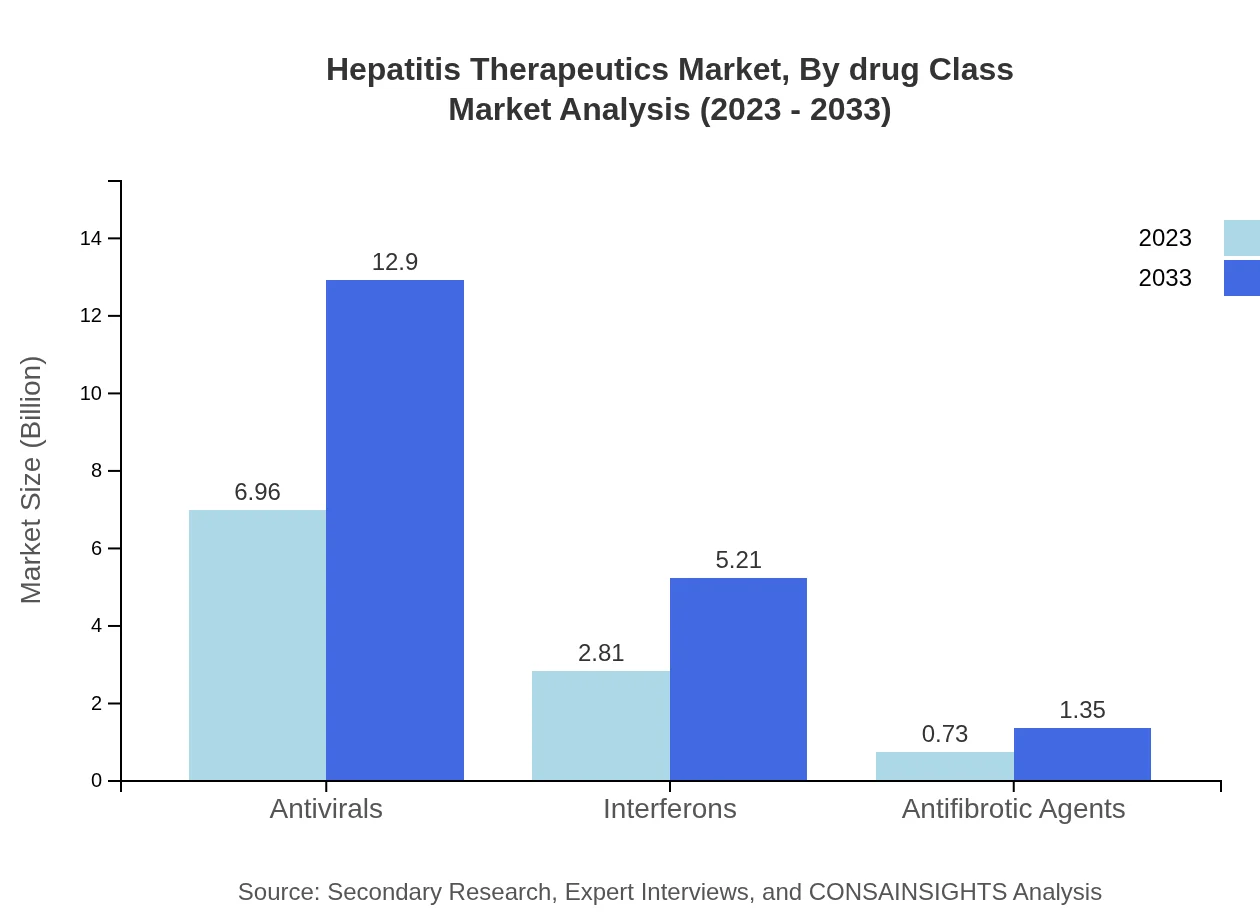
The Hepatitis Therapeutics market showcases significant size variation across drug classes. Antivirals dominate the segment with a market size of $6.96 billion in 2023, expected to rise to $12.90 billion by 2033. This class is crucial for managing Hepatitis B and C. Interferons follow with a size of $2.81 billion in 2023, increasing to $5.21 billion by 2033. Antifibrotic agents currently contribute $0.73 billion, projected to reach $1.35 billion by 2033.
Hepatitis Therapeutics Market Analysis By Indication
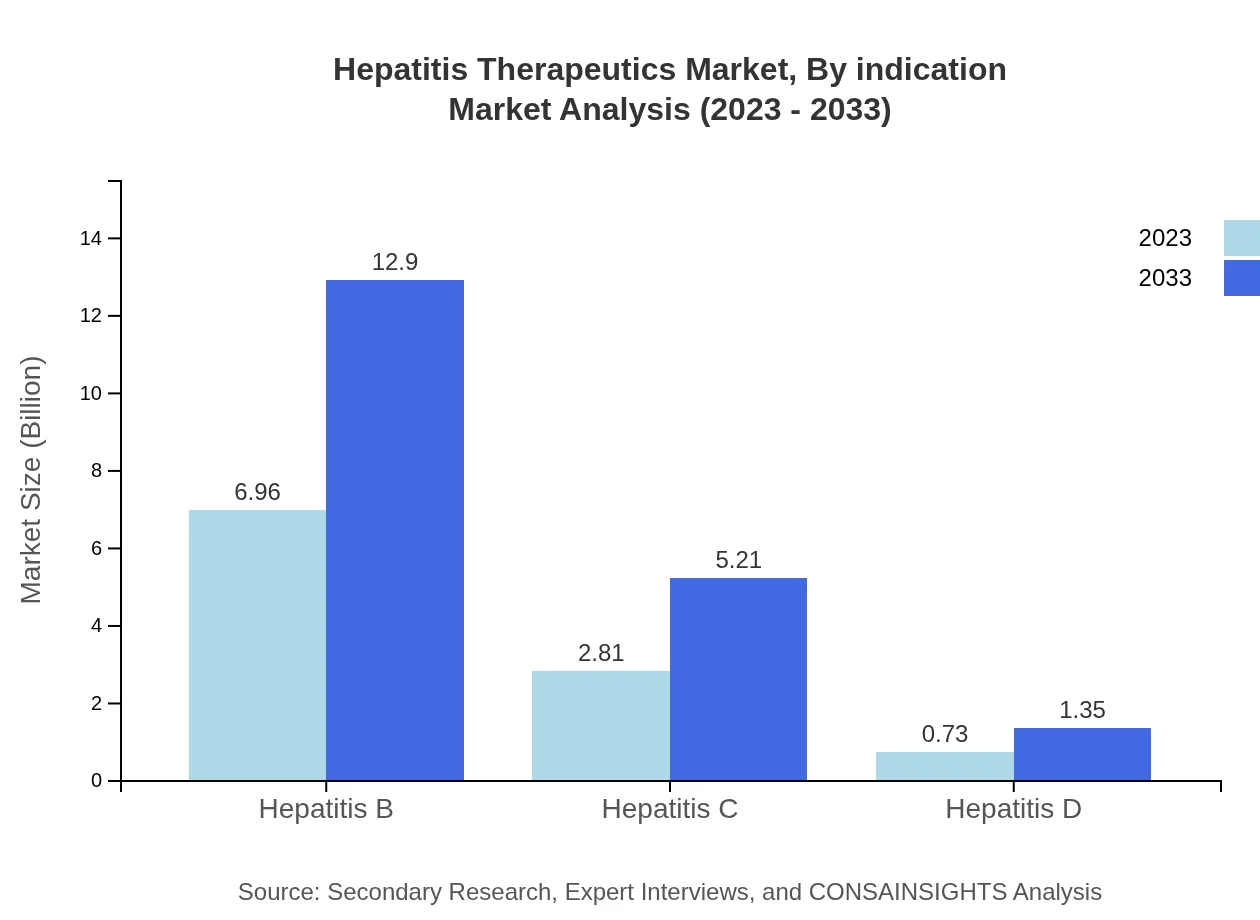
Market segmentation by indication reflects the significant demand for effective treatments targeting various hepatitis types. In 2023, Hepatitis B therapeutics lead the market with $6.96 billion, expected to reach $12.90 billion in 2033. Hepatitis C follows at $2.81 billion, growing to $5.21 billion by 2033, while Hepatitis A and D account for smaller market shares but are critically important for specific patient demographics.
Hepatitis Therapeutics Market Analysis By Route Of Administration
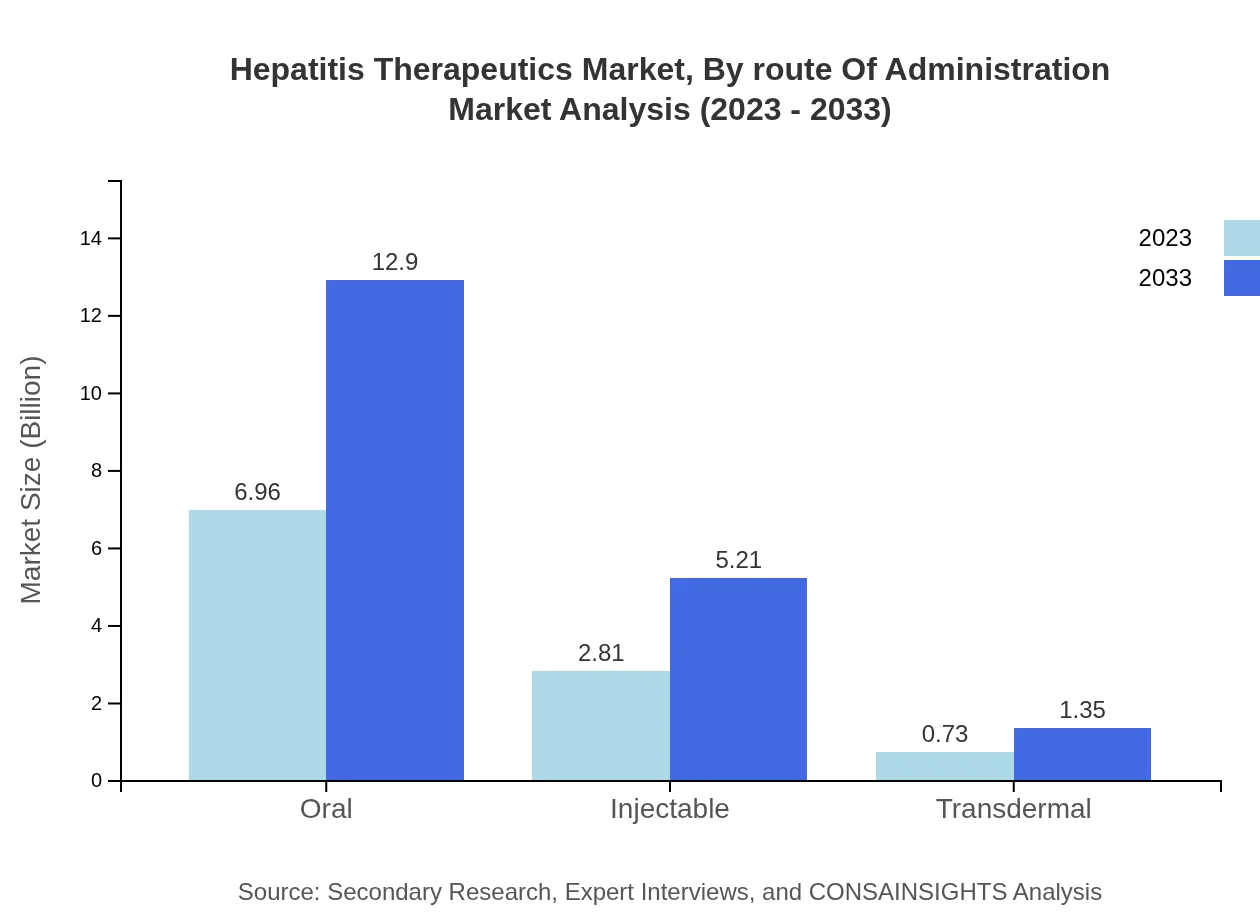
Oral formulations dominate the Hepatitis Therapeutics market, valued at $6.96 billion in 2023 and projected to reach $12.90 billion by 2033. Injectable solutions are also significant, with a market size of $2.81 billion in 2023, growing to $5.21 billion by 2033. Transdermal delivery systems, though smaller in scope, show promise with a growth trajectory from $0.73 billion to $1.35 billion.
Hepatitis Therapeutics Market Analysis By Patient Type
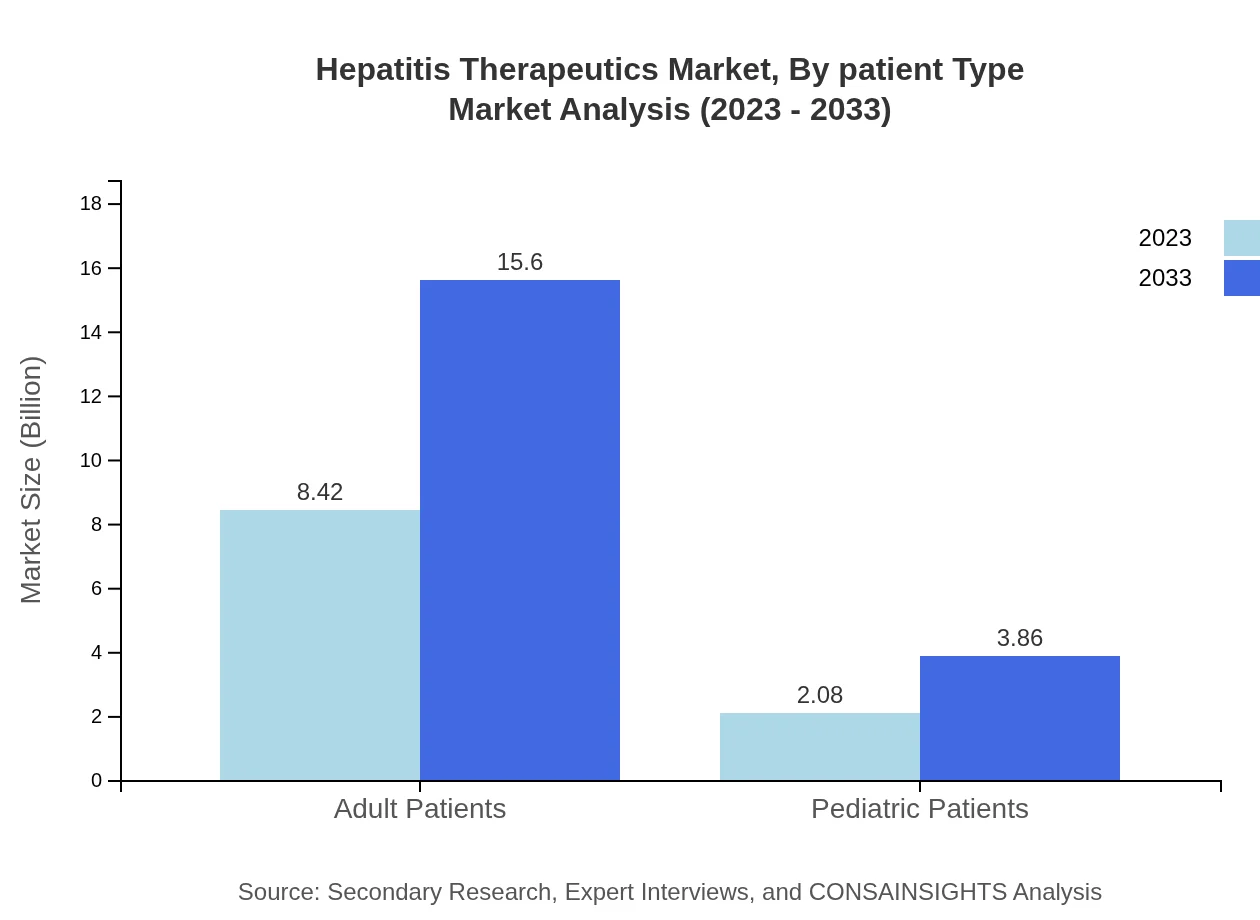
The Hepatitis Therapeutics market categorized by patient type indicates a strong adult demographic, reflecting a size of $8.42 billion in 2023 and projected to reach $15.60 billion by 2033, capturing 80.18% of the market share. Pediatric patients account for a smaller segment, anticipated to grow from $2.08 billion to $3.86 billion by 2033.
Hepatitis Therapeutics Market Analysis By Sales Channel
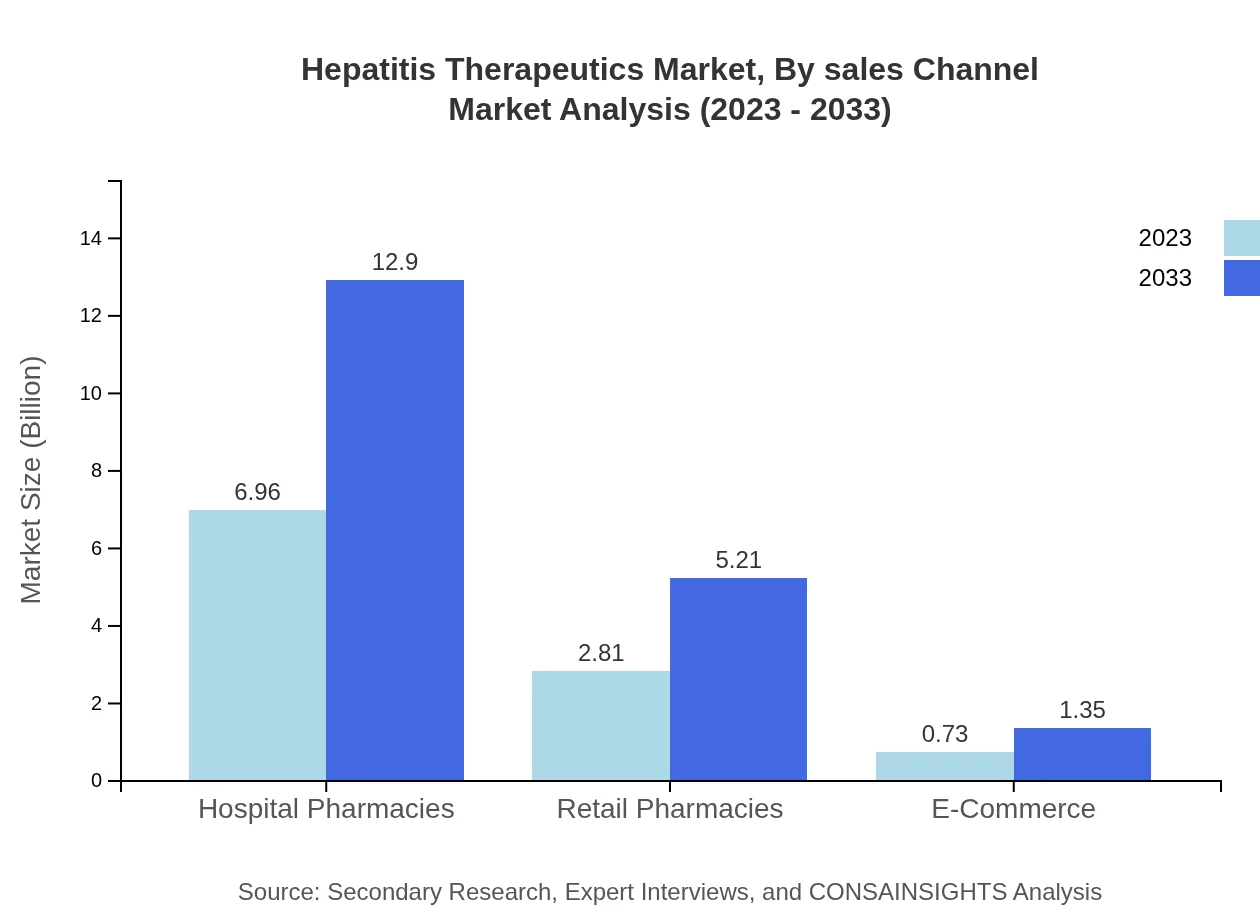
Hospital pharmacies lead the market representation with a size of $6.96 billion in 2023, expected to rise to $12.90 billion by 2033, capturing 66.31% of the market share. Retail pharmacies follow and are projected to grow from $2.81 billion to $5.21 billion, while e-commerce channels, although smaller at $0.73 billion, are anticipated to increase to $1.35 billion by 2033.
Hepatitis Therapeutics Market Trends and Future Forecast
Tell us your focus area and get a customized research report.
Global Market Leaders and Top Companies in Hepatitis Therapeutics Industry
Gilead Sciences, Inc.:
A leading biopharmaceutical company dedicated to the research and development of innovative medicines, particularly for viral infections including Hepatitis B and C.AbbVie Inc.:
AbbVie focuses on developing advanced therapies for chronic viral infections, striving to enhance treatment outcomes for Hepatitis patients globally.Merck & Co., Inc.:
Known for its robust portfolio in infectious diseases, Merck has pioneered treatments in Hepatitis B and C, showcasing significant contributions to therapeutic advancements.GSK:
GlaxoSmithKline is committed to addressing global health issues, including the development of effective vaccines for Hepatitis A and B.Bristol-Myers Squibb:
BMS is engaged in the development of innovative therapies targeting Hepatitis B, C, and associated complications, contributing to the market's evolution.We're grateful to work with incredible clients.







FAQs
What is the market size of the Hepatitis Therapeutics market in 2023?
The market size in 2023 is $10.50 Billion, serving as the base-year valuation for the 2023 to 2033 forecast period and comparative market analysis.
How big will the market be in 2033?
By 2033 the market is projected to reach $19.45 Billion, reflecting anticipated growth driven by therapeutic innovation and expanded treatment access.
What is CAGR for the forecast period?
The compound annual growth rate for the 2023 to 2033 forecast period is 6.2%, as stated in the market projections.
Is there a single fastest Growing region in the Hepatitis Therapeutics Market Report market?
No single fastest-growing region is stated for the Hepatitis Therapeutics Market Report market because the top regional implied CAGR values are within 0.15 percentage points of each other, making the ranking too close to call reliably.
Who are the top companies operating in this market?
Key companies listed include Gilead Sciences, Inc., AbbVie Inc., Merck & Co., Inc., GSK, and Bristol-Myers Squibb, active in therapy development.
What are the primary therapy classes included?
The market covers major drug classes such as antivirals, interferons, and antifibrotic agents, reflecting the therapeutic mix addressed in research and treatment.
Why is the market expected to expand over the decade?
Market expansion is linked to improved diagnostics, rising treatment uptake, innovation in drug classes, and greater healthcare access across multiple regions.
What patient types are covered in the segmentation?
Segmentation includes patient types such as adult patients and pediatric patients, accounting for different therapeutic needs and dosing strategies.
Which sales channels are included in the report?
Sales channels reported include hospital pharmacies, retail pharmacies, and e-commerce platforms as part of distribution coverage.
What routes of administration are considered?
The report includes routes of administration such as oral, injectable, and transdermal formats across marketed and pipeline therapies.