

Her-2 Negative Breast Cancer Market Report
First published: 21 October 2024 | Last updated: 25 May 2026 | Report Code: her-2-negative-breast-cancer
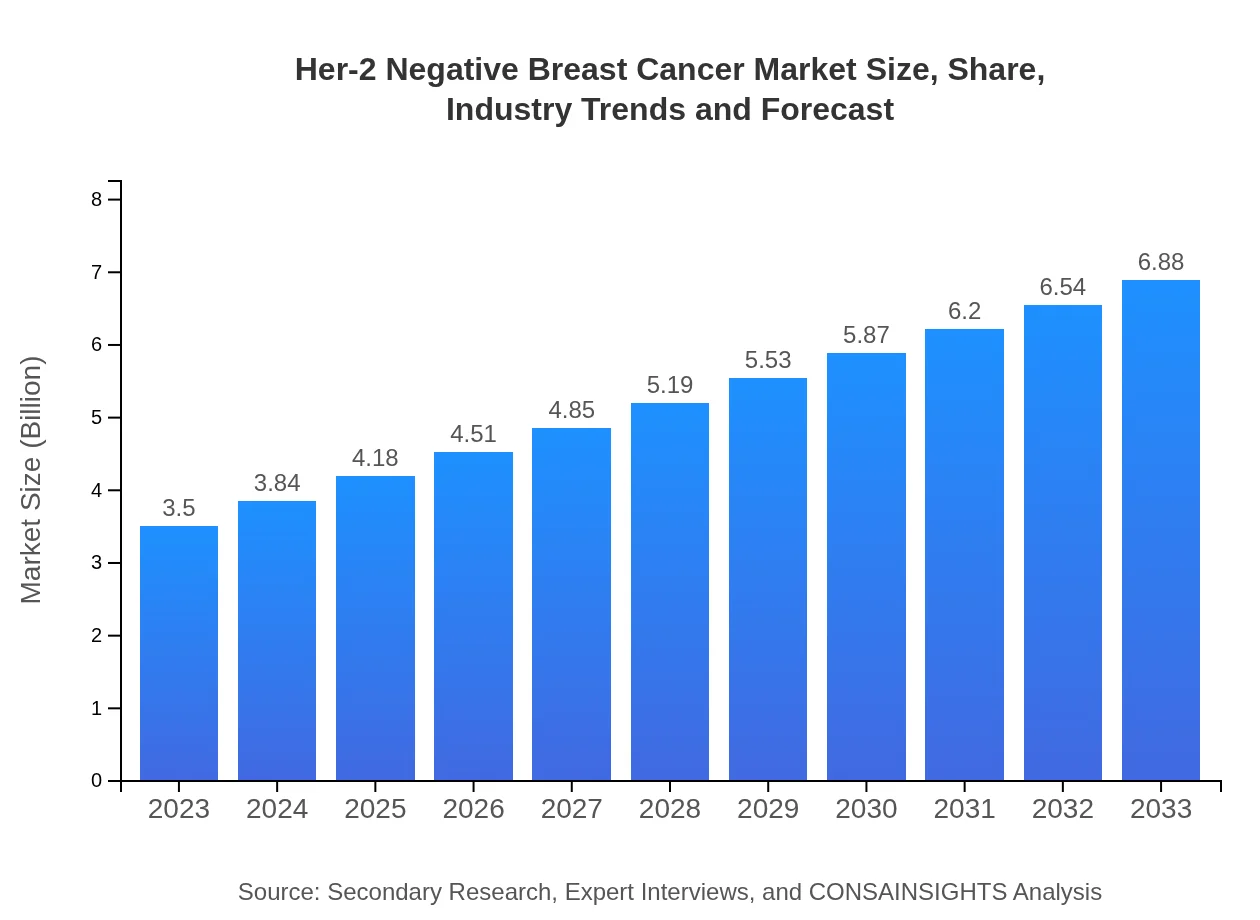
Her-2 Negative Breast Cancer Market — USD 3.5 billion in 2023, Growing to USD 6.88B by 2033 at 6.8% CAGR
This report presents a comprehensive analysis of the Her-2 Negative Breast Cancer market, covering insights, trends, and forecasts from 2023 to 2033. The analysis includes market sizing, growth rates, regional breakdowns, and industry dynamics tailored to stakeholders in this sector.
Key Takeaways
- Global market projected to rise from $3.50 Billion in 2023 to $6.88 Billion by 2033 at a 6.8% CAGR.
- North America is largest regional market, while no single fastest-growing region is stated because regional CAGR differences remain within 0.15 percentage points.
- Europe and Asia Pacific show substantial gains: Europe from $0.9 Billion to $1.78 Billion, Asia Pacific from $0.75 Billion to $1.48 Billion.
- Top industry participants include Roche, Novartis, Pfizer, AstraZeneca and Johnson & Johnson, driving R&D and treatment innovation.
Her-2 Negative Breast Cancer Market Report — Executive Summary
North America remains largest market by forecast-period value, while no single fastest-growing region is stated because top regional growth rates are separated by less than 0.15 percentage points. The report profiles the Her-2 Negative Breast Cancer market across treatment modalities, stages at diagnosis, distribution channels and patient demographics. Market value expands from $3.50 Billion in 2023 to $6.88 Billion by 2033, reflecting a 6.8% CAGR through the forecast period. Growth is supported by advances in targeted and hormone therapies, evolving clinical guidelines, and increasing screening and awareness. North America represents the largest regional market. The competitive field highlights major pharmaceutical firms—Roche, Novartis, Pfizer, AstraZeneca and Johnson & Johnson—investing in R&D and clinical programs. The study structure combines segmentation analysis with regional performance, trend evaluation and company profiling to help stakeholders evaluate opportunities and strategic priorities.
Key Growth Drivers
- Advances in targeted and hormone therapies expanding treatment options and improving outcomes.
- Growing screening initiatives and earlier diagnosis increasing eligible patient populations for standard and newer treatments.
- Sustained R&D investments by major pharmaceutical companies enhancing product pipelines and clinical trial activity.
- Rising awareness and adoption of evidence-based clinical protocols across major healthcare systems.
| Metric | Value |
|---|---|
| Study Period | 2023 - 2033 |
| 2023 Market Size | $3.50 Billion |
| CAGR (2023-2033) | 6.8% |
| 2033 Market Size | $6.88 Billion |
| Top Companies | Roche, Novartis, Pfizer , AstraZeneca, Johnson & Johnson |
| Published Date | 21 October 2024 |
| Last Modified Date | 25 May 2026 |
Her-2 Negative Breast Cancer Market Overview
Customize Her-2 Negative Breast Cancer Market Report market research report
- ✔ Get in-depth analysis of Her-2 Negative Breast Cancer market size, growth, and forecasts.
- ✔ Understand Her-2 Negative Breast Cancer's regional dynamics and industry-specific trends.
- ✔ Identify potential applications, end-user demand, and growth segments in Her-2 Negative Breast Cancer
What is the Market Size & CAGR of Her-2 Negative Breast Cancer Market Report market in 2023?
Her-2 Negative Breast Cancer Industry Analysis
Her-2 Negative Breast Cancer Market Segmentation and Scope
Tell us your focus area and get a customized research report.
Her-2 Negative Breast Cancer Market Report Market Analysis Report by Region
Europe Her-2 Negative Breast Cancer Market Report:
Europe grows from $0.9 Billion in 2023 to $1.78 Billion in 2033. Regional drivers include evolving clinical guidelines, increasing awareness campaigns and investments in treatment development and patient access programs.Asia Pacific Her-2 Negative Breast Cancer Market Report:
Asia Pacific grows from $0.75 Billion in 2023 to $1.48 Billion in 2033. Growth reflects broader screening efforts, expanding healthcare capacity and rising clinical research initiatives increasing availability of therapies.North America Her-2 Negative Breast Cancer Market Report:
North America is largest regional market, rising from $1.23 Billion in 2023 to $2.41 Billion in 2033. This expansion is supported by advanced healthcare infrastructure, concentrated industry R&D and established clinical trial activity that sustain adoption of new therapies.South America Her-2 Negative Breast Cancer Market Report:
Latin America grows from $0.16 Billion in 2023 to $0.32 Billion in 2033. Market expansion is influenced by improving diagnostic reach, gradual treatment uptake and growing engagement in regional clinical studies.Middle East & Africa Her-2 Negative Breast Cancer Market Report:
Middle East and Africa grows from $0.45 Billion in 2023 to $0.89 Billion in 2033. Drivers include expanding healthcare services, greater disease awareness and incremental investments in treatment access and clinical infrastructure.Tell us your focus area and get a customized research report.
Research Methodology
Her-2 Negative Breast Cancer Market Analysis By Treatment Type
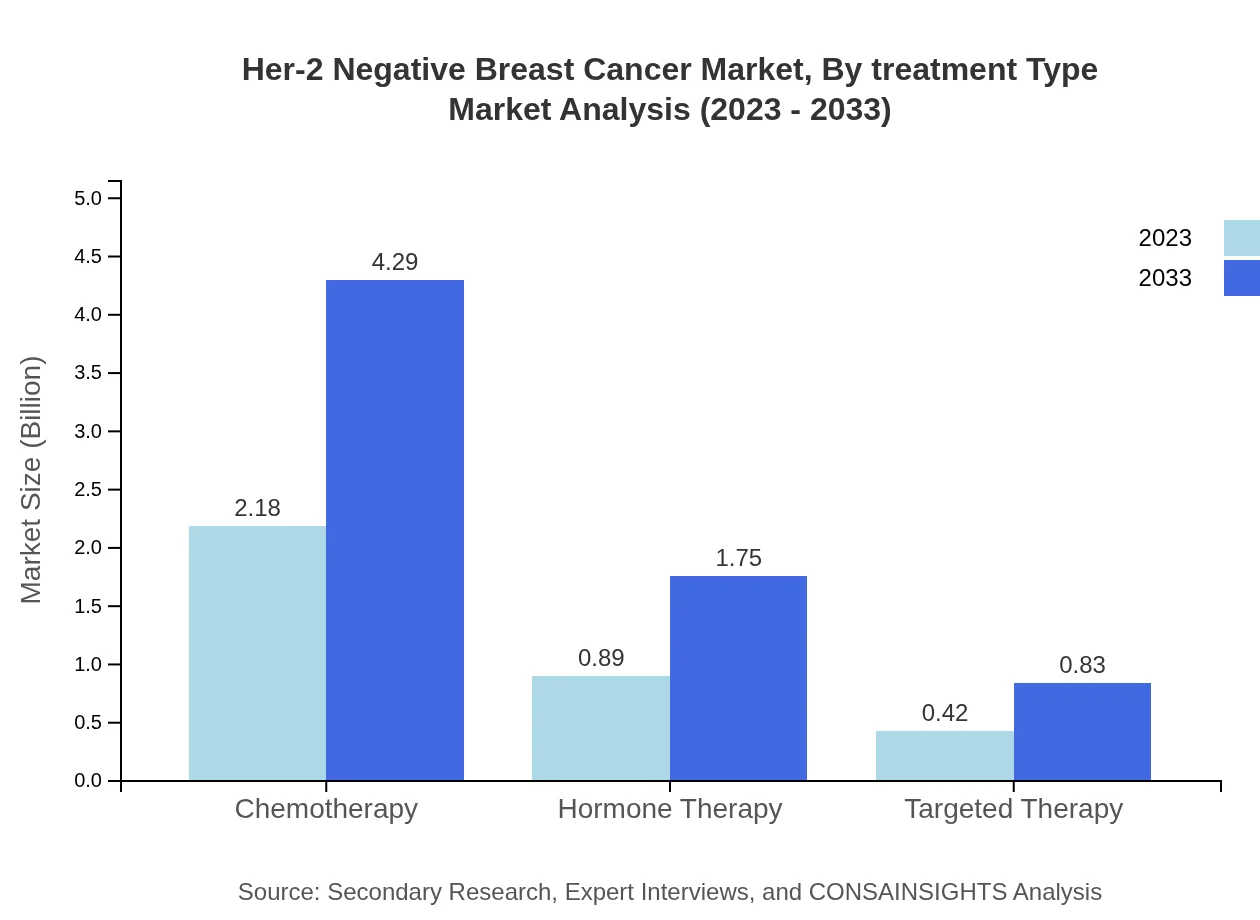
Chemotherapy remains the dominant treatment modality, representing a market size of $2.18 billion in 2023 and expected to grow to $4.29 billion by 2033, accounting for 62.38% market share. Hormone therapy follows with an initial market size of $0.89 billion in 2023, forecasted to reach $1.75 billion by 2033, holding a share of 25.49%. Targeted therapy, although smaller at $0.42 billion in 2023, will grow to $0.83 billion, showing a consistent share of 12.13%. This segmentation reflects the focus on both established and emerging treatment paradigms in managing Her-2 Negative Breast Cancer.
Her-2 Negative Breast Cancer Market Analysis By Stage At Diagnosis
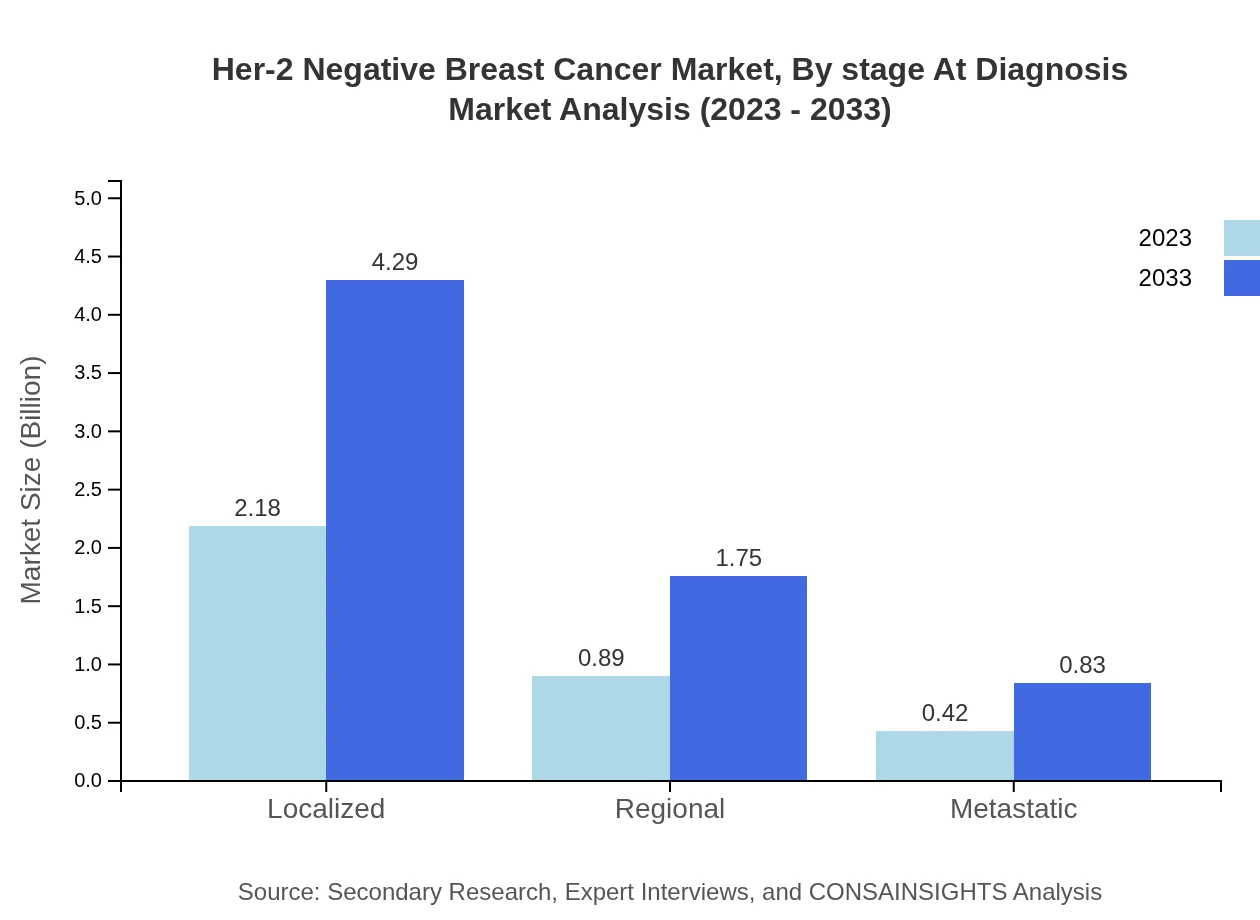
The market is segmented by stage at diagnosis into localized, regional, and metastatic categories. Localized cases represent the largest share, with a size of $2.18 billion in 2023 projected to grow to $4.29 billion by 2033. Regional cases will progress from $0.89 billion to $1.75 billion, while metastatic cases start at $0.42 billion, expected to double over the forecast period. This emphasizes the critical need for early diagnosis and intervention in improving treatment outcomes and patient quality of life.
Her-2 Negative Breast Cancer Market Analysis By Distribution Channel
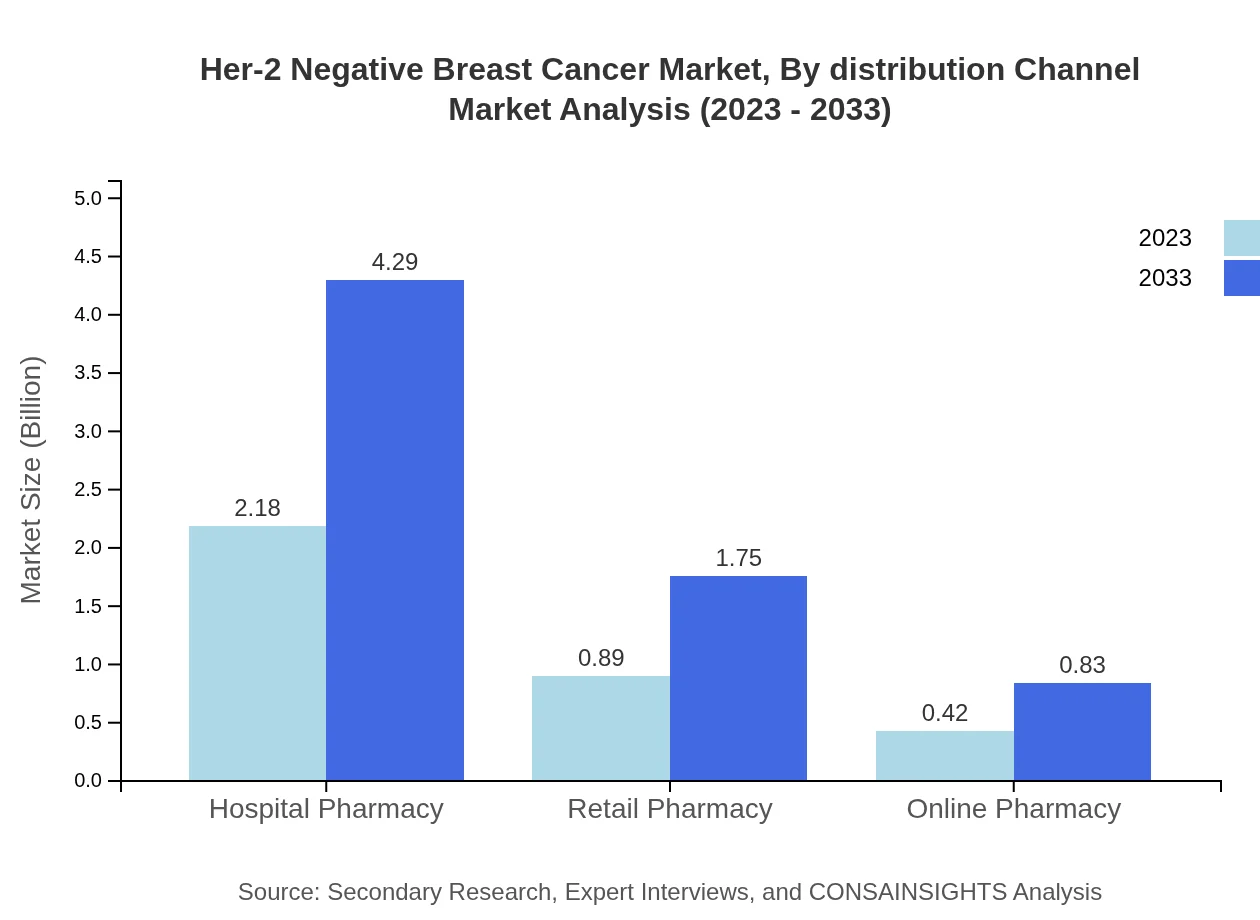
The market is analyzed through distribution channels such as hospital pharmacies, retail pharmacies, and online pharmacies. Hospital pharmacies dominate with a size of $2.18 billion in 2023 and an expected growth to $4.29 billion by 2033. Retail pharmacies account for $0.89 billion, leading to $1.75 billion, while online pharmacies show increasing relevance with $0.42 billion, expected to grow to $0.83 billion. This segmentation indicates the changing landscape of pharmaceutical distribution in oncology treatment and the growing online healthcare market.
Her-2 Negative Breast Cancer Market Analysis By Patient Demographics
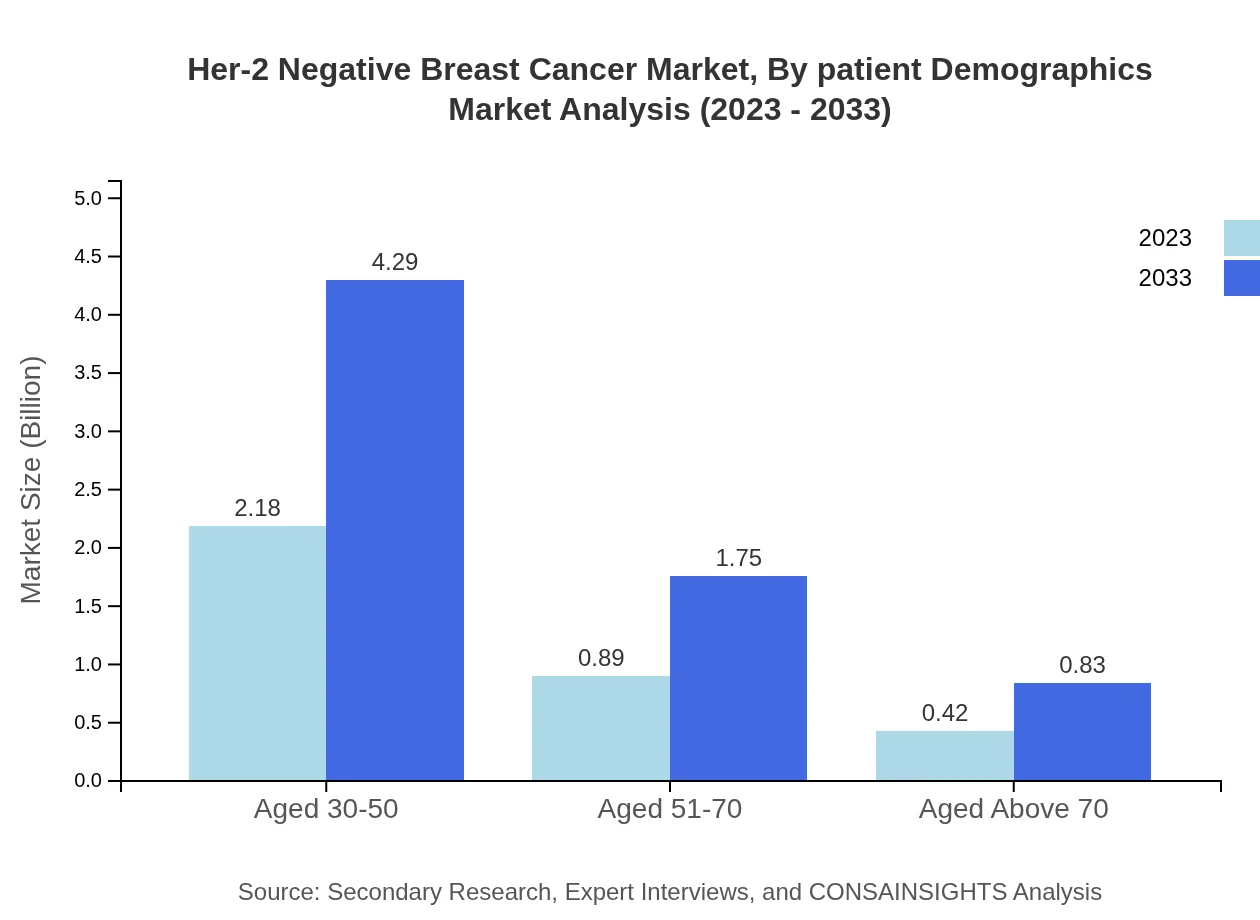
In terms of patient demographics, the market predominantly serves individuals aged 30-50, with a size of $2.18 billion forecasted to grow to $4.29 billion. The 51-70 age group follows closely, starting at $0.89 billion and projected to reach $1.75 billion, while patients above 70 begin at $0.42 billion heading to $0.83 billion. These demographics are critical in tailoring treatment plans, as age influences the choice of treatment modalities and responses.
Her-2 Negative Breast Cancer Market Trends and Future Forecast
Tell us your focus area and get a customized research report.
Global Market Leaders and Top Companies in Her-2 Negative Breast Cancer Industry
Roche:
A pioneer in biopharmaceuticals, Roche has made significant advancements in targeted therapies for breast cancer, including Herceptin, which has transformed treatment strategies.Novartis:
Novartis invests heavily in oncology research and development, focusing on innovative therapies that enhance outcomes for Her-2 Negative Breast Cancer patients.Pfizer :
Pfizer is a global leader in the development of cancer treatments, continuously working on novel solutions to improve survival rates of patients with Her-2 Negative Breast Cancer.AstraZeneca:
With a robust pipeline and recent approvals for therapies targeting breast cancer, AstraZeneca is committed to advancing treatment options in the oncology sector.Johnson & Johnson:
Dedicated to broadening its cancer treatment portfolio, Johnson & Johnson focuses on combination therapies to provide comprehensive care for breast cancer patients.We're grateful to work with incredible clients.








FAQs
What is the market size of the Her-2 Negative Breast Cancer market in 2023?
The market size was $3.50 Billion in 2023, based on reported figures for the global Her-2 Negative Breast Cancer market for that year.
How big will the market be in 2033?
The market is projected to reach $6.88 Billion by 2033, reflecting the reported end-period value for the forecast horizon.
What is CAGR of the market between 2023 and 2033?
The compound annual growth rate for the 2023 to 2033 period is 6.8%, as specified for the market forecast.
Is there a single fastest Growing region in the Her-2 Negative Breast Cancer Market Report market?
No single fastest-growing region is stated for the Her-2 Negative Breast Cancer Market Report market because the top regional implied CAGR values are within 0.15 percentage points of each other, making the ranking too close to call reliably.
Why is North America the largest regional market?
North America’s scale reflects higher end-period market value, supported by established healthcare infrastructures and concentrated industry investment.
Who are the top companies active in this market?
Leading companies listed for the market include Roche, Novartis, Pfizer, AstraZeneca and Johnson & Johnson.
What are common treatment segments included in the report?
Treatment categories covered comprise chemotherapy, hormone therapy and targeted therapy as primary subsegments in the market analysis.
Which distribution channels are evaluated?
The report assesses hospital pharmacy, retail pharmacy and online pharmacy channels as distribution routes for therapies and products.
What stages at diagnosis does the study consider?
The segmentation includes localized, regional and metastatic stages at diagnosis to reflect clinical treatment pathways.
What patient demographics are captured in the segmentation?
Patient cohorts are segmented by age groups including Aged 30-50, Aged 51-70 and Aged Above 70.