

Home Automation Market Report
First published: 20 October 2024 | Last updated: 24 June 2026 | Report Code: home-automation
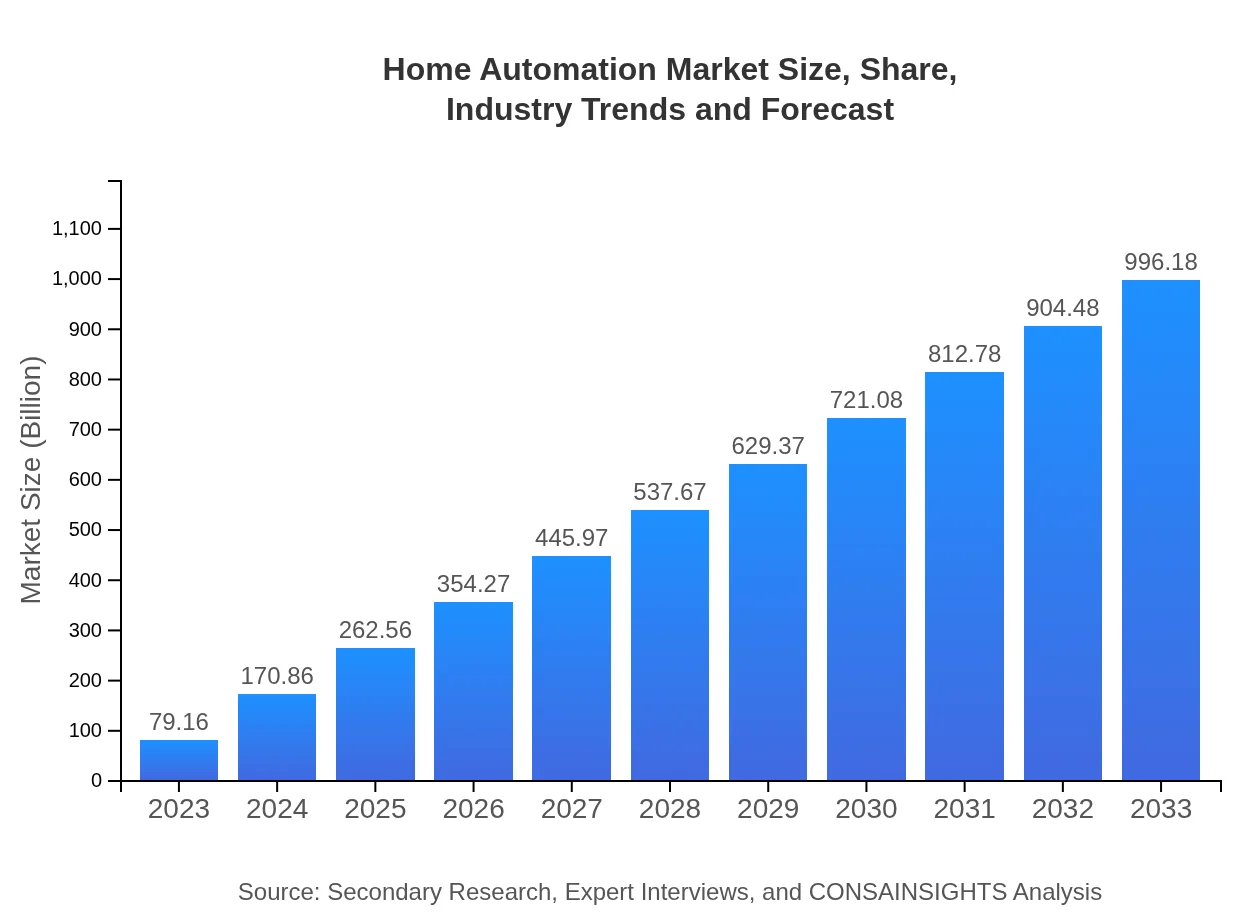
Home Automation Market — USD $79.16 Billion in 2023, Growing to USD 996.18null by 2033 at 26.9% CAGR
This market report provides comprehensive insights into the Home Automation industry, covering market size, growth projections, segmentation, and technological advancements. The analysis includes data-driven forecasts for the years 2023 to 2033.
Key Takeaways
- Global market value rises from $79.16 Billion in 2023 to $996.18 Billion in 2033 with a 26.9% CAGR for 2023 to 2033.
- North America is largest regional market, while no single fastest-growing region is stated because regional CAGR differences remain within 0.15 percentage points.
- Regional expansions occur across Europe, Asia Pacific, Middle East & Africa, and Latin America with significant absolute growth through 2033.
- Top companies shaping the market include Google Nest, Amazon, Apple, Samsung SmartThings and Philips Hue.
- Technology shifts toward wireless connectivity, IoT integration and energy-efficient solutions are core trend drivers.
Home Automation Market Report — Executive Summary
North America remains largest market by forecast-period value, while no single fastest-growing region is stated because top regional growth rates are separated by less than 0.15 percentage points. This report examines growth dynamics in home automation driven by consumer appetite for convenience, security and energy efficiency. The market is valued at $79.16 Billion in 2023 and is expected to reach $996.18 Billion by 2033 at a CAGR of 26.9% for 2023 to 2033. Key forces include wider IoT adoption, proliferation of wireless technologies, and demand for integrated smart lighting, security and climate control systems. The study segments the market by product, technology, application and device type, and provides regional breakdowns highlighting North America as the largest market. Competitive coverage profiles major vendors such as Google Nest, Amazon, Apple, Samsung SmartThings and Philips Hue. The report concludes with strategic implications for manufacturers, channel partners and service providers focusing on interoperability, energy efficiency and user experience enhancements.
Key Growth Drivers
- Broader IoT adoption enabling device interoperability and remote management across residential and commercial settings.
- Rising consumer interest in security and convenience fueling demand for smart security, lighting and thermostat solutions.
- Regulatory emphasis on energy efficiency encouraging deployment of intelligent controls and low-power devices.
- Advances in wireless technologies lowering installation complexity and supporting wider smart device penetration.
- Integration incentives from major platform providers and device manufacturers enhancing ecosystem compatibility.
Home Automation Market Overview
Customize Home Automation Market Report market research report
- ✔ Get in-depth analysis of Home Automation market size, growth, and forecasts.
- ✔ Understand Home Automation's regional dynamics and industry-specific trends.
- ✔ Identify potential applications, end-user demand, and growth segments in Home Automation
What is the Market Size & CAGR of Home Automation Market Report market in 2023?
Home Automation Industry Analysis
Home Automation Market Segmentation and Scope
Tell us your focus area and get a customized research report.
Home Automation Market Report Market Analysis Report by Region
Europe Home Automation Market Report:
Europe grows from $24.78 Billion in 2023 to $311.81 Billion in 2033. Regional drivers include regulatory focus on energy efficiency, steady uptake of smart lighting and heating controls, and investments in connected building technologies.Asia Pacific Home Automation Market Report:
Asia Pacific grows from $14.08 Billion in 2023 to $177.22 Billion in 2033. Growth is underpinned by rising consumer interest in convenience and security, urbanization trends and expanding availability of wireless smart devices.North America Home Automation Market Report:
North America is largest regional market, rising from $30.54 Billion in 2023 to $384.33 Billion in 2033. 54 Billion in 2023 and is expected to reach $384.33 Billion in 2033. The region’s expansion is supported by strong platform ecosystems, high smart device penetration and early consumer adoption driving integrated home solutions as the largest regional market.South America Home Automation Market Report:
Latin America grows from $1.57 Billion in 2023 to $19.72 Billion in 2033. Adoption is supported by gradual market maturation, growing awareness of smart solutions and increasing availability of affordable connected devices.Middle East & Africa Home Automation Market Report:
Middle East and Africa grows from $8.19 Billion in 2023 to $103.11 Billion in 2033. Drivers include infrastructure investments, demand for energy-efficient systems and growing interest in home security and automation technologies.Tell us your focus area and get a customized research report.
Research Methodology
Home Automation Market Analysis By Product
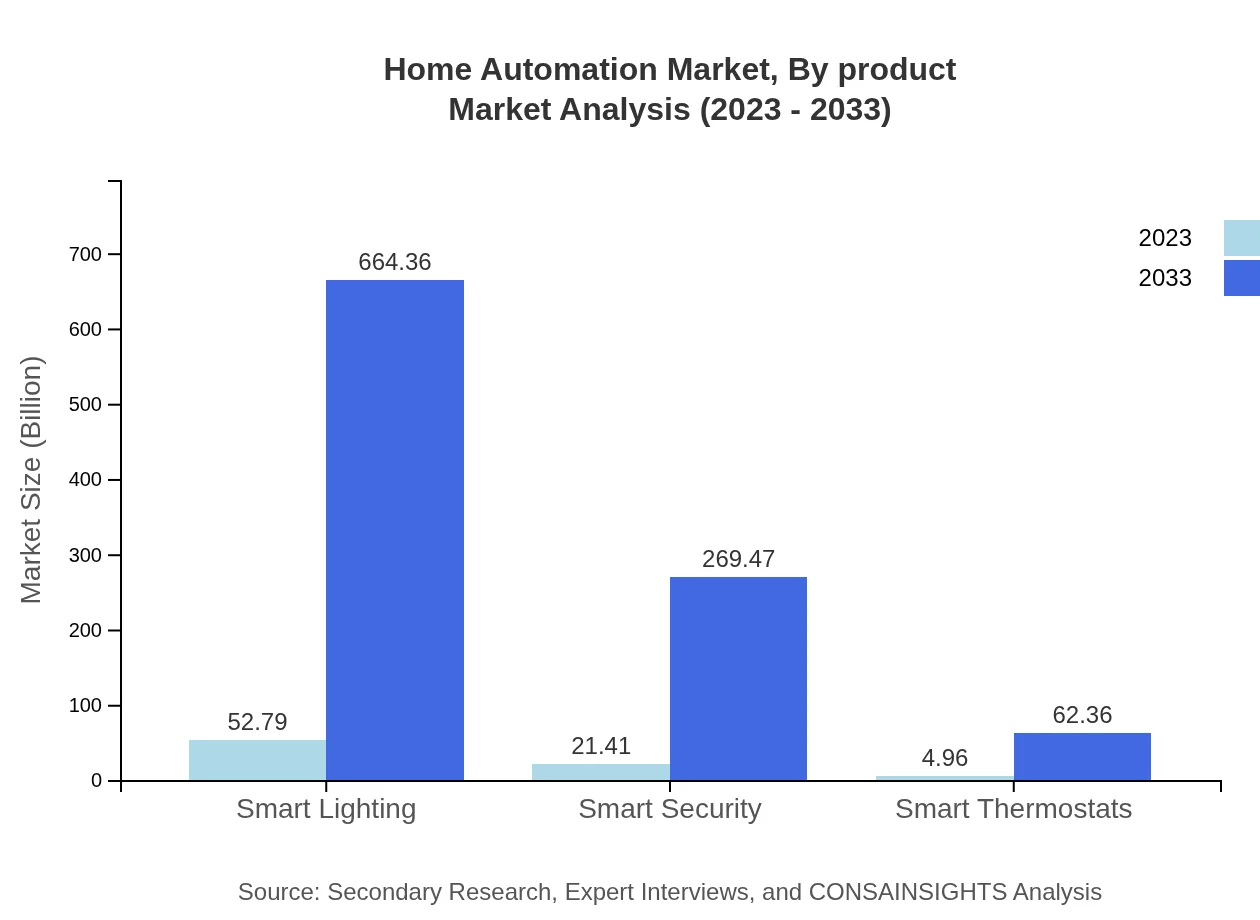
Smart lighting currently leads the market with a size of $52.79 billion in 2023, projected to soar to $664.36 billion by 2033. Similarly, smart security measures reflect strong growth, moving from $21.41 billion in 2023 to $269.47 billion over the next decade. HVAC control systems and other smart devices are also proving increasingly significant as consumer focus shifts towards comprehensive home automation solutions.
Home Automation Market Analysis By Technology
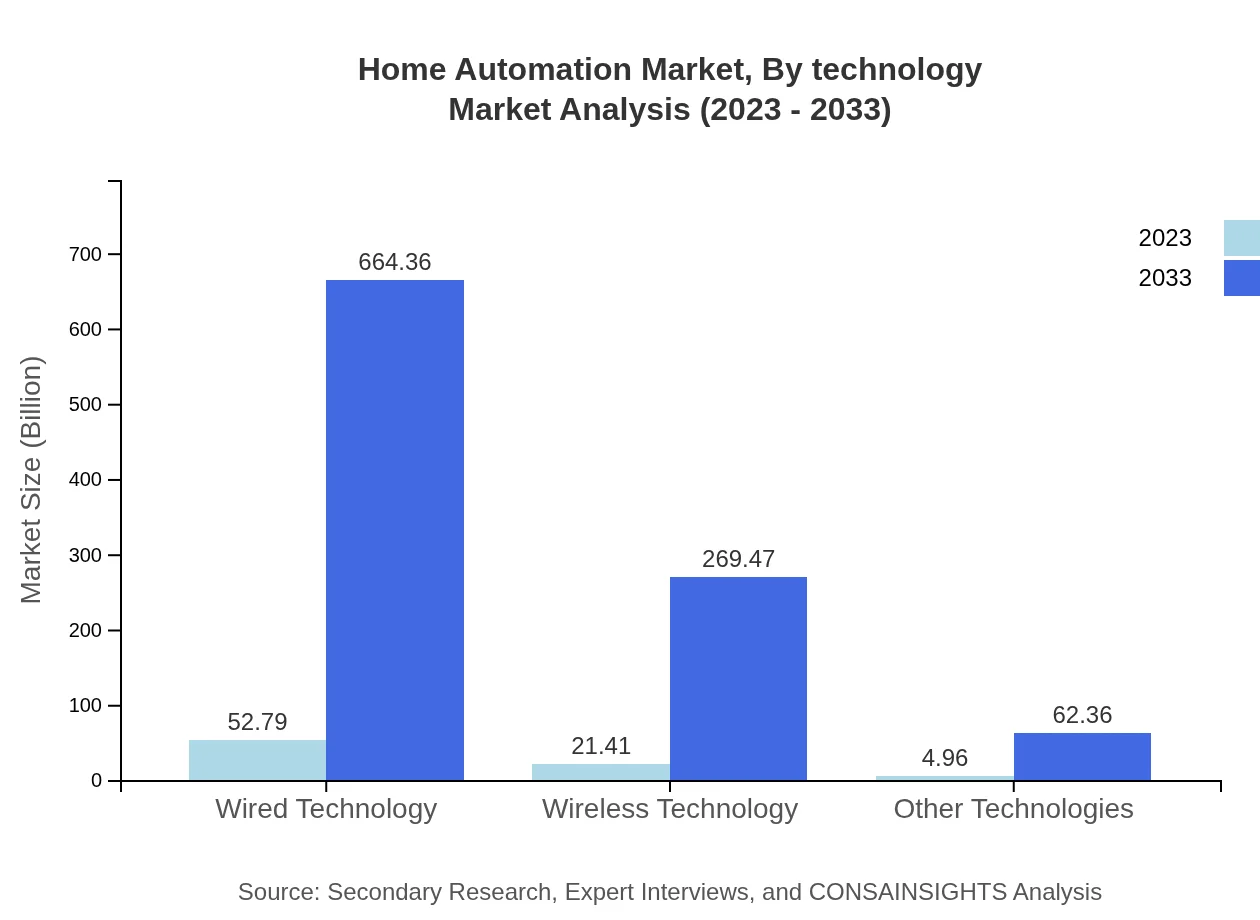
Increasing adoption of wired technology ($52.79 billion in 2023, $664.36 billion by 2033) remains prevalent, but wireless technology, valued at $21.41 billion currently, is growing significantly due to consumer preference for flexible, mobile solutions. These segments reflect a shift toward integrated systems combining various technologies to enhance ease of use.
Home Automation Market Analysis By Device Type
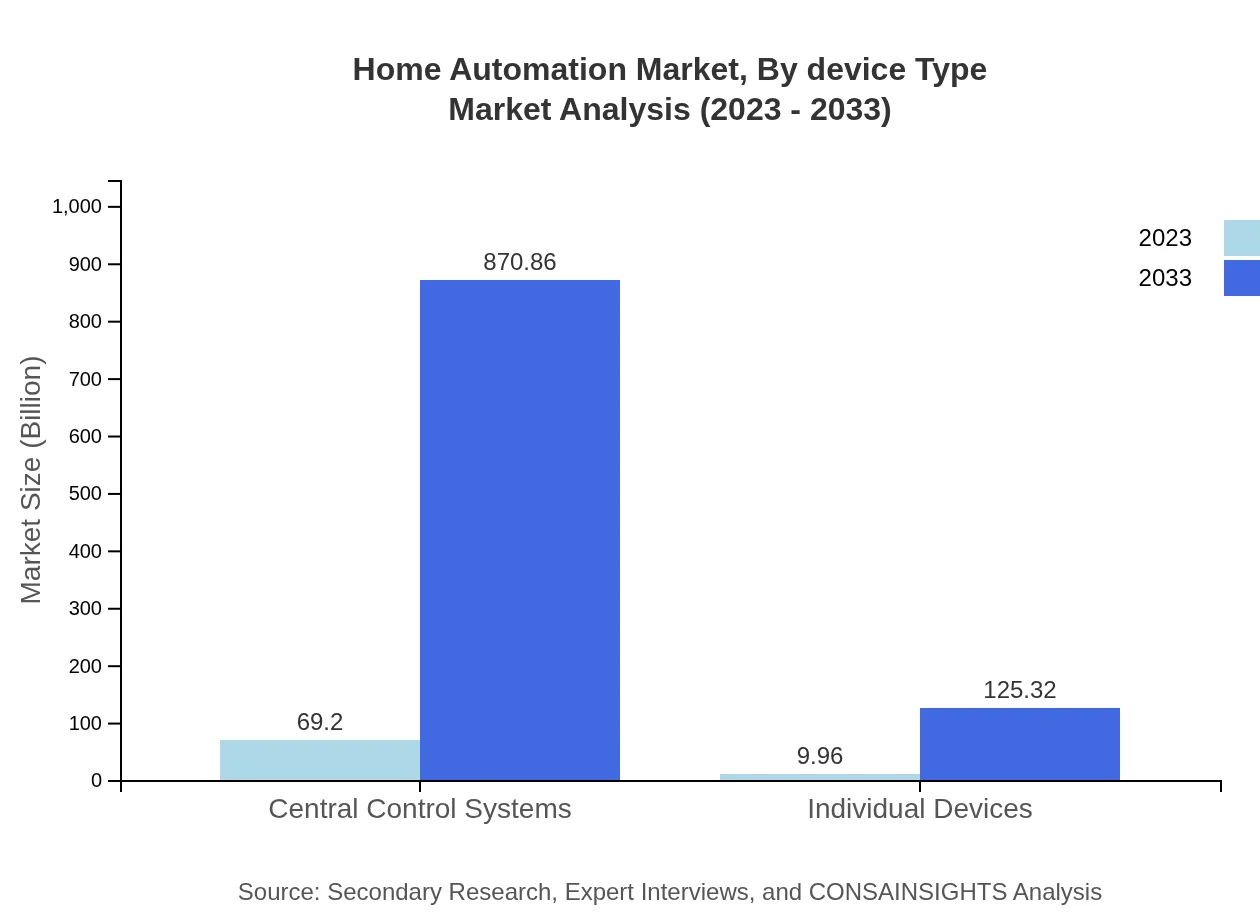
The market split between central control systems and individual devices shows a strong preference for central solutions valued at $69.20 billion in 2023, growing to $870.86 billion by 2033. Individual devices hold a market size of $9.96 billion currently, reflecting consumer interest in piecemeal automation as part of broader systems.
Home Automation Market Analysis By Application
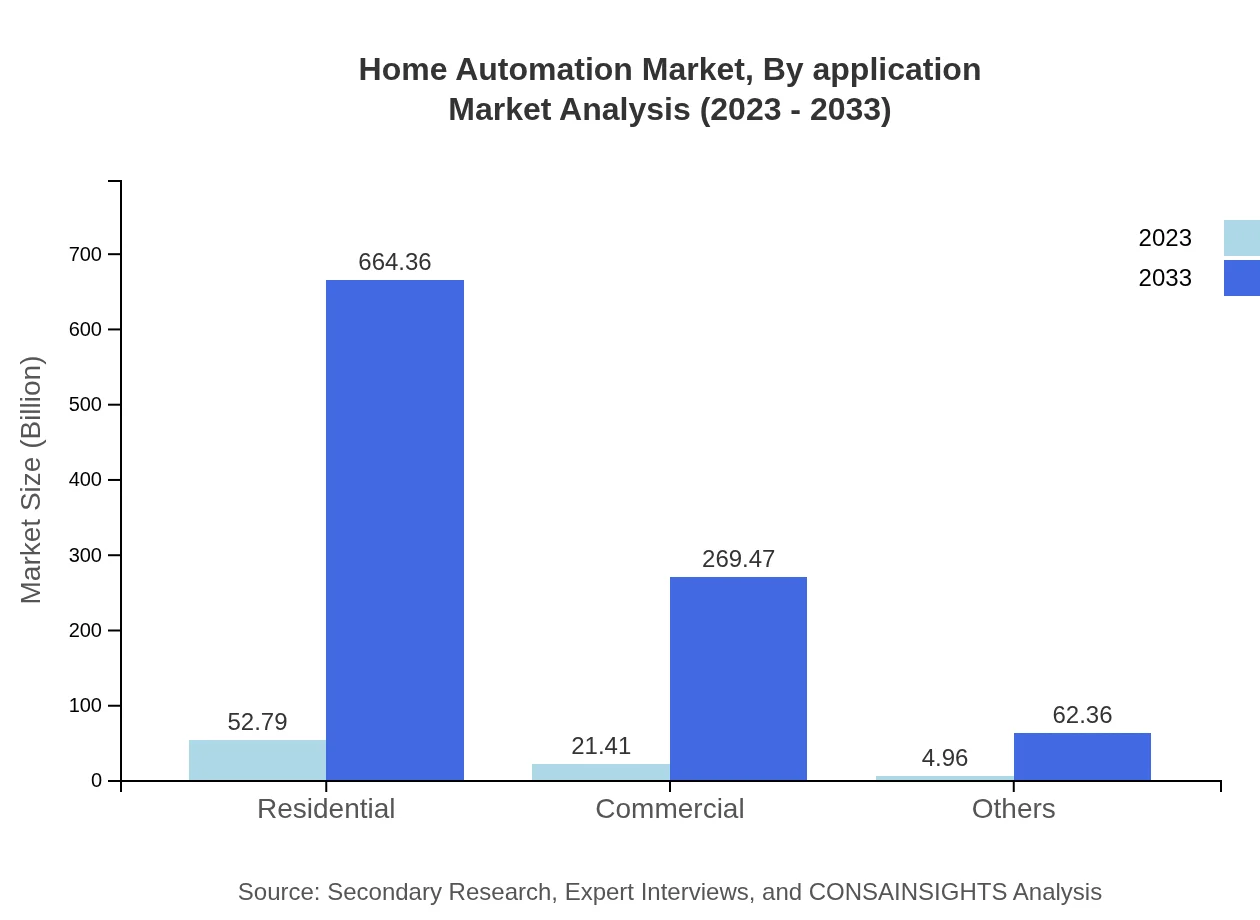
Residential applications dominate the Home Automation market, anticipated to grow from $52.79 billion in 2023 to $664.36 billion by 2033. In contrast, commercial applications, valued at $21.41 billion, are also receiving attention as businesses recognize the value in automation for efficiency and security.
Home Automation Market Trends and Future Forecast
Tell us your focus area and get a customized research report.
Global Market Leaders and Top Companies in Home Automation Industry
Google Nest:
Google Nest designs products for the smart home, focusing on devices that enhance household efficiency, such as smart thermostats and security cameras.Amazon :
Amazon's ecosystem, primarily through Alexa-enabled devices, leads the market in smart home products and services, contributing considerably to user integration and automation.Apple :
Apple integrates its HomeKit platform with its ecosystem, focusing on seamless connectivity among devices and ensuring high security and user experience.Samsung SmartThings:
Samsung offers a range of products under its SmartThings brand, which focuses on home automation and interconnectivity between devices.Philips Hue:
Philips Hue is one of the leading brands in smart lighting, providing a variety of interconnected lighting solutions that enhance home automation and energy efficiency.We're grateful to work with incredible clients.









FAQs
What is the market size of the Home Automation Market Report in 2023?
The market size in 2023 is $79.16 Billion as stated in the report, reflecting current installed base and early adoption across connected lighting, security and HVAC control segments.
How big will the market be in 2033?
By 2033 the market is projected to reach $996.18 Billion, representing long-term expansion driven by broader adoption of smart devices and integrated home systems.
What is CAGR of the market for 2023 to 2033?
The report specifies a compound annual growth rate (CAGR) of 26.9% for the period 2023 to 2033 based on observed adoption trends and technology diffusion.
Is there a single fastest Growing region in the Home Automation Market Report market?
No single fastest-growing region is stated for the Home Automation Market Report market because the top regional implied CAGR values are within 0.15 percentage points of each other, making the ranking too close to call reliably.
Who are the top companies in the home automation market?
Top listed companies in the report include Google Nest, Amazon, Apple, Samsung SmartThings and Philips Hue, reflecting platform and device leadership in smart home segments.
Why is wireless technology important in this market?
Wireless technology reduces installation barriers and supports scalable device networks, enabling broader consumer adoption of smart lighting, security and thermostat solutions.
How big is the Europe market in 2023 and 2033?
Europe grows from $24.78 Billion in 2023 to $311.81 Billion in 2033, reflecting regional investments in energy-efficient building controls and connected home deployments.
What drives commercial adoption of home automation technologies?
Commercial uptake is driven by efficiency, centralized control and enhanced security, with integration of smart systems offering operational savings and improved occupant experience.
Which technologies are covered under by Technology segmentation?
The report’s by-technology segmentation includes Wired Technology, Wireless Technology and Other Technologies as specified in the input data.
What role do partnerships play in market development?
Partnerships between device makers and platform providers accelerate interoperability, speed time-to-market for new features, and expand consumer access to integrated smart home solutions.