

Human Embryonic Stem Cells Market Report
First published: 11 October 2024 | Last updated: 25 May 2026 | Report Code: human-embryonic-stem-cells
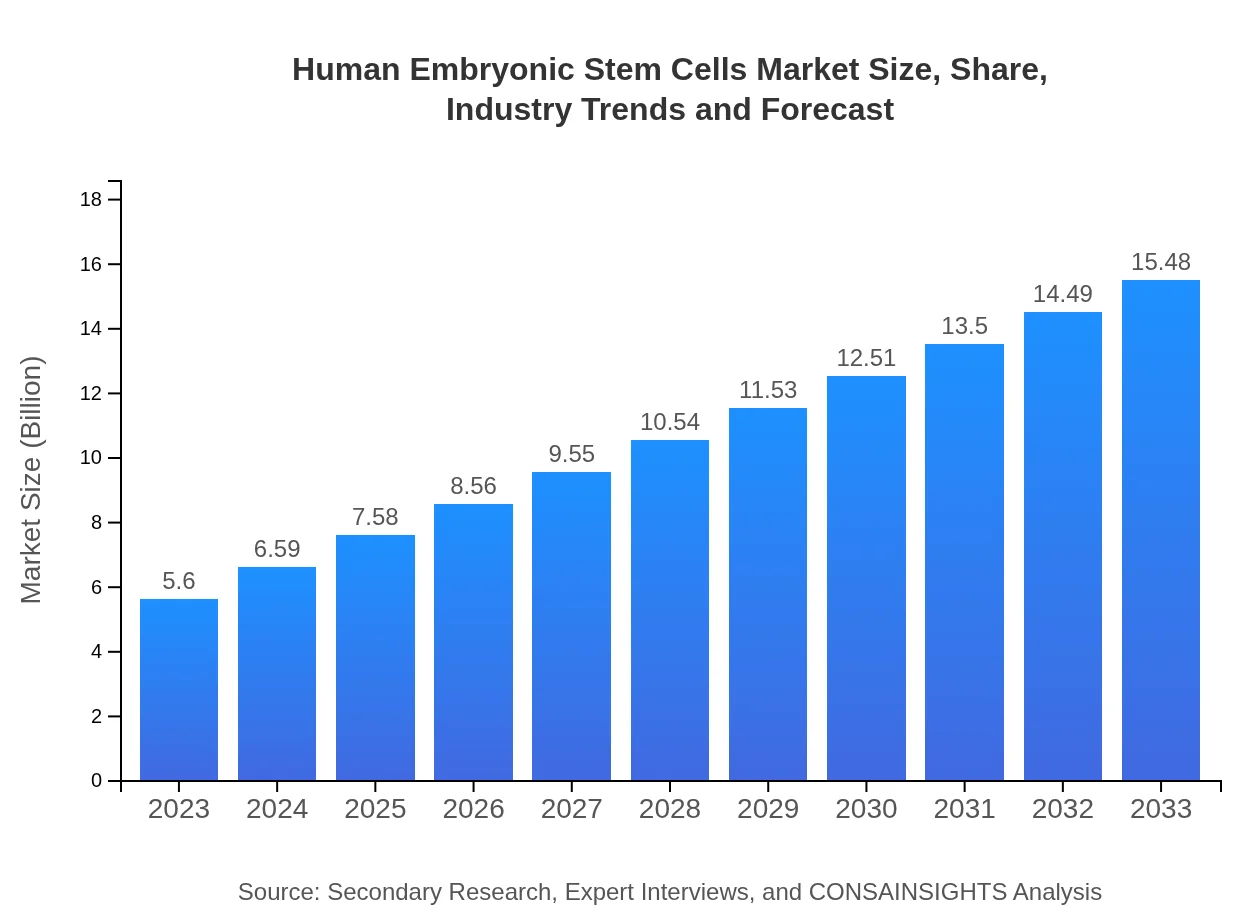
Human Embryonic Stem Cells Market — USD 5.6 billion in 2023, Growing to USD 15.48B by 2033 at 10.3% CAGR
This report provides an insightful analysis of the Human Embryonic Stem Cells market, examining key trends, growth projections, and competitive landscapes from 2023 to 2033.
Key Takeaways
- Global market value rises from $5.60 Billion (2023) to $15.48 Billion (2033) with a 10.3% CAGR.
- North America is largest regional market, while no single fastest-growing region is stated because regional CAGR differences remain within 0.15 percentage points.
- Europe grows from $1.73 Billion in 2023 to $4.79 Billion in 2033, reflecting sustained research and biotech investment.
- Asia Pacific advances from $1.06 Billion to $2.93 Billion between 2023 and 2033 amid expanding clinical and research activities.
- Top industry participants include Thermo Fisher Scientific, Merck KGaA, Lonza Group, and StemCells, Inc.
Human Embryonic Stem Cells Market Report — Executive Summary
North America remains largest market by forecast-period value, while no single fastest-growing region is stated because top regional growth rates are separated by less than 0.15 percentage points. The Human Embryonic Stem Cells market is set for notable expansion between 2023 and 2033, driven by technological progress in regenerative therapies, growing demand for advanced research tools, and increasing investment from both commercial and academic stakeholders. Market value is expected to rise from $5.60 Billion in 2023 to $15.48 Billion in 2033, reflecting a 10.3% CAGR across the forecast period. Key trends include greater collaboration between academia and industry, focus on personalized and cell-based therapies, and strengthened regulatory pathways that support clinical development while addressing ethical considerations. Market structure spans source types, product offerings such as stem cell lines and culture media, and end users including academic and research institutes, biotech and pharmaceutical companies, and CROs. Major providers named in the market include Thermo Fisher Scientific, Merck KGaA, Lonza Group, and StemCells, Inc., which supply core materials and services that enable research and therapeutic development.
Key Growth Drivers
- Advances in regenerative medicine and cell therapy technologies expanding potential applications.
- Increased R&D investment from biopharma and academic institutions accelerating therapeutic and research activities.
- Rising demand for standardized stem cell materials and culture systems to support reproducible research.
- Collaborations between industry and research organizations facilitating translation from laboratory findings to clinical development.
- Growing prevalence of chronic and genetic disorders driving need for novel therapeutic approaches.
| Metric | Value |
|---|---|
| Study Period | 2023 - 2033 |
| 2023 Market Size | $5.60 Billion |
| CAGR (2023-2033) | 10.3% |
| 2033 Market Size | $15.48 Billion |
| Top Companies | Thermo Fisher Scientific, Merck KGaA, Lonza Group, StemCells, Inc. |
| Published Date | 11 October 2024 |
| Last Modified Date | 25 May 2026 |
Human Embryonic Stem Cells Market Overview
Customize Human Embryonic Stem Cells Market Report market research report
- ✔ Get in-depth analysis of Human Embryonic Stem Cells market size, growth, and forecasts.
- ✔ Understand Human Embryonic Stem Cells's regional dynamics and industry-specific trends.
- ✔ Identify potential applications, end-user demand, and growth segments in Human Embryonic Stem Cells
What is the Market Size & CAGR of Human Embryonic Stem Cells Market Report market in 2023?
Human Embryonic Stem Cells Industry Analysis
Human Embryonic Stem Cells Market Segmentation and Scope
Tell us your focus area and get a customized research report.
Human Embryonic Stem Cells Market Report Market Analysis Report by Region
Europe Human Embryonic Stem Cells Market Report:
Europe grows from $1.73 Billion in 2023 to $4.79 Billion in 2033. This expansion is supported by active academic research, increasing biotech investment, and regulatory developments that facilitate clinical research while addressing ethical considerations.Asia Pacific Human Embryonic Stem Cells Market Report:
Asia Pacific grows from $1.06 Billion in 2023 to $2.93 Billion in 2033. Growth is linked to expanding clinical research capacity, rising R&D expenditure, and growing interest in advanced therapies across several markets in the region.North America Human Embryonic Stem Cells Market Report:
North America is largest regional market, rising from $1.98 Billion in 2023 to $5.48 Billion in 2033. Regional strength reflects concentrated research infrastructure, significant biotech and pharma activity, and robust demand for cell therapy research tools and services.South America Human Embryonic Stem Cells Market Report:
Latin America grows from $0.48 Billion in 2023 to $1.31 Billion in 2033. Progress in the region is driven by an expanding research base and increasing collaborations with international academic and commercial partners.Middle East & Africa Human Embryonic Stem Cells Market Report:
Middle East and Africa grows from $0.35 Billion in 2023 to $0.97 Billion in 2033. Growth factors include targeted research investments, emerging clinical research initiatives, and partnerships that aim to build local biotech capabilities.Tell us your focus area and get a customized research report.
Research Methodology
Human Embryonic Stem Cells Market Analysis By Source
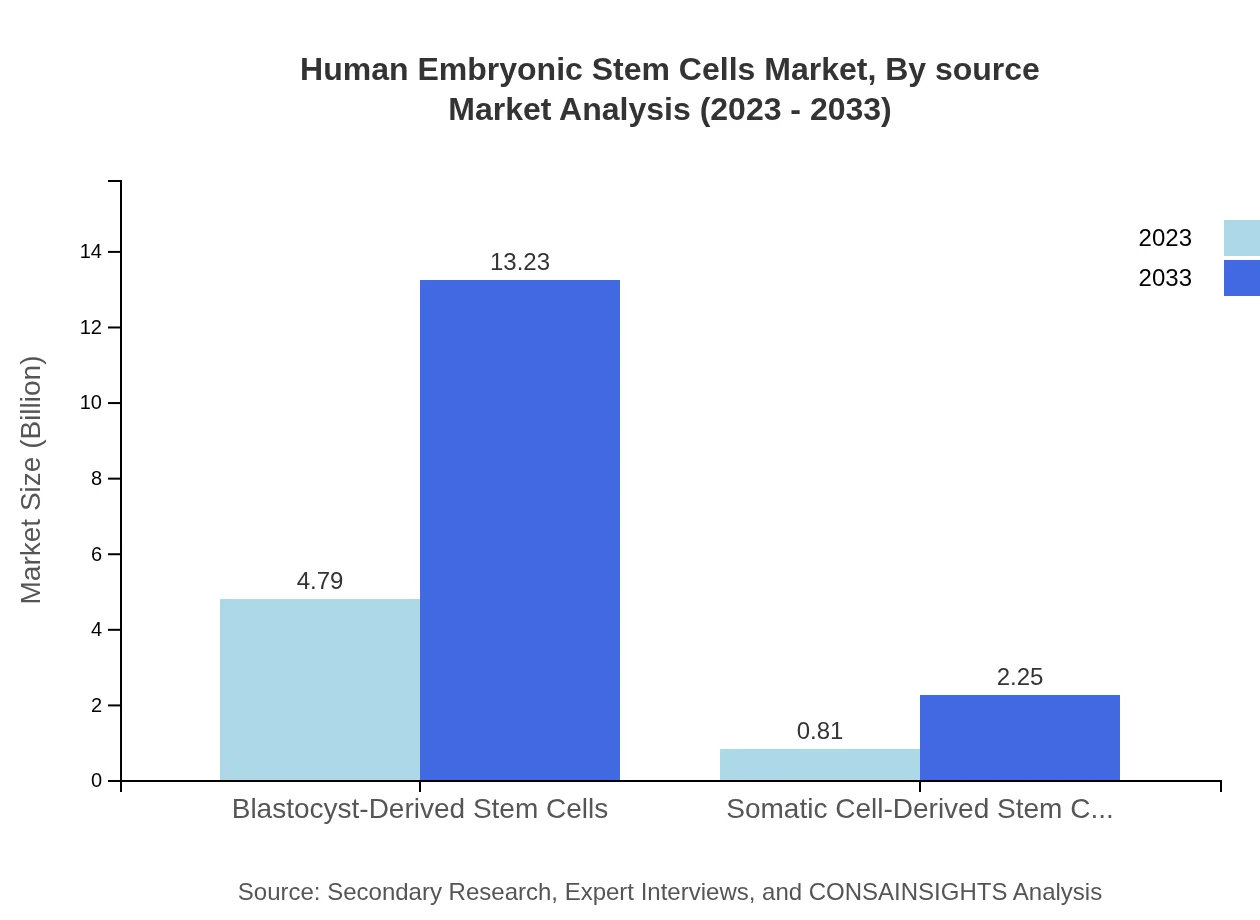
The market is predominantly led by blastocyst-derived stem cells, accounting for approximately $4.79 billion in 2023, and anticipated to grow to $13.23 billion by 2033. In contrast, somatic cell-derived stem cells currently represent a market value of $0.81 billion, with expectations of reaching $2.25 billion within the same timeframe.
Human Embryonic Stem Cells Market Analysis By Application
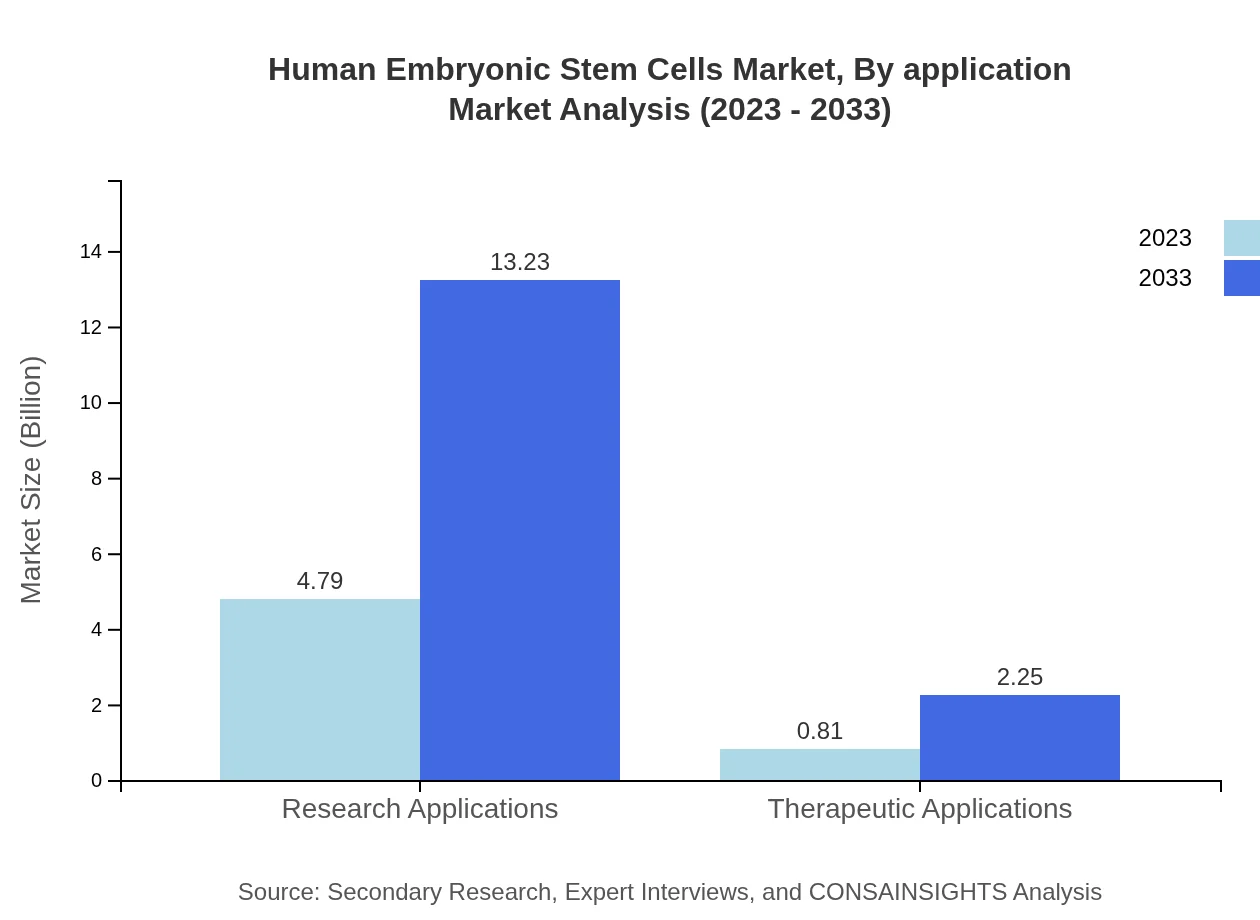
The predominant application area for HESCs is research applications, which accounted for a market size of $4.79 billion in 2023 and is projected to expand to $13.23 billion by 2033. Therapeutic applications, while smaller, are growing steadily, with a market size of $0.81 billion in 2023 expected to increase to $2.25 billion over the forecast period.
Human Embryonic Stem Cells Market Analysis By Product Type
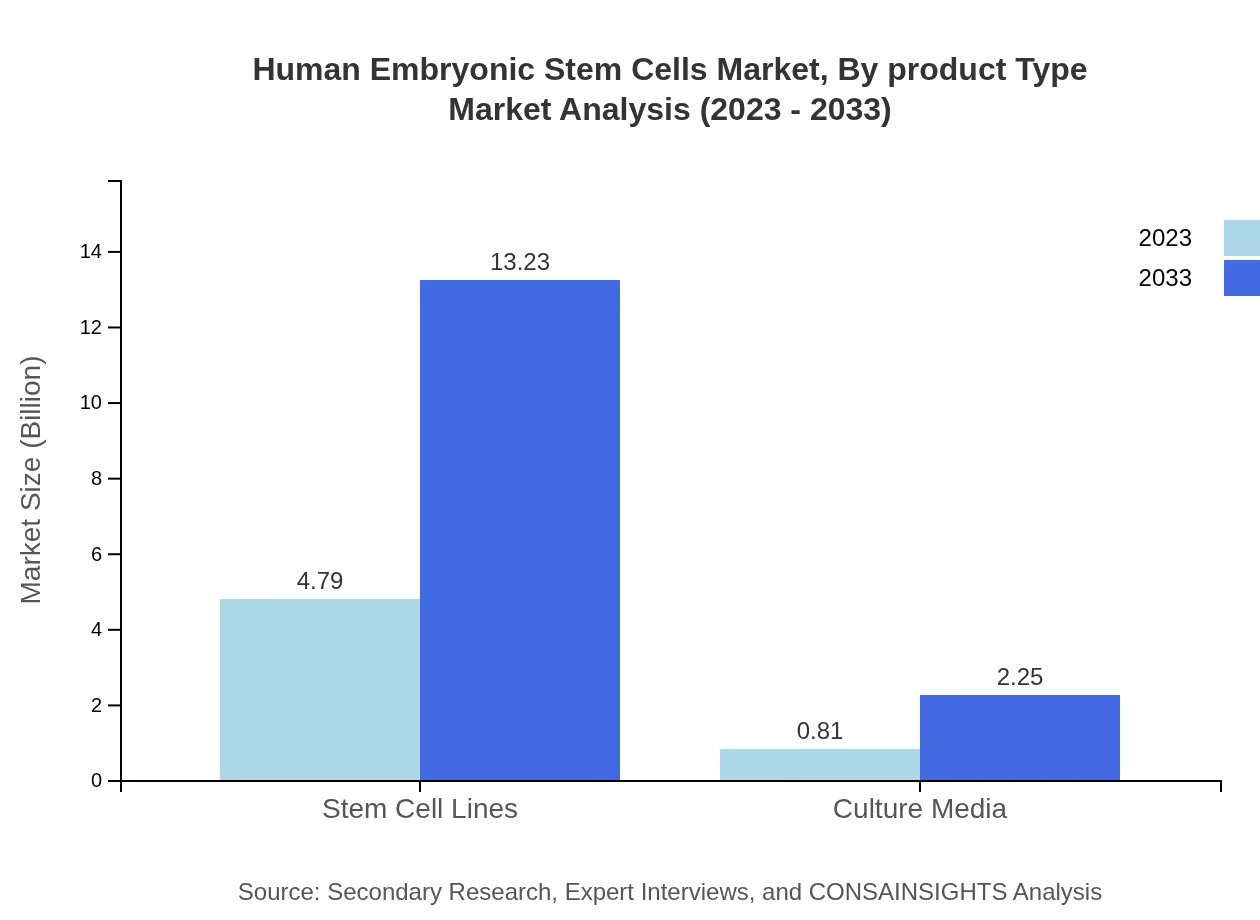
The HESC market comprises key product types including stem cell lines, valued at $4.79 billion in 2023 and $13.23 billion by 2033, and culture media, which represents a smaller segment with a size of $0.81 billion in 2023 growing to $2.25 billion by 2033.
Human Embryonic Stem Cells Market Analysis By End User
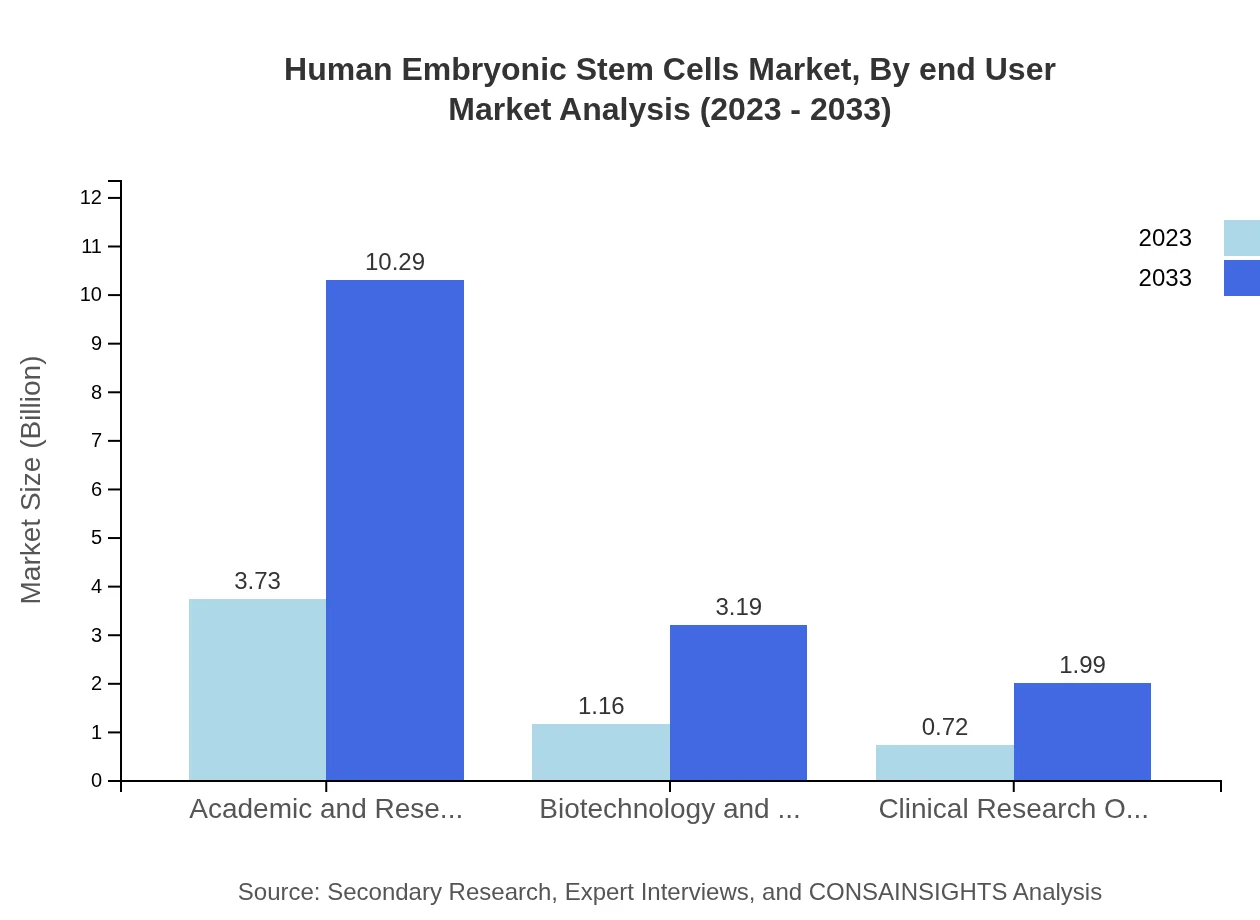
The industry encompasses several end-users, including academic and research institutes, which accounted for $3.73 billion in 2023 and are projected to grow to $10.29 billion by 2033. Biotechnology and pharmaceutical companies also represent significant demand, with a market size of $1.16 billion increasing to $3.19 billion by the forecast's end.
Human Embryonic Stem Cells Market Trends and Future Forecast
Tell us your focus area and get a customized research report.
Global Market Leaders and Top Companies in Human Embryonic Stem Cells Industry
Thermo Fisher Scientific:
A leader in serving science, Thermo Fisher offers a variety of stem cell research products and services, enhancing the capabilities of many researchers in this field.Merck KGaA:
Merck KGaA plays a prominent role in the HESC market with its innovative range of products that support cell biology and stem cell culture.Lonza Group:
Lonza is known for its high-quality stem cell technologies and services, helping to advance stem cell research and clinical therapies.StemCells, Inc.:
A biotechnology company focused on stem cell research and development, StemCells, Inc. aims to bring innovative therapies to the market.We're grateful to work with incredible clients.









FAQs
What is the market size of the Human Embryonic Stem Cells market in 2023?
The market size in 2023 is $5.60 Billion, as stated for the base year in the report data.
How big will the market be in 2033?
The market is projected to reach $15.48 Billion in 2033 according to the provided forecast figures.
What is CAGR of the market for the forecast period?
The CAGR for the 2023 to 2033 forecast period is 10.3%, based on the input data.
Is there a single fastest Growing region in the Human Embryonic Stem Cells Market Report market?
No single fastest-growing region is stated for the Human Embryonic Stem Cells Market Report market because the top regional implied CAGR values are within 0.15 percentage points of each other, making the ranking too close to call reliably.
Which companies are listed as top participants?
Top companies specified are Thermo Fisher Scientific, Merck KGaA, Lonza Group, and StemCells, Inc.
What are the main application areas for these stem cells?
Applications include research-focused uses and therapeutic development, as listed among the report's application subsegments.
Who are the primary end users of products in this market?
End users include academic and research institutes, biotechnology and pharmaceutical companies, and CROs as indicated in the subsegments.
What is driving demand for culture media and cell lines?
Demand is fueled by the need for reliable cell lines and standardized culture media to support reproducible research and clinical development.
How big is Europe’s market in 2023 and 2033?
Europe’s market is $1.73 Billion in 2023 and is expected to reach $4.79 Billion in 2033, per the regional facts.
Which regions are covered in the regional analysis?
The regional analysis includes North America, Europe, Asia Pacific, Latin America, and Middle East & Africa according to the input.
What is the role of collaborations in market growth?
Collaborations between academic institutions and industry are noted as catalysts that accelerate research translation and support clinical development efforts.
What research methods supported the report findings?
The report relied on primary interviews, secondary company publications, data triangulation, and expert-led trend analysis as part of its methodology.