

Idiopathic Pulmonary Fibrosis Market Report
First published: 07 October 2024 | Last updated: 25 May 2026 | Report Code: idiopathic-pulmonary-fibrosis
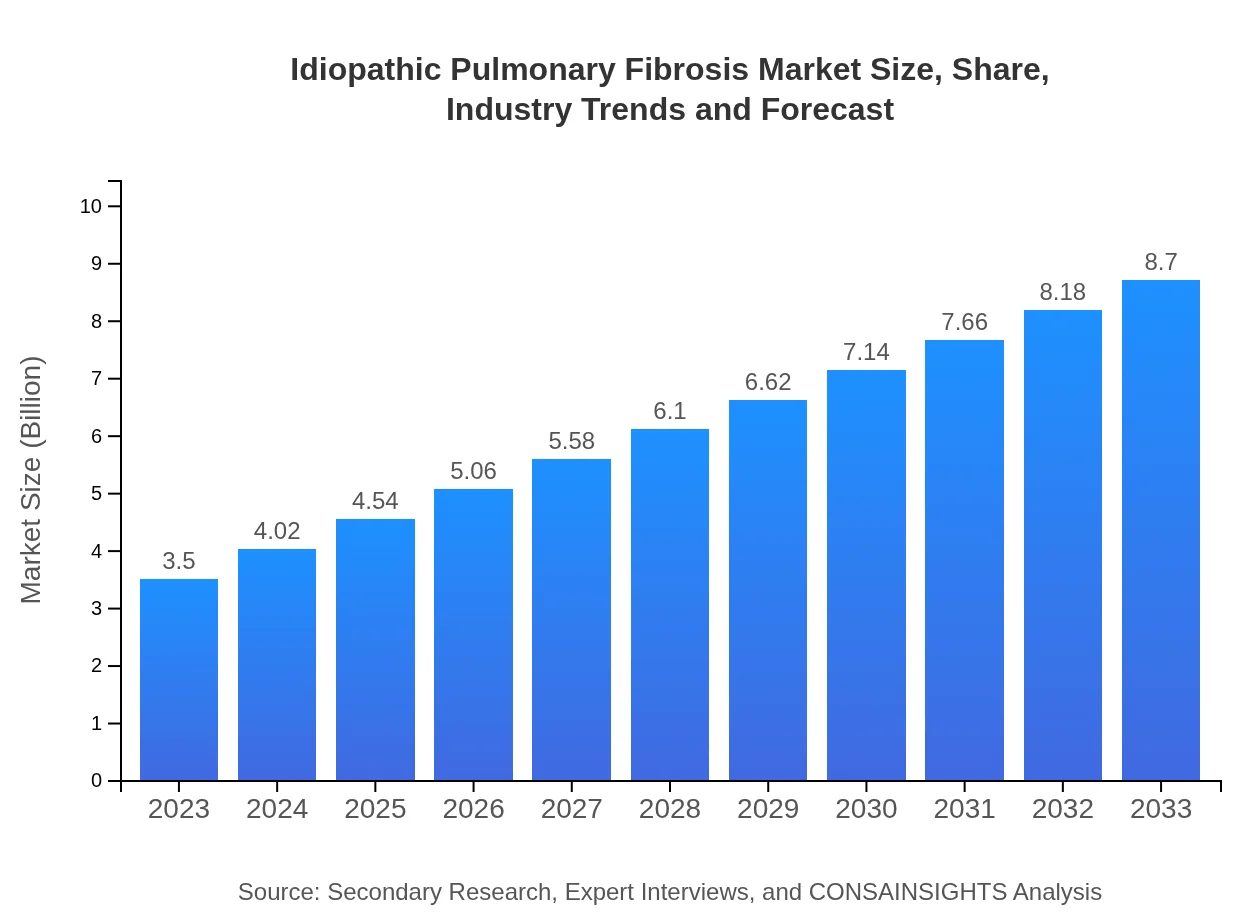
Idiopathic Pulmonary Fibrosis Market — USD 3.5 billion in 2023, Growing to USD 8.70B by 2033 at 9.2% CAGR
This report provides a comprehensive analysis of the Idiopathic Pulmonary Fibrosis (IPF) market from 2023 to 2033, covering market size, growth trends, industry dynamics, and insights by region and product type.
Key Takeaways
- Global market projected from $3.50 Billion in 2023 to $8.70 Billion in 2033 at a 9.2% CAGR.
- North America is largest regional market, while no single fastest-growing region is stated because regional CAGR differences remain within 0.15 percentage points.
- Europe grows from $1.01 Billion in 2023 to $2.51 Billion in 2033, highlighting strong regional demand.
- Asia Pacific expands from $0.69 Billion in 2023 to $1.7 Billion in 2033, reflecting increased access and R&D activity.
- Leading companies include Boehringer Ingelheim, Roche, Galapagos, Bristol-Myers Squibb, and Pfizer.
Idiopathic Pulmonary Fibrosis Market Report — Executive Summary
North America remains largest market by forecast-period value, while no single fastest-growing region is stated because top regional growth rates are separated by less than 0.15 percentage points. This report presents a structured review of the Idiopathic Pulmonary Fibrosis market, outlining growth driven by novel therapeutics, improved diagnostics, and enhanced patient management approaches. Market size moves from $3.50 Billion in 2023 to $8.70 Billion in 2033 at a 9.2% CAGR for 2023 to 2033. Analysis includes segmentation by drug type, treatment setting, end user, stage of disease, and disease-management strategies. Regional profiles detail North America as the largest market, with Europe, Asia Pacific, Latin America, and Middle East & Africa showing meaningful increases. The competitive landscape highlights active participation by Boehringer Ingelheim, Roche, Galapagos, Bristol-Myers Squibb, and Pfizer. Research combines primary interviews and secondary sources, with data triangulation and expert-led trend interpretation to ensure a validated perspective for stakeholders.
Key Growth Drivers
- Acceleration in R&D and clinical development of targeted antifibrotic agents and symptomatic therapies.
- Greater adoption of improved diagnostic techniques enabling earlier disease identification and intervention.
- Rising focus on patient-centric and non-pharmacological management approaches enhancing care pathways.
- Expansion of care delivery across hospitals, outpatient settings, and home care settings increases treatment reach.
- Active involvement of major pharmaceutical players advancing drug pipelines and market access.
| Metric | Value |
|---|---|
| Study Period | 2023 - 2033 |
| 2023 Market Size | $3.50 Billion |
| CAGR (2023-2033) | 9.2% |
| 2033 Market Size | $8.70 Billion |
| Top Companies | Boehringer Ingelheim, Roche, Galapagos, Bristol-Myers Squibb, Pfizer |
| Published Date | 07 October 2024 |
| Last Modified Date | 25 May 2026 |
Idiopathic Pulmonary Fibrosis Market Overview
Customize Idiopathic Pulmonary Fibrosis Market Report market research report
- ✔ Get in-depth analysis of Idiopathic Pulmonary Fibrosis market size, growth, and forecasts.
- ✔ Understand Idiopathic Pulmonary Fibrosis's regional dynamics and industry-specific trends.
- ✔ Identify potential applications, end-user demand, and growth segments in Idiopathic Pulmonary Fibrosis
What is the Market Size & CAGR of Idiopathic Pulmonary Fibrosis Market Report market in 2023?
Idiopathic Pulmonary Fibrosis Industry Analysis
Idiopathic Pulmonary Fibrosis Market Segmentation and Scope
Tell us your focus area and get a customized research report.
Idiopathic Pulmonary Fibrosis Market Report Market Analysis Report by Region
Europe Idiopathic Pulmonary Fibrosis Market Report:
Europe grows from $1.01 Billion in 2023 to $2.51 Billion in 2033. Regional expansion is supported by enhanced diagnostic uptake, clinical research activity, and integrated care pathways that promote timely treatment initiation.Asia Pacific Idiopathic Pulmonary Fibrosis Market Report:
Asia Pacific grows from $0.69 Billion in 2023 to $1.7 Billion in 2033. Market expansion reflects growing R&D participation, improving access to therapies, and greater emphasis on patient management and diagnostic improvements.North America Idiopathic Pulmonary Fibrosis Market Report:
North America is largest regional market, rising from $1.21 Billion in 2023 to $2.99 Billion in 2033. The region benefits from established clinical networks, early adoption of novel therapies, and strong industry investment by major pharmaceutical companies.South America Idiopathic Pulmonary Fibrosis Market Report:
Latin America grows from $0.2 Billion in 2023 to $0.49 Billion in 2033. Growth in the region is driven by heightened awareness, gradual adoption of pharmacological and non-pharmacological management practices, and improving healthcare infrastructure.Middle East & Africa Idiopathic Pulmonary Fibrosis Market Report:
Middle East and Africa grows from $0.4 Billion in 2023 to $0.99 Billion in 2033. Regional growth is associated with increased diagnostic capabilities, expanding treatment availability, and growing engagement from global pharmaceutical players.Tell us your focus area and get a customized research report.
Research Methodology
Idiopathic Pulmonary Fibrosis Market Analysis By Drug Type
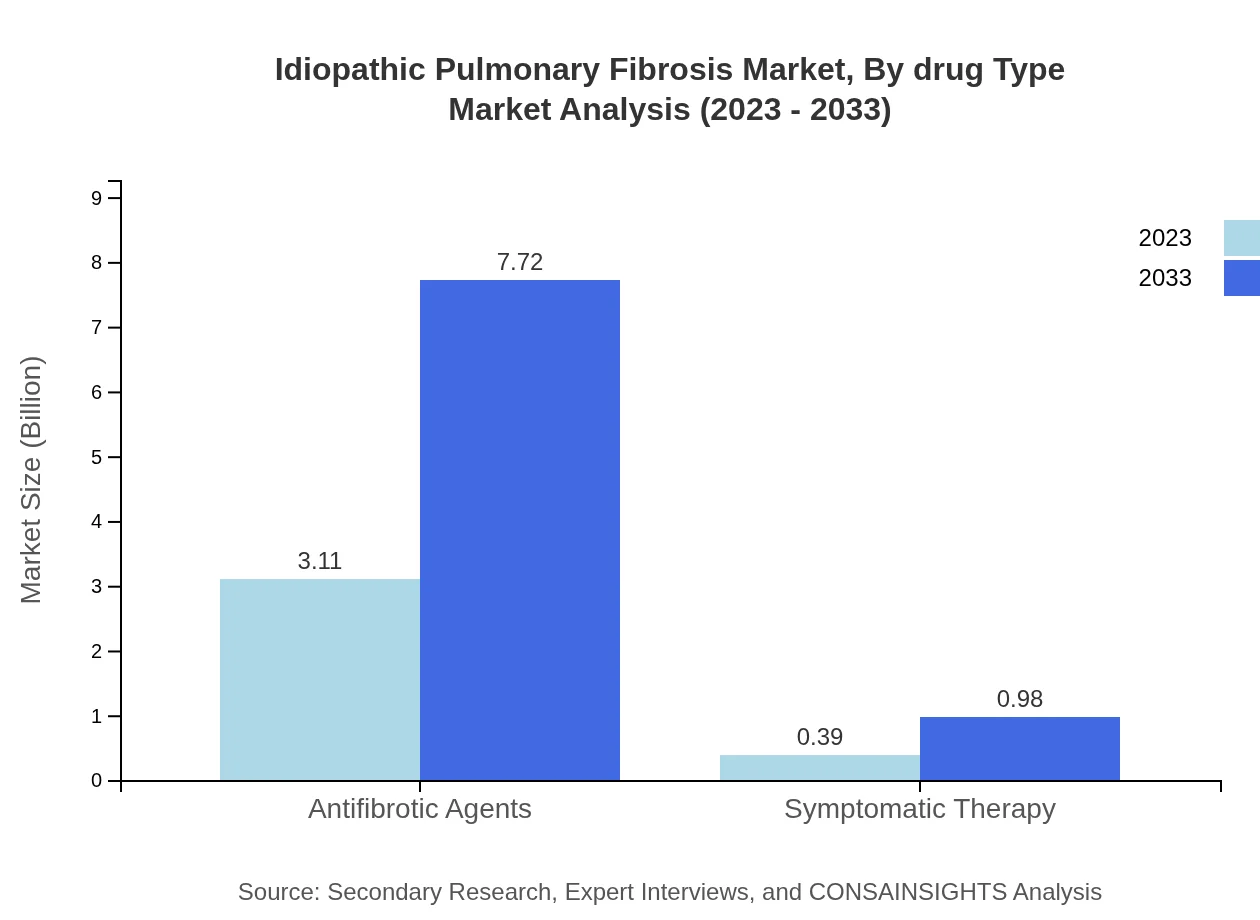
The IPF drug market primarily comprises antifibrotic agents, accounting for $3.11 billion in 2023, expected to rise to $7.72 billion by 2033. Antifibrotic drugs hold an 88.76% market share, dominating treatment paradigms. Symptomatic therapies, while growing, represent a smaller market share of 11.24%, projected to grow from $0.39 billion in 2023 to $0.98 billion by 2033.
Idiopathic Pulmonary Fibrosis Market Analysis By Treatment Setting
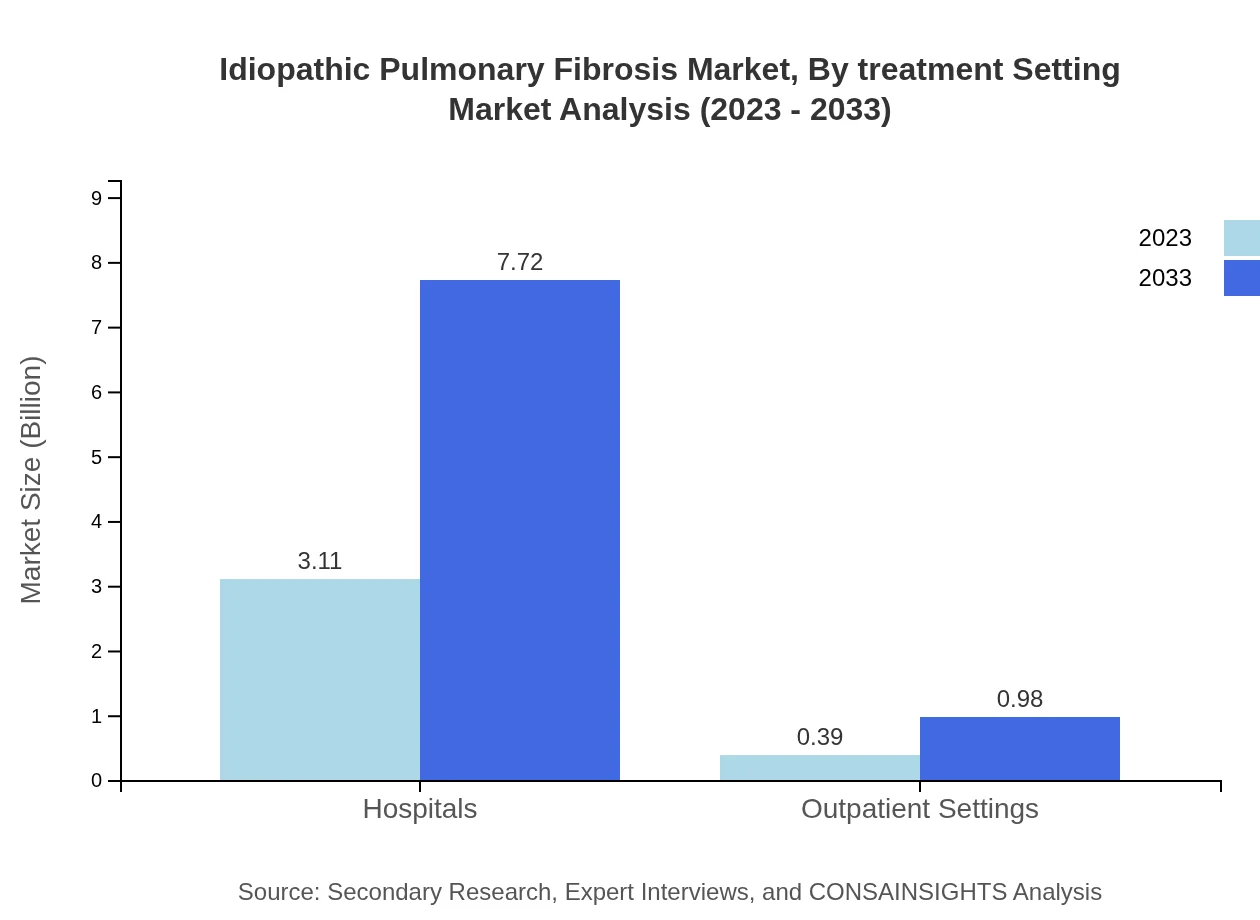
Treatment settings for IPF include hospitals, clinics, and home care settings. Hospitals dominate this segment with a market size of $3.11 billion in 2023, growing to $7.72 billion by 2033, reflecting the need for comprehensive treatment and emergency care. Clinics are projected to increase from $0.76 billion in 2023 to $1.90 billion by 2033. Home care settings, albeit smaller, are also climbing from $0.36 billion to $0.89 billion due to trends toward patient-centered care.
Idiopathic Pulmonary Fibrosis Market Analysis By End User
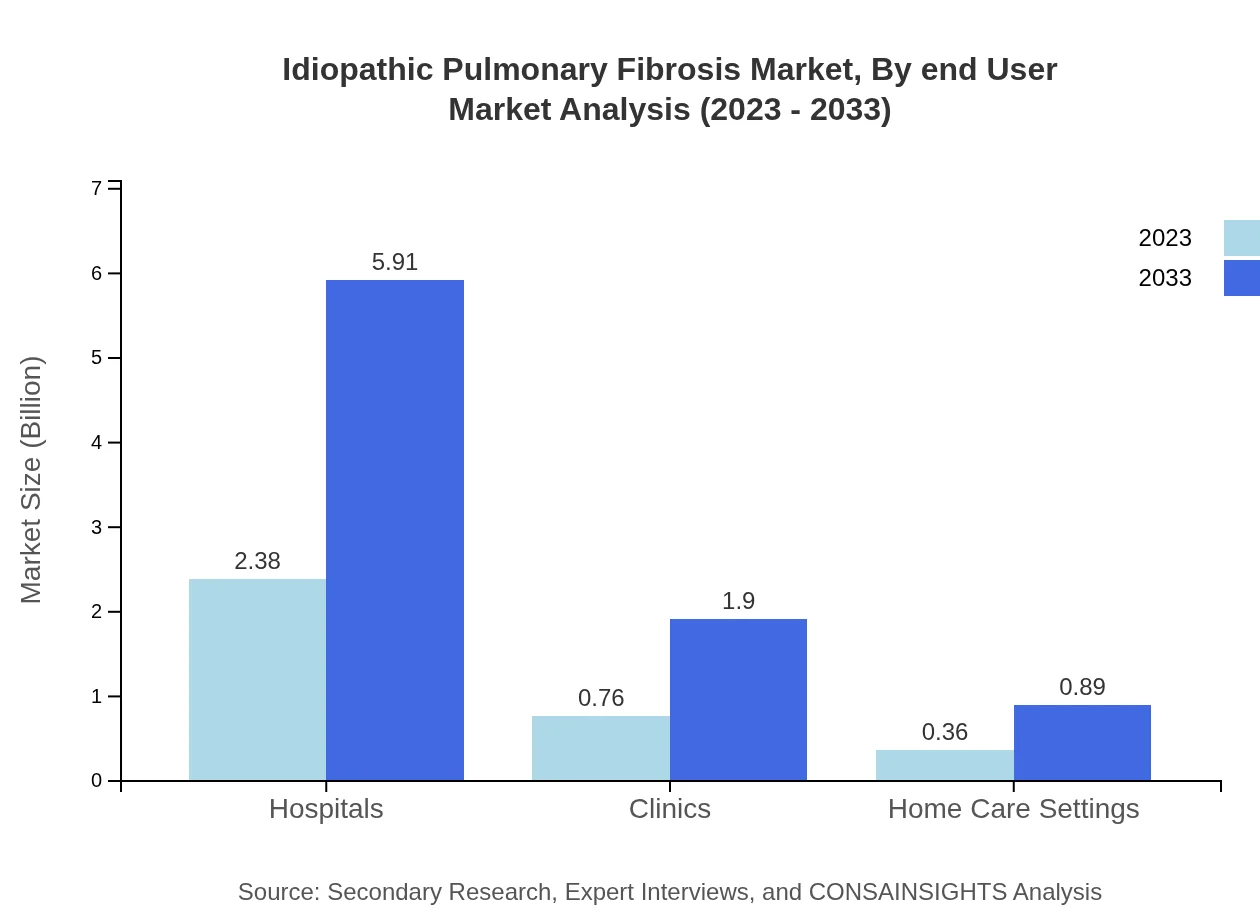
In terms of end-users, hospitals continue to lead the market with significant contributions to treatment strategies. The growing prevalence of IPF and complex management needs increases hospital visits. Outpatient settings are also emerging as important venues for managing IPF, expected to grow from $0.39 billion in 2023 to $0.98 billion by 2033.
Idiopathic Pulmonary Fibrosis Market Analysis By Stage Of Disease
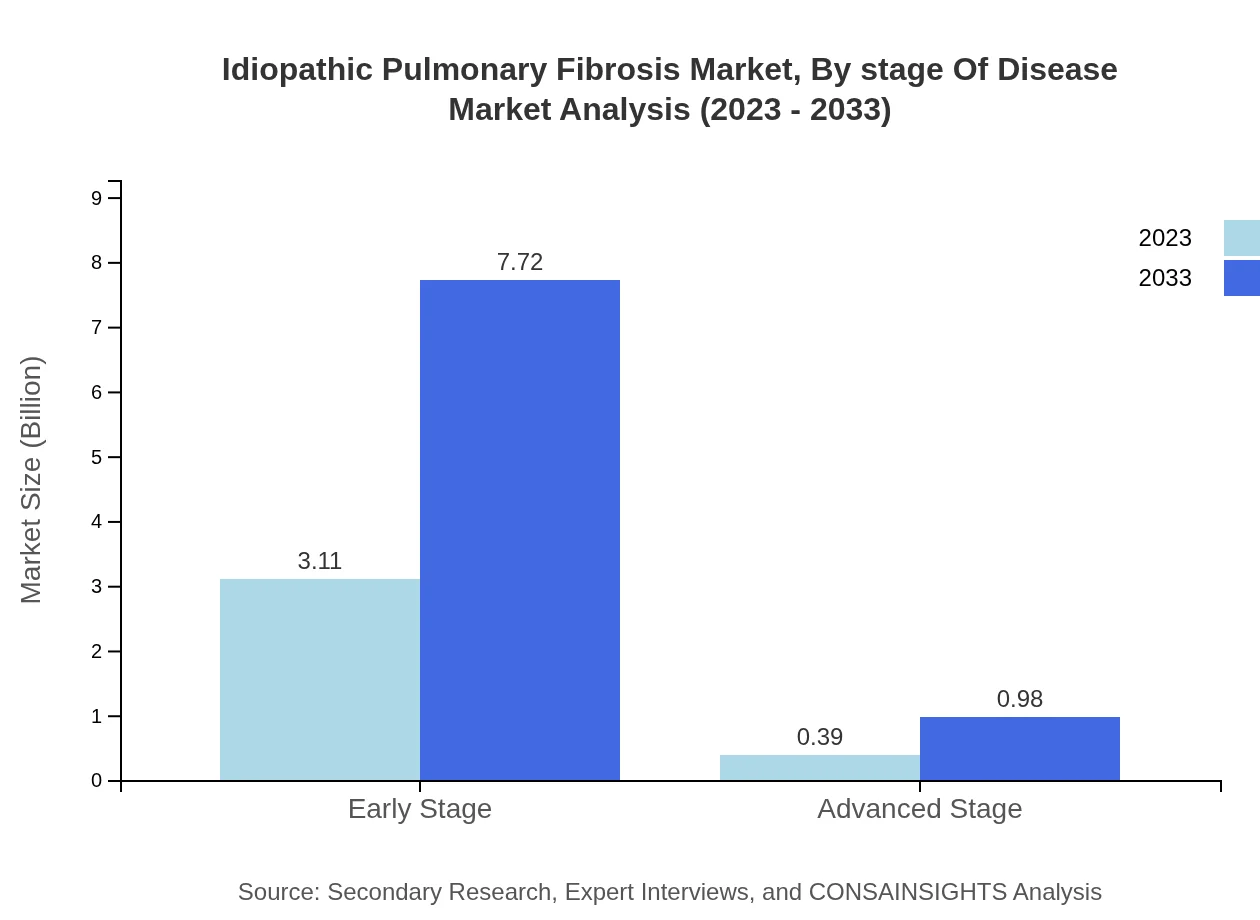
IPF management is critical at both early and advanced stages of disease. Early-stage treatment accounts for 88.76% of the market share, expected to increase from $3.11 billion to $7.72 billion by 2033. Advanced-stage management strategies occupy the remaining share, growing from $0.39 billion to $0.98 billion, highlighting the importance of timely intervention.
Idiopathic Pulmonary Fibrosis Market Analysis By Disease Management
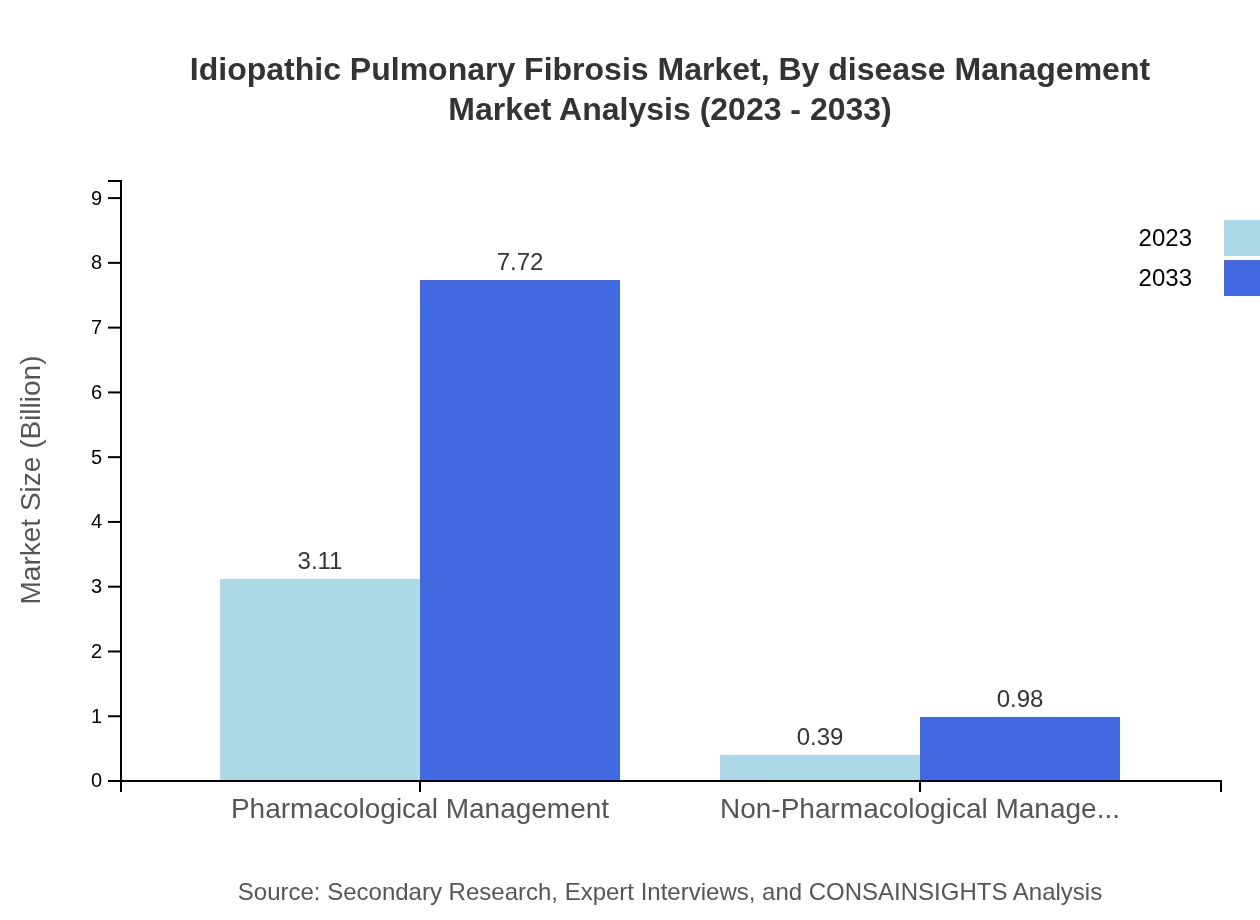
Disease management for IPF combines pharmacological and non-pharmacological approaches. The pharmacological management segment commands 88.76% of the market, projected to grow significantly. Non-pharmacological interventions, while smaller (11.24%), are gaining traction for improving patient quality of life and supporting disease progression.
Idiopathic Pulmonary Fibrosis Market Trends and Future Forecast
Tell us your focus area and get a customized research report.
Global Market Leaders and Top Companies in Idiopathic Pulmonary Fibrosis Industry
Boehringer Ingelheim:
A global pharmaceutical company leading in IPF treatment with its drug, Ofev (Nintedanib), a key antifibrotic therapy.Roche:
Developers of Esbriet (Pirfenidone), a breakthrough medication that significantly impacts the treatment of IPF.Galapagos:
Focused on developing innovative treatments for IPF, including investigational drugs aimed at different pathways in fibrosis.Bristol-Myers Squibb:
Engaged in research for the development of IPF therapeutics, emphasizing on improving patient outcomes.Pfizer :
Involved in multiple clinical trials aimed at optimizing treatment options for patients with IPF.We're grateful to work with incredible clients.








FAQs
What is the market size of the Idiopathic Pulmonary Fibrosis market in 2023?
The market size for Idiopathic Pulmonary Fibrosis in 2023 is $3.50 Billion, as reported for the global market in the provided dataset.
How big will the Idiopathic Pulmonary Fibrosis market be in 2033?
The Idiopathic Pulmonary Fibrosis market is projected to reach $8.70 Billion by 2033, according to the forecast figures supplied in the report data.
What is CAGR for the Idiopathic Pulmonary Fibrosis market?
The compound annual growth rate (CAGR) for the Idiopathic Pulmonary Fibrosis market is 9.2% for the forecast period 2023 to 2033, per the input data.
Is there a single fastest Growing region in the Idiopathic Pulmonary Fibrosis Market Report market?
No single fastest-growing region is stated for the Idiopathic Pulmonary Fibrosis Market Report market because the top regional implied CAGR values are within 0.15 percentage points of each other, making the ranking too close to call reliably.
Which companies are highlighted in the report?
Top companies listed include Boehringer Ingelheim, Roche, Galapagos, Bristol-Myers Squibb, and Pfizer as principal industry participants in the market landscape.
What are key treatment segments covered?
Primary treatment segments include antifibrotic agents and symptomatic therapies, with settings spanning hospitals, outpatient environments, and home care, as specified in the segmentation facts.
How is disease Stage segmentation addressed?
The report distinguishes stages with Early Stage and Advanced Stage categories, supporting differentiated treatment strategies and resource allocation across care pathways.
Who contributed to the research methodology?
Research relied on primary interviews with industry experts, supplemented by secondary research from company reports and publications, followed by data triangulation and internal validation.