

Infertility Treatment Market Report
First published: 07 October 2024 | Last updated: 25 May 2026 | Report Code: infertility-treatment
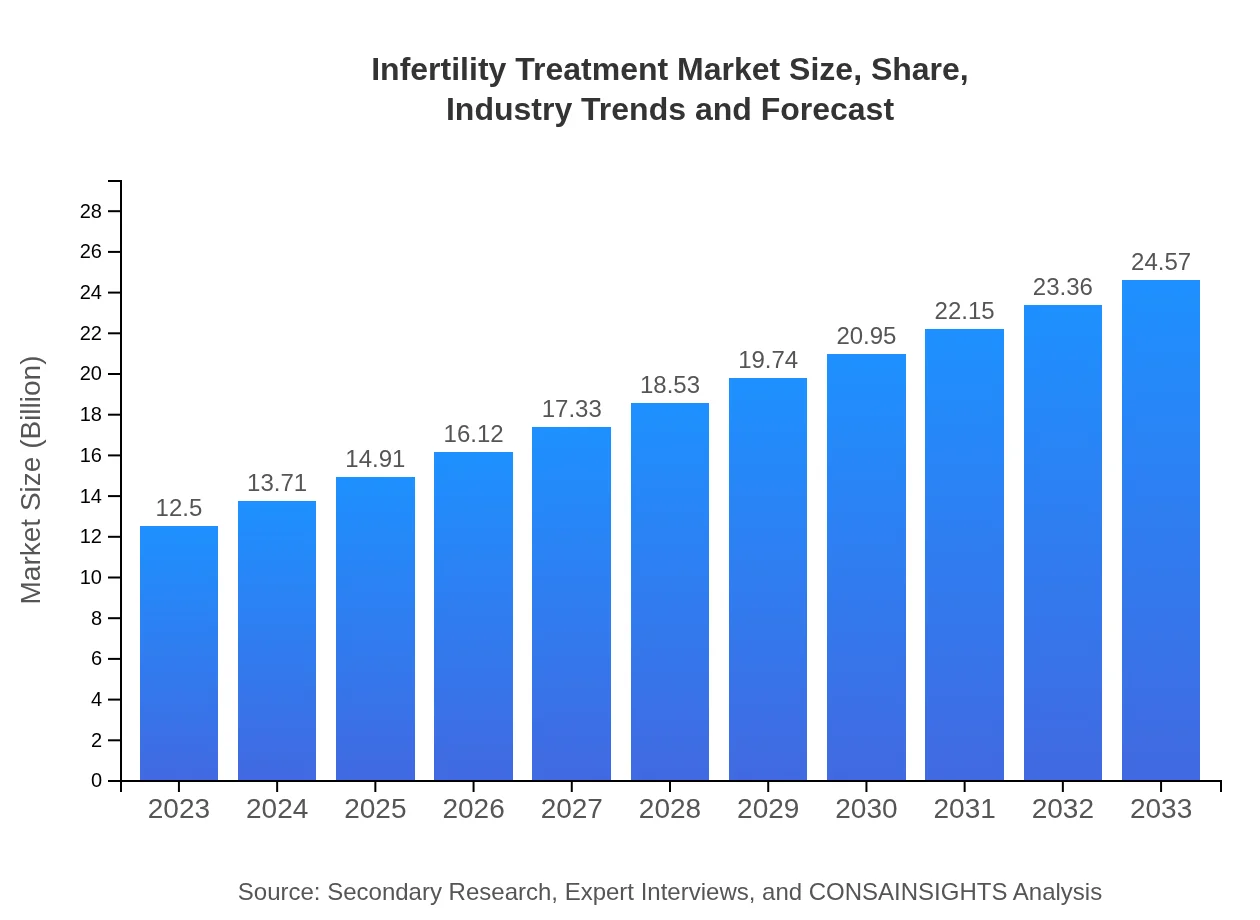
Infertility Treatment Market — USD 12.5 billion in 2023, Growing to USD 24.57B by 2033 at 6.8% CAGR
This report provides a comprehensive analysis of the infertility treatment market, including market size, growth forecasts, key trends, industry challenges, and competitive landscape from 2023 to 2033.
Key Takeaways
- Global market value increases from $12.50 Billion in 2023 to $24.57 Billion in 2033 at a 6.8% CAGR.
- Europe is largest regional market, while no single fastest-growing region is stated because regional CAGR differences remain within 0.15 percentage points.
- North America expands from $4.18 Billion in 2023 to $8.22 Billion in 2033, reflecting strong healthcare infrastructure.
- Asia Pacific climbs from $2.13 Billion in 2023 to $4.18 Billion in 2033, supported by rising awareness and clinical capacity.
- Key participants include IVF Worldwide, Merck KGaA, CooperSurgical, and Ferring Pharmaceuticals, active in product and service innovation.
Infertility Treatment Market Report — Executive Summary
Europe remains largest market by forecast-period value, while no single fastest-growing region is stated because top regional growth rates are separated by less than 0.15 percentage points. The Infertility Treatment Market Report details a market rising from $12.50 Billion in 2023 to $24.57 Billion in 2033, with a 6.8% CAGR over the 2023 to 2033 forecast period. Growth is driven by technological improvements in assisted reproductive technologies, greater public awareness of reproductive health, delayed childbearing, and broader service availability across hospitals, fertility clinics, and homecare settings. Regional patterns show Europe as the largest market, while North America and Asia Pacific also record substantial expansion. The report segments the market by treatment type, cause of infertility, end-user, age group, and region, and profiles leading companies such as IVF Worldwide, Merck KGaA, CooperSurgical, and Ferring Pharmaceuticals. Findings are informed by expert interviews and secondary data sources, with emphasis on recent trends, regulatory context, and service delivery models shaping future demand.
Key Growth Drivers
- Advances in assisted reproductive technologies improving success rates and treatment options.
- Rising awareness of reproductive health and increased access to fertility services across care settings.
- Demographic shifts such as delayed parenthood increasing demand for infertility interventions.
- Investment by key companies in R&D and personalized treatment approaches expanding available services.
| Metric | Value |
|---|---|
| Study Period | 2023 - 2033 |
| 2023 Market Size | $12.50 Billion |
| CAGR (2023-2033) | 6.8% |
| 2033 Market Size | $24.57 Billion |
| Top Companies | IVF Worldwide, Merck KGaA, CooperSurgical, Ferring Pharmaceuticals |
| Published Date | 07 October 2024 |
| Last Modified Date | 25 May 2026 |
Infertility Treatment Market Overview
Customize Infertility Treatment Market Report market research report
- ✔ Get in-depth analysis of Infertility Treatment market size, growth, and forecasts.
- ✔ Understand Infertility Treatment's regional dynamics and industry-specific trends.
- ✔ Identify potential applications, end-user demand, and growth segments in Infertility Treatment
What is the Market Size & CAGR of Infertility Treatment Market Report market in 2023?
Infertility Treatment Industry Analysis
Infertility Treatment Market Segmentation and Scope
Tell us your focus area and get a customized research report.
Infertility Treatment Market Report Market Analysis Report by Region
Europe Infertility Treatment Market Report:
Europe is largest regional market, rising from $4.43 Billion in 2023 to $8.7 Billion in 2033. 43 Billion in 2023 to $8.7 Billion in 2033, making it the largest regional market. Drivers include mature healthcare systems, adoption of advanced reproductive technologies, and growing awareness of fertility services.Asia Pacific Infertility Treatment Market Report:
Asia Pacific grows from $2.13 Billion in 2023 to $4.18 Billion in 2033. Growth is driven by rising awareness, expanding clinic capacity, and increasing availability of assisted reproductive technologies across urban centers.North America Infertility Treatment Market Report:
North America grows from $4.18 Billion in 2023 to $8.22 Billion in 2033. Expansion is supported by established clinical networks, investment in ART technologies, and broad patient access through hospitals and fertility clinics.South America Infertility Treatment Market Report:
Latin America grows from $0.58 Billion in 2023 to $1.14 Billion in 2033. 58 Billion in 2023 to $1.14 Billion in 2033, reflecting greater service adoption, improving clinical infrastructure, and increased patient education on infertility.Middle East & Africa Infertility Treatment Market Report:
Middle East and Africa grows from $1.18 Billion in 2023 to $2.33 Billion in 2033. 18 Billion in 2023 to $2.33 Billion in 2033, supported by growing healthcare investment, expanding fertility clinic networks, and increasing demand for reproductive services.Tell us your focus area and get a customized research report.
Research Methodology
Infertility Treatment Market Analysis By Treatment Type
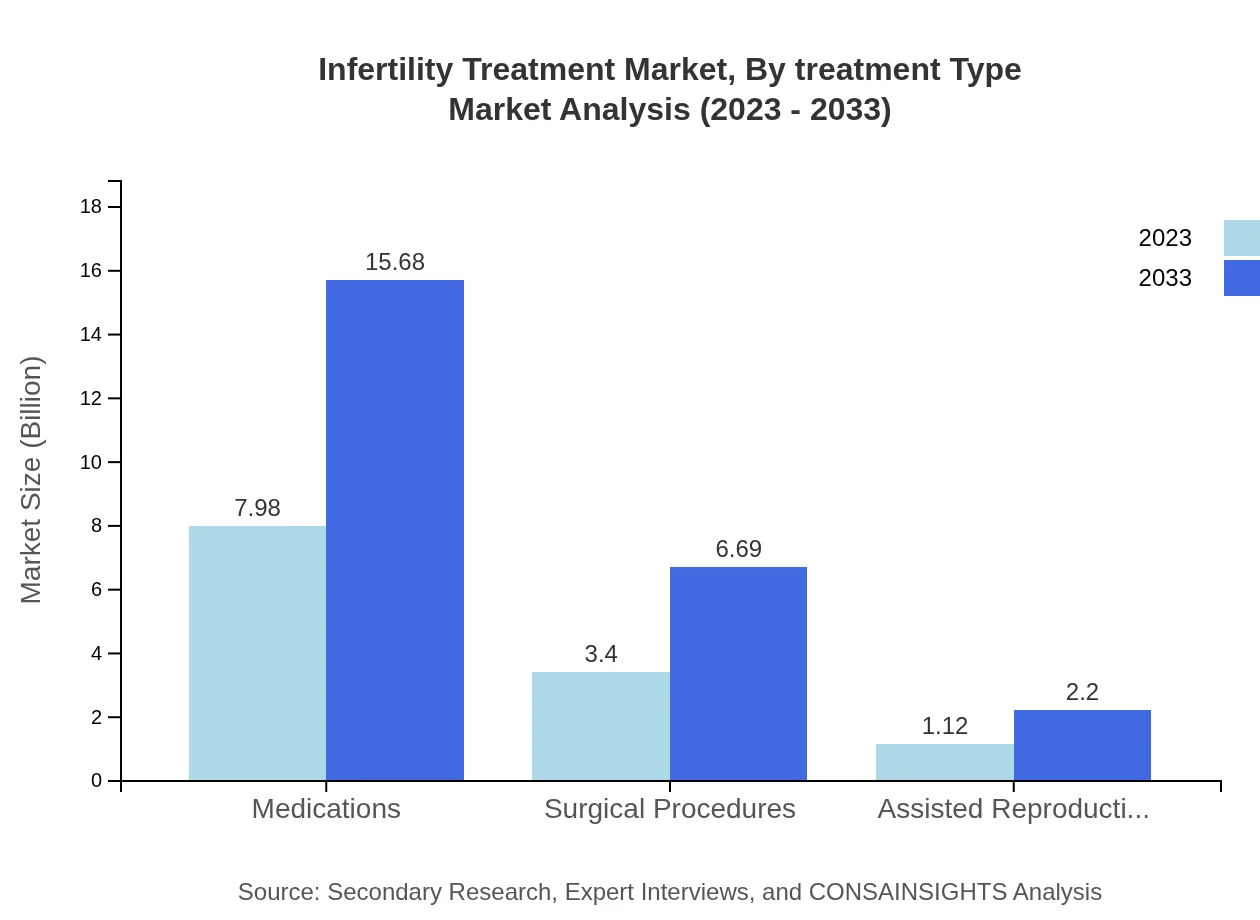
In 2023, medications dominate the treatment type segment, valued at $7.98 billion, expected to grow to $15.68 billion by 2033. Surgical procedures follow with a market size of $3.40 billion in 2023, projected to reach $6.69 billion by 2033. Assisted reproductive technologies, while smaller at $1.12 billion in 2023, are anticipated to see a significant growth trajectory.
Infertility Treatment Market Analysis By Cause Of Infertility
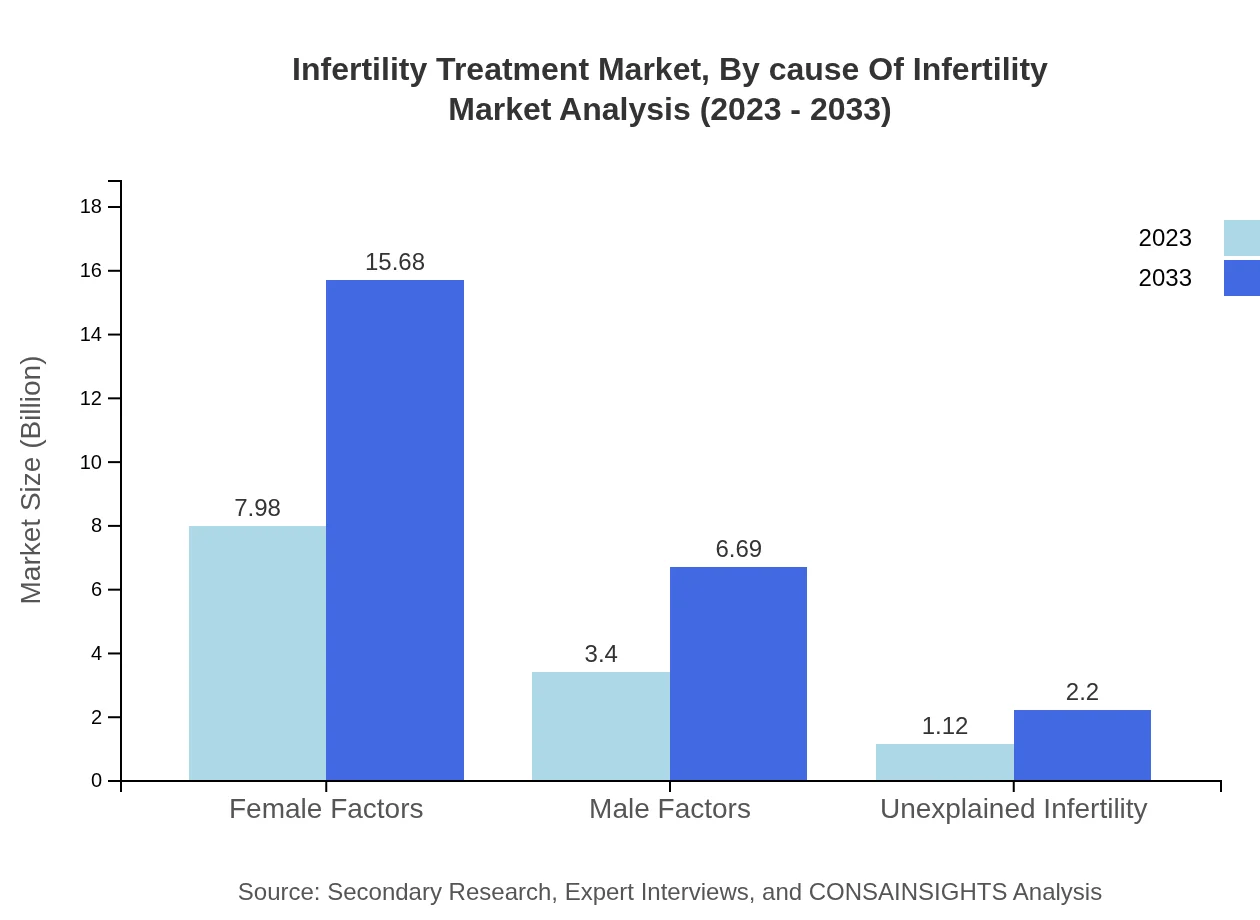
Market segmentation by causes of infertility emphasizes the dominance of female factors, accounting for $7.98 billion in 2023, with expectations to grow to $15.68 billion by 2033. Male factors contribute $3.40 billion in 2023, projected at $6.69 billion by 2033, showing growing awareness and treatment options for male infertility.
Infertility Treatment Market Analysis By End User
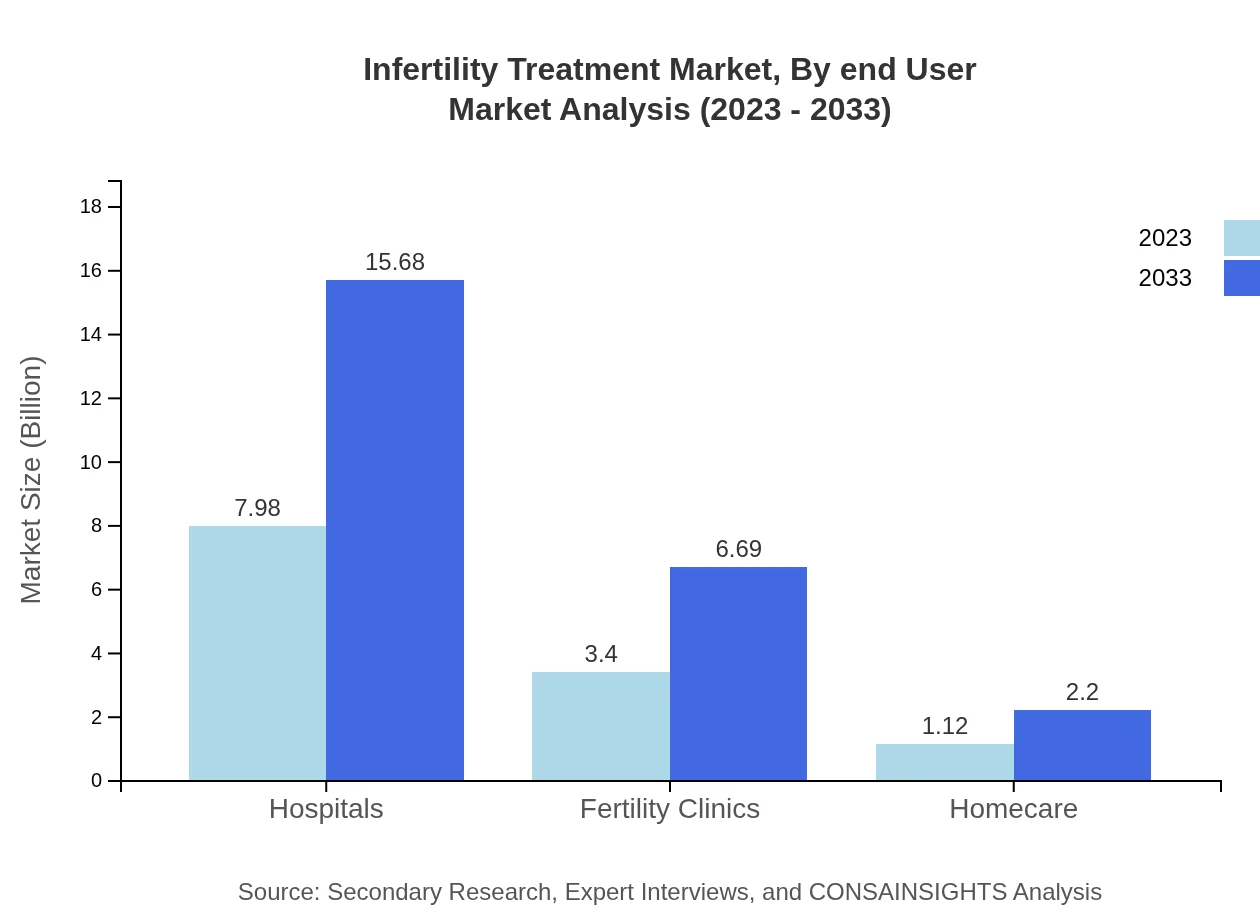
Hospitals hold a significant share of the market, valued at $7.98 billion in 2023 and targeting $15.68 billion by 2033. Fertility clinics are also expanding, with a market size of $3.40 billion currently, expected to grow to $6.69 billion. Homecare options, although smaller, show potential growth from $1.12 billion to $2.20 billion.
Infertility Treatment Market Analysis By Region
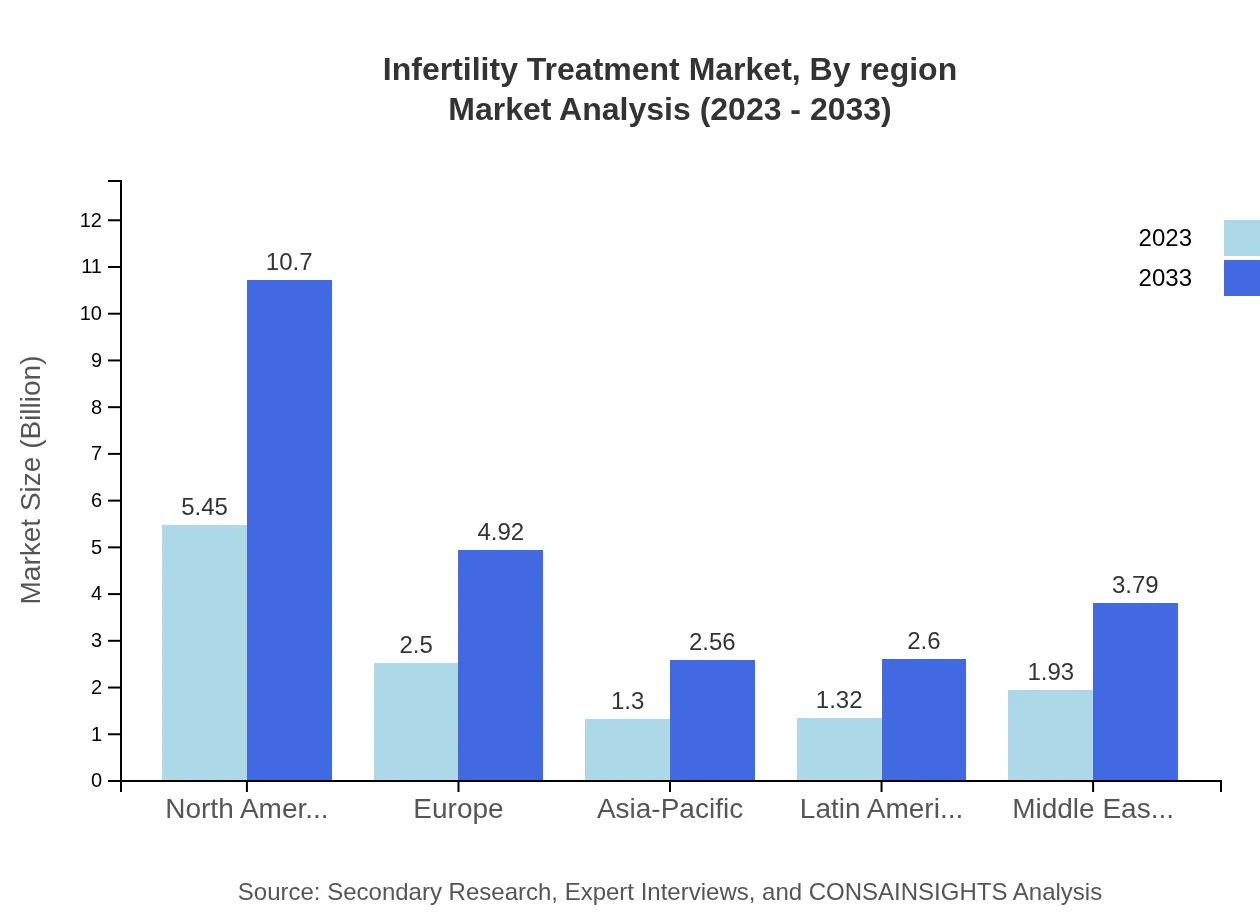
Each region exhibits unique growth patterns influenced by local factors. North America and Europe lead in size and innovation, while Asia-Pacific shows remarkable growth potential driven by demographic shifts.
Infertility Treatment Market Analysis By Age Group
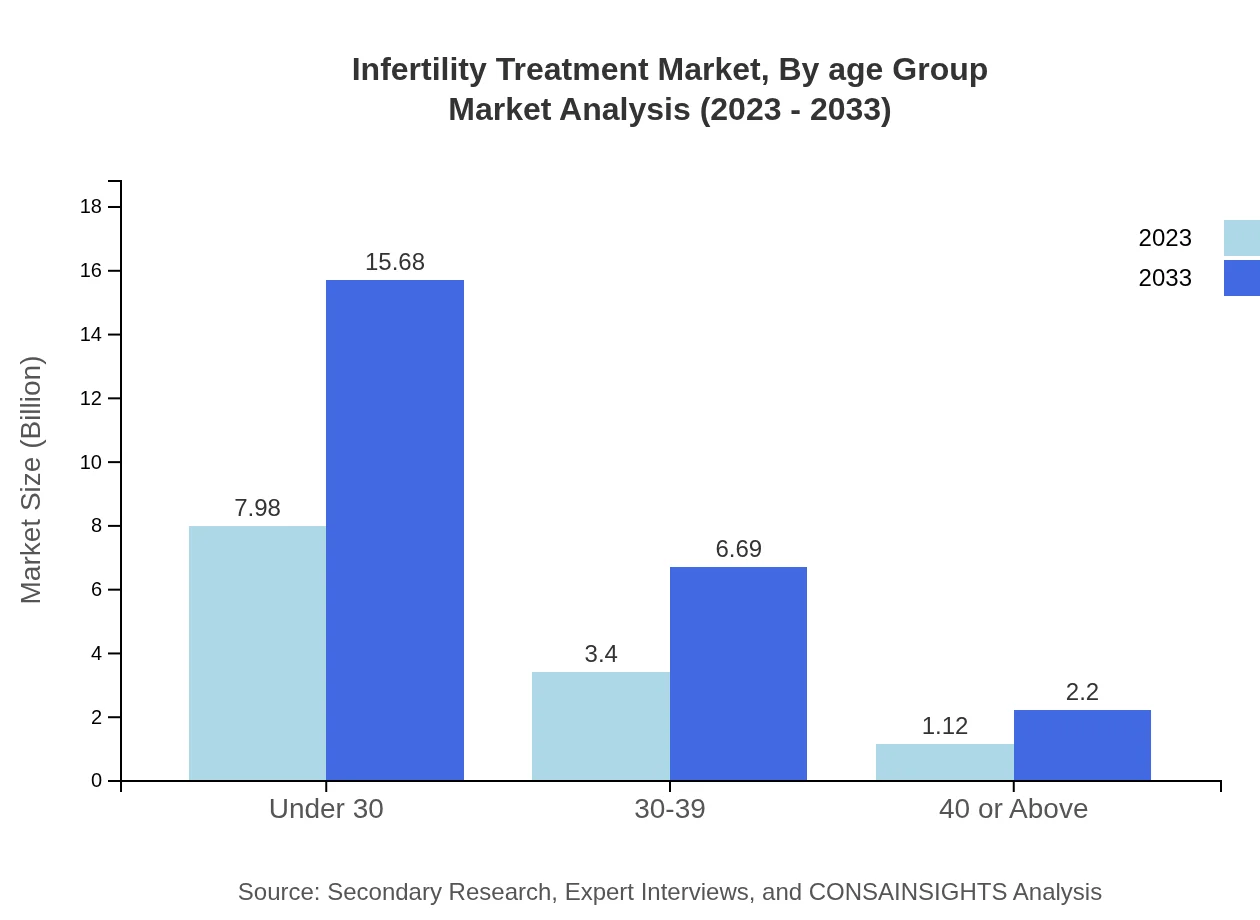
The under 30 age group represents the largest segment, currently valued at $7.98 billion and expected to reach $15.68 billion by 2033. The 30-39 age group also shows significant growth, while the 40 and above segment, although smaller, reflects increasing attention towards age-related infertility treatments.
Infertility Treatment Market Trends and Future Forecast
Tell us your focus area and get a customized research report.
Global Market Leaders and Top Companies in Infertility Treatment Industry
IVF Worldwide:
IVF Worldwide provides comprehensive IVF solutions and has established a strong presence in fertility services globally, integrating advanced technologies and techniques in their offerings.Merck KGaA:
Merck KGaA specializes in fertility medications and solutions, focusing on scientific research and development to drive effective treatments for various infertility causes.CooperSurgical:
CooperSurgical, part of The Cooper Companies, is a leading provider of women’s health care products, with a particular emphasis on fertility and minimally invasive surgery.Ferring Pharmaceuticals:
Ferring Pharmaceuticals is recognized for innovating reproductive health solutions and serves as a key player in the global infertility treatment market.We're grateful to work with incredible clients.








FAQs
What is the market size of the infertility treatment market in 2023?
The market size in 2023 is $12.50 Billion, as reported for the Infertility Treatment Market Report.
How big will the market be in 2033?
The market is projected to reach $24.57 Billion by 2033 according to the provided forecast.
What is CAGR for the forecast period?
The compound annual growth rate for 2023 to 2033 is reported as 6.8% for the market.
Is there a single fastest Growing region in the Infertility Treatment Market Report market?
No single fastest-growing region is stated for the Infertility Treatment Market Report market because the top regional implied CAGR values are within 0.15 percentage points of each other, making the ranking too close to call reliably.
Which companies are listed as top participants?
Top companies named include IVF Worldwide, Merck KGaA, CooperSurgical, and Ferring Pharmaceuticals in the market landscape.
What are the primary treatment categories covered?
Treatment categories include medications, surgical procedures, and assisted reproductive technologies as defined in the segmentation.
Who were the research sources used in this report?
Research included primary interviews with industry experts and secondary research from company reports and publications.
How is segmentation organized in the report?
Segmentation covers treatment type, cause of infertility, end-user, age group, and by-region categories as outlined in the input.