
Reports >
Life Sciences
>
Peptic Ulcer Drugs Market Report

Peptic Ulcer Drugs Market Report
First published: 07 October 2024 | Last updated: 25 May 2026 | Report Code: peptic-ulcer-drugs
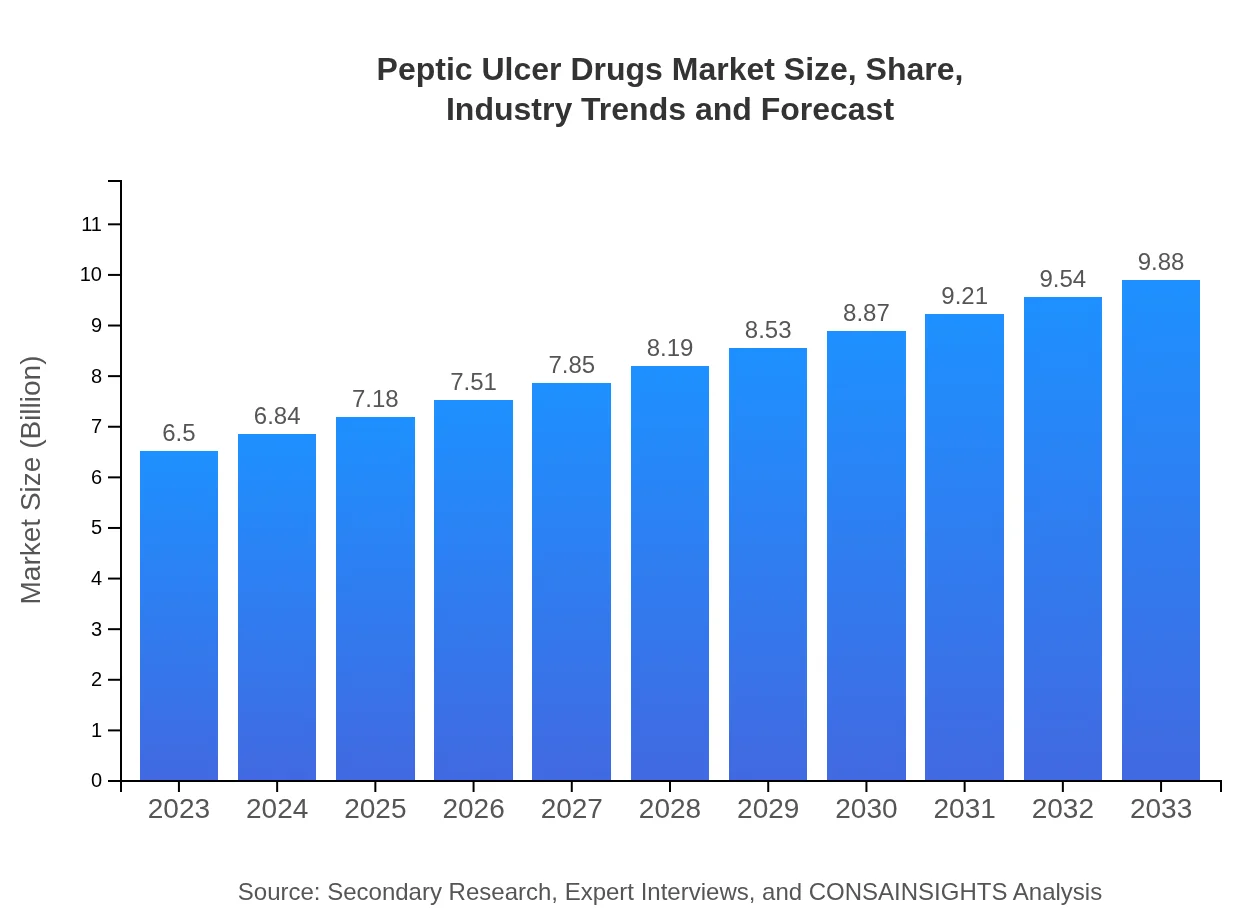
Peptic Ulcer Drugs Market — USD $6.5 Billion in 2023, Growing to USD 9.88null by 2033 at 4.2% CAGR
This report covers comprehensive insights into the Peptic Ulcer Drugs market, including its current size, growth potential, competitive landscape, and trends from 2023 to 2033.
Key Takeaways
- $6.50 Billion market size in 2023 expanding to $9.88 Billion by 2033 at a 4.2% CAGR.
- North America is largest regional market, while no single fastest-growing region is stated because regional CAGR differences remain within 0.15 percentage points.
- Europe and Asia Pacific show substantial gains: Europe from $1.95 Billion to $2.96 Billion; Asia Pacific from $1.39 Billion to $2.11 Billion.
- Core therapy classes include Proton Pump Inhibitors, H2 Receptor Antagonists, Antacids, and Antibiotics.
- Leading companies covered include AstraZeneca, Pfizer Inc., Boehringer Ingelheim, and Takeda Pharmaceuticals.
Peptic Ulcer Drugs Market Report — Executive Summary
North America remains largest market by forecast-period value, while no single fastest-growing region is stated because top regional growth rates are separated by less than 0.15 percentage points. This report examines the peptic ulcer drugs sector from 2023 to 2033, where the market increases from $6.50 Billion to $9.88 Billion at a 4.2% CAGR. Growth is driven by demographic trends, rising gastrointestinal health awareness, and ongoing clinical research developments. The analysis covers drug-type formulations such as oral and injectable products, distribution channels including hospital and retail pharmacies, and therapeutic indications like gastric and duodenal ulcers. Regional breakdowns detail North America as the largest market alongside figures for Europe, Asia Pacific, Latin America, and the Middle East and Africa. Regulatory updates, emerging drug pipelines, and industry R&D investments are profiled. The competitive landscape highlights major pharmaceutical firms and their roles in shaping treatment availability and innovation. Methodology combines primary interviews, secondary literature, and data validation to present an evidence-based market perspective useful for investors, R&D teams, and commercial strategists.
Key Growth Drivers
- Aging populations and higher prevalence of gastrointestinal conditions increasing demand for established and novel therapies.
- Expanded clinical research and development activity improving therapeutic options and supporting new drug approvals.
- Greater awareness of digestive health and Helicobacter pylori management encouraging diagnosis and treatment uptake.
- Wider distribution access via hospital, retail, and online pharmacies facilitating patient reach and medication availability.
| Metric | Value |
|---|---|
| Study Period | 2023 - 2033 |
| 2023 Market Size | $6.50 Billion |
| CAGR (2023-2033) | 4.2% |
| 2033 Market Size | $9.88 Billion |
| Top Companies | AstraZeneca, Pfizer Inc., Boehringer Ingelheim, Takeda Pharmaceuticals |
| Published Date | 07 October 2024 |
| Last Modified Date | 25 May 2026 |
Peptic Ulcer Drugs Market Overview
Customize Peptic Ulcer Drugs Market Report market research report
- ✔ Get in-depth analysis of Peptic Ulcer Drugs market size, growth, and forecasts.
- ✔ Understand Peptic Ulcer Drugs's regional dynamics and industry-specific trends.
- ✔ Identify potential applications, end-user demand, and growth segments in Peptic Ulcer Drugs
What is the Market Size & CAGR of Peptic Ulcer Drugs Market Report market in 2023?
Peptic Ulcer Drugs Industry Analysis
Peptic Ulcer Drugs Market Segmentation and Scope
Tell us your focus area and get a customized research report.
Peptic Ulcer Drugs Market Report Market Analysis Report by Region
Europe Peptic Ulcer Drugs Market Report:
Europe grows from $1.95 Billion in 2023 to $2.96 Billion in 2033. Drivers include concentrated clinical research activity, regulatory pathways that support approvals, and increasing awareness of gastrointestinal health among aging populations.Asia Pacific Peptic Ulcer Drugs Market Report:
Asia Pacific grows from $1.39 Billion in 2023 to $2.11 Billion in 2033. Market movement is influenced by rising healthcare access, greater diagnosis rates, and expanding distribution networks that improve availability of peptic ulcer therapies.North America Peptic Ulcer Drugs Market Report:
North America is largest regional market, rising from $2.16 Billion in 2023 to $3.28 Billion in 2033. Regional expansion is underpinned by established healthcare infrastructure, ongoing R&D investment, and wide access through hospital and retail pharmacy channels.South America Peptic Ulcer Drugs Market Report:
Latin America grows from $0.12 Billion in 2023 to $0.18 Billion in 2033. Growth relates to improving healthcare services, enhanced market penetration by pharmaceutical companies, and growing public awareness of digestive disorders.Middle East & Africa Peptic Ulcer Drugs Market Report:
Middle East and Africa grows from $0.89 Billion in 2023 to $1.35 Billion in 2033. Expansion is associated with broader healthcare investment, rising demand for effective treatments, and greater reach through hospital and retail outlets.Tell us your focus area and get a customized research report.
Research Methodology
Peptic Ulcer Drugs Market Analysis By Drug Type
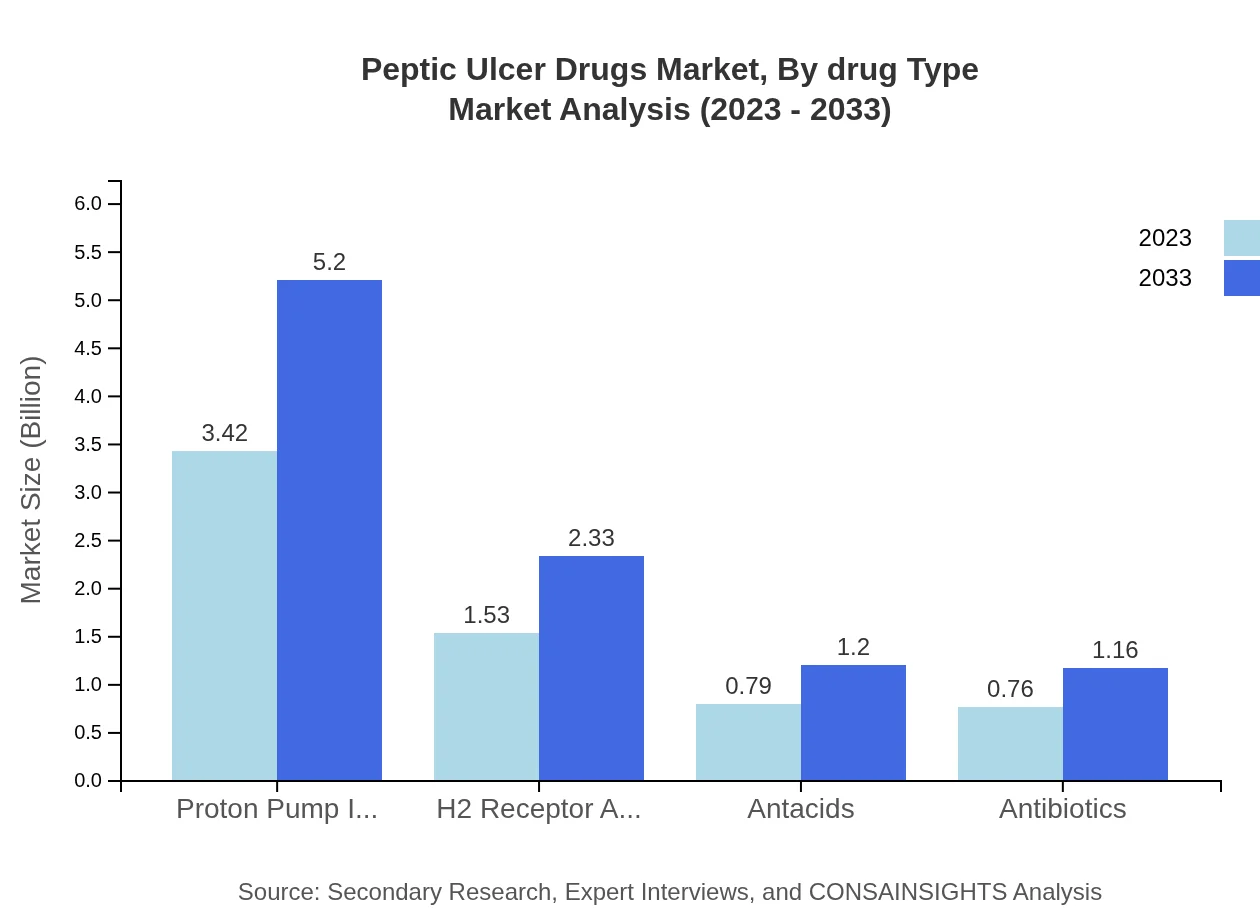
In 2023, Proton Pump Inhibitors (PPIs) dominated the market with a value of $3.42 billion, expected to increase to $5.20 billion by 2033. They account for 52.59% of the market share, making them the most preferred treatment option. H2 Receptor Antagonists, with a market size of $1.53 billion, are projected to reach $2.33 billion, holding a share of 23.56%, while antacids have a market size of $0.79 billion in 2023, increasing to $1.20 billion by 2033. Overall, emerging drugs are showing significant potential with a market increase from $4.22 billion to $6.42 billion, capturing a share of 64.92%.
Peptic Ulcer Drugs Market Analysis By Indication
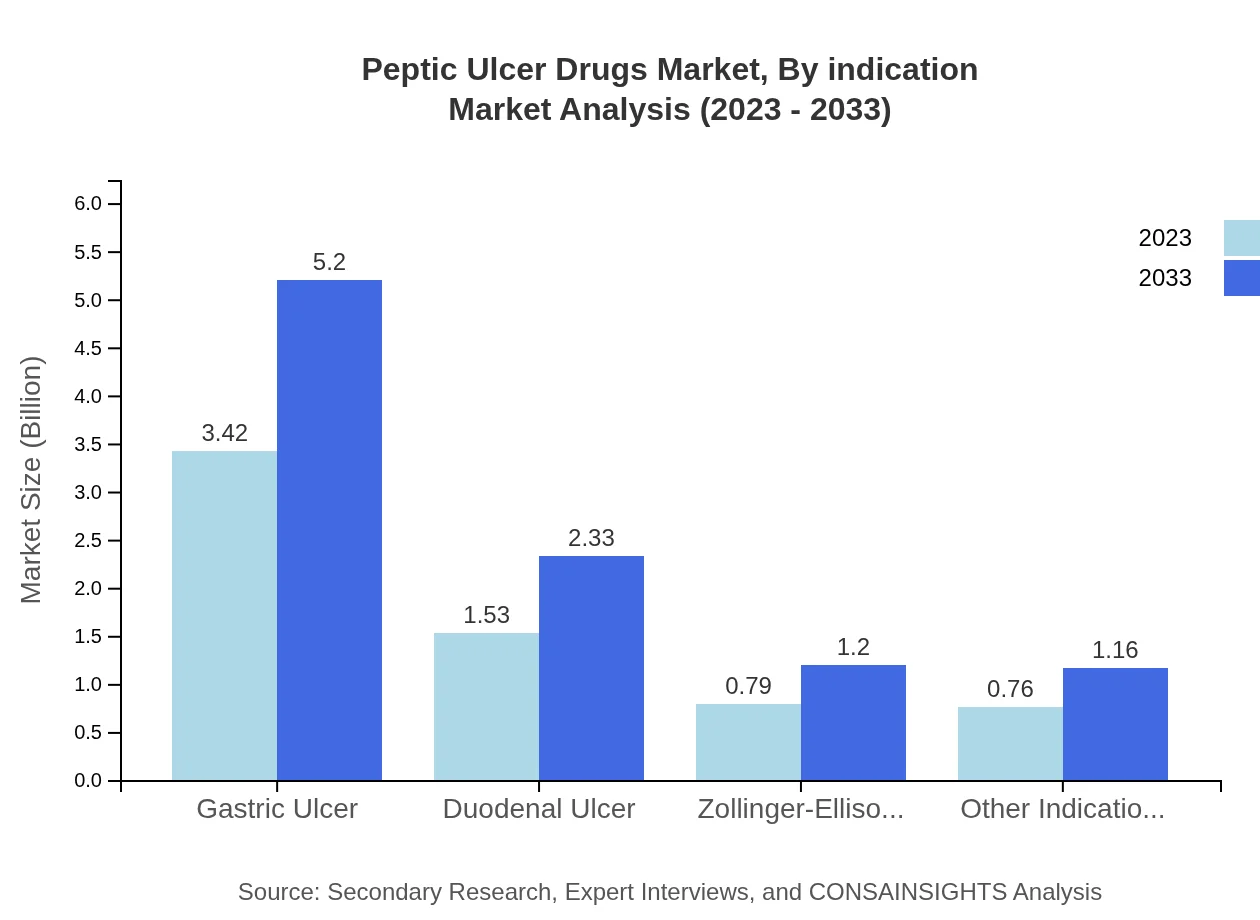
The market divided by indication reveals gastric ulcers as the leading segment with a size of $3.42 billion as of 2023, anticipated to rise to $5.20 billion by 2033. Duodenal ulcers follow closely with an increase from $1.53 billion to $2.33 billion. Other indications including Zollinger-Ellison syndrome and emerging drugs continue to demonstrate strong growth rates, indicating evolving treatment needs and innovations in therapy.
Peptic Ulcer Drugs Market Analysis By Formulation
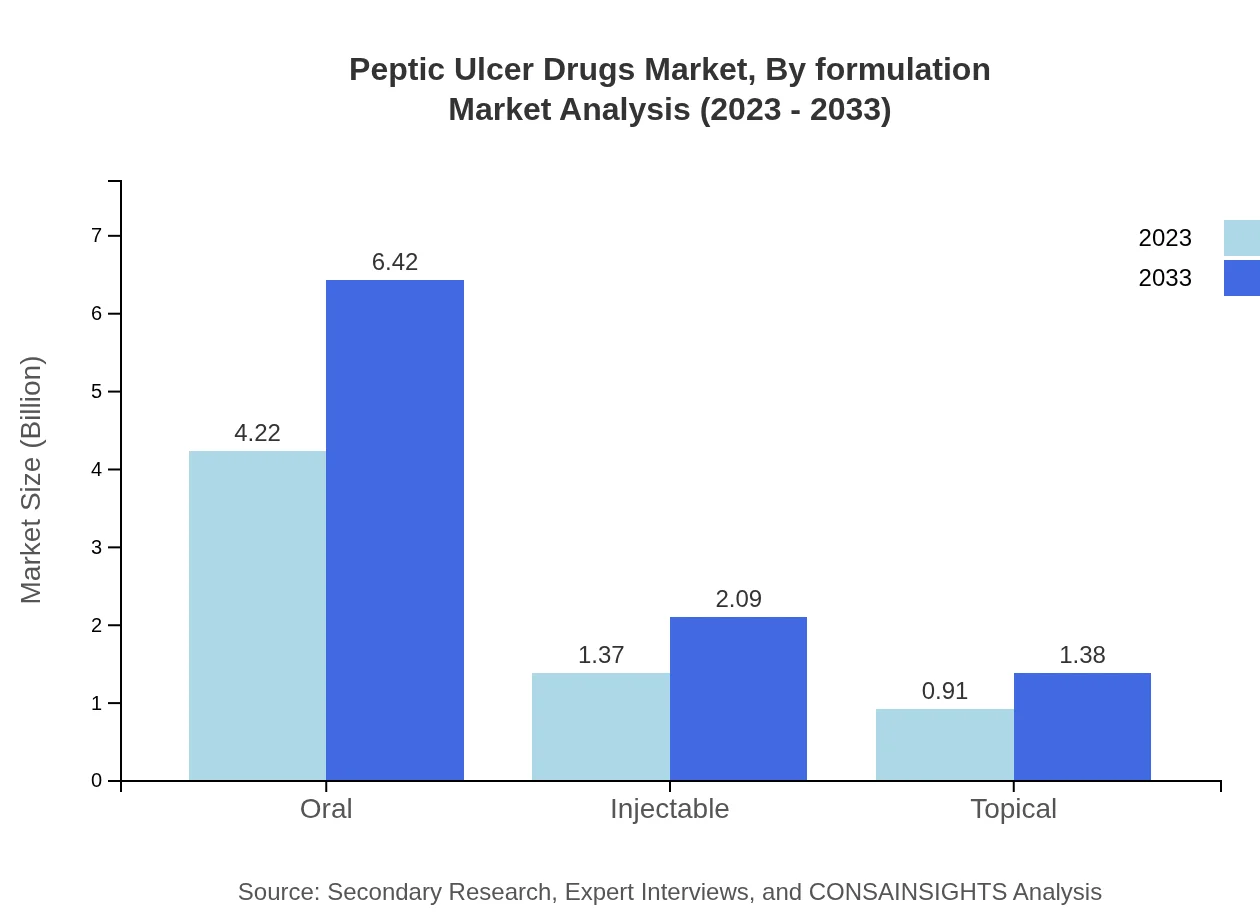
Oral formulations remain the market leader with a size of $4.22 billion in 2023, expected to reach $6.42 billion by 2033, indicating a 64.92% market share. Injectable formulations follow with projected growth from $1.37 billion to $2.09 billion, maintaining a 21.1% market share, while topical formulations are anticipated to grow from $0.91 billion to $1.38 billion, holding a 13.98% share.
Peptic Ulcer Drugs Market Analysis By Distribution Channel
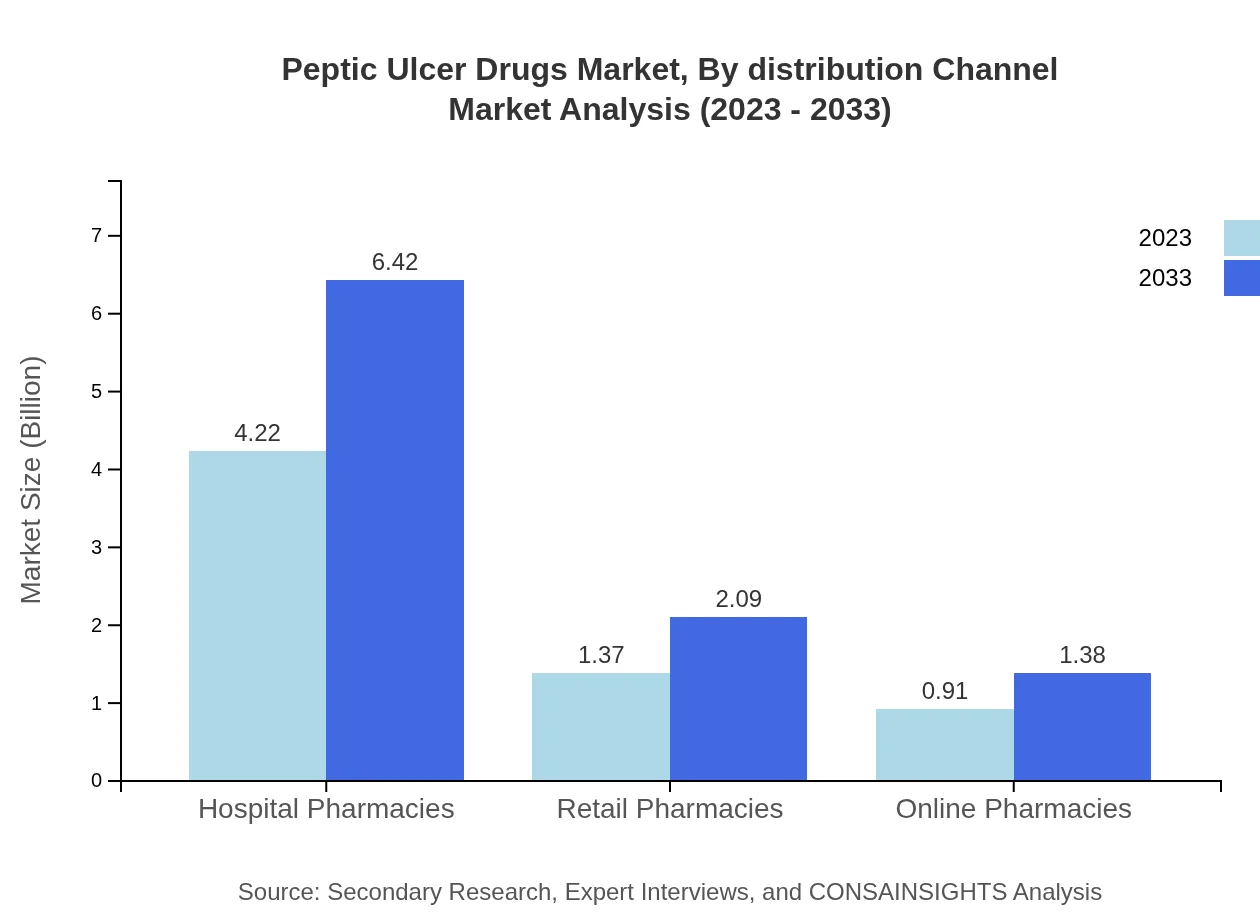
The distribution channels segment shows that hospital pharmacies are the primary channel for Peptic Ulcer Drugs, holding a substantial market size of $4.22 billion in 2023, growing to $6.42 billion by 2033. Retail pharmacies and online pharmacies follow with market sizes of $1.37 billion and $0.91 billion, respectively, indicating rising trends towards online purchases supported by e-commerce growth.
Peptic Ulcer Drugs Market Analysis Market Trends
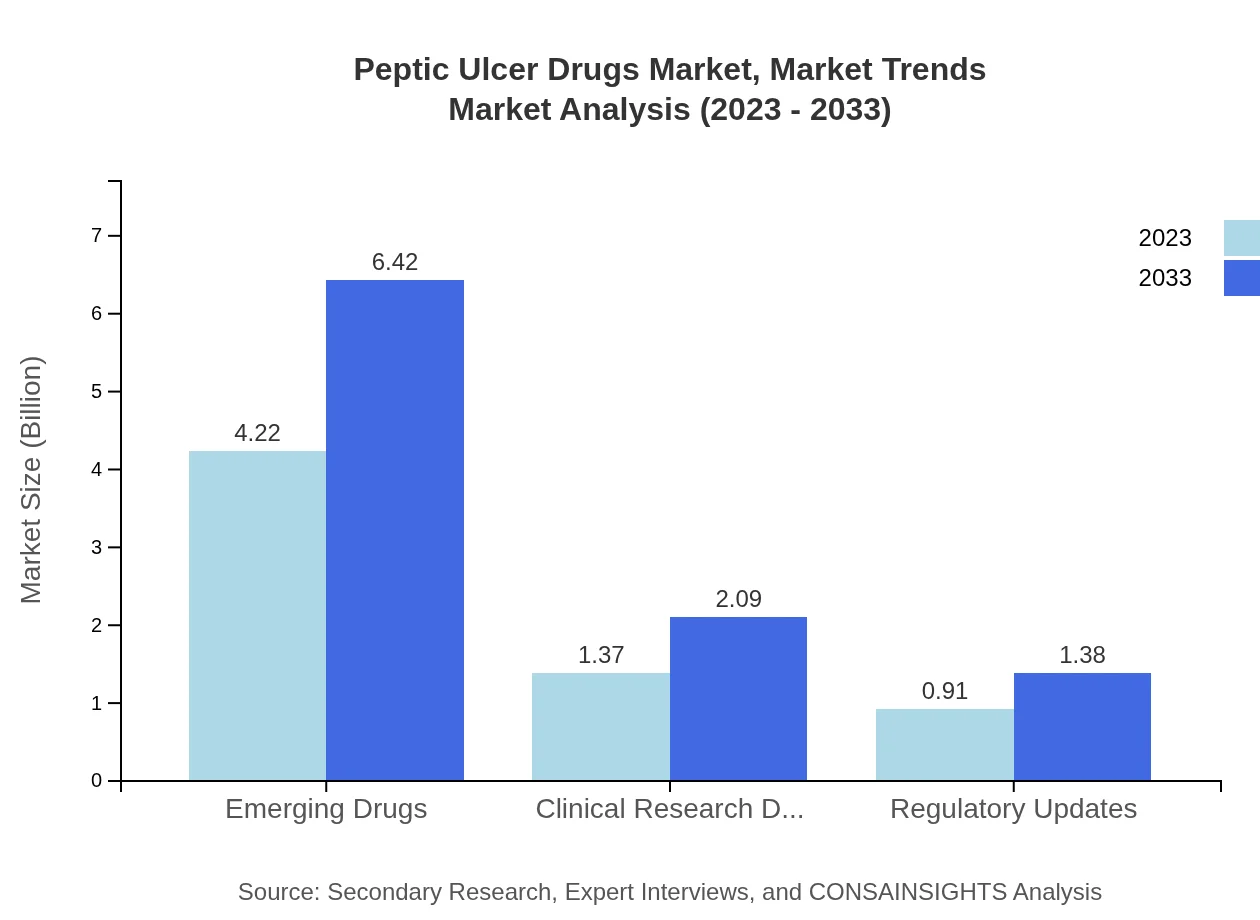
Key market trends include an increasing focus on personalized medicine, innovative drug formulations, and the growing impact of digital health technologies. Telehealth services are gaining traction in patient consultations and monitoring, facilitating better access to care. Additionally, the emergence of generic brands is enhancing affordability while providing access to effective treatments, contributing to market growth.
Peptic Ulcer Drugs Market Trends and Future Forecast
Tell us your focus area and get a customized research report.
Global Market Leaders and Top Companies in Peptic Ulcer Drugs Industry
AstraZeneca:
AstraZeneca is a global biopharmaceutical company that has developed several leading peptic ulcer drugs, including proton pump inhibitors, focusing on research-driven innovation.Pfizer Inc.:
Pfizer is a major player in the pharmaceutical field, known for its extensive range of medications, including H2 receptor antagonists and antacids.Boehringer Ingelheim:
Boehringer Ingelheim specializes in various pharmaceuticals, with a strong presence in the development of treatments aimed at gastroesophageal reflux disease (GERD) and peptic ulcers.Takeda Pharmaceuticals:
Takeda is a leading biopharmaceutical company focused on developing innovative therapies, notably in the area of gastrointestinal health.We're grateful to work with incredible clients.








FAQs
What is the market size of the Peptic Ulcer Drugs market in 2023?
The market size in 2023 is $6.50 Billion, based on the provided market assessment covering treatment classes, regional breakdowns, and industry participants.
How big is the market expected to be in 2033?
The market is projected to reach $9.88 Billion in 2033, reflecting expansion across drug classes and regions during the forecast period.
What is CAGR of the market for 2023 to 2033?
The compound annual growth rate for 2023 to 2033 is 4.2%, as stated for the overall market trajectory across the forecast window.
Is there a single fastest Growing region in the Peptic Ulcer Drugs Market Report market?
No single fastest-growing region is stated for the Peptic Ulcer Drugs Market Report market because the top regional implied CAGR values are within 0.15 percentage points of each other, making the ranking too close to call reliably.
Who are the top companies active in this market?
Prominent companies listed include AstraZeneca, Pfizer Inc., Boehringer Ingelheim, and Takeda Pharmaceuticals, representing major industry involvement.
What are the primary drug Type segments covered?
Key drug-type segments include Proton Pump Inhibitors, H2 Receptor Antagonists, Antacids, and Antibiotics, as outlined in the report's segmentation.
Why is clinical research important for this market?
Clinical research developments drive innovation, support regulatory approvals, and expand therapeutic choices, contributing to market growth and patient outcomes.
What distribution channels are analyzed?
The report examines hospital pharmacies, retail pharmacies, and online pharmacies as principal distribution channels for peptic ulcer medications.
What indications are included in the segmentation?
Segmented indications include gastric ulcer, duodenal ulcer, Zollinger-Ellison Syndrome, and other indications relevant to peptic ulcer treatment.
How does regulation influence the market?
Regulatory updates impact approval timelines, safety standards, and market entry, shaping product availability and commercial strategies across regions.