

Metaverse In Gaming
First published: 26 February 2026 | Last updated: 26 February 2026 | Report Code: metaverse-in-gaming
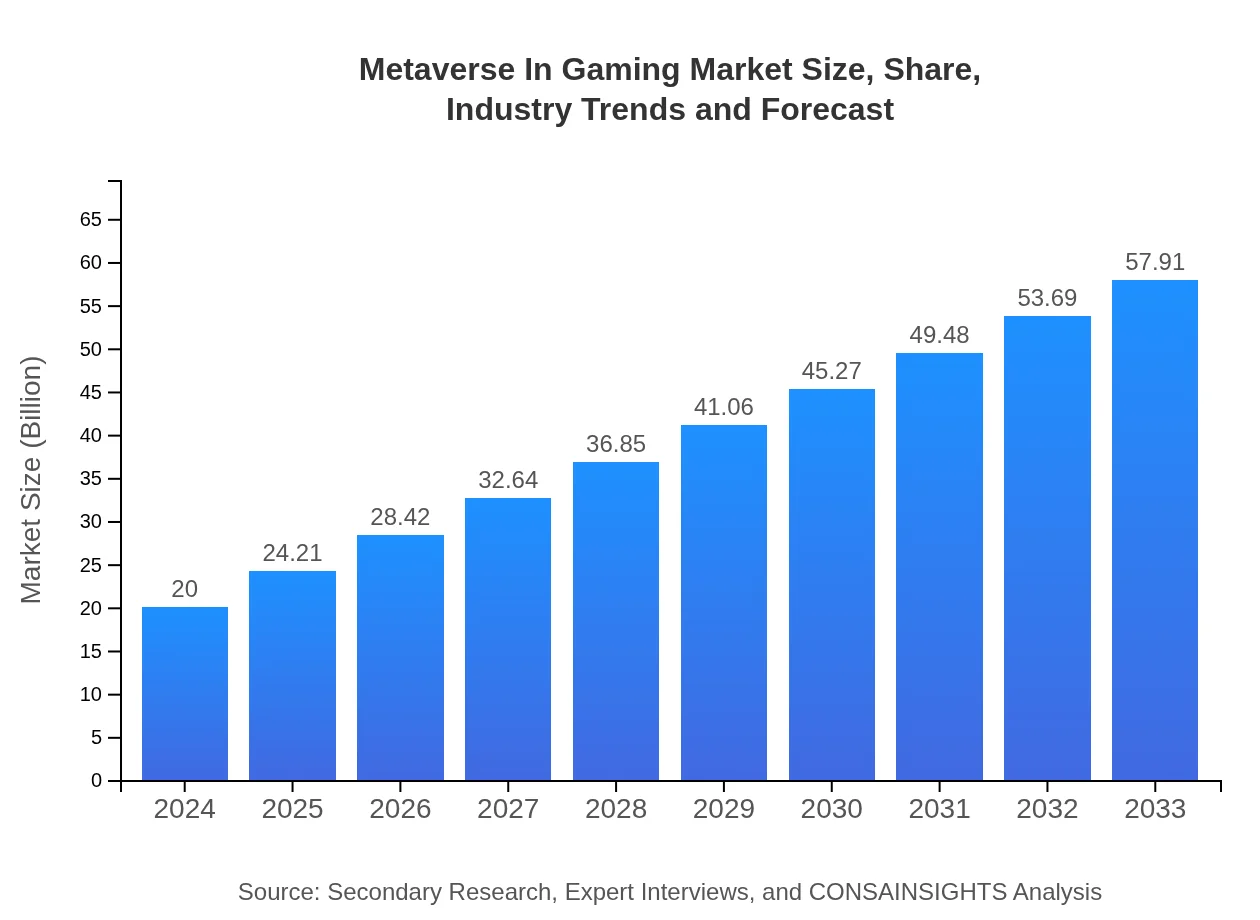
Metaverse In Gaming Market — USD $20 Billion in 2024, Growing to USD 57.91 by 2033 at 12.0% CAGR
This comprehensive report on the Metaverse In Gaming market provides an in‐depth exploration of current market conditions, growth drivers, segmentation insights, and regional dynamics, while presenting advanced technological innovations and product performances. Covering the forecast period from 2024 to 2033, the report delivers detailed quantitative and qualitative analyses to inform strategic decision-making.
| Metric | Value |
|---|---|
| Study Period | 2024 - 2033 |
| 2024 Market Size | $20.00 Billion |
| CAGR (2024-2033) | 12.0% |
| 2033 Market Size | $57.91 Billion |
| Top Companies | MetaPlay Interactive, CyberVerse Studios |
| Published Date | 26 February 2026 |
| Last Modified Date | 26 February 2026 |
Metaverse In Gaming Market Overview
Customize Metaverse In Gaming market research report
- ✔ Get in-depth analysis of Metaverse In Gaming market size, growth, and forecasts.
- ✔ Understand Metaverse In Gaming's regional dynamics and industry-specific trends.
- ✔ Identify potential applications, end-user demand, and growth segments in Metaverse In Gaming
What is the Market Size & CAGR of Metaverse In Gaming market in 2024?
Metaverse In Gaming Industry Analysis
Metaverse In Gaming Market Segmentation and Scope
Tell us your focus area and get a customized research report.
Metaverse In Gaming Market Analysis Report by Region
Europe Metaverse In Gaming:
The European market is showing steady growth with an initial market size of 6.28 in 2024, projected to escalate to 18.19 by 2033. Regulatory frameworks, a high standard of living, and substantial investment in research and development contribute to the vibrancy of the European gaming landscape. The region is characterized by a mix of traditional gaming powerhouses and innovative startups, ensuring that technological advances and immersive content remain key focus areas as the metaverse concept gains mainstream traction.Asia Pacific Metaverse In Gaming:
In the Asia Pacific region, the Metaverse In Gaming market is experiencing robust growth due to rapid digitalization, rising disposable incomes, and a culturally driven passion for gaming innovations. Starting from a market size of 3.53 in 2024 and expected to reach 10.22 by 2033, this region benefits from optimistic government policies, high mobile penetration levels, and technological savviness across key markets such as China, Japan, and South Korea. Local game developers and tech startups are aggressively investing in immersive gaming technologies, contributing to heightened regional market dynamism.North America Metaverse In Gaming:
North America remains a front-runner in the Metaverse In Gaming sector with a strong market presence, starting at 7.24 in 2024 and anticipated to surge to 20.97 by 2033. The region boasts a technologically advanced infrastructure, high penetration of gaming devices, and a mature digital entertainment market. Investment in innovation, coupled with strategic partnerships among dominant tech players, perpetuates market expansions that further cement North America as a leader in gaming metaverse explorations.South America Metaverse In Gaming:
South America, identified as a key emerging market, demonstrates promising growth trajectories despite initial market sizes being modest at 0.71 in 2024, with a projected increase to 2.04 by 2033. The region’s gaming market benefits from a youthful population, increased internet accessibility, and a growing appetite for digital entertainment. Though challenged by infrastructural constraints, public and private sector initiatives aimed at boosting digital ecosystems are expected to significantly improve the technological landscape in the coming years.Middle East & Africa Metaverse In Gaming:
The Middle East and Africa region, while starting with a relatively modest market size of 2.24 in 2024, is expected to reach 6.48 by 2033. Rapid urbanization, increased access to digital devices, and government-led digital initiatives are fostering an environment conducive to market expansion. Although infrastructural challenges persist, strategic investments and a burgeoning young population are driving growing consumer interest in immersive gaming experiences, thereby enhancing the overall competitiveness of the region.Tell us your focus area and get a customized research report.
Metaverse In Gaming Market Analysis By Platform
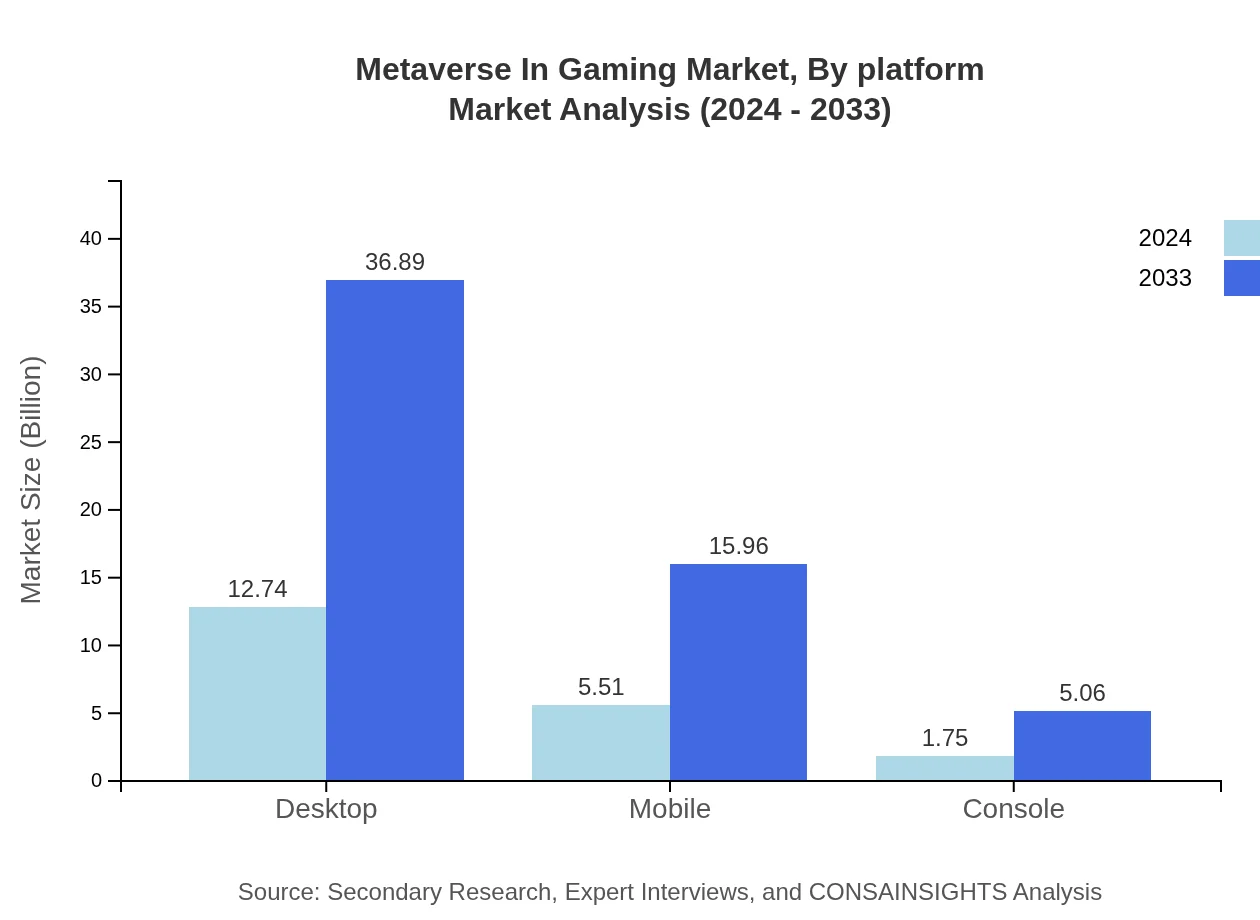
The analysis by platform highlights the performance of desktop, mobile, and console systems within the metaverse gaming domain. Desktop gaming recorded significant traction with a market size of 12.74 in 2024 that is projected to reach 36.89 by 2033, maintaining a consistent share of 63.7% over the forecast period. Mobile gaming, characterized by its portability and ease of access, shows moderate growth with market values expanding from 5.51 in 2024 to 15.96 in 2033, capturing a share of 27.57%. Console gaming, though smaller in absolute terms with a market size of 1.75 in 2024 growing to 5.06 by 2033, continues to represent a niche market with an 8.73% share. These platforms are critical as they embody the hardware interface through which end users experience immersive gaming. Combined, they underscore the importance of technological adaptation and user-friendly interfaces in enhancing overall market growth.
Metaverse In Gaming Market Analysis By Game Genre
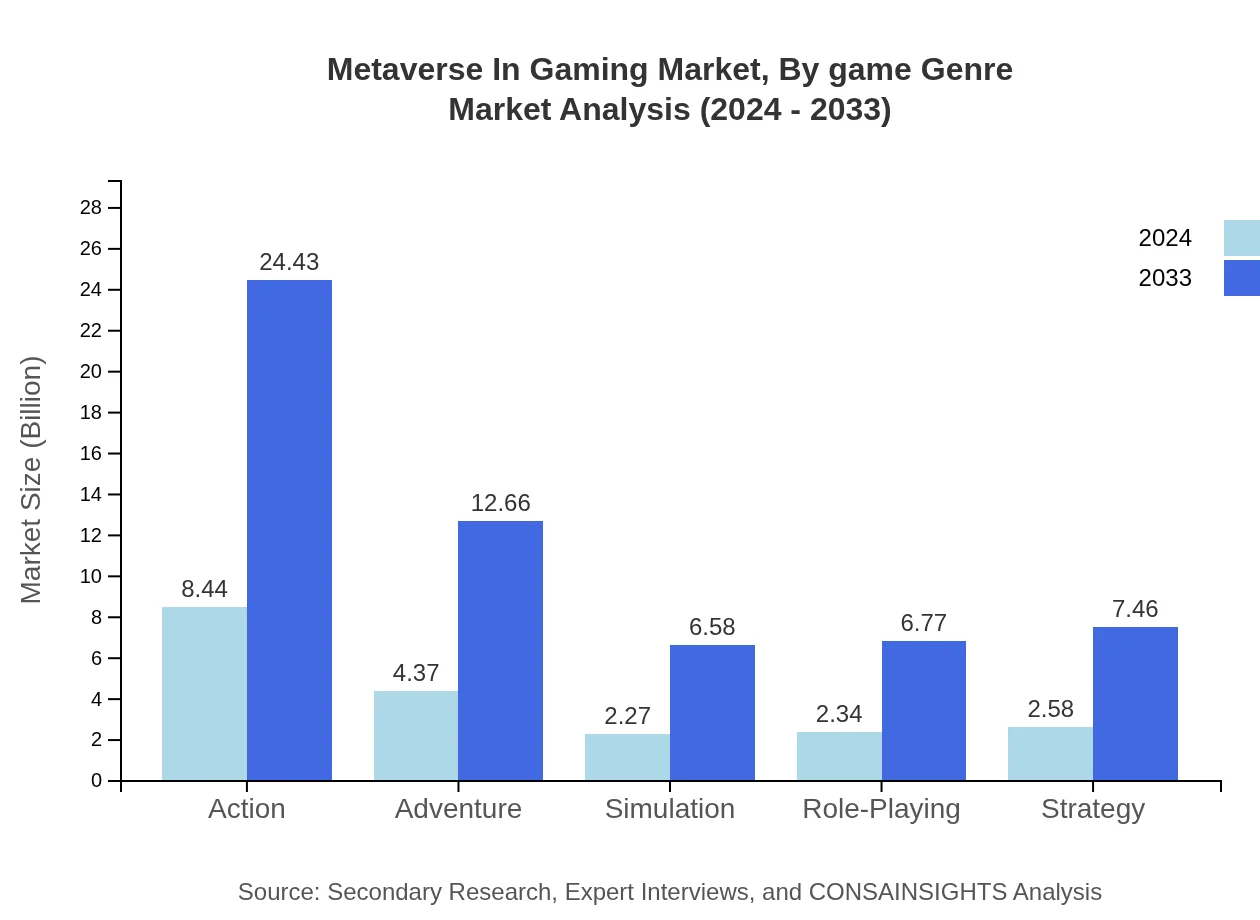
Segmentation by game genre encompasses several popular categories including Action, Adventure, Simulation, Role-Playing, and Strategy games. The Action genre, with market figures starting at 8.44 in 2024 and growing to 24.43 by 2033, represents 42.19% of the overall market share, reflecting its widespread appeal due to fast-paced gameplay and competitive dynamics. Similarly, the Adventure genre is witnessing steady growth as its market size escalates from 4.37 in 2024 to 12.66 in 2033, commanding 21.87% of the total share. Simulation titles, valued at 2.27 in 2024 and rising to 6.58 by 2033, have carved a niche among players seeking realistic virtual experiences, maintaining an 11.37% share. The Role-Playing and Strategy segments similarly demonstrate consistent performance, with market values for Role-Playing growing from 2.34 to 6.77 and for Strategy rising from 2.58 to 7.46, holding shares of 11.69% and 12.88% respectively. These genres collectively underscore the varied consumer preferences and the industry’s commitment to content diversification, making genre-specific innovations a vital focus area for market participants.
Metaverse In Gaming Market Analysis By Technology
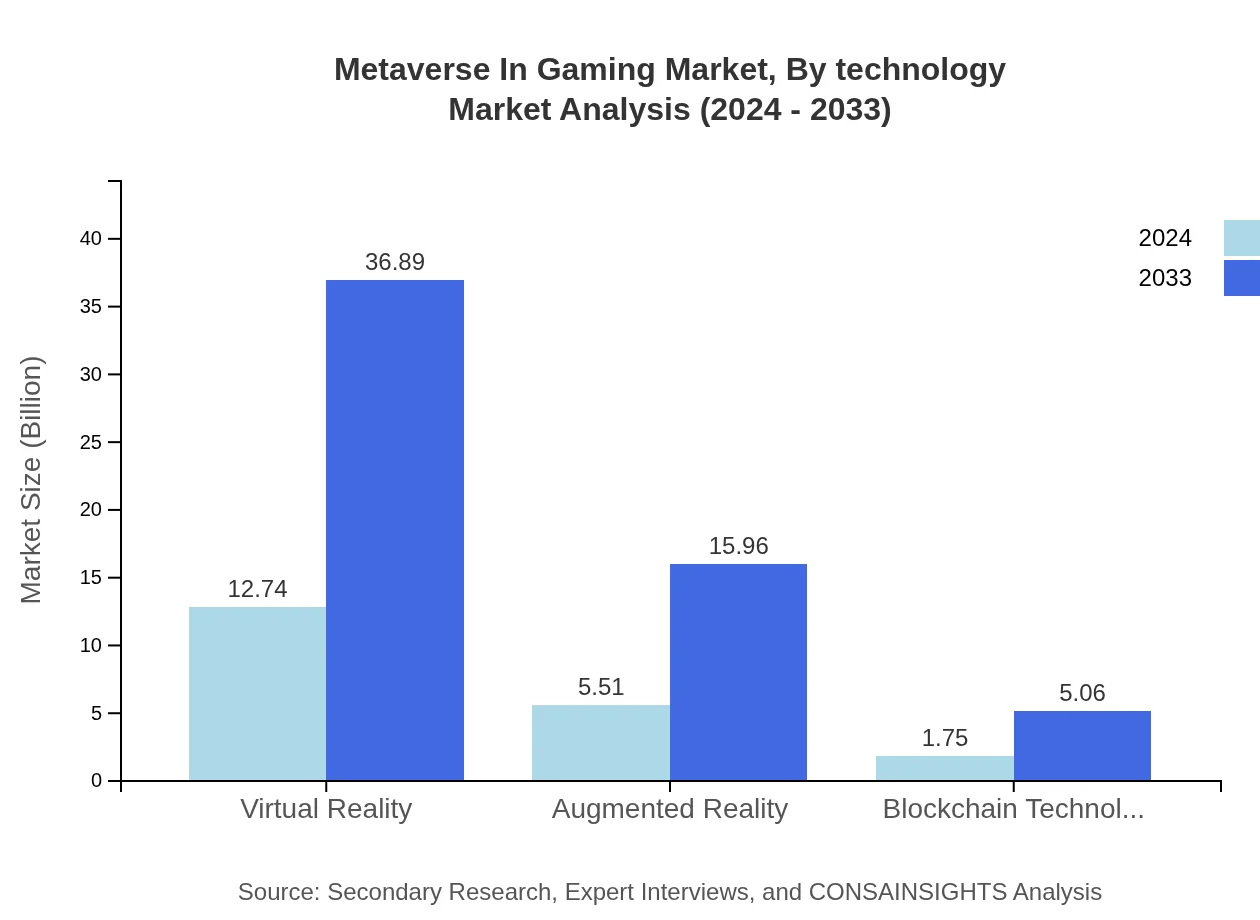
The technology segment within the Metaverse In Gaming industry is a critical driver of market evolution. Detailed analysis shows that Virtual Reality (VR) and Augmented Reality (AR) technologies are at the forefront, with the VR market size anticipated to increase from 12.74 in 2024 to 36.89 by 2033 and a dominant market share of 63.7%. Augmented Reality, complementing VR, exhibits figures moving from 5.51 to 15.96 with a share of 27.57%. Additionally, Blockchain Technology is carving its niche, starting at 1.75 in 2024 and expected to reach 5.06 by 2033, representing an 8.73% share. These technological breakthroughs are facilitating more immersive, secure, and interactive gaming environments, driving a transformation in the area of digital asset management and ownership verification. The constant improvements in processing capabilities, graphical interfaces, and data security protocols form the backbone of innovation, setting the stage for a radically redefined digital gaming experience.
Metaverse In Gaming Market Analysis By Business Model
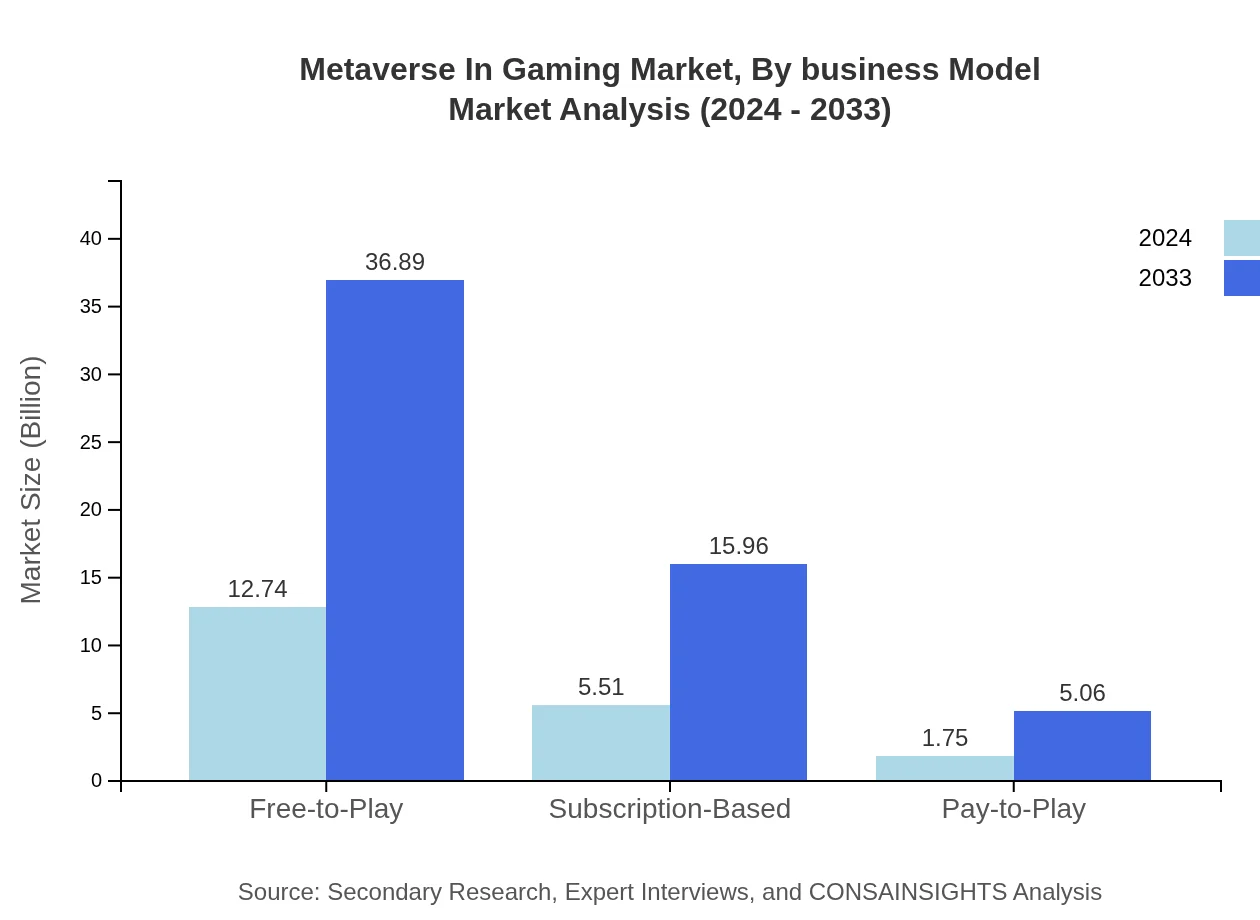
Business models in the metaverse gaming industry are evolving to embrace a diverse range of revenue streams optimized for a digital economy. The Free-to-Play model dominates with a significant market presence, boasting a market size of 12.74 in 2024 and expanding to 36.89 by 2033, maintaining a consistent share of 63.7%. Subscription-Based models, while more conservative, demonstrate reliable growth, recorded at 5.51 in 2024 and advancing to 15.96 by 2033 with a share of 27.57%. The Pay-to-Play segment, although smaller with figures starting at 1.75 in 2024 and growing to 5.06 by 2033, continues to serve dedicated gamers seeking premium content and exclusive access. These diversified models not only broaden the revenue opportunities but also create an ecosystem where developers, publishers, and service providers can benefit from recurring income streams while continuously investing in technological and content enhancements.
Metaverse In Gaming Market Analysis By User Demographics
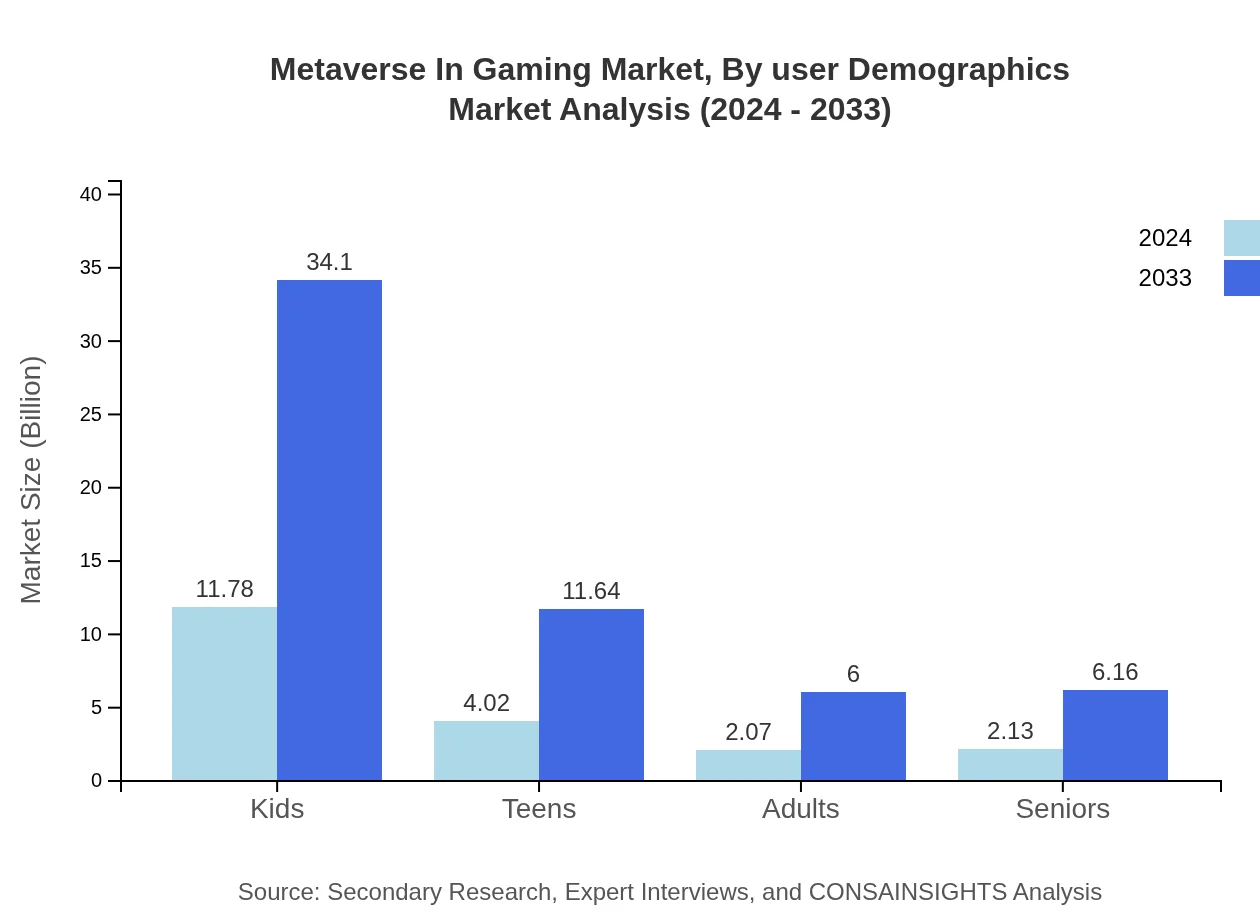
User demographics present a compelling narrative in the Metaverse In Gaming sector, revealing insights into consumer behavior across various age groups. The Kids segment leads with a market size of 11.78 in 2024 and an expected increase to 34.10 by 2033, securing an impressive 58.89% share due to early adoption and evolving digital literacy among younger audiences. The Teens segment follows, recording a market size of 4.02 in 2024 and growing to 11.64 by 2033, with a 20.1% share driven by a blend of social connectivity and dynamic gaming experiences. Adults form a lucrative niche with figures rising from 2.07 in 2024 to 6.00 in 2033, accounting for 10.37% of the market, while the Seniors segment, though smaller, demonstrates steady engagement with market values increasing from 2.13 to 6.16 and representing a 10.64% share. This segmentation underscores how diverse age groups are increasingly embracing metaverse gaming through tailored content and interactive platforms, signaling a broadened market appeal and sustained future growth.
Metaverse In Gaming Market Trends and Future Forecast
Tell us your focus area and get a customized research report.
Global Market Leaders and Top Companies in Metaverse In Gaming Industry
MetaPlay Interactive:
MetaPlay Interactive is a frontrunner in integrating immersive virtual reality with interactive gameplay. The company pioneers innovative strategies that combine blockchain technologies with traditional gaming methodologies, ensuring secure in-game economies and forward-thinking content delivery.CyberVerse Studios:
CyberVerse Studios is renowned for its comprehensive approach to creating expansive digital worlds. With an emphasis on community-driven experiences and high-end graphical outputs, the company has significantly impacted how players interact within the metaverse, reinforcing its leadership role in next-generation gaming.We're grateful to work with incredible clients.









FAQs
How can the Report help align our marketing strategy with customer adoption trends?
The Metaverse in Gaming market size is projected at $20 billion with a CAGR of 12.0%. This report can identify customer adoption segments, enabling the fine-tuning of marketing strategies to capitalize on emerging trends and preferences globally.
What product features are in highest demand according to the Report trends?
High-demand features focus on virtual reality (VR), which commands a 63.7% market share. Mobile experiences also resonate, with growing demand in immersive content as gaming transitions towards greater engagement in the metaverse.
Which regions offer the best market entry and expansion opportunities in the Report industry?
North America leads the market with an estimated size of $20.97 billion by 2033, while Europe is projected at $18.19 billion. In Asia Pacific, expect $10.22 billion. These regions represent substantial opportunities for market entry.
What emerging technologies and innovations are shaping the Report market?
Key technologies include virtual and augmented reality, facilitating immersive gaming experiences. Blockchain technology is crucial in securing transactions, and free-to-play models drive user engagement, reshaping how games are monetized and accessed.
Does the Report include competitive landscape and market share analysis?
Yes, the report provides a thorough competitive landscape and market share analysis, helping identify key players in the Metaverse in Gaming market, along with their strategic positioning and competitive advantages.
How can executives use the Report to evaluate investment risks and ROI?
Executives can use the comprehensive data on market size, CAGR, and regional growth forecasts to assess potential risks and returns. Understanding trends in audience behavior and competitive positioning aids in informed investment decisions.
What is the market size of metaverse In Gaming?
The Metaverse in Gaming market is valued at $20 billion as of 2024, with a projected CAGR of 12.0% through 2033, indicating significant growth potential and opportunities within this evolving sector.
What segment data is available in the report regarding gaming platforms?
By segment, Desktop gaming leads with a market size of $12.74 billion in 2024, while Mobile follows at $5.51 billion. Action games will capture $8.44 billion, impacting strategies for targeting various gamer demographics.