
Reports >
Life Sciences
>
Microfluidics Market Report

Microfluidics Market Report
First published: 08 October 2024 | Last updated: 25 May 2026 | Report Code: microfluidics
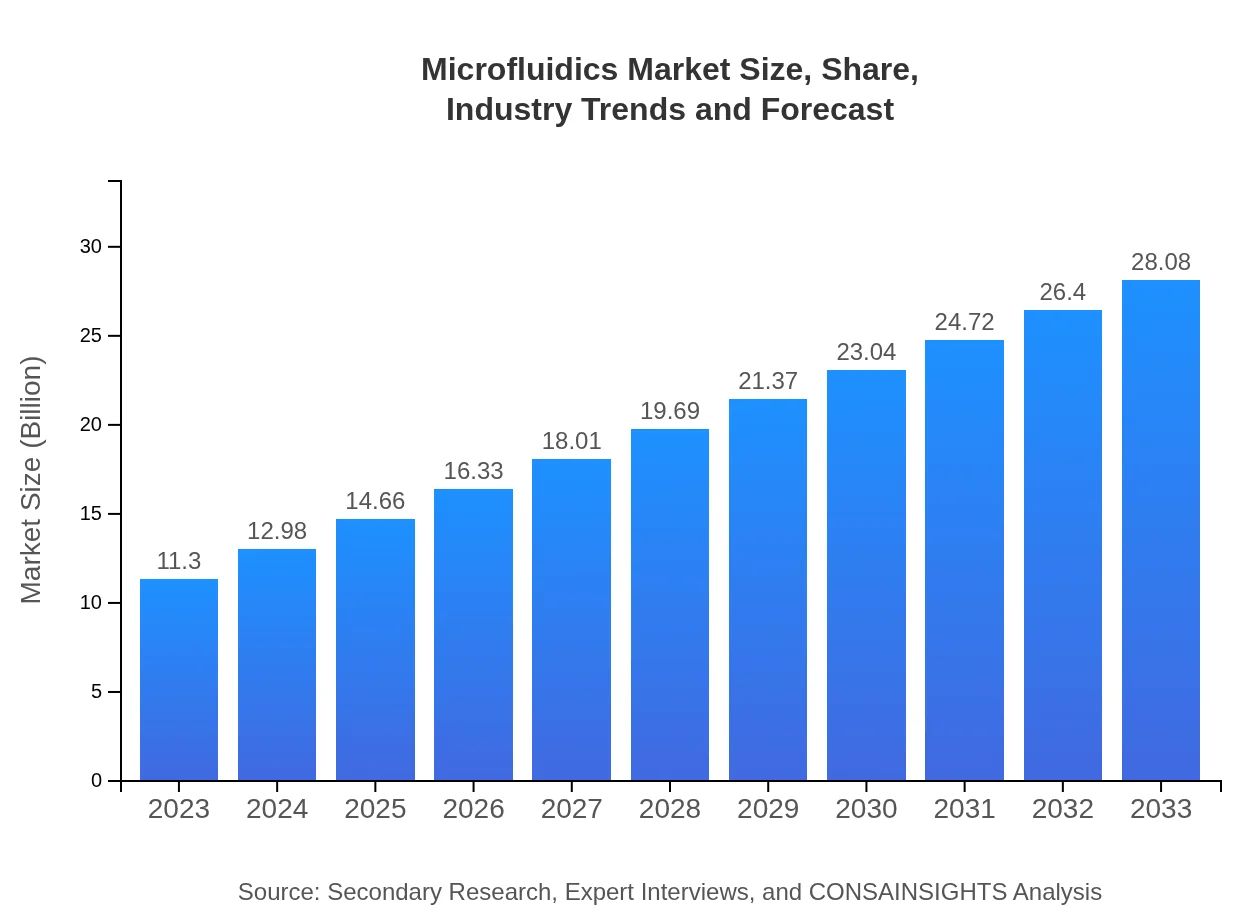
Microfluidics Market — USD 11.3 billion in 2023, Growing to USD 28.08B by 2033 at 9.2% CAGR
This report provides a comprehensive analysis of the Microfluidics market, including insights on market size, growth potential, segmentation, and regional trends from 2023 to 2033.
Key Takeaways
- Global market expands from $11.30 Billion in 2023 to $28.08 Billion in 2033 at a 9.2% CAGR.
- North America is largest regional market, while no single fastest-growing region is stated because regional CAGR differences remain within 0.15 percentage points.
- Europe and Asia Pacific show significant growth with Europe rising from $3.61 Billion to $8.97 Billion and Asia Pacific from $2.22 Billion to $5.51 Billion.
- Primary drivers include demand for point-of-care diagnostics, personalized medicine, and miniaturized laboratory workflows.
- Key vendors active in the market include Abbott Laboratories, Thermo Fisher Scientific, and Agilent Technologies.
Microfluidics Market Report — Executive Summary
North America remains largest market by forecast-period value, while no single fastest-growing region is stated because top regional growth rates are separated by less than 0.15 percentage points. The Microfluidics Market Report presents a detailed assessment of a market that grows from $11.30 Billion in 2023 to $28.08 Billion in 2033 at a CAGR of 9.2% over 2023 to 2033. Rising demand for point-of-care diagnostics, expansion of personalized medicine, and the need for compact laboratory processes are core growth levers. Technological innovations such as digital and hybrid microfluidics are shaping product development and deployment. The report covers segmentation by product type, application, end user, technology, and country-level presence, and profiles leading companies including Abbott Laboratories, Thermo Fisher Scientific, Becton, Dickinson and Company, Dolomite Microfluidics, and Agilent Technologies. Regional breakdowns detail market movements in North America, Europe, Asia Pacific, Latin America, and the Middle East and Africa. Methodology includes primary interviews with industry experts, secondary company literature, and data triangulation with internal validation to ensure robust trend interpretation and actionable insights.
Key Growth Drivers
- Rising need for rapid, point-of-care diagnostic tools that reduce time-to-result and support decentralized testing.
- Growth in personalized medicine prompting demand for precise, small-volume assays and tailored therapeutic workflows.
- Advances in digital and hybrid microfluidic technologies enabling more automated and miniaturized laboratory processes.
- Increased use of microfluidic platforms in pharmaceutical R&D and clinical research for high-throughput screening.
- Wider adoption across academic and research institutions driving innovation and use-case expansion.
| Metric | Value |
|---|---|
| Study Period | 2023 - 2033 |
| 2023 Market Size | $11.30 Billion |
| CAGR (2023-2033) | 9.2% |
| 2033 Market Size | $28.08 Billion |
| Top Companies | Abbott Laboratories, Thermo Fisher Scientific, Becton, Dickinson and Company, Dolomite Microfluidics, Agilent Technologies |
| Published Date | 08 October 2024 |
| Last Modified Date | 25 May 2026 |
Microfluidics Market Overview
Customize Microfluidics Market Report market research report
- ✔ Get in-depth analysis of Microfluidics market size, growth, and forecasts.
- ✔ Understand Microfluidics's regional dynamics and industry-specific trends.
- ✔ Identify potential applications, end-user demand, and growth segments in Microfluidics
What is the Market Size & CAGR of Microfluidics Market Report market in 2023?
Microfluidics Industry Analysis
Microfluidics Market Segmentation and Scope
Tell us your focus area and get a customized research report.
Microfluidics Market Report Market Analysis Report by Region
Europe Microfluidics Market Report:
Europe grows from $3.61 Billion in 2023 to $8.97 Billion in 2033. Expansion is linked to increasing use of microfluidic devices in healthcare diagnostics, research institutions, and a focus on integrating compact laboratory solutions in clinical and academic settings.Asia Pacific Microfluidics Market Report:
Asia Pacific grows from $2.22 Billion in 2023 to $5.51 Billion in 2033. Growth drivers include rising demand for rapid diagnostics, expanding pharmaceutical research, and growing investments in miniaturized testing technologies across healthcare and labs.North America Microfluidics Market Report:
North America is largest regional market, rising from $3.73 Billion in 2023 to $9.26 Billion in 2033. Regional momentum is supported by extensive clinical diagnostics adoption, strong pharmaceutical R&D activity, and infrastructure that facilitates deployment of microfluidic platforms.South America Microfluidics Market Report:
Latin America grows from $0.81 Billion in 2023 to $2 Billion in 2033. Adoption is driven by growing needs for accessible diagnostics, broader research activities, and gradual uptake of compact microfluidic systems in clinical and environmental monitoring applications.Middle East & Africa Microfluidics Market Report:
Middle East and Africa grows from $0.94 Billion in 2023 to $2.33 Billion in 2033. Market development reflects rising interest in point-of-care diagnostics, research infrastructure growth, and deployment of microfluidic tools for health and environmental testing.Tell us your focus area and get a customized research report.
Research Methodology
Microfluidics Market Analysis By Product Type
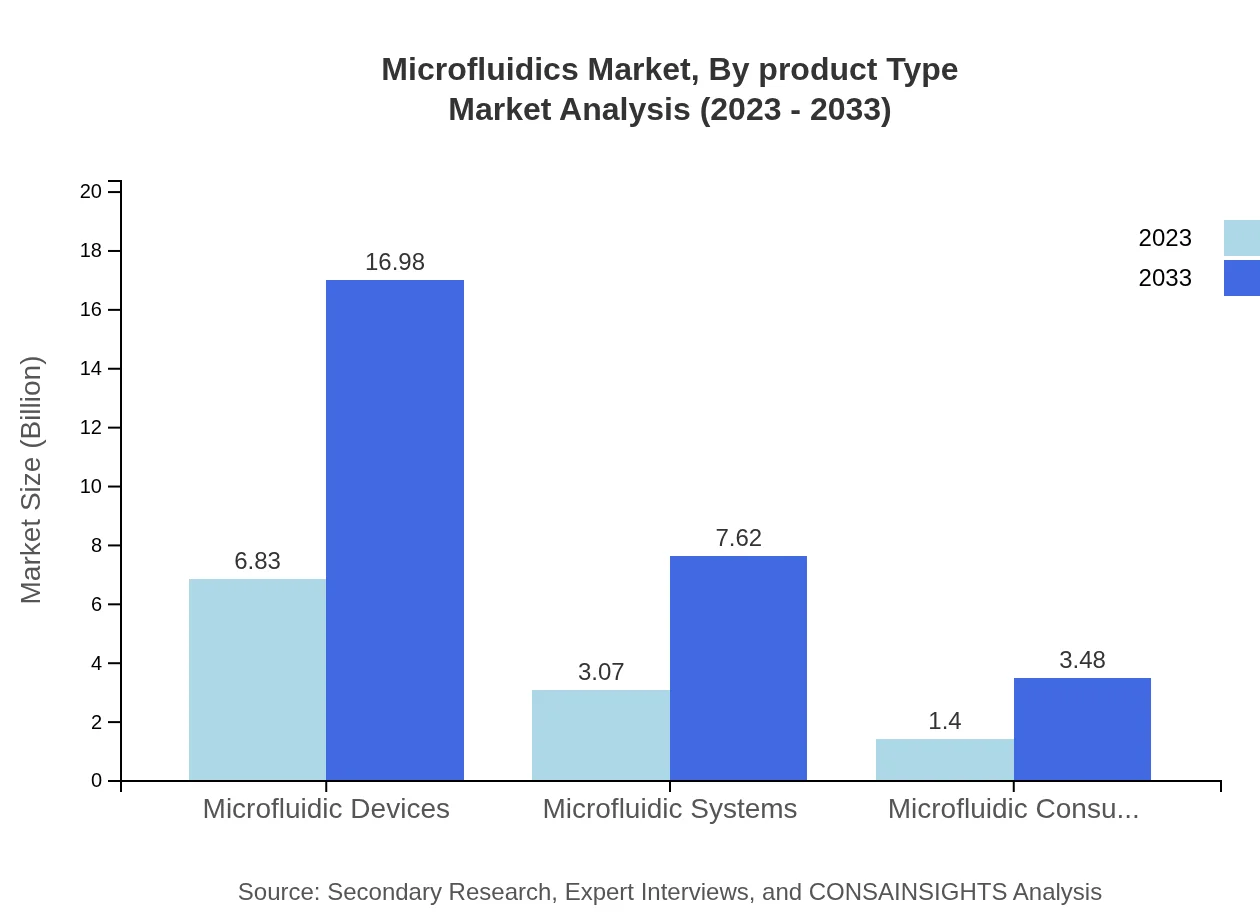
The market by product type includes Microfluidic Devices, which represent a significant share of the market at over 60% in 2023. These devices are projected to grow from $6.83 billion in 2023 to $16.98 billion by 2033. Microfluidic systems and consumables also hold important market shares, emphasizing the technological advancements driving sales.
Microfluidics Market Analysis By Application
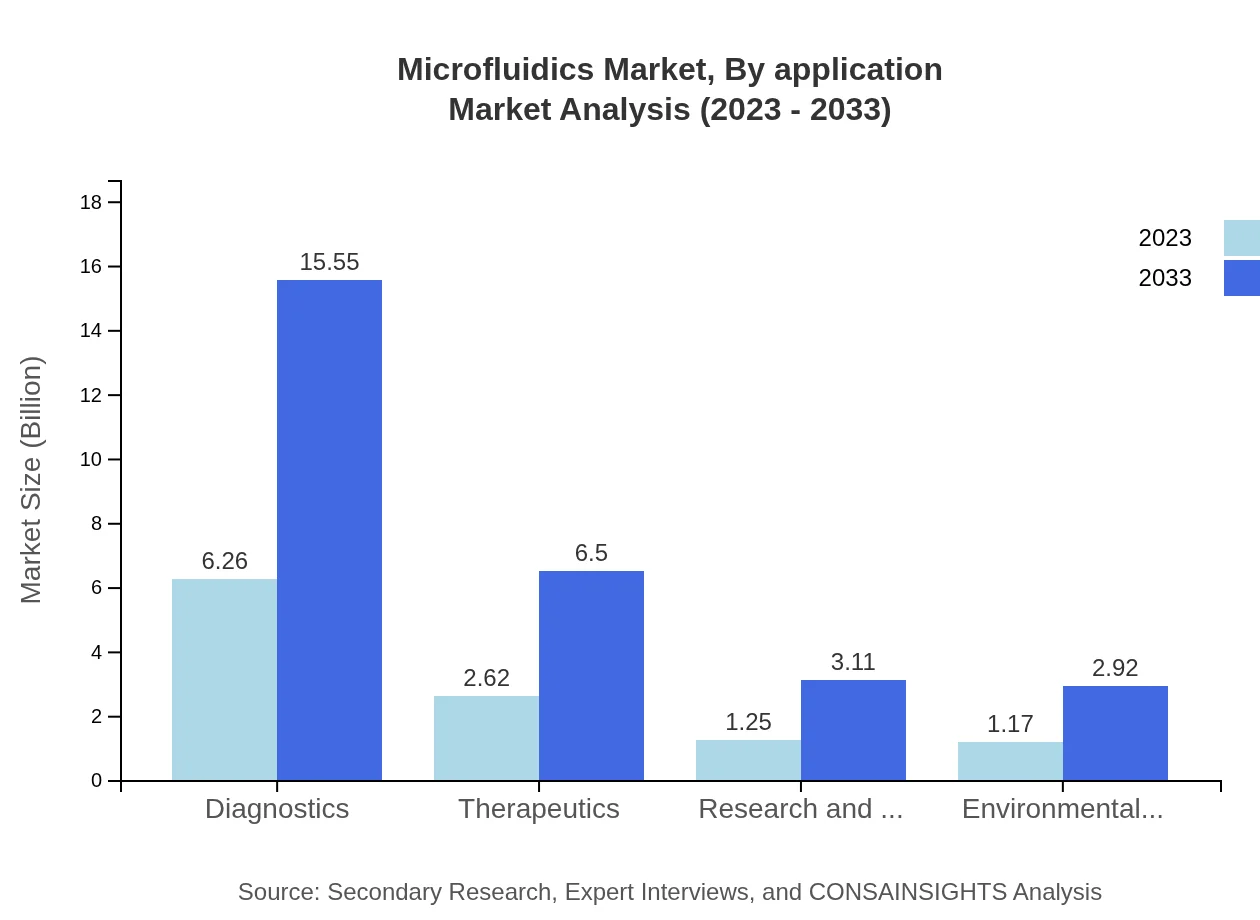
The application segment highlights the critical role of microfluidics in diagnostics and therapeutics. For instance, the diagnostics application is substantial, projected to grow from $6.26 billion in 2023 to $15.55 billion by 2033, accounting for a consistent market share.
Microfluidics Market Analysis By End User
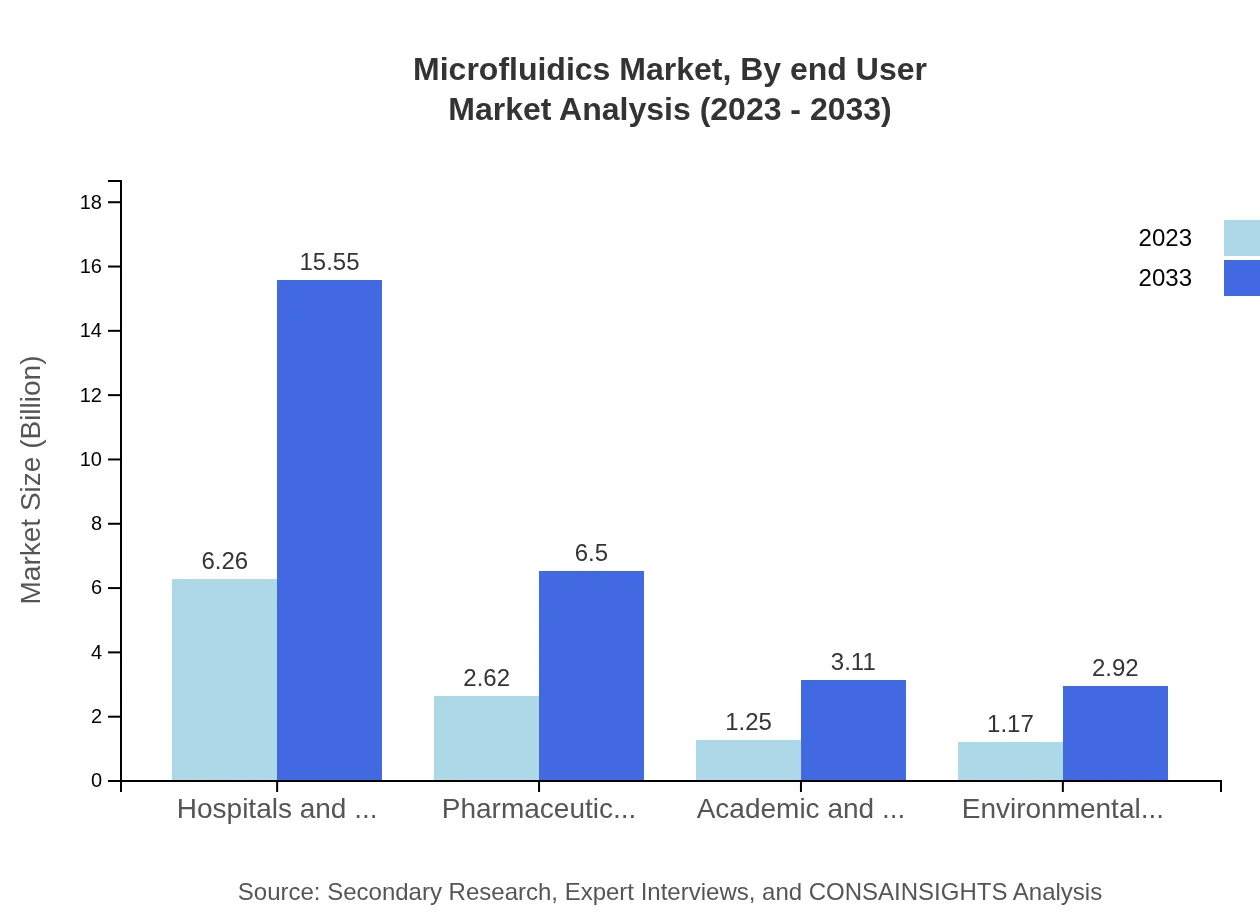
The end-user segment is comprised of hospitals and clinics, which dominate the market with a share of 55.4%, translating to a market size increase from $6.26 billion in 2023 to $15.55 billion by 2033. The pharmaceutical industry, academic and research institutions, and environmental agencies are also notable contributors.
Microfluidics Market Analysis By Technological Advancements
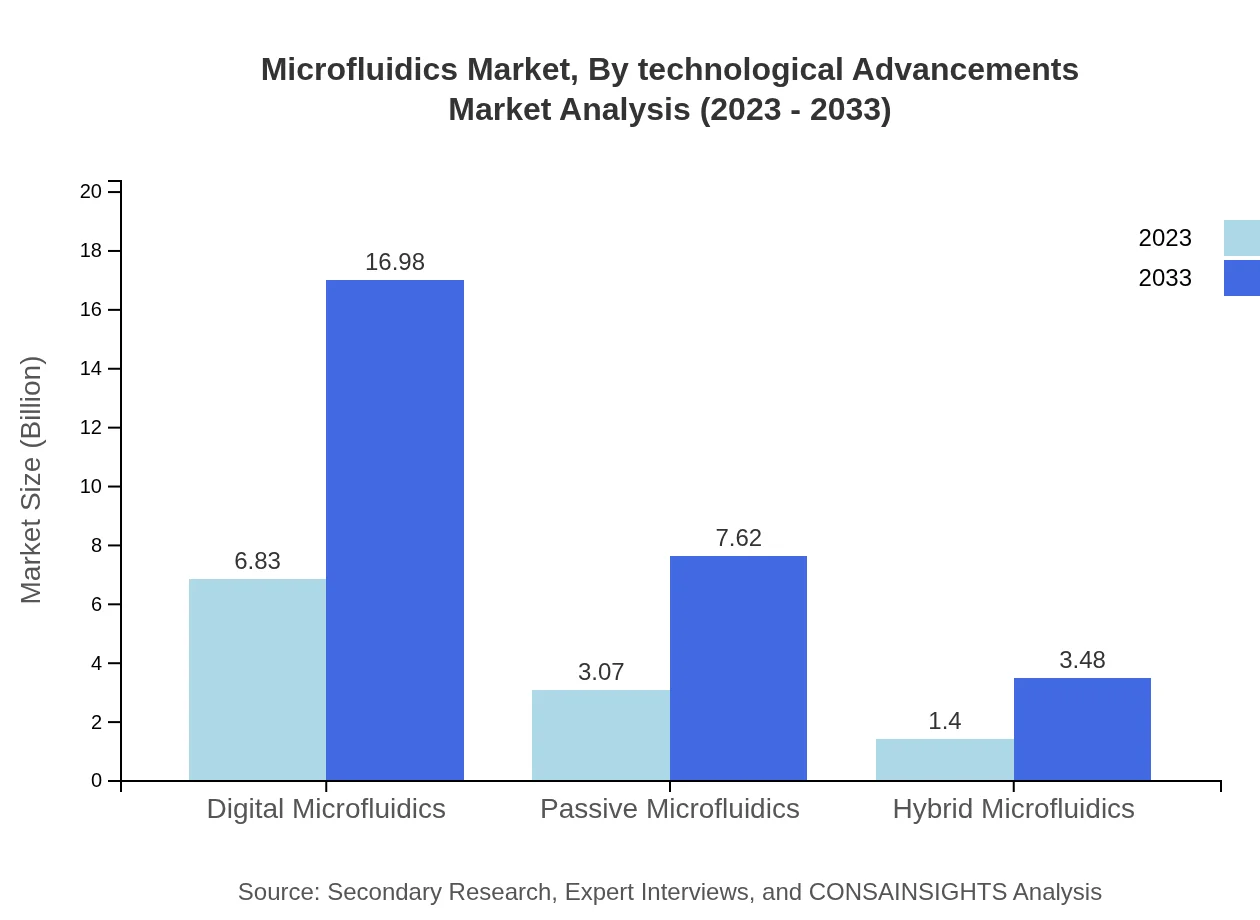
Technological advancements in digital microfluidics and passive microfluidics are notably influencing the market. Digital microfluidics holds a sizeable share of the market at 60.47% in 2023, expected to grow significantly with continuous innovation in device design and functionality.
Microfluidics Market Analysis By Country Level Segmentation
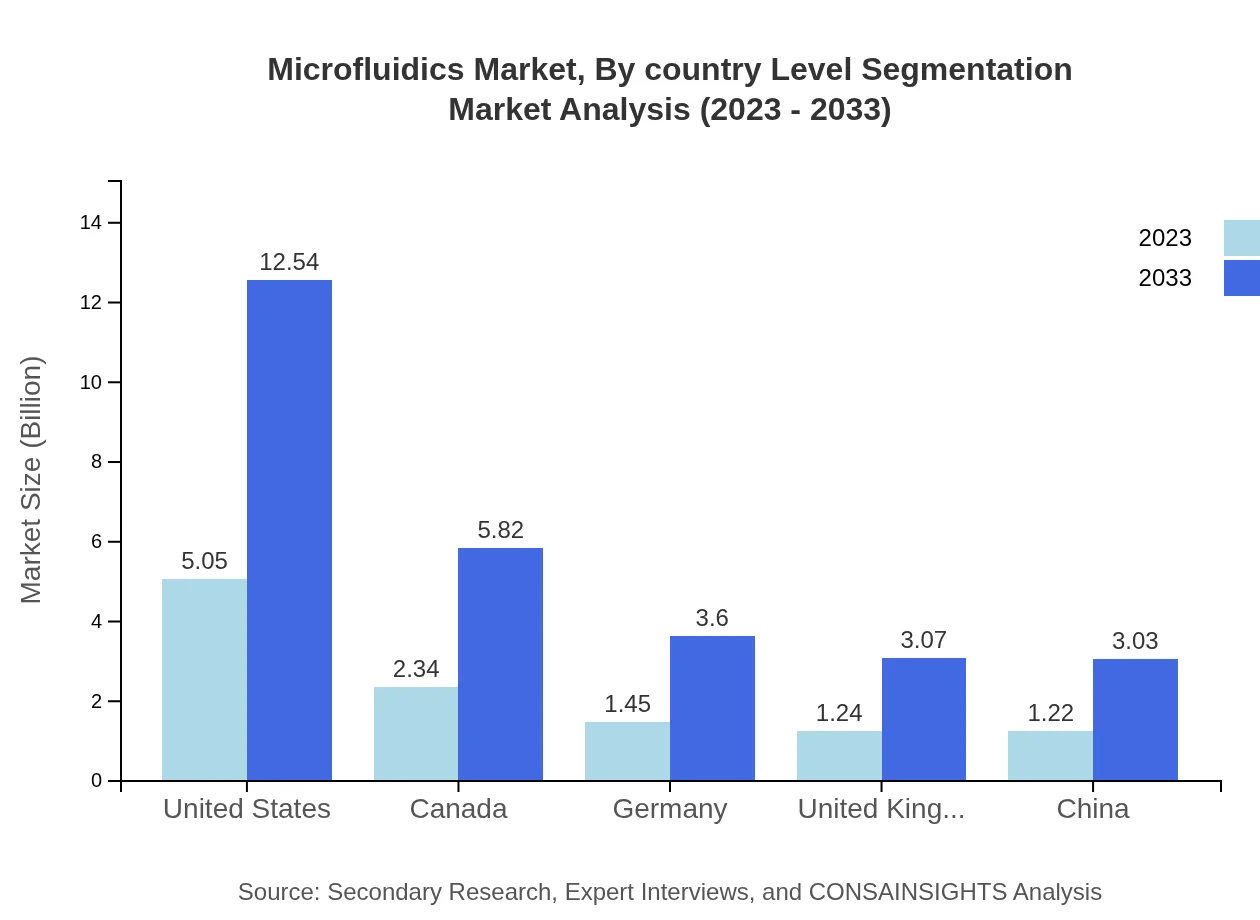
Country-level analysis indicates the United States as the leading market, growing from $5.05 billion in 2023 to $12.54 billion by 2033. Canada and key European markets such as Germany and the UK are expected to show steady growth, increasing their market shares along with major developing countries in the Asia Pacific.
Microfluidics Market Trends and Future Forecast
Tell us your focus area and get a customized research report.
Global Market Leaders and Top Companies in Microfluidics Industry
Abbott Laboratories:
Abbott Laboratories provides a wide range of diagnostic and healthcare solutions, prominently utilizing microfluidics technology in its products.Thermo Fisher Scientific:
Thermo Fisher is notable for its innovative microfluidic products that enhance research capabilities in the laboratory and clinical settings.Becton, Dickinson and Company:
BD develops medical devices, instrument systems, and reagents, making effective use of microfluidics in critical diagnostics and drug delivery.Dolomite Microfluidics:
Dolomite specializes in microfluidic solutions, offering a wide range of products and services tailored for life sciences and chemical applications.Agilent Technologies:
Agilent focuses on providing tools and services for microfluidics to advance life sciences and diagnostics capabilities.We're grateful to work with incredible clients.









FAQs
What is the market size of the microfluidics market in 2023?
The market size in 2023 is $11.30 Billion, based on the reported valuation for the global microfluidics sector.
How big will the market be by 2033?
By 2033 the market is projected to reach $28.08 Billion, reflecting the reported long-term forecast for the industry.
What is CAGR for the forecast period?
The compound annual growth rate for 2023 to 2033 is 9.2% as stated in the market projections.
Is there a single fastest Growing region in the Microfluidics Market Report market?
No single fastest-growing region is stated for the Microfluidics Market Report market because the top regional implied CAGR values are within 0.15 percentage points of each other, making the ranking too close to call reliably.
Which companies lead the microfluidics market?
Top companies listed include Abbott Laboratories, Thermo Fisher Scientific, Becton, Dickinson and Company, Dolomite Microfluidics, and Agilent Technologies.
What applications drive demand for microfluidic solutions?
Diagnostics, therapeutics, research and development, and environmental monitoring are key application areas propelling product uptake.
Who are primary end users of microfluidic products?
Primary end users include hospitals and clinics, pharmaceutical companies, academic and research institutions, and environmental agencies.
How is technology shaping the market?
Technological advancements such as digital, passive, and hybrid microfluidics are enabling automation, miniaturization, and broader application capabilities.
What is the forecast period for this report?
The forecast period covered by the report is 2023 to 2033, matching the stated projection window.
Why are microfluidic platforms important for personalized medicine?
Microfluidic platforms support small-volume, high-precision assays that enable tailored diagnostics and therapeutic approaches essential for personalized medicine.