

Myocardial Infarction Drugs Market Report
First published: 21 October 2024 | Last updated: 25 May 2026 | Report Code: myocardial-infarction-drugs
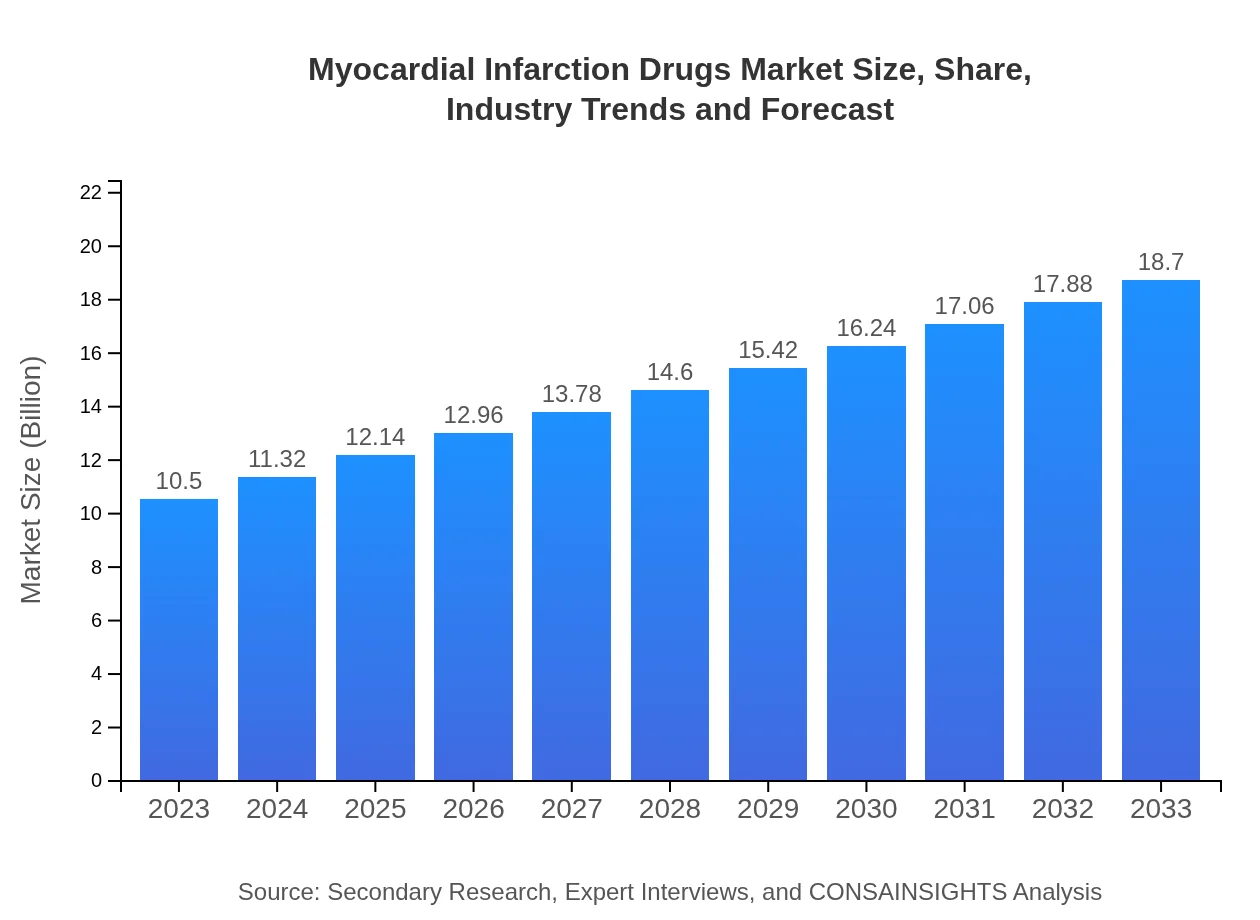
Myocardial Infarction Drugs Market — USD 10.5 billion in 2023, Growing to USD 18.70B by 2033 at 5.8% CAGR
This report provides a comprehensive analysis of the Myocardial Infarction Drugs market, projecting insights from 2023 to 2033. It includes market size and growth forecasts, regional insights, industry analysis, and detailed information on segment performances.
Key Takeaways
- Global market value rises from $10.50 Billion in 2023 to $18.70 Billion by 2033 at a 5.8% CAGR.
- North America is largest regional market, while no single fastest-growing region is stated because regional CAGR differences remain within 0.15 percentage points.
- Regional expansions are supported by aging populations, greater R&D investment, and advances in drug formulations.
- Leading firms include Pfizer Inc., Novartis AG, Bristol-Myers Squibb, AstraZeneca, and Sanofi.
- Market structure spans acute and post-acute therapies, multiple drug classes, and diverse distribution channels.
Myocardial Infarction Drugs Market Report — Executive Summary
North America remains largest market by forecast-period value, while no single fastest-growing region is stated because top regional growth rates are separated by less than 0.15 percentage points. The market for myocardial infarction medications is forecasted to expand from $10.50 Billion in 2023 to $18.70 Billion by 2033, reflecting a 5.8% CAGR. Growth is propelled by rising prevalence of cardiovascular conditions, demographic shifts toward older populations, and ongoing pharmaceutical innovation. Stakeholders are prioritizing improved efficacy, formulation advances, and greater accessibility through hospital, retail, and online pharmacies. Major manufacturers such as Pfizer Inc., Novartis AG, Bristol-Myers Squibb, AstraZeneca, and Sanofi play prominent roles in development and commercialization. The report examines therapy segments, drug classes, patient categories, and regional markets to guide strategic decisions.
Key Growth Drivers
- Increasing prevalence of cardiovascular disease and related risk factors fueling demand for effective therapies.
- Demographic trends with aging populations expanding the pool of patients requiring post-infarction treatment.
- Ongoing R&D and formulation improvements enhancing drug performance and therapeutic options.
- Wider distribution channels, including hospital and online pharmacies, improving patient access to medications.
- Regulatory approvals and clinical evidence supporting broader adoption of advanced myocardial infarction drugs.
| Metric | Value |
|---|---|
| Study Period | 2023 - 2033 |
| 2023 Market Size | $10.50 Billion |
| CAGR (2023-2033) | 5.8% |
| 2033 Market Size | $18.70 Billion |
| Top Companies | Pfizer Inc., Novartis AG, Bristol-Myers Squibb, AstraZeneca, Sanofi |
| Published Date | 21 October 2024 |
| Last Modified Date | 25 May 2026 |
Myocardial Infarction Drugs Market Overview
Customize Myocardial Infarction Drugs Market Report market research report
- ✔ Get in-depth analysis of Myocardial Infarction Drugs market size, growth, and forecasts.
- ✔ Understand Myocardial Infarction Drugs's regional dynamics and industry-specific trends.
- ✔ Identify potential applications, end-user demand, and growth segments in Myocardial Infarction Drugs
What is the Market Size & CAGR of Myocardial Infarction Drugs Market Report market in 2023?
Myocardial Infarction Drugs Industry Analysis
Myocardial Infarction Drugs Market Segmentation and Scope
Tell us your focus area and get a customized research report.
Myocardial Infarction Drugs Market Report Market Analysis Report by Region
Europe Myocardial Infarction Drugs Market Report:
Europe grows from $2.63 Billion in 2023 to $4.69 Billion in 2033. Regional expansion is driven by aging populations, emphasis on cardiovascular care, and ongoing clinical research that supports adoption of new drug formulations.Asia Pacific Myocardial Infarction Drugs Market Report:
Asia Pacific grows from $2.04 Billion in 2023 to $3.64 Billion in 2033. Growth is linked to demographic shifts, rising awareness of heart health, improving healthcare infrastructure, and expanding access to prescription therapies.North America Myocardial Infarction Drugs Market Report:
North America is largest regional market, rising from $3.4 Billion in 2023 to $6.05 Billion in 2033. This region is identified as the largest market, supported by high healthcare expenditure, strong pharmaceutical R&D, and established distribution networks that facilitate uptake of advanced therapies.South America Myocardial Infarction Drugs Market Report:
Latin America grows from $1.03 Billion in 2023 to $1.83 Billion in 2033. Market advances reflect increasing investment in healthcare services, improved access to medications, and broader screening and treatment initiatives for cardiovascular conditions.Middle East & Africa Myocardial Infarction Drugs Market Report:
Middle East and Africa grows from $1.4 Billion in 2023 to $2.49 Billion in 2033. Growth is associated with strengthening healthcare systems, greater availability of pharmaceuticals, and rising prevalence of lifestyle-related cardiovascular risk factors.Tell us your focus area and get a customized research report.
Research Methodology
Myocardial Infarction Drugs Market Analysis By Drug Type
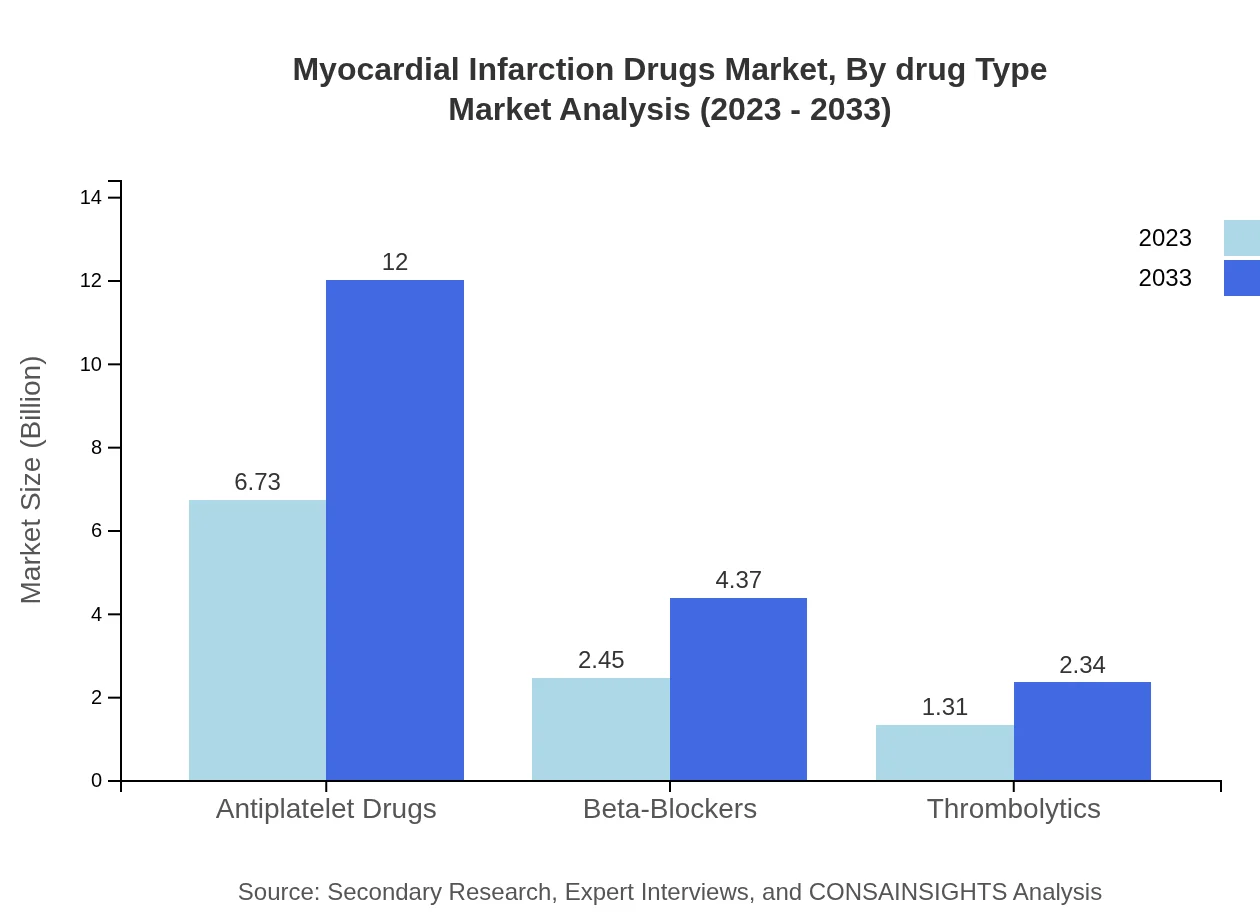
The market for Myocardial Infarction Drugs is predominantly driven by Acute Therapy, which is projected to grow from $8.81 billion in 2023 to $15.70 billion by 2033, retaining an 83.94% market share. Apart from this, Antiplatelet Drugs are also significant, expected to increase from $6.73 billion to $12.00 billion, capturing a 64.14% share by 2033.
Myocardial Infarction Drugs Market Analysis By Route Of Administration
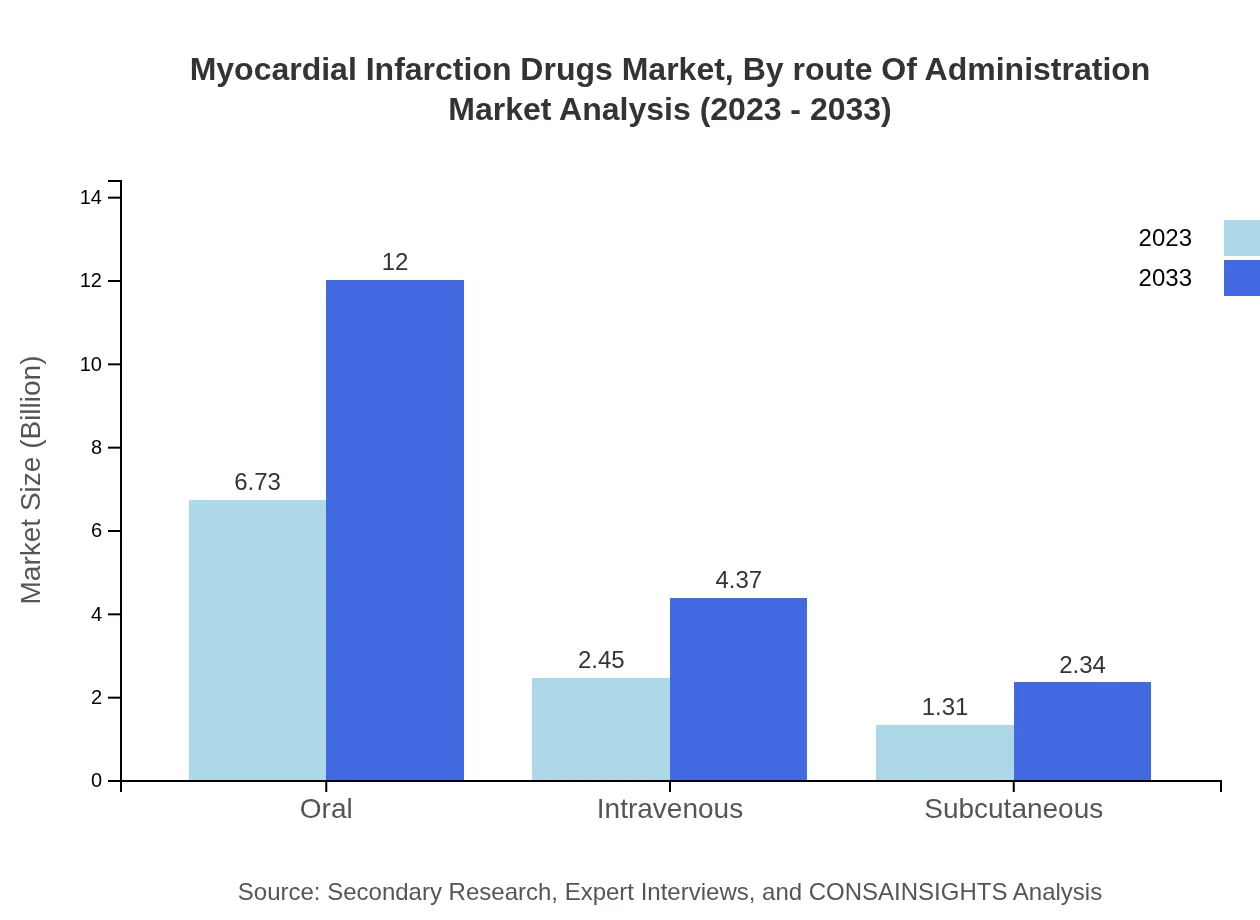
Oral administration is the most prevalent route in this market, with growth projected from $6.73 billion in 2023 to $12.00 billion by 2033. Intravenous and subcutaneous routes, though lower in volume, are also experiencing growth, indicating a diversified approach to treatment methods.
Myocardial Infarction Drugs Market Analysis By Therapy
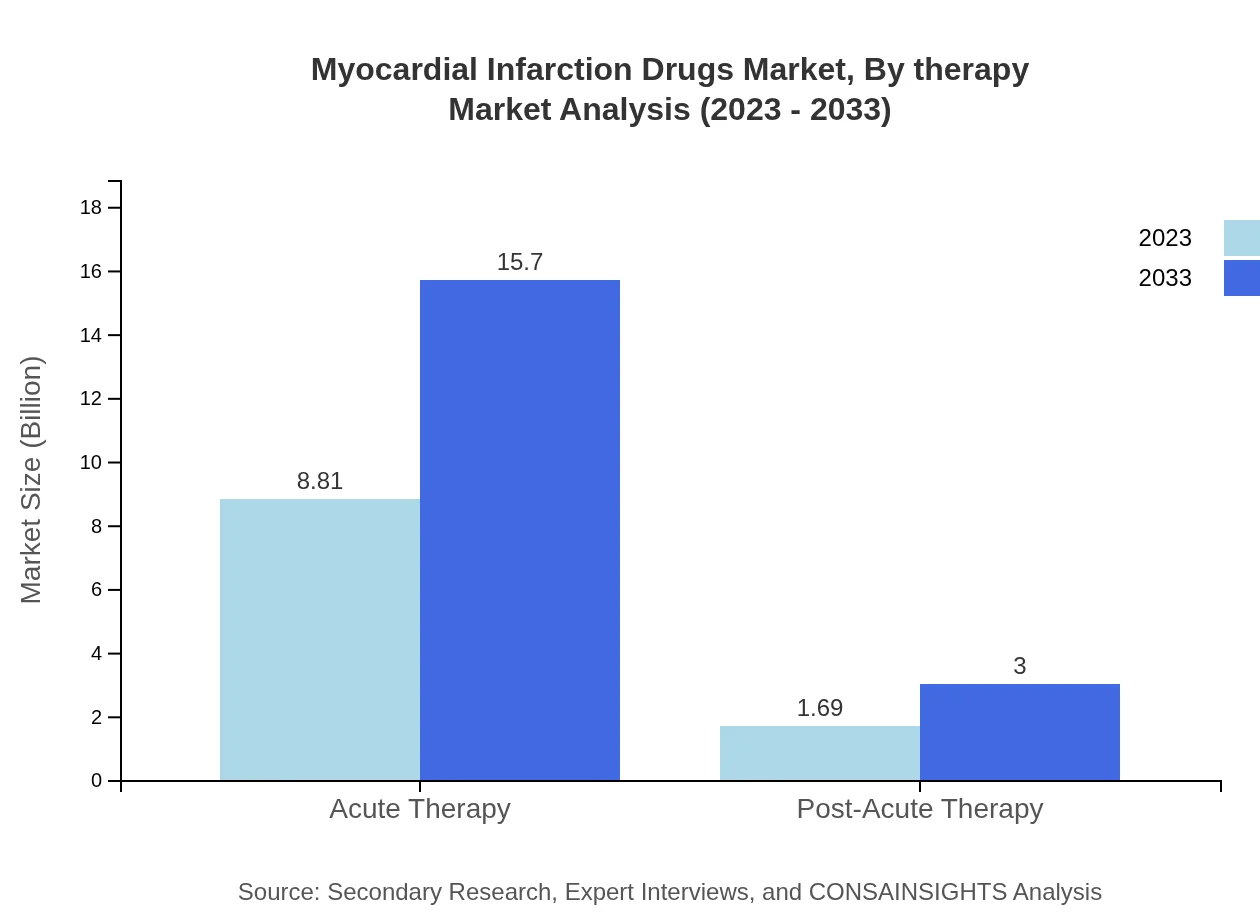
The division between Acute Therapy and Post-Acute Therapy reveals a robust growth in Acute Therapy, while Post-Acute Therapy is also expected to see an increase from $1.69 billion to $3.00 billion, representing a growing focus on post-discharge care.
Myocardial Infarction Drugs Market Analysis By Distribution Channel
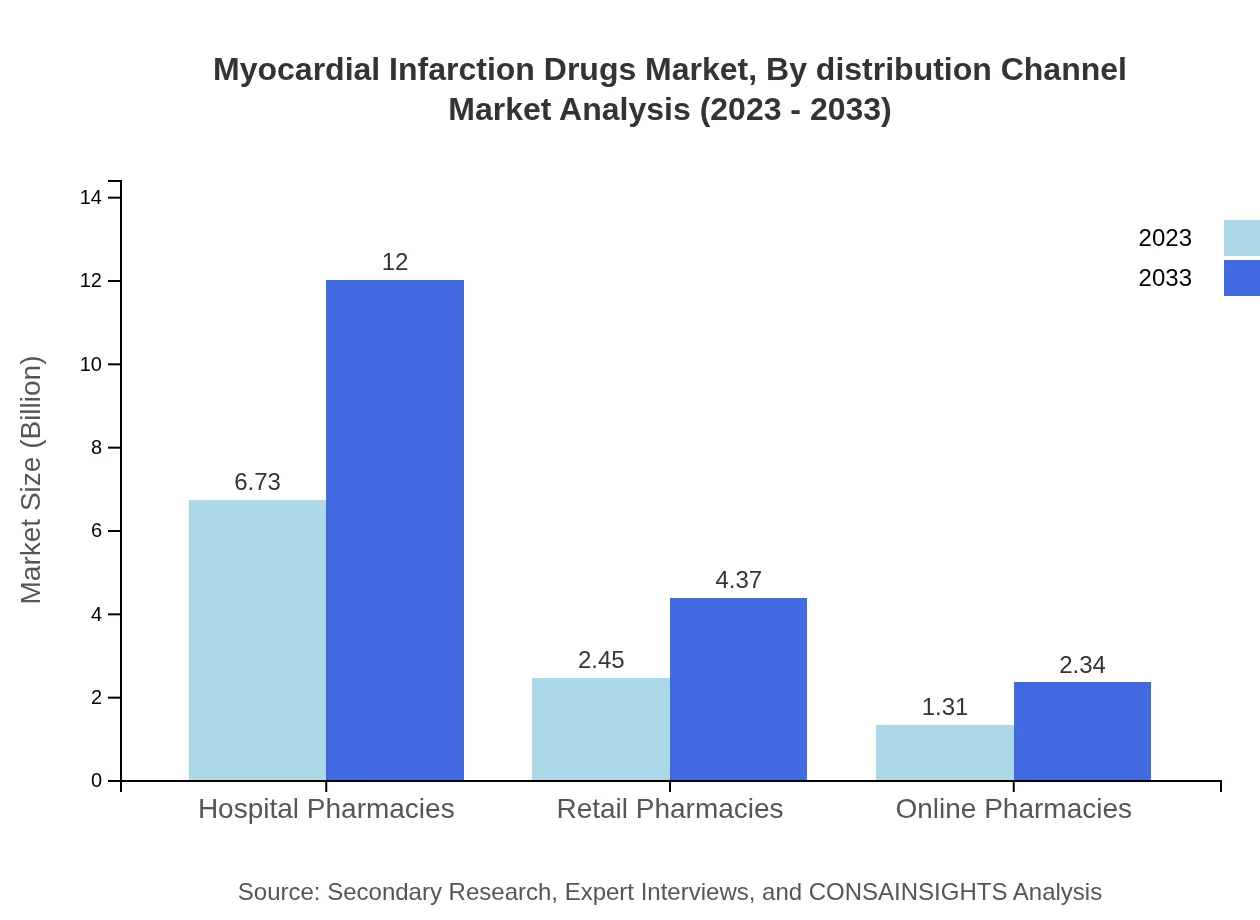
Hospital Pharmacies dominate the distribution channel, with a share of 64.14% increasing from $6.73 billion to $12.00 billion by 2033. Online and retail pharmacies, although smaller in share, are growing as patients seek convenience.
Myocardial Infarction Drugs Market Trends and Future Forecast
Tell us your focus area and get a customized research report.
Global Market Leaders and Top Companies in Myocardial Infarction Drugs Industry
Pfizer Inc.:
Pfizer is a leading player in the pharmaceuticals industry, actively involved in developing innovative treatments for myocardial infarction, with a strong focus on patient-centric therapies.Novartis AG:
Novartis is well known for its advanced cardiovascular therapies, committing significant resources toward research and development to improve heart health outcomes.Bristol-Myers Squibb:
Bristol-Myers Squibb is renowned for its innovative research in anti-platelet therapies, addressing critical needs in myocardial infarction management.AstraZeneca:
AstraZeneca is recognized for its comprehensive cardiovascular portfolio and is heavily invested in solutions aimed at reducing the incidence of myocardial infarction.Sanofi:
Sanofi offers a variety of cardiac medications, focusing on strengthening treatments related to myocardial infarction and enhancing patient accessibility.We're grateful to work with incredible clients.



FAQs
What is the market size of the myocardial infarction drugs market in 2023?
The market size for myocardial infarction drugs in 2023 is reported as $10.50 Billion, reflecting the baseline for forecasts and strategic planning across the 2023 to 2033 period.
How big will the myocardial infarction drugs market be in 2033?
By 2033 the myocardial infarction drugs market is projected to reach $18.70 Billion, representing the reported end-point value used in long-term industry and investment assessments.
What is CAGR of the myocardial infarction drugs market for 2023 to 2033?
The documented compound annual growth rate for the period 2023 to 2033 is 5.8%, as specified for market projections and trend analysis.
Is there a single fastest Growing region in the Myocardial Infarction Drugs Market Report market?
No single fastest-growing region is stated for the Myocardial Infarction Drugs Market Report market because the top regional implied CAGR values are within 0.15 percentage points of each other, making the ranking too close to call reliably.
Which companies lead the myocardial infarction drugs market?
Top companies listed for this market include Pfizer Inc., Novartis AG, Bristol-Myers Squibb, AstraZeneca, and Sanofi, representing major pharmaceutical participants in the sector.
What are primary drivers of market growth?
Primary drivers include higher cardiovascular disease prevalence, aging demographics, increased R&D, and improvements in drug formulations and distribution that expand patient access.
How are regional markets expected to change over the forecast?
Regional markets show growth from 2023 to 2033 across all reported regions, with distinct start and end values provided for planning and comparative regional assessment.
What is the role of distribution channels in this market?
Distribution channels such as hospital pharmacies, retail pharmacies, and online pharmacies are noted as key routes that enhance availability and support patient adherence to therapies.