

Neonatal Care Equipment And Fetal Labor Delivery Market Report
First published: 11 October 2024 | Last updated: 25 May 2026 | Report Code: neonatal-care-equipment-and-fetal-labor-delivery
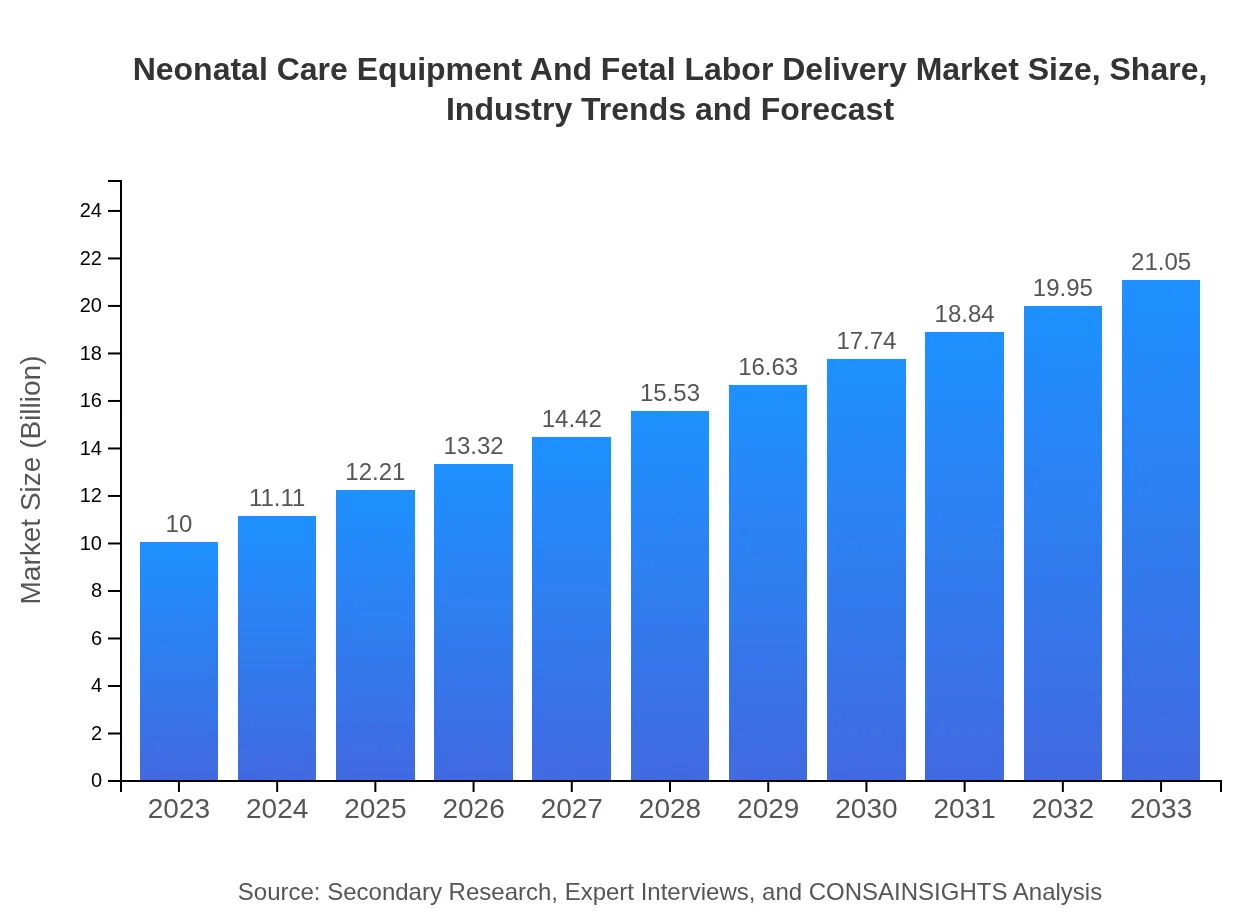
Neonatal Care Equipment And Fetal Labor Delivery Market — USD 10 billion in 2023, Growing to USD 21.05B by 2033 at 7.5% CAGR
This report provides a comprehensive analysis of the Neonatal Care Equipment and Fetal Labor Delivery market from 2023 to 2033, detailing market dynamics, size, growth rates, technological advancements, and the competitive landscape.
Key Takeaways
- $10.00 Billion market size in 2023 expanding to $21.05 Billion by 2033.
- Projected CAGR of 7.5% across the 2023 to 2033 forecast period.
- North America is largest regional market, while no single fastest-growing region is stated because regional CAGR differences remain within 0.15 percentage points.
- Europe is expected to grow from $2.51 Billion to $5.28 Billion between 2023 and 2033.
- Regional spreads include Asia Pacific ($1.95 Billion to $4.10 Billion) and Middle East and Africa ($1.19 Billion to $2.51 Billion).
Neonatal Care Equipment And Fetal Labor Delivery Market Report — Executive Summary
North America remains largest market by forecast-period value, while no single fastest-growing region is stated because top regional growth rates are separated by less than 0.15 percentage points. The Neonatal Care Equipment And Fetal Labor Delivery market is forecast to more than double from $10.00 Billion in 2023 to $21.05 Billion in 2033 at a 7.5% CAGR. Growth is driven by rising healthcare investment, increased focus on neonatal outcomes, and adoption of advanced monitoring and respiratory support devices. The market spans incubators, respiratory support equipment, monitoring systems, and fetal monitoring technologies distributed via direct sales, distributors, and e-commerce. Hospitals and specialty clinics are primary end users, while home healthcare is an emerging application area. Key vendors include GE Healthcare, Philips Healthcare, Medtronic, Natus Medical, and Fischer & Paykel Healthcare. The report synthesizes primary interviews, company disclosures, and triangulated data to present regional breakdowns and segment-level performance, helping procurement and product teams prioritize innovation, distribution, and training initiatives.
Key Growth Drivers
- Greater healthcare spending and investment in neonatal care infrastructure expanding demand for specialized devices.
- Technological advances in monitoring, respiratory support, and non-invasive fetal assessment improving clinical capabilities.
- Rising awareness of neonatal health and growing need for interventions for preterm births and congenital conditions.
- Expanded distribution channels, including e-commerce and specialist distributors, enhancing market access.
- Increased adoption of hospital-level solutions and growth in specialty clinics and home healthcare applications.
| Metric | Value |
|---|---|
| Study Period | 2023 - 2033 |
| 2023 Market Size | $10.00 Billion |
| CAGR (2023-2033) | 7.5% |
| 2033 Market Size | $21.05 Billion |
| Top Companies | GE Healthcare, Philips Healthcare, Medtronic , Natus Medical, Fischer & Paykel Healthcare |
| Published Date | 11 October 2024 |
| Last Modified Date | 25 May 2026 |
Neonatal Care Equipment And Fetal Labor Delivery Market Overview
Customize Neonatal Care Equipment And Fetal Labor Delivery Market Report market research report
- ✔ Get in-depth analysis of Neonatal Care Equipment And Fetal Labor Delivery market size, growth, and forecasts.
- ✔ Understand Neonatal Care Equipment And Fetal Labor Delivery's regional dynamics and industry-specific trends.
- ✔ Identify potential applications, end-user demand, and growth segments in Neonatal Care Equipment And Fetal Labor Delivery
What is the Market Size & CAGR of Neonatal Care Equipment And Fetal Labor Delivery Market Report market in 2023?
Neonatal Care Equipment And Fetal Labor Delivery Industry Analysis
Neonatal Care Equipment And Fetal Labor Delivery Market Segmentation and Scope
Tell us your focus area and get a customized research report.
Neonatal Care Equipment And Fetal Labor Delivery Market Report Market Analysis Report by Region
Europe Neonatal Care Equipment And Fetal Labor Delivery Market Report:
Europe grows from $2.51 Billion in 2023 to $5.28 Billion in 2033. Regional expansion is underpinned by increasing clinical focus on neonatal outcomes, regulatory oversight encouraging safe device adoption, and modernization of neonatal units across many healthcare systems.Asia Pacific Neonatal Care Equipment And Fetal Labor Delivery Market Report:
Asia Pacific grows from $1.95 Billion in 2023 to $4.1 Billion in 2033. Demand is driven by expanding healthcare access, investment in perinatal services, and uptake of monitoring and respiratory technologies to address neonatal health needs.North America Neonatal Care Equipment And Fetal Labor Delivery Market Report:
North America is largest regional market, rising from $3.72 Billion in 2023 to $7.83 Billion in 2033. This growth reflects sustained investment in neonatal infrastructure, adoption of advanced monitoring and respiratory devices, and established hospital networks supporting specialized care.South America Neonatal Care Equipment And Fetal Labor Delivery Market Report:
Latin America grows from $0.63 Billion in 2023 to $1.33 Billion in 2033. Market progress is linked to incremental healthcare spending, growing capabilities in neonatal care, and broader distribution of essential neonatal equipment.Middle East & Africa Neonatal Care Equipment And Fetal Labor Delivery Market Report:
Middle East and Africa grows from $1.19 Billion in 2023 to $2.51 Billion in 2033. Growth factors include targeted investments in maternal and child health infrastructure, adoption of improved monitoring tools, and efforts to strengthen neonatal care services regionally.Tell us your focus area and get a customized research report.
Research Methodology
Neonatal Care Equipment And Fetal Labor Delivery Market Analysis By Product
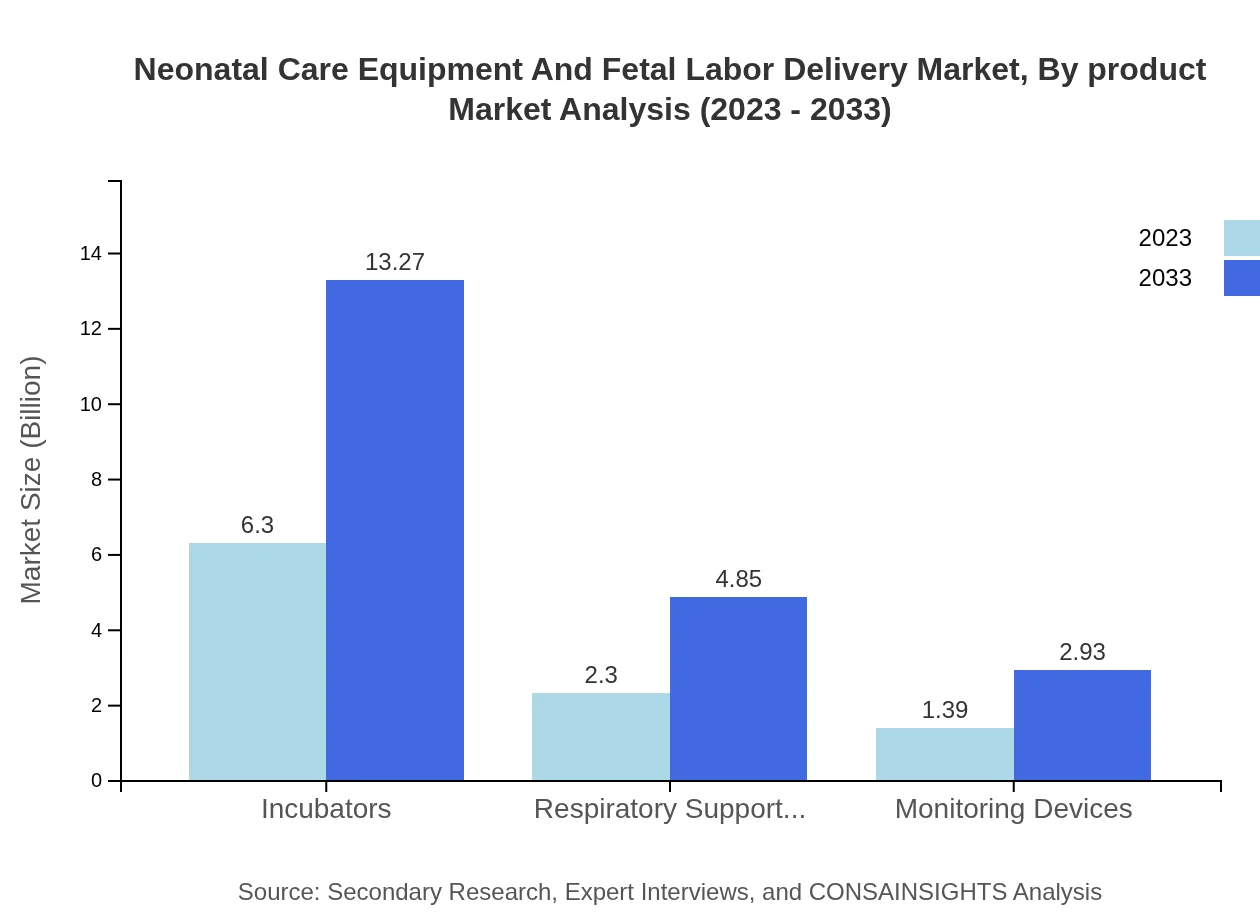
In the product segment, incubators dominate with a market size of $6.30 billion in 2023, expected to reach $13.27 billion by 2033, holding a significant share of 63.04%. Respiratory support equipment follows, valued at $2.30 billion in 2023 and projected to grow to $4.85 billion, accounting for 23.04% share. Monitoring devices have a market size of $1.39 billion with a share of 13.92% in 2023.
Neonatal Care Equipment And Fetal Labor Delivery Market Analysis By Application
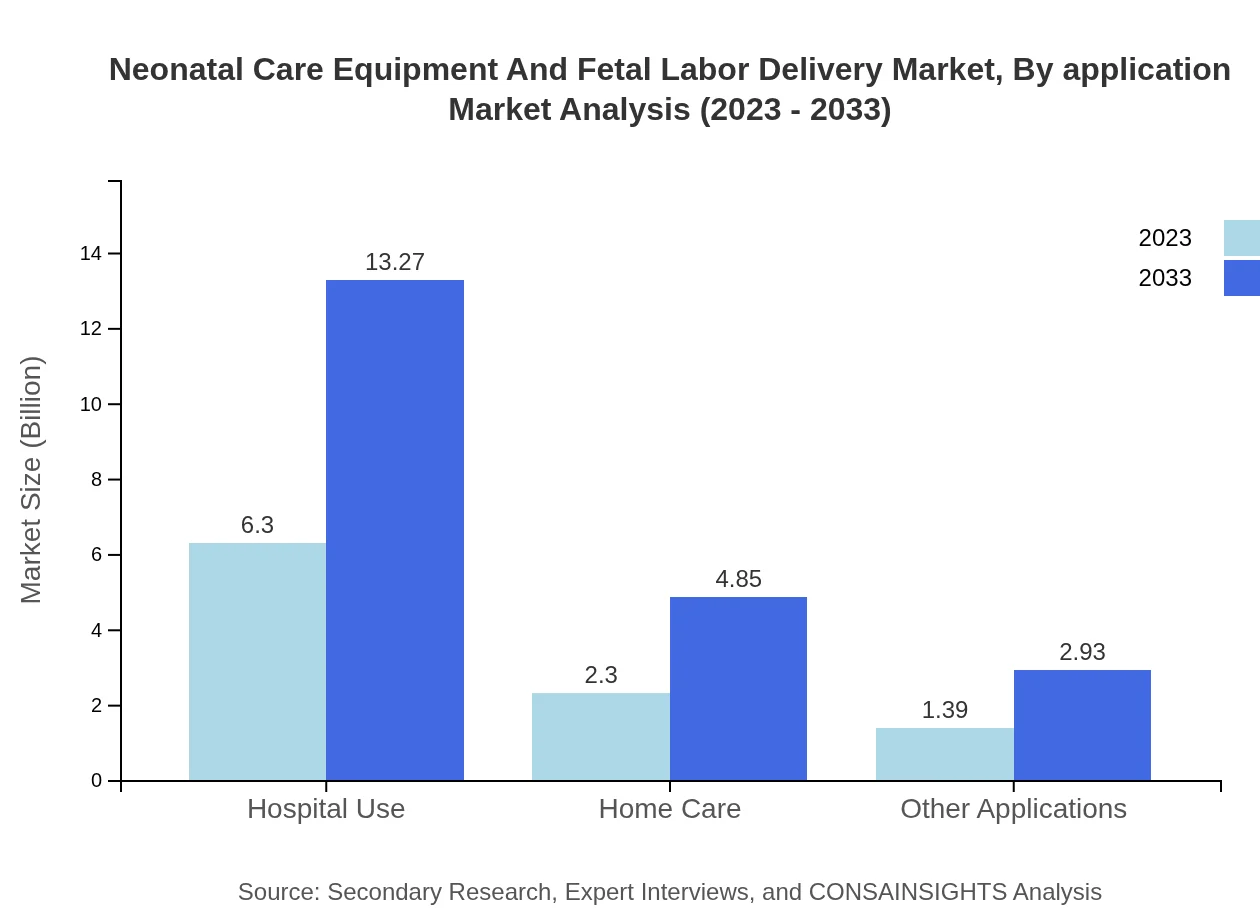
The market by application reveals that hospitals account for the largest share, with a size of $6.30 billion in 2023 and expected to grow to $13.27 billion by 2033, sustaining a 63.04% market share. Specialty clinics and home healthcare settings also represent vital segments, with sizes of $2.30 billion and $1.39 billion, respectively.
Neonatal Care Equipment And Fetal Labor Delivery Market Analysis By Technology
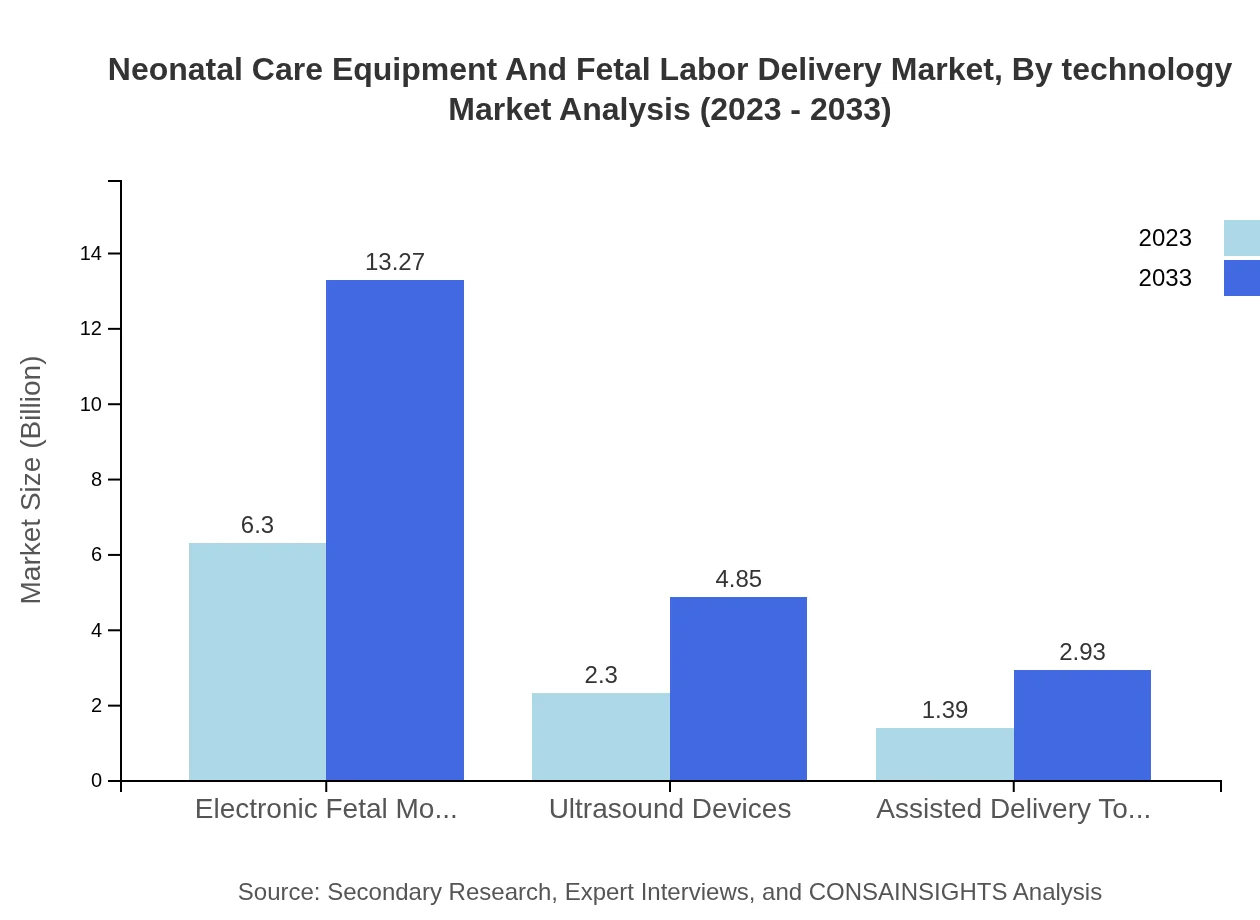
Within technology, electronic fetal monitoring leads with a market size of $6.30 billion in 2023, projected to see growth to $13.27 billion by 2033, capturing 63.04% of the market. Ultrasound devices also make significant contributions, valued at $2.30 billion in 2023.
Neonatal Care Equipment And Fetal Labor Delivery Market Analysis By End User
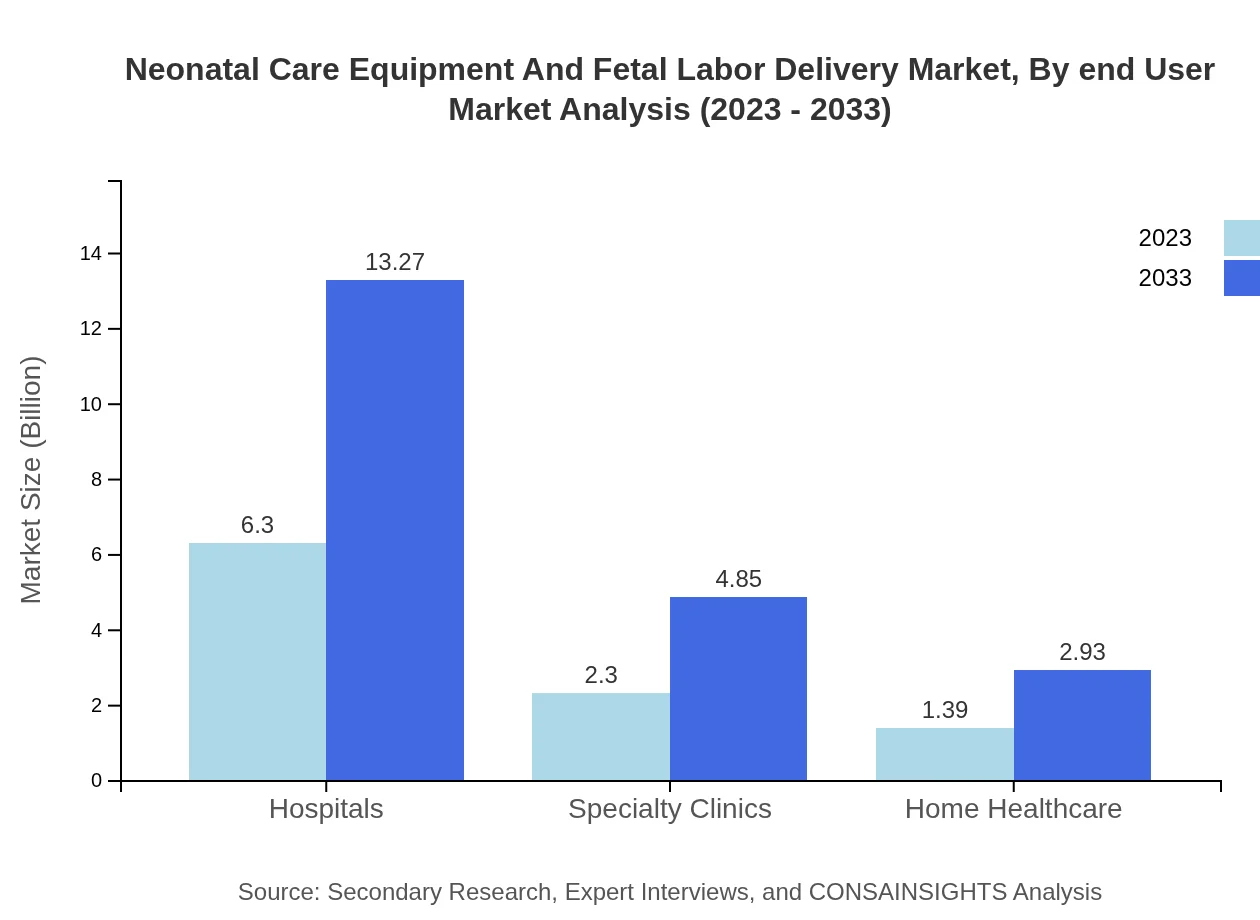
In the end-user sector, hospitals dominate the Neonatal Care Equipment market, mirroring trends in application analysis, while specialty clinics and home care settings show increasing use of neonatal technologies to provide advanced care.
Neonatal Care Equipment And Fetal Labor Delivery Market Analysis By Distribution Channel
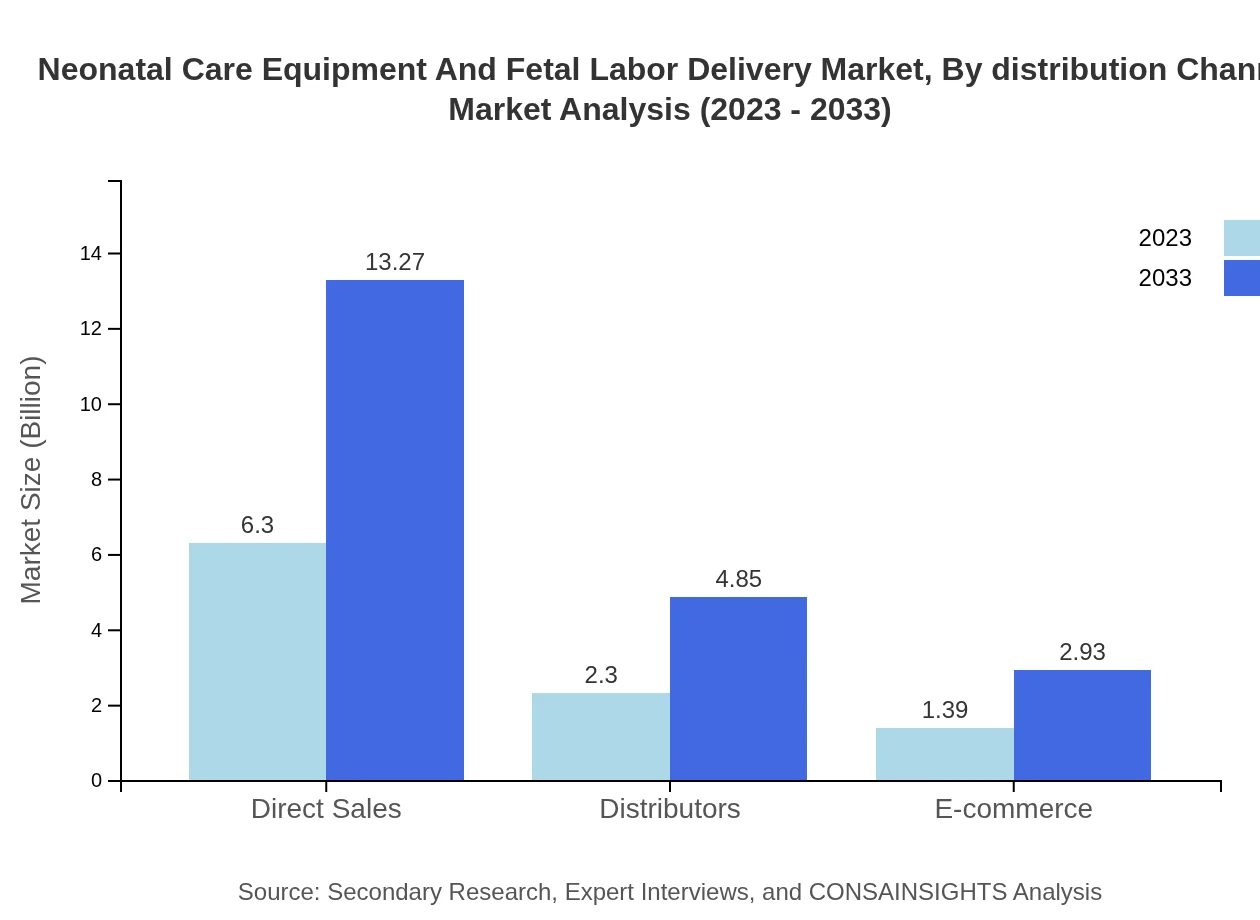
Direct sales contribute significantly to the market, valued at $6.30 billion in 2023 and expected to rise to $13.27 billion by 2033. Distributors and e-commerce platforms are also important, with emerging trends indicating a shift towards online sales channels in the future.
Neonatal Care Equipment And Fetal Labor Delivery Market Trends and Future Forecast
Tell us your focus area and get a customized research report.
Global Market Leaders and Top Companies in Neonatal Care Equipment And Fetal Labor Delivery Industry
GE Healthcare:
A leading global medical technology and life sciences company, GE Healthcare offers innovative neonatal care solutions including advanced monitoring and imaging technologies.Philips Healthcare:
Philips specializes in health technology, providing a range of neonatal equipment that enhances patient care through superior monitoring and diagnostic tools.Medtronic :
Medtronic develops medical technologies focusing on neonatal and maternal health, delivering vital equipment that supports critical care requirements.Natus Medical:
Natus Medical is dedicated to providing innovative systems to support the neonatal care process, specializing in screening and monitoring equipment.Fischer & Paykel Healthcare:
This company is known for its advanced respiratory care solutions tailored for neonatal applications, enhancing treatment for premature and critically ill infants.We're grateful to work with incredible clients.









FAQs
What is the market size in 2023?
The market size in 2023 is $10.00 Billion, based on the provided market valuation for neonatal care equipment and fetal labor delivery.
How big will the market be in 2033?
By 2033 the market is projected to reach $21.05 Billion according to the forecasted end-period value supplied in the report data.
What is CAGR for the forecast period?
The compound annual growth rate for 2023 to 2033 is 7.5% as stated in the report's forecast summary.
Is there a single fastest Growing region in the Neonatal Care Equipment And Fetal Labor Delivery Market Report market?
No single fastest-growing region is stated for the Neonatal Care Equipment And Fetal Labor Delivery Market Report market because the top regional implied CAGR values are within 0.15 percentage points of each other, making the ranking too close to call reliably.
Which companies are listed as top vendors?
Top companies named include GE Healthcare, Philips Healthcare, Medtronic, Natus Medical, and Fischer & Paykel Healthcare as leading participants.
What are common distribution channels?
Distribution is noted to include direct sales, distributors, and e-commerce, enabling manufacturers to reach hospitals, clinics, and home-care providers.
Who are the primary end users?
Primary end users include hospitals, specialty clinics, and home healthcare providers, reflecting where neonatal and fetal delivery equipment is deployed.
What product categories are included?
Product groupings include incubators, respiratory support equipment, monitoring devices, and fetal monitoring technologies as listed in the segmentation.
How is technology influencing the market?
Advances such as improved monitoring systems and enhanced respiratory support are cited as key enablers that boost clinical capabilities and device adoption.
Why is methodology important in this report?
The methodology combines expert interviews and secondary sources with data triangulation and internal validation to ensure robust, reliable market insights.