

Non Hodgkin Lymphoma Therapeutics Market Report
First published: 21 October 2024 | Last updated: 25 May 2026 | Report Code: non-hodgkin-lymphoma-therapeutics
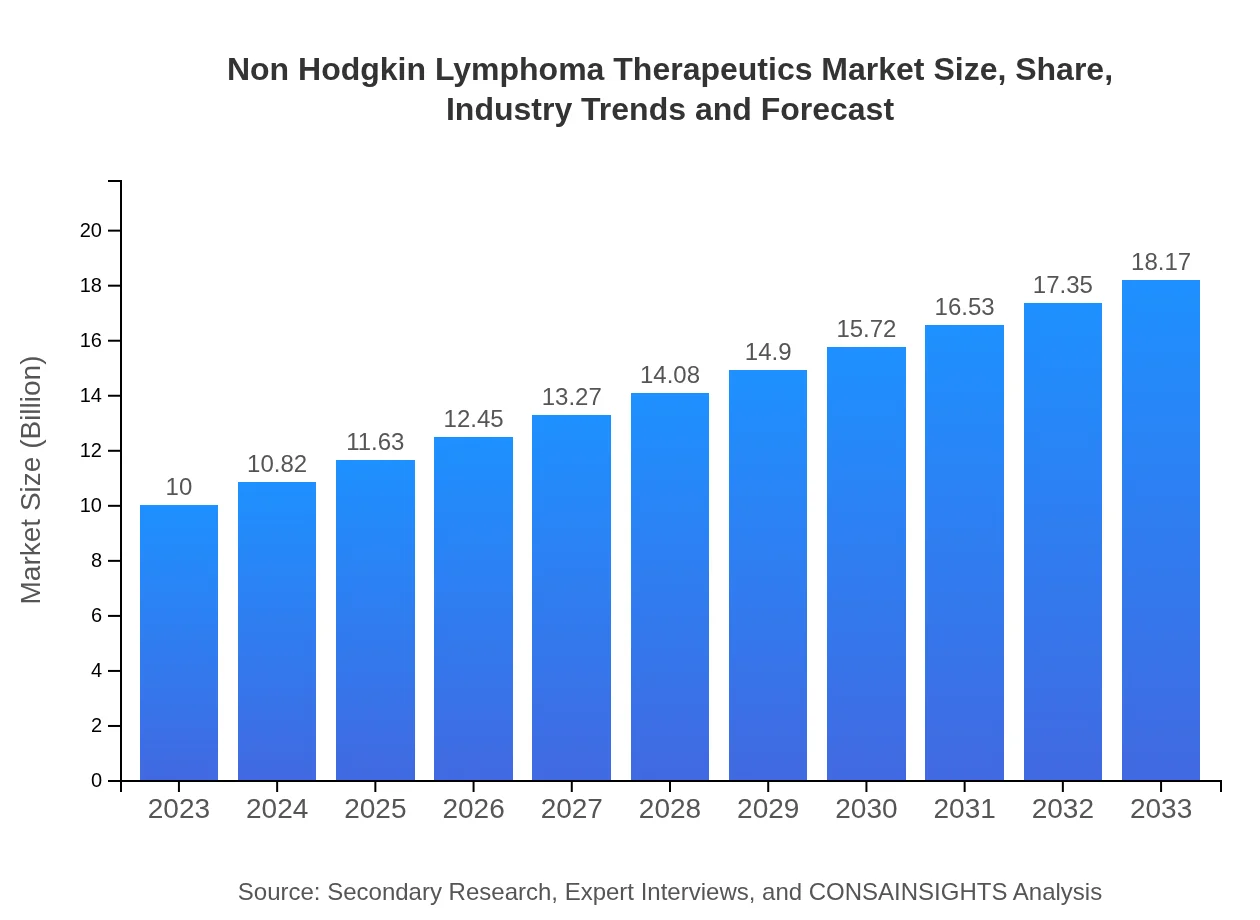
Non Hodgkin Lymphoma Therapeutics Market — USD 10 billion in 2023, Growing to USD 18.17B by 2033 at 6% CAGR
This report provides an in-depth analysis of the Non Hodgkin Lymphoma Therapeutics market from 2023 to 2033, highlighting market trends, size, growth prospects, regional dynamics, and competitive landscape in the industry.
Key Takeaways
- Global market expands from $10.00 Billion in 2023 to $18.17 Billion by 2033, reflecting a 6% CAGR over the forecast period.
- North America is largest regional market, while no single fastest-growing region is stated because regional CAGR differences remain within 0.15 percentage points.
- Strong innovation in targeted therapies and immunotherapies is a primary trend supporting sustained demand.
- Leading industry participants include Roche, AbbVie, Bristol Myers Squibb and Novartis, active across therapy segments.
- Regional growth across Europe, Asia Pacific, Latin America and Middle East & Africa contributes to overall market expansion.
Non Hodgkin Lymphoma Therapeutics Market Report — Executive Summary
North America remains largest market by forecast-period value, while no single fastest-growing region is stated because top regional growth rates are separated by less than 0.15 percentage points. The Non Hodgkin Lymphoma therapeutics landscape is projected to grow substantially from $10.00 Billion in 2023 to $18.17 Billion in 2033 at a 6% CAGR. Growth is propelled by therapeutic innovation, including targeted treatments and immunotherapies, alongside rising clinical adoption and expanding pipelines. Market structure includes segments by patient type, therapy type, treatment stage and route of administration. Regional flows show a dominant North American market with meaningful increases across Europe, Asia Pacific, Latin America and the Middle East & Africa. Key firms such as Roche, AbbVie, Bristol Myers Squibb and Novartis maintain active roles in product development and commercialization. Primary challenges include treatment affordability and safety considerations, while collaborations and personalized approaches continue to shape future opportunities.
Key Growth Drivers
- Advances in targeted therapies and immunotherapies expanding effective treatment options and clinical uptake.
- Rising adoption of personalized treatment strategies and combination regimens improving patient outcomes.
- Robust R&D activity and collaborations between biotech and pharmaceutical companies accelerating new therapeutic introductions.
- Increasing incidence and diagnosis rates leading to higher demand for established and emerging treatments.
- Broader access to specialty oncology care and supportive reimbursement frameworks in key markets.
| Metric | Value |
|---|---|
| Study Period | 2023 - 2033 |
| 2023 Market Size | $10.00 Billion |
| CAGR (2023-2033) | 6% |
| 2033 Market Size | $18.17 Billion |
| Top Companies | Roche, AbbVie, Bristol Myers Squibb, Novartis |
| Published Date | 21 October 2024 |
| Last Modified Date | 25 May 2026 |
Non Hodgkin Lymphoma Therapeutics Market Overview
Customize Non Hodgkin Lymphoma Therapeutics Market Report market research report
- ✔ Get in-depth analysis of Non Hodgkin Lymphoma Therapeutics market size, growth, and forecasts.
- ✔ Understand Non Hodgkin Lymphoma Therapeutics's regional dynamics and industry-specific trends.
- ✔ Identify potential applications, end-user demand, and growth segments in Non Hodgkin Lymphoma Therapeutics
What is the Market Size & CAGR of Non Hodgkin Lymphoma Therapeutics Market Report market in 2023?
Non Hodgkin Lymphoma Therapeutics Industry Analysis
Non Hodgkin Lymphoma Therapeutics Market Segmentation and Scope
Tell us your focus area and get a customized research report.
Non Hodgkin Lymphoma Therapeutics Market Report Market Analysis Report by Region
Europe Non Hodgkin Lymphoma Therapeutics Market Report:
Europe grows from $3.01 Billion in 2023 to $5.47 Billion in 2033. Growth in this region is supported by increasing availability of targeted and immunotherapy options, ongoing clinical trials, and supportive commercial pathways for oncology treatments.Asia Pacific Non Hodgkin Lymphoma Therapeutics Market Report:
Asia Pacific grows from $1.83 Billion in 2023 to $3.33 Billion in 2033. Drivers include rising diagnosis rates, expanding oncology care infrastructure, and growing investment in localized clinical development and market entry strategies.North America Non Hodgkin Lymphoma Therapeutics Market Report:
North America is largest regional market, rising from $3.73 Billion in 2023 to $6.77 Billion in 2033. Regional momentum is tied to high levels of clinical research, access to advanced therapies, and active participation from major industry players.South America Non Hodgkin Lymphoma Therapeutics Market Report:
Latin America grows from $0.62 Billion in 2023 to $1.12 Billion in 2033. Market expansion reflects improving access to specialized oncology care, gradual uptake of newer therapies, and growing healthcare investments.Middle East & Africa Non Hodgkin Lymphoma Therapeutics Market Report:
Middle East and Africa grows from $0.81 Billion in 2023 to $1.48 Billion in 2033. Growth factors include strengthening regional healthcare services, incremental adoption of advanced therapeutics, and collaborations that support treatment availability.Tell us your focus area and get a customized research report.
Research Methodology
Non Hodgkin Lymphoma Therapeutics Market Analysis By Patient Type
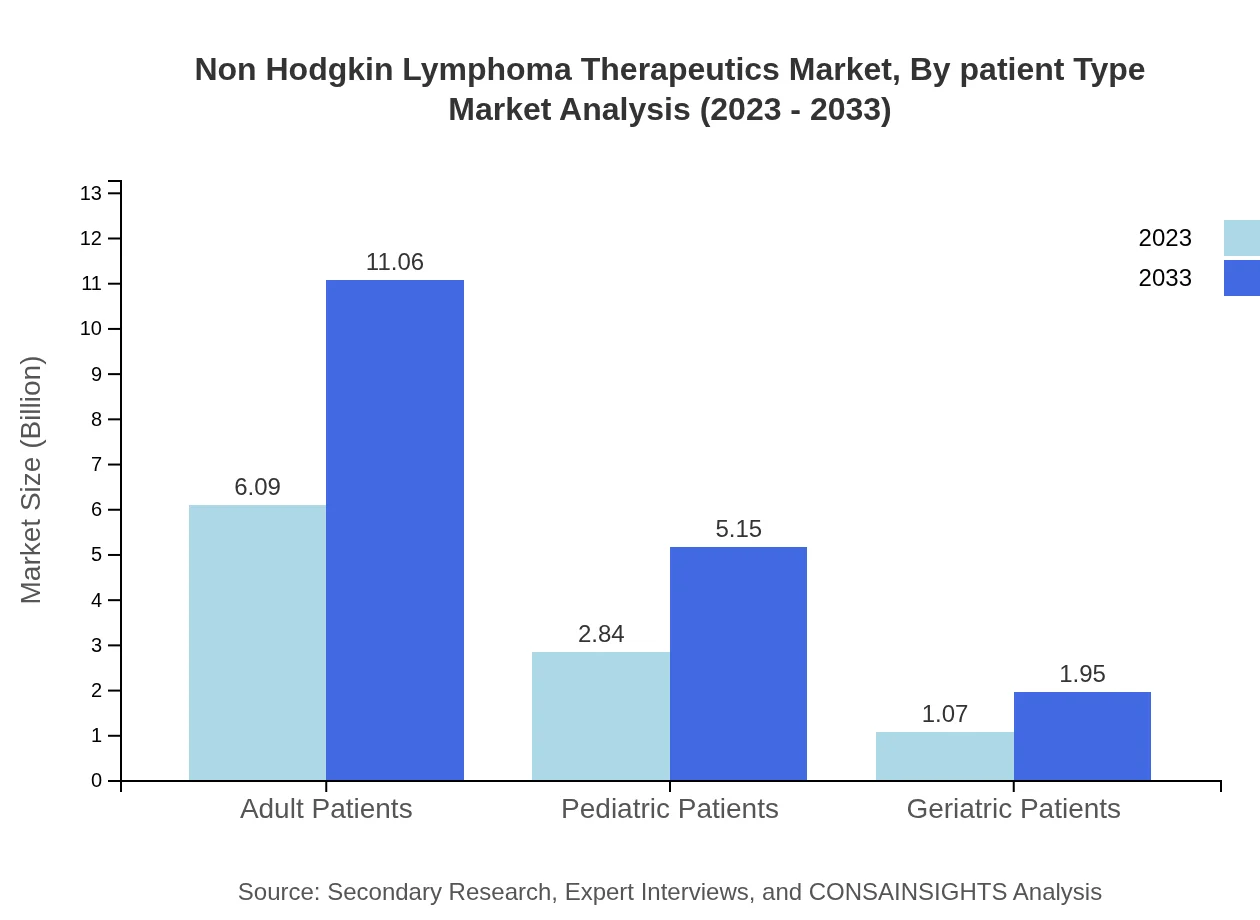
The market for Non Hodgkin Lymphoma therapeutics is categorized by patient type: Adult patients, Pediatric patients, and Geriatric patients. In 2023, the adult patient segment holds a market size of $6.09 billion (60.9% market share) while the pediatric segment is valued at $2.84 billion (28.35% market share), and the geriatric segment at $1.07 billion (10.75% market share). By 2033, these figures are expected to rise to $11.06 billion (60.9%), $5.15 billion (28.35%), and $1.95 billion (10.75%) respectively, indicating a growing focus on treatments for all age groups.
Non Hodgkin Lymphoma Therapeutics Market Analysis By Therapy Type
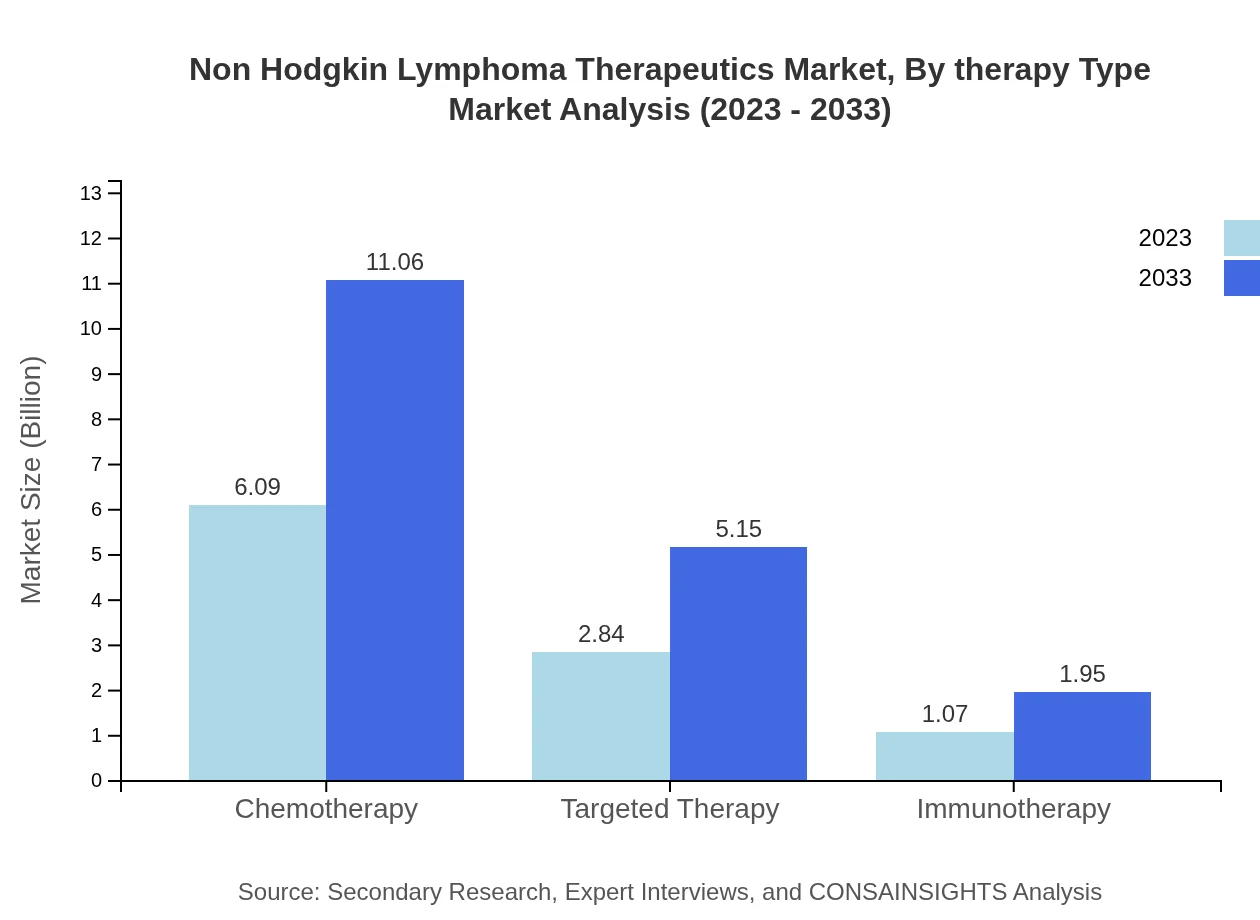
In the treatment of Non Hodgkin Lymphoma, chemotherapy remains the dominant therapy type, accounting for a market size of $6.09 billion (60.9% share) in 2023, with expected growth to $11.06 billion by 2033. Targeted therapy and immunotherapy also play crucial roles, with current market sizes of $2.84 billion (28.35%) and $1.07 billion (10.75%) respectively, expected to rise to $5.15 billion and $1.95 billion by 2033.
Non Hodgkin Lymphoma Therapeutics Market Analysis By Treatment Stage
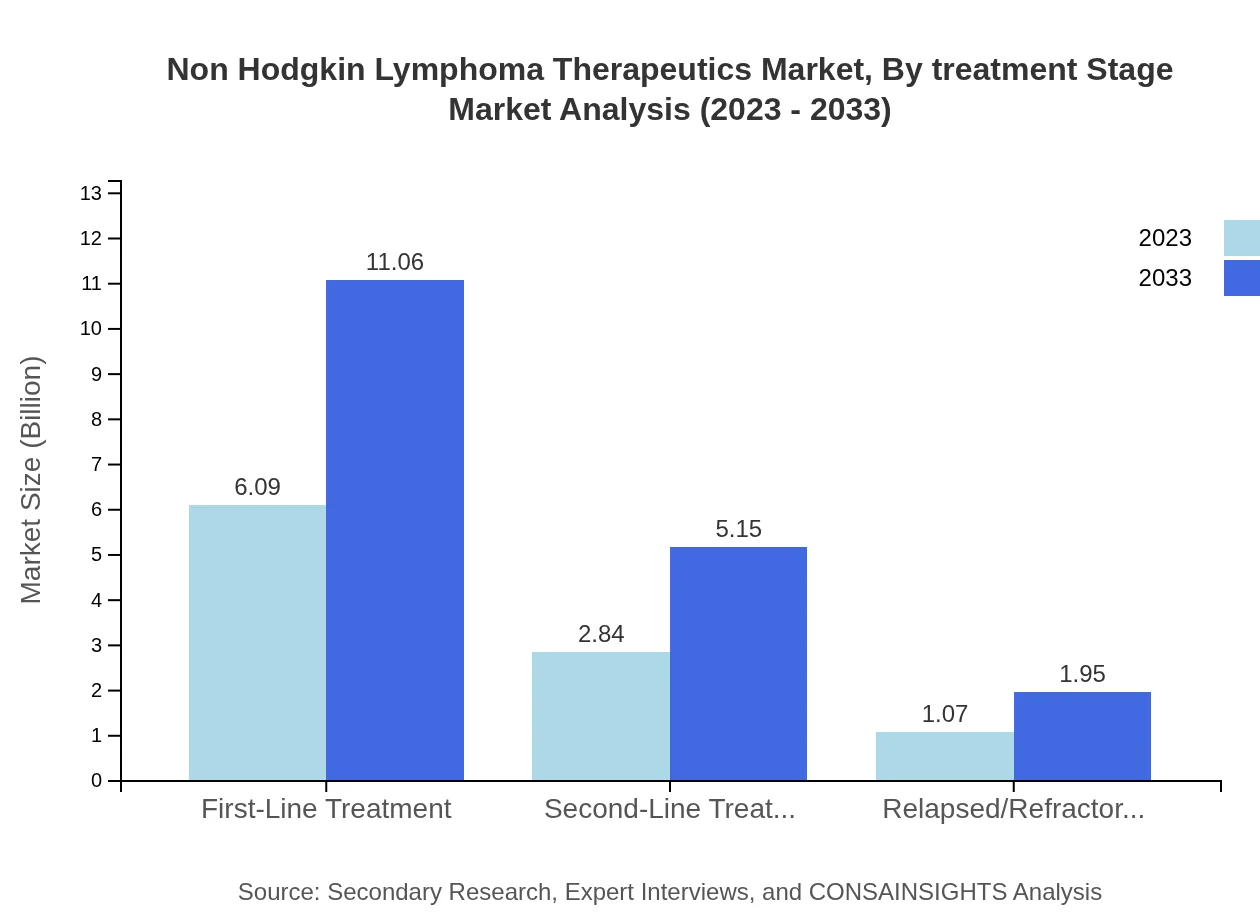
The market is also segmented by treatment stages, including First-Line, Second-Line, and Relapsed/Refractory treatments. First-Line Treatment accounts for $6.09 billion (60.9% share) in 2023, projected to grow to $11.06 billion by 2033. Second-Line Treatment follows with $2.84 billion (28.35%) and is expected to reach $5.15 billion, while Relapsed/Refractory Treatment, valued at $1.07 billion (10.75%), is expected to grow to $1.95 billion by 2033.
Non Hodgkin Lymphoma Therapeutics Market Analysis By Route Of Administration
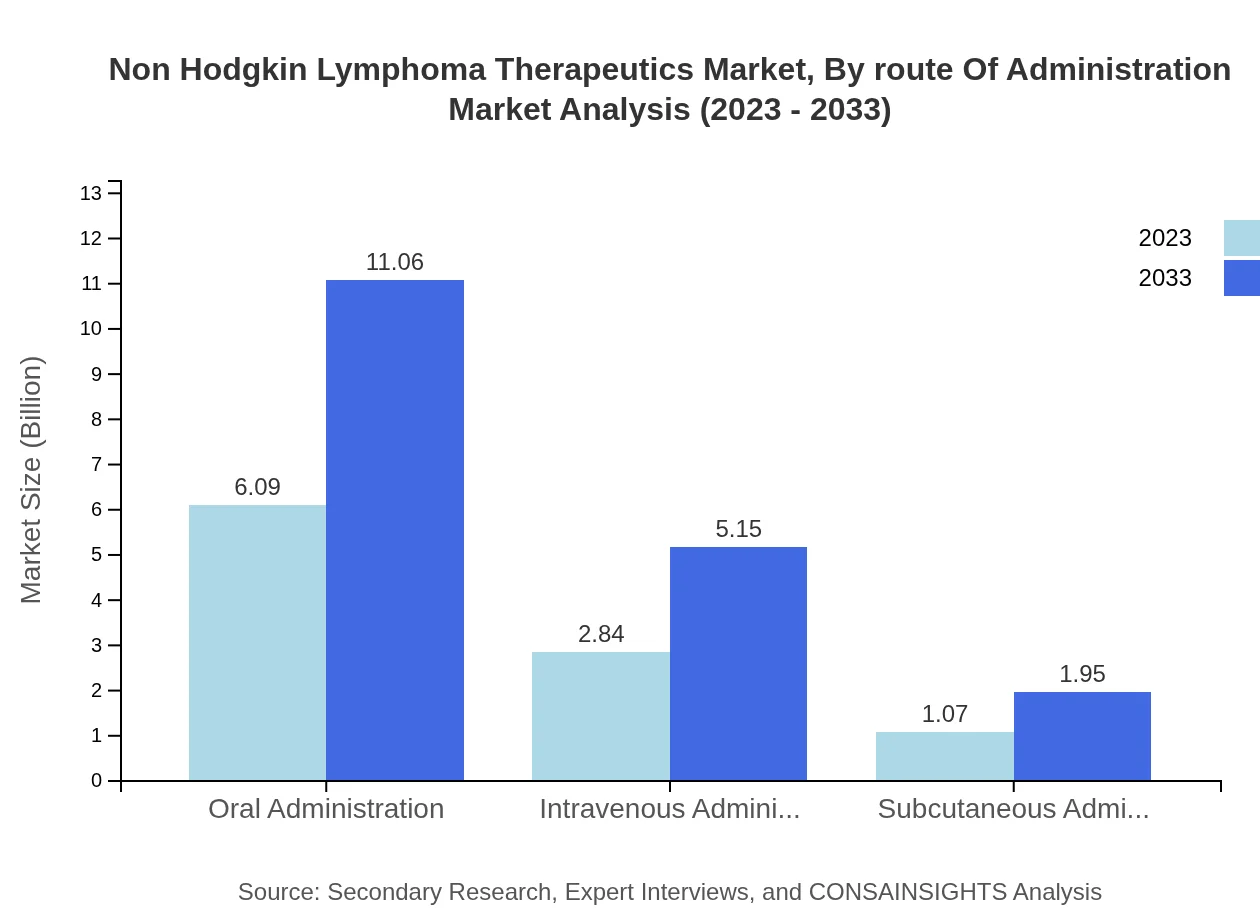
Routes of administration for NHL therapeutics include Oral, Intravenous, and Subcutaneous administration. Oral administration leads the segment with a market size of $6.09 billion (60.9%) in 2023, projected to grow to $11.06 billion. Intravenous and Subcutaneous methods currently command market sizes of $2.84 billion (28.35%) and $1.07 billion (10.75%), respectively, with forecasts predicting growth to $5.15 billion and $1.95 billion by 2033.
Non Hodgkin Lymphoma Therapeutics Market Trends and Future Forecast
Tell us your focus area and get a customized research report.
Global Market Leaders and Top Companies in Non Hodgkin Lymphoma Therapeutics Industry
Roche:
Roche is a pioneer in developing innovative pharmaceuticals, particularly focusing on targeted therapies for cancer treatment, including non-Hodgkin lymphoma.AbbVie:
AbbVie specializes in biopharmaceuticals and is a leader in immunotherapy for various conditions, including effective treatments for NHL.Bristol Myers Squibb:
With a strong focus on oncology, Bristol Myers Squibb develops therapies that address the unmet needs of non-Hodgkin lymphoma patients, showcasing their commitment to cancer care.Novartis:
Novartis is key in the biotech industry, particularly known for introducing new therapies that have reshaped the treatment paradigm for non-Hodgkin lymphoma.We're grateful to work with incredible clients.







FAQs
What is the current market size of Non Hodgkin Lymphoma therapeutics?
The market size for Non Hodgkin Lymphoma therapeutics in 2023 is $10.00 Billion, as reported in the input data for the forecast analysis covering 2023 to 2033.
How big will the market be in 2033?
By 2033 the Non Hodgkin Lymphoma therapeutics market is projected to reach $18.17 Billion, based on the provided forecast figures spanning 2023 to 2033.
What is CAGR for the forecast period?
The reported compound annual growth rate (CAGR) for the market over 2023 to 2033 is 6%, according to the supplied market projections.
Is there a single fastest Growing region in the Non Hodgkin Lymphoma Therapeutics Market Report market?
No single fastest-growing region is stated for the Non Hodgkin Lymphoma Therapeutics Market Report market because the top regional implied CAGR values are within 0.15 percentage points of each other, making the ranking too close to call reliably.
Which companies are named as leading players?
Top companies listed in the report include Roche, AbbVie, Bristol Myers Squibb and Novartis, each active across multiple therapeutic segments and development programs.
Who conducted the research for this market report?
Research combined primary interviews with industry experts and secondary review of company reports and publications, with data triangulation and internal validation steps.
What are the primary trends influencing the market?
Primary trends include increased use of targeted therapies and immunotherapies, personalized medicine approaches, and collaborative R&D activity between biotech and pharma firms.
How are treatment segments categorized in the report?
The market is segmented by patient type, therapy type, treatment stage and route of administration, covering chemotherapy, targeted therapy and immunotherapy among others.