

Novel Drug Delivery Systems Ndds Market Report
First published: 08 October 2024 | Last updated: 25 May 2026 | Report Code: novel-drug-delivery-systems-ndds
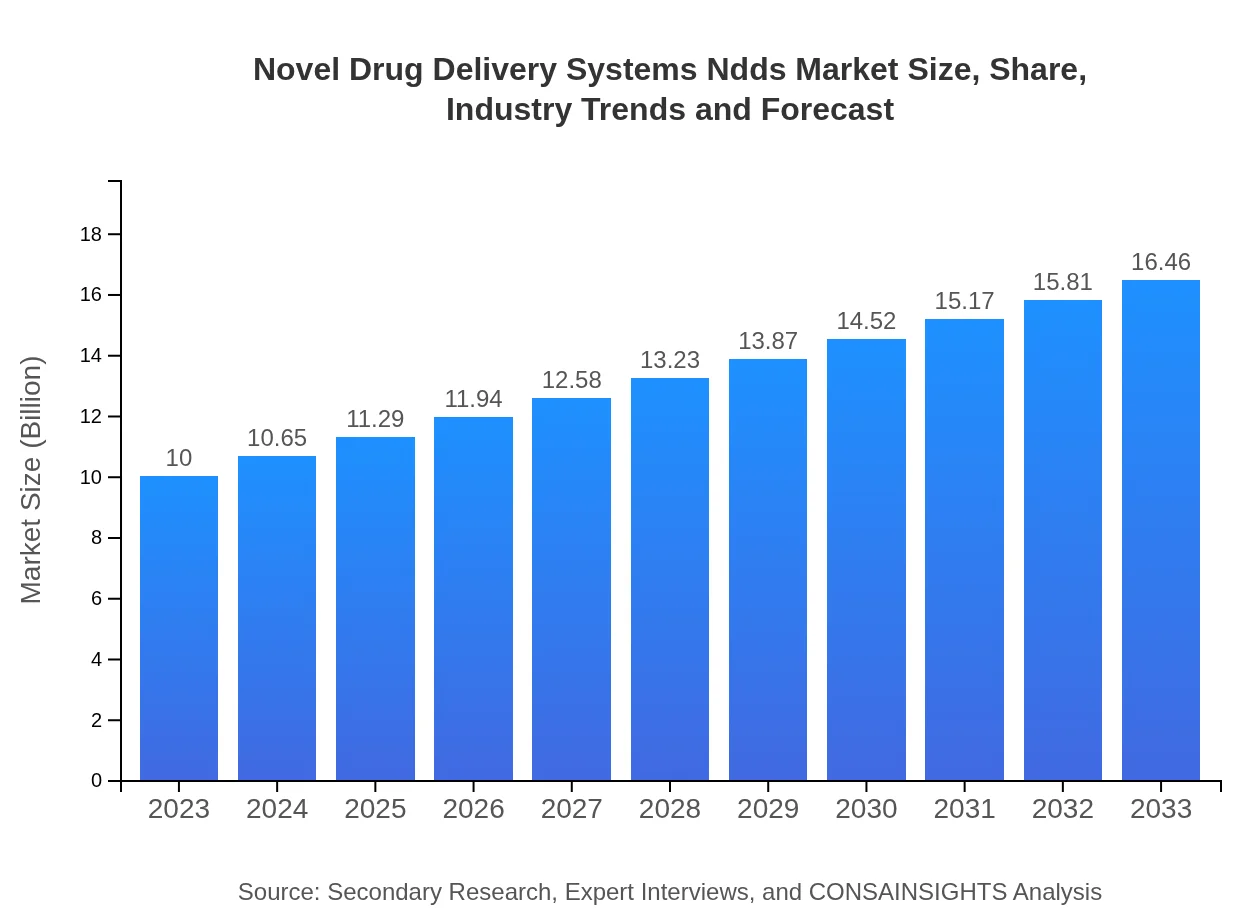
Novel Drug Delivery Systems Ndds Market — USD 10 billion in 2023, Growing to USD 16.46B by 2033 at 5% CAGR
This report offers a comprehensive analysis of the Novel Drug Delivery Systems (NDDS) market, exploring market trends, size, revenue forecasts, and detailed insights spanning from 2023 to 2033.
Key Takeaways
- Global market expands from $10.00 Billion in 2023 to $16.46 Billion in 2033 at a 5% CAGR.
- North America is largest regional market, while no single fastest-growing region is stated because regional CAGR differences remain within 0.15 percentage points.
- Europe increases from $3.39 Billion to $5.58 Billion between 2023 and 2033, reflecting sustained demand.
- Technological advances—liposomes, nanoparticles, polymeric systems—drive product innovation and commercial partnerships.
- Top industry players include Johnson & Johnson, Bristol-Myers Squibb, Roche, and SANDOZ, shaping competitive dynamics.
Novel Drug Delivery Systems Ndds Market Report — Executive Summary
North America remains largest market by forecast-period value, while no single fastest-growing region is stated because top regional growth rates are separated by less than 0.15 percentage points. The Novel Drug Delivery Systems Ndds Market Report examines a market growing from $10.00 Billion in 2023 to $16.46 Billion in 2033 at a 5% CAGR. Growth is supported by rising chronic disease prevalence, an aging population, and increased investment in biologics and precision therapies. Technological advances such as liposomes, nanoparticles, and polymeric delivery systems are central to product development, while collaborations between pharmaceutical firms and technology partners accelerate smart delivery solutions. The report covers market structure across technologies, drug types, formulations, applications, end users, and regional performance, and profiles leading companies including Johnson & Johnson, Bristol-Myers Squibb, Roche, and SANDOZ.
Key Growth Drivers
- Increasing chronic disease burden and aging demographics expand long-term demand for advanced delivery options.
- Rising emphasis on biologics and precision medicine heightens need for specialized delivery platforms.
- Advances in nanoparticles, liposomes, and polymeric systems improve therapeutic performance and patient adherence.
- Greater collaboration between pharma and tech firms fosters development of smart and targeted delivery solutions.
- Sustained R&D investment and commercialization efforts by major industry players accelerate market rollout.
| Metric | Value |
|---|---|
| Study Period | 2023 - 2033 |
| 2023 Market Size | $10.00 Billion |
| CAGR (2023-2033) | 5% |
| 2033 Market Size | $16.46 Billion |
| Top Companies | Johnson & Johnson, Bristol-Myers Squibb, Roche, SANDOZ |
| Published Date | 08 October 2024 |
| Last Modified Date | 25 May 2026 |
Novel Drug Delivery Systems Ndds Market Overview
Customize Novel Drug Delivery Systems Ndds Market Report market research report
- ✔ Get in-depth analysis of Novel Drug Delivery Systems Ndds market size, growth, and forecasts.
- ✔ Understand Novel Drug Delivery Systems Ndds's regional dynamics and industry-specific trends.
- ✔ Identify potential applications, end-user demand, and growth segments in Novel Drug Delivery Systems Ndds
What is the Market Size & CAGR of Novel Drug Delivery Systems Ndds Market Report market in 2023?
Novel Drug Delivery Systems Ndds Industry Analysis
Novel Drug Delivery Systems Ndds Market Segmentation and Scope
Tell us your focus area and get a customized research report.
Novel Drug Delivery Systems Ndds Market Report Market Analysis Report by Region
Europe Novel Drug Delivery Systems Ndds Market Report:
Europe grows from $3.39 Billion in 2023 to $5.58 Billion in 2033. Growth is supported by robust biotech research, regulatory focus on innovative therapies, and increasing adoption of advanced delivery methods across clinical and commercial settings.Asia Pacific Novel Drug Delivery Systems Ndds Market Report:
Asia Pacific grows from $1.71 Billion in 2023 to $2.82 Billion in 2033. Regional demand is driven by growing healthcare access, rising chronic disease incidence, and expanding research collaborations focused on biologics and new delivery technologies.North America Novel Drug Delivery Systems Ndds Market Report:
North America is largest regional market, rising from $3.46 Billion in 2023 to $5.69 Billion in 2033. The region’s scale reflects concentrated R&D activity, substantial pharmaceutical investment, and clinical adoption of advanced delivery platforms.South America Novel Drug Delivery Systems Ndds Market Report:
Latin America grows from $0.94 Billion in 2023 to $1.54 Billion in 2033. Market progress is influenced by expanding healthcare infrastructure, growing awareness of advanced therapies, and partnerships that support technology transfer and clinical adoption.Middle East & Africa Novel Drug Delivery Systems Ndds Market Report:
Middle East and Africa grows from $0.5 Billion in 2023 to $0.83 Billion in 2033. Expansion is shaped by improving healthcare investment, targeted public health initiatives, and gradual introduction of advanced therapeutic delivery approaches.Tell us your focus area and get a customized research report.
Research Methodology
Novel Drug Delivery Systems Ndds Market Analysis By Drug Type
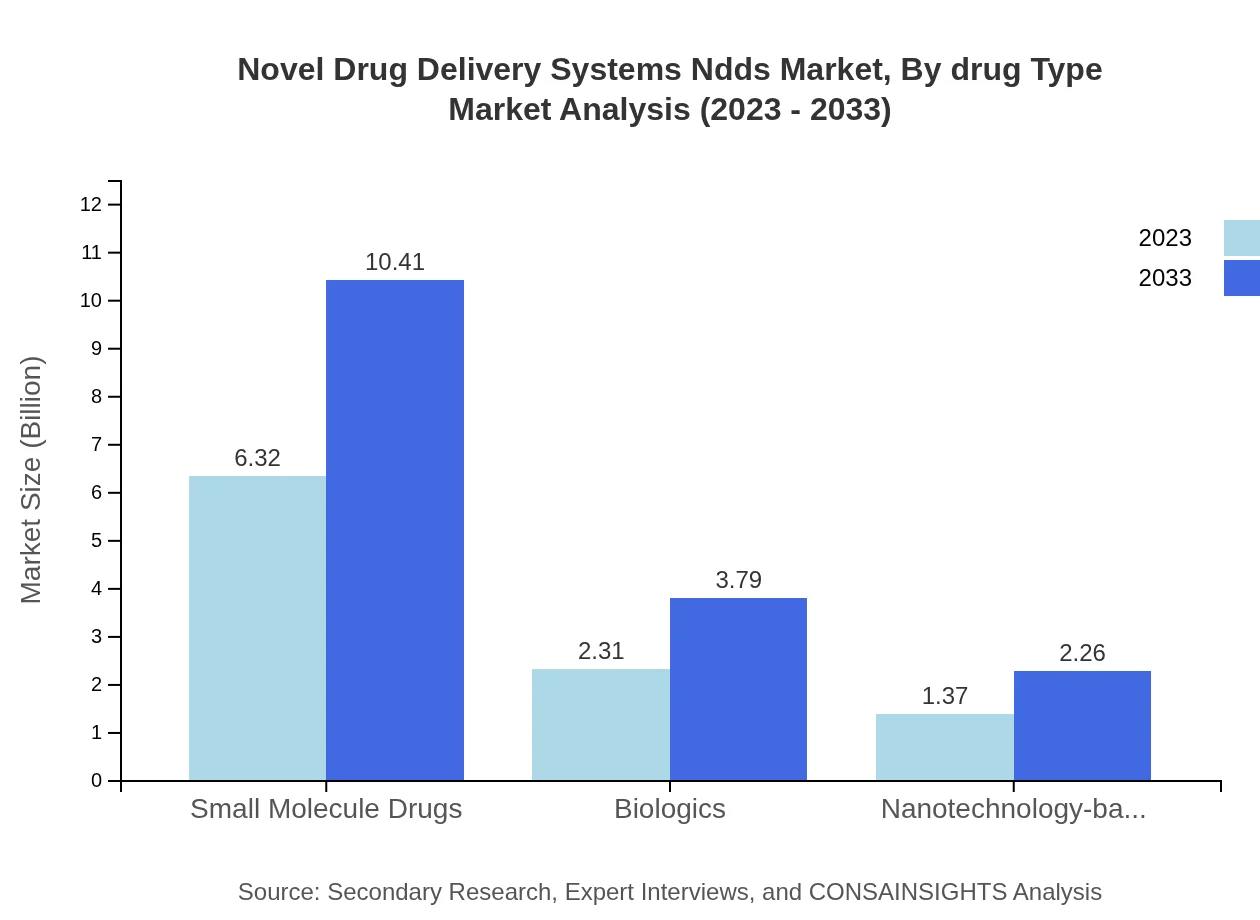
The market features various drug types, predominantly small molecule drugs, which account for a significant share at 63.23% in 2023, growing from $6.32 billion to $10.41 billion by 2033. Biologics represent 23.05% in market share as they grow from $2.31 billion to $3.79 billion. The emerging nanotechnology-based systems account for 13.72% of the market share, indicative of a broader trend toward sophisticated drug formulations.
Novel Drug Delivery Systems Ndds Market Analysis By Technology
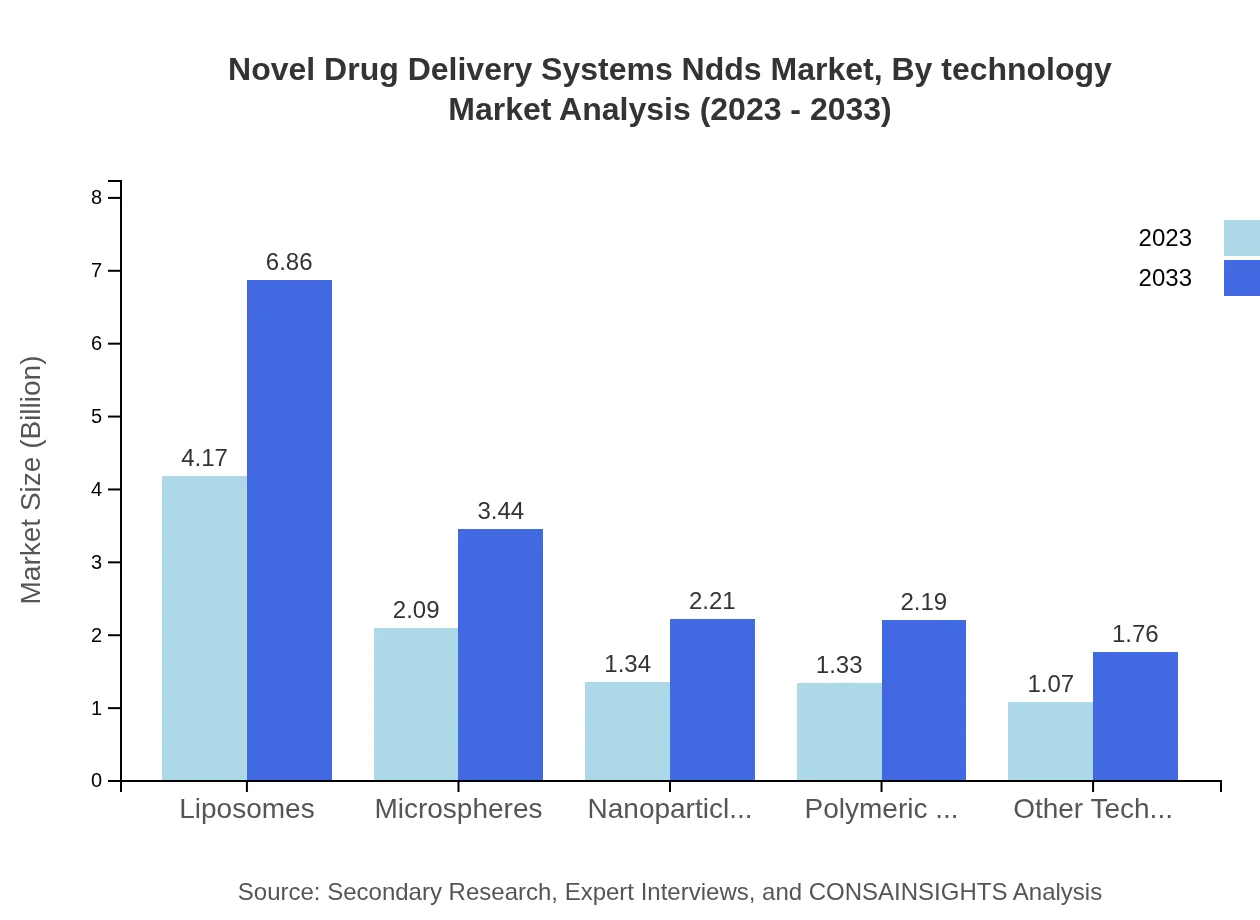
Various technologies dominate the NDDS market, with liposomes leading the segment with a 41.66% share, forecasted to grow from $4.17 billion in 2023 to $6.86 billion by 2033. Nanoparticles and polymeric drug delivery systems also play crucial roles, valued at $1.34 billion and $1.33 billion respectively in 2023, indicating their growing importance in advanced drug formulation.
Novel Drug Delivery Systems Ndds Market Analysis By Application
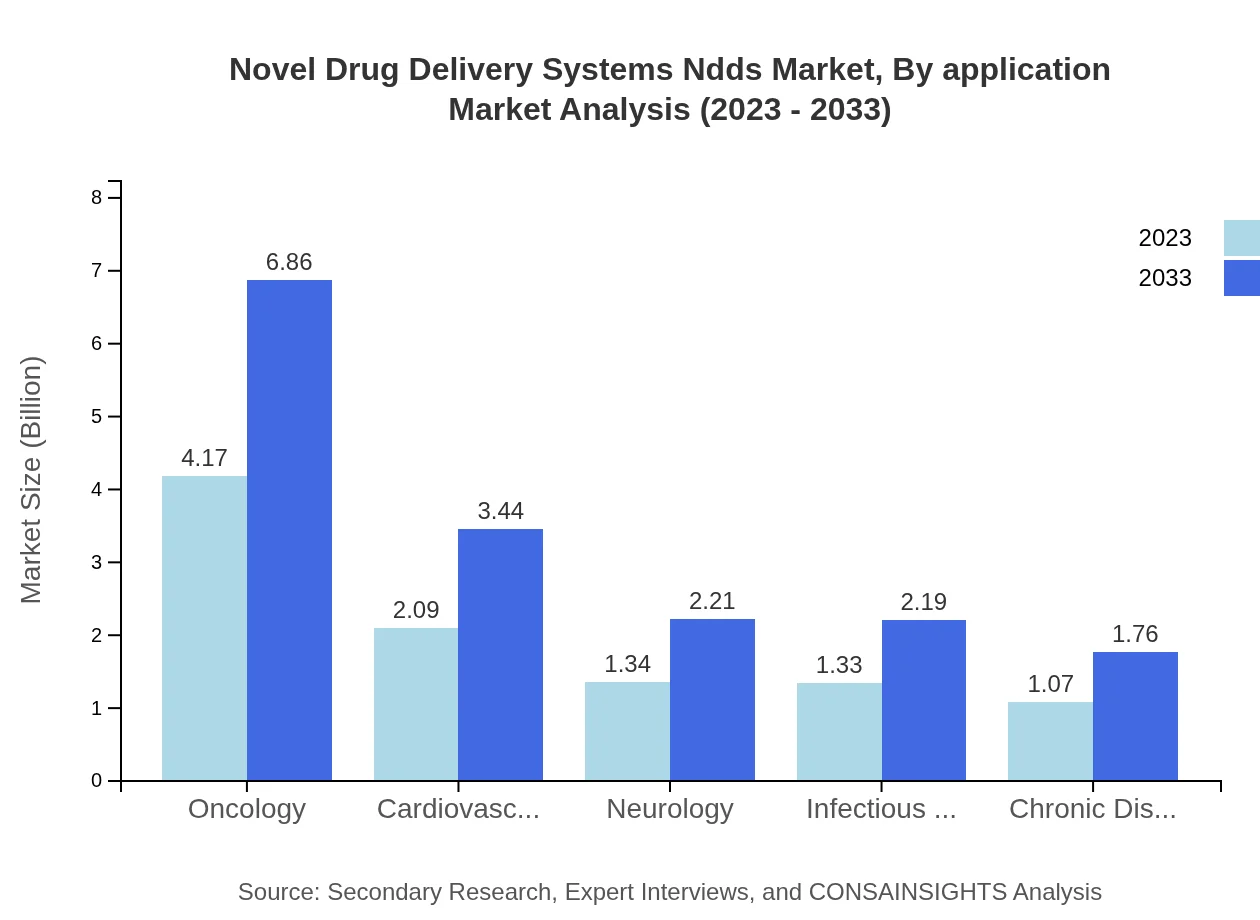
Applications in oncology and cardiovascular treatments dominate the NDDS market. Oncology applications lead with a market size of $4.17 billion in 2023 (41.66% share), while cardiovascular applications account for $2.09 billion (20.9% share). The trend towards personalized medicine is shaping new applications, enhancing the significance of drug delivery systems across various therapeutic areas.
Novel Drug Delivery Systems Ndds Market Analysis By End User
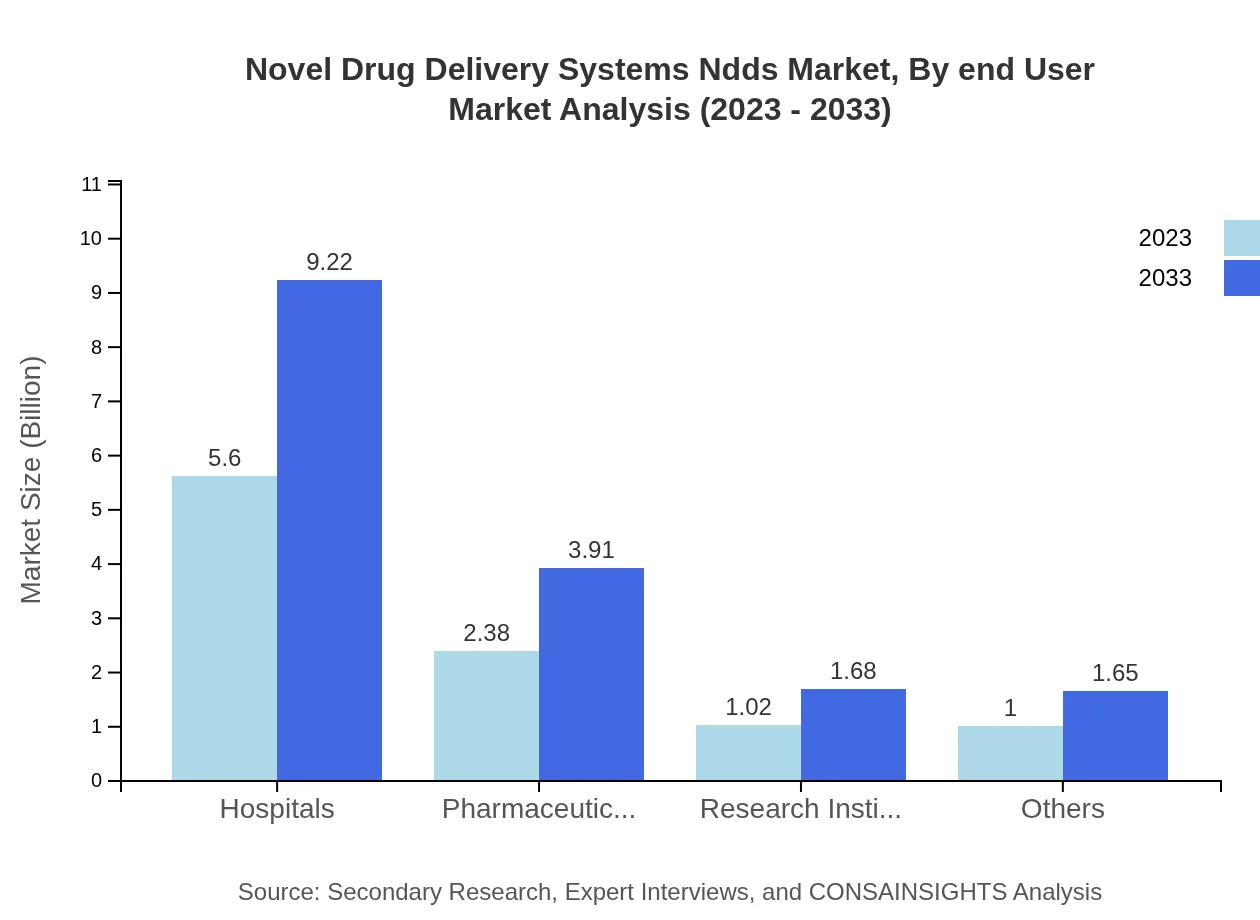
Hospitals represent the largest end-user segment in the NDDS market, accounting for a market value of $5.60 billion (56% share) in 2023, expected to grow to $9.22 billion by 2033. Pharmaceutical companies and research institutions also hold significant portions of the market, emphasizing their roles in the development and application of advanced delivery systems.
Novel Drug Delivery Systems Ndds Market Analysis By Formulation
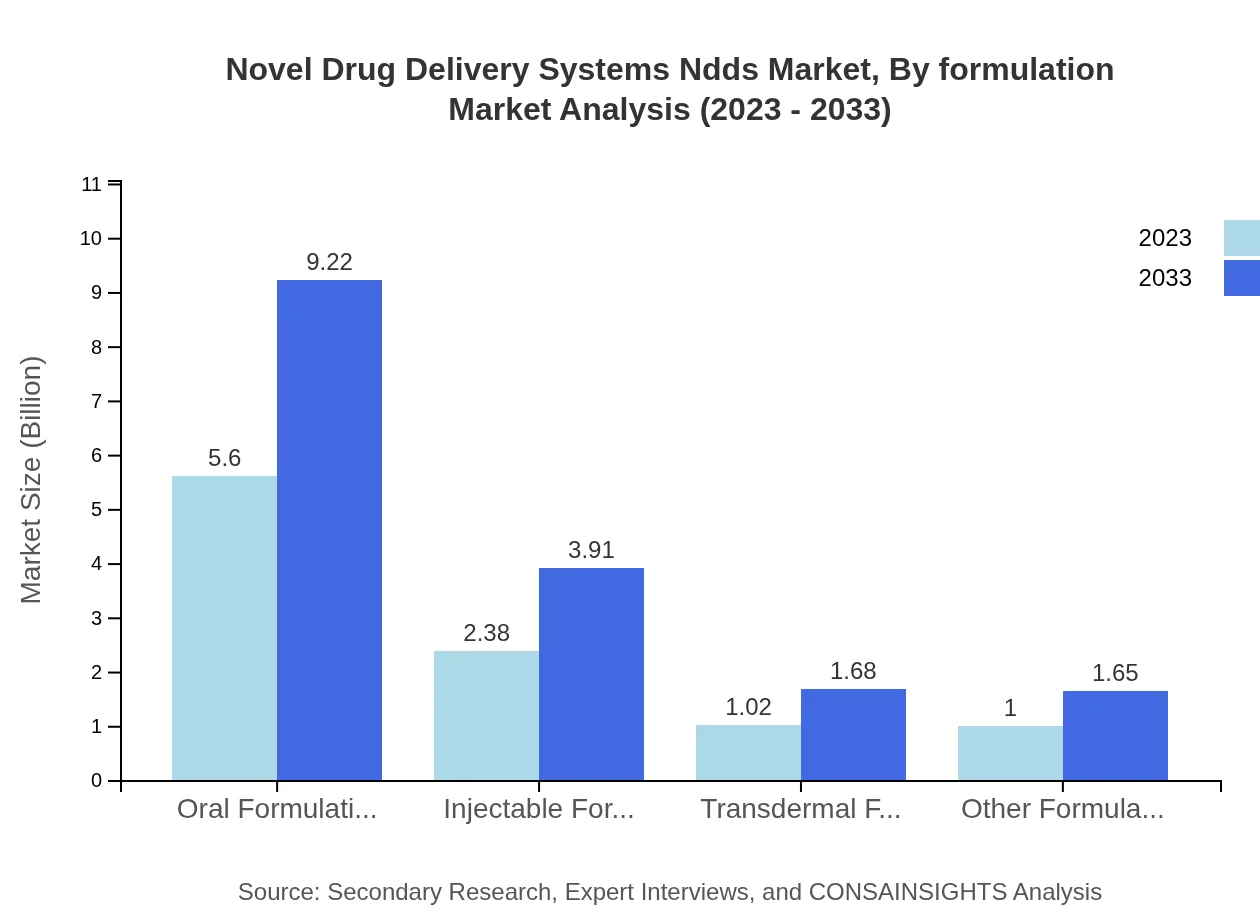
In terms of formulation types, oral formulations are the leading segment with $5.60 billion (56% share) in 2023, growing to $9.22 billion by 2033. Injectable and transdermal formulations follow, with shares of 23.75% and 10.21%, respectively, showcasing diverse methods of administration that cater to different patient needs and therapeutic requirements.
Novel Drug Delivery Systems Ndds Market Trends and Future Forecast
Tell us your focus area and get a customized research report.
Global Market Leaders and Top Companies in Novel Drug Delivery Systems Ndds Industry
Johnson & Johnson:
A leader in pharmaceuticals, Johnson & Johnson invests heavily in NDDS research focused on enhancing drug efficacy and patient compliance through innovative delivery systems.Bristol-Myers Squibb:
Focusing on biologics and combination therapies, Bristol-Myers Squibb is known for its pioneering work in NDDS, emphasizing systems that promote targeted drug delivery.Roche:
Roche excels in developing personalized medicine solutions. Their commitment to NDDS helps facilitate sophisticated drug delivery for oncology treatments.SANDOZ:
A division of Novartis, SANDOZ leads in generic pharmaceuticals and has been actively developing NDDS technologies to improve bioavailability and therapeutic efficacy.We're grateful to work with incredible clients.








FAQs
What is the market size of Novel Drug Delivery Systems in 2023?
The market size for Novel Drug Delivery Systems is $10.00 Billion in 2023, based on the provided report figures and used as the 2023 baseline for the 2023 to 2033 forecast.
How big will the market be in 2033?
By 2033 the market is projected to reach $16.46 Billion according to the report, reflecting growth driven by technological innovation and expanding therapeutic applications.
What is CAGR for the forecast period?
The Compound Annual Growth Rate (CAGR) for the 2023 to 2033 forecast period is 5%, as stated in the report summary and used to project market expansion to 2033.
Is there a single fastest Growing region in the Novel Drug Delivery Systems Ndds Market Report market?
No single fastest-growing region is stated for the Novel Drug Delivery Systems Ndds Market Report market because the top regional implied CAGR values are within 0.15 percentage points of each other, making the ranking too close to call reliably.
Which technologies are central to NDDS innovation?
Key technologies highlighted include liposomes, microspheres, nanoparticles, and polymeric drug delivery systems, supporting improved solubility, targeting, and controlled release in therapeutic products.
Who are the top companies in the report?
Top companies listed in the report include Johnson & Johnson, Bristol-Myers Squibb, Roche, and SANDOZ, representing leading pharmaceutical involvement in delivery system development.
What end users are covered in segmentation?
The report’s end-user segmentation includes Hospitals, Pharmaceutical Companies, Research Institutes, and Others, reflecting clinical, commercial, and investigational demand channels.
How does the report approach regional comparisons?
Regional analysis uses explicit start and end values for each area and notes that no single regional growth market is named due to close implied growth rates among top regions.