

Particle Therapy Market Report
First published: 20 October 2024 | Last updated: 25 May 2026 | Report Code: particle-therapy
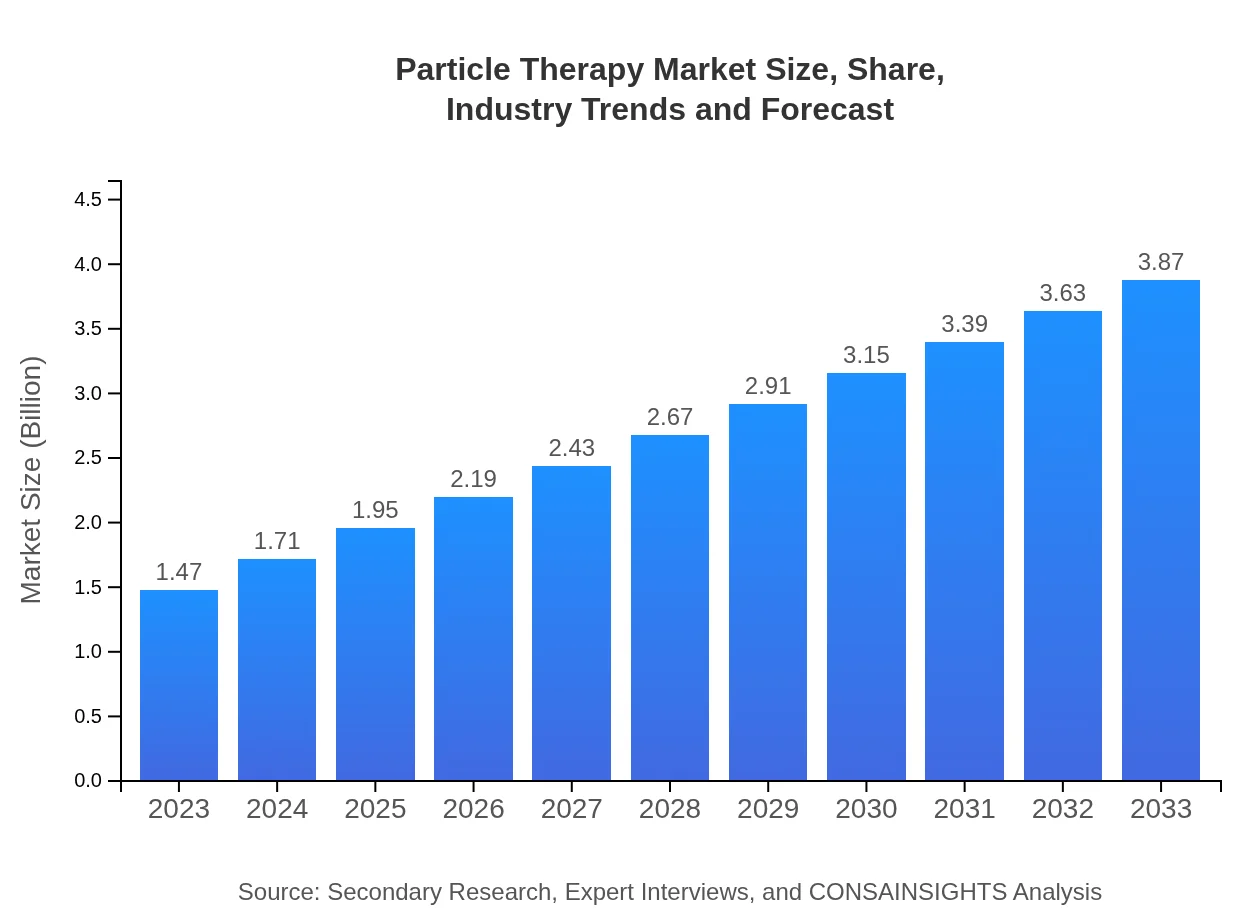
Particle Therapy Market — USD 1.47 billion in 2023, Growing to USD 3.87B by 2033 at 9.8% CAGR
This report delves into the Particle Therapy market, analyzing key insights, market trends, and data projections from 2023 to 2033. It covers market size, growth rates, technological advances, and competitive landscape, offering a comprehensive overview for stakeholders.
Key Takeaways
- Global market expands from $1.47 Billion in 2023 to $3.87 Billion by 2033 at a 9.8% CAGR.
- North America is largest regional market, while no single fastest-growing region is stated because regional CAGR differences remain within 0.15 percentage points.
- Europe grows from $0.47 Billion in 2023 to $1.23 Billion in 2033, supported by clinical investments and infrastructure.
- Asia Pacific rises from $0.22 Billion in 2023 to $0.59 Billion in 2033 amid increased healthcare spending and technology adoption.
- Key vendors include Varian Medical Systems, Hitachi, Ltd., Elekta AB, and Iba Radiology.
Particle Therapy Market Report — Executive Summary
North America remains largest market by forecast-period value, while no single fastest-growing region is stated because top regional growth rates are separated by less than 0.15 percentage points. The Particle Therapy market is projected to expand substantially between 2023 and 2033, moving from $1.47 Billion to $3.87 Billion at a 9.8% CAGR. Growth is underpinned by clinical demand for precision oncology, investments in specialized treatment centers, and advancements in particle accelerator and treatment planning technologies. The market structure includes segmentation by treatment type, equipment, end user and application, with Proton Therapy and Heavy Ions Therapy as primary approaches. Regional dynamics show North America as the largest market, while Europe and Asia Pacific register notable growth supported by research activity and increasing healthcare infrastructure. Key participants such as Varian Medical Systems, Hitachi, Ltd., Elekta AB, and Iba Radiology are active in equipment development, services, and collaborations. Persistent challenges include high installation and maintenance costs and policy or reimbursement constraints, which are driving suppliers and providers toward cost optimization, strategic partnerships, and targeted clinical trials to improve accessibility and outcomes.
Key Growth Drivers
- Rising clinical adoption of precision particle therapies to reduce collateral damage and improve treatment outcomes.
- Investments in specialized treatment centers and advanced particle accelerators increase regional capacity.
- Technological advances in treatment planning systems and patient positioning improve treatment accuracy and throughput.
- Expanded clinical research and collaborations between equipment manufacturers and healthcare institutions support product development and uptake.
- Growing healthcare spending and infrastructure upgrades in multiple regions bolster market expansion.
| Metric | Value |
|---|---|
| Study Period | 2023 - 2033 |
| 2023 Market Size | $1.47 Billion |
| CAGR (2023-2033) | 9.8% |
| 2033 Market Size | $3.87 Billion |
| Top Companies | Varian Medical Systems, Hitachi, Ltd., Elekta AB, Iba Radiology |
| Published Date | 20 October 2024 |
| Last Modified Date | 25 May 2026 |
Particle Therapy Market Overview
Customize Particle Therapy Market Report market research report
- ✔ Get in-depth analysis of Particle Therapy market size, growth, and forecasts.
- ✔ Understand Particle Therapy's regional dynamics and industry-specific trends.
- ✔ Identify potential applications, end-user demand, and growth segments in Particle Therapy
What is the Market Size & CAGR of Particle Therapy Market Report market in 2023?
Particle Therapy Industry Analysis
Particle Therapy Market Segmentation and Scope
Tell us your focus area and get a customized research report.
Particle Therapy Market Report Market Analysis Report by Region
Europe Particle Therapy Market Report:
Europe grows from $0.47 Billion in 2023 to $1.23 Billion in 2033. Growth is supported by clinical research activity, public and private healthcare investments, and collaborations that advance treatment availability and technology deployment.Asia Pacific Particle Therapy Market Report:
Asia Pacific grows from $0.22 Billion in 2023 to $0.59 Billion in 2033. Regional momentum is tied to rising healthcare expenditure, infrastructure upgrades, and growing interest in advanced oncology treatments and clinical trials.North America Particle Therapy Market Report:
North America is largest regional market, rising from $0.56 Billion in 2023 to $1.47 Billion in 2033. The region's leading position is supported by established clinical infrastructure, capital investment in treatment centers, and active equipment manufacturers fostering adoption.South America Particle Therapy Market Report:
Latin America grows from $0.13 Billion in 2023 to $0.35 Billion in 2033. Development is influenced by gradual healthcare infrastructure improvements, targeted investments, and increasing awareness of particle therapy benefits.Middle East & Africa Particle Therapy Market Report:
Middle East and Africa grows from $0.09 Billion in 2023 to $0.23 Billion in 2033. Expansion is driven by selective investments in advanced medical facilities, regional partnerships, and efforts to introduce specialized oncology services.Tell us your focus area and get a customized research report.
Research Methodology
Particle Therapy Market Analysis By Treatment Type
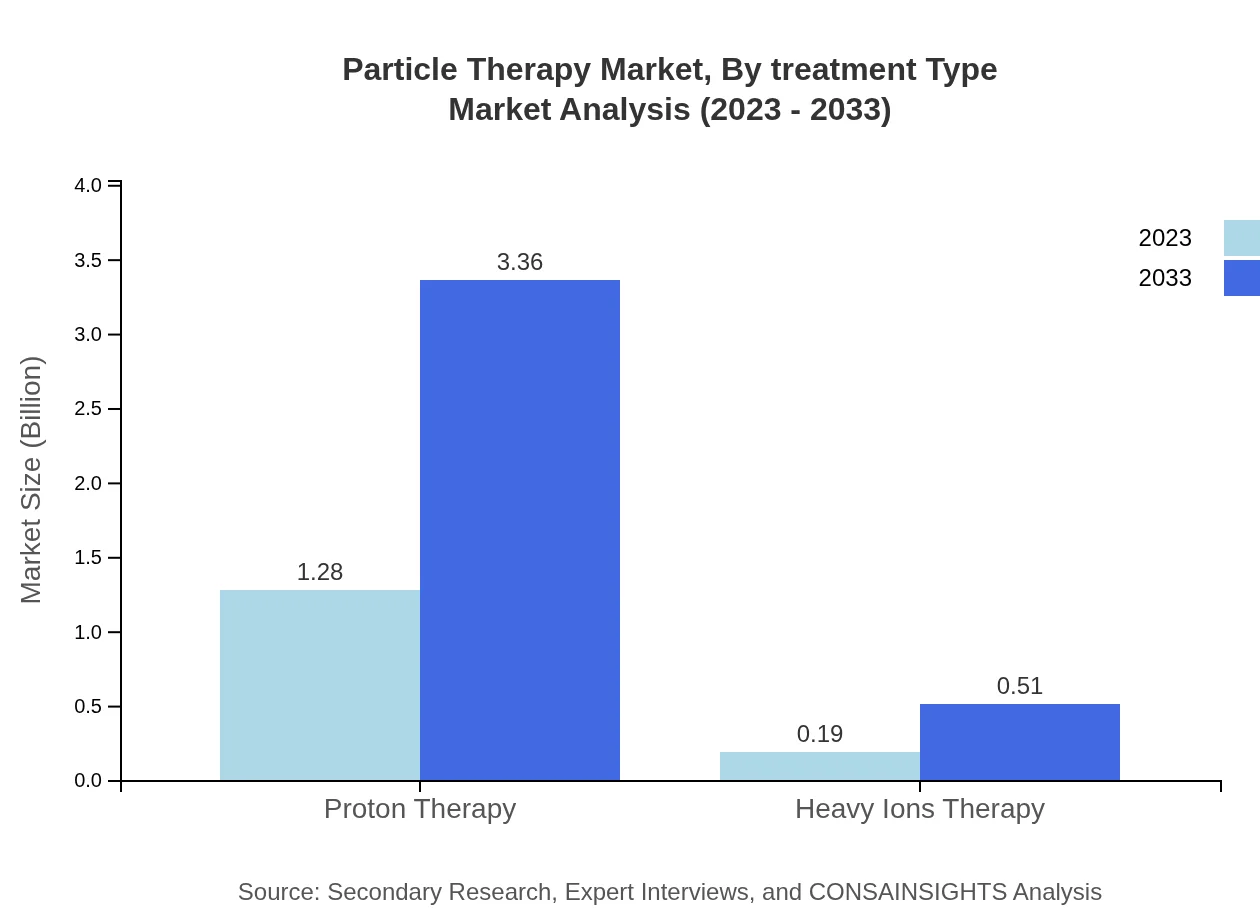
The treatment type segment of the Particle Therapy market indicates a robust growth trajectory with Proton Therapy leading, expected to expand from USD 1.28 billion in 2023 to USD 3.36 billion by 2033. Meanwhile, Heavy Ions Therapy is anticipated to rise from USD 0.19 billion to USD 0.51 billion. Notably, the proton therapy segment accounts for 86.79% of the market share, reflecting its preference among hospitals due to its effectiveness.
Particle Therapy Market Analysis By Therapy Application
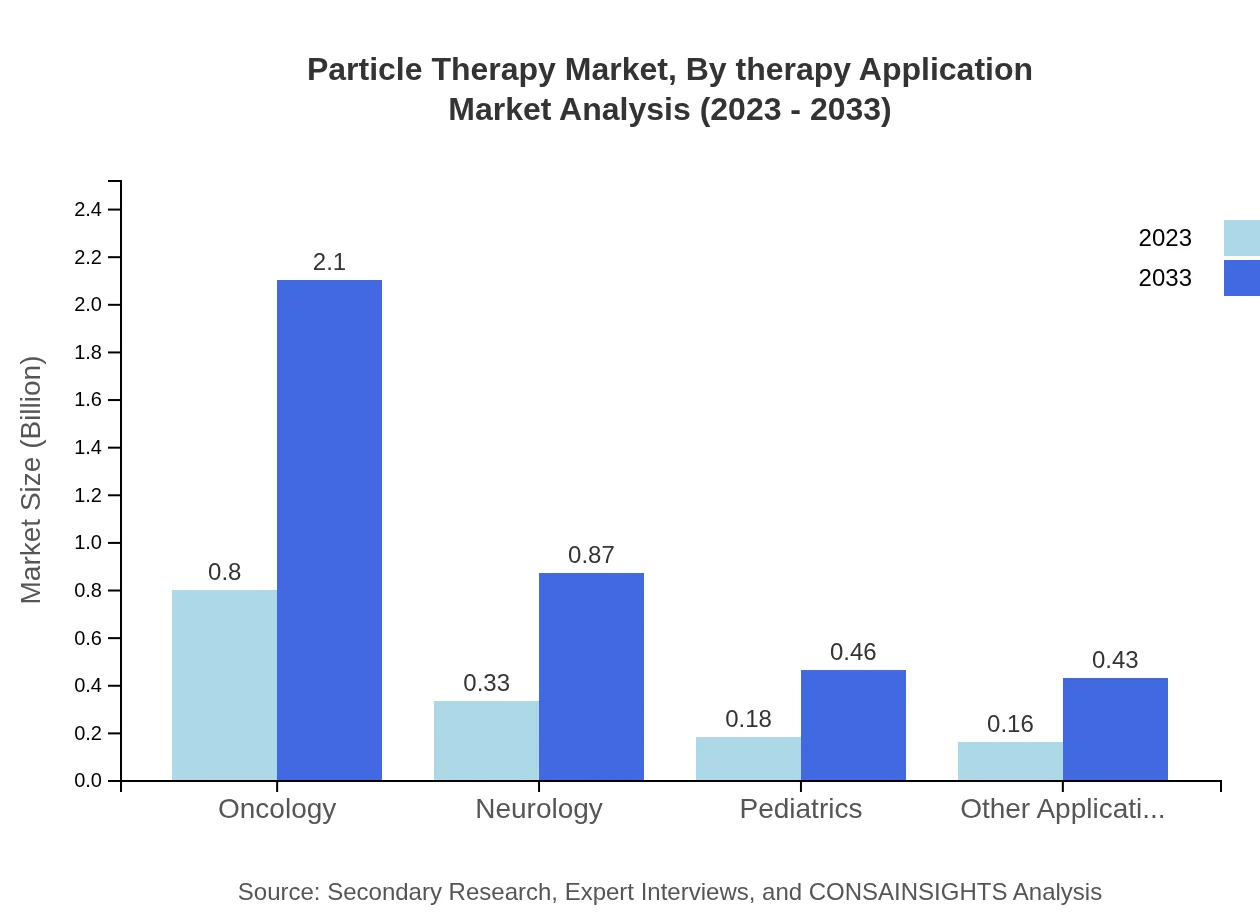
In terms of application, oncology is the dominant segment, projected to grow from USD 0.80 billion in 2023 to USD 2.10 billion in 2033, holding a significant share of 54.37%. Neurology and pediatrics are also notable segments, with expected growth to USD 0.87 billion and USD 0.46 billion, respectively. This underscores the versatility and expanding adoption of particle therapy across various medical specialties.
Particle Therapy Market Analysis By Equipment Type
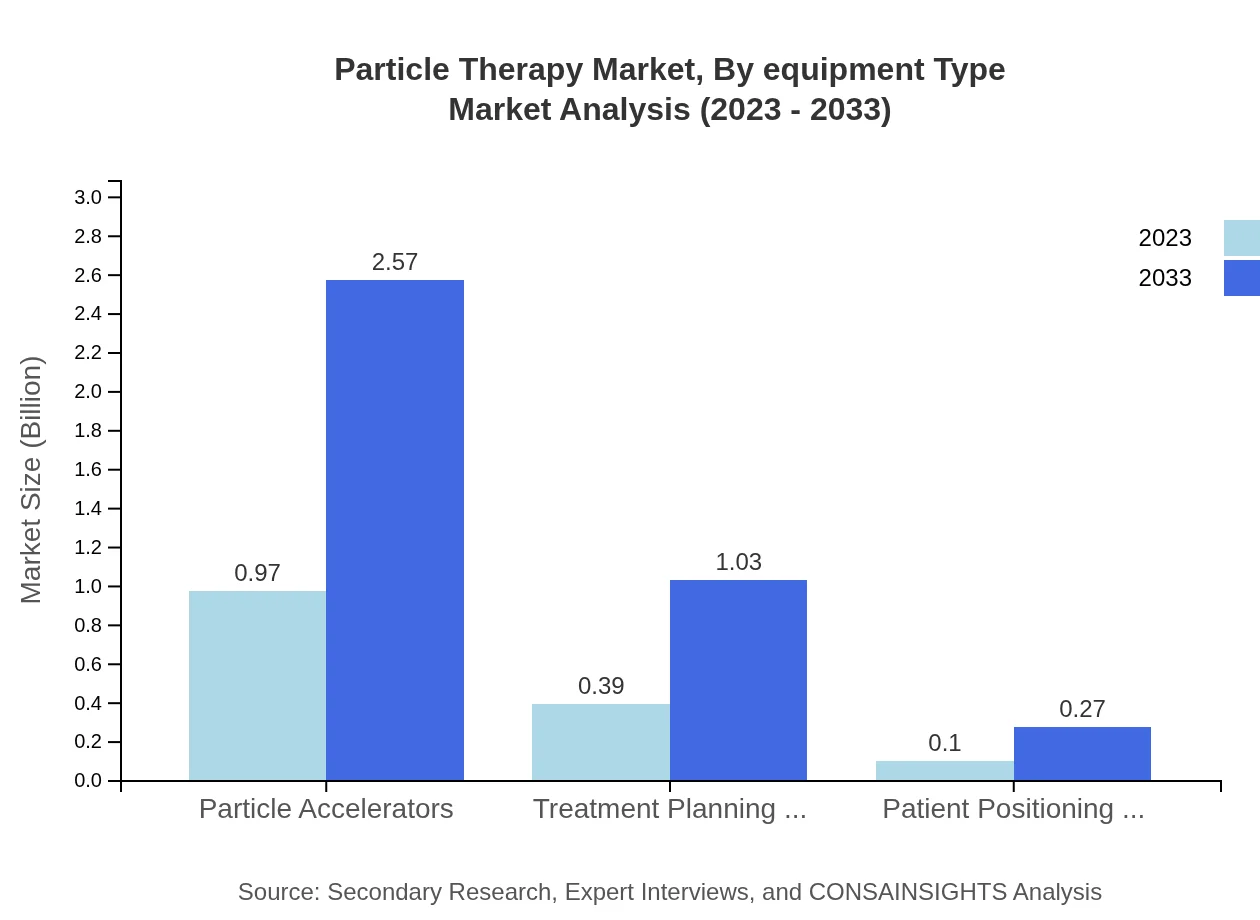
Analyzing the equipment type segment, Particle Accelerators dominate with an anticipated growth from USD 0.97 billion in 2023 to USD 2.57 billion by 2033. Treatment Planning Systems and Patient Positioning Systems also show significant growth patterns, indicating an increasing emphasis on comprehensive treatment approaches in oncology.
Particle Therapy Market Analysis By End User
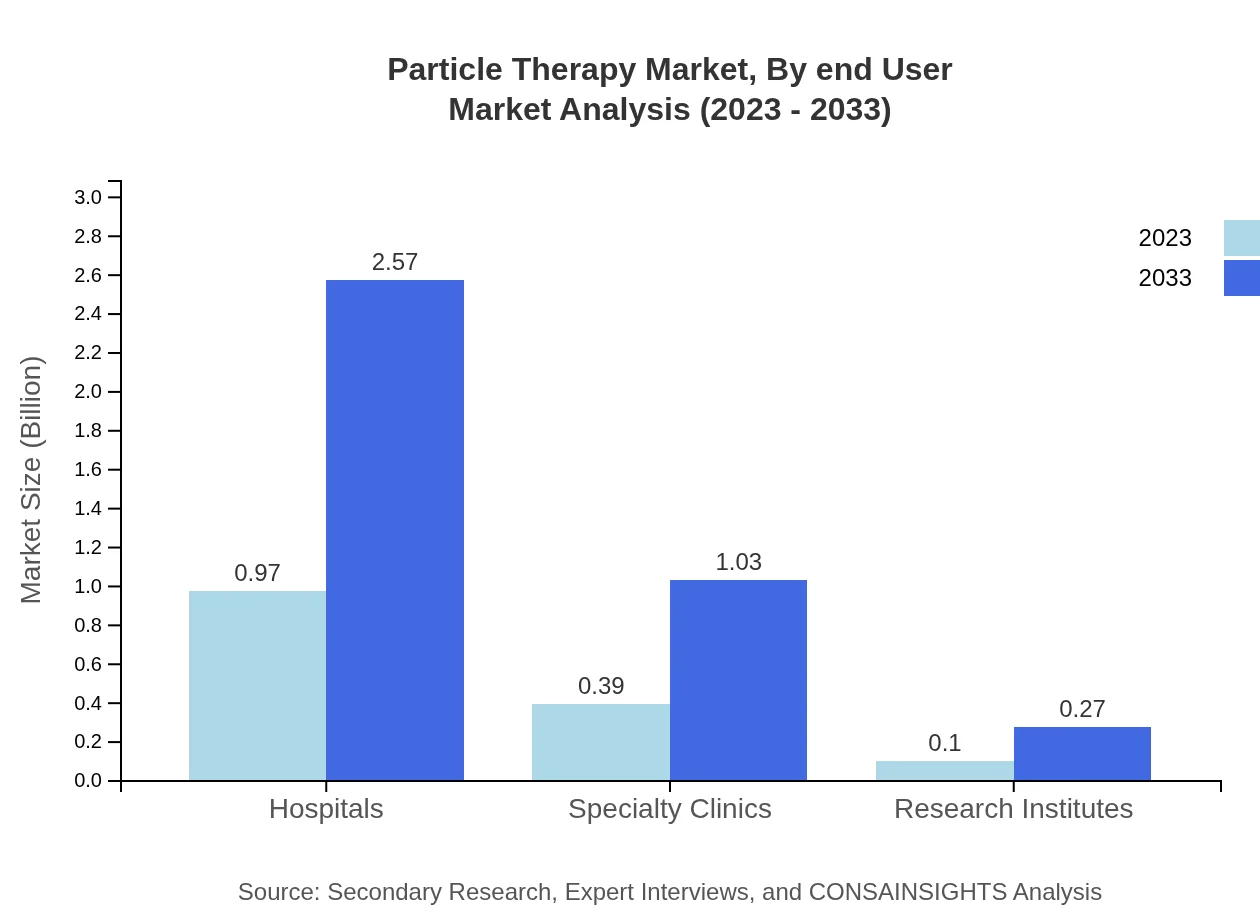
Hospitals and specialty clinics are primary end-users of particle therapy equipment. Hospitals account for a substantial 66.3% market share, reflecting their foundational role in healthcare delivery, while specialty clinics exhibit growth from USD 0.39 billion to USD 1.03 billion. The diversification into clinics mirrors the ongoing shift toward outpatient services.
Particle Therapy Market Analysis By Region Development
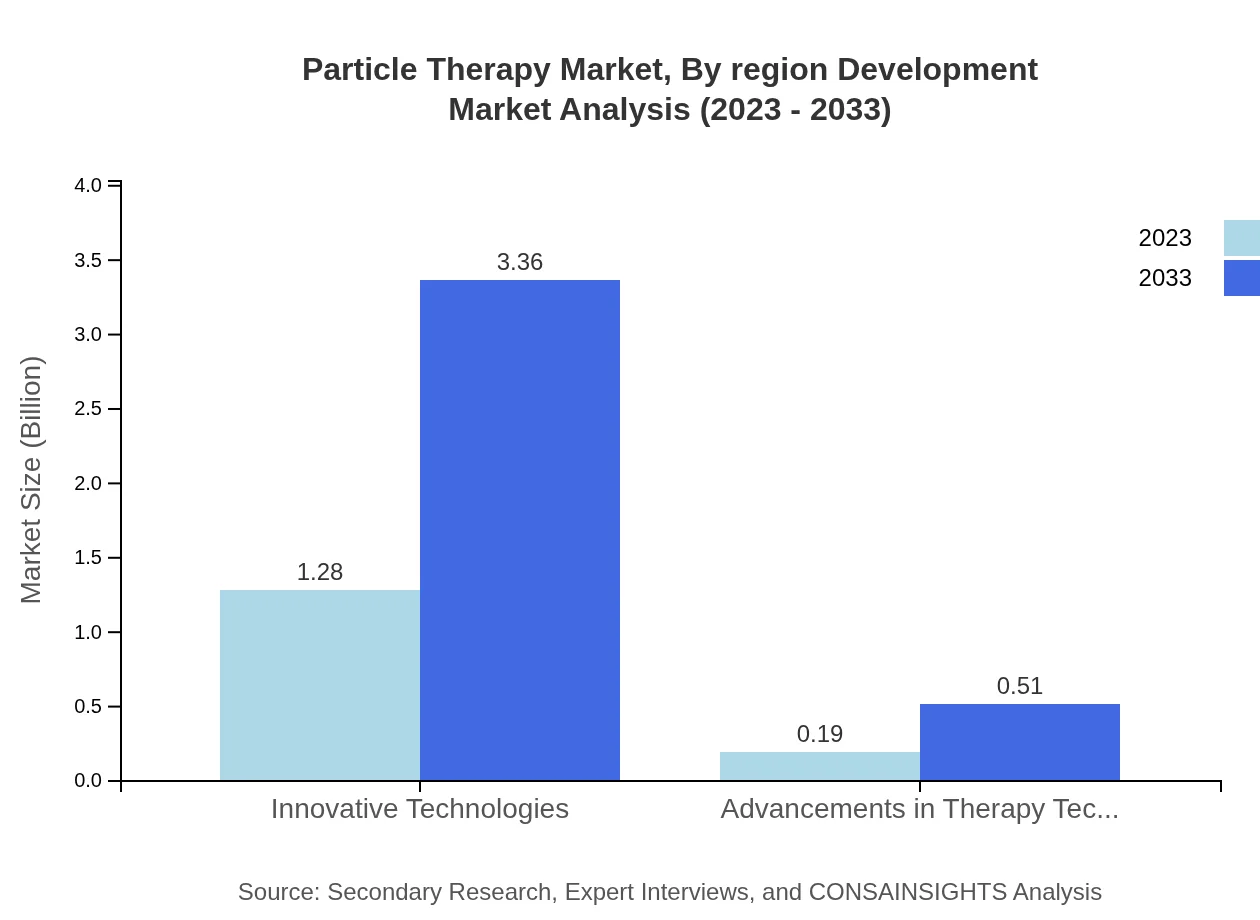
In discussing technology development, the Particle Therapy market is witnessing rapid advancements, with Innovative Technologies expected to grow from USD 1.28 billion in 2023 to USD 3.36 billion by 2033, mirroring enhancements in treatment methodologies and equipment efficiency. Meanwhile, advancements in therapy techniques are also projected to increase significantly, signifying a broader trend towards developing effective and patient-friendly treatment options.
Particle Therapy Market Trends and Future Forecast
Tell us your focus area and get a customized research report.
Global Market Leaders and Top Companies in Particle Therapy Industry
Varian Medical Systems:
A leader in the oncology space, Varian specializes in advanced radiotherapy solutions and is at the forefront of integrating particle therapy with other innovative cancer treatments.Hitachi, Ltd.:
Hitachi manufactures advanced particle accelerators and contributes significantly to particle therapy technology development, focusing on enhancing treatment accuracy and patient outcomes.Elekta AB:
Elekta is renowned for its precision radiation therapy solutions and plays a crucial role in advancing particle therapy through cutting-edge treatment planning systems.Iba Radiology:
Iba Radiology specializes in proton therapy systems and has made strides in making particle therapy accessible, providing comprehensive solutions to cancer treatment centers.We're grateful to work with incredible clients.









FAQs
What is the current market size of the particle therapy market?
The market size was $1.47 Billion in 2023, based on the provided report data for the 2023 starting point of the forecast period.
How big will the market be in 2033?
The market is projected to reach $3.87 Billion by 2033 according to the supplied forecast figures for the 2023 to 2033 period.
What is CAGR of the particle therapy market?
The reported compound annual growth rate for the forecast from 2023 to 2033 is 9.8%, as stated in the input data.
Is there a single fastest Growing region in the Particle Therapy Market Report market?
No single fastest-growing region is stated for the Particle Therapy Market Report market because the top regional implied CAGR values are within 0.15 percentage points of each other, making the ranking too close to call reliably.
Which companies are listed as top participants?
Top companies provided in the input include Varian Medical Systems, Hitachi, Ltd., Elekta AB, and Iba Radiology, noted for equipment and service offerings.
What are the main treatment type segments?
The primary treatment type segments listed are Proton Therapy and Heavy Ions Therapy, reflecting core modalities used in particle-based oncology treatments.
How big is the Europe market in 2023 and 2033?
Europe is reported to grow from $0.47 Billion in 2023 to $1.23 Billion in 2033, backed by clinical research and healthcare infrastructure investments.
What factors drive technology adoption in the sector?
Adoption is driven by improvements in particle accelerators, treatment planning systems, patient positioning solutions, and collaborative research between industry and healthcare providers.
Who contributed to the research methodology?
The methodology includes primary interviews with industry experts and secondary research via company reports and publications, along with data triangulation and internal validation.