

Peptide Therapeutics Market Report
First published: 08 October 2024 | Last updated: 25 May 2026 | Report Code: peptide-therapeutics
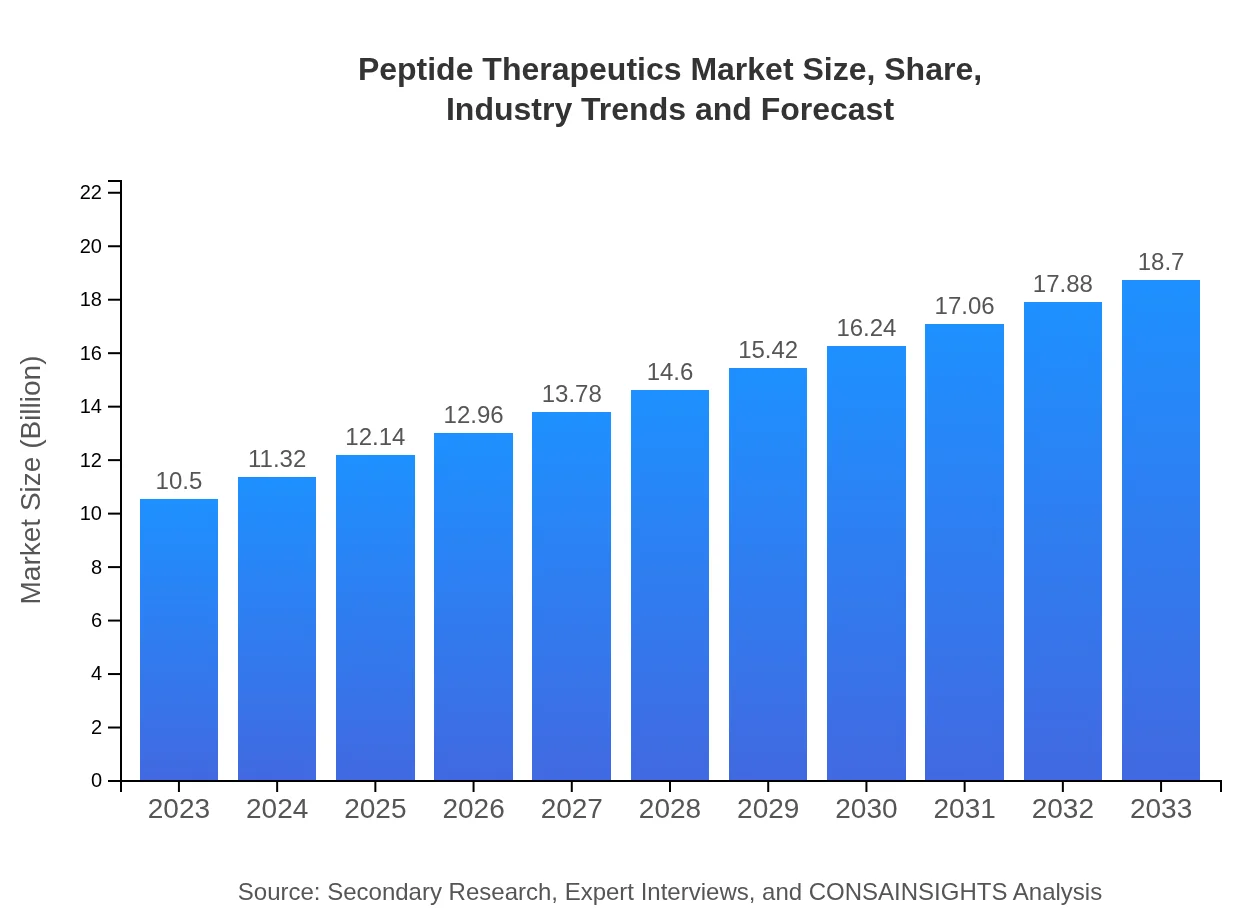
Peptide Therapeutics Market — USD 10.5 billion in 2023, Growing to USD 18.70B by 2033 at 5.8% CAGR
This report delves into the Peptide Therapeutics market, providing comprehensive insights into market size, growth forecasts for 2023-2033, regional analyses, and trends. It outlines key segments and leaders influencing the industry landscape.
Key Takeaways
- Global market expands from $10.50 Billion in 2023 to $18.70 Billion by 2033 at a 5.8% CAGR.
- North America is largest regional market, while no single fastest-growing region is stated because regional CAGR differences remain within 0.15 percentage points.
- North America leads with growth from $3.56 Billion to $6.34 Billion between 2023 and 2033.
- Europe increases from $3.37 Billion to $6.00 Billion over the forecast period, signaling robust demand.
- Asia Pacific grows from $2.00 Billion to $3.56 Billion, reflecting rising adoption in the region.
- Leading industry players include Amgen Inc., Novo Nordisk, Boehringer Ingelheim, and Teva Pharmaceuticals.
Peptide Therapeutics Market Report — Executive Summary
North America remains largest market by forecast-period value, while no single fastest-growing region is stated because top regional growth rates are separated by less than 0.15 percentage points. This report examines the Peptide Therapeutics market across a 2023 to 2033 forecast horizon, where the market rises from $10.50 Billion to $18.70 Billion at a 5.8% CAGR. Growth is driven by increased investment in peptide research, expanding applications in oncology, metabolic and autoimmune disorders, and advances in manufacturing methods such as solid-phase and recombinant techniques. North America remains largest market by forecast-period value, while no single fastest-growing region is stated because top regional growth rates are separated by less than 0.15 percentage points. The competitive landscape reflects activity from Amgen Inc., Novo Nordisk, Boehringer Ingelheim, and Teva Pharmaceuticals. The report is structured to cover market sizing, segmentation by product type, therapy area, application, manufacturing technique and route of administration, plus regional outlooks and strategic considerations for stakeholders.
Key Growth Drivers
- Rising R&D investment in peptide-based drug discovery and development across biotechnology firms and pharmaceutical companies.
- Broader clinical adoption of peptide therapies for oncology, metabolic disorders, and autoimmune diseases increasing commercial demand.
- Technological improvements in peptide manufacturing, including solid-phase synthesis and recombinant DNA techniques, reducing production barriers.
- Expanding delivery options such as injectable, oral, and nasal routes enhancing patient access and treatment flexibility.
- Strategic activity by major firms—Amgen Inc., Novo Nordisk, Boehringer Ingelheim, and Teva Pharmaceuticals—supporting pipeline advancement and partnerships.
| Metric | Value |
|---|---|
| Study Period | 2023 - 2033 |
| 2023 Market Size | $10.50 Billion |
| CAGR (2023-2033) | 5.8% |
| 2033 Market Size | $18.70 Billion |
| Top Companies | Amgen Inc., Novo Nordisk, Boehringer Ingelheim, Teva Pharmaceuticals |
| Published Date | 08 October 2024 |
| Last Modified Date | 25 May 2026 |
Peptide Therapeutics Market Overview
Customize Peptide Therapeutics Market Report market research report
- ✔ Get in-depth analysis of Peptide Therapeutics market size, growth, and forecasts.
- ✔ Understand Peptide Therapeutics's regional dynamics and industry-specific trends.
- ✔ Identify potential applications, end-user demand, and growth segments in Peptide Therapeutics
What is the Market Size & CAGR of Peptide Therapeutics Market Report market in 2023?
Peptide Therapeutics Industry Analysis
Peptide Therapeutics Market Segmentation and Scope
Tell us your focus area and get a customized research report.
Peptide Therapeutics Market Report Market Analysis Report by Region
Europe Peptide Therapeutics Market Report:
Europe grows from $3.37 Billion in 2023 to $6 Billion in 2033. Expansion is driven by clinical uptake in targeted therapies, investments in peptide manufacturing technologies, and regulatory focus on advanced therapeutics across major markets.Asia Pacific Peptide Therapeutics Market Report:
Asia Pacific grows from $2 Billion in 2023 to $3.56 Billion in 2033. Growth reflects rising healthcare demand, expanding research capacity, and greater access to peptide treatments for chronic and complex diseases in several markets.North America Peptide Therapeutics Market Report:
North America is largest regional market, rising from $3.56 Billion in 2023 to $6.34 Billion in 2033. The region is the largest market in end-period value, supported by strong R&D activity, established biotech and pharmaceutical ecosystems, and adoption across oncology and metabolic therapy areas.South America Peptide Therapeutics Market Report:
Latin America grows from $0.53 Billion in 2023 to $0.94 Billion in 2033. Market development is underpinned by increasing awareness of peptide therapies, expanding healthcare infrastructure, and growing clinical applications in regional centers.Middle East & Africa Peptide Therapeutics Market Report:
Middle East and Africa grows from $1.05 Billion in 2023 to $1.87 Billion in 2033. Adoption is supported by improving healthcare systems, targeted investment, and interest in innovative therapies for oncology and metabolic conditions.Tell us your focus area and get a customized research report.
Research Methodology
Peptide Therapeutics Market Analysis By Type
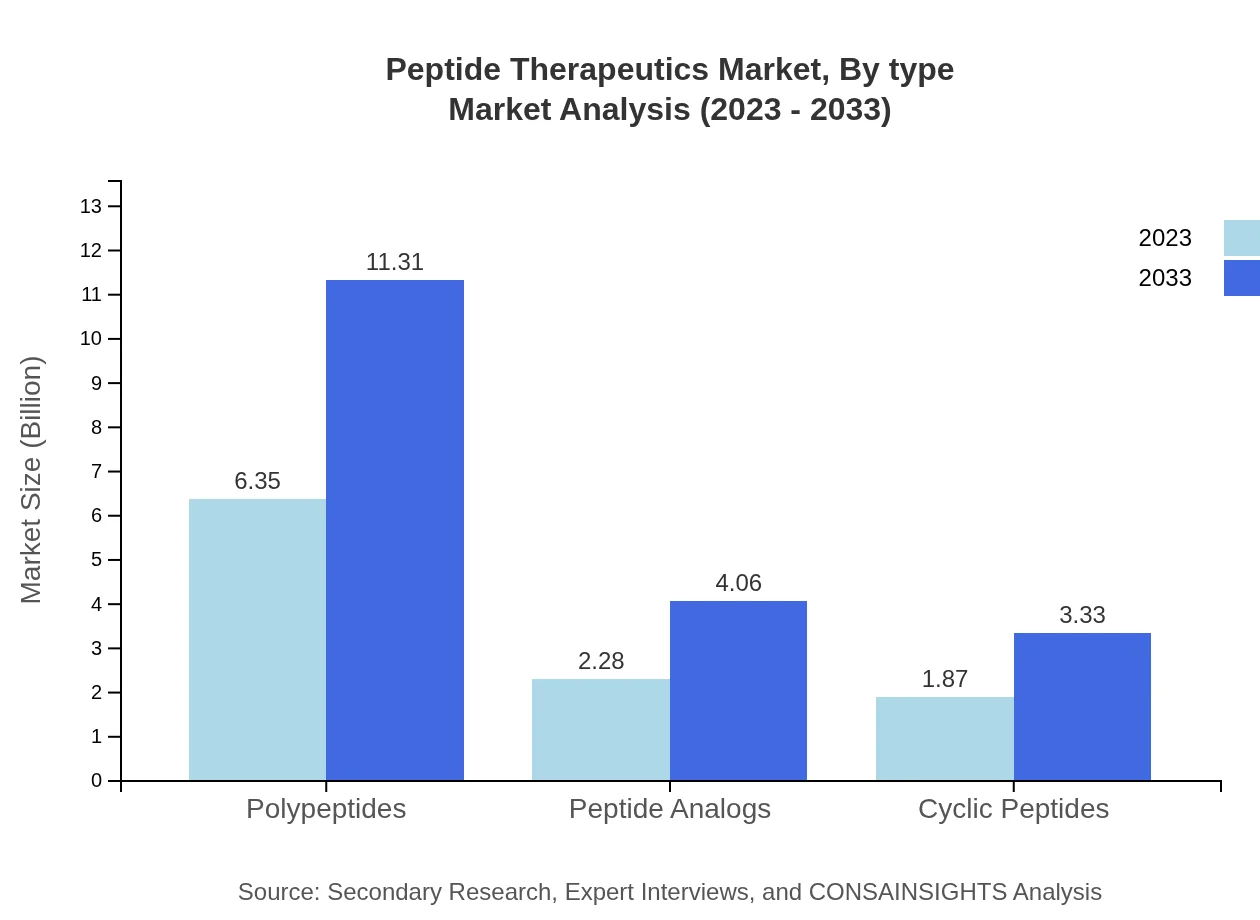
Polypeptides are leading with a market size of $6.35 billion in 2023, expected to rise to $11.31 billion by 2033, holding a market share of 60.45%. Peptide Analogs are projected to grow from $2.28 billion to $4.06 billion, marking a share of 21.73%. Cyclic Peptides will see an increase from $1.87 billion to $3.33 billion, maintaining a 17.82% share.
Peptide Therapeutics Market Analysis By Therapy
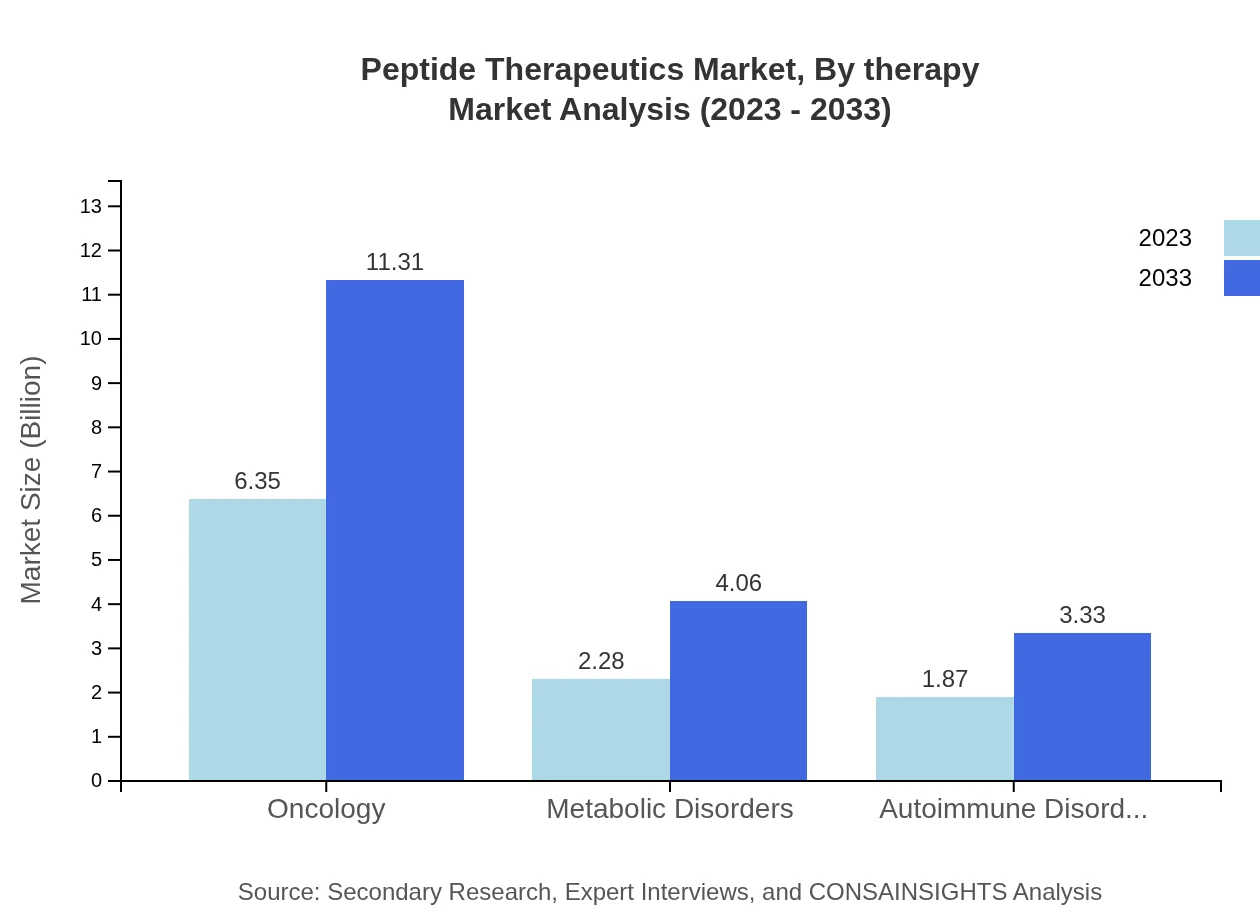
Oncology is a key therapy area representing a market size of $6.35 billion in 2023, growing to $11.31 billion by 2033, with a share of 60.45%. Metabolic Disorders will expand from $2.28 billion to $4.06 billion, capturing 21.73% of the market. Autoimmune Disorders will see growth from $1.87 billion to $3.33 billion with a 17.82% share.
Peptide Therapeutics Market Analysis By Route Of Administration
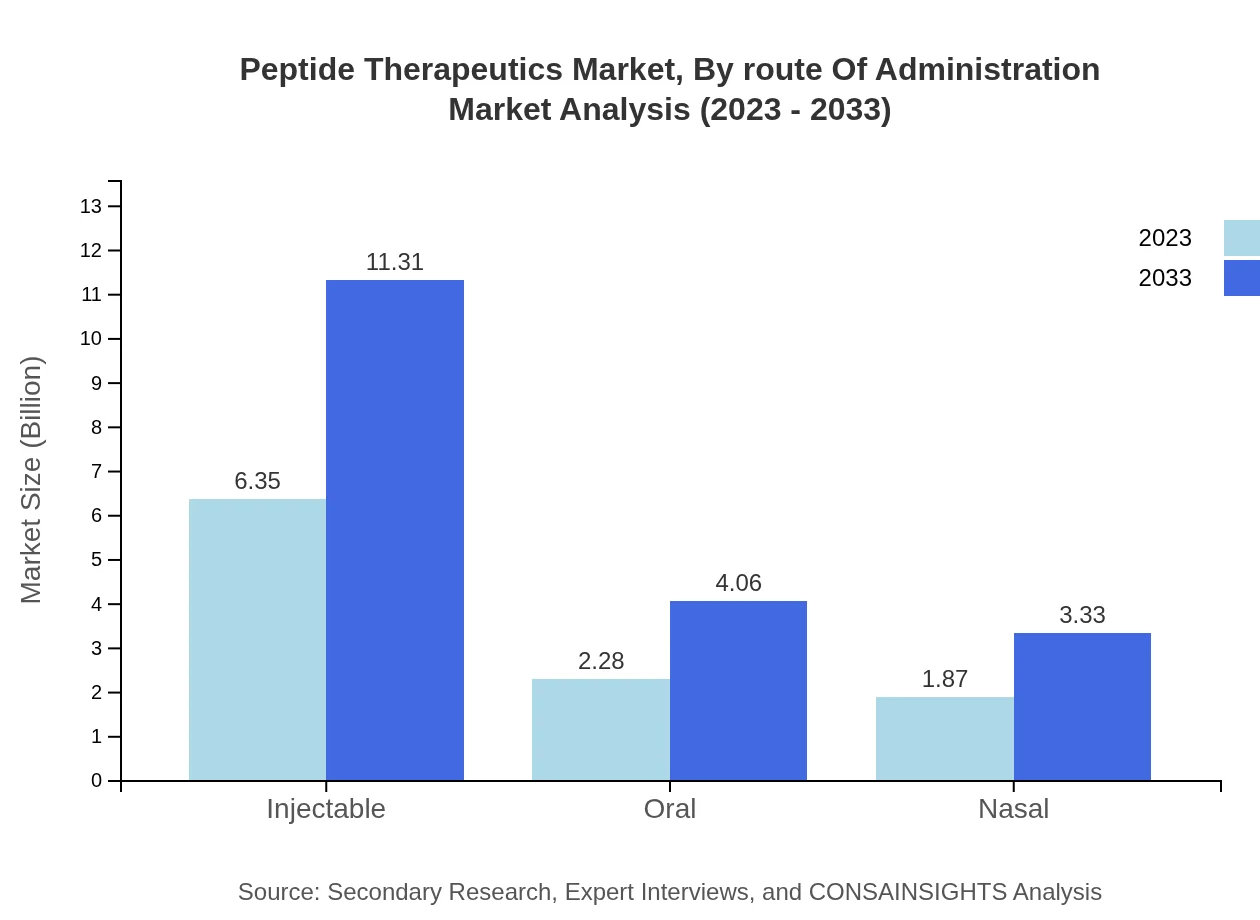
Injectable routes dominate the market, projected to grow from $6.35 billion to $11.31 billion by 2033, maintaining a share of 60.45%. Oral administration will see growth from $2.28 billion to $4.06 billion, accounting for 21.73%. Nasal routes will expand from $1.87 billion to $3.33 billion, representing a 17.82% share.
Peptide Therapeutics Market Analysis By Application
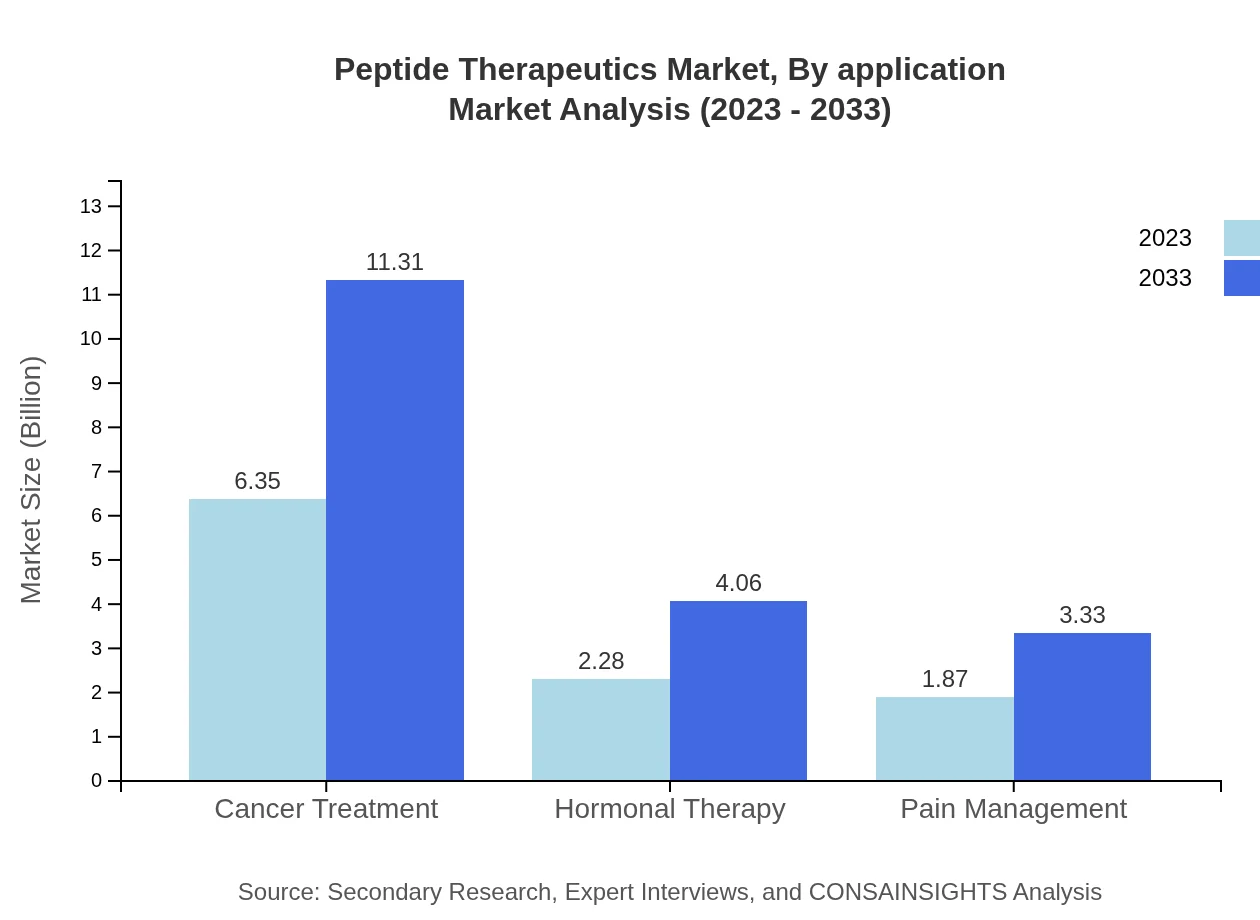
Cancer Treatment leads the application segment growing from $6.35 billion to $11.31 billion in market size, holding a 60.45% market share. Hormonal Therapy is projected to increase from $2.28 billion to $4.06 billion, accounting for 21.73%. Pain Management will grow from $1.87 billion to $3.33 billion, representing a share of 17.82%.
Peptide Therapeutics Market Analysis By Manufacturing Technique
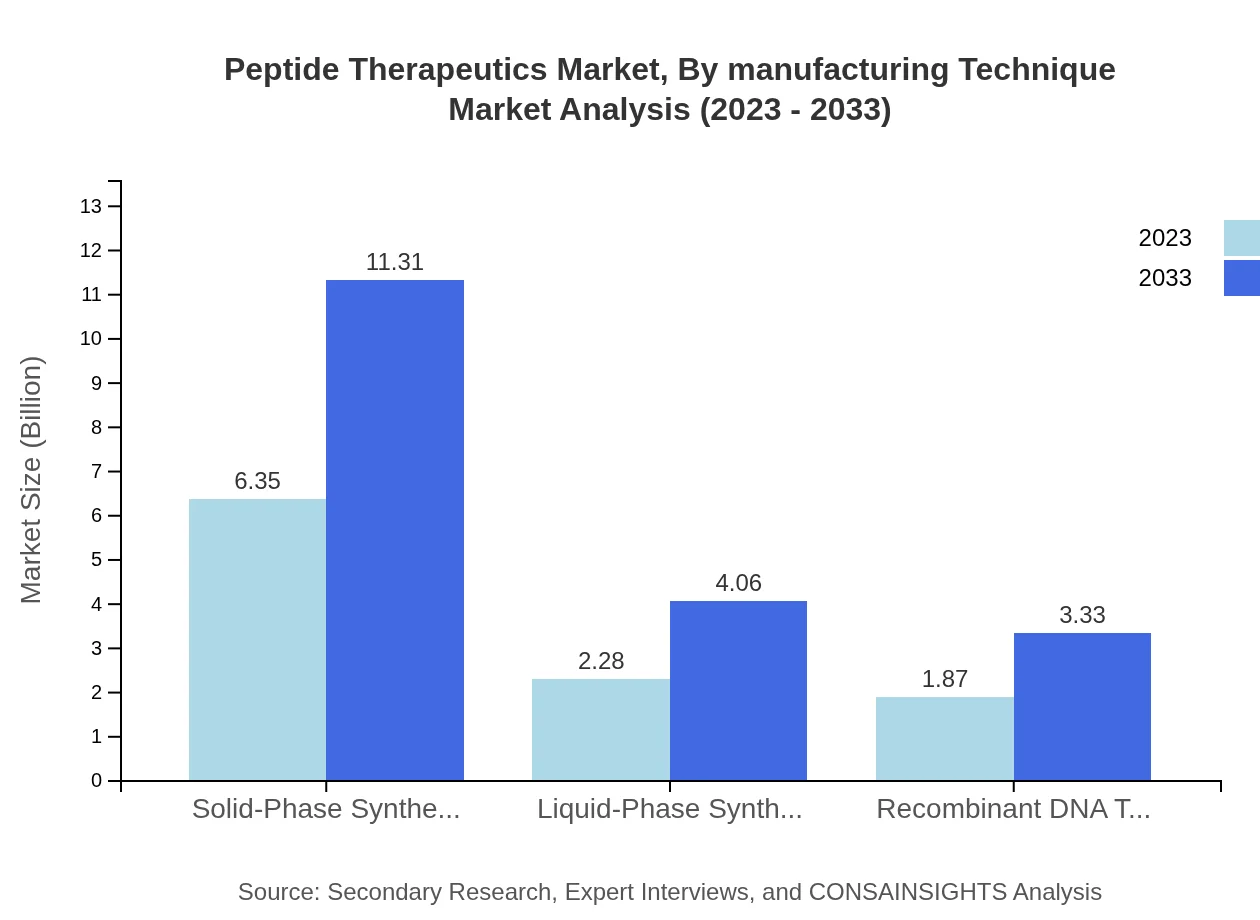
Solid-Phase Synthesis is the leading manufacturing technique with a market size rising from $6.35 billion to $11.31 billion, capturing over 60.45% of the market. Liquid-Phase Synthesis is expected to grow from $2.28 billion to $4.06 billion, representing a 21.73% share. Recombinant DNA techniques will expand from $1.87 billion to $3.33 billion, accounting for 17.82%.
Peptide Therapeutics Market Trends and Future Forecast
Tell us your focus area and get a customized research report.
Global Market Leaders and Top Companies in Peptide Therapeutics Industry
Amgen Inc.:
A biotechnology company that develops innovative therapies involving peptides for oncology and metabolic conditions.Novo Nordisk:
Specializes in diabetes management products, utilizing peptide technology to create effective therapeutic solutions.Boehringer Ingelheim:
Engaged in developing peptide therapeutics for various diseases, emphasizing innovative delivery systems.Teva Pharmaceuticals:
A global leader in generic pharmaceuticals, investing in peptide therapies to expand product offerings.We're grateful to work with incredible clients.








FAQs
What is the current market size of the Peptide Therapeutics Market Report?
The market size for 2023 is $10.50 Billion, based on the report's baseline figure for the start of the forecast period.
How big will the market be in 2033?
The market is projected to reach $18.70 Billion by 2033 according to the provided forecast figures.
What is CAGR for the forecast period?
The compound annual growth rate (CAGR) for the 2023 to 2033 forecast period is 5.8%, as stated in the report data.
Is there a single fastest Growing region in the Peptide Therapeutics Market Report market?
No single fastest-growing region is stated for the Peptide Therapeutics Market Report market because the top regional implied CAGR values are within 0.15 percentage points of each other, making the ranking too close to call reliably.
Why is peptide therapeutics demand rising?
Demand grows due to expanded clinical use in oncology, metabolic and autoimmune conditions, plus increased R&D investment and improved manufacturing techniques.
Who are key companies in this market?
Top companies named in the report include Amgen Inc., Novo Nordisk, Boehringer Ingelheim, and Teva Pharmaceuticals.
Which manufacturing techniques are covered?
The report lists solid-phase synthesis, liquid-phase synthesis, and recombinant DNA technique as primary manufacturing approaches.
What applications does the market address?
Reported applications include cancer treatment, hormonal therapy, and pain management among the noted use cases.