
Reports >
Life Sciences
>
Pharmaceutical Pellets Market Report

Pharmaceutical Pellets Market Report
First published: 15 October 2024 | Last updated: 25 May 2026 | Report Code: pharmaceutical-pellets
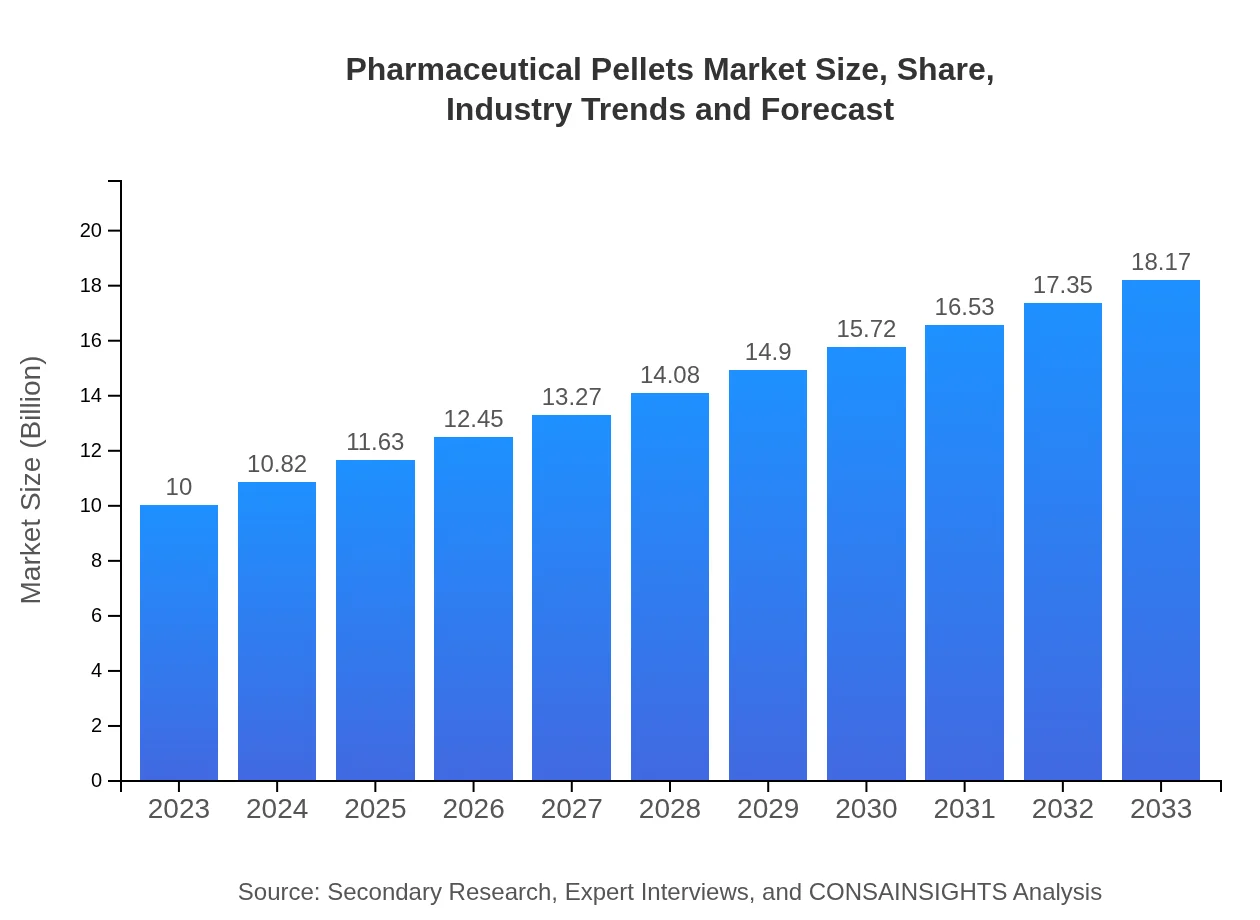
Pharmaceutical Pellets Market — USD 10 billion in 2023, Growing to USD 18.17B by 2033 at 6% CAGR
This report offers an in-depth analysis of the Pharmaceutical Pellets market, providing insights into market dynamics from 2023 to 2033. It covers trends, regional analysis, market size, and forecasts, helping stakeholders to make informed decisions.
Key Takeaways
- Global market expands from $10.00 Billion in 2023 to $18.17 Billion in 2033 at a 6% CAGR.
- North America is largest regional market, while no single fastest-growing region is stated because regional CAGR differences remain within 0.15 percentage points.
- North America leads regionally, rising from $3.74 Billion in 2023 to $6.79 Billion in 2033.
- Europe and Asia Pacific show notable increases: Europe $2.44B to $4.43B; Asia Pacific $1.99B to $3.62B.
- Leading firms include BASF SE, Evonik Industries AG, Pfizer Inc., and Sandoz (Novartis AG).
- Key production methods include extrusion-spheronization, layering and hot melt extrusion, supporting formulation uniformity.
Pharmaceutical Pellets Market Report — Executive Summary
North America remains largest market by forecast-period value, while no single fastest-growing region is stated because top regional growth rates are separated by less than 0.15 percentage points. The report examines market forces shaping pharmaceutical pellets between 2023 and 2033. Rising demand for reliable oral and controlled-release formulations, sustained R&D investment, and greater outsourcing to contract manufacturers support revenue growth. Regulatory compliance pressures—GMP, FDA and EMA standards—drive quality and process investment. Manufacturing techniques such as extrusion-spheronization, layering and hot melt extrusion are central to production capability and product differentiation. Regionally, North America accounts for the largest share, with Europe, Asia Pacific, Latin America and Middle East & Africa all expanding over the decade. The study profiles major suppliers, evaluates segmentation by product type, application and end-user, and outlines strategic implications for manufacturers, contract service providers and research organizations.
Key Growth Drivers
- Expanding demand for uniform oral and controlled-release dosage forms increases adoption of pellet technologies.
- Rising R&D spending on novel formulations incentivizes advanced manufacturing methods like extrusion-spheronization and hot melt extrusion.
- Regulatory emphasis on GMP, FDA and EMA compliance raises quality standards and encourages process investments.
- Outsourcing to contract manufacturers broadens production capacity and enables pharmaceutical companies to focus on formulation innovation.
- Prevalence of chronic diseases sustains long-term need for reliable drug delivery systems.
| Metric | Value |
|---|---|
| Study Period | 2023 - 2033 |
| 2023 Market Size | $10.00 Billion |
| CAGR (2023-2033) | 6% |
| 2033 Market Size | $18.17 Billion |
| Top Companies | BASF SE, Evonik Industries AG, Pfizer Inc., Sandoz (Novartis AG) |
| Published Date | 15 October 2024 |
| Last Modified Date | 25 May 2026 |
Pharmaceutical Pellets Market Overview
Customize Pharmaceutical Pellets Market Report market research report
- ✔ Get in-depth analysis of Pharmaceutical Pellets market size, growth, and forecasts.
- ✔ Understand Pharmaceutical Pellets's regional dynamics and industry-specific trends.
- ✔ Identify potential applications, end-user demand, and growth segments in Pharmaceutical Pellets
What is the Market Size & CAGR of Pharmaceutical Pellets Market Report market in 2023?
Pharmaceutical Pellets Industry Analysis
Pharmaceutical Pellets Market Segmentation and Scope
Tell us your focus area and get a customized research report.
Pharmaceutical Pellets Market Report Market Analysis Report by Region
Europe Pharmaceutical Pellets Market Report:
Europe grows from $2.44 Billion in 2023 to $4.43 Billion in 2033. The region’s expansion reflects stringent regulatory frameworks such as EMA standards, active formulation research, and established contract manufacturing networks.Asia Pacific Pharmaceutical Pellets Market Report:
Asia Pacific grows from $1.99 Billion in 2023 to $3.62 Billion in 2033. Drivers include rising pharmaceutical production capacity, growing demand for advanced drug delivery, and expanding R&D investment across regional hubs.North America Pharmaceutical Pellets Market Report:
North America is largest regional market, rising from $3.74 Billion in 2023 to $6.79 Billion in 2033. Regional growth is underpinned by established pharmaceutical manufacturing infrastructure, strong R&D activity, and a high concentration of suppliers and contract service providers.South America Pharmaceutical Pellets Market Report:
Latin America grows from $0.78 Billion in 2023 to $1.42 Billion in 2033. Market advancement is supported by growing healthcare needs, increasing adoption of standardized dosage forms, and partnerships with global manufacturers.Middle East & Africa Pharmaceutical Pellets Market Report:
Middle East and Africa grows from $1.05 Billion in 2023 to $1.91 Billion in 2033. Regional drivers include investments in healthcare infrastructure, demand for reliable therapies, and increasing engagement with contract manufacturers.Tell us your focus area and get a customized research report.
Research Methodology
Pharmaceutical Pellets Market Analysis By Product Type
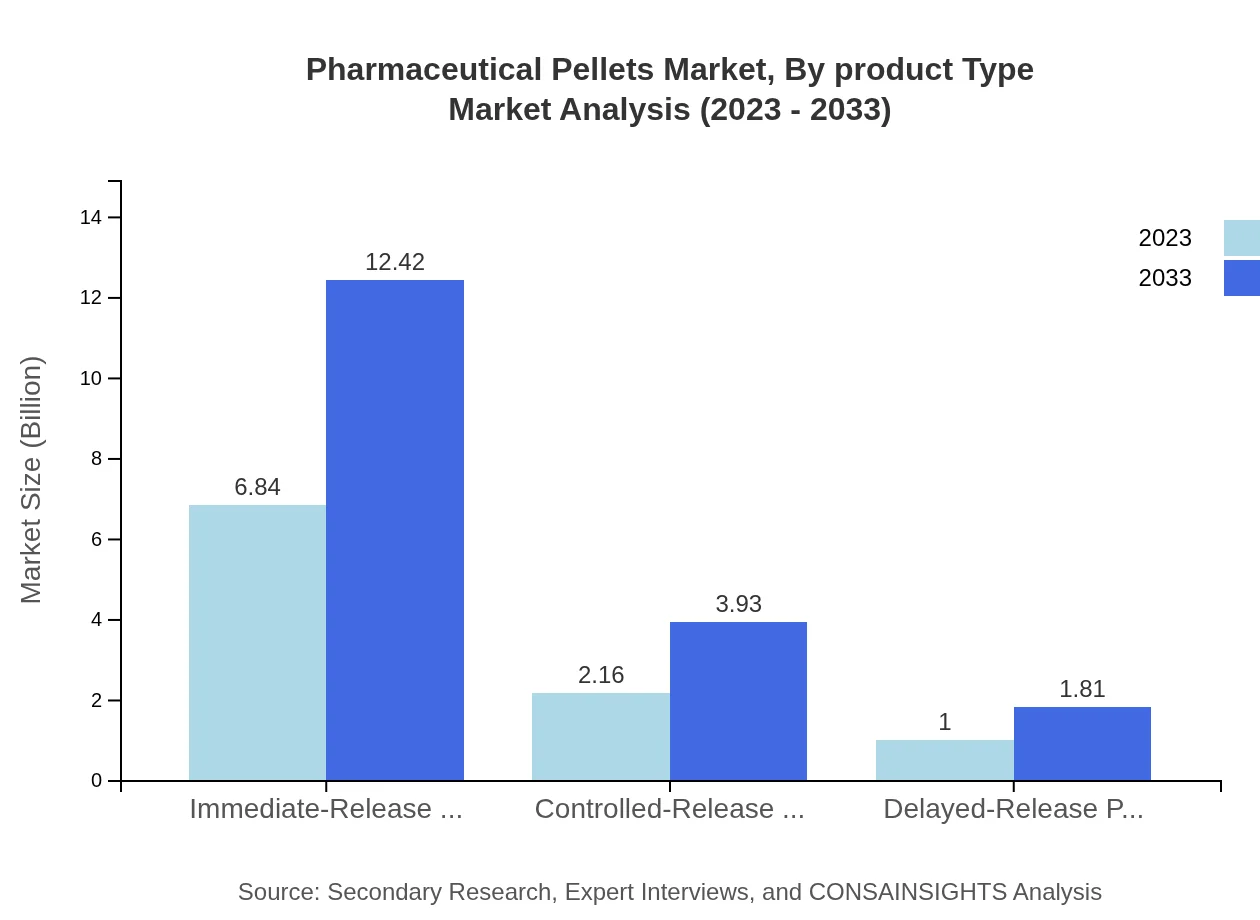
The market is significantly influenced by product types such as Oral Drugs (projected to grow from $6.84 billion in 2023 to $12.42 billion by 2033), Injectables (anticipating growth from $2.16 billion to $3.93 billion), and Topical Drugs (expected to rise from $1.00 billion to $1.81 billion). These segments offer different administration routes and benefits, driving demand across varied therapeutic scenarios.
Pharmaceutical Pellets Market Analysis By Application
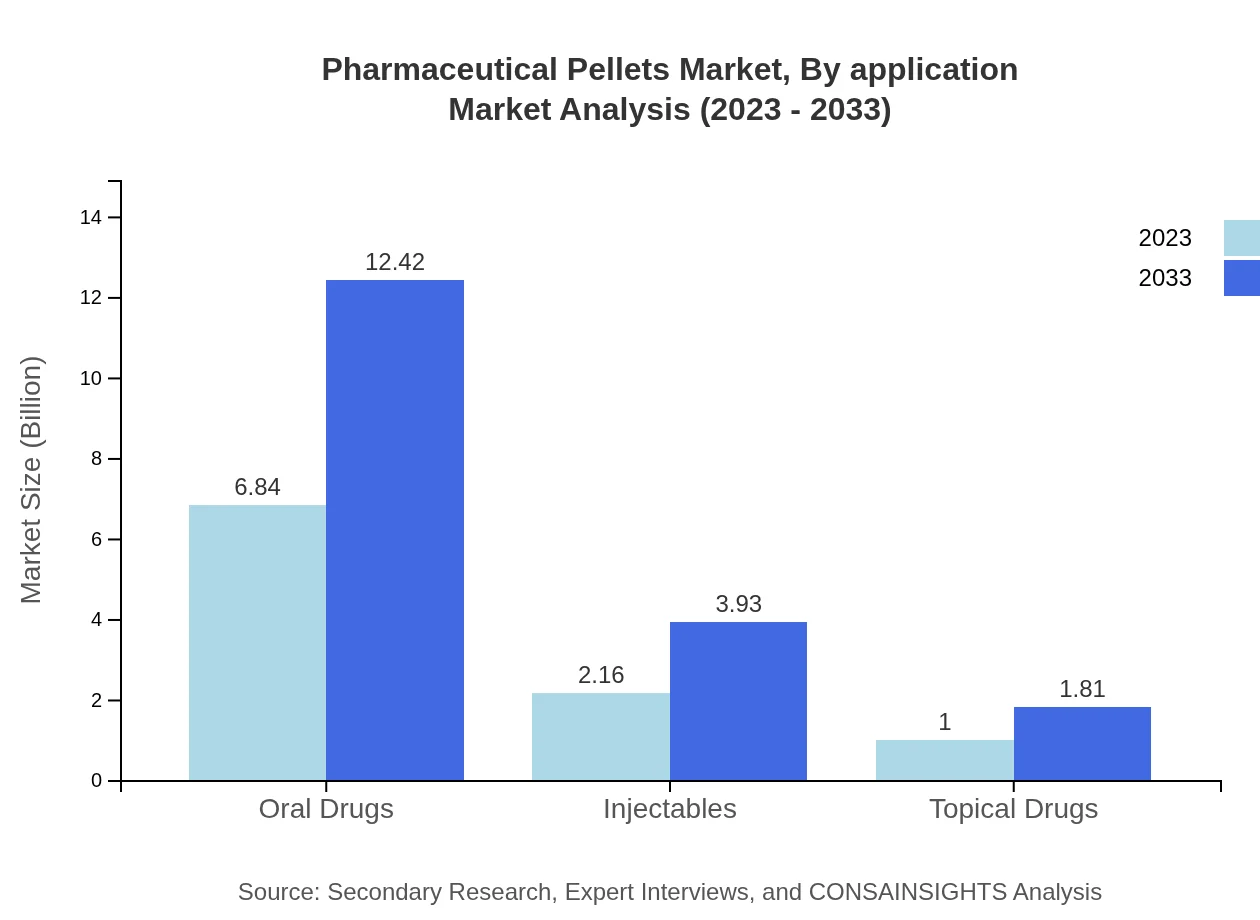
Applications of pharmaceutical pellets cater mainly to therapeutic areas such as chronic diseases, acute care, and preventive care. The focus is on improving patient compliance and treatment efficacy through various formulations, ultimately expanding the delivery capabilities of essential medications.
Pharmaceutical Pellets Market Analysis By Manufacturing Technique
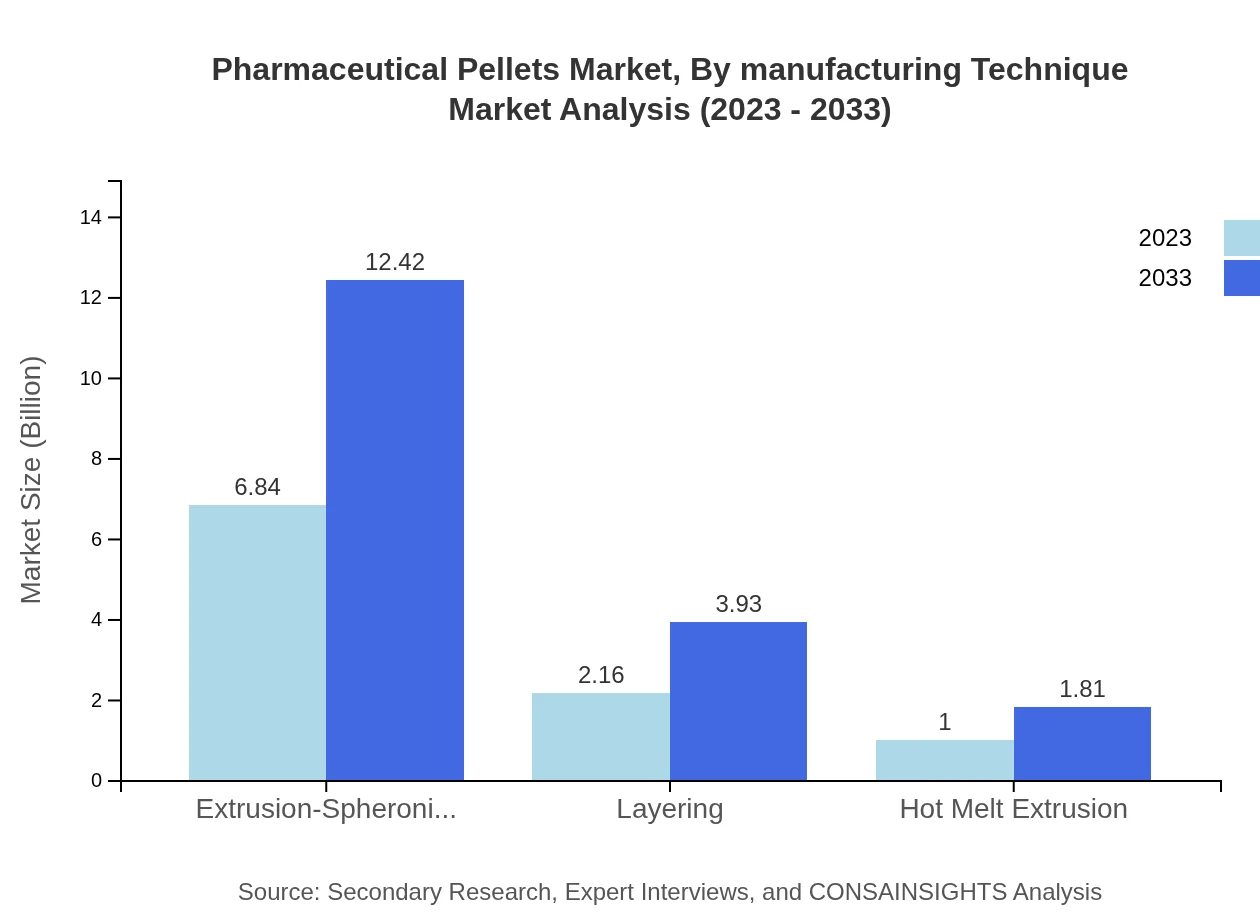
Manufacturing techniques like Extrusion-Spheronization, Layering, and Hot Melt Extrusion play pivotal roles in pellet production. With Extrusion-Spheronization holding a significant market share, the efficiency and flexibility it offers make it a preferred technique for many pharmaceutical manufacturers.
Pharmaceutical Pellets Market Analysis By End User Industry
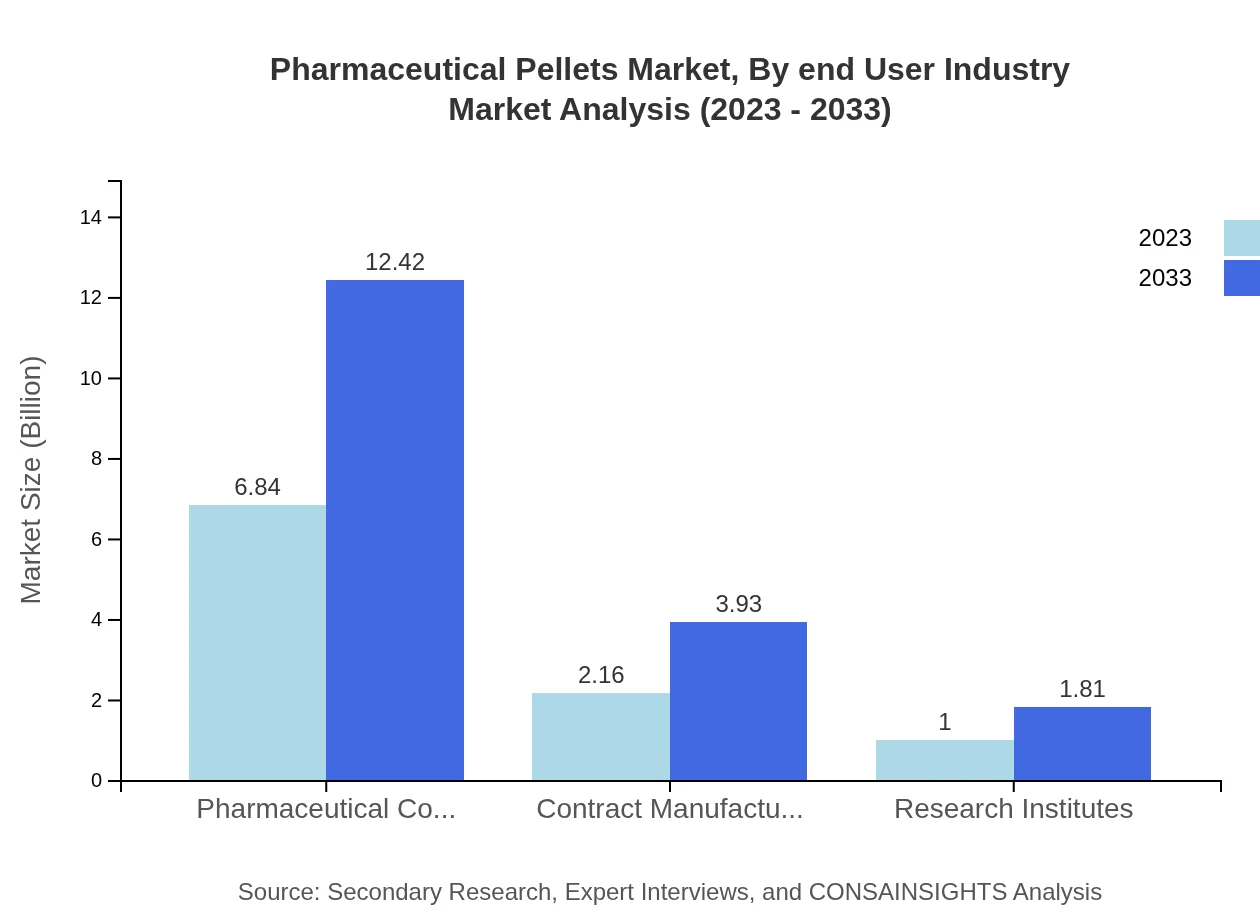
The end-user industry encompasses pharmaceutical companies, contract manufacturers, and research institutes. The pharmaceutical sector dominates, with significant growth anticipated from contract manufacturers as they scale production capabilities to meet the rising global demand for similar formulations.
Pharmaceutical Pellets Market Analysis By Regulatory Compliance
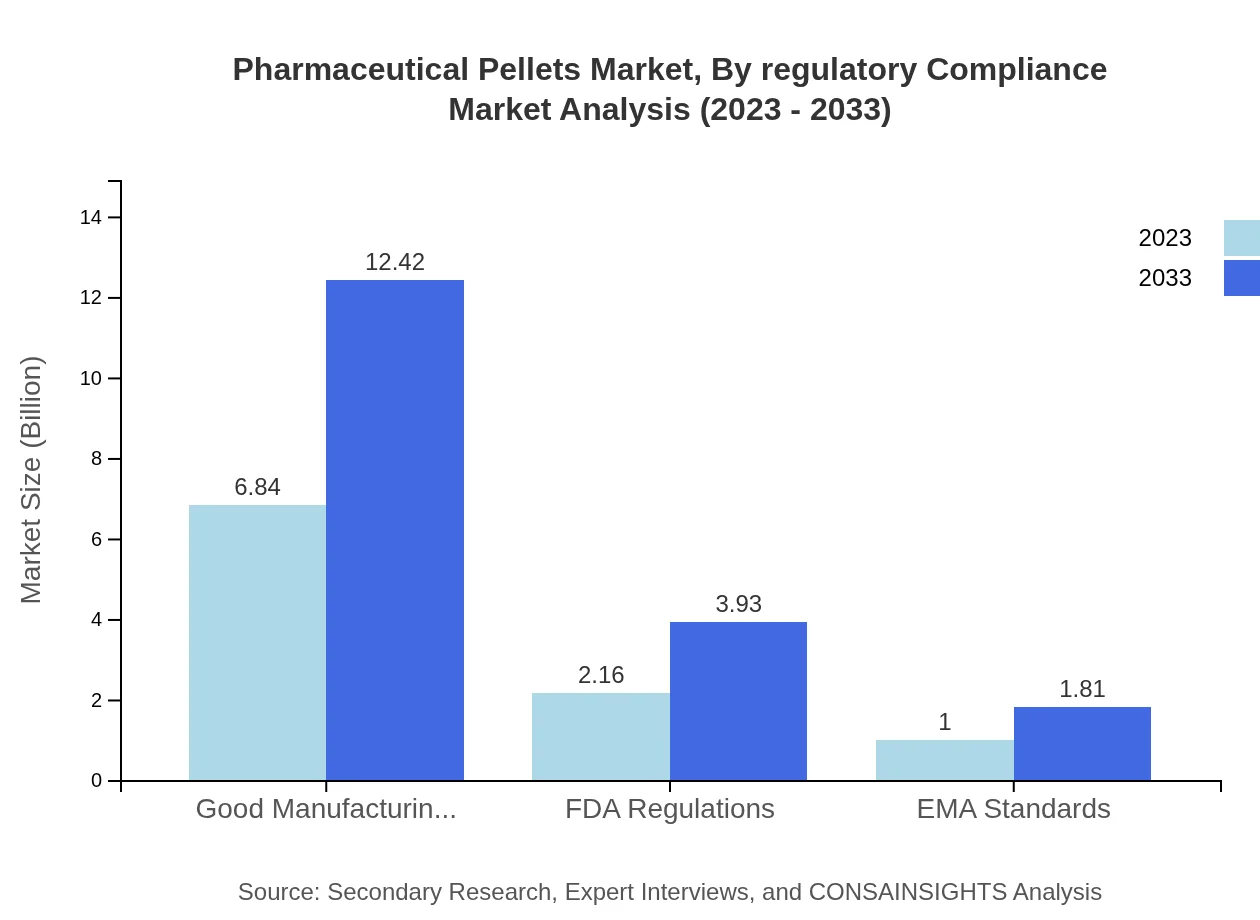
Regulatory compliance plays a crucial role in the pharmaceutical pellets market, with Good Manufacturing Practices (GMP), FDA regulations, and EMA standards guiding the production processes. Adhering to these standards ensures consumer safety and trust in pharmaceutical products.
Pharmaceutical Pellets Market Trends and Future Forecast
Tell us your focus area and get a customized research report.
Global Market Leaders and Top Companies in Pharmaceutical Pellets Industry
BASF SE:
A global leader in the chemical industry, BASF offers comprehensive solutions for pharmaceutical formulations, including innovative additives that enhance pellet performance.Evonik Industries AG:
Evonik specializes in pharmaceutical ingredients and solutions, providing advanced polymer technologies that improve drug delivery efficiency in pellet form.Pfizer Inc.:
As a leading pharmaceutical company, Pfizer integrates advanced drug delivery systems, with robust research into pellet formulations for better treatment outcomes.Sandoz (Novartis AG):
Sandoz focuses on generics and biosimilars, actively investing in pellet technology to improve delivery systems for various therapeutic applications.We're grateful to work with incredible clients.








FAQs
What is the current market size of the Pharmaceutical Pellets Market Report?
The market size in 2023 is $10.00 Billion, as stated in the report. This figure establishes the baseline for the 2023 to 2033 forecast period.
How big will the market be in 2033?
The market is projected to reach $18.17 Billion by 2033, using the provided forecast data for the 2023 to 2033 period.
What is CAGR for the forecast period?
The Compound Annual Growth Rate for the 2023 to 2033 forecast period is 6%, as specified in the report data.
Is there a single fastest Growing region in the Pharmaceutical Pellets Market Report market?
No single fastest-growing region is stated for the Pharmaceutical Pellets Market Report market because the top regional implied CAGR values are within 0.15 percentage points of each other, making the ranking too close to call reliably.
Which companies are identified as key players?
Top companies listed include BASF SE, Evonik Industries AG, Pfizer Inc., and Sandoz (Novartis AG), indicating major supplier involvement in pellets production and materials.
What manufacturing techniques are highlighted?
Primary manufacturing methods mentioned are extrusion-spheronization, layering and hot melt extrusion, which support consistent pellet quality and formulation control.
How does regulatory compliance affect the market?
Regulatory frameworks such as GMP, FDA and EMA standards drive quality assurance investments, impacting production processes and supplier selection across the industry.
What are primary end User segments for pellets?
End-users include pharmaceutical companies, contract manufacturers and research institutes, reflecting both in-house production and outsourced manufacturing demand.
What applications do pellets serve?
Pellets are used in oral drugs, injectables and topical formulations, supporting immediate-, controlled- and delayed-release profiles depending on product design.
Why is contract manufacturing important?
Contract manufacturers expand production capacity and allow pharmaceutical companies to prioritize formulation development while leveraging established facilities for scale-up.