

Photopheresis Products Market Report
First published: 21 October 2024 | Last updated: 25 May 2026 | Report Code: photopheresis-products
Photopheresis Products Market — USD 500 million in 2023, Growing to USD 822.88M by 2033 at 5% CAGR
This report analyzes the Photopheresis Products market from 2023 to 2033, covering market trends, size, and insights across various segments and regions. It provides a forecast of growth opportunities and the competitive landscape influencing the industry.
Key Takeaways
- Global market value rises from $500.00 Billion in 2023 to $822.88 Billion in 2033 at a 5% CAGR.
- North America is largest regional market, while no single fastest-growing region is stated because regional CAGR differences remain within 0.15 percentage points.
- Europe, Asia Pacific, Latin America and MENA show notable expansions with explicit decade growth figures.
- Therapeutic devices and disposables are primary product categories supporting treatment delivery.
- Hospitals, clinics and research laboratories represent key end-users driving adoption.
- Leading firms named include Therakos, Inc., Fresenius Kabi AG and MediClonal.
Photopheresis Products Market Report — Executive Summary
North America remains largest market by forecast-period value, while no single fastest-growing region is stated because top regional growth rates are separated by less than 0.15 percentage points. This report analyzes market dynamics influencing photopheresis products across product, application and end-user segments. Key drivers include increasing chronic disease prevalence, advances in device technology and ongoing clinical research. The market expands from $500.00 Billion in 2023 to $822.88 Billion in 2033 at a 5% CAGR during 2023 to 2033. North America is the largest regional market, with documented growth from $172.8 Billion to $284.39 Billion. The study examines therapeutic devices and disposables, applications such as oncology, dermatology and transplantation, and use settings including hospitals, clinics and research laboratories. Competitive profiling highlights Therakos, Inc., Fresenius Kabi AG and MediClonal. The analysis also discusses regulatory influences, cost and procedural complexity as constraints, and opportunities from technology integration and collaborative research efforts.
Key Growth Drivers
- Rising prevalence of chronic and complex conditions increasing demand for photopheresis therapies.
- Technological improvements in devices that enhance treatment safety and operational efficiency.
- Expanded clinical research and approvals that broaden therapeutic indications and adoption.
- Greater adoption across hospitals, clinics and research laboratories supporting market uptake.
- Focused investments by established companies and new entrants accelerating product availability.
| Metric | Value |
|---|---|
| Study Period | 2023 - 2033 |
| 2023 Market Size | $500.00 Million |
| CAGR (2023-2033) | 5% |
| 2033 Market Size | $822.88 Million |
| Top Companies | Therakos, Inc., Fresenius Kabi AG, MediClonal |
| Published Date | 21 October 2024 |
| Last Modified Date | 25 May 2026 |
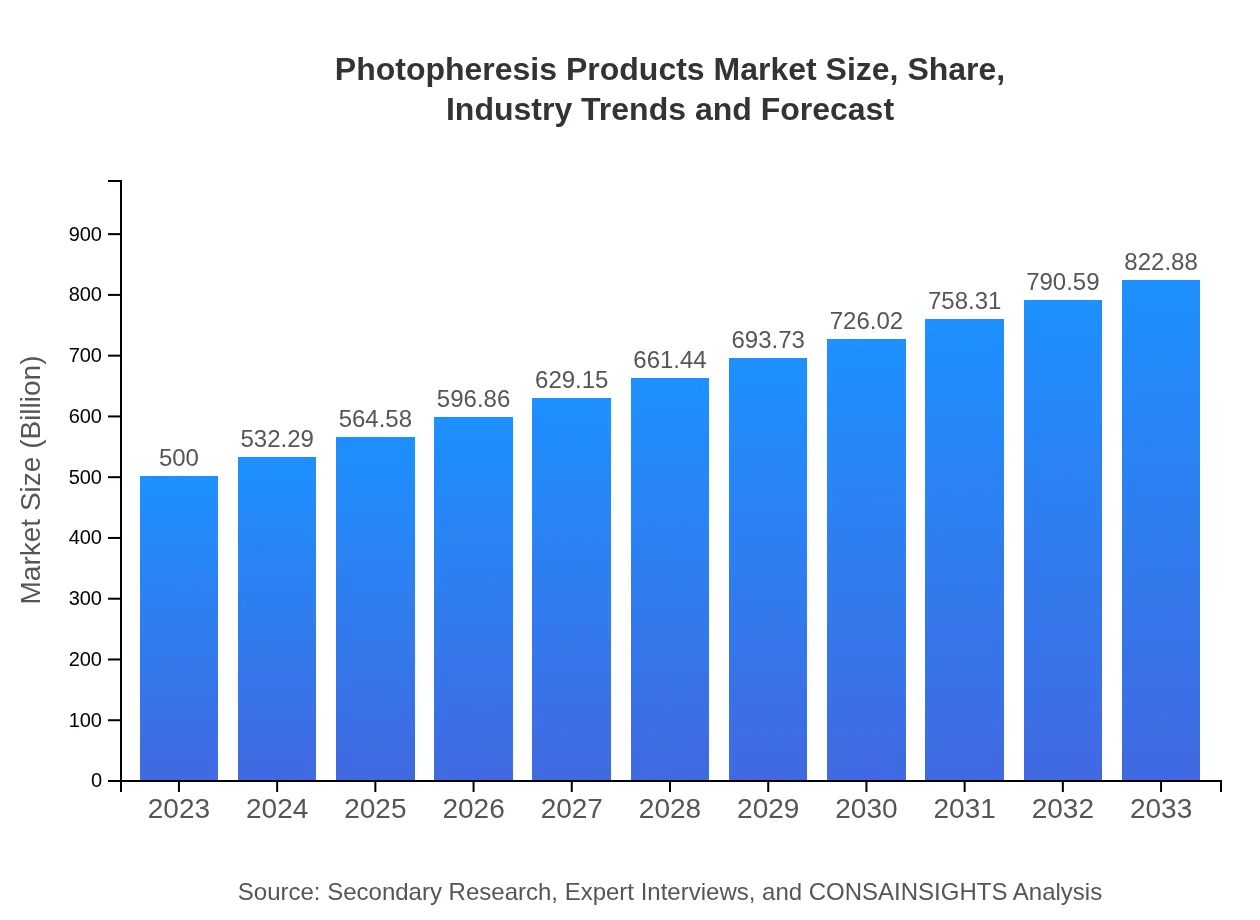
Photopheresis Products Market Overview
Customize Photopheresis Products Market Report market research report
- ✔ Get in-depth analysis of Photopheresis Products market size, growth, and forecasts.
- ✔ Understand Photopheresis Products's regional dynamics and industry-specific trends.
- ✔ Identify potential applications, end-user demand, and growth segments in Photopheresis Products
What is the Market Size & CAGR of Photopheresis Products Market Report market in 2023?
Photopheresis Products Industry Analysis
Photopheresis Products Market Segmentation and Scope
Tell us your focus area and get a customized research report.
Photopheresis Products Market Report Market Analysis Report by Region
Europe Photopheresis Products Market Report:
Europe grows from $136.75 Billion in 2023 to $225.06 Billion in 2033. Growth is influenced by clinical research activity, regulatory developments and increasing use of photopheresis in oncology and dermatology settings.Asia Pacific Photopheresis Products Market Report:
Asia Pacific grows from $103.25 Billion in 2023 to $169.93 Billion in 2033. Adoption is driven by expanding healthcare infrastructure, rising awareness of therapeutic applications and increasing investment in medical technologies.North America Photopheresis Products Market Report:
North America is largest regional market, rising from $172.8 Billion in 2023 to $284.39 Billion in 2033. Local drivers include established clinical infrastructure, higher device adoption rates and ongoing research that underpin regional demand and market scale.South America Photopheresis Products Market Report:
Latin America grows from $43.45 Billion in 2023 to $71.51 Billion in 2033. Regional expansion reflects growing access to specialized therapies, rising clinical adoption and development of healthcare facilities.Middle East & Africa Photopheresis Products Market Report:
Middle East and Africa grows from $43.75 Billion in 2023 to $72 Billion in 2033. Demand is supported by improving healthcare services, targeted research initiatives and gradual uptake of advanced therapeutic devices.Tell us your focus area and get a customized research report.
Research Methodology
Photopheresis Products Market Analysis By Product
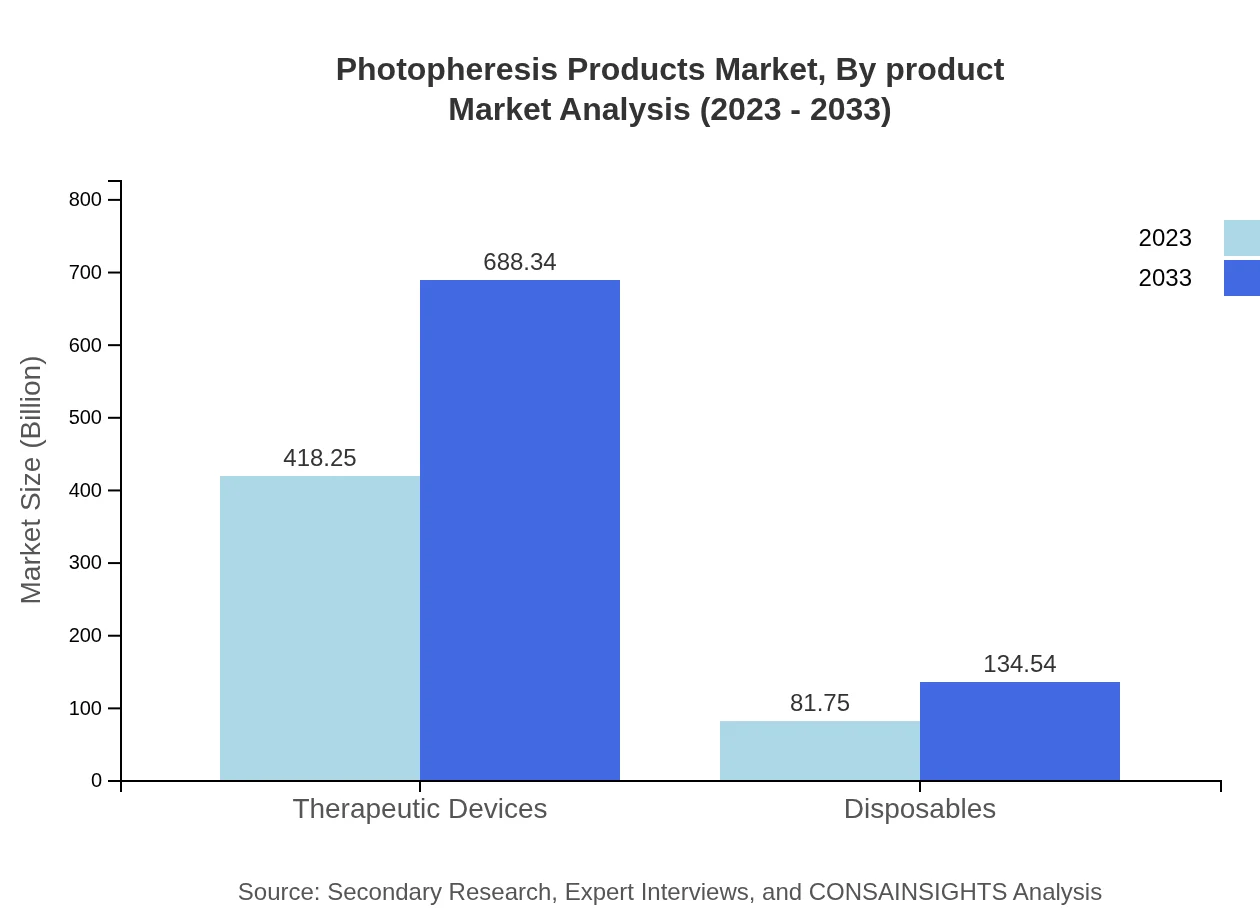
The Photopheresis Products market is segmented by product type into Therapeutic Devices and Disposables, where Therapeutic Devices account for a substantial share, comprising USD 418.25 million in 2023, growing to USD 688.34 million by 2033. Disposables segment is valued at USD 81.75 million in 2023, projected to reach USD 134.54 million by 2033.
Photopheresis Products Market Analysis By Application
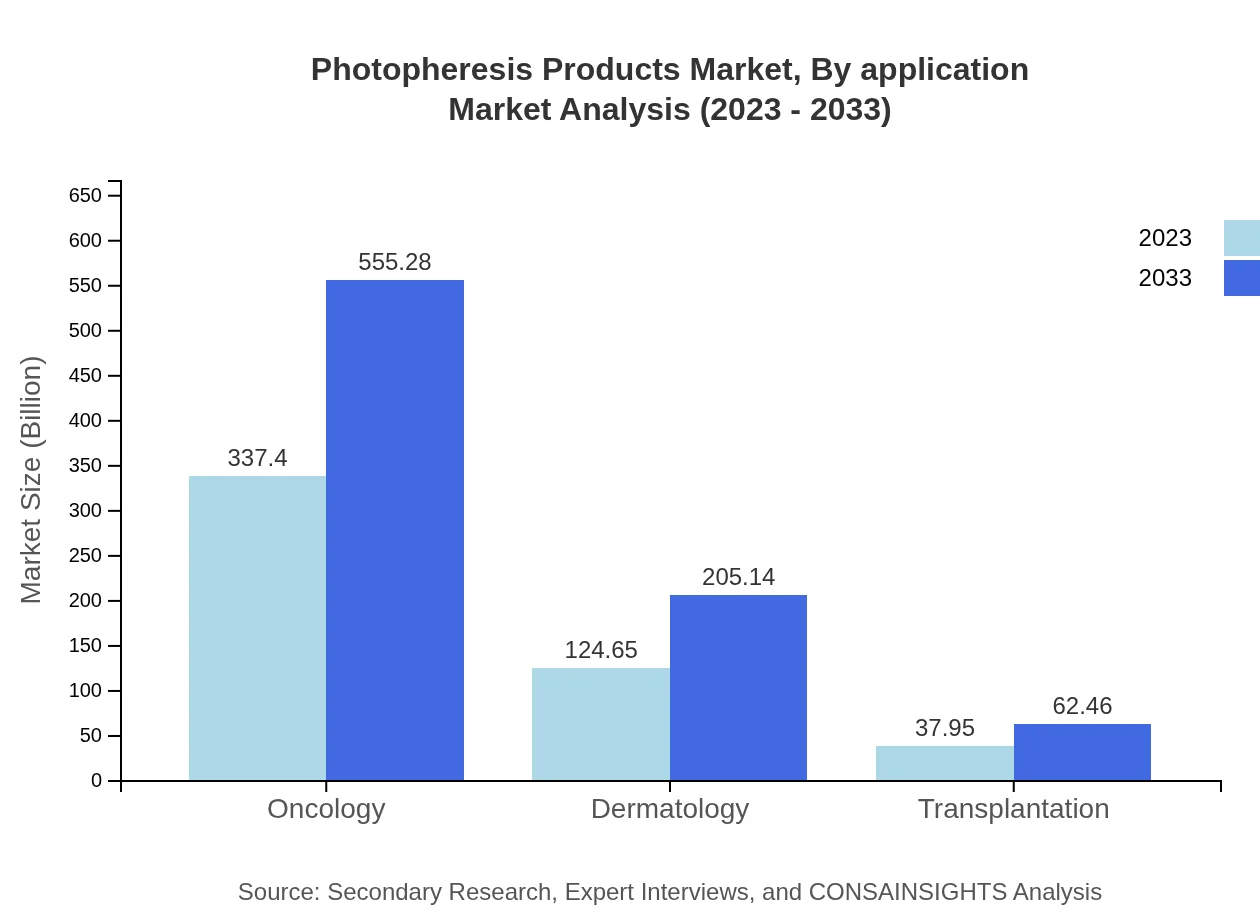
Applications of Photopheresis Products include Oncology, Dermatology, and Transplantation. Oncology holds a significant market share, valued at approximately USD 337.40 million in 2023, anticipated to reach USD 555.28 million by 2033. Dermatology and Transplantation follow, with projected growth rates reflecting increasing cases and treatment needs.
Photopheresis Products Market Analysis By End User
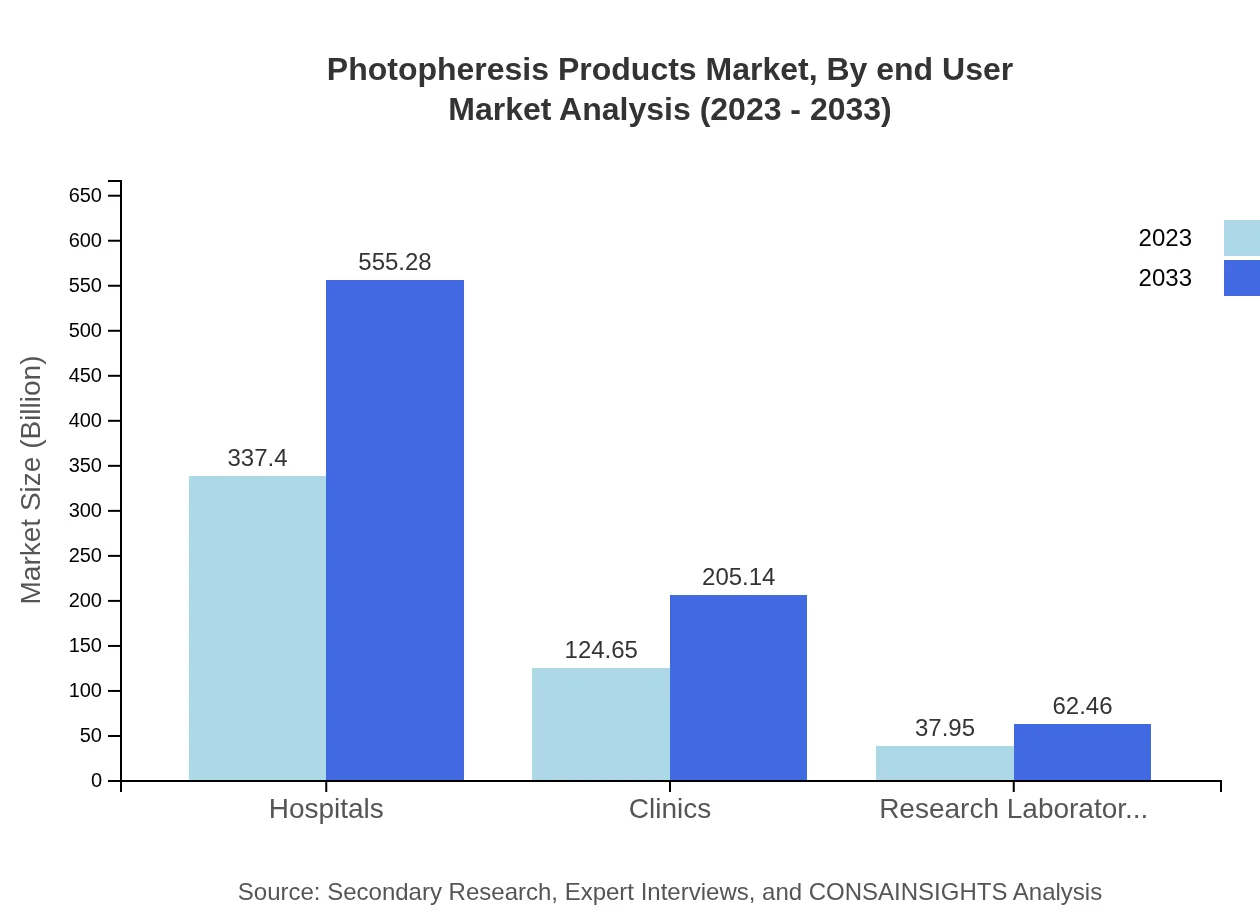
End-users include Hospitals, Clinics, and Research Laboratories. In 2023, Hospitals represent the largest segment with market values of USD 337.40 million, followed by Clinics at USD 124.65 million and Research Laboratories at USD 37.95 million. By 2033, these figures are expected to rise significantly across all segments.
Photopheresis Products Market Analysis By Region
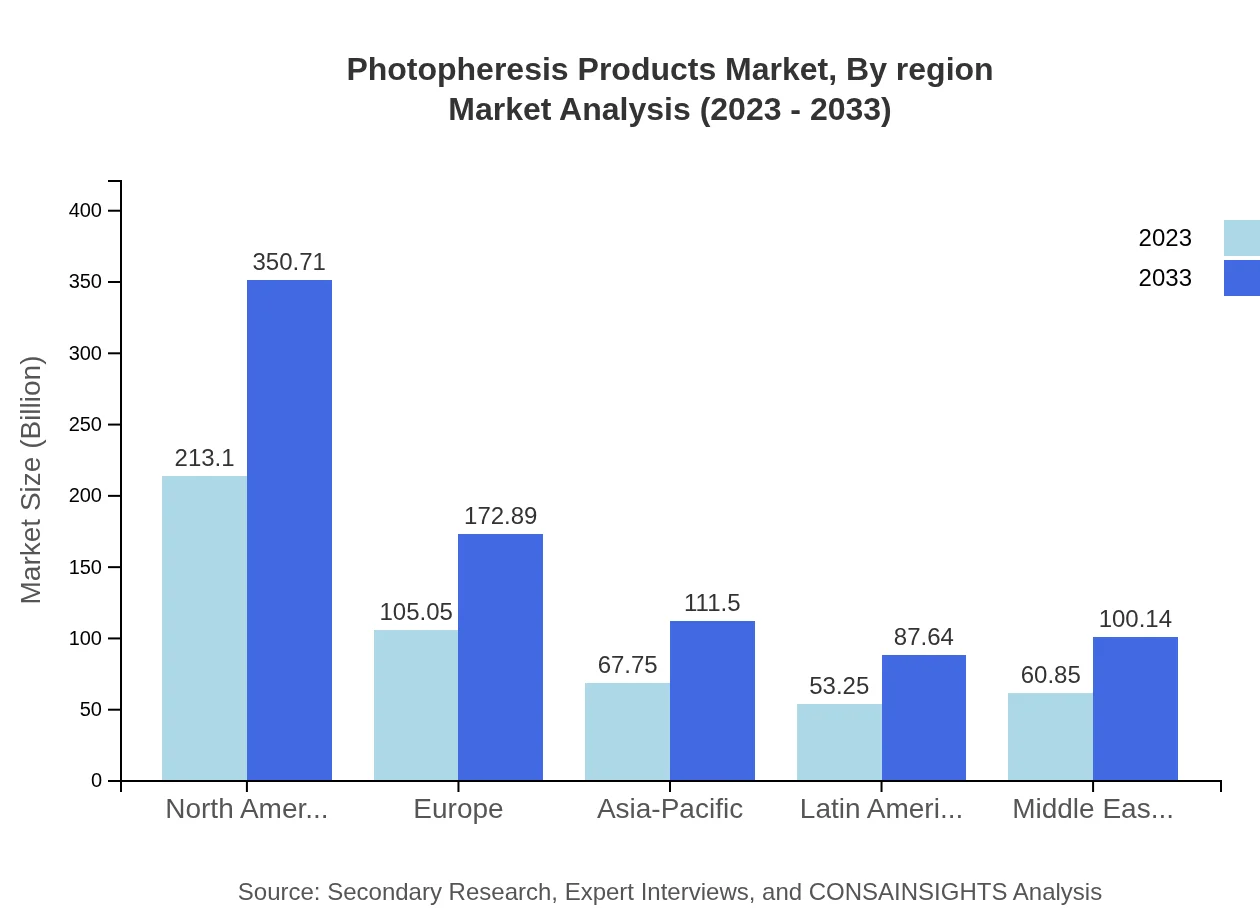
Regionally, North America leads in market size, followed by Europe and Asia Pacific. The trends show significant growth in emerging markets in Asia Pacific and Latin America, indicating a shift in acceptance and accessibility to therapeutic interventions across these regions.
Photopheresis Products Market Trends and Future Forecast
Tell us your focus area and get a customized research report.
Global Market Leaders and Top Companies in Photopheresis Products Industry
Therakos, Inc.:
A prominent player specializing in photopheresis technology with a focus on innovation and improved patient care.Fresenius Kabi AG:
A leading global healthcare company specializing in lifesaving medicines and technologies, including photopheresis machines.MediClonal:
A biotechnology firm engaged in the development of new therapies utilizing photopheresis for various indications.We're grateful to work with incredible clients.









FAQs
What is the market size of Photopheresis Products Market Report in 2023?
The market size for 2023 is $500.00 Billion as stated in the report data, representing the baseline year for the 2023 to 2033 forecast period.
How big will the Photopheresis Products Market Report market be in 2033?
The market is projected to reach $822.88 Billion in 2033 according to the provided forecast figures for the period 2023 to 2033.
What is CAGR of the Photopheresis Products Market Report market for 2023 to 2033?
The compound annual growth rate for the forecast period 2023 to 2033 is 5% as specified in the input dataset.
Is there a single fastest Growing region in the Photopheresis Products Market Report market?
No single fastest-growing region is stated for the Photopheresis Products Market Report market because the top regional implied CAGR values are within 0.15 percentage points of each other, making the ranking too close to call reliably.
Who are the leading companies in the Photopheresis Products Market Report market?
Top companies listed for this market include Therakos, Inc., Fresenius Kabi AG and MediClonal as provided in the input.
Why is North America the largest regional market?
North America’s scale reflects a combination of established clinical infrastructure, device adoption and documented regional growth from $172.8 Billion to $284.39 Billion.
What are the main product segments in this market?
Primary product groupings include therapeutic devices and disposables, which are highlighted as core components of photopheresis treatment delivery.
What end Users drive demand for photopheresis products?
Hospitals, clinics and research laboratories are the main end-users cited, supporting clinical application and wider treatment availability.
Which applications are covered in the Photopheresis Products Market Report market?
Key clinical applications listed include oncology, dermatology and transplantation, reflecting primary therapeutic use cases.
How does the report address regulatory and cost challenges?
The study notes regulatory requirements and procedural costs as constraints affecting adoption while highlighting opportunities from innovation and collaborative research.