
Reports >
Life Sciences
>
Protein Labelling Market Report

Protein Labelling Market Report
First published: 16 October 2024 | Last updated: 25 May 2026 | Report Code: protein-labelling
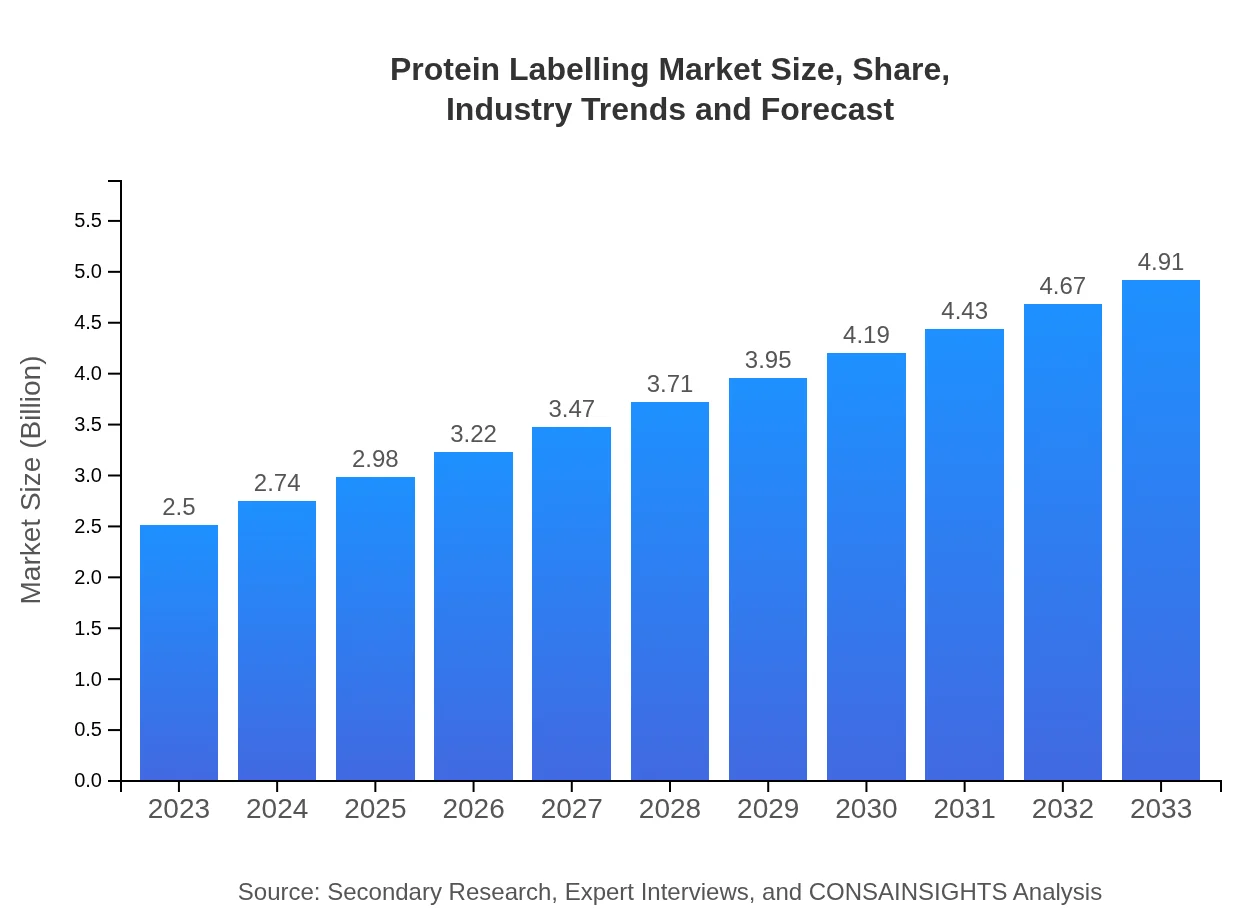
Protein Labelling Market — USD 2.5 billion in 2023, Growing to USD 4.91B by 2033 at 6.8% CAGR
This report provides an in-depth analysis of the Protein Labelling market, covering market size, growth trends, and forecasts from 2023 to 2033. It includes insights into regional performance, technology trends, and key players in the industry.
Key Takeaways
- Global market expands from $2.50 Billion in 2023 to $4.91 Billion in 2033 at a 6.8% CAGR.
- North America is largest regional market, while no single fastest-growing region is stated because regional CAGR differences remain within 0.15 percentage points.
- Strong demand drivers include clinical diagnostics, pharmaceutical R&D, and academic research applications.
- Key labeling techniques include fluorescent, radioactive, and enzymatic methods; product types span reagents, kits, and instruments.
- Leading companies featured: Thermo Fisher Scientific, Agilent Technologies, Merck Group, PerkinElmer, Roche Diagnostics.
Protein Labelling Market Report — Executive Summary
North America remains largest market by forecast-period value, while no single fastest-growing region is stated because top regional growth rates are separated by less than 0.15 percentage points. The Protein Labelling Market Report examines market forces shaping a sector that grows from $2.50 Billion in 2023 to $4.91 Billion by 2033 at a 6.8% CAGR. Expansion is driven by rising needs in clinical diagnostics, pharmaceutical drug development, and biomedical research, together with increasing investment in laboratory automation and advanced detection techniques. The report breaks the market into product types, labeling techniques, applications, and end users, and profiles prominent companies such as Thermo Fisher Scientific and Roche Diagnostics. Regional performance is analyzed across North America, Europe, Asia Pacific, Latin America, and Middle East and Africa. Methodology combines expert interviews, company documentation, and internal validation to ensure robust, triangulated conclusions. The analysis is tailored for stakeholders seeking actionable intelligence on adoption patterns, technology trends, and competitive positioning across the forecast period.
Key Growth Drivers
- Rising diagnostic testing and clinical laboratory activity boosting demand for protein labeling reagents and kits.
- Increased pharmaceutical and biotechnology R&D spending supporting uptake of labeling techniques for drug discovery and development.
- Academic and institutional research growth fueling demand for instruments and specialized labeling methods.
- Advances in detection technologies and laboratory automation enhancing throughput and assay sensitivity.
| Metric | Value |
|---|---|
| Study Period | 2023 - 2033 |
| 2023 Market Size | $2.50 Billion |
| CAGR (2023-2033) | 6.8% |
| 2033 Market Size | $4.91 Billion |
| Top Companies | Thermo Fisher Scientific, Agilent Technologies, Merck Group, PerkinElmer, Roche Diagnostics |
| Published Date | 16 October 2024 |
| Last Modified Date | 25 May 2026 |
Protein Labelling Market Overview
Customize Protein Labelling Market Report market research report
- ✔ Get in-depth analysis of Protein Labelling market size, growth, and forecasts.
- ✔ Understand Protein Labelling's regional dynamics and industry-specific trends.
- ✔ Identify potential applications, end-user demand, and growth segments in Protein Labelling
What is the Market Size & CAGR of Protein Labelling Market Report market in 2023?
Protein Labelling Industry Analysis
Protein Labelling Market Segmentation and Scope
Tell us your focus area and get a customized research report.
Protein Labelling Market Report Market Analysis Report by Region
Europe Protein Labelling Market Report:
Europe grows from $0.65 Billion in 2023 to $1.28 Billion in 2033. Expansion is supported by robust academic research, pharmaceutical R&D investment, and demand for sensitive labeling techniques in clinical diagnostics and drug discovery.Asia Pacific Protein Labelling Market Report:
Asia Pacific grows from $0.48 Billion in 2023 to $0.95 Billion in 2033. Market development is linked to rising biomedical research activity, increasing biotechnology investments, and broader adoption of labeling kits and instruments in labs.North America Protein Labelling Market Report:
North America is largest regional market, rising from $0.8 Billion in 2023 to $1.58 Billion in 2033. Regional strength reflects concentrated biotech and pharmaceutical research, extensive clinical laboratory networks, and high adoption of advanced labeling instruments and reagents.South America Protein Labelling Market Report:
Latin America grows from $0.25 Billion in 2023 to $0.48 Billion in 2033. Growth there is influenced by expanding diagnostic services, academic research programs, and gradual uptake of protein labeling reagents and kits.Middle East & Africa Protein Labelling Market Report:
Middle East and Africa grows from $0.32 Billion in 2023 to $0.62 Billion in 2033. Market drivers include expanding clinical diagnostics capacity, growing research infrastructure, and demand for established labeling techniques in biomedical applications.Tell us your focus area and get a customized research report.
Research Methodology
Protein Labelling Market Analysis By Labeling Technique
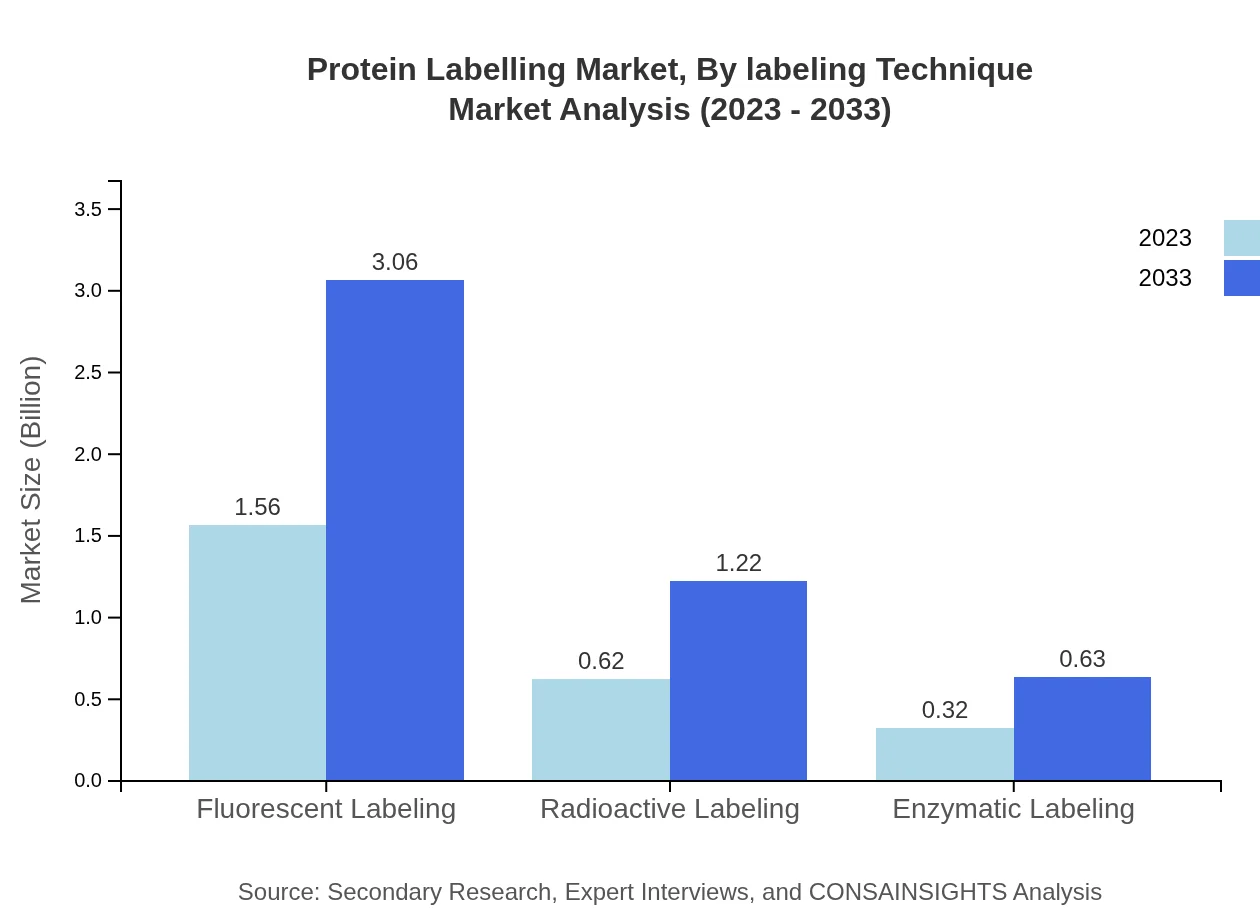
The Protein Labelling market by labeling technique includes major segments such as fluorescent, radioactive, and enzymatic labeling. Fluorescent labeling dominates the market, accounting for a significant share of over 62.33% in 2023. Advances in fluorescence technology have expanded its application in various fields including diagnostics and drug discovery, ensuring its continued significance.
Protein Labelling Market Analysis By Application
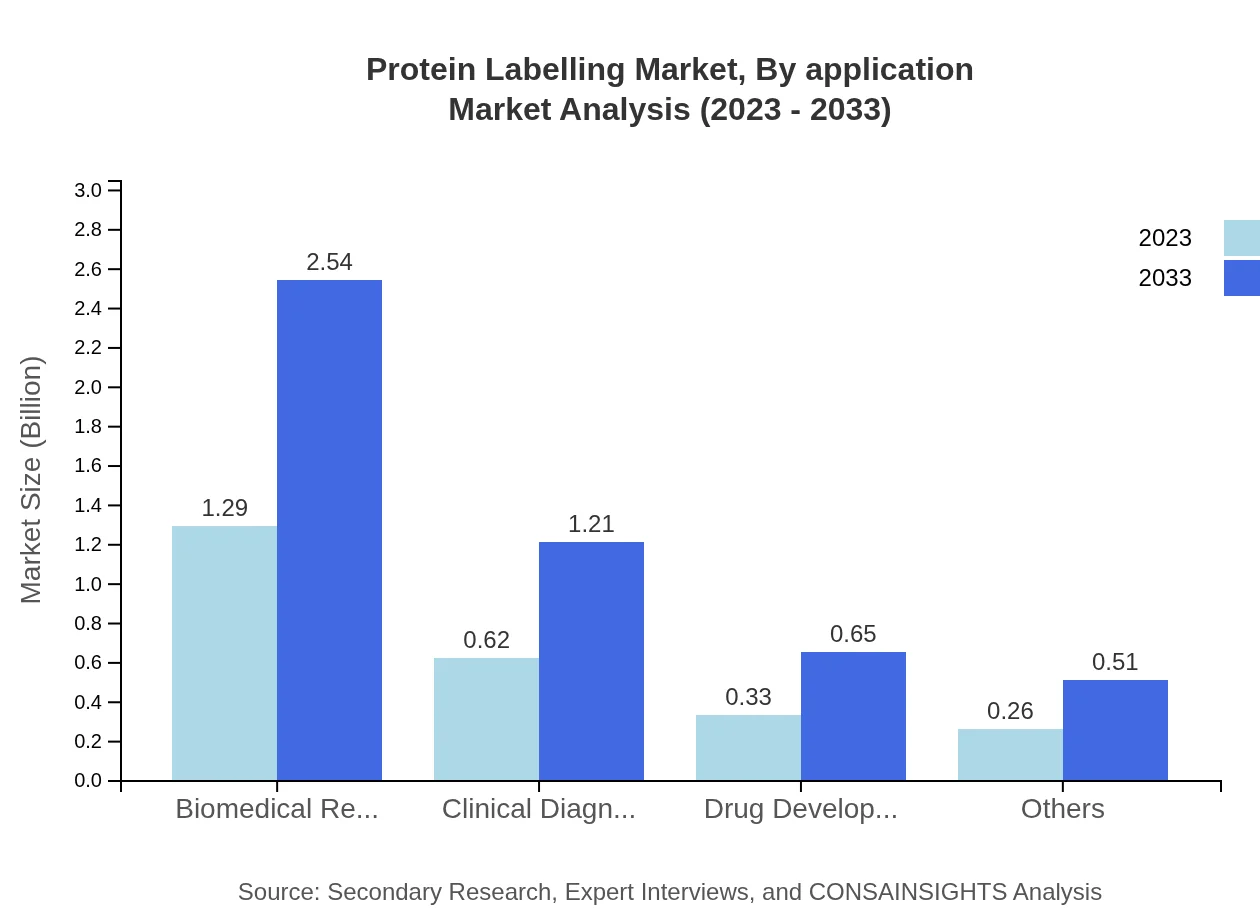
In terms of application, academic research institutes are the largest segment, representing 51.72% share in 2023, with a steady growth projection due to consistent funding in educational research. Pharmaceutical companies also hold a vital market position with 24.6% share, reflecting the rise in drug development activities requiring precise protein analysis.
Protein Labelling Market Analysis By Product Type
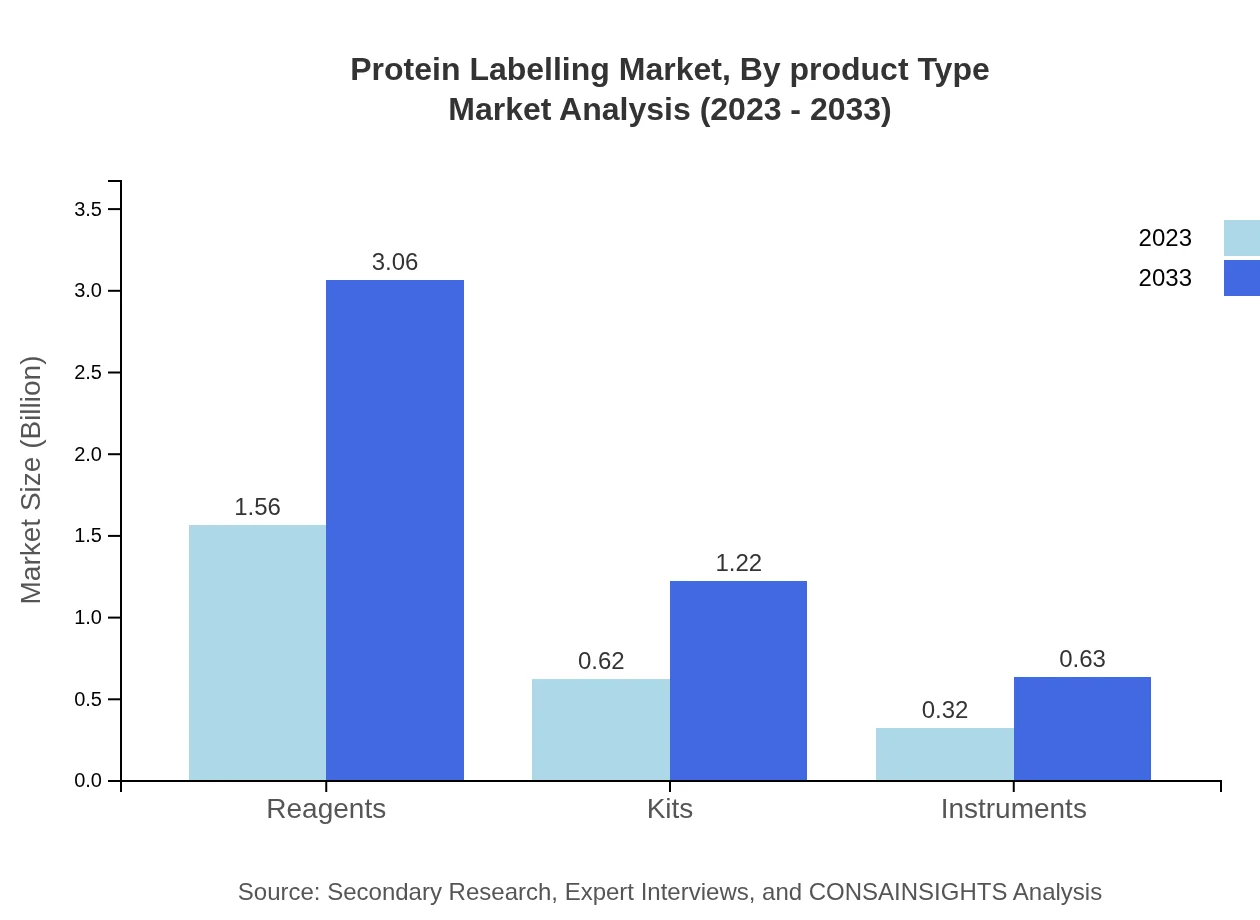
The protein labeling market by product type emphasizes reagents, which represent a majority share of 62.33% in 2023. The growth of this segment is driven by the demand for high-quality reagents that are essential in research applications. Kits and instruments follow closely, like the kits, having a 24.86% market share, reflecting their importance in streamlined research processes.
Protein Labelling Market Analysis By End User
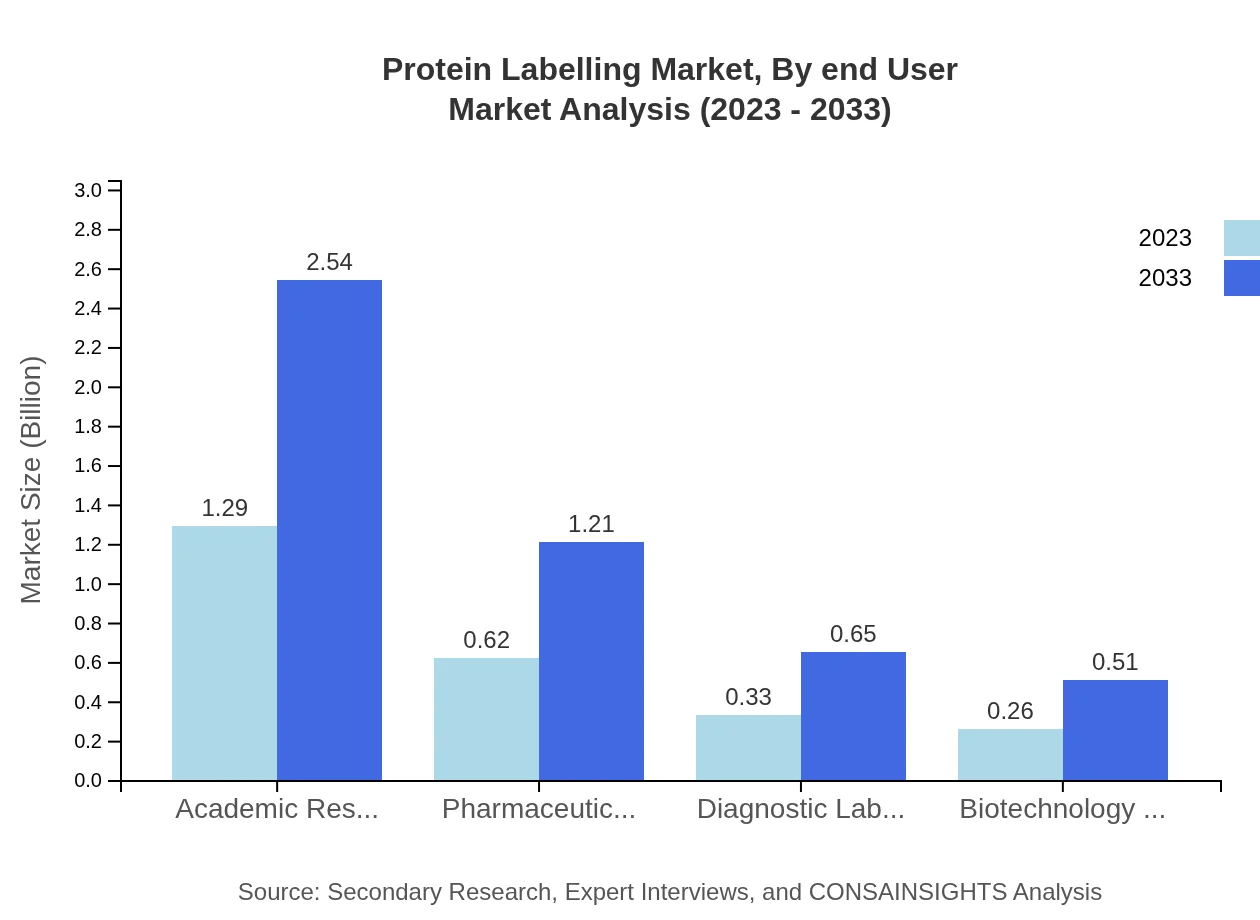
The end-user segmentation shows that academic research institutes lead the market with a representation of over 51.72% in 2023, indicating a strong emphasis on educational research. Pharmaceutical and biotech companies follow, contributing significantly due to the need for protein analysis in diagnostics and therapeutic development.
Protein Labelling Market Trends and Future Forecast
Tell us your focus area and get a customized research report.
Global Market Leaders and Top Companies in Protein Labelling Industry
Thermo Fisher Scientific:
A leading player in the protein labeling market, Thermo Fisher Scientific offers a comprehensive range of products including reagents and kits that cater to diverse research needs.Agilent Technologies:
Agilent Technologies is renowned for its innovative solutions in the life sciences sector, providing cutting-edge instruments and labeling technologies that enhance research outcomes.Merck Group:
Merck Group excels in biotechnology and life science research with a robust portfolio of reagents, kits, and instruments for effective protein analysis.PerkinElmer:
PerkinElmer is recognized for its high-performance analytical technologies, contributing significantly to the protein labeling segment through its advanced diagnostic tools.Roche Diagnostics:
Roche Diagnostics leads in medical diagnostics and healthcare, offering protein labeling solutions that push the boundaries of clinical research.We're grateful to work with incredible clients.


FAQs
What is the market size of the Protein Labelling Market Report in 2023?
The market size is $2.50 Billion in 2023, as reported for the Protein Labelling market.
How big is the Protein Labelling market projected to be in 2033?
The projected market value reaches $4.91 Billion in 2033, according to the forecast period data provided.
What is CAGR for the forecast period 2023 to 2033?
The market is forecast to grow at a compound annual growth rate (CAGR) of 6.8% between 2023 and 2033.
Is there a single fastest Growing region in the Protein Labelling Market Report market?
No single fastest-growing region is stated for the Protein Labelling Market Report market because the top regional implied CAGR values are within 0.15 percentage points of each other, making the ranking too close to call reliably.
Which companies are recognized as key players?
Top companies listed include Thermo Fisher Scientific, Agilent Technologies, Merck Group, PerkinElmer, and Roche Diagnostics.
What are the main product categories in the market?
Primary product types include reagents, kits, and instruments, each supporting varied laboratory workflows and assay requirements.
What is driving adoption of fluorescent and enzymatic labeling?
Adoption is supported by needs for higher sensitivity and specificity in biomedical research and diagnostic applications, along with compatibility with modern detection platforms.
How was the market assessment conducted?
The evaluation used primary interviews with industry experts, secondary sources such as company reports, and data triangulation with internal validation.