
Reports >
Life Sciences
>
Restriction Endonucleases Market Report

Restriction Endonucleases Market Report
First published: 21 October 2024 | Last updated: 25 May 2026 | Report Code: restriction-endonucleases
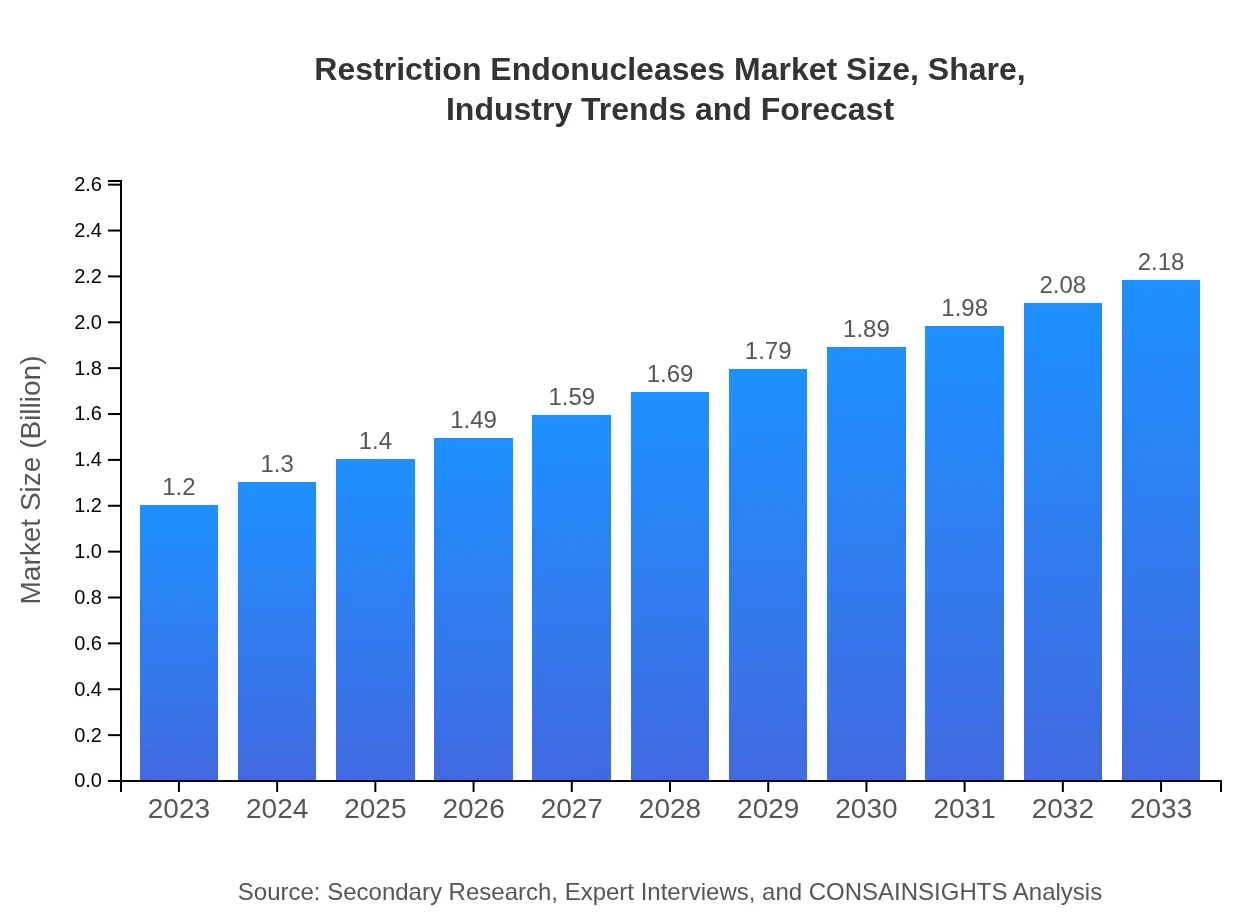
Restriction Endonucleases Market — USD 1.2 billion in 2023, Growing to USD 2.18B by 2033 at 6% CAGR
This report provides an in-depth analysis of the Restriction Endonucleases market, exploring current market trends, size projections, and key insights from 2023 to 2033.
Key Takeaways
- Global market grows from $1.20 Billion in 2023 to $2.18 Billion in 2033, reflecting a 6% CAGR over 2023 to 2033.
- North America is largest regional market, while no single fastest-growing region is stated because regional CAGR differences remain within 0.15 percentage points.
- Europe expands from $0.36 Billion to $0.65 Billion over the forecast period, supported by biotechnology and genomics activity.
- Asia Pacific rises from $0.23 Billion in 2023 to $0.42 Billion in 2033, driven by growing research infrastructure.
- Key suppliers include Thermo Fisher Scientific, New England Biolabs, Takara Bio, Promega Corporation, and Sigma-Aldrich (Merck Group).
Restriction Endonucleases Market Report — Executive Summary
North America remains largest market by forecast-period value, while no single fastest-growing region is stated because top regional growth rates are separated by less than 0.15 percentage points. This report analyzes market dynamics for restriction endonucleases across product types, applications, formulations, and end-users. The market was valued at $1.20 Billion in 2023 and is projected to grow to $2.18 Billion by 2033 at a 6% CAGR during 2023 to 2033. Expansion is propelled by increased biotechnology research, advances in genetic engineering tools, and adoption of gene-editing workflows. Demand from academic institutions, pharmaceutical and biotechnology firms, and CROs supports uptake, while innovations in enzyme formulations and workflow automation are shaping supplier offerings. The competitive landscape features established vendors such as Thermo Fisher Scientific, New England Biolabs, Takara Bio, Promega Corporation, and Sigma-Aldrich (Merck Group). Regional patterns vary: North America remains the largest market, with Europe and Asia Pacific showing substantial increases. The report segments the market by product type (including Type I, II, and III enzymes), application, end-user, and formulation to provide actionable insights for stakeholders and investors.
Key Growth Drivers
- Rising investment in biotechnology and genomics research increases demand for DNA-modifying enzymes and related reagents.
- Advances in genetic engineering techniques expand laboratory use cases for restriction endonucleases in research and development.
- Growing activity in academic institutions, pharmaceutical companies, and biotechnology firms supports steady procurement of enzyme products.
- Improvements in enzyme formulations and integration with automated workflows enhance usability and adoption in laboratories.
- Expanding applications in diagnostics, therapeutics, and biotechnology drive broader market uptake across end users.
| Metric | Value |
|---|---|
| Study Period | 2023 - 2033 |
| 2023 Market Size | $1.20 Billion |
| CAGR (2023-2033) | 6% |
| 2033 Market Size | $2.18 Billion |
| Top Companies | Thermo Fisher Scientific, New England Biolabs, Takara Bio, Promega Corporation, Sigma-Aldrich (Merck Group) |
| Published Date | 21 October 2024 |
| Last Modified Date | 25 May 2026 |
Restriction Endonucleases Market Overview
Customize Restriction Endonucleases Market Report market research report
- ✔ Get in-depth analysis of Restriction Endonucleases market size, growth, and forecasts.
- ✔ Understand Restriction Endonucleases's regional dynamics and industry-specific trends.
- ✔ Identify potential applications, end-user demand, and growth segments in Restriction Endonucleases
What is the Market Size & CAGR of Restriction Endonucleases Market Report market in 2023?
Restriction Endonucleases Industry Analysis
Restriction Endonucleases Market Segmentation and Scope
Tell us your focus area and get a customized research report.
Restriction Endonucleases Market Report Market Analysis Report by Region
Europe Restriction Endonucleases Market Report:
Europe grows from $0.36 Billion in 2023 to $0.65 Billion in 2033. This growth is driven by active genomics and biotech research communities, supportive clinical and academic research programs, and demand for genetic engineering tools.Asia Pacific Restriction Endonucleases Market Report:
Asia Pacific grows from $0.23 Billion in 2023 to $0.42 Billion in 2033. 23 Billion in 2023 to $0.42 Billion in 2033, supported by growing research funding, expanding laboratory capacity, and rising adoption of molecular biology techniques in academic and commercial settings.North America Restriction Endonucleases Market Report:
North America is largest regional market, rising from $0.38 Billion in 2023 to $0.7 Billion in 2033. Regional strength reflects concentrated biotechnology research, established life-sciences infrastructure, and strong presence of leading suppliers.South America Restriction Endonucleases Market Report:
Latin America grows from $0.07 Billion in 2023 to $0.12 Billion in 2033. 07 Billion in 2023 to $0.12 Billion in 2033, reflecting gradual increases in regional research activity and investments in biotechnology infrastructure and diagnostic capabilities.Middle East & Africa Restriction Endonucleases Market Report:
Middle East and Africa grows from $0.16 Billion in 2023 to $0.29 Billion in 2033. 16 Billion in 2023 to $0.29 Billion in 2033, driven by developing research programs, growing healthcare and diagnostics initiatives, and expanding laboratory services in select markets.Tell us your focus area and get a customized research report.
Research Methodology
Restriction Endonucleases Market Analysis By Product Type
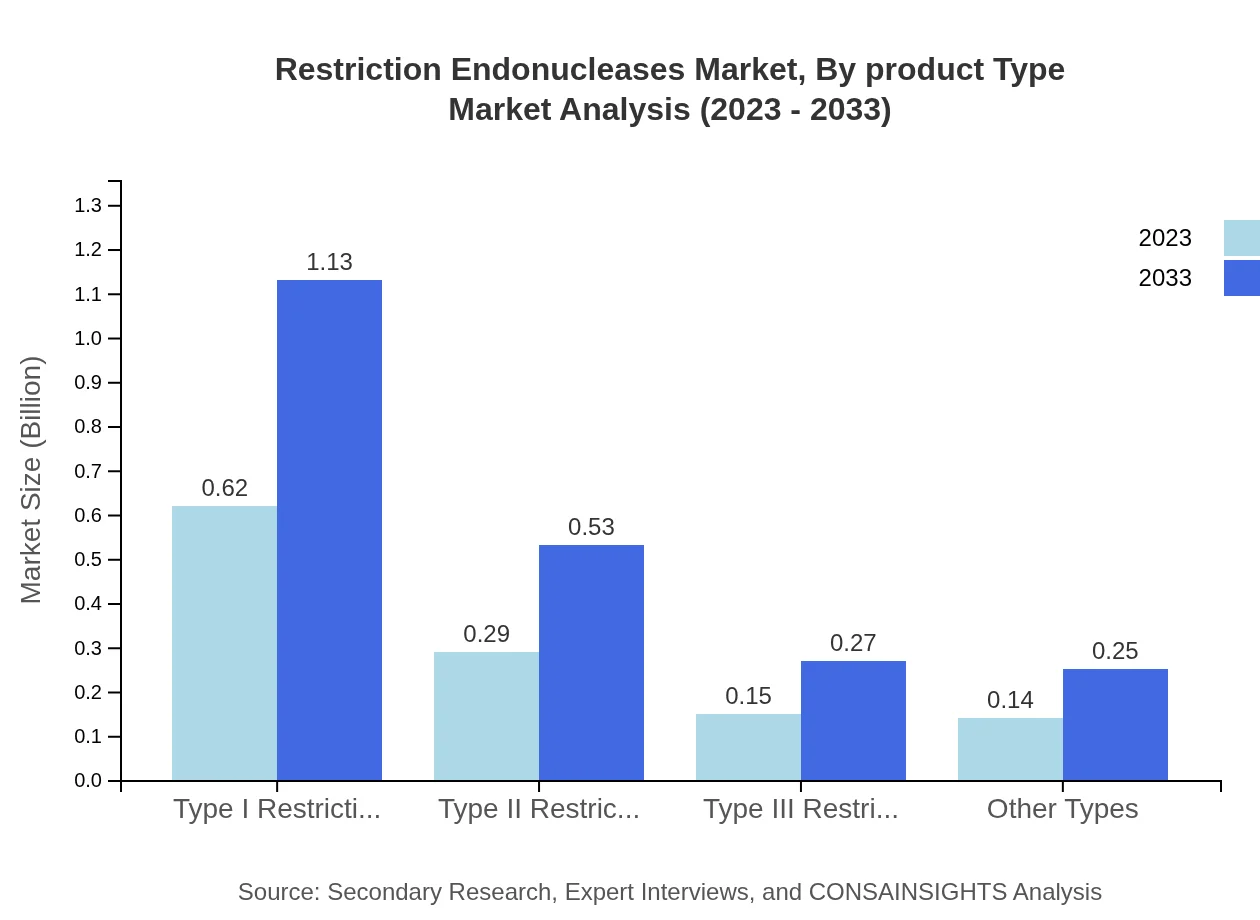
The market comprises various product types, with Type I Restriction Endonucleases leading the segment at USD 0.62 billion in 2023 and projected to grow to USD 1.13 billion by 2033. Type II follows with a market size of USD 0.29 billion, expected to rise to USD 0.53 billion, while Type III and other types contribute significantly to the overall market.
Restriction Endonucleases Market Analysis By Application
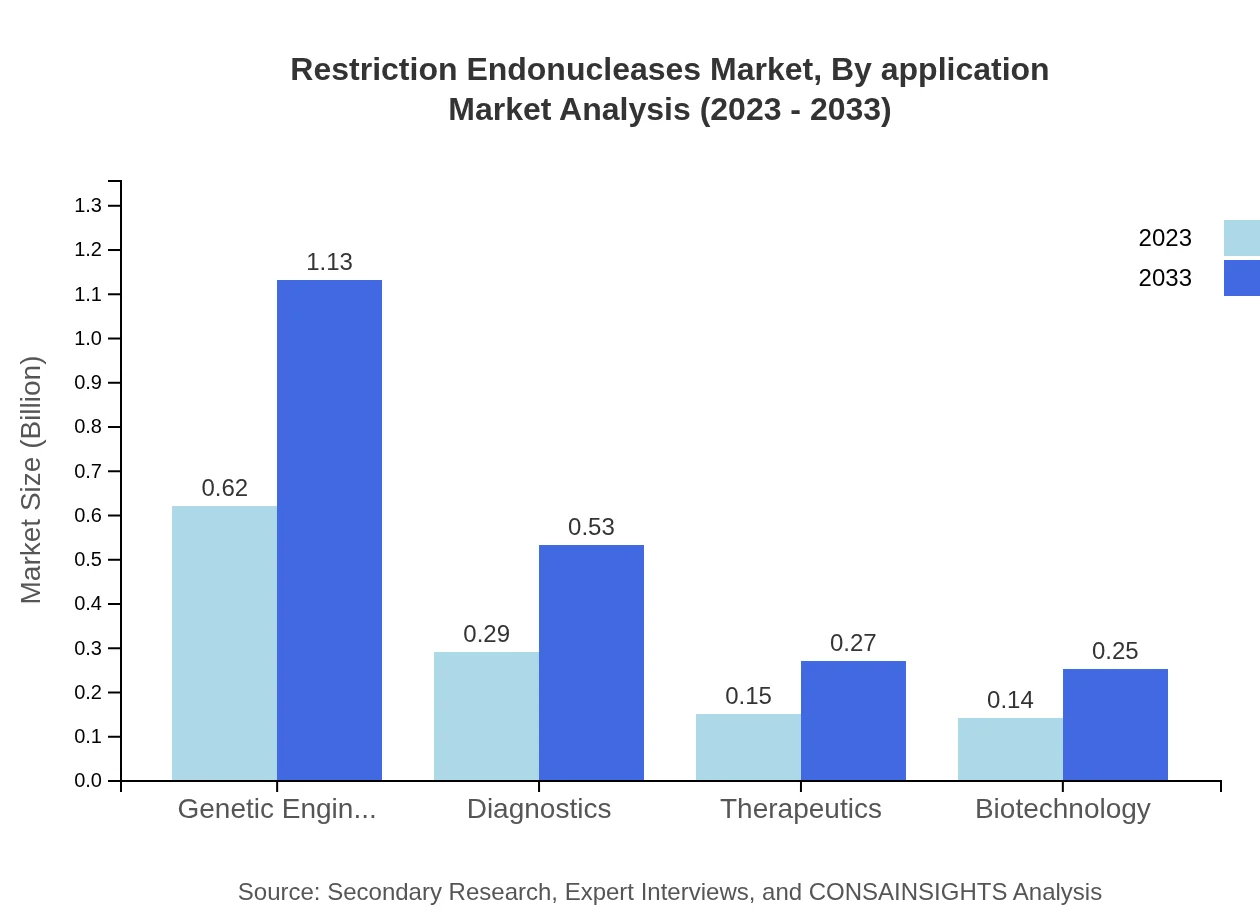
Academics represent the largest application segment, with a market size of USD 0.58 billion in 2023, projected to reach USD 1.05 billion by 2033. Pharmaceutical companies and biotechnology firms also hold significant shares, showing robust growth in their respective segments as they increasingly utilize Restriction Endonucleases in drug development and genetic research.
Restriction Endonucleases Market Analysis By End User
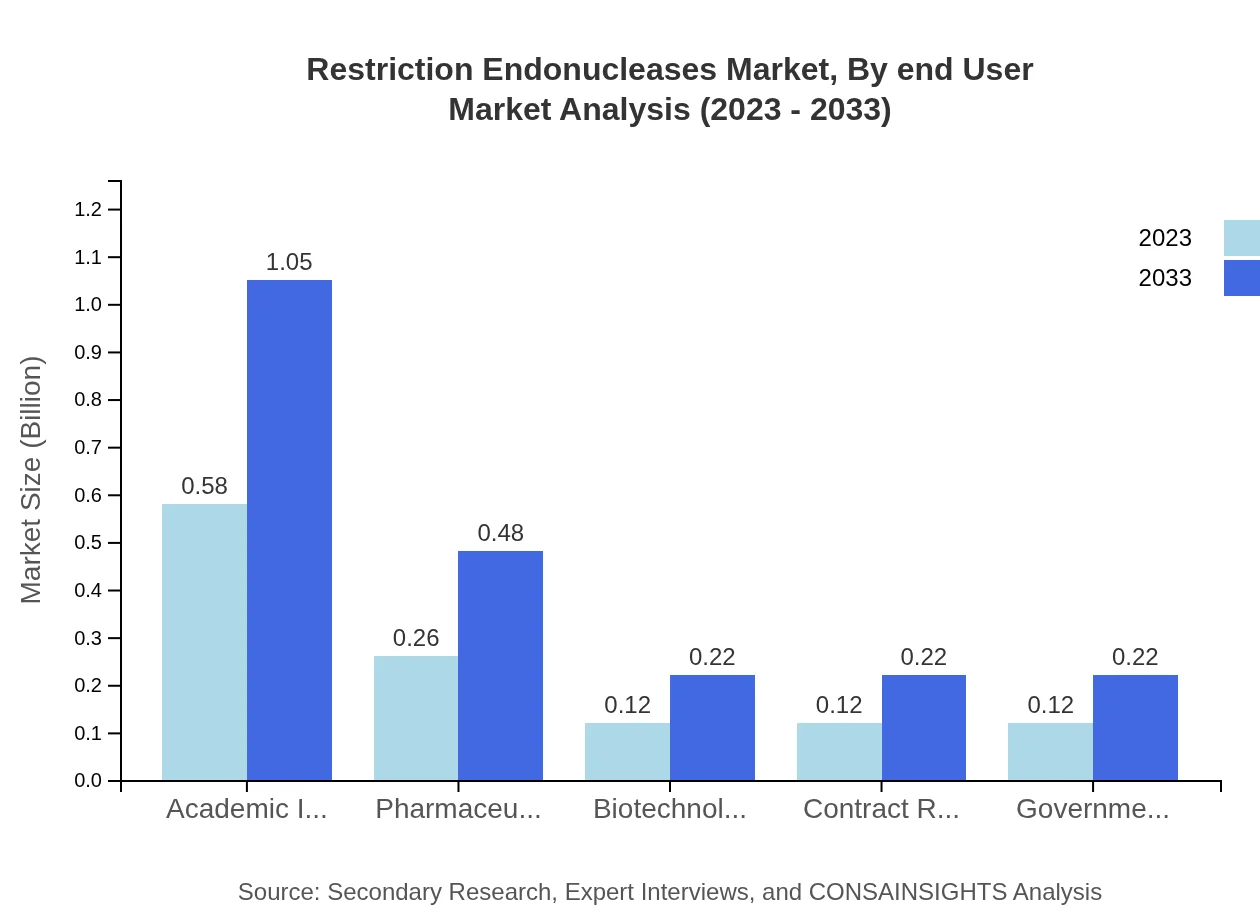
End-user segments include academic institutions, government and non-profit organizations, and commercial entities, with distinct growth patterns. Academic institutions dominate the landscape, enjoying a favorable market share due to their continuous research-oriented activities. The increasing application of genetic engineering in healthcare also supports growth across various sectors.
Restriction Endonucleases Market Analysis By Formulation
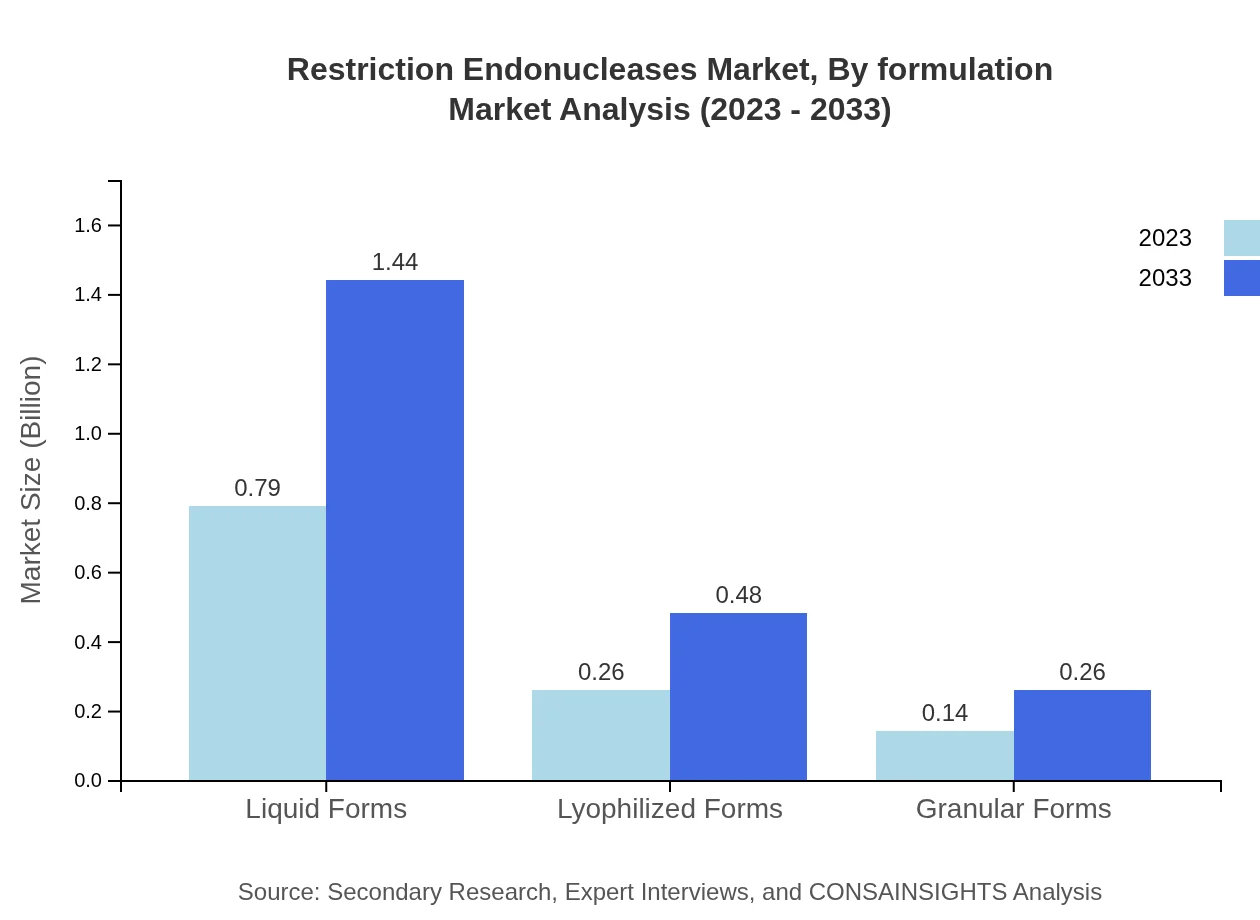
The formulation segment is categorized into liquid and lyophilized forms, with liquid forms leading at USD 0.79 billion in 2023 and expected to grow to USD 1.44 billion by 2033. Lyophilized forms also show promise, increasing from USD 0.26 billion to USD 0.48 billion within the same timeframe.
Restriction Endonucleases Market Trends and Future Forecast
Tell us your focus area and get a customized research report.
Global Market Leaders and Top Companies in Restriction Endonucleases Industry
Thermo Fisher Scientific:
A leading provider of scientific instrumentation and reagents, Thermo Fisher offers a wide range of Restriction Endonucleases vital for genetic modifications and molecular biology applications.New England Biolabs:
Specializes in the development and production of enzymes for genomic research, New England Biolabs is recognized for its innovations in Restriction Endonucleases, providing vital products for researchers and laboratories.Takara Bio:
Takara Bio is known for its extensive biotechnology research tools, including a wide variety of Restriction Endonucleases, contributing significantly to advancements in molecular biology.Promega Corporation:
Promega supplies high-quality reagents and systems for the life sciences industry; its Restriction Endonucleases are pivotal for research laboratories focused on genetic engineering and biopharmaceuticals.Sigma-Aldrich (Merck Group):
A major name in the life sciences market, Sigma-Aldrich provides a wide array of enzymes including Restriction Endonucleases, supporting a broad spectrum of research applications and innovations.We're grateful to work with incredible clients.








FAQs
What is the market size in 2023?
The market size for 2023 is $1.20 Billion, as stated in the report, reflecting current demand for restriction endonucleases across research and industrial applications.
How big will the market be in 2033?
The market is projected to reach $2.18 Billion by 2033, based on the forecast provided for the 2023 to 2033 period.
What is CAGR of the market?
The forecasted compound annual growth rate (CAGR) for the period 2023 to 2033 is 6%, according to the provided projections.
Is there a single fastest Growing region in the Restriction Endonucleases Market Report market?
No single fastest-growing region is stated for the Restriction Endonucleases Market Report market because the top regional implied CAGR values are within 0.15 percentage points of each other, making the ranking too close to call reliably.
Which companies lead the restriction endonucleases market?
Prominent companies listed include Thermo Fisher Scientific, New England Biolabs, Takara Bio, Promega Corporation, and Sigma-Aldrich (Merck Group).
What are the main applications driving demand?
Key applications include genetic engineering, diagnostics, therapeutics, and broader biotechnology research that require DNA manipulation tools and enzymes.
Who are the primary end Users?
Primary end-users encompass academic institutions, pharmaceutical companies, biotechnology firms, contract research organizations, and government or non-profit organizations.
How does formulation variety affect the market?
Different formulations—liquid, lyophilized, and granular—offer varying stability and convenience, influencing procurement decisions across laboratories and workflows.