
Reports >
Life Sciences
>
Retinal Implants Market Report

Retinal Implants Market Report
First published: 20 October 2024 | Last updated: 28 May 2026 | Report Code: retinal-implants
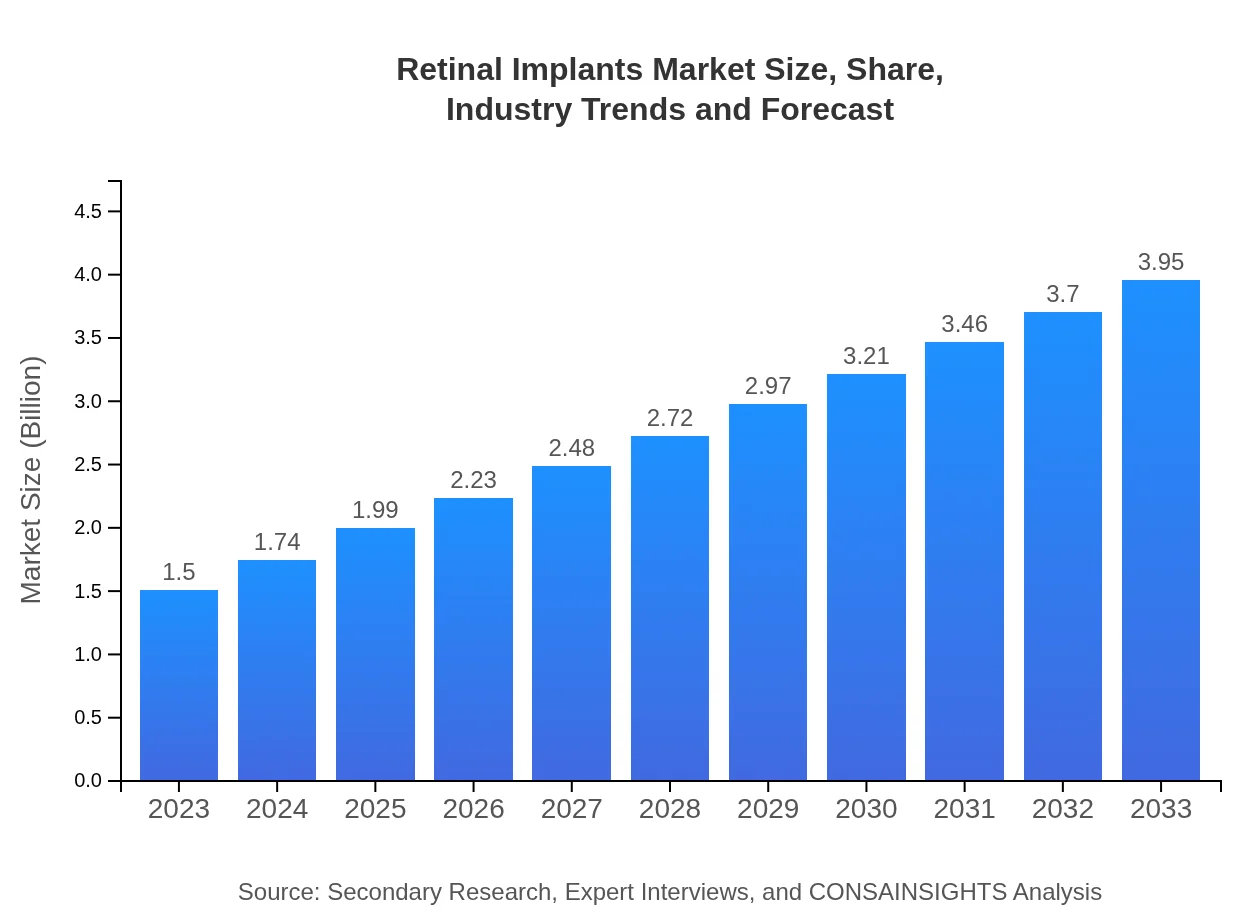
Retinal Implants Market — USD 1.5 billion in 2023, Growing to USD 3.95B by 2033 at 9.8% CAGR
This market report provides a comprehensive analysis of the retinal implants market from 2023 to 2033, highlighting key insights such as market size, trends, segmentation, regional analysis, and forecasts based on quantitative data and industry developments.
Key Takeaways
- Global market expands from $1.50 Billion in 2023 to $3.95 Billion in 2033 at a 9.8% CAGR.
- North America is the largest region, rising from $0.55 Billion in 2023 to $1.44 Billion in 2033.
- North America is largest regional market; Latin America is regional market region based on implied CAGR across 2023 to 2033.
- Regional growth supported by technological innovation, clinical trials, and rising prevalence of retinal disorders.
- Notable industry participants include Second Sight Medical Products, Inc., Pixium Vision, and EPIRET driving product development.
Retinal Implants Market Report — Executive Summary
Regional analysis shows North America as largest market and Latin America as fastest-growing region by implied CAGR. This report examines market dynamics for retinal implants across 2023 to 2033, where total value grows from $1.50 Billion to $3.95 Billion at a 9.8% CAGR. Growth is propelled by advances in electrical stimulation, digital image processing and pharmacological techniques, along with amplified clinical research and collaborations between industry and research institutions. Adoption is concentrated in clinical settings such as hospitals and research organizations, with homecare applications emerging. Regional patterns vary: North America records the highest regional value while Latin America posts the strongest implied growth. Competitive activity among players such as Second Sight Medical Products, Inc., Pixium Vision and EPIRET underscores continued investment in device performance, regulatory progression, and expanded patient access. The analysis covers segmentation by technology, product type, application and end user to guide stakeholders on market opportunities and investment priorities.
Key Growth Drivers
- Rising prevalence of retinal diseases increasing demand for vision-restoration technologies.
- Ongoing clinical trials and regulatory approvals enabling broader device adoption.
- Technological enhancements in electrical stimulation and image processing improving outcomes.
- Collaboration between manufacturers and research institutions accelerating product development.
- Expansion of service delivery across hospitals, research institutions and homecare settings.
| Metric | Value |
|---|---|
| Study Period | 2023 - 2033 |
| 2023 Market Size | $1.50 Billion |
| CAGR (2023-2033) | 9.8% |
| 2033 Market Size | $3.95 Billion |
| Top Companies | Second Sight Medical Products, Inc., Pixium Vision, EPIRET |
| Published Date | 20 October 2024 |
| Last Modified Date | 28 May 2026 |
Retinal Implants Market Overview
Customize Retinal Implants Market Report market research report
- ✔ Get in-depth analysis of Retinal Implants market size, growth, and forecasts.
- ✔ Understand Retinal Implants's regional dynamics and industry-specific trends.
- ✔ Identify potential applications, end-user demand, and growth segments in Retinal Implants
What is the Market Size & CAGR of Retinal Implants Market Report market in 2023?
Retinal Implants Industry Analysis
Retinal Implants Market Segmentation and Scope
Tell us your focus area and get a customized research report.
Retinal Implants Market Report Market Analysis Report by Region
Europe Retinal Implants Market Report:
Europe grows from $0.41 Billion in 2023 to $1.08 Billion in 2033. Expansion is supported by clinical trials, regulatory pathways for medical devices, and collaboration between companies and research centers to advance retinal implant technology.Asia Pacific Retinal Implants Market Report:
Asia Pacific grows from $0.29 Billion in 2023 to $0.77 Billion in 2033. Market momentum is linked to rising incidence of retinal conditions, growing healthcare infrastructure, and adoption of advanced therapeutic devices in clinical settings.North America Retinal Implants Market Report:
North America is largest regional market, rising from $0.55 Billion in 2023 to $1.44 Billion in 2033. The region’s leading value reflects concentrated clinical adoption, active R&D programs, and investment by device manufacturers, reinforcing its position as the largest regional market across the forecast.South America Retinal Implants Market Report:
Latin America is fastest-growing region by implied CAGR, increasing from $0.05 Billion in 2023 to $0.14 Billion in 2033. The region is noted as the fastest-growing area, with growth driven by expanding clinical capacity, increased awareness of retinal therapies, and emerging investments in ophthalmic technologies.Middle East & Africa Retinal Implants Market Report:
Middle East and Africa grows from $0.19 Billion in 2023 to $0.51 Billion in 2033. Progress is underpinned by improving access to specialty care, gradual increases in device adoption, and collaborative research initiatives in regional centers.Tell us your focus area and get a customized research report.
Research Methodology
Retinal Implants Market Analysis By Product Type
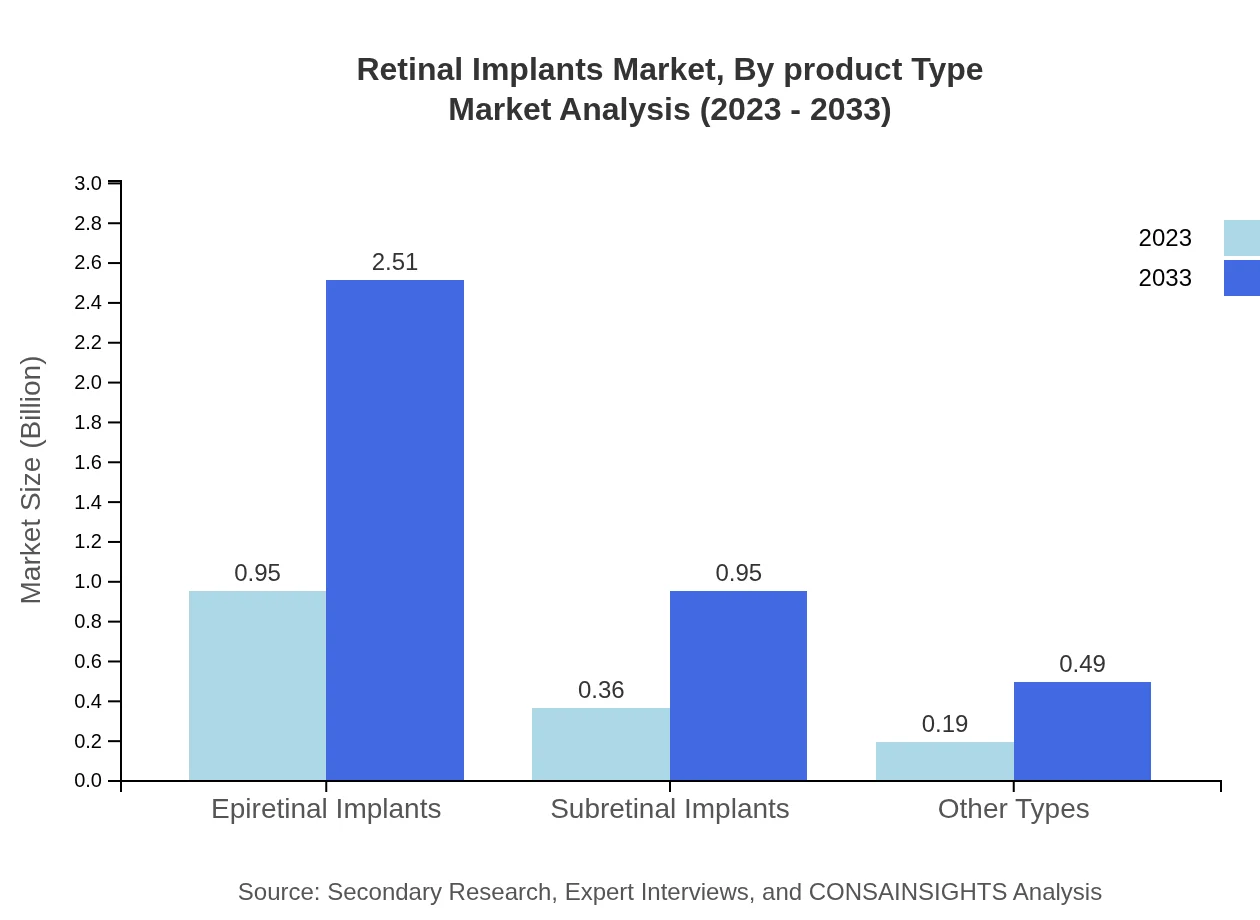
In the retinal implants market, epiretinal implants dominate with a size of $950 million in 2023, expected to grow to $2.51 billion by 2033, maintaining a 63.53% market share. Subretinal implants hold a market size of $360 million in 2023, anticipated to increase to $950 million by 2033 (24% share). Other types of implants account for $190 million in 2023 and grow to $490 million by 2033 (12.47% share). Each segment’s growth is propelled by advancements in the respective technologies and increasing clinical applications.
Retinal Implants Market Analysis By Technology
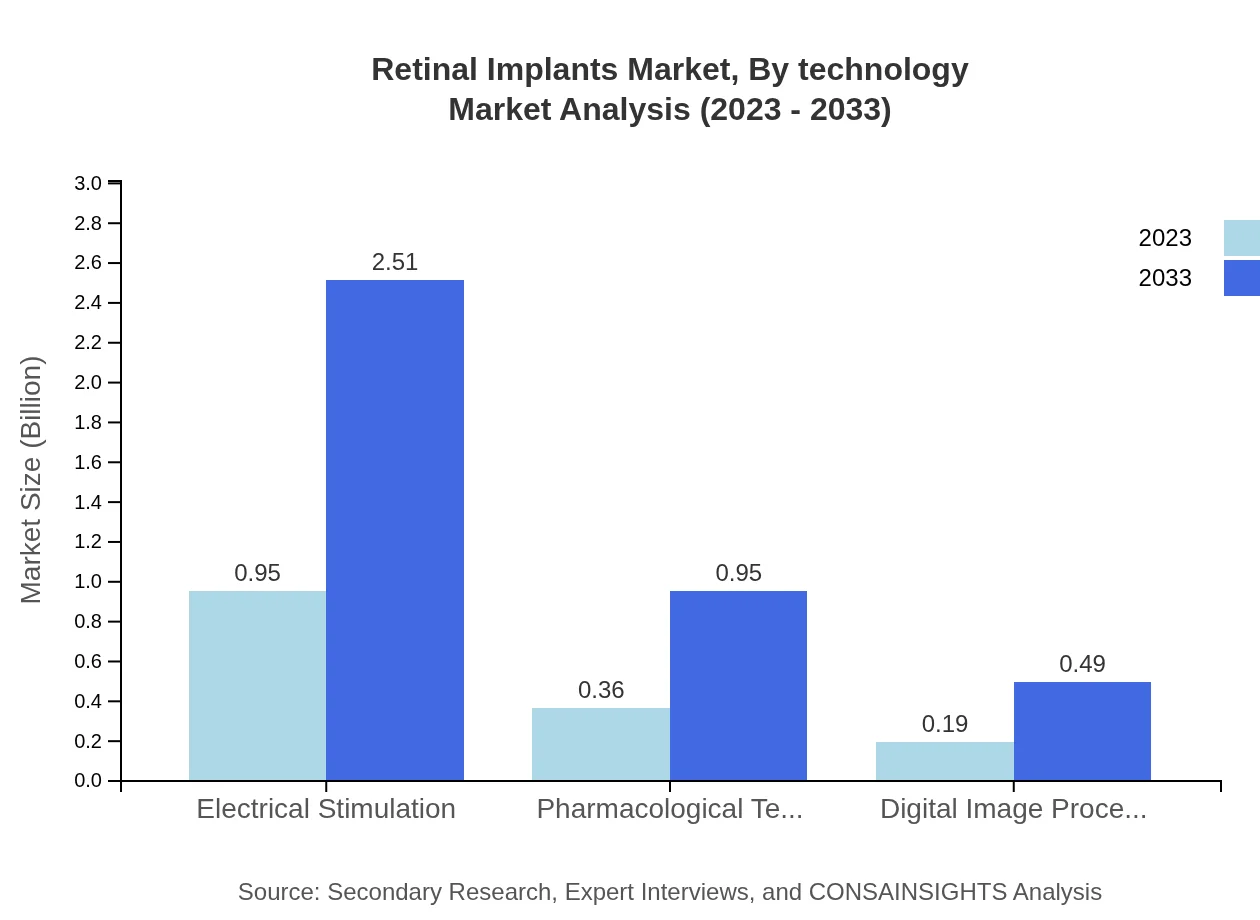
The market segmentation by technology indicates that electrical stimulation remains prevalent, with an estimated market size of $950 million in 2023, projected to rise to $2.51 billion by 2033 (63.53% market share). Pharmacological techniques account for $360 million in 2023, expected to reach $950 million by 2033 (24% share). Digital image processing is evolving with a size of $190 million in 2023, forecasted to grow to $490 million by 2033 (12.47% share). Innovations in these technologies are essential to the future of retinal treatments.
Retinal Implants Market Analysis By Application
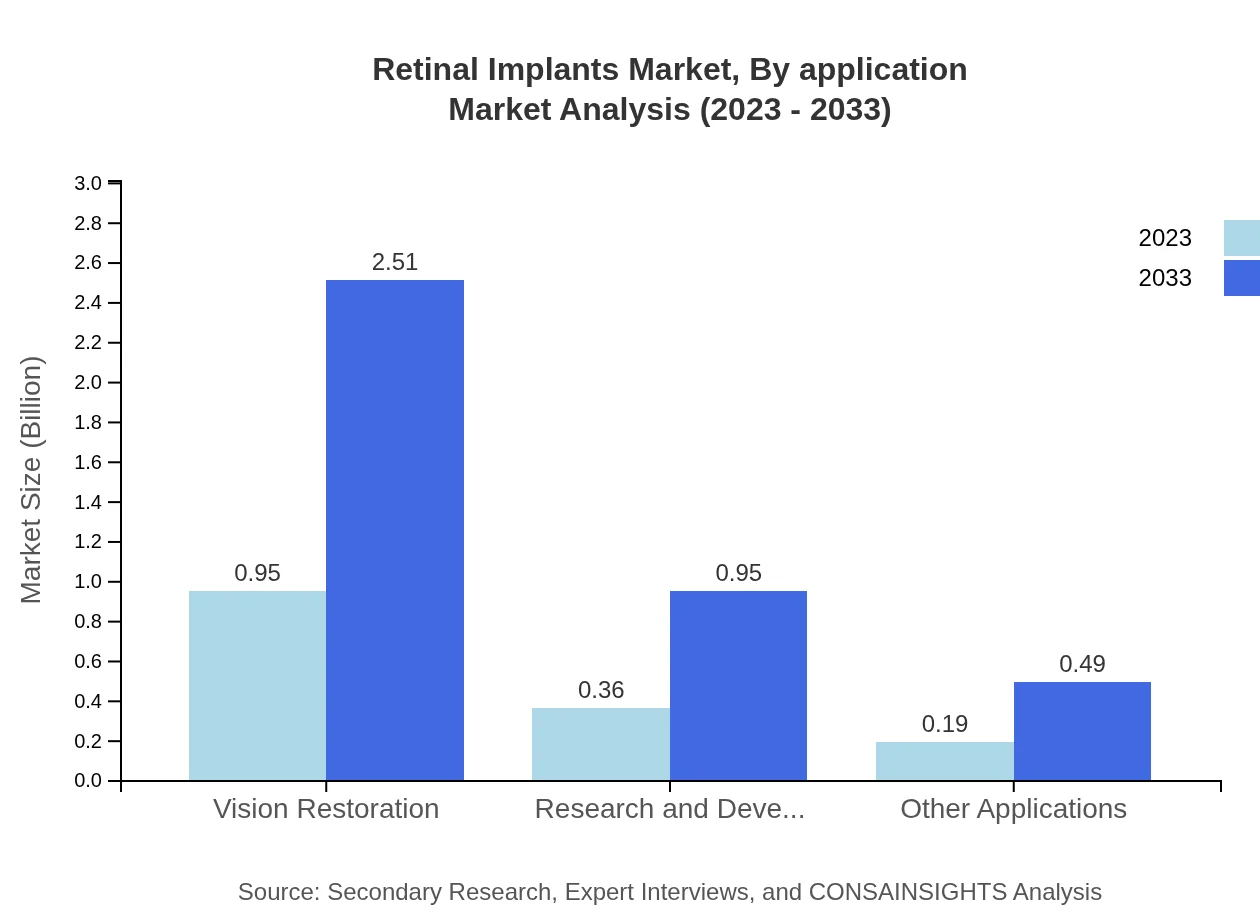
By application, vision restoration leads with a market size of $950 million in 2023, likely to expand to $2.51 billion by 2033, maintaining 63.53% of the market. Research and development account for $360 million in 2023 and are expected to reach $950 million by 2033 (24% share). Homecare settings represent a smaller segment with a 2023 size of $190 million, anticipated to grow to $490 million by 2033 (12.47% share). This diversification in applications emphasizes the broad scope of the retinal implants market.
Retinal Implants Market Analysis By End User
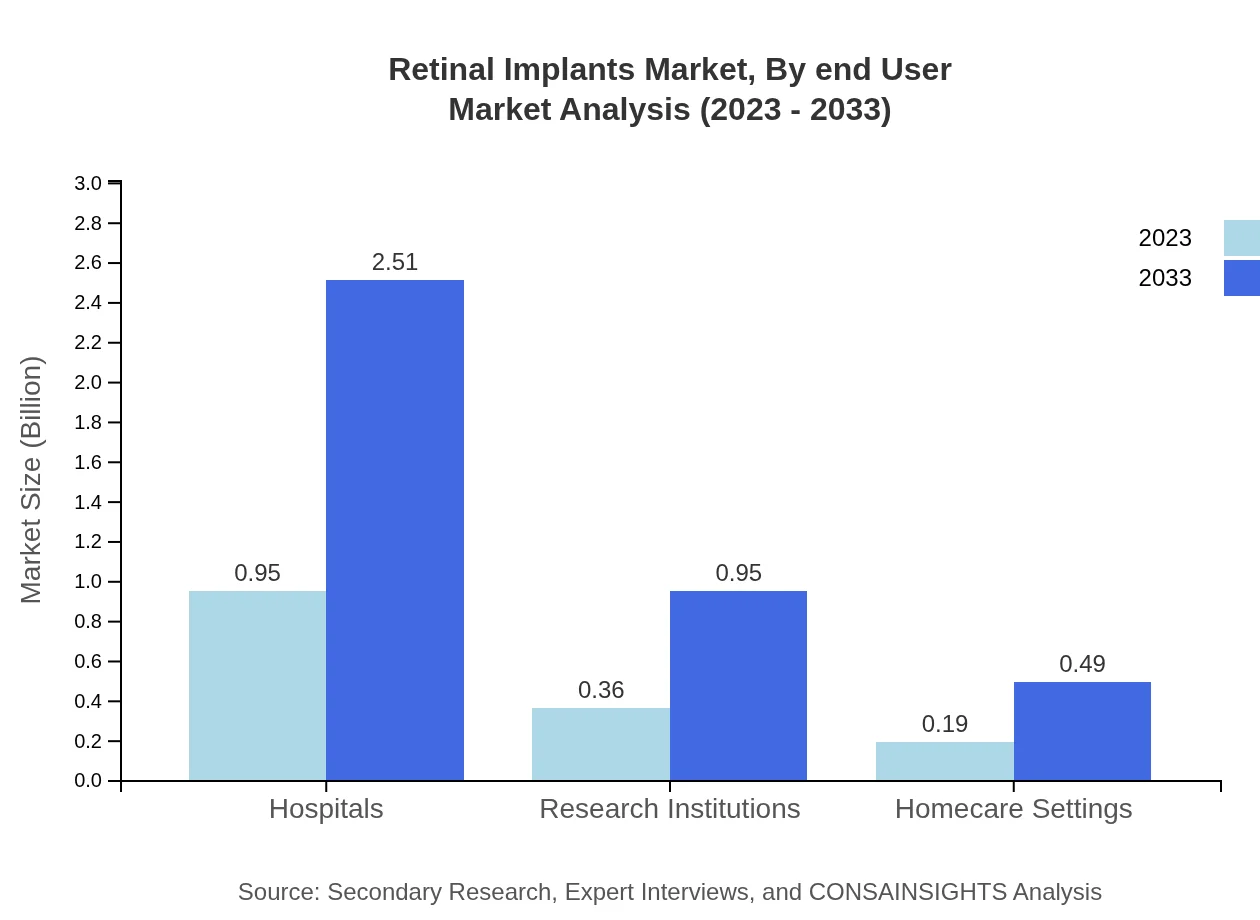
Hospitals are the leading end-user segment, with a market size of $950 million in 2023, projected to increase to $2.51 billion by 2033, capturing 63.53% of the market. Research institutions follow with a size of $360 million in 2023, expected to reach $950 million by 2033 (24% share). Homecare settings account for $190 million in 2023, growing to $490 million by 2033 (12.47% share). The increasing utilization of retinal implants in various settings reflects the ongoing evolution of treatment approaches.
Retinal Implants Market Trends and Future Forecast
Tell us your focus area and get a customized research report.
Global Market Leaders and Top Companies in Retinal Implants Industry
Second Sight Medical Products, Inc.:
Pioneering the development of the Argus II retinal prosthesis system, Second Sight has made significant strides in vision restoration technologies aimed primarily at patients with severe retinal degeneration.Pixium Vision:
This company focuses on developing the IRIS® retinal implant system, facilitating advancements in retinal prostheses and improving upon standards of care for individuals facing vision impairment.EPIRET:
EPIRET is engaged in the design and manufacture of advanced retinal implants and has partnered with various research institutions to innovate and enhance therapeutic interventions for retinal diseases.We're grateful to work with incredible clients.









FAQs
What is the current market size of the retinal implants market?
The market size is $1.50 Billion in 2023, based on the report’s baseline valuation for the start of the forecast period.
How big will the market be by 2033?
The market is projected to reach $3.95 Billion in 2033 according to the provided forecast data covering 2023 to 2033.
What is CAGR for the forecast period?
The reported compound annual growth rate (CAGR) is 9.8% for the 2023 to 2033 forecast interval.
Which region is the fastest Growing in the Retinal Implants Market Report market?
Latin America is the fastest-growing region, projected to expand from $0.05 Billion in 2023 to $0.14 Billion in 2033, reflecting an implied 10.84% CAGR over the forecast period.
Which region is the fastest Growing?
Latin America is reported as the regional market region, rising from $0.05 Billion in 2023 to $0.14 Billion in 2033 at an implied 10.84% CAGR.
Who are the major companies in this market?
Top companies listed include Second Sight Medical Products, Inc., Pixium Vision, and EPIRET as highlighted participants in the market.
Why are clinical trials important for this market?
Clinical trials validate device safety and efficacy, support regulatory approvals, and drive clinician confidence, which in turn facilitates wider market acceptance and reimbursement discussions.
Which end users are covered in the segmentation?
Reported end-user subsegments include Hospitals, Research Institutions, and Homecare Settings as primary venues for device deployment and patient care.
What technologies are emphasized in the report?
Key technology subsegments listed are Electrical Stimulation, Pharmacological Techniques, and Digital Image Processing supporting diverse therapeutic approaches.
How does product segmentation break down?
By product type, the market includes Epiretinal Implants, Subretinal Implants, and Other Types, reflecting device categorization used in clinical applications.