

Reverse Shoulder Arthroplasty Market Report
First published: 20 October 2024 | Last updated: 25 May 2026 | Report Code: reverse-shoulder-arthroplasty
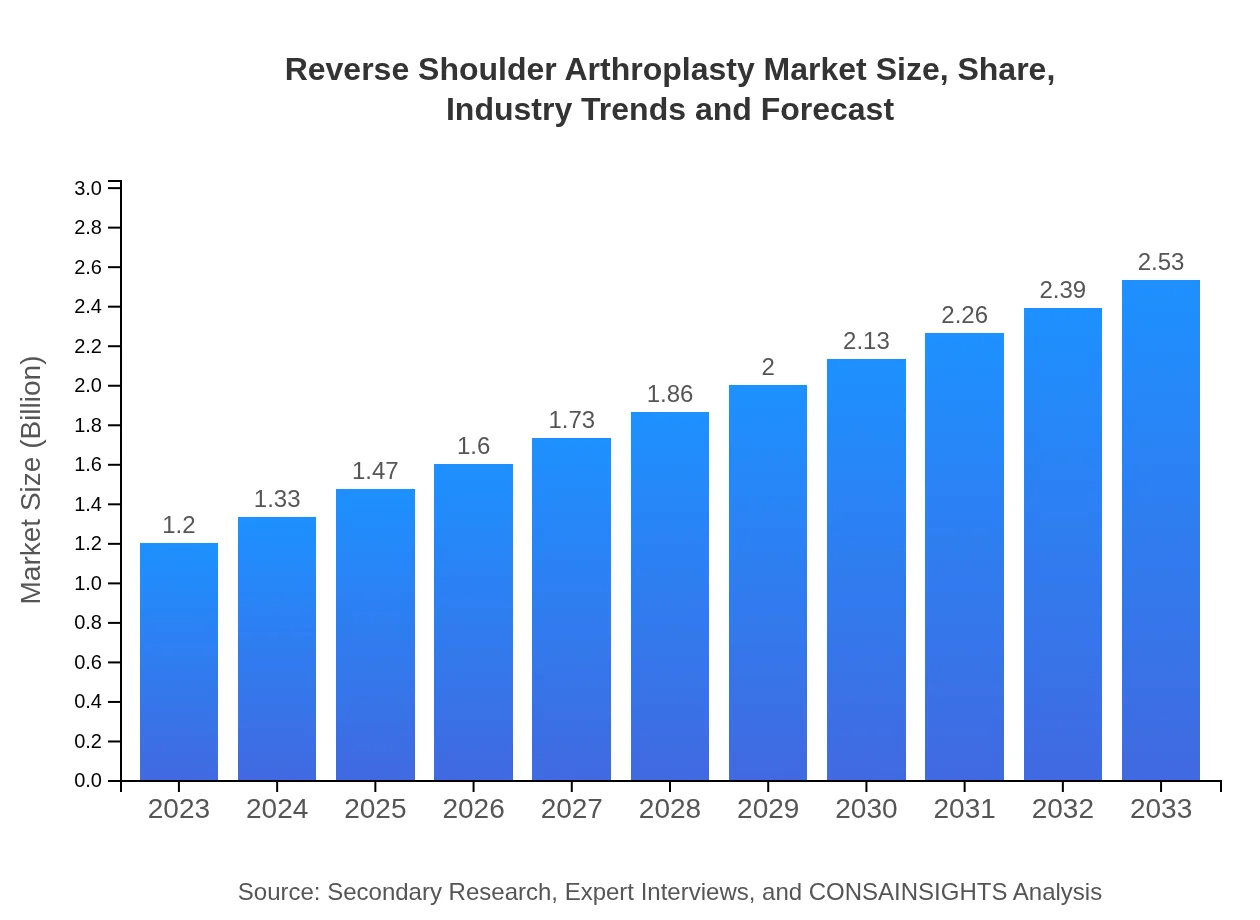
Reverse Shoulder Arthroplasty Market — USD 1.2 billion in 2023, Growing to USD 2.53B by 2033 at 7.5% CAGR
This report provides an in-depth analysis of the Reverse Shoulder Arthroplasty market, highlighting current trends, market size, growth forecasts, and competitive landscape for the forecast period 2023 to 2033.
Key Takeaways
- Global market expands from $1.20 Billion in 2023 to $2.53 Billion by 2033 at a 7.5% CAGR.
- Europe is largest regional market, while no single fastest-growing region is stated because regional CAGR differences remain within 0.15 percentage points.
- North America grows from $0.4 Billion in 2023 to $0.84 Billion in 2033, reflecting notable regional demand.
- Asia Pacific increases from $0.21 Billion in 2023 to $0.45 Billion by 2033 amid demographic and surgical-technology trends.
- Key market participants include DePuy Synthes, Zimmer Biomet, Stryker Corporation, Smith & Nephew, and Wright Medical Group.
Reverse Shoulder Arthroplasty Market Report — Executive Summary
Europe remains largest market by forecast-period value, while no single fastest-growing region is stated because top regional growth rates are separated by less than 0.15 percentage points. The reverse shoulder arthroplasty sector is forecasted to progress from $1.20 Billion in 2023 to $2.53 Billion by 2033 at a 7.5% CAGR. Growth is supported by demographic shifts, greater procedure uptake, and ongoing implant and surgical technique improvements. Europe is the largest regional market, expanding from $0.42 Billion to $0.89 Billion over the decade. Market structure spans product materials, surgical approaches and end users, with hospitals and ambulatory surgical centers among primary settings. Major companies such as DePuy Synthes, Zimmer Biomet, Stryker Corporation, Smith & Nephew and Wright Medical Group shape competition through product development and partnerships. Research incorporates primary expert interviews and secondary sources to validate trends and forecasts.
Key Growth Drivers
- Aging populations and higher incidence of shoulder degenerative conditions increasing procedure volumes.
- Advances in implant materials and designs improving outcomes and surgeon adoption.
- Refinements in surgical techniques, including minimally invasive approaches, supporting broader clinical use.
- Rising awareness among healthcare providers of reverse arthroplasty benefits for complex shoulder pathologies.
- Expansion of ambulatory surgical centers and hospital capacities to deliver orthopedic procedures.
| Metric | Value |
|---|---|
| Study Period | 2023 - 2033 |
| 2023 Market Size | $1.20 Billion |
| CAGR (2023-2033) | 7.5% |
| 2033 Market Size | $2.53 Billion |
| Top Companies | DePuy Synthes, Zimmer Biomet, Stryker Corporation, Smith & Nephew, Wright Medical Group |
| Published Date | 20 October 2024 |
| Last Modified Date | 25 May 2026 |
Reverse Shoulder Arthroplasty Market Overview
Customize Reverse Shoulder Arthroplasty Market Report market research report
- ✔ Get in-depth analysis of Reverse Shoulder Arthroplasty market size, growth, and forecasts.
- ✔ Understand Reverse Shoulder Arthroplasty's regional dynamics and industry-specific trends.
- ✔ Identify potential applications, end-user demand, and growth segments in Reverse Shoulder Arthroplasty
What is the Market Size & CAGR of Reverse Shoulder Arthroplasty Market Report market in 2023?
Reverse Shoulder Arthroplasty Industry Analysis
Reverse Shoulder Arthroplasty Market Segmentation and Scope
Tell us your focus area and get a customized research report.
Reverse Shoulder Arthroplasty Market Report Market Analysis Report by Region
Europe Reverse Shoulder Arthroplasty Market Report:
Europe is largest regional market, rising from $0.42 Billion in 2023 to $0.89 Billion in 2033. Growth is linked to demographic shifts, adoption of advanced surgical approaches, and strong presence of orthopedic device companies.Asia Pacific Reverse Shoulder Arthroplasty Market Report:
Asia Pacific grows from $0.21 Billion in 2023 to $0.45 Billion in 2033. Expansion reflects growing procedure volumes, improving access to orthopedic care, and increasing adoption of newer implant technologies.North America Reverse Shoulder Arthroplasty Market Report:
North America grows from $0.4 Billion in 2023 to $0.84 Billion in 2033. Regional demand is supported by established healthcare infrastructure, procedure availability in hospitals and ambulatory surgical centers, and active participation by major device manufacturers.South America Reverse Shoulder Arthroplasty Market Report:
Latin America grows from $0.06 Billion in 2023 to $0.12 Billion in 2033. Market movement is tied to improving healthcare capacity, rising awareness of surgical options, and gradual uptake of advanced implants.Middle East & Africa Reverse Shoulder Arthroplasty Market Report:
Middle East and Africa grows from $0.11 Billion in 2023 to $0.23 Billion in 2033. Regional expansion is driven by increasing access to orthopedic services, investments in healthcare facilities, and rising demand for procedural interventions.Tell us your focus area and get a customized research report.
Research Methodology
Reverse Shoulder Arthroplasty Market Analysis By Indication
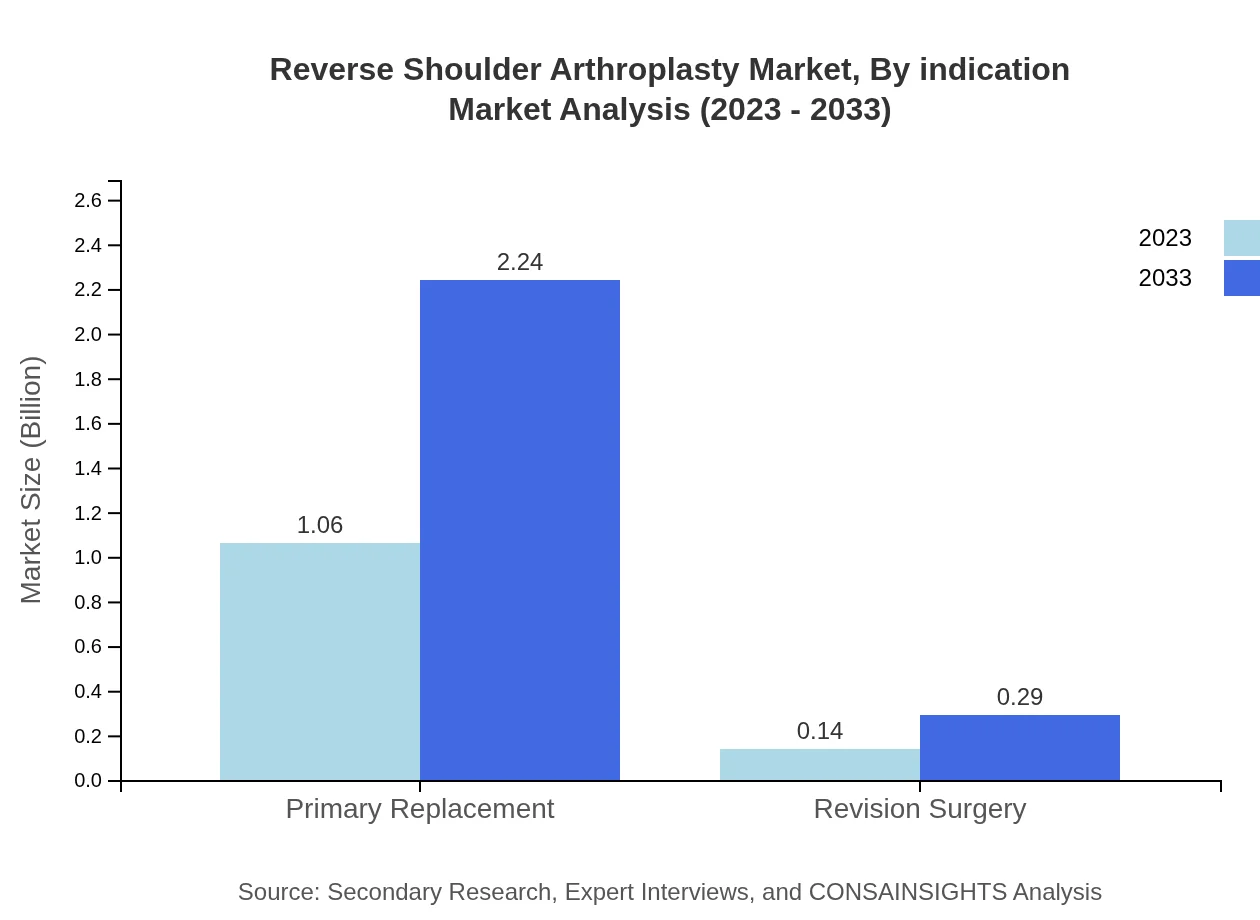
By indication, the market is primarily divided into primary replacements, accounting for approximately 88.65% share in 2023, while revision surgery constitutes 11.35%. This trend is expected to persist, with primary replacements growing from USD 1.06 billion to USD 2.24 billion from 2023 to 2033, signifying the importance of primary RSA procedures for patient recovery.
Reverse Shoulder Arthroplasty Market Analysis By Material
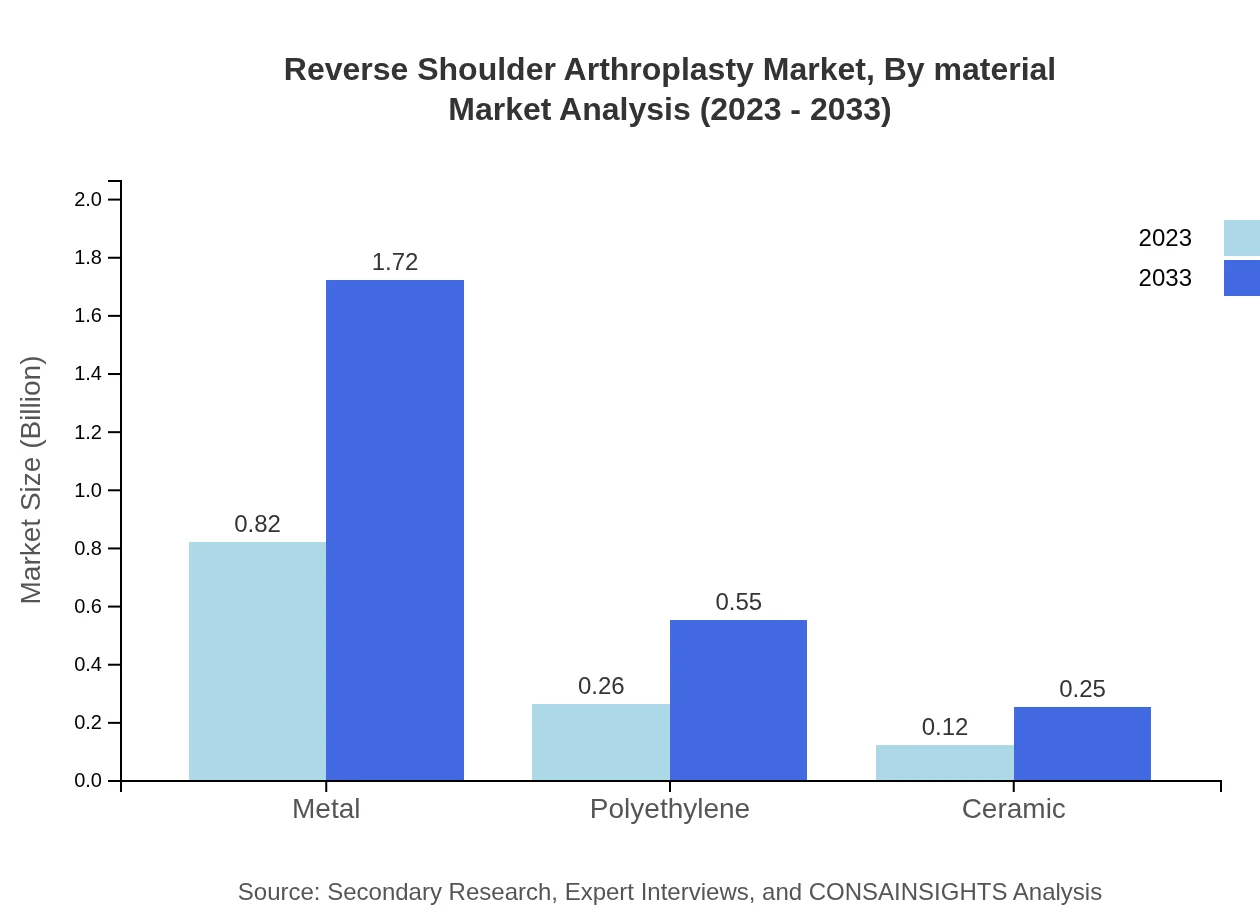
Material segmentation identifies metal, polyethylene, and ceramic implants as key market players. Metal implants dominate the segment, holding 68.21% of the market share in 2023. Growth is projected with metal implants expanding to USD 1.72 billion by 2033, driven by their durability and biomechanical advantages over alternatives.
Reverse Shoulder Arthroplasty Market Analysis By End User
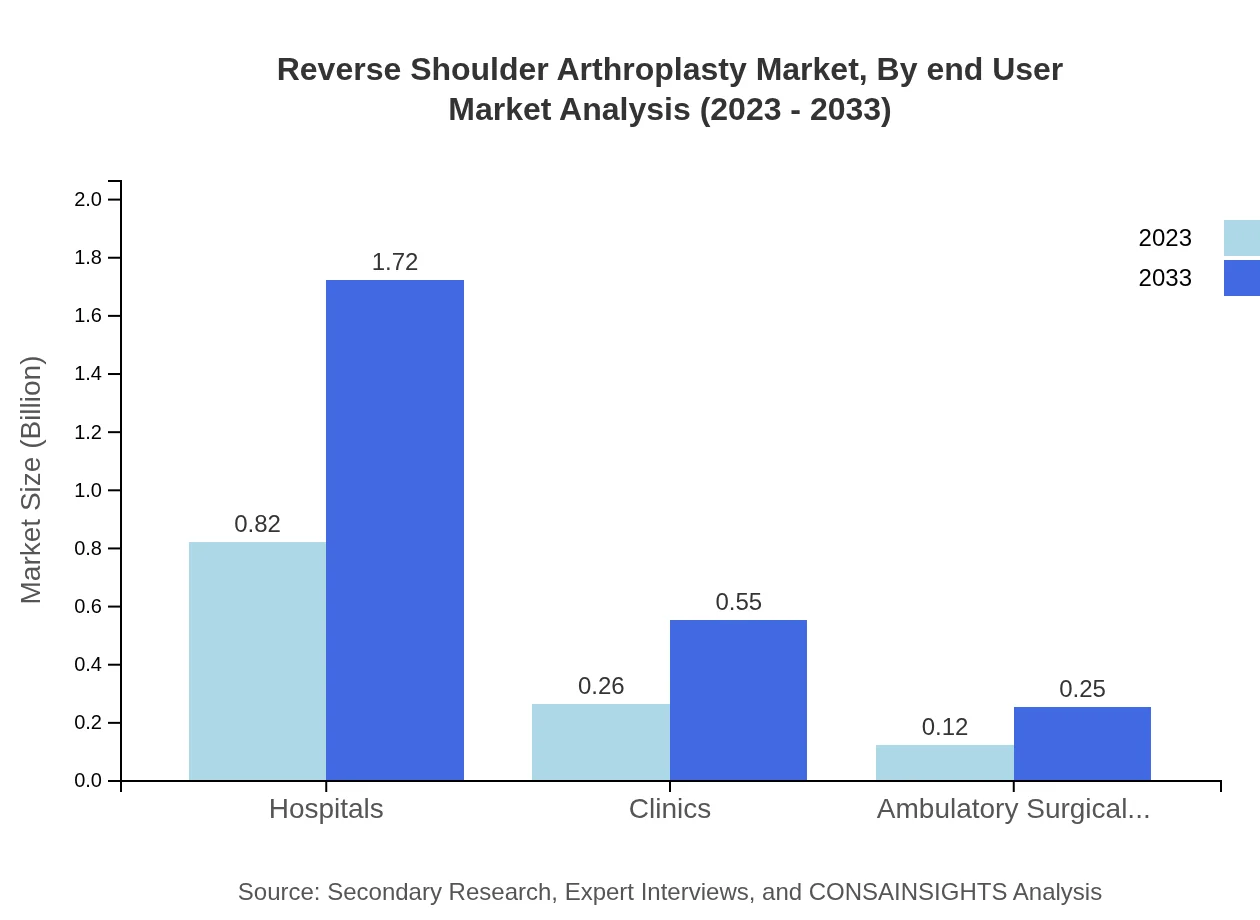
Hospitals are the primary end-users, representing 68.21% of the market in 2023, with projected growth from USD 0.82 billion to USD 1.72 billion. Ambulatory surgical centers are gaining traction, offering minimally invasive procedures, yet they account for a smaller segment at 9.97% in 2023.
Reverse Shoulder Arthroplasty Market Analysis By Technology
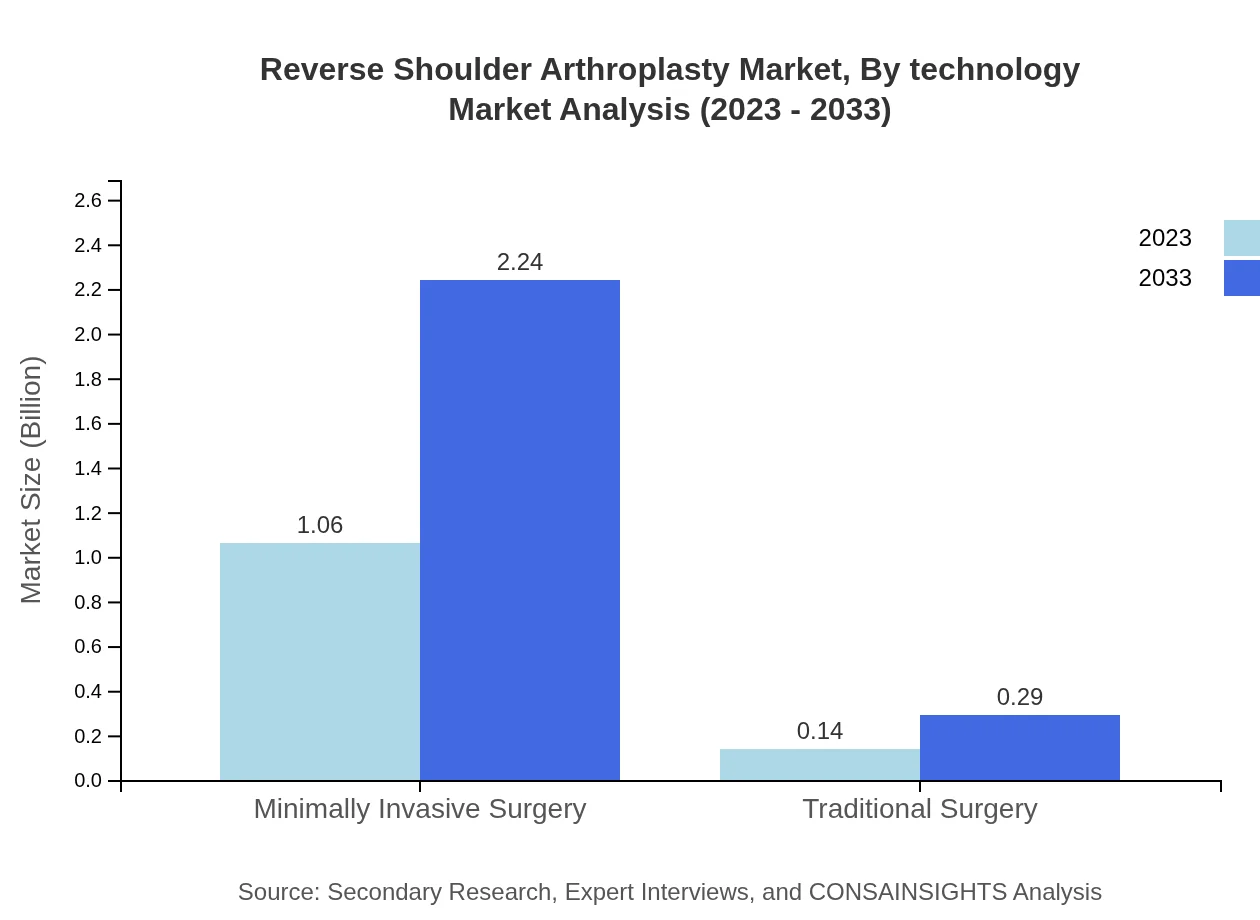
Technologically, minimally invasive surgical methods dominate the market with an 88.65% share in 2023, owing to advantages such as shorter recovery times and fewer complications. Traditional surgeries comprise the remaining 11.35%, indicating a transitioning preference towards advanced technologies in orthopedics.
Reverse Shoulder Arthroplasty Market Analysis By Region Type
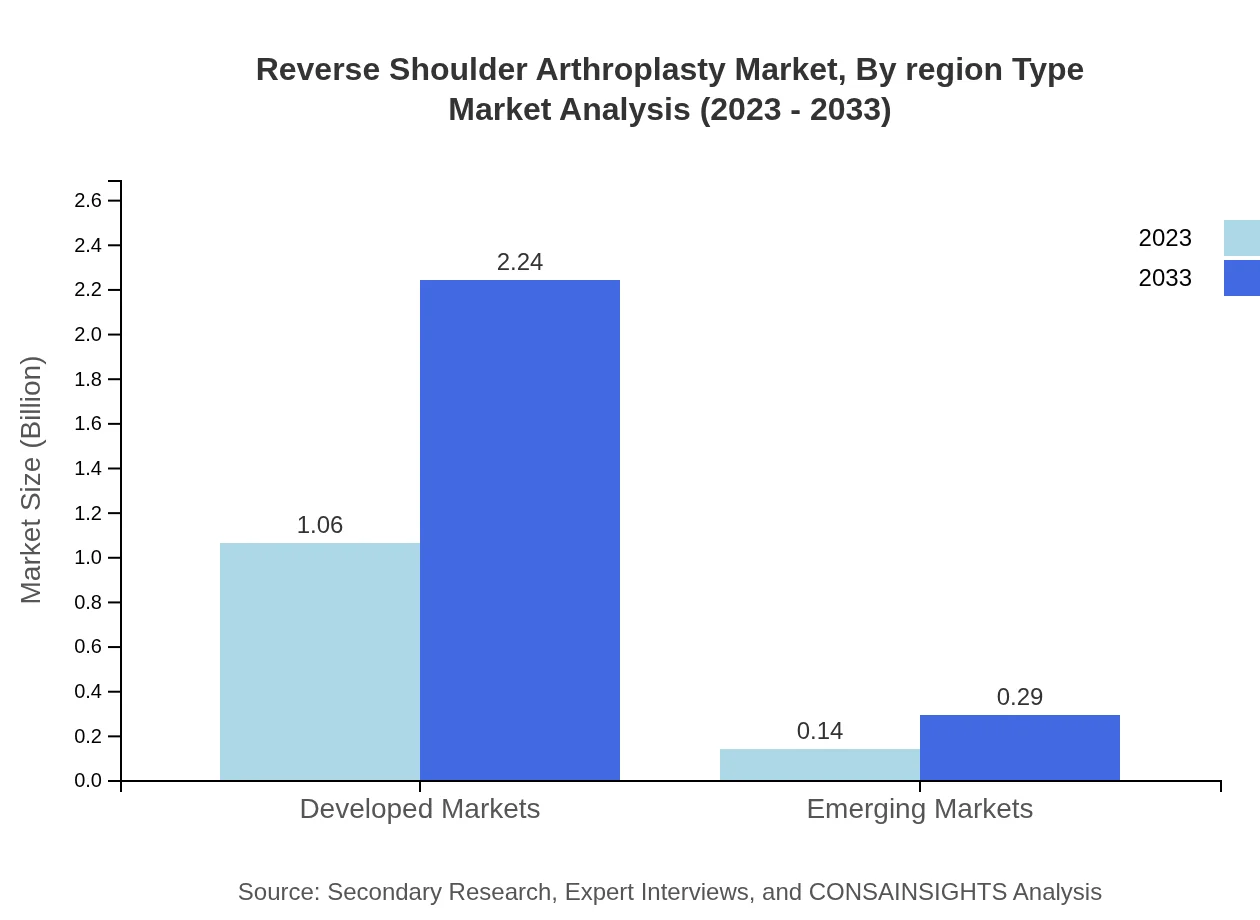
Geographically, the market is dominated by developed regions, specifically North America and Europe, which together contribute significantly to the global RSA market. Emerging markets are expected to show progressive growth as healthcare access improves and surgical options become more prevalent.
Reverse Shoulder Arthroplasty Market Trends and Future Forecast
Tell us your focus area and get a customized research report.
Global Market Leaders and Top Companies in Reverse Shoulder Arthroplasty Industry
DePuy Synthes:
A leader in orthopedic solutions, DePuy Synthes focuses on developing innovative implants that enhance the performance, safety, and efficacy of shoulder replacement surgeries.Zimmer Biomet:
Zimmer Biomet is renowned for its advanced orthopedic technologies and has a significant market presence in the RSA sector, offering a range of shoulder arthroplasty solutions.Stryker Corporation:
Stryker Corporation is a key player in medical technology, providing a variety of innovative products and services for shoulder surgeries, contributing to enhanced surgical outcomes.Smith & Nephew:
This company is committed to advancing surgery through innovative solutions and has a strong portfolio in shoulder arthroplasty aimed at improving patient care.Wright Medical Group:
Wright Medical specializes in extremities and biologics, focusing on developing new technologies to improve the outcomes of shoulder surgeries.We're grateful to work with incredible clients.








FAQs
What is the market size of reverse shoulder arthroplasty in 2023?
The market size for reverse shoulder arthroplasty in 2023 is $1.20 Billion, as reported in the provided dataset for the 2023 baseline.
How big will the market be in 2033?
According to the input data, the market is projected to reach $2.53 Billion by 2033 within the 2023 to 2033 forecast period.
What is CAGR for the forecast period?
The compound annual growth rate for the forecast period 2023 to 2033 is 7.5%, as stated in the supplied report information.
Is there a single fastest Growing region in the Reverse Shoulder Arthroplasty Market Report market?
No single fastest-growing region is stated for the Reverse Shoulder Arthroplasty Market Report market because the top regional implied CAGR values are within 0.15 percentage points of each other, making the ranking too close to call reliably.
Which companies lead the competitive landscape?
Top companies listed include DePuy Synthes, Zimmer Biomet, Stryker Corporation, Smith & Nephew, and Wright Medical Group as leading participants.
What are common end User segments?
End-user subsegments provided include Hospitals, Clinics, and Ambulatory Surgical Centers, reflecting the primary care delivery settings for procedures.
Who conducted the research methodology?
Research combined primary interviews with industry experts and secondary analysis of company reports and publications, plus data triangulation and internal validation.
What material types are highlighted in the report?
Material subsegments specified are Metal, Polyethylene, and Ceramic as the primary implant material categories covered in the dataset.