

Skin Tightening Market Report
First published: 08 October 2024 | Last updated: 28 May 2026 | Report Code: skin-tightening
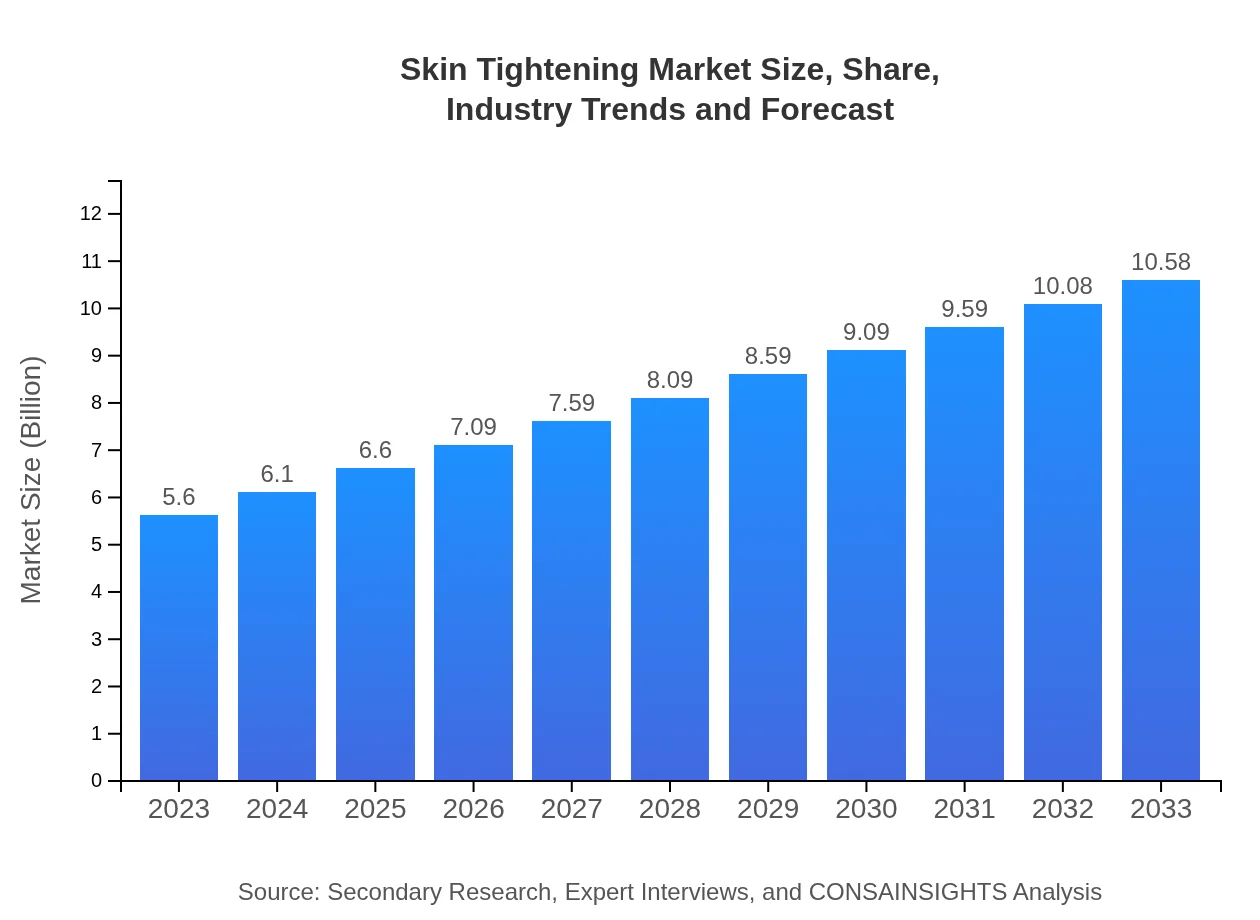
Skin Tightening Market — USD 5.6 billion in 2023, Growing to USD 10.58B by 2033 at 6.4% CAGR
This market report delves into the skin tightening industry, examining its growth prospects and trends from 2023 to 2033. It presents insights on market size, key segments, regional dynamics, and forecasts to provide a comprehensive understanding of the market landscape.
Key Takeaways
- Global market expands from $5.60 Billion (2023) to $10.58 Billion (2033) at a 6.4% CAGR over 2023 to 2033.
- Europe is largest regional market, while no single fastest-growing region is stated because regional CAGR differences remain within 0.15 percentage points.
- Non-invasive technologies—laser, radio frequency, ultrasound—remain central to market growth and consumer preference.
- Home-use devices and online distribution channels are rising alongside clinic-based services, reshaping access and purchase behavior.
Skin Tightening Market Report — Executive Summary
Europe remains largest market by forecast-period value, while no single fastest-growing region is stated because top regional growth rates are separated by less than 0.15 percentage points. The skin tightening market is experiencing steady expansion driven by demographic shifts and technological progress. Rising demand for minimally invasive and non-invasive treatments, including laser, radio frequency, and ultrasound technologies, supports market growth. Consumers increasingly seek convenient options, boosting home-use devices and online distribution alongside traditional dermatology clinics. Key market participants such as Allergan Aesthetics, Galderma, Merz Pharmaceuticals, and Revance Therapeutics influence innovation and product availability. Regulatory focus on safety and quality, combined with recovery from pandemic-related disruptions, shapes market dynamics. Segmentation spans product types, technologies, applications, end users, and channels, enabling targeted strategies for providers and manufacturers. The forecast period emphasizes technology diffusion, personalized therapies, and expanded access through digital channels.
Key Growth Drivers
- Aging population and greater awareness of aesthetic treatments increase demand for skin tightening procedures.
- Technological advances in laser, radio frequency, and ultrasound drive efficacy with reduced downtime, encouraging broader adoption.
- Growth of at-home devices and telemedicine expands access and stimulates consumer-initiated purchases via online channels.
- Clinics and dermatology providers continue to invest in minimally invasive procedures, supporting procedure volumes and device sales.
| Metric | Value |
|---|---|
| Study Period | 2023 - 2033 |
| 2023 Market Size | $5.60 Billion |
| CAGR (2023-2033) | 6.4% |
| 2033 Market Size | $10.58 Billion |
| Top Companies | Allergan Aesthetics, Galderma, Merz Pharmaceuticals, Revance Therapeutics |
| Published Date | 08 October 2024 |
| Last Modified Date | 28 May 2026 |
Skin Tightening Market Overview
Customize Skin Tightening Market Report market research report
- ✔ Get in-depth analysis of Skin Tightening market size, growth, and forecasts.
- ✔ Understand Skin Tightening's regional dynamics and industry-specific trends.
- ✔ Identify potential applications, end-user demand, and growth segments in Skin Tightening
What is the Market Size & CAGR of Skin Tightening Market Report market in 2023?
Skin Tightening Industry Analysis
Skin Tightening Market Segmentation and Scope
Tell us your focus area and get a customized research report.
Skin Tightening Market Report Market Analysis Report by Region
Europe Skin Tightening Market Report:
Europe is largest regional market, rising from $1.98 Billion in 2023 to $3.75 Billion in 2033. Regional growth is driven by established dermatology services, technology adoption, and rising demand for minimally invasive and in-clinic treatments.Asia Pacific Skin Tightening Market Report:
Asia Pacific grows from $1.01 Billion in 2023 to $1.91 Billion in 2033. 01 Billion in 2023 to $1.91 Billion in 2033, supported by increasing awareness of aesthetic treatments, wider access to non-invasive technologies, and a growing market for home-use devices and online distribution.North America Skin Tightening Market Report:
North America grows from $1.8 Billion in 2023 to $3.39 Billion in 2033. 80 Billion in 2023 to $3.39 Billion in 2033, reflecting strong clinic-based services and technology uptake. Market expansion is fueled by consumer interest in non-invasive procedures and growing availability of devices through both online and offline channels.South America Skin Tightening Market Report:
Latin America grows from $0.36 Billion in 2023 to $0.67 Billion in 2033. 36 Billion in 2023 to $0.67 Billion in 2033, with growth underpinned by greater procedure awareness, expanding clinic networks, and increasing availability of affordable device options.Middle East & Africa Skin Tightening Market Report:
Middle East and Africa grows from $0.45 Billion in 2023 to $0.86 Billion in 2033. 45 Billion in 2023 to $0.86 Billion in 2033, driven by expanding aesthetic service offerings, technology diffusion, and growing consumer interest in minimally invasive treatments.Tell us your focus area and get a customized research report.
Research Methodology
Skin Tightening Market Analysis By Product Type
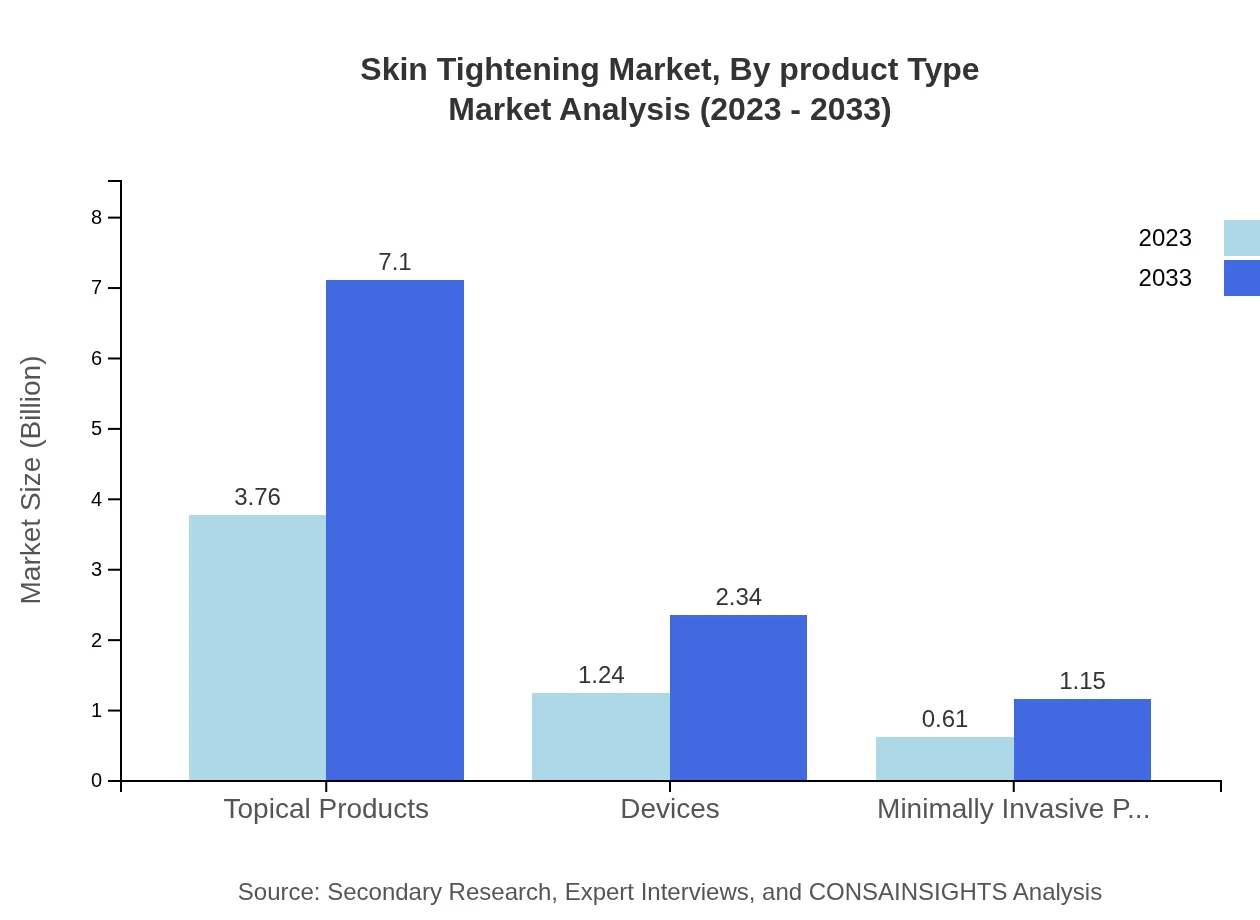
By product type, the skin tightening market is primarily dominated by dermatology clinics, which account for a sizable $4.59 billion in 2023 and are projected to reach $8.67 billion by 2033, maintaining a market share of 81.94% due to their trusted expertise. Home use devices are also becoming increasingly popular, expanding from $1.01 billion in 2023 to $1.91 billion in 2033, signifying an 18.06% market share.
Skin Tightening Market Analysis By Technology
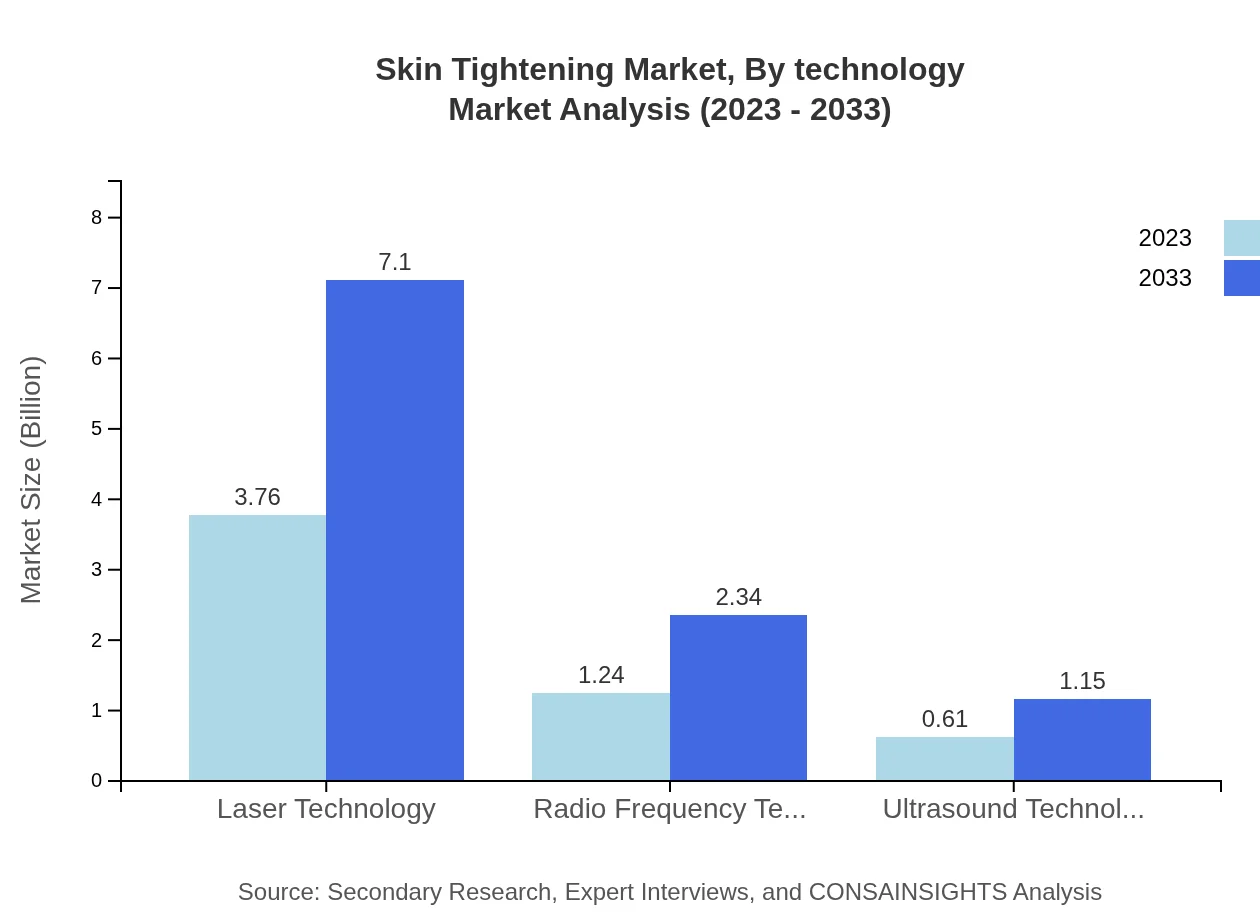
In terms of technology, laser technology remains the leading segment, valued at $3.76 billion in 2023 and expected to reach $7.10 billion by 2033, maintaining a market share of 67.06%. Radio frequency technology follows with an increase from $1.24 billion in 2023 to $2.34 billion in 2033, holding a 22.07% share. Ultrasound technology, while smaller, is growing from $0.61 billion to $1.15 billion during the same period, representing a 10.87% share.
Skin Tightening Market Analysis By Application
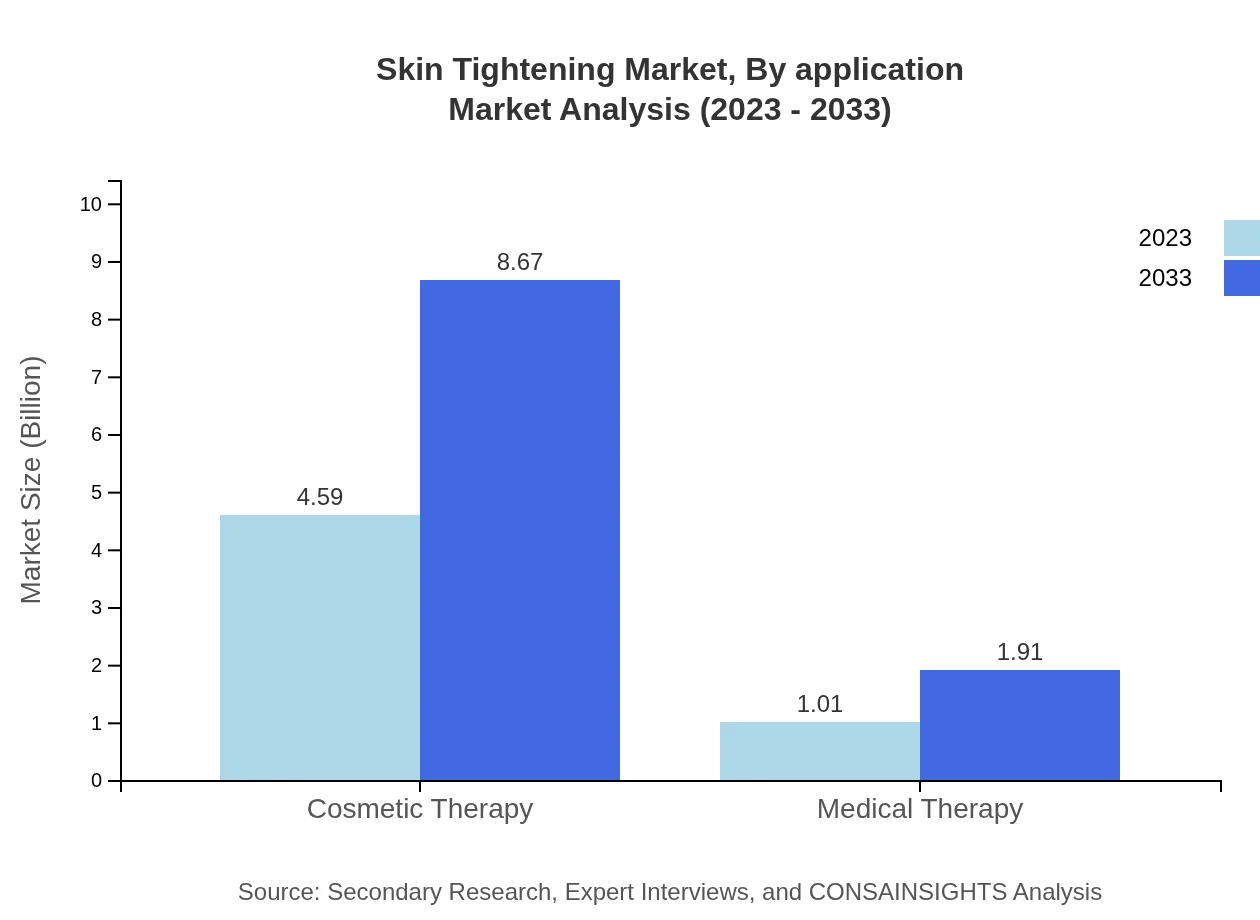
The skin tightening market application segment is significantly influenced by cosmetic therapy, which dominates with a size of $4.59 billion in 2023, forecasted to grow to $8.67 billion by 2033, while also holding a steady share of 81.94%. Medical therapy, though smaller, is anticipated to also see growth, expanding from $1.01 billion in 2023 to $1.91 billion by 2033, maintaining an 18.06% market share.
Skin Tightening Market Analysis By End User
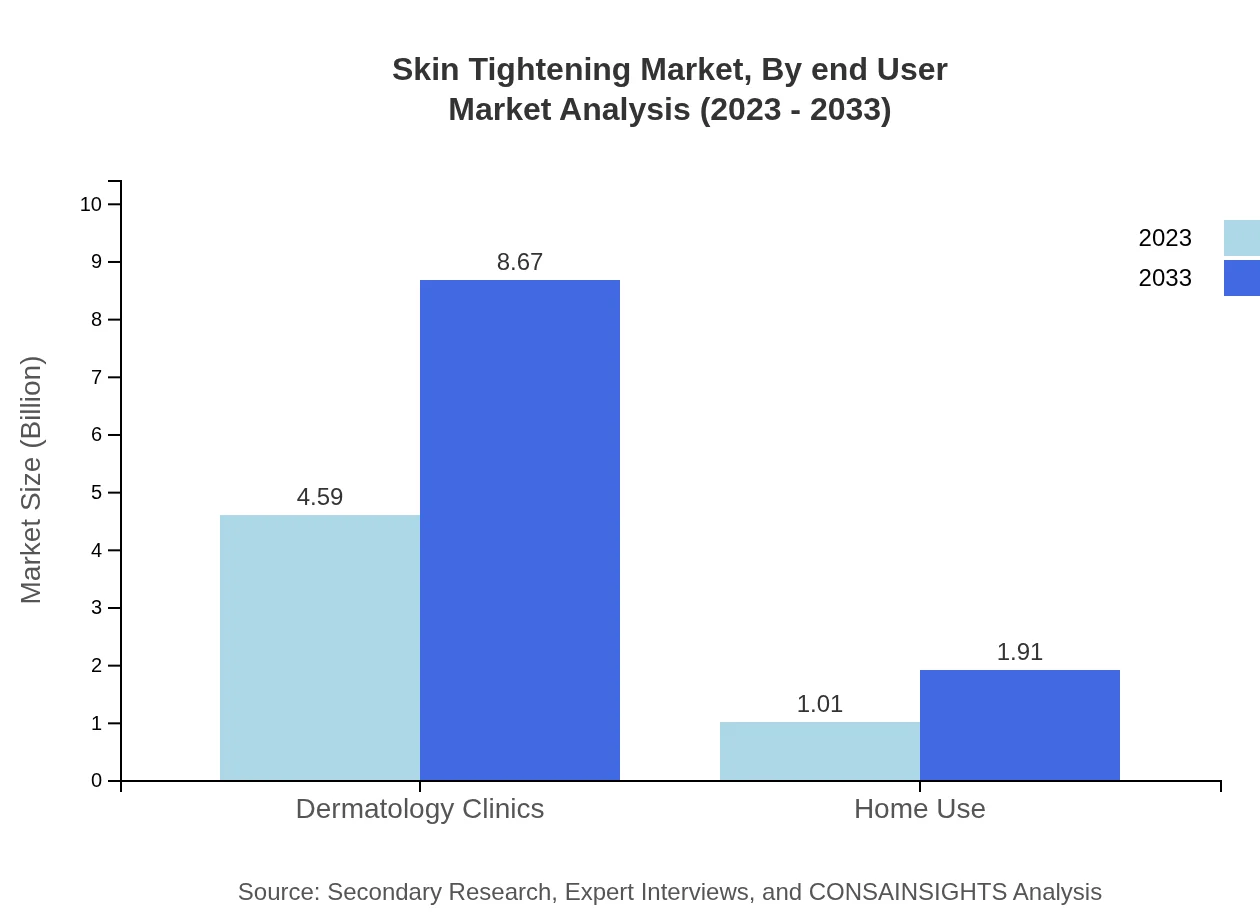
Consumers are increasingly opting for online purchases of skin tightening products, currently valued at $4.59 billion in 2023 and expected to grow to $8.67 billion by 2033, dominating the market with an 81.94% share. Offline retail channels are experiencing slower growth, expected to expand from $1.01 billion in 2023 to $1.91 billion by 2033, reflecting an 18.06% market share.
Skin Tightening Market Analysis By Distribution Channel
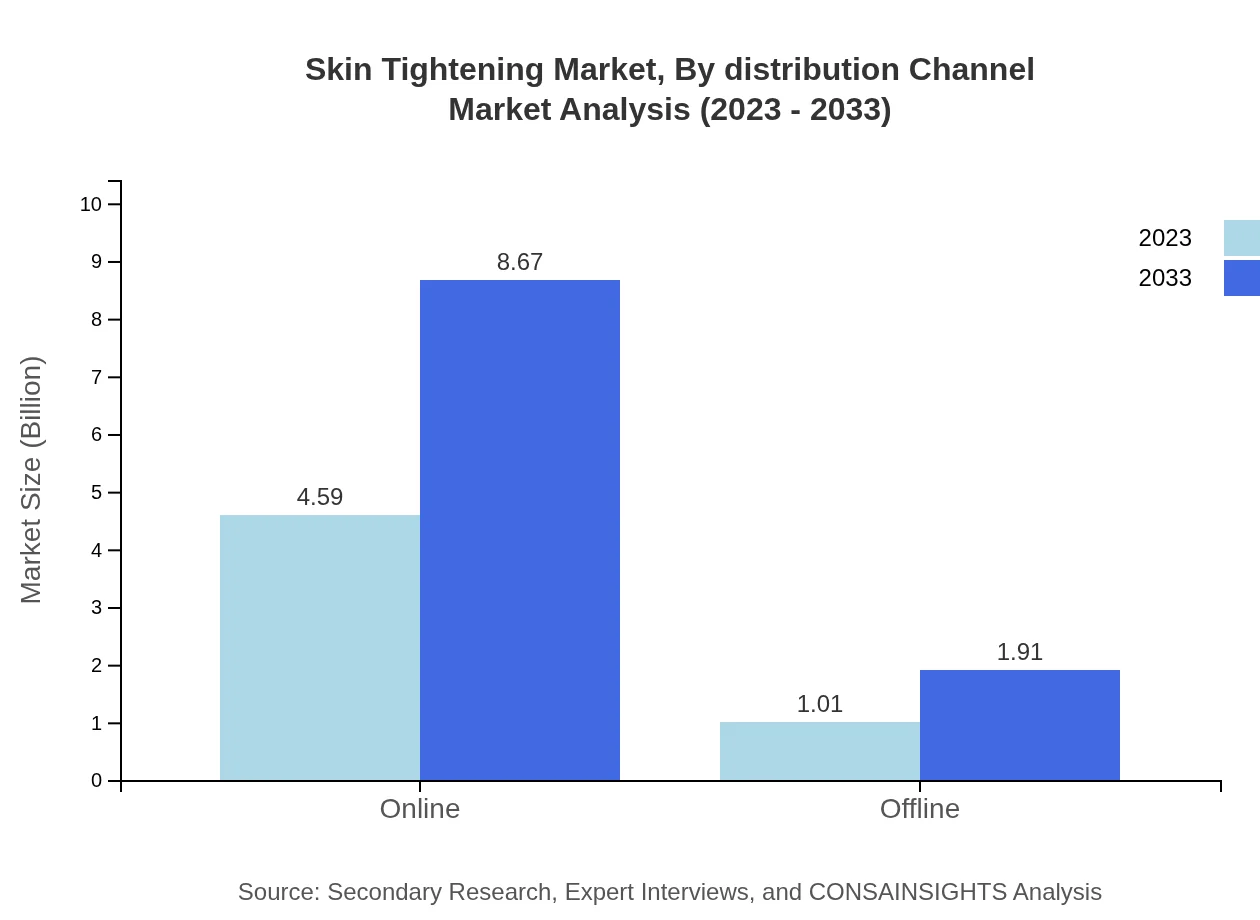
Distribution channels for the skin tightening market show strong performance through online platforms, projected to escalate from $4.59 billion in 2023 to $8.67 billion by 2033. Offline channels, although significant, are expected to grow less aggressively, from $1.01 billion to $1.91 billion over the same period. This highlights the consumer shift to convenient shopping options as technology adoption rises.
Skin Tightening Market Trends and Future Forecast
Tell us your focus area and get a customized research report.
Global Market Leaders and Top Companies in Skin Tightening Industry
Allergan Aesthetics:
Renowned for its products like Botox and Juvederm, Allergan Aesthetics leads the skin tightening segment through innovative solutions in aesthetic treatments and its extensive portfolio.Galderma:
A major player offering a range of skin care and aesthetic products, Galderma's flagship brand Dysport is well recognized in the skin tightening market.Merz Pharmaceuticals:
Merz Pharmaceuticals is notable for its advanced technologies and aesthetic solutions, including devices for non-invasive skin tightening treatments.Revance Therapeutics:
Revance is innovating the market with its DaxibotulinumtoxinA injection as a solution for skin firmness and elasticity.We're grateful to work with incredible clients.








FAQs
What is the market size of the Skin Tightening Market Report in 2023?
The market size in 2023 is $5.60 Billion, based on the reported valuation for that year in the study covering industry scope and segmentation.
How big will the market be by 2033?
By 2033 the market is projected to reach $10.58 Billion, reflecting growth across technologies, applications, and distribution channels outlined in the report.
What is CAGR of the market during the forecast period?
The reported compound annual growth rate for the forecast period 2023 to 2033 is 6.4%, representing the expected annualized expansion across the decade.
Is there a single fastest Growing region in the Skin Tightening Market Report market?
No single fastest-growing region is stated for the Skin Tightening Market Report market because the top regional implied CAGR values are within 0.15 percentage points of each other, making the ranking too close to call reliably.
Who are the top companies in this market?
Top companies listed in the report include Allergan Aesthetics, Galderma, Merz Pharmaceuticals, and Revance Therapeutics, each noted for product development and market presence.
What are the main technologies driving market growth?
Laser technology, radio frequency technology, and ultrasound technology are central drivers, offering effective, minimally invasive treatments that align with consumer preferences for reduced downtime.
Why are online channels important for this market?
Online channels facilitate purchase of home-use devices and information access, enhancing convenience and reach while complementing offline clinic-based service delivery and distribution.
Which end Users are covered in the segmentation?
End-user segmentation includes dermatology clinics and home use categories, reflecting both professional service settings and consumer-driven at-home treatments.