

Smart Pill Technologies Market Report
First published: 11 October 2024 | Last updated: 28 May 2026 | Report Code: smart-pill-technologies
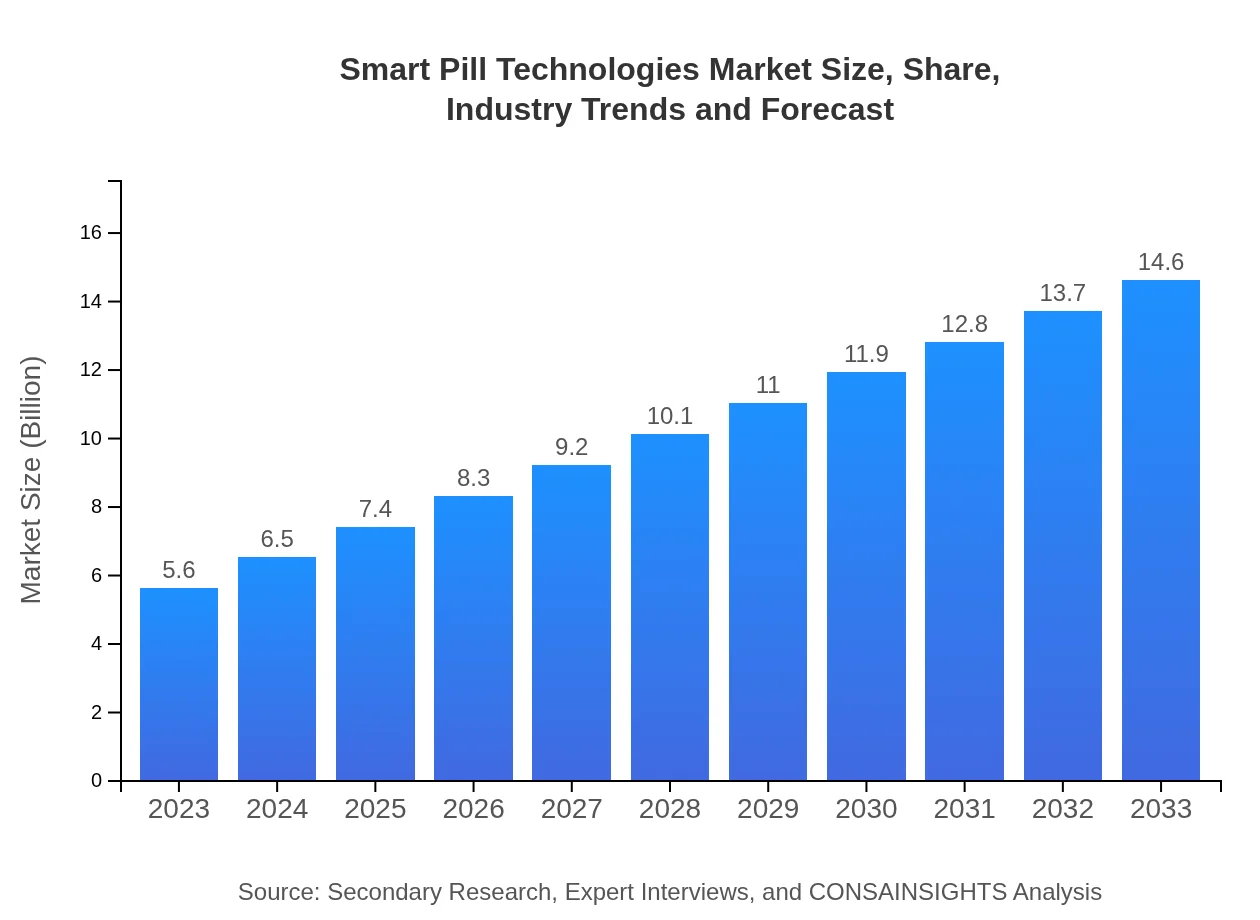
Smart Pill Technologies Market — USD 5.6 billion in 2023, Growing to USD 14.60B by 2033 at 9.7% CAGR
This report presents a comprehensive analysis of the Smart Pill Technologies market, including key insights, trends, and regional performance for the forecast period from 2023 to 2033. It explores market size, growth rates, industry trends, and competitive landscape.
Key Takeaways
- Global market expands from $5.60 Billion in 2023 to $14.60 Billion by 2033 at a 9.7% CAGR.
- North America is largest regional market, while no single fastest-growing region is stated because regional CAGR differences remain within 0.15 percentage points.
- Europe grows from $1.69 Billion to $4.42 Billion between 2023 and 2033, reflecting strong adoption trends.
- Asia Pacific rises from $1.02 Billion to $2.67 Billion, supported by rising digital health investments and chronic disease management needs.
- Market participants include Proteus Digital Health, Otsuka Pharmaceutical, Medtronic, Novartis, and Aridis Pharmaceuticals.
Smart Pill Technologies Market Report — Executive Summary
North America remains largest market by forecast-period value, while no single fastest-growing region is stated because top regional growth rates are separated by less than 0.15 percentage points. The Smart Pill Technologies market is projected to expand notably from $5.60 Billion in 2023 to $14.60 Billion by 2033, reflecting a 9.7% CAGR over the forecast period. Growth is driven by demand for less invasive monitoring, improvements in wireless communication technologies and biometric sensing, and expanding applications across diagnostics, therapeutics, and research. Regional progress varies: North America leads in absolute scale, while Europe and Asia Pacific show substantial increases in absolute value. Key market players such as Proteus Digital Health, Otsuka Pharmaceutical, Medtronic, Novartis, and Aridis Pharmaceuticals are active across product, technology, and channel segments. The analysis covers product types, end users, technologies, applications, and distribution channels, and highlights regulatory and reimbursement considerations, partnership activity, and innovation pathways that will influence adoption through 2033.
Key Growth Drivers
- Rising preference for minimally invasive monitoring methods that support remote patient management.
- Advances in wireless communication technologies enabling reliable in-body data transmission.
- Improved biometric sensor capabilities that expand diagnostic and therapeutic applications.
- Growing prevalence of chronic diseases increasing demand for continuous adherence and monitoring solutions.
- Investment and collaboration between healthcare and technology firms accelerating product development and commercialization.
| Metric | Value |
|---|---|
| Study Period | 2023 - 2033 |
| 2023 Market Size | $5.60 Billion |
| CAGR (2023-2033) | 9.7% |
| 2033 Market Size | $14.60 Billion |
| Top Companies | Proteus Digital Health, Otsuka Pharmaceutical, Medtronic , Novartis, Aridis Pharmaceuticals |
| Published Date | 11 October 2024 |
| Last Modified Date | 28 May 2026 |
Smart Pill Technologies Market Overview
Customize Smart Pill Technologies Market Report market research report
- ✔ Get in-depth analysis of Smart Pill Technologies market size, growth, and forecasts.
- ✔ Understand Smart Pill Technologies's regional dynamics and industry-specific trends.
- ✔ Identify potential applications, end-user demand, and growth segments in Smart Pill Technologies
What is the Market Size & CAGR of Smart Pill Technologies Market Report market in 2023?
Smart Pill Technologies Industry Analysis
Smart Pill Technologies Market Segmentation and Scope
Tell us your focus area and get a customized research report.
Smart Pill Technologies Market Report Market Analysis Report by Region
Europe Smart Pill Technologies Market Report:
Europe grows from $1.69 Billion in 2023 to $4.42 Billion in 2033. Growth reflects regulatory support, integration of advanced diagnostic and therapeutic solutions, and collaborative initiatives between medical and tech organizations.Asia Pacific Smart Pill Technologies Market Report:
Asia Pacific grows from $1.02 Billion in 2023 to $2.67 Billion in 2033. Expansion is driven by rising healthcare spending, growing focus on chronic disease care, and accelerating deployment of digital health and connectivity technologies.North America Smart Pill Technologies Market Report:
North America is largest regional market, rising from $2.05 Billion in 2023 to $5.36 Billion in 2033. Regional momentum is underpinned by investment in digital health, strong healthcare infrastructure, and early adoption of remote monitoring technologies.South America Smart Pill Technologies Market Report:
Latin America grows from $0.18 Billion in 2023 to $0.47 Billion in 2033. Market progression is supported by gradual investments in healthcare technology and increasing interest in remote patient monitoring and adherence tools.Middle East & Africa Smart Pill Technologies Market Report:
Middle East and Africa grows from $0.65 Billion in 2023 to $1.69 Billion in 2033. Regional gains are associated with expanding healthcare access, targeted investments, and adoption of innovative monitoring solutions in select markets.Tell us your focus area and get a customized research report.
Research Methodology
Smart Pill Technologies Market Analysis By Product
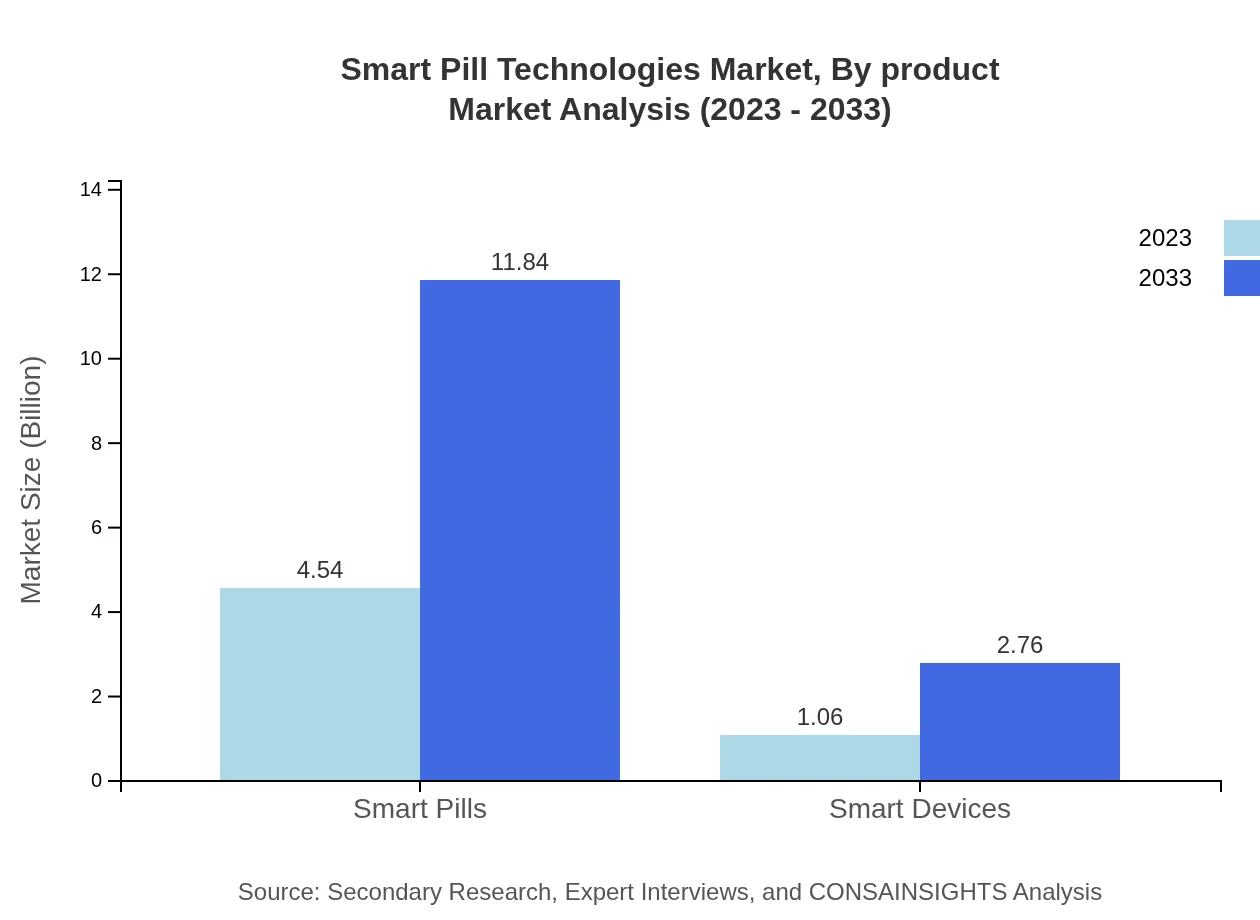
The Smart Pill Technologies market by product type includes Smart Pills and Smart Devices. In 2023, the Smart Pills segment contributed significantly to the market, valued at $4.54 billion, growing to $11.84 billion by 2033. Smart Devices are projected to grow from $1.06 billion in 2023 to $2.76 billion by 2033, indicating a rising trend toward integration for comprehensive health management.
Smart Pill Technologies Market Analysis By Application
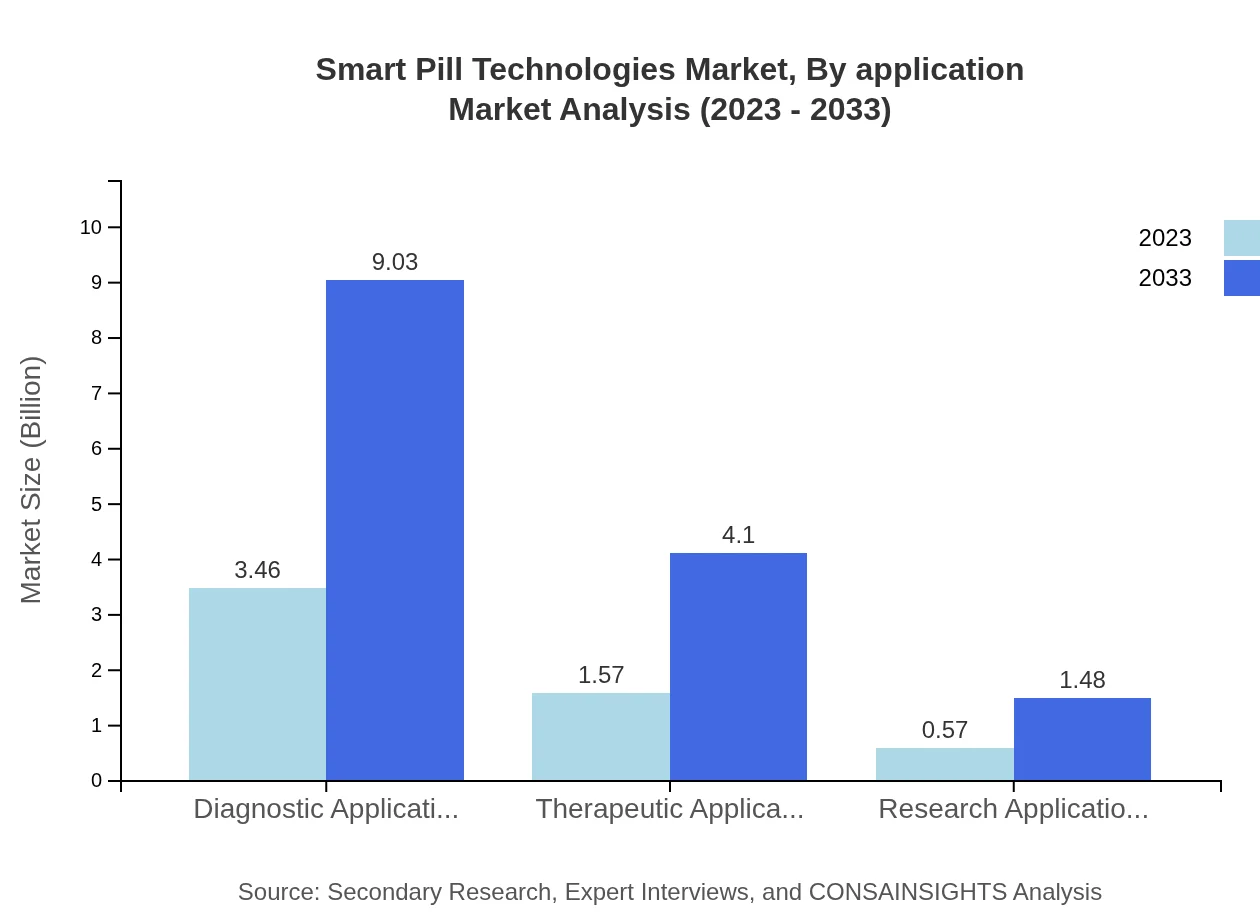
The application segments showcase the market's breadth, with Diagnostic Applications dominating at $3.46 billion in 2023, rising to $9.03 billion by 2033. Therapeutic Applications account for $1.57 billion in 2023 and are anticipated to grow to $4.10 billion. Research Applications, while smaller at $0.57 billion, are expected to reach $1.48 billion, highlighting the growing importance of smart technologies in research settings.
Smart Pill Technologies Market Analysis By End User
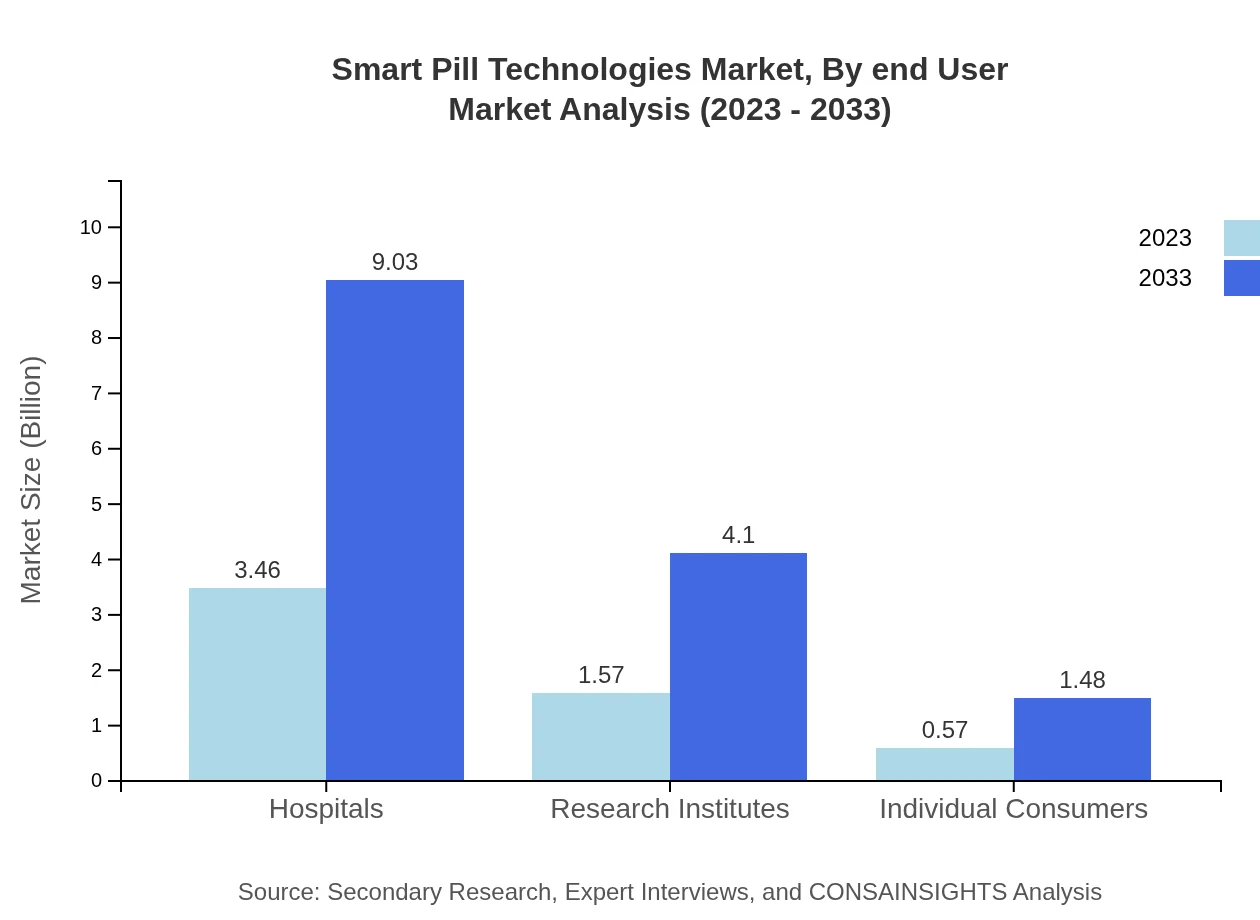
Hospitals lead the market with a valuation of $3.46 billion in 2023, forecasted to reach $9.03 billion by 2033, indicating their pivotal role in adopting Smart Pill Technologies. Research Institutes and Individual Consumers follow, projected to grow significantly as awareness and technology availability increase.
Smart Pill Technologies Market Analysis By Distribution Channel
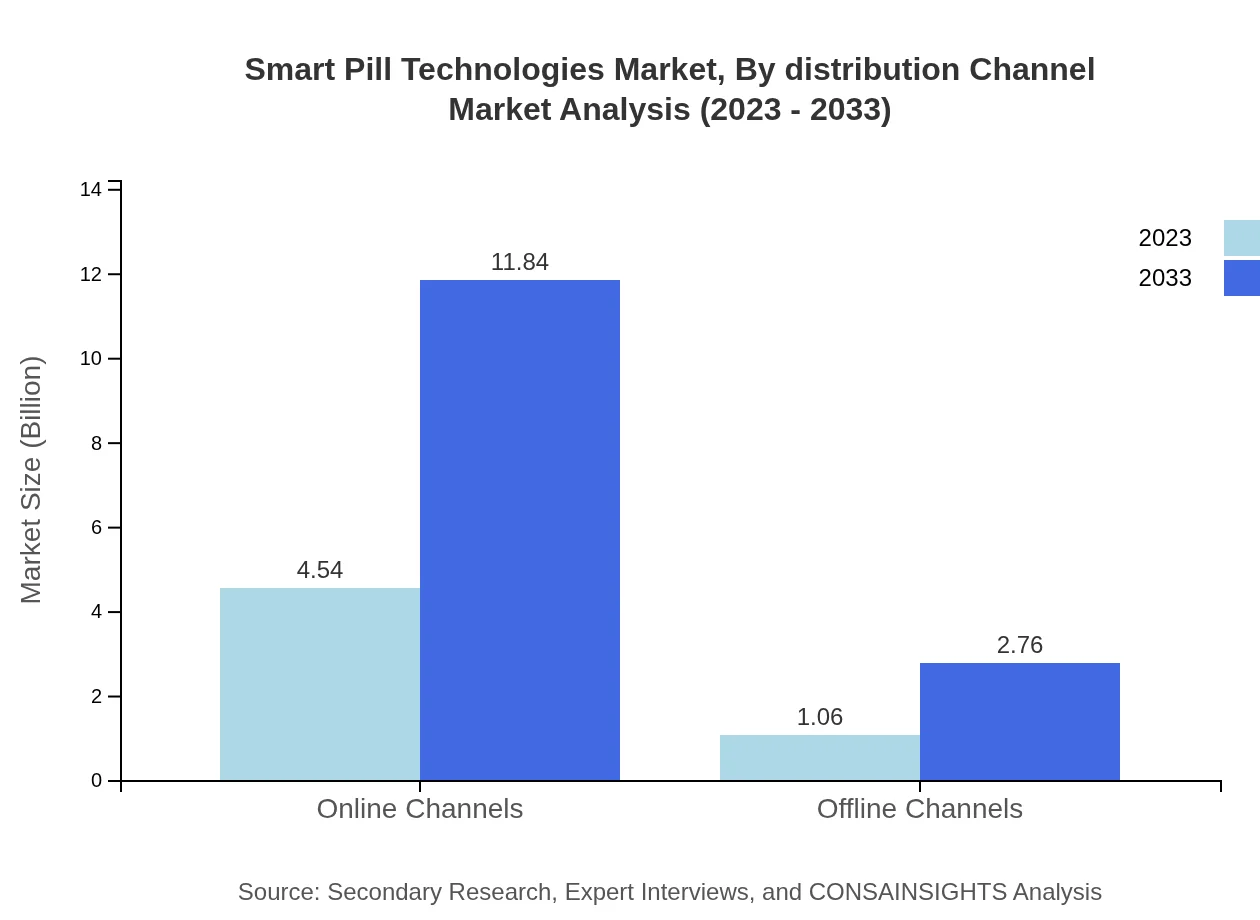
Online Channels account for a substantial share, with $4.54 billion in 2023, expected to grow to $11.84 billion by 2033, reflecting the trend toward e-commerce for healthcare products. Offline Channels, valued at $1.06 billion in 2023, are also witnessing growth but at a slower pace, reflecting changing consumer preferences.
Smart Pill Technologies Market Analysis By Technology
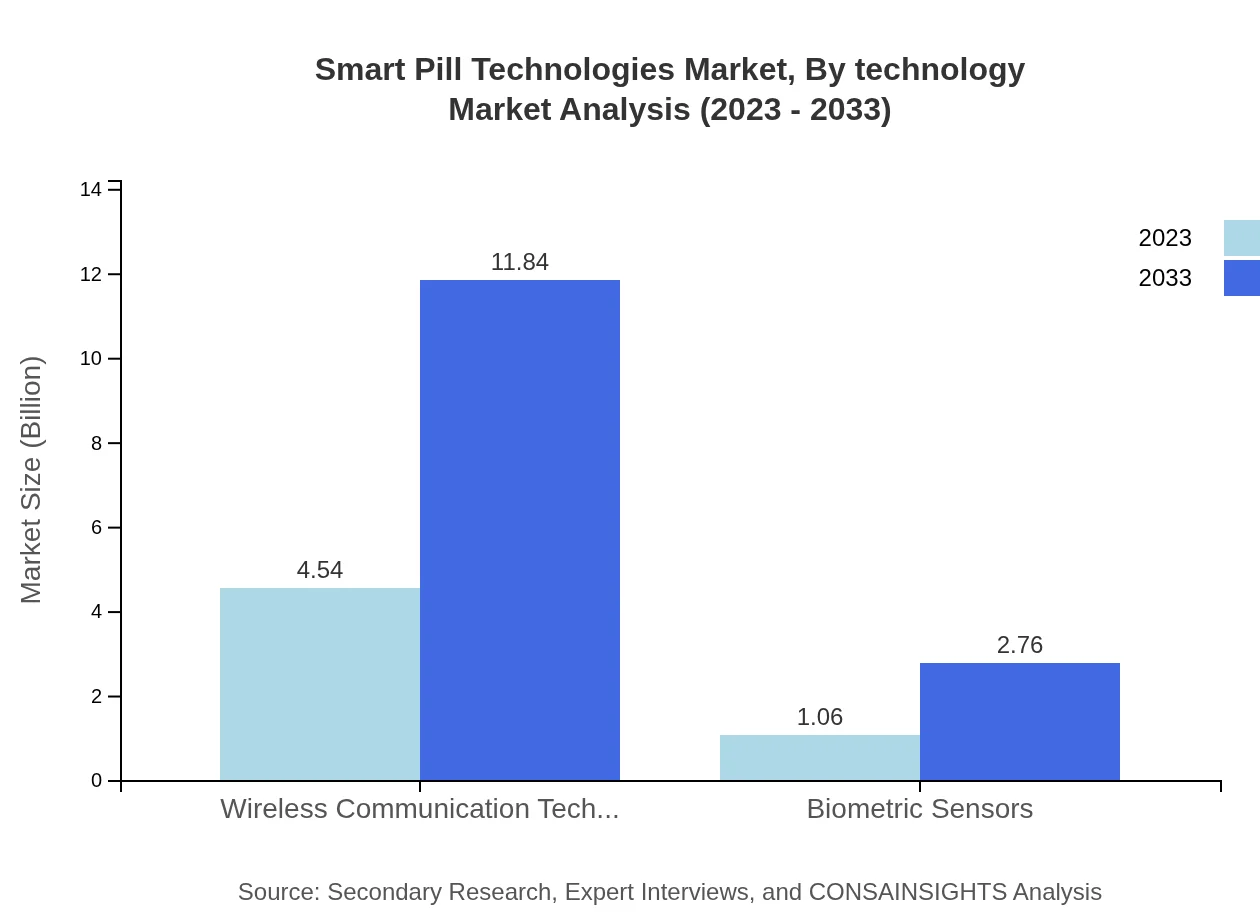
The market by technology reveals significant advancements, particularly in Wireless Communication Technology, valued at $4.54 billion in 2023 and expected to reach $11.84 billion. Biometric Sensors stand out with a projected growth from $1.06 billion to $2.76 billion over the same period, emphasizing technological integration in patient management.
Smart Pill Technologies Market Trends and Future Forecast
Tell us your focus area and get a customized research report.
Global Market Leaders and Top Companies in Smart Pill Technologies Industry
Proteus Digital Health:
A leader in the Smart Pill space, Proteus Digital Health specializes in digital medicine, developing smart pills that track medication adherence and provide real-time health data.Otsuka Pharmaceutical:
A key player in pharmaceuticals, Otsuka has pioneered the development of smart medication systems, integrating digital technology with traditional pharmaceuticals.Medtronic :
Known for its advanced medical devices, Medtronic is also invested in smart technologies for pills that focus on improving patient outcomes through innovative treatment applications.Novartis:
Novartis is heavily involved in integrating technology into drug development, creating solutions that enhance patient monitoring and medication adherence through smart applications.Aridis Pharmaceuticals:
Aridis is committed to developing unique smart technology solutions aimed at facilitating drug delivery and enhancing health management for chronic disease patients.We're grateful to work with incredible clients.









FAQs
What is the market size of Smart Pill Technologies in 2023?
The market size for Smart Pill Technologies in 2023 is $5.60 Billion, as reported in the provided dataset for the forecast starting year.
How big will the Smart Pill Technologies market be in 2033?
The market is projected to reach $14.60 Billion by 2033, based on the forecast figures supplied in the input data.
What is CAGR of the Smart Pill Technologies market?
The compound annual growth rate (CAGR) for the Smart Pill Technologies market during 2023 to 2033 is 9.7% as stated in the dataset.
Is there a single fastest Growing region in the Smart Pill Technologies Market Report market?
No single fastest-growing region is stated for the Smart Pill Technologies Market Report market because the top regional implied CAGR values are within 0.15 percentage points of each other, making the ranking too close to call reliably.
Which companies are leading participants in the market?
Top companies listed include Proteus Digital Health, Otsuka Pharmaceutical, Medtronic, Novartis, and Aridis Pharmaceuticals as provided in the input.
What are primary applications for smart pill technologies?
Primary applications include diagnostic, therapeutic, and research uses, aligning with broader adoption in clinical and consumer health contexts.
How are distribution channels categorized for this market?
Distribution is classified into online channels and offline channels, reflecting multiple pathways to reach hospitals, research institutes, and individual consumers.
What drives technology adoption in this sector?
Adoption is supported by wireless communication advances, enhanced biometric sensors, regulatory support, and growing needs for remote monitoring and adherence solutions.
Who are the end users of smart pill technologies?
End users identified include hospitals, research institutes, and individual consumers as specified in the segmentation facts.
What research methods were used for this report?
The research combined primary interviews with industry experts, secondary sources such as company reports, data triangulation, and expert-led trend analysis.