

Spasticity Treatment Market Report
First published: 20 October 2024 | Last updated: 28 May 2026 | Report Code: spasticity-treatment
Spasticity Treatment Market — USD 2.5 billion in 2023, Growing to USD 4.77B by 2033 at 6.5% CAGR
This report provides an in-depth analysis of the Spasticity Treatment market trends, segmentation, regional insights, and forecasts from 2023 to 2033, catering to stakeholders and decision-makers in health care and pharmaceutical sectors.
Key Takeaways
- Global market expands from $2.50 Billion in 2023 to $4.77 Billion in 2033 at a 6.5% CAGR.
- North America is largest regional market, while no single fastest-growing region is stated because regional CAGR differences remain within 0.15 percentage points.
- Europe moves from $0.78 Billion in 2023 to $1.48 Billion in 2033, reflecting sustained demand for therapies.
- Asia Pacific grows from $0.49 Billion in 2023 to $0.94 Billion in 2033, driven by rising neurological care access.
- Segment diversity spans pharmacological, non-pharmacological and surgical treatments with hospitals, rehabilitation centers and home care as key end-users.
Spasticity Treatment Market Report — Executive Summary
North America remains largest market by forecast-period value, while no single fastest-growing region is stated because top regional growth rates are separated by less than 0.15 percentage points. This report examines the spasticity treatment market, which stood at $2.50 Billion in 2023 and is projected to reach $4.77 Billion by 2033 at a 6.5% CAGR. Growth is propelled by increased prevalence of neurological disorders, innovations in pharmacological and non-pharmacological therapies, and expanding access to rehabilitation services. The market structure covers treatment types, causes and end-user segments, with hospitals, rehabilitation centers and home care playing central roles. Regional breakdown highlights North America as the largest market, while Europe, Asia Pacific, Latin America and Middle East & Africa show measurable gains. Leading companies profiled include Ipsen, Allergan, Merz Pharmaceuticals, UCB and Revance Therapeutics. The analysis focuses on demand drivers, technological advancements, and stakeholder strategies to expand patient access and improve treatment outcomes.
Key Growth Drivers
- Rising incidence and diagnosis rates of neurological conditions increasing demand for spasticity management.
- Advances in therapeutic techniques and devices enabling more targeted pharmacological and non-pharmacological interventions.
- Expansion of rehabilitation infrastructure and greater adoption of home care services for long-term management.
- Collaborations between pharmaceutical manufacturers and healthcare providers to enhance treatment delivery and outcomes.
- Increased healthcare spending and policy attention toward neurological disorder treatment and patient access.
| Metric | Value |
|---|---|
| Study Period | 2023 - 2033 |
| 2023 Market Size | $2.50 Billion |
| CAGR (2023-2033) | 6.5% |
| 2033 Market Size | $4.77 Billion |
| Top Companies | Ipsen, Allergan, Merz Pharmaceuticals, UCB, Revance Therapeutics |
| Published Date | 20 October 2024 |
| Last Modified Date | 28 May 2026 |
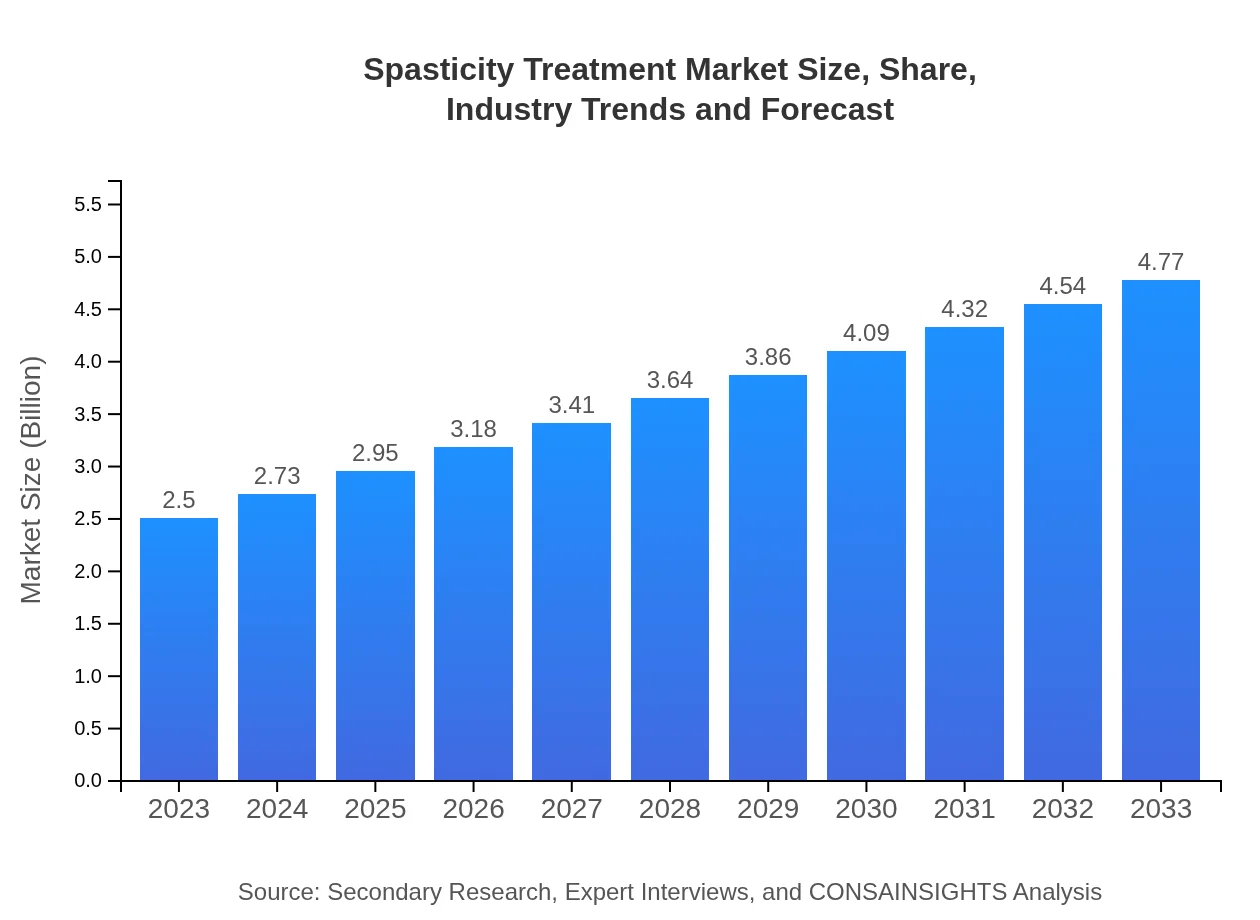
Spasticity Treatment Market Overview
Customize Spasticity Treatment Market Report market research report
- ✔ Get in-depth analysis of Spasticity Treatment market size, growth, and forecasts.
- ✔ Understand Spasticity Treatment's regional dynamics and industry-specific trends.
- ✔ Identify potential applications, end-user demand, and growth segments in Spasticity Treatment
What is the Market Size & CAGR of Spasticity Treatment Market Report market in 2023?
Spasticity Treatment Industry Analysis
Spasticity Treatment Market Segmentation and Scope
Tell us your focus area and get a customized research report.
Spasticity Treatment Market Report Market Analysis Report by Region
Europe Spasticity Treatment Market Report:
Europe grows from $0.78 Billion in 2023 to $1.48 Billion in 2033. This progression is driven by increased diagnosis of neurological conditions, investment in therapeutic technologies, and broader integration of multidisciplinary care models across healthcare systems.Asia Pacific Spasticity Treatment Market Report:
Asia Pacific grows from $0.49 Billion in 2023 to $0.94 Billion in 2033. Growth is underpinned by improving access to neurological care, rising healthcare expenditure, and adoption of both pharmacological and non-pharmacological interventions in urban centers.North America Spasticity Treatment Market Report:
North America is largest regional market, rising from $0.85 Billion in 2023 to $1.63 Billion in 2033. Regional expansion reflects strong clinical adoption, reimbursement frameworks, and established rehabilitation and hospital infrastructure supporting diverse treatment modalities.South America Spasticity Treatment Market Report:
Latin America grows from $0.15 Billion in 2023 to $0.28 Billion in 2033. Market gains are linked to growing healthcare investments, enhanced rehabilitation services, and gradual expansion of treatment availability in key urban markets.Middle East & Africa Spasticity Treatment Market Report:
Middle East and Africa grows from $0.23 Billion in 2023 to $0.44 Billion in 2033. Progress is supported by targeted healthcare initiatives, expanding rehabilitation capacity, and efforts to improve access to specialized neurological treatments.Tell us your focus area and get a customized research report.
Research Methodology
Spasticity Treatment Market Analysis By Treatment Type
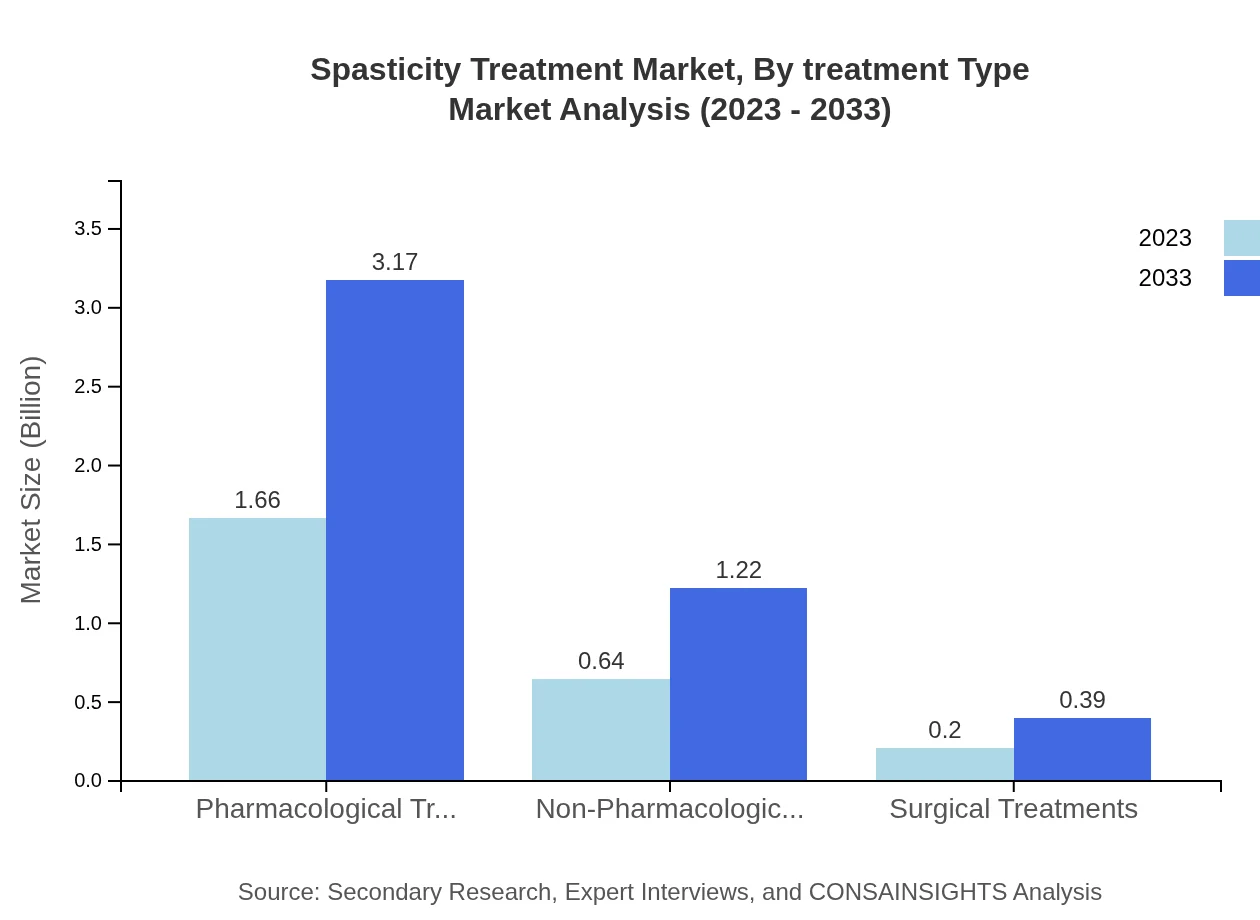
The spasticity treatment market by treatment type comprises pharmacological, non-pharmacological, and surgical treatments. In 2023, pharmacological treatments constitute a significant portion with a market size of USD 1.66 billion (66.43% market share), projected to grow to USD 3.17 billion by 2033. Non-pharmacological treatments follow, with a market size of USD 0.64 billion (25.49% market share), expected to rise to USD 1.22 billion. Surgical treatments, while smaller in size, also play a critical role, growing from USD 0.20 billion (8.08% market share) to USD 0.39 billion.
Spasticity Treatment Market Analysis By Cause
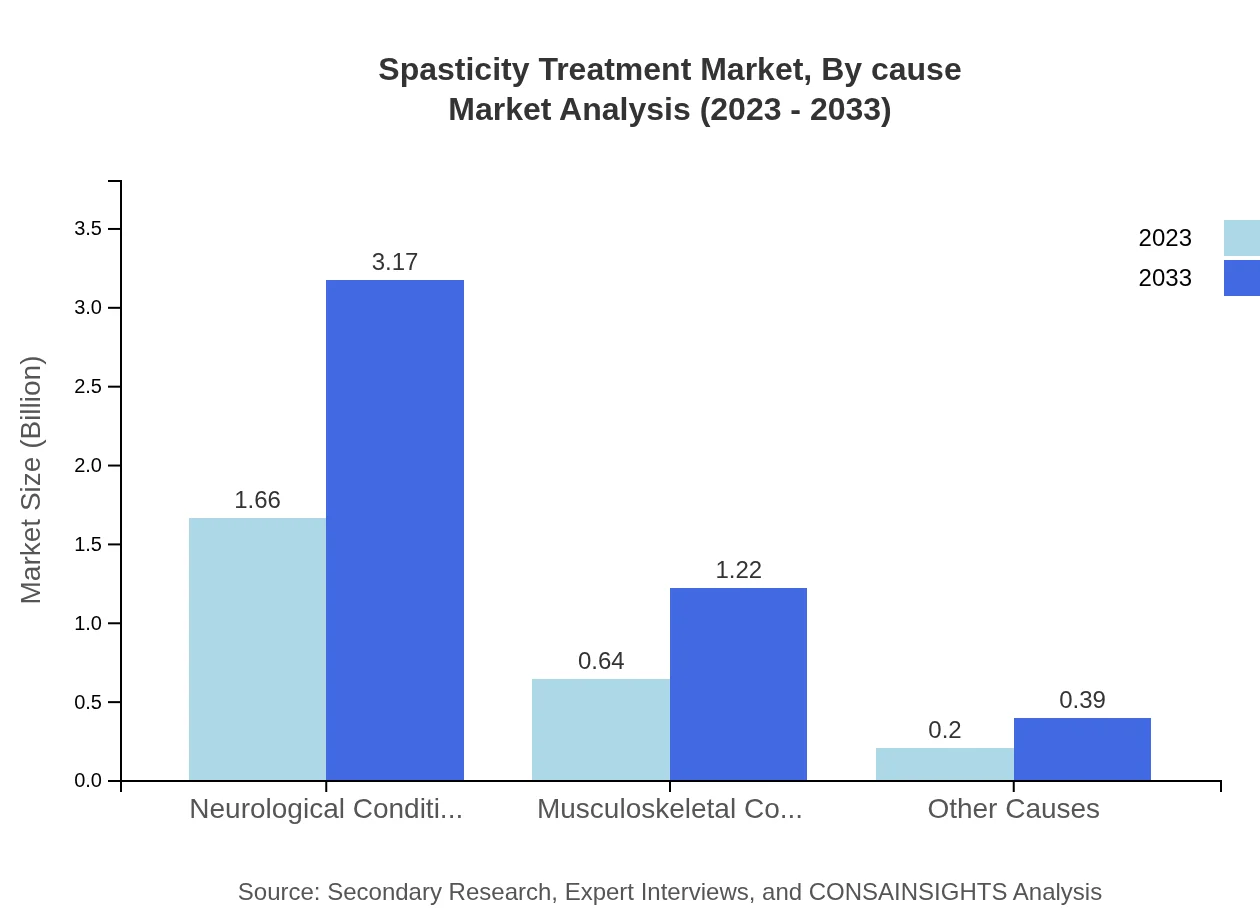
The dominant segment in the spasticity treatment market is neurological conditions, beginning with a market size of USD 1.66 billion in 2023 (66.43% share), expected to expand to USD 3.17 billion. Following are musculoskeletal conditions at USD 0.64 billion (25.49% share) in 2023, projected at USD 1.22 billion, and other causes representing USD 0.20 billion (8.08% share) intended to reach USD 0.39 billion by 2033.
Spasticity Treatment Market Analysis By End User
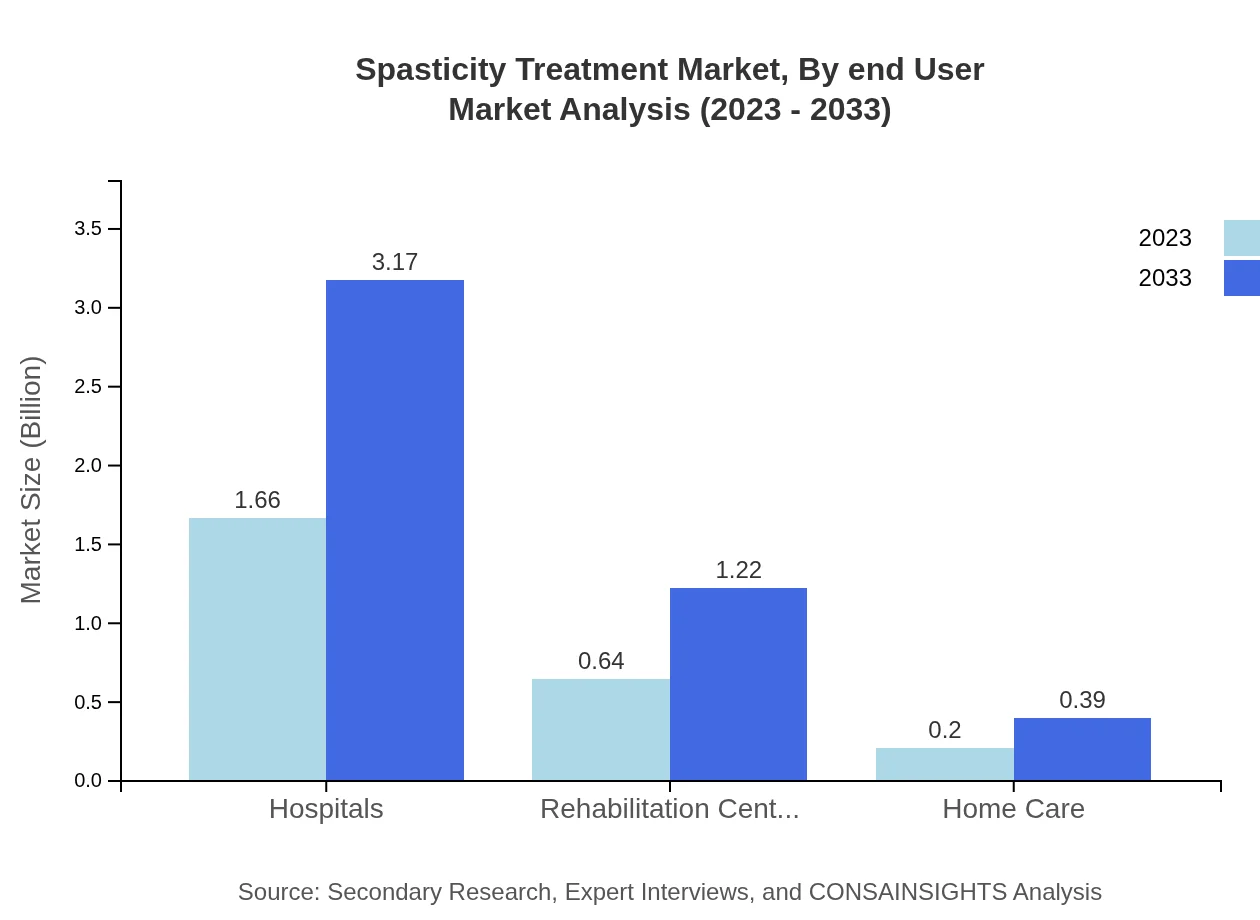
End-user segmentation reveals hospitals leading with a market size of USD 1.66 billion in 2023 (66.43% share), anticipated to achieve USD 3.17 billion by 2033. Rehabilitation centers follow with USD 0.64 billion (25.49% share), expanding to USD 1.22 billion, and home care settings, although smaller, are expected to grow from USD 0.20 billion to USD 0.39 billion.
Spasticity Treatment Market Analysis By Region
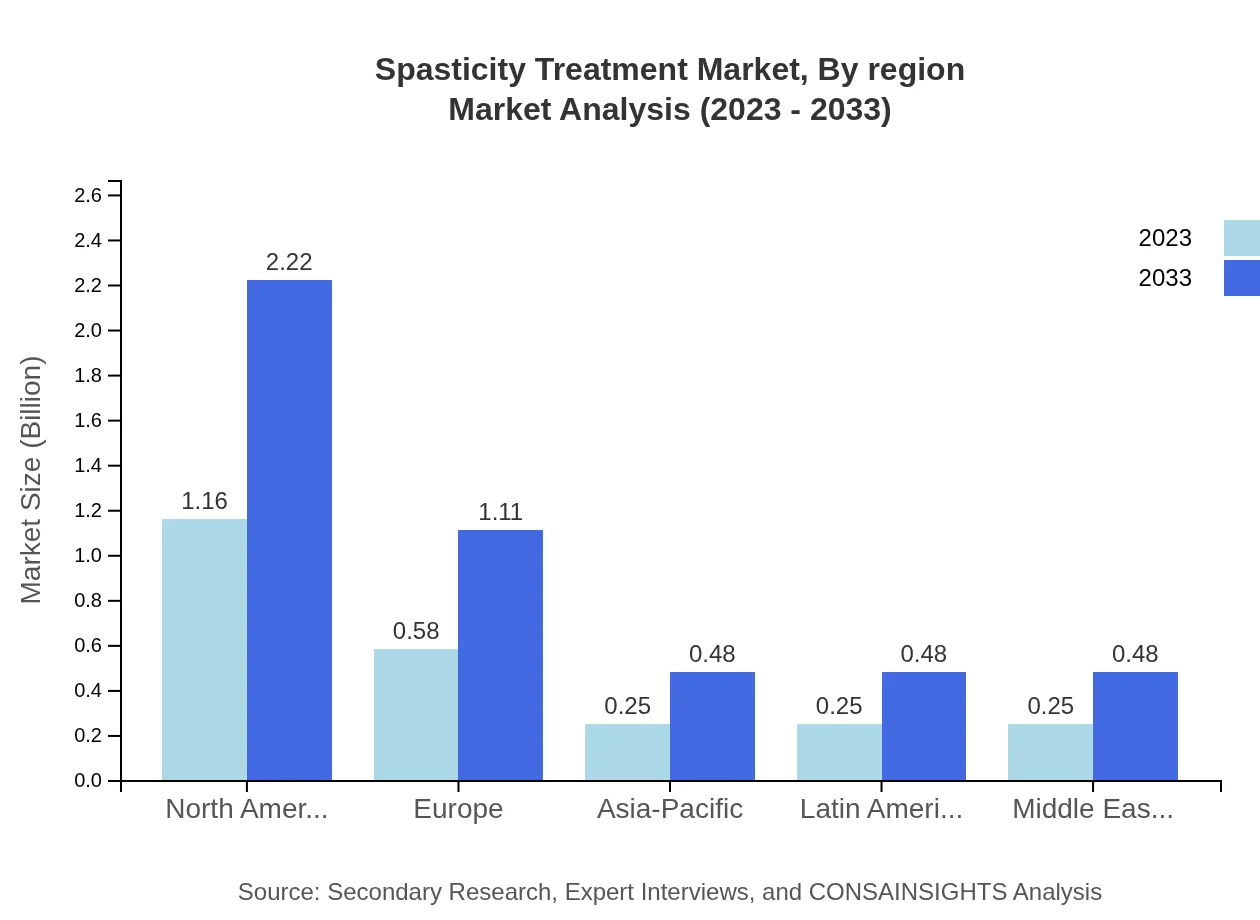
Geographically, North America holds the largest share with a market size of USD 1.16 billion (46.46% share) in 2023, expected to expand to USD 2.22 billion. Europe follows with USD 0.58 billion (23.28% share), projected to grow to USD 1.11 billion. The Asia-Pacific region has a smaller market size of USD 0.25 billion (10.07% share) expected to reach USD 0.48 billion, while South America, with USD 0.25 billion (10.1% share) is similarly projected to grow to USD 0.48 billion by 2033.
Spasticity Treatment Market Trends and Future Forecast
Tell us your focus area and get a customized research report.
Global Market Leaders and Top Companies in Spasticity Treatment Industry
Ipsen:
A global biopharmaceutical group focused on innovation. Ipsen provides innovative therapeutic solutions to treat botulinum toxin and spasticity.Allergan:
A leader in the pharmaceutical and biotechnology industry, Allergan is known for its neuromodulator products, particularly Botox for treating spasticity.Merz Pharmaceuticals:
Merz specializes in treatments for neurological disorders including spasticity, focusing on innovative therapies and high-quality care.UCB:
UCB is a biopharmaceutical company dedicated to the research and development of treatments for neurological and rare diseases, including spasticity.Revance Therapeutics:
Revance focuses on innovative therapeutic solutions with an emphasis on revitalizing the treatment landscape for spasticity.We're grateful to work with incredible clients.



FAQs
What is the market size of the spasticity treatment market in 2023?
The market size in 2023 is $2.50 Billion, as reported for the global spasticity treatment market for the base year.
How big will the market be in 2033?
By 2033 the market is projected to reach $4.77 Billion according to the provided forecast for the 2023 to 2033 period.
What is CAGR of the market during the forecast period?
The market is forecasted to grow at a compound annual growth rate (CAGR) of 6.5% between 2023 and 2033.
Is there a single fastest Growing region in the Spasticity Treatment Market Report market?
No single fastest-growing region is stated for the Spasticity Treatment Market Report market because the top regional implied CAGR values are within 0.15 percentage points of each other, making the ranking too close to call reliably.
Which treatment types are included in the market segmentation?
Treatment types covered include pharmacological treatments, non-pharmacological treatments, and surgical treatments as distinct categories.
Who are the top companies operating in this market?
Top companies listed in the report include Ipsen, Allergan, Merz Pharmaceuticals, UCB, and Revance Therapeutics.
What end Users are addressed in the market study?
Key end-user categories examined are hospitals, rehabilitation centers, and home care providers across regional markets.
How is the market research methodology described?
The methodology combines primary interviews, secondary research from company reports and publications, data triangulation, and expert-led trend analysis.