
Reports >
Life Sciences
>
Synthetic Stem Cells Market Report

Synthetic Stem Cells Market Report
First published: 11 October 2024 | Last updated: 28 May 2026 | Report Code: synthetic-stem-cells
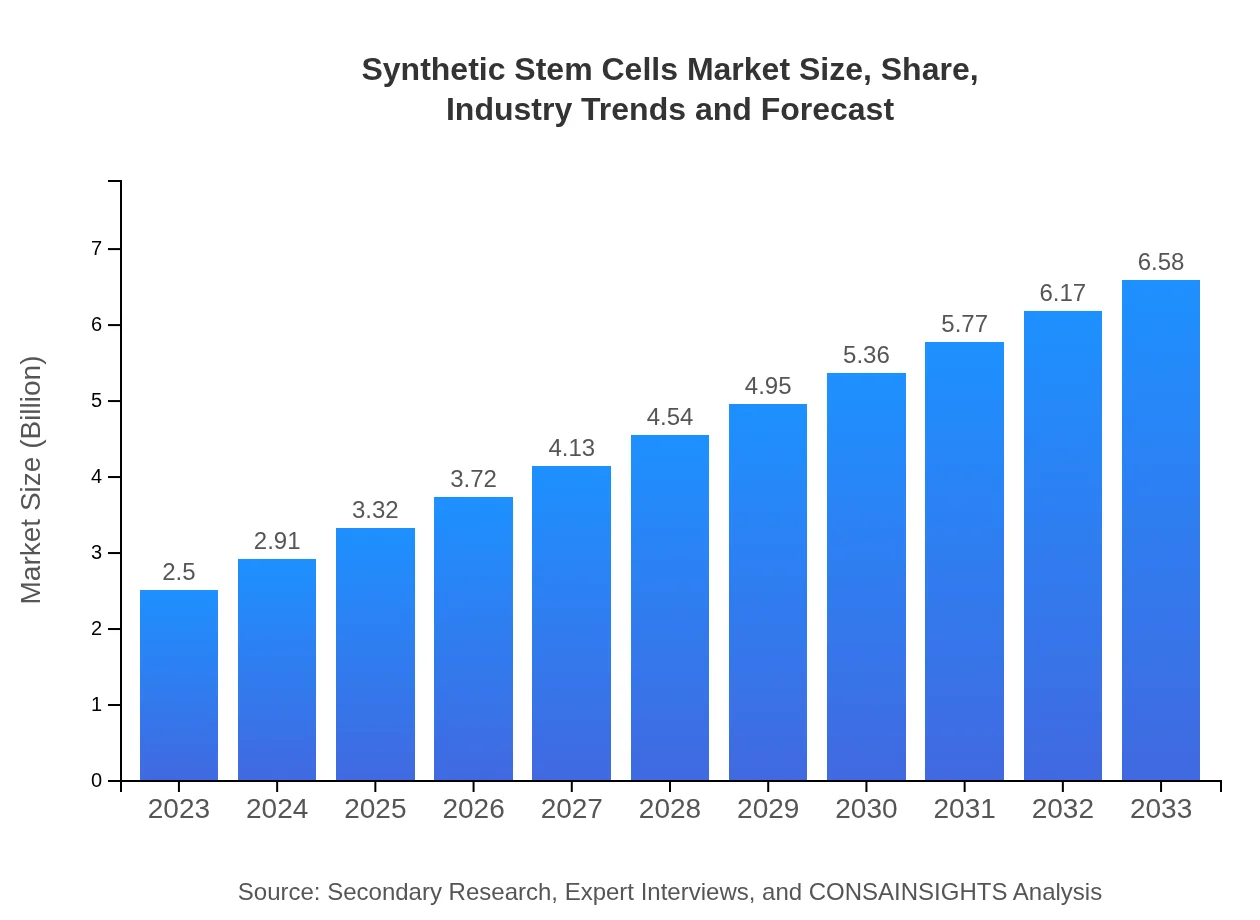
Synthetic Stem Cells Market — USD 2.5 billion in 2023, Growing to USD 6.58B by 2033 at 9.8% CAGR
This market report delves into the Synthetic Stem Cells sector, providing insights into market dynamics, growth forecasts from 2023 to 2033, and key trends impacting the industry. It covers market size, segmentation, regional analysis, leading players, and emerging technologies.
Key Takeaways
- Global market expands from $2.50 Billion in 2023 to $6.58 Billion in 2033 at a 9.8% CAGR.
- Europe is largest regional market, while no single fastest-growing region is stated because regional CAGR differences remain within 0.15 percentage points.
- North America grows from $0.82 Billion in 2023 to $2.17 Billion in 2033, reflecting strong clinical and research activity.
- Asia Pacific increases from $0.47 Billion in 2023 to $1.23 Billion in 2033, driven by expanding biotechnology investments.
- Market participation includes Mesoblast Limited, Athersys, Inc., Sumitomo Dainippon Pharma Co., Ltd., Cynata Therapeutics, and Invitrogen by Thermo Fisher Scientific.
Synthetic Stem Cells Market Report — Executive Summary
Europe remains largest market by forecast-period value, while no single fastest-growing region is stated because top regional growth rates are separated by less than 0.15 percentage points. This report examines the synthetic stem cells market, which grows from $2.50 Billion in 2023 to $6.58 Billion in 2033 at a 9.8% CAGR over the 2023 to 2033 forecast period. Growth is propelled by rising demand in regenerative medicine, increased research funding, and advances in cell culture, gene editing, and bioreactor technologies. Industry players such as Mesoblast Limited and Invitrogen by Thermo Fisher Scientific are active through partnerships and product development. Regional patterns show Europe as the largest market, with substantial increases in North America and Asia Pacific. The analysis covers technology, application, distribution channels, and end-user segments—highlighting pharmaceutical companies, research institutes, hospitals, and biotechnology firms. Regulatory pathways, ethical considerations, and collaborative research efforts shape market progress, while innovations in personalized medicine and clinical translation underpin long-term opportunities. The report integrates primary interviews, company disclosures, and expert validation to present actionable market intelligence for stakeholders.
Key Growth Drivers
- Rising clinical demand for regenerative therapies that leverage synthetic stem cell solutions.
- Advances in cell culture, gene editing, and bioreactor technologies enabling scalable production.
- Increased investment by pharmaceutical companies and biotechnology firms into synthetic cell research.
- Expanded application areas including drug discovery, regenerative medicine, and research and development.
- Collaborations among research institutes, universities, and industry to accelerate translational outcomes.
| Metric | Value |
|---|---|
| Study Period | 2023 - 2033 |
| 2023 Market Size | $2.50 Billion |
| CAGR (2023-2033) | 9.8% |
| 2033 Market Size | $6.58 Billion |
| Top Companies | Mesoblast Limited, Athersys, Inc., Sumitomo Dainippon Pharma Co., Ltd., Cynata Therapeutics, Invitrogen by Thermo Fisher Scientific |
| Published Date | 11 October 2024 |
| Last Modified Date | 28 May 2026 |
Synthetic Stem Cells Market Overview
Customize Synthetic Stem Cells Market Report market research report
- ✔ Get in-depth analysis of Synthetic Stem Cells market size, growth, and forecasts.
- ✔ Understand Synthetic Stem Cells's regional dynamics and industry-specific trends.
- ✔ Identify potential applications, end-user demand, and growth segments in Synthetic Stem Cells
What is the Market Size & CAGR of Synthetic Stem Cells Market Report market in 2023?
Synthetic Stem Cells Industry Analysis
Synthetic Stem Cells Market Segmentation and Scope
Tell us your focus area and get a customized research report.
Synthetic Stem Cells Market Report Market Analysis Report by Region
Europe Synthetic Stem Cells Market Report:
Europe is largest regional market, rising from $0.85 Billion in 2023 to $2.24 Billion in 2033. Growth reflects concentrated research activity, collaborative networks among institutes and industry, and demand for regenerative medicine solutions across healthcare systems.Asia Pacific Synthetic Stem Cells Market Report:
Asia Pacific grows from $0.47 Billion in 2023 to $1.23 Billion in 2033. Expansion is underpinned by rising biotech investment, growing research institute activity, and increasing clinical adoption of novel therapeutic approaches in several countries.North America Synthetic Stem Cells Market Report:
North America grows from $0.82 Billion in 2023 to $2.17 Billion in 2033. Regional drivers include substantial clinical research activity, strong pharmaceutical and biotechnology investment, and adoption of advanced laboratory technologies that support translational applications.South America Synthetic Stem Cells Market Report:
Latin America grows from $0.2 Billion in 2023 to $0.53 Billion in 2033. Market development is driven by growing research initiatives, expanding healthcare infrastructure, and interest from regional biotech firms in regenerative applications.Middle East & Africa Synthetic Stem Cells Market Report:
Middle East and Africa grows from $0.16 Billion in 2023 to $0.41 Billion in 2033. Progress is supported by emerging research capacities, targeted investments, and partnerships aimed at advancing regenerative medicine and related biotechnology efforts.Tell us your focus area and get a customized research report.
Research Methodology
Synthetic Stem Cells Market Analysis By Type
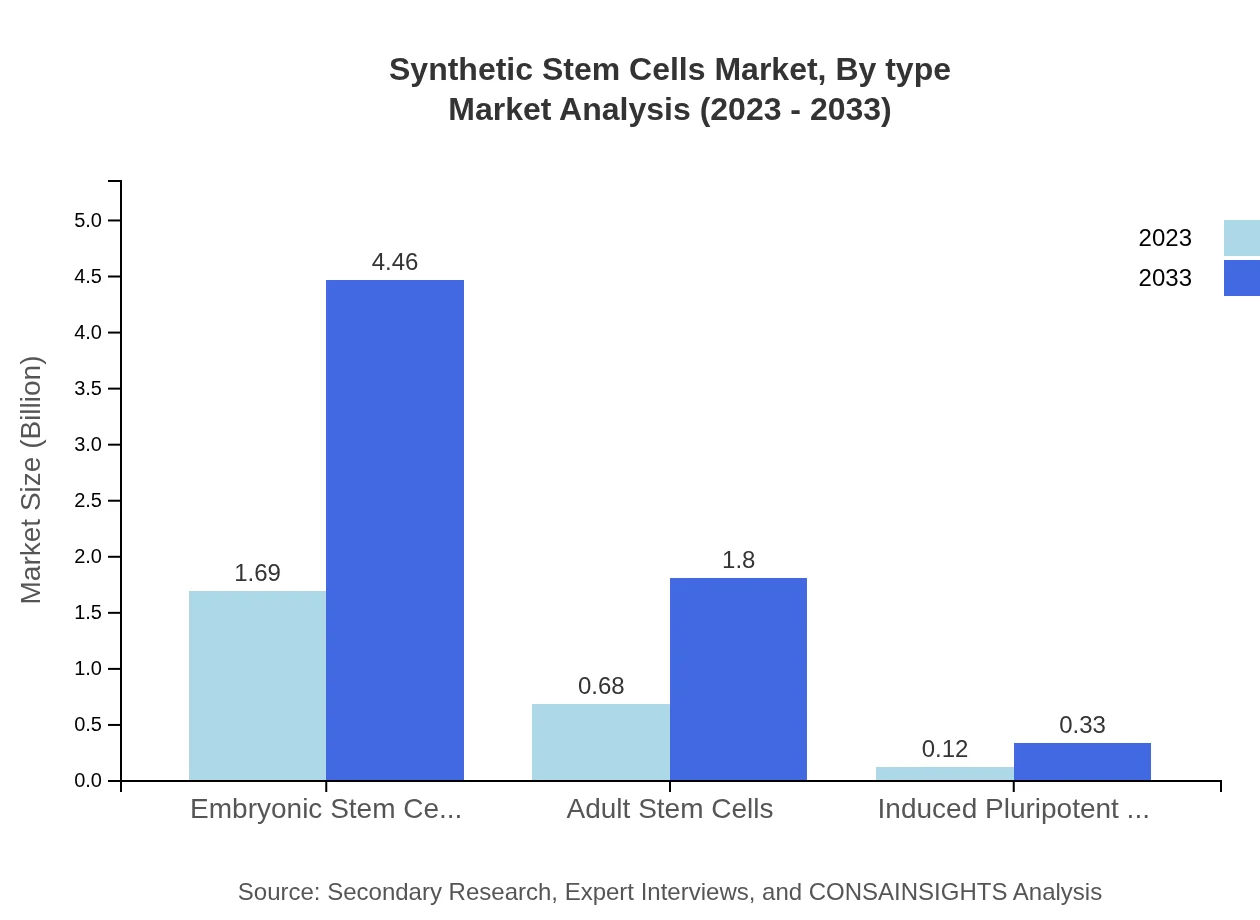
The Synthetic Stem Cells market, segmented by type, includes embryonic stem cells, adult stem cells, and induced pluripotent stem cells. The embryonic stem cells segment is the largest, valued at USD 1.69 billion in 2023 and projected to reach USD 4.46 billion by 2033. Adult stem cells and pluripotent stem cells are also experiencing significant growth due to their increasing applications in therapeutic developments.
Synthetic Stem Cells Market Analysis By Application
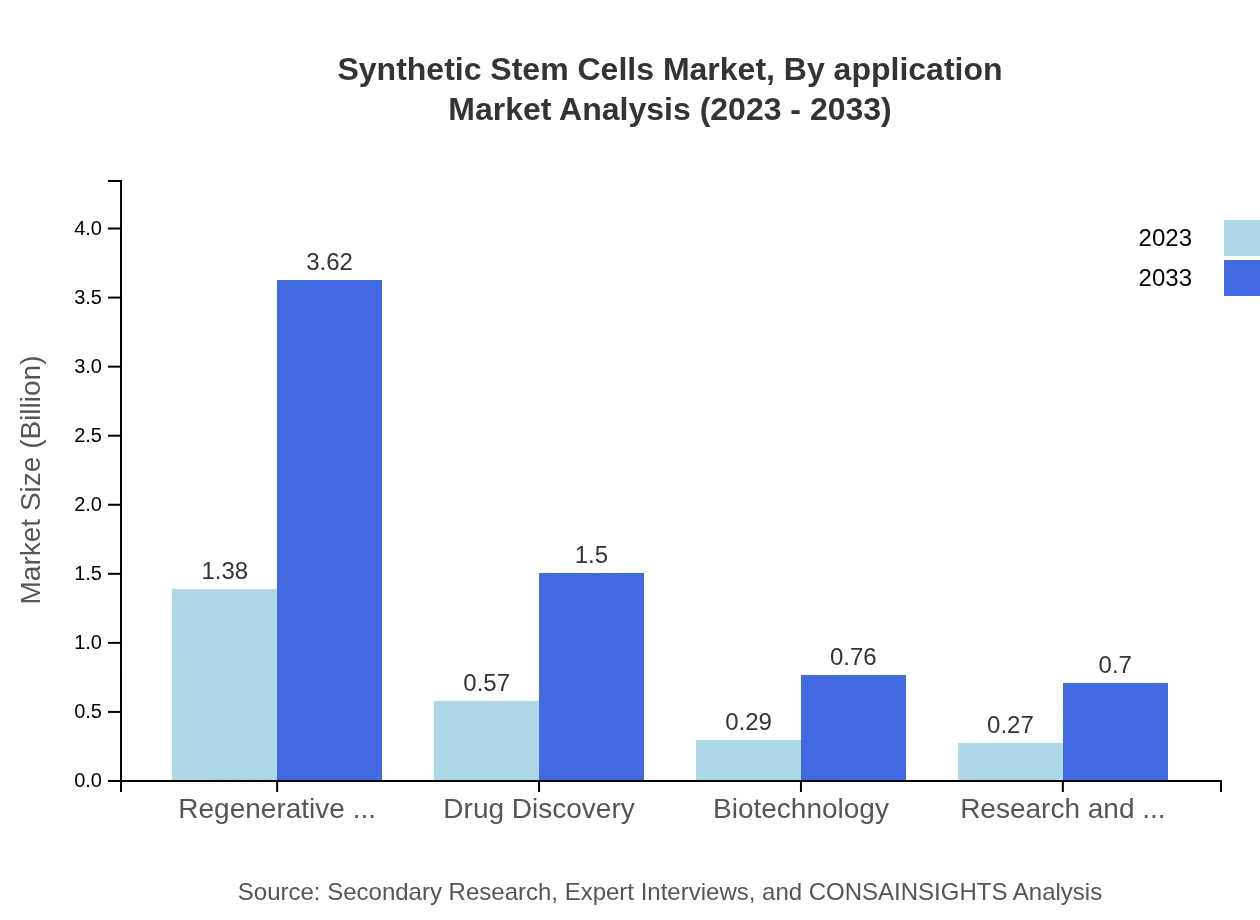
Segmentation by application reveals that regenerative medicine poses the largest market share, estimated to contribute approximately USD 1.38 billion in 2023 and expected to grow to USD 3.62 billion by 2033. Drug discovery and research & development follow subsequently, highlighting the diverse utility of synthetic stem cells across the healthcare spectrum.
Synthetic Stem Cells Market Analysis By End User
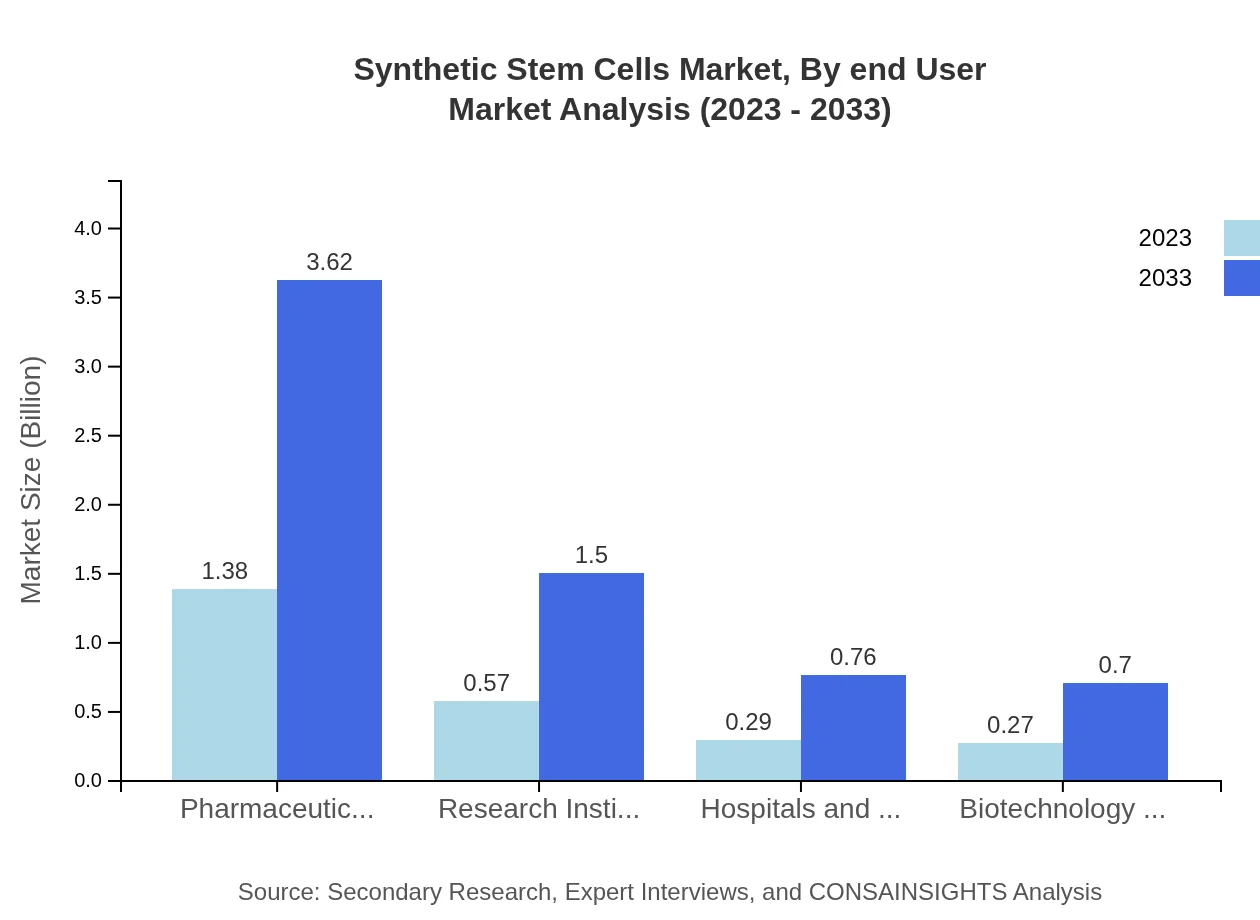
The major end-users of synthetic stem cells include pharmaceutical companies, research institutes, hospitals, and clinics. Pharmaceutical companies dominate the market, accounting for approximately USD 1.38 billion in 2023, with growth projected towards USD 3.62 billion by 2033. Research institutes and hospitals are crucial for advancing clinical applications.
Synthetic Stem Cells Market Analysis By Technology
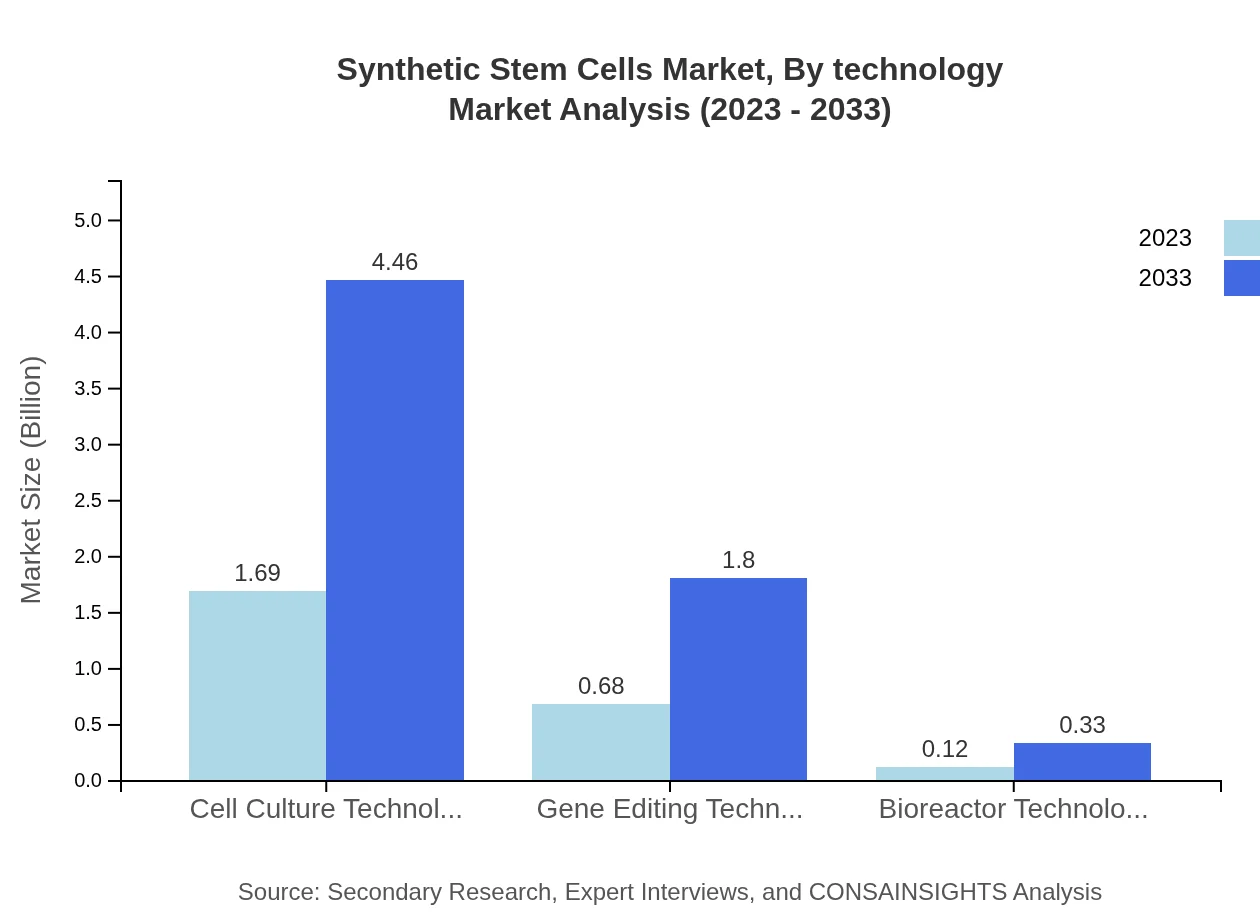
The technology segment includes gene editing technologies, bioreactor technologies, and cell culture technologies. Cell culture technologies dominate with a market size of USD 1.69 billion in 2023, projected to grow to USD 4.46 billion by 2033. Innovations in gene editing are also propelling growth as stakeholders leverage these technologies for enhanced cell manipulation.
Synthetic Stem Cells Market Analysis By Distribution Channel
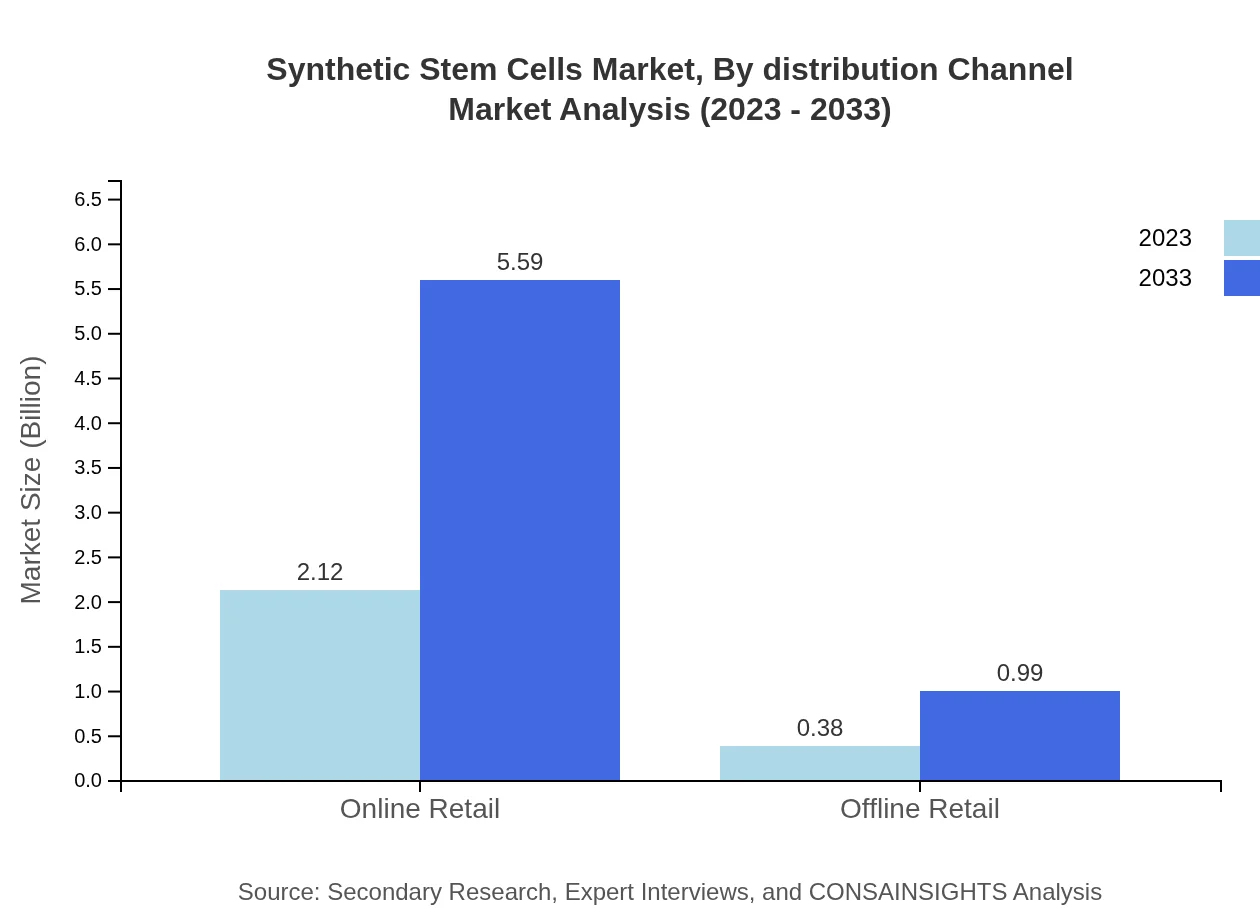
The distribution channels in the Synthetic Stem Cells market are segmented into online and offline retail. The online retail segment leads with USD 2.12 billion in revenue during 2023, expected to increase to USD 5.59 billion by 2033 due to growing internet accessibility and the trend towards e-commerce in healthcare products.
Synthetic Stem Cells Market Trends and Future Forecast
Tell us your focus area and get a customized research report.
Global Market Leaders and Top Companies in Synthetic Stem Cells Industry
Mesoblast Limited:
An innovative company specializing in stem cell therapies, Mesoblast focuses on allogeneic cell therapy products aimed at treating chronic diseases.Athersys, Inc.:
A publicly traded biotechnology company developing regenerative medicine therapies with a diverse portfolio of stem cell products.Sumitomo Dainippon Pharma Co., Ltd.:
This pharmaceutical company is focused on advancing cell therapy development, including synthetic stem cell applications in oncology.Cynata Therapeutics:
Cynata is a clinical-stage biotechnology company with a unique technology platform that enables the manufacture of stem cells for various therapeutic uses.Invitrogen by Thermo Fisher Scientific:
A leading provider of laboratory products and services including stem cell research tools and applications, supporting advancements in synthetic stem cells.We're grateful to work with incredible clients.







FAQs
What is the market size of the Synthetic Stem Cells Market Report in 2023?
The market size in 2023 is $2.50 Billion, as reported in the provided dataset.
How big will the market be in 2033?
The projected market size for 2033 is $6.58 Billion according to the input data.
What is CAGR for the forecast period?
The compound annual growth rate for 2023 to 2033 is 9.8%, per the supplied figures.
Is there a single fastest Growing region in the Synthetic Stem Cells Market Report market?
No single fastest-growing region is stated for the Synthetic Stem Cells Market Report market because the top regional implied CAGR values are within 0.15 percentage points of each other, making the ranking too close to call reliably.
Which companies are named as top players?
Top companies listed include Mesoblast Limited, Athersys, Inc., Sumitomo Dainippon Pharma Co., Ltd., Cynata Therapeutics, and Invitrogen by Thermo Fisher Scientific.
Who are primary end users in this market?
Primary end users include pharmaceutical companies, research institutes, hospitals and clinics, and biotechnology firms, per the input segments.
What are key applications for synthetic stem cells?
Key applications listed are regenerative medicine, drug discovery, biotechnology, and research and development.
How was the research for this report conducted?
Research combined primary interviews with industry experts and secondary analysis of company reports, followed by data triangulation and expert-led validation.