
Reports >
Life Sciences
>
Sickle Cell Treatment Market Report

Sickle Cell Treatment Market Report
First published: 11 October 2024 | Last updated: 28 May 2026 | Report Code: sickle-cell-treatment
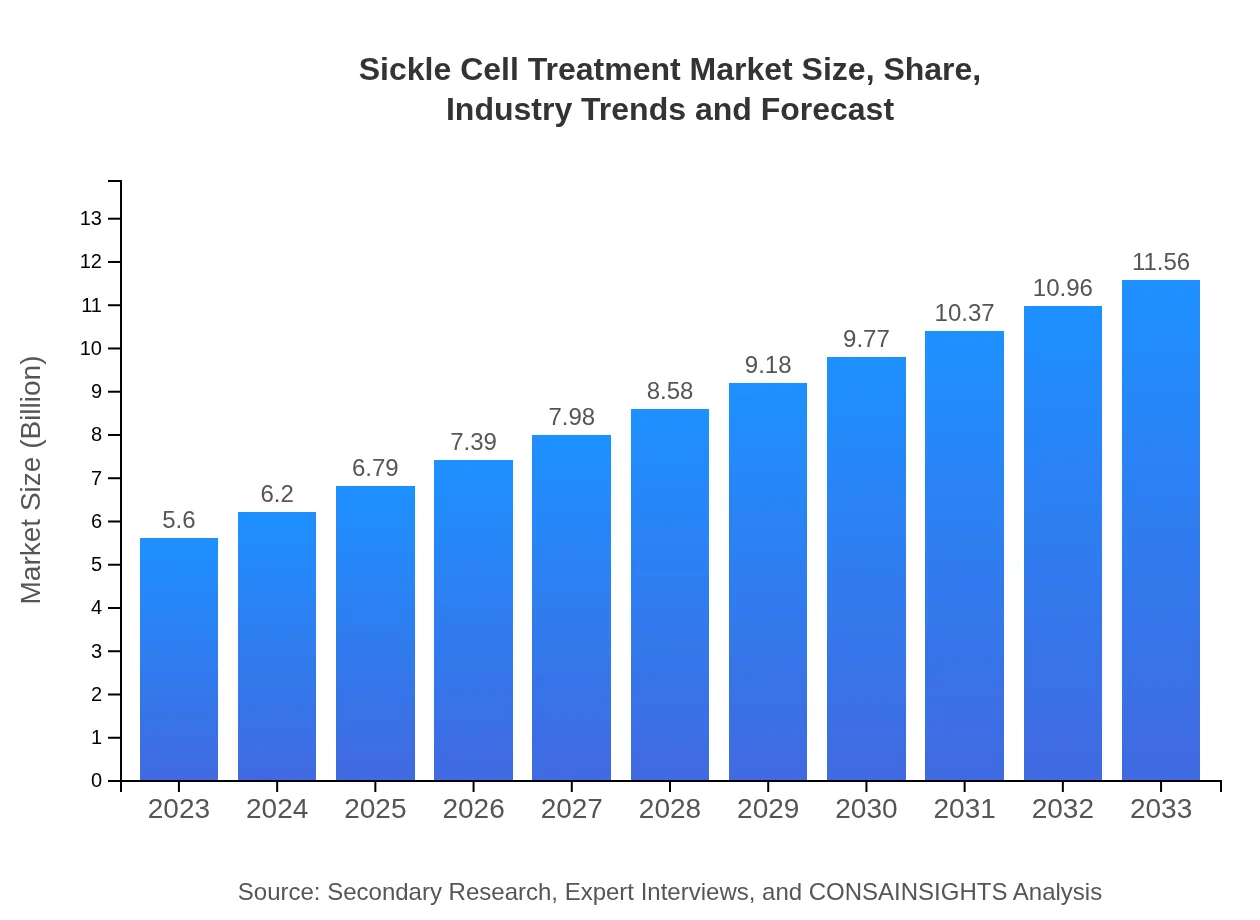
Sickle Cell Treatment Market — USD 5.6 billion in 2023, Growing to USD 11.56B by 2033 at 7.3% CAGR
This report analyzes the Sickle Cell Treatment market, offering insights into its growth, key players, and market dynamics from 2023 to 2033. It provides comprehensive data on segmentation, regional analysis, and future trends critical for stakeholders in this expanding field.
Key Takeaways
- Global market rises from $5.60 Billion in 2023 to $11.56 Billion by 2033 at a 7.3% CAGR.
- North America is largest regional market, while no single fastest-growing region is stated because regional CAGR differences remain within 0.15 percentage points.
- Europe and Asia Pacific show substantial expansion: Europe from $1.44 Billion to $2.98 Billion, Asia Pacific from $1.15 Billion to $2.38 Billion.
- Innovations such as gene therapy and improved diagnostics are principal contributors to market momentum.
- Major industry participants include Novartis, Bluebird Bio, Bristol-Myers Squibb, Pfizer, and Celgene.
Sickle Cell Treatment Market Report — Executive Summary
North America remains largest market by forecast-period value, while no single fastest-growing region is stated because top regional growth rates are separated by less than 0.15 percentage points. The Sickle Cell Treatment market is projected to grow from $5.60 Billion in 2023 to $11.56 Billion by 2033 at a 7.3% CAGR. Expansion is driven by advances in pharmacological therapies, gene therapy development, and broader adoption of supportive care. Market structure encompasses treatment types such as medications, blood transfusion, gene therapy, and stem cell transplant, distributed through hospital and retail pharmacies as well as online channels. Patient demographics span pediatric and adult populations, with hospitals and clinics forming key end-user segments. Regional dynamics show North America as the largest market. Leading companies—Novartis, Bluebird Bio, Bristol-Myers Squibb, Pfizer, and Celgene—are investing in research collaborations and pipeline development. Ongoing trends include personalized treatment approaches, regulatory approvals for novel therapies, and increasing emphasis on early diagnosis and access to care, shaping commercial strategies and investment priorities across the value chain.
Key Growth Drivers
- Rising investment in gene therapy research and development expanding the range of curative and disease-modifying options.
- Improved diagnostic awareness and early detection increasing patient identification and treatment uptake.
- Expansion of supportive care protocols and specialized clinical services enhancing patient outcomes and treatment adoption.
- Collaborations between pharmaceutical companies and research institutions accelerating clinical pipelines and regulatory submissions.
- Growth in distribution channels, including hospital pharmacies and online pharmacies, improving treatment access.
| Metric | Value |
|---|---|
| Study Period | 2023 - 2033 |
| 2023 Market Size | $5.60 Billion |
| CAGR (2023-2033) | 7.3% |
| 2033 Market Size | $11.56 Billion |
| Top Companies | Novartis, Bluebird Bio, Bristol-Myers Squibb, Pfizer , Celgene |
| Published Date | 11 October 2024 |
| Last Modified Date | 28 May 2026 |
Sickle Cell Treatment Market Overview
Customize Sickle Cell Treatment Market Report market research report
- ✔ Get in-depth analysis of Sickle Cell Treatment market size, growth, and forecasts.
- ✔ Understand Sickle Cell Treatment's regional dynamics and industry-specific trends.
- ✔ Identify potential applications, end-user demand, and growth segments in Sickle Cell Treatment
What is the Market Size & CAGR of Sickle Cell Treatment Market Report market in 2023?
Sickle Cell Treatment Industry Analysis
Sickle Cell Treatment Market Segmentation and Scope
Tell us your focus area and get a customized research report.
Sickle Cell Treatment Market Report Market Analysis Report by Region
Europe Sickle Cell Treatment Market Report:
Europe grows from $1.44 Billion in 2023 to $2.98 Billion in 2033. Expansion reflects increased diagnostic programs, adoption of advanced therapeutics, and cross-border clinical collaborations that support trial activity and treatment availability.Asia Pacific Sickle Cell Treatment Market Report:
Asia Pacific grows from $1.15 Billion in 2023 to $2.38 Billion in 2033. Growth is driven by improved healthcare access, rising awareness of sickle cell disease, expanding treatment facilities, and growing participation in clinical research initiatives.North America Sickle Cell Treatment Market Report:
North America is largest regional market, rising from $2.13 Billion in 2023 to $4.4 Billion in 2033. This growth is underpinned by concentrated R&D spending, established clinical infrastructure, regulatory activity for novel therapies, and strong investment from leading pharmaceutical companies.South America Sickle Cell Treatment Market Report:
Latin America grows from $0.35 Billion in 2023 to $0.73 Billion in 2033. Regional expansion is supported by enhanced diagnostic reach, gradual adoption of newer therapies, and efforts to strengthen specialist care networks.Middle East & Africa Sickle Cell Treatment Market Report:
Middle East and Africa grows from $0.52 Billion in 2023 to $1.07 Billion in 2033. Growth factors include expanding access to specialized care, increased screening programs, and partnerships aimed at improving treatment infrastructure and availability.Tell us your focus area and get a customized research report.
Research Methodology
Sickle Cell Treatment Market Analysis By Treatment Type
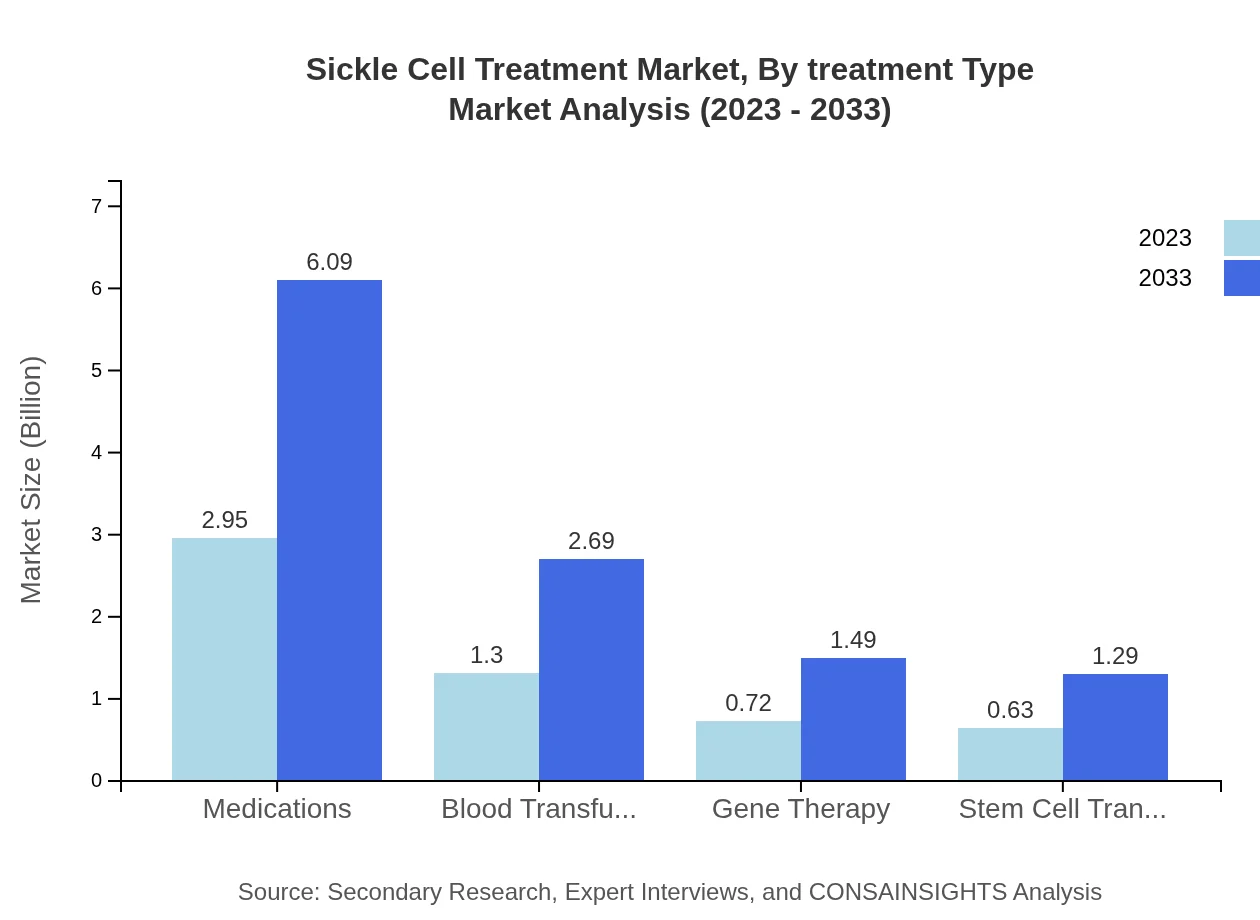
In 2023, the antineoplastic agents segment dominates with a market size of $4.85 billion, accounting for 86.6% of the share, and is projected to reach $10.01 billion by 2033. This is followed by medications at $2.95 billion, sharing 52.65%, and projected to grow to $6.09 billion. Blood transfusion therapy is also significant, expected to expand from $1.30 billion to $2.69 billion, demonstrating the critical roles these treatments play in managing SCD.
Sickle Cell Treatment Market Analysis By End User
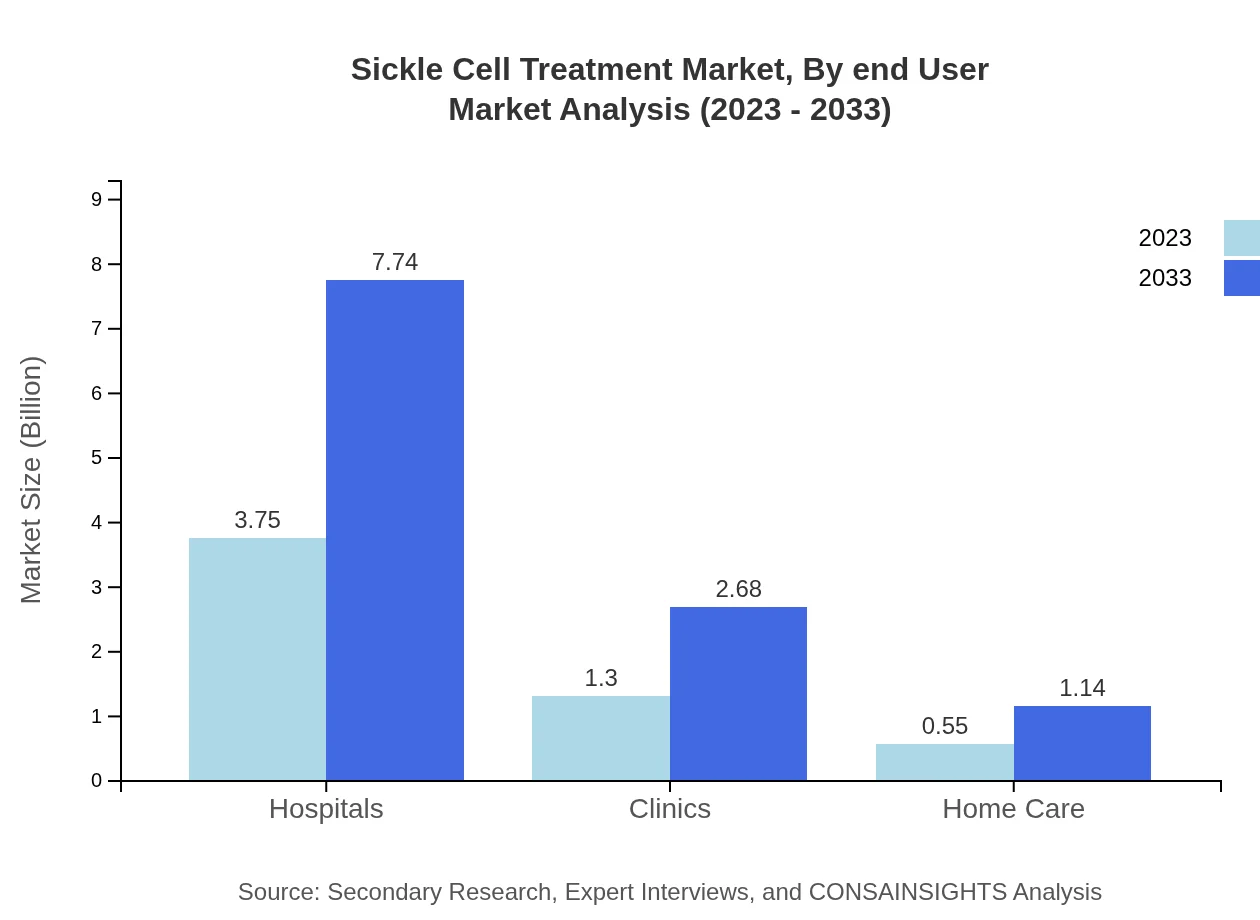
Hospitals occupy the largest share of the market with a size of $3.75 billion, maintaining 66.99% during this period, and anticipated to grow to $7.74 billion. Clinics and home care settings follow suit, with clinics at $1.30 billion (23.15% share) expected to rise to $2.68 billion, and home care witnessing growth from $0.55 billion to $1.14 billion, reflecting shifts in patient care preferences.
Sickle Cell Treatment Market Analysis By Drug Class
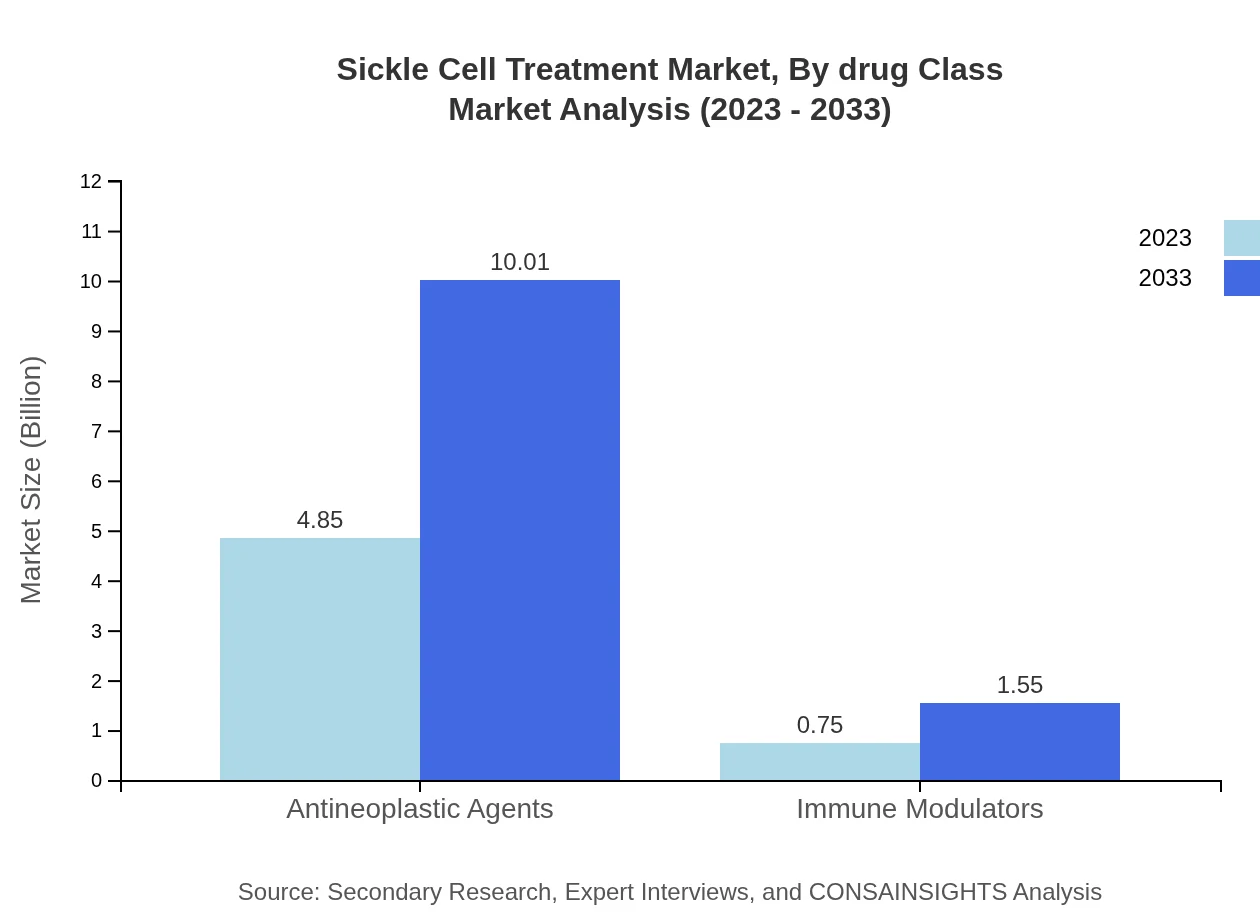
Antineoplastic agents lead this segment with a market size of $4.85 billion in 2023, expected to evolve to $10.01 billion by 2033. Immune modulators represent a niche but growing segment projected to increase from $0.75 billion to $1.55 billion, showing diversification in treatment approaches. These trends indicate adoption of various drug classes tailored for patient needs.
Sickle Cell Treatment Market Analysis By Distribution Channel
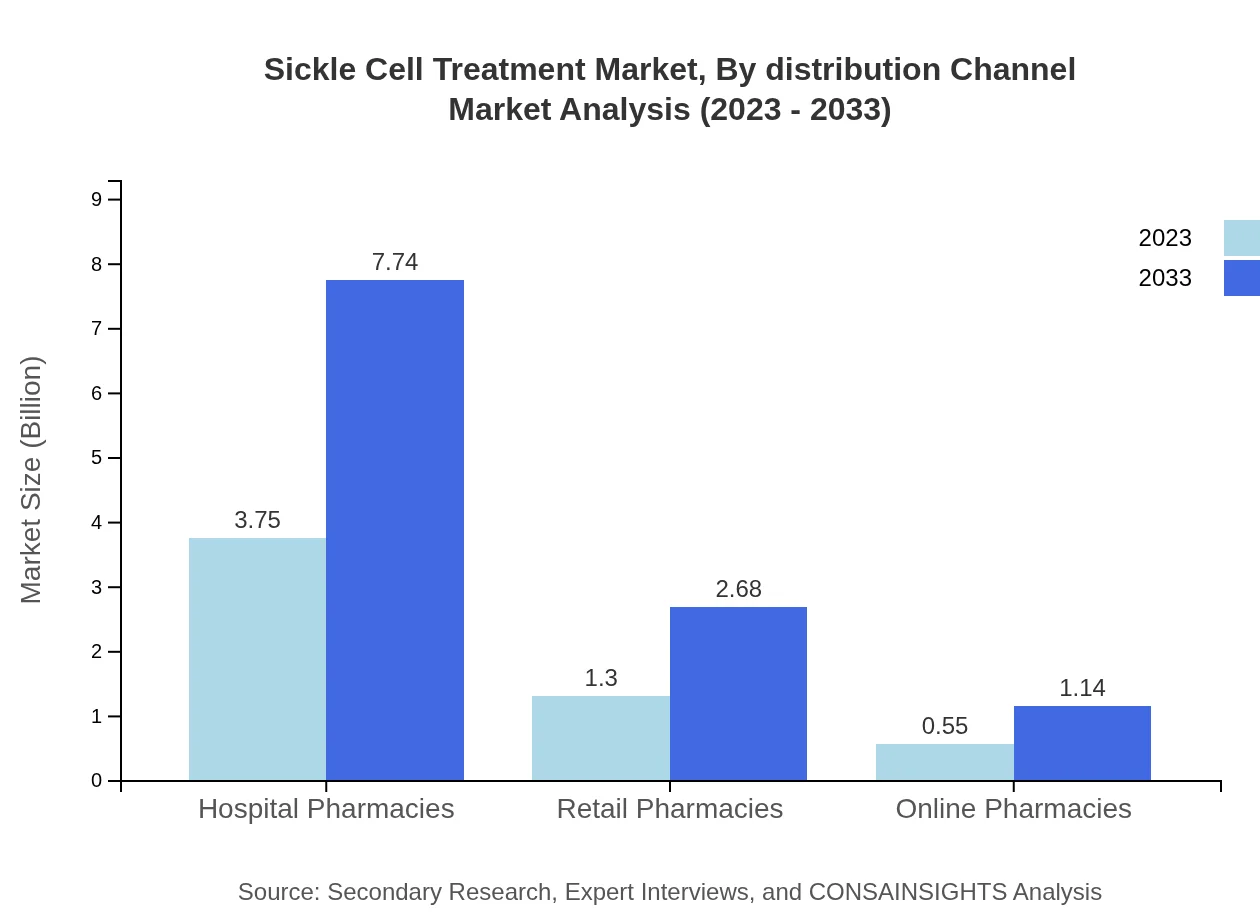
The market for distribution is primarily concentrated in hospital pharmacies, which held $3.75 billion (66.99% share) in 2023, and is forecasted to reach $7.74 billion. Retail pharmacies and online pharmacies also contribute, with sizes of $1.30 billion (23.15%) and $0.55 billion (9.86%), indicating a shift in how patients obtain treatments as digital channels and convenience become critical.
Sickle Cell Treatment Market Analysis By Patient Demographics
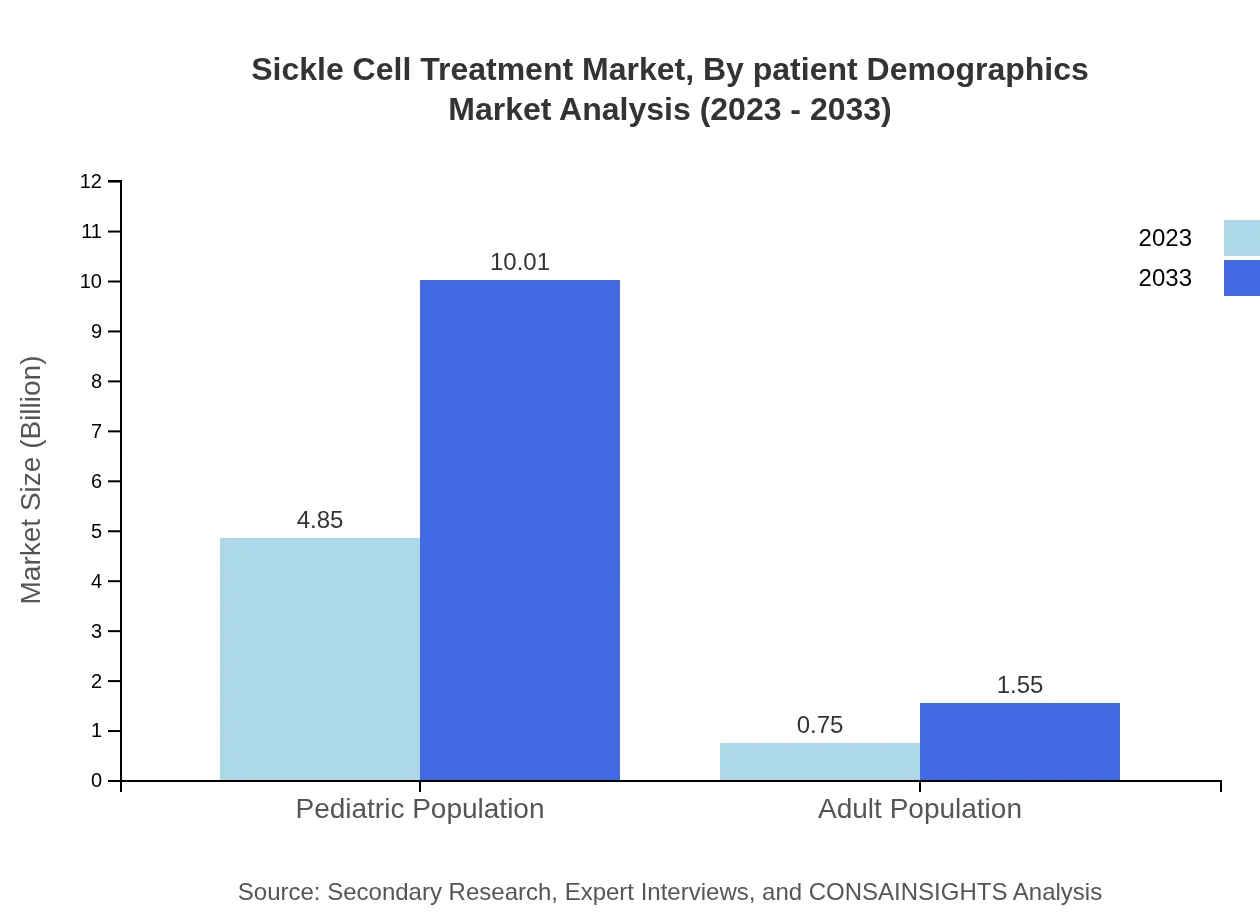
Focusing on patient demographics, the pediatric population represents a dominant share with $4.85 billion and an 86.6% market share in 2023, expected to rise to $10.01 billion. In contrast, the adult population, while smaller, is notable, with a market size of $0.75 billion and a projected $1.55 billion by 2033, highlighting treatment needs across age groups.
Sickle Cell Treatment Market Trends and Future Forecast
Tell us your focus area and get a customized research report.
Global Market Leaders and Top Companies in Sickle Cell Treatment Industry
Novartis:
A leading pharmaceutical company, Novartis, developed the first FDA-approved gene therapy, Zolgensma, offering groundbreaking treatment options for SCD, thereby establishing itself as a pivotal player in the market.Bluebird Bio:
Specializing in gene therapies for genetic diseases, Bluebird Bio is instrumental in innovations for SCD treatment through its lentiviral gene therapy, demonstrating substantial contributions to patient management and care.Bristol-Myers Squibb:
This biotech giant is known for its pioneering work in immunotherapy and has leveraged its expertise to develop therapies aimed at treating complications associated with SCD, enhancing the overall treatment landscape.Pfizer :
With a robust portfolio, Pfizer plays a significant role in research and development of new medications for Sickle Cell Treatment, continually seeking enhancements in treatment efficacy and safety for patients.Celgene:
Now part of Bristol-Myers Squibb, Celgene was pivotal in developing transformative therapies for SCD, focusing on improving patient quality of life and reducing overall healthcare costs.We're grateful to work with incredible clients.








FAQs
What is the market size of the Sickle Cell Treatment market in 2023?
The market size for 2023 is $5.60 Billion, reflecting current therapy adoption and investment in novel treatments.
How big will the market be in 2033?
By 2033 the market is projected to reach $11.56 Billion, based on continued advancements in treatment modalities and patient access.
What is CAGR for the forecast period?
The forecast period CAGR is 7.3%, representing compounded annual growth from 2023 to 2033.
Is there a single fastest Growing region in the Sickle Cell Treatment Market Report market?
No single fastest-growing region is stated for the Sickle Cell Treatment Market Report market because the top regional implied CAGR values are within 0.15 percentage points of each other, making the ranking too close to call reliably.
Which treatment types are included in the market structure?
Treatment types listed include medications, blood transfusion, gene therapy, and stem cell transplant as primary therapeutic categories.
Who are the leading companies in the market?
Top companies named include Novartis, Bluebird Bio, Bristol-Myers Squibb, Pfizer, and Celgene.
How are distribution channels evolving?
Distribution channels cover hospital pharmacies, retail pharmacies, and online pharmacies, expanding patient access and convenience.
What drives adoption among patient demographics?
Adoption is influenced by improved diagnostics, targeted therapies, and specialized care availability across pediatric and adult populations.