

Therapeutic Plasma Exchange Market Report
First published: 21 October 2024 | Last updated: 28 May 2026 | Report Code: therapeutic-plasma-exchange
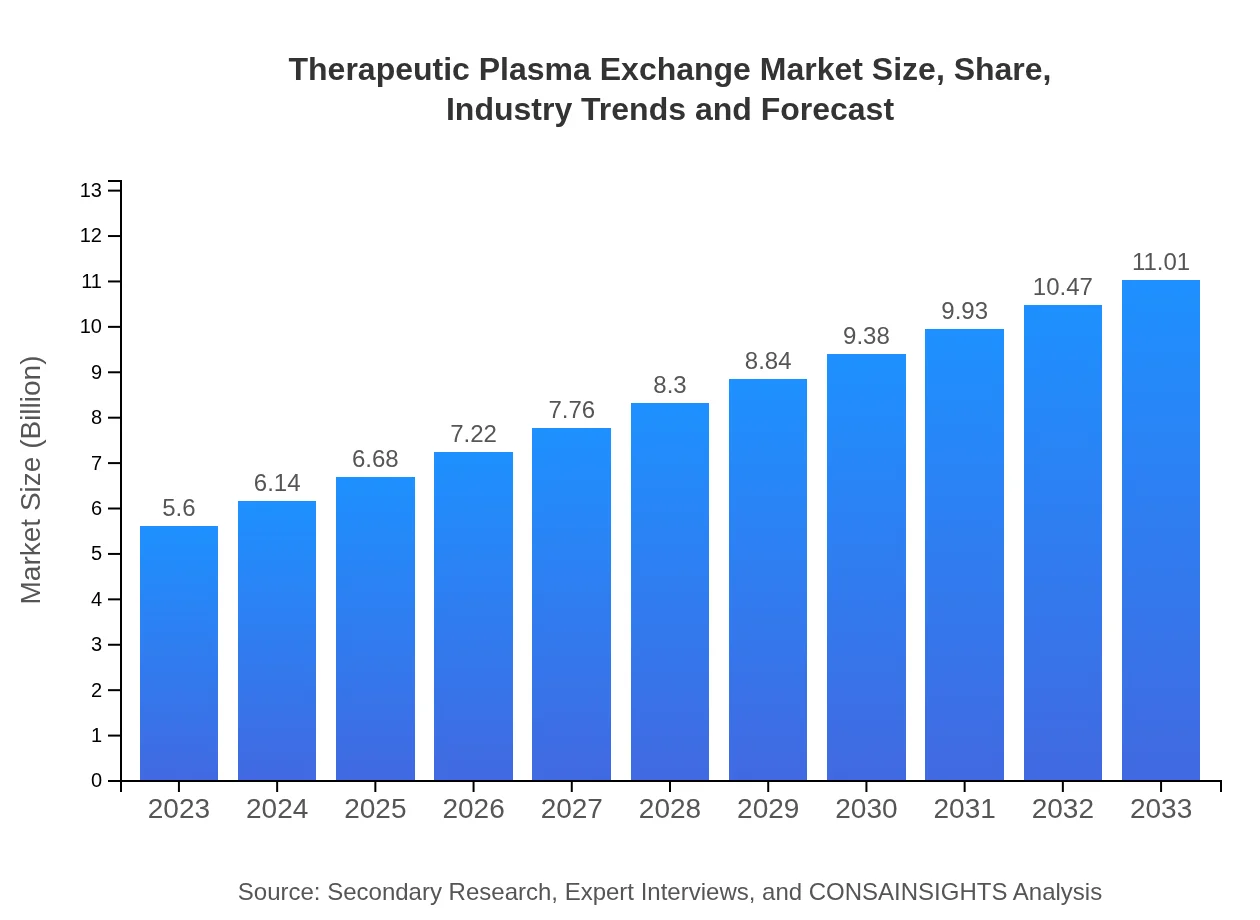
Therapeutic Plasma Exchange Market — USD 5.6 billion in 2023, Growing to USD 11.01B by 2033 at 6.8% CAGR
This report covers a comprehensive analysis of the Therapeutic Plasma Exchange (TPE) market from 2023 to 2033, providing insights into market sizes, growth forecasts, industry trends, segmentation, and a regional breakdown to indicate market dynamics across various geographies.
Key Takeaways
- Market expands from $5.60 Billion in 2023 to $11.01 Billion in 2033 at a 6.8% CAGR.
- North America is largest regional market, while no single fastest-growing region is stated because regional CAGR differences remain within 0.15 percentage points.
- Europe progresses from $1.52 Billion in 2023 to $2.98 Billion in 2033; Asia Pacific from $1.07 Billion to $2.1 Billion.
- Core suppliers include Terumo BCT, Fresenius Kabi, Haemonetics Corporation and Grifols, reflecting a competitive vendor landscape.
- Primary growth catalysts include expanding clinical indications, technology improvements in apheresis devices, and increased awareness among providers.
Therapeutic Plasma Exchange Market Report — Executive Summary
North America remains largest market by forecast-period value, while no single fastest-growing region is stated because top regional growth rates are separated by less than 0.15 percentage points. The Therapeutic Plasma Exchange market is projected to nearly double from $5.60 Billion in 2023 to $11.01 Billion by 2033, supported by a 6.8% CAGR over the forecast period. Growth is fueled by broader clinical adoption across neurological, autoimmune and hematological disorders, alongside improvements in apheresis systems and accessories. Hospitals, blood banks and specialized clinics remain primary end users, and leading vendors such as Terumo BCT, Fresenius Kabi, Haemonetics Corporation and Grifols compete through product innovation and service expansion. Regional demand varies, with North America holding the largest market value. Ongoing trends include consolidation of services, investment in device R&D, and rising provider awareness, while challenges such as treatment costs and workforce training influence accessibility and deployment strategies.
Key Growth Drivers
- Rising use of TPE across neurological, autoimmune and hematological indications expands procedure volumes.
- Advances in apheresis devices and accessories improve safety and operational efficiency, encouraging adoption.
- Increased awareness among clinicians and patients leads to greater referrals and broader utilization in hospitals and clinics.
- Investment by leading vendors in product development and service models supports market penetration and technology upgrades.
- Growth in healthcare infrastructure and specialized blood bank capabilities facilitates wider access to plasma exchange services.
| Metric | Value |
|---|---|
| Study Period | 2023 - 2033 |
| 2023 Market Size | $5.60 Billion |
| CAGR (2023-2033) | 6.8% |
| 2033 Market Size | $11.01 Billion |
| Top Companies | Terumo BCT, Fresenius Kabi, Haemonetics Corporation, Grifols |
| Published Date | 21 October 2024 |
| Last Modified Date | 28 May 2026 |
Therapeutic Plasma Exchange Market Overview
Customize Therapeutic Plasma Exchange Market Report market research report
- ✔ Get in-depth analysis of Therapeutic Plasma Exchange market size, growth, and forecasts.
- ✔ Understand Therapeutic Plasma Exchange's regional dynamics and industry-specific trends.
- ✔ Identify potential applications, end-user demand, and growth segments in Therapeutic Plasma Exchange
What is the Market Size & CAGR of Therapeutic Plasma Exchange Market Report market in 2023?
Therapeutic Plasma Exchange Industry Analysis
Therapeutic Plasma Exchange Market Segmentation and Scope
Tell us your focus area and get a customized research report.
Therapeutic Plasma Exchange Market Report Market Analysis Report by Region
Europe Therapeutic Plasma Exchange Market Report:
Europe grows from $1.52 Billion in 2023 to $2.98 Billion in 2033. The region's progression reflects rising clinical adoption, investments in specialized clinics and blood bank capabilities, alongside vendor activity in device enhancements and clinical support.Asia Pacific Therapeutic Plasma Exchange Market Report:
Asia Pacific grows from $1.07 Billion in 2023 to $2.1 Billion in 2033. Market momentum is underpinned by increasing healthcare capacity, growing awareness of plasma therapies and gradual adoption of modern apheresis equipment in hospitals and centers.North America Therapeutic Plasma Exchange Market Report:
North America is largest regional market, rising from $2.1 Billion in 2023 to $4.13 Billion in 2033. Regional expansion is supported by established healthcare infrastructure, extensive hospital and blood bank networks, and active presence of key suppliers driving technology uptake.South America Therapeutic Plasma Exchange Market Report:
Latin America grows from $0.37 Billion in 2023 to $0.73 Billion in 2033. Growth drivers include improving healthcare services, broader availability of specialized clinics and blood bank development that enables wider access to plasma exchange procedures.Middle East & Africa Therapeutic Plasma Exchange Market Report:
Middle East and Africa grows from $0.54 Billion in 2023 to $1.07 Billion in 2033. Expansion is supported by investments in healthcare infrastructure, rising clinical demand for plasma therapies and gradual enhancement of trained personnel and facility capabilities.Tell us your focus area and get a customized research report.
Research Methodology
Therapeutic Plasma Exchange Market Analysis By Indication
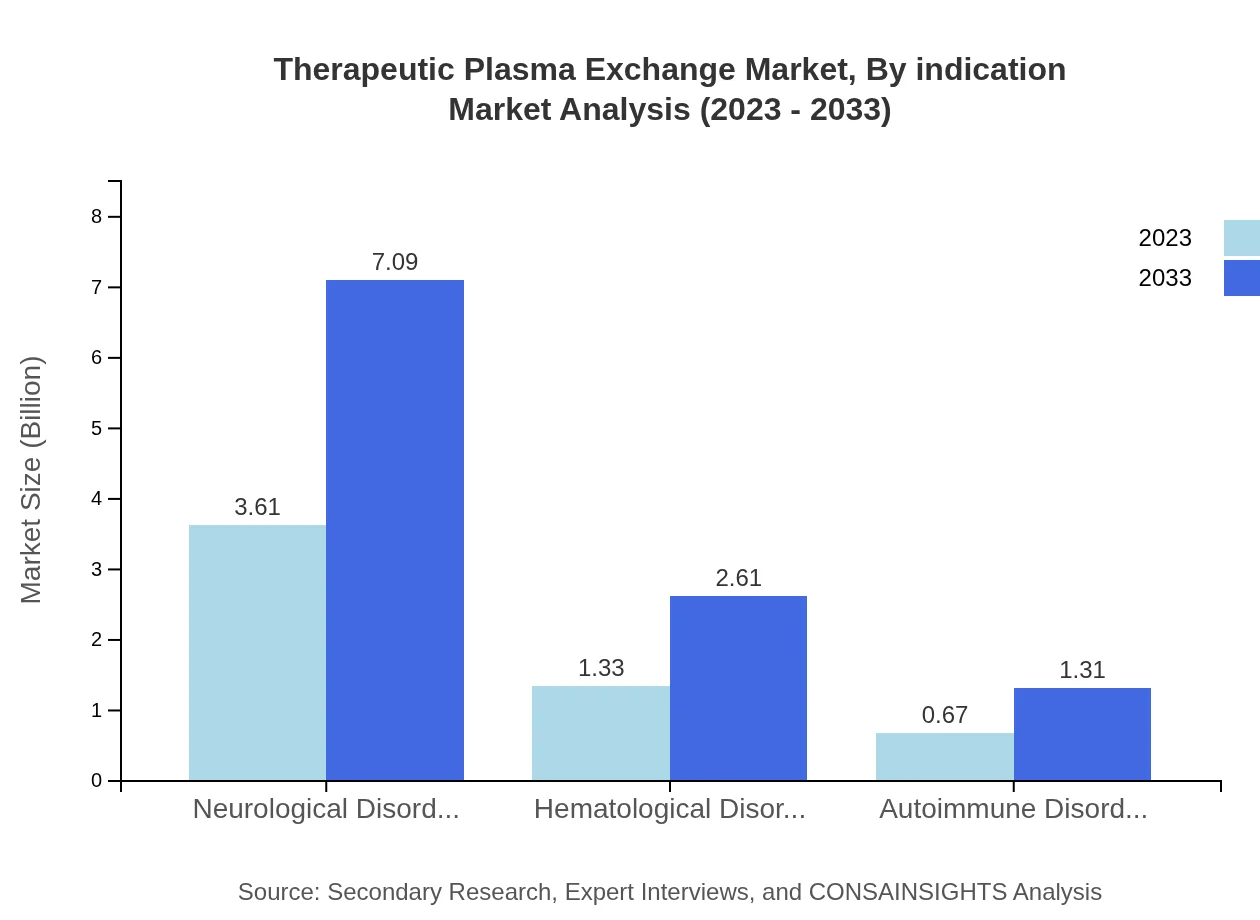
The Therapeutic Plasma Exchange market is significantly influenced by its applications in various diseases. Neurological disorders hold the largest market share, accounting for $3.61 billion in 2023 and expected to reach $7.09 billion by 2033. Hematological disorders and autoimmune disorders follow with respective shares of $1.33 billion and $0.67 billion and estimated growth to $2.61 billion and $1.31 billion by 2033.
Therapeutic Plasma Exchange Market Analysis By Equipment
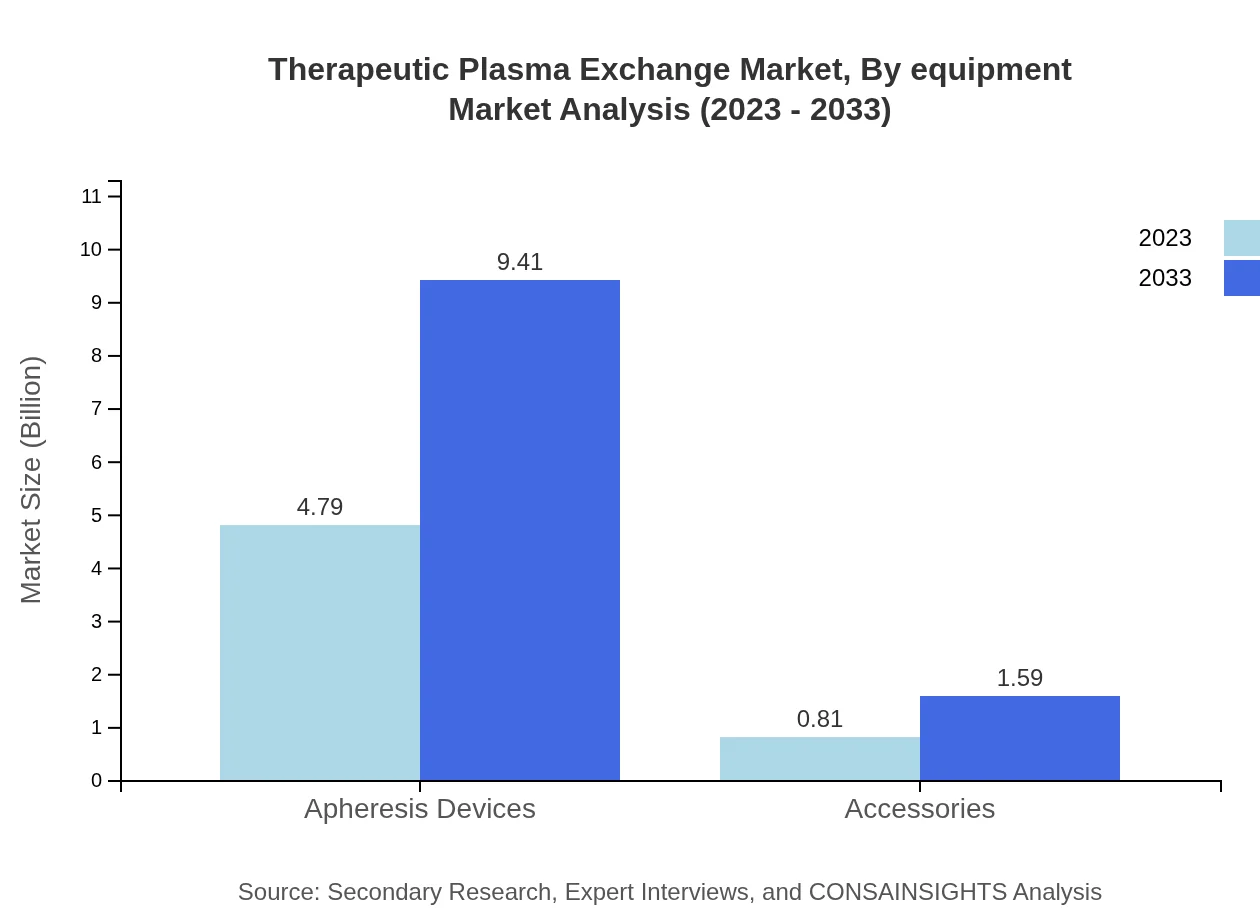
In terms of equipment, apheresis devices dominate the market with significant demand, valued at $4.79 billion in 2023, projected to grow to $9.41 billion by 2033. Accessories also contribute, growing from $0.81 billion to $1.59 billion in the same period, reflecting an overall demand for complete plasma exchange solutions.
Therapeutic Plasma Exchange Market Analysis By Therapy Type
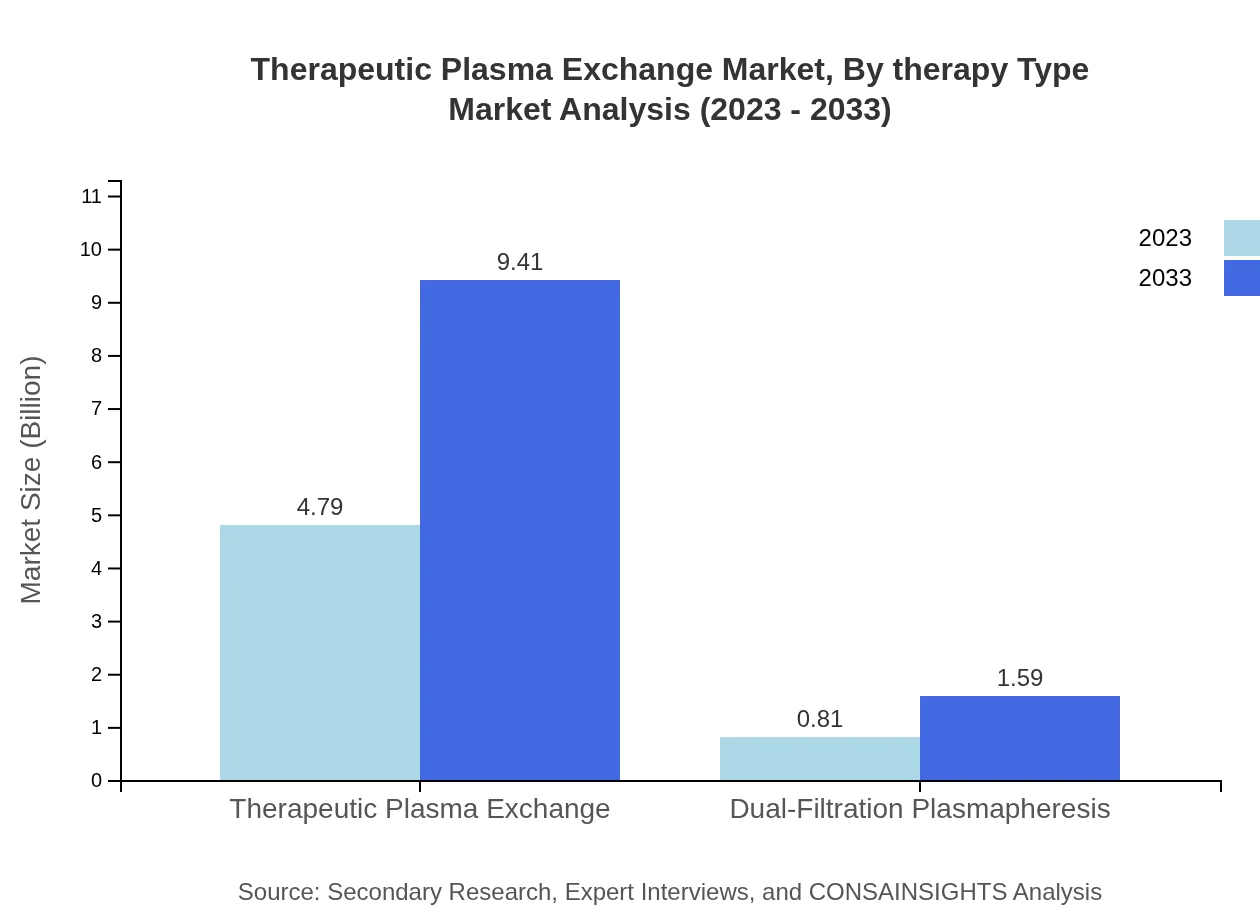
Market analysis by therapy type indicates that standard plasmapheresis accounts for the majority share, supported by its widespread application, while dual-filtration plasmapheresis holds considerable potential due to its benefits in efficiency and efficacy.
Therapeutic Plasma Exchange Market Analysis By End User
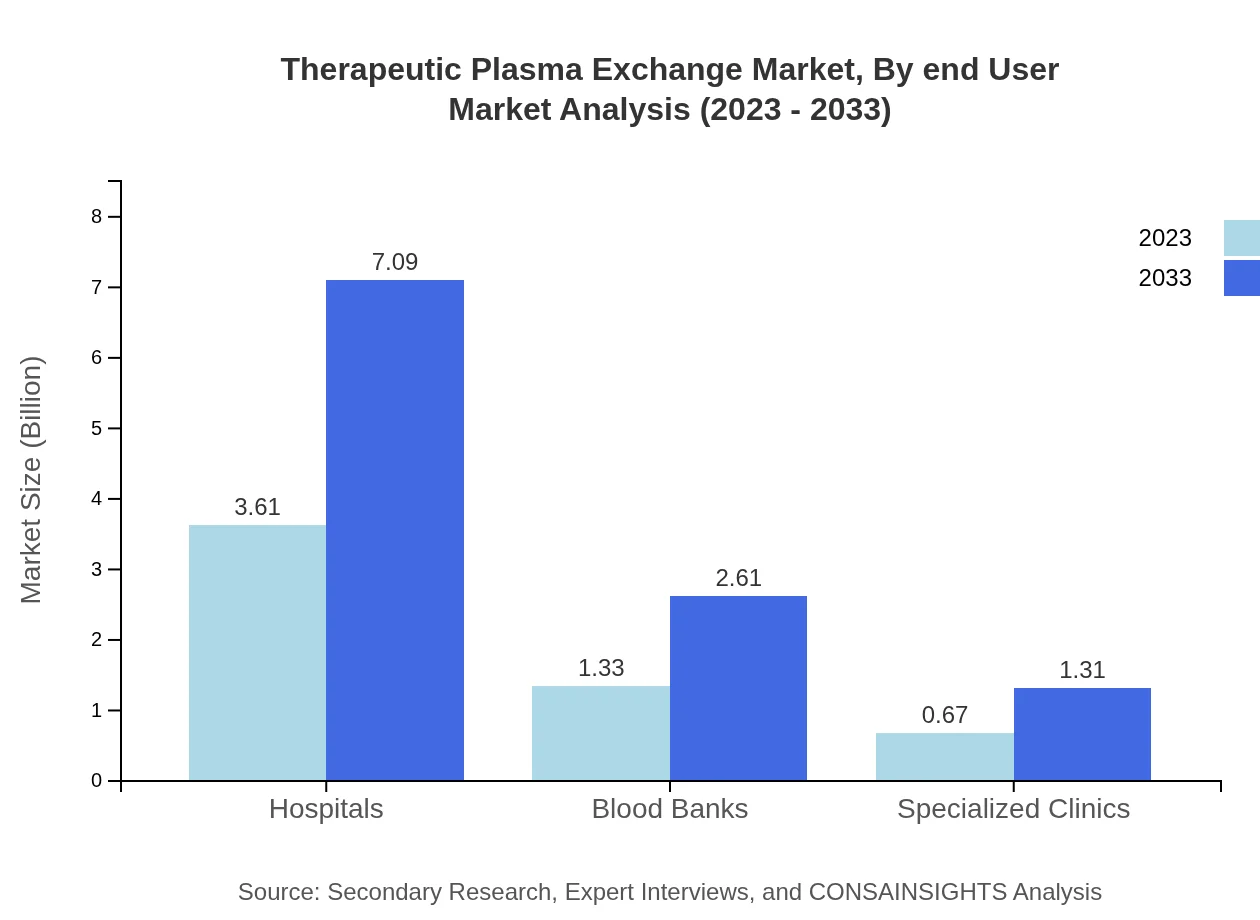
Hospitals are the primary end-users of TPE services, commanding a market share of $3.61 billion in 2023 with a steady growth trajectory to $7.09 billion by 2033. Blood banks and specialized clinics also play vital roles in service provision and market dynamics.
Therapeutic Plasma Exchange Market Analysis By Region Usage
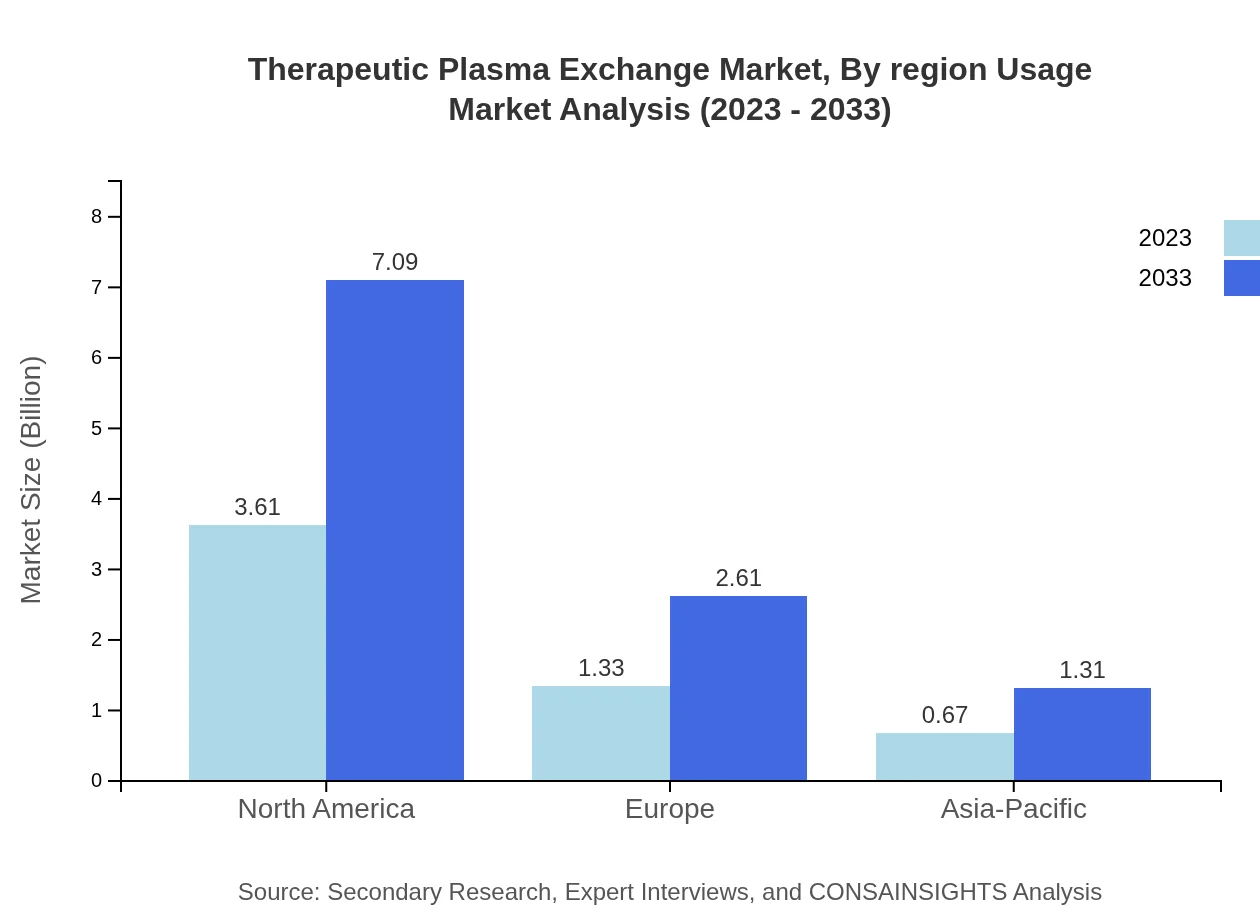
Regional analysis of TPE indicates that North America and Europe are currently the largest markets, driven by technological advancements and higher healthcare spending. The Asia Pacific region shows strong growth potential due to expanding healthcare services and increasing patient population.
Therapeutic Plasma Exchange Market Trends and Future Forecast
Tell us your focus area and get a customized research report.
Global Market Leaders and Top Companies in Therapeutic Plasma Exchange Industry
Terumo BCT:
A leading provider of blood component collection and cellular therapies, Terumo BCT specializes in apheresis devices that enhance the effectiveness of Therapeutic Plasma Exchange.Fresenius Kabi:
Fresenius Kabi is recognized for its development of innovative infusion and transfusion technology, including advanced apheresis systems, contributing significantly to the TPE market.Haemonetics Corporation:
Haemonetics focuses on blood management solutions and has carved a niche in the plasma exchange market with its comprehensive product offerings.Grifols:
Grifols is a major player in the biopharmaceutical industry and is heavily involved in plasma-derived therapies, including TPE solutions, reinforcing its position in the market.We're grateful to work with incredible clients.









FAQs
What is the market size of the Therapeutic Plasma Exchange market in 2023?
The market size in 2023 is $5.60 Billion, as reported for the Therapeutic Plasma Exchange market.
How big will the Therapeutic Plasma Exchange market be in 2033?
The market is projected to reach $11.01 Billion by 2033 based on the provided forecast for the period 2023 to 2033.
What is CAGR for the forecast period?
The compound annual growth rate for the forecast period 2023 to 2033 is 6.8%, per the supplied figures.
Is there a single fastest Growing region in the Therapeutic Plasma Exchange Market Report market?
No single fastest-growing region is stated for the Therapeutic Plasma Exchange Market Report market because the top regional implied CAGR values are within 0.15 percentage points of each other, making the ranking too close to call reliably.
Why is Therapeutic Plasma Exchange demand increasing?
Demand growth is driven by rising clinical indications, technological advances in apheresis equipment, and broader awareness among healthcare providers.
Who are the top companies in this market?
Top companies listed include Terumo BCT, Fresenius Kabi, Haemonetics Corporation and Grifols, as provided in the input data.
What are primary end users of TPE services?
Primary end users consist of hospitals, blood banks and specialized clinics, as specified in the segmentation details.
How is the market segmented by equipment?
By equipment, the market includes apheresis devices and accessories, per the sub-segment information supplied.
Which regions are covered in the regional breakdown?
Regional coverage includes North America, Europe, Asia Pacific, Latin America and Middle East and Africa, with specific start and end values provided.
What research methods were used for this report?
The methodology includes primary interviews with industry experts, secondary research in company reports and publications, data triangulation and expert-led validation.