

Ovarian Cancer Market Report
First published: 21 October 2024 | Last updated: 25 May 2026 | Report Code: ovarian-cancer
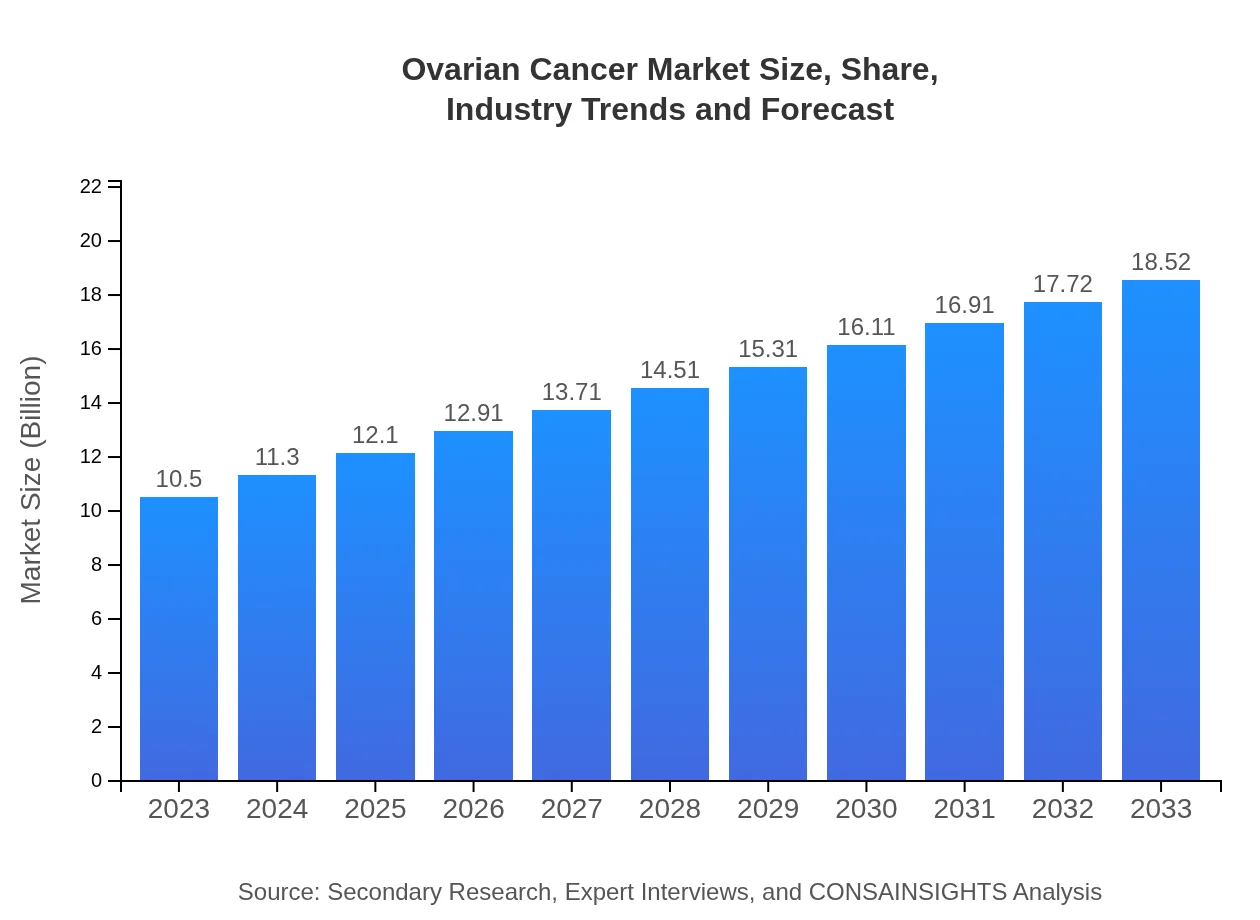
Ovarian Cancer Market — USD 10.5 billion in 2023, Growing to USD 18.52B by 2033 at 5.7% CAGR
This report provides a comprehensive analysis of the ovarian cancer market, including market size, growth trends, industry insights, and forecasts from 2023 to 2033. It examines segmentation by treatment types, drug classes, and regional dynamics to offer valuable insights for stakeholders.
Key Takeaways
- Global market projected from $10.50 Billion in 2023 to $18.52 Billion in 2033 at a 5.7% CAGR.
- North America is largest regional market, while no single fastest-growing region is stated because regional CAGR differences remain within 0.15 percentage points.
- Europe grows from $3.07 Billion in 2023 to $5.42 Billion in 2033, reflecting sustained demand for therapies.
- Asia Pacific rises from $1.99 Billion in 2023 to $3.50 Billion in 2033, supported by increased diagnostics and treatment access.
Ovarian Cancer Market Report — Executive Summary
North America remains largest market by forecast-period value, while no single fastest-growing region is stated because top regional growth rates are separated by less than 0.15 percentage points. The ovarian cancer market is anticipated to expand from $10.50 Billion in 2023 to $18.52 Billion in 2033, driven by therapeutic innovation, greater diagnostic awareness, and investment from major pharmaceutical firms such as Roche, Bristol-Myers Squibb, Merck & Co., Johnson & Johnson, and Novartis. Key market dynamics include the adoption of targeted therapies, chemotherapy, and immunotherapy alongside surgical interventions. Regional shifts show North America as the largest market, with Europe and Asia Pacific also demonstrating notable increases. Market participants are focusing on R&D, strategic collaborations, and localized access initiatives to address unmet clinical needs and improve patient outcomes over the forecast period.
Key Growth Drivers
- Rising investment by leading pharmaceutical companies in ovarian cancer research and novel therapeutics.
- Improved diagnostic awareness and earlier detection increasing treatment uptake and patient management.
- Expansion of targeted therapies and immunotherapies offering alternative treatment pathways to traditional chemotherapy.
- Greater access to oncology care in emerging markets supporting adoption of advanced treatment options.
| Metric | Value |
|---|---|
| Study Period | 2023 - 2033 |
| 2023 Market Size | $10.50 Billion |
| CAGR (2023-2033) | 5.7% |
| 2033 Market Size | $18.52 Billion |
| Top Companies | Roche, Bristol-Myers Squibb, Merck & Co., Johnson & Johnson, Novartis |
| Published Date | 21 October 2024 |
| Last Modified Date | 25 May 2026 |
Ovarian Cancer Market Overview
Customize Ovarian Cancer Market Report market research report
- ✔ Get in-depth analysis of Ovarian Cancer market size, growth, and forecasts.
- ✔ Understand Ovarian Cancer's regional dynamics and industry-specific trends.
- ✔ Identify potential applications, end-user demand, and growth segments in Ovarian Cancer
What is the Market Size & CAGR of Ovarian Cancer Market Report market in 2023?
Ovarian Cancer Industry Analysis
Ovarian Cancer Market Segmentation and Scope
Tell us your focus area and get a customized research report.
Ovarian Cancer Market Report Market Analysis Report by Region
Europe Ovarian Cancer Market Report:
Europe grows from $3.07 Billion in 2023 to $5.42 Billion in 2033. Adoption of advanced therapies, clinical research presence, and improved diagnostic programs contribute to sustained regional expansion during the forecast window.Asia Pacific Ovarian Cancer Market Report:
Asia Pacific grows from $1.99 Billion in 2023 to $3.5 Billion in 2033. Growth drivers include widening access to oncology services, investments in healthcare infrastructure, and rising awareness that supports earlier diagnosis and treatment uptake.North America Ovarian Cancer Market Report:
North America is largest regional market, rising from $3.87 Billion in 2023 to $6.83 Billion in 2033. Regional momentum is linked to strong industry investment, established oncology care infrastructure, and significant activity by major pharmaceutical firms.South America Ovarian Cancer Market Report:
Latin America grows from $0.13 Billion in 2023 to $0.22 Billion in 2033. Market progression is tied to gradual improvements in treatment availability and increased engagement in regional clinical initiatives.Middle East & Africa Ovarian Cancer Market Report:
Middle East and Africa grows from $1.44 Billion in 2023 to $2.54 Billion in 2033. Regional advancement is supported by growing healthcare investment, capacity building in oncology services, and partnerships aimed at improving patient access.Tell us your focus area and get a customized research report.
Research Methodology
Ovarian Cancer Market Analysis By Treatment Type
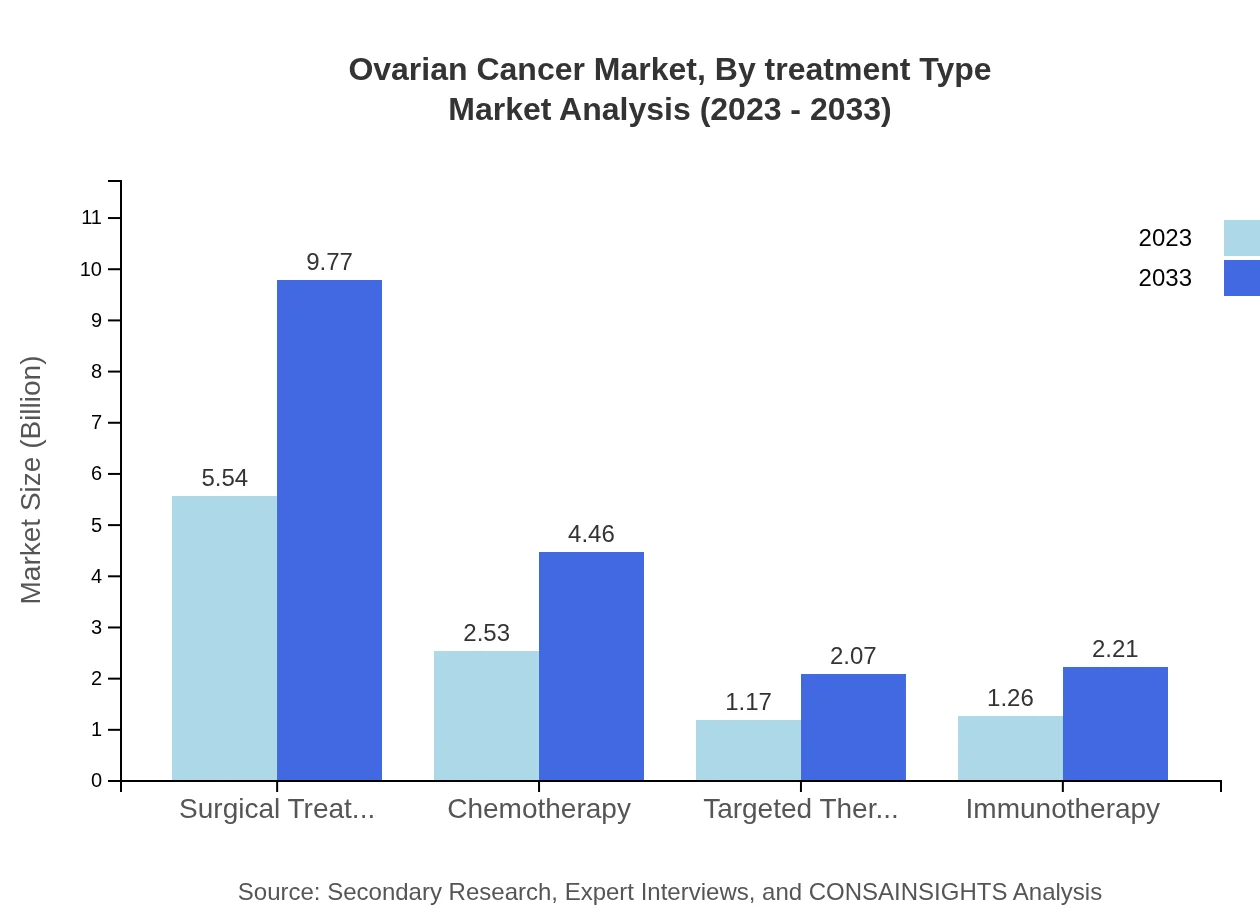
The treatment segment includes several key areas such as cytotoxic agents, targeted drugs, and immunotherapy. Hospitals dominate the treatment type segment, with market sizes projected at USD 6.99 billion in 2023 growing to USD 12.33 billion by 2033. This segment accounts for 66.6% of the overall market share, indicating its critical role in ovarian cancer treatment.
Ovarian Cancer Market Analysis By Drug Class
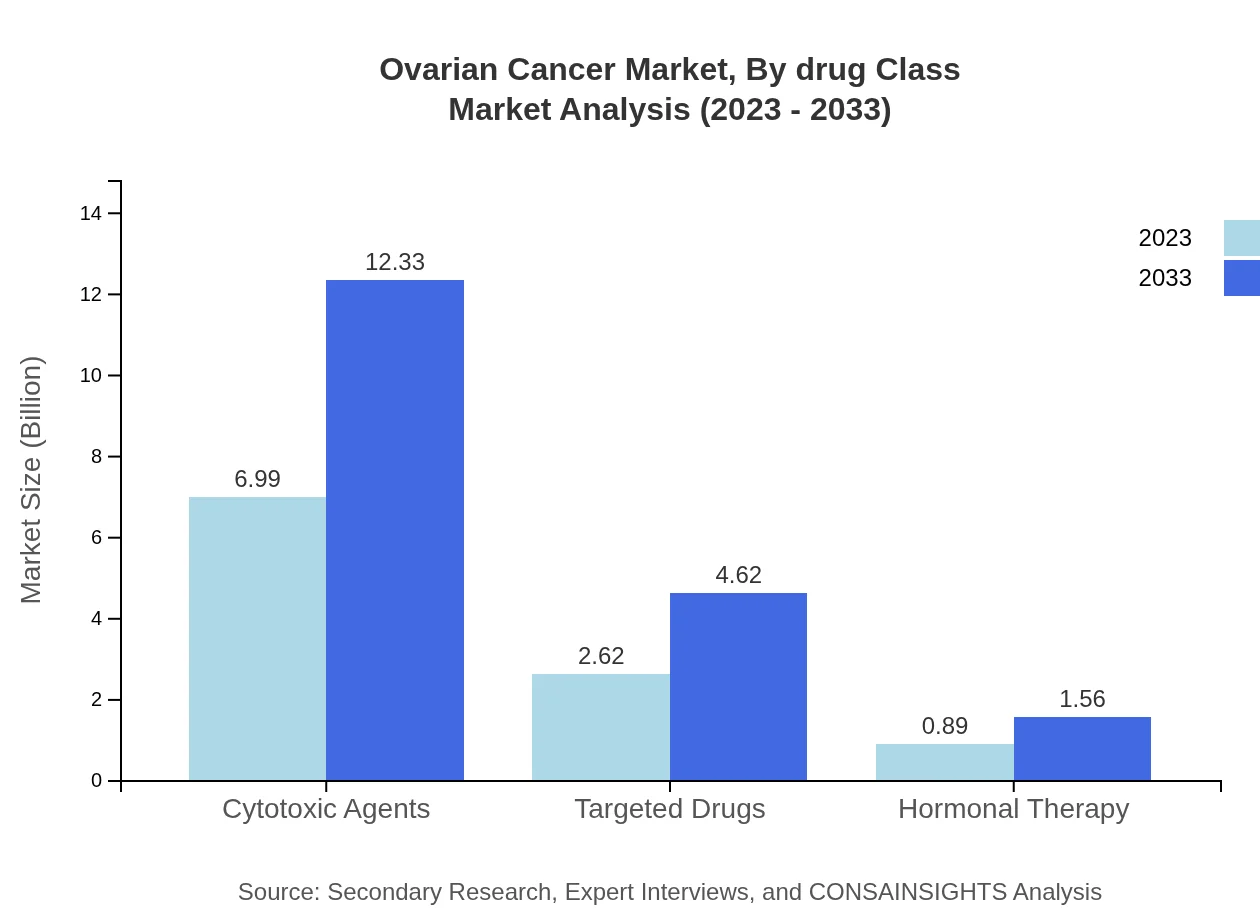
Cytotoxic agents are leading the drug class market, valued at USD 6.99 billion in 2023 and anticipated to grow to USD 12.33 billion by 2033; targeted drugs and hormonal therapies also play vital roles, indicative of evolving treatment modalities.
Ovarian Cancer Market Analysis By End User
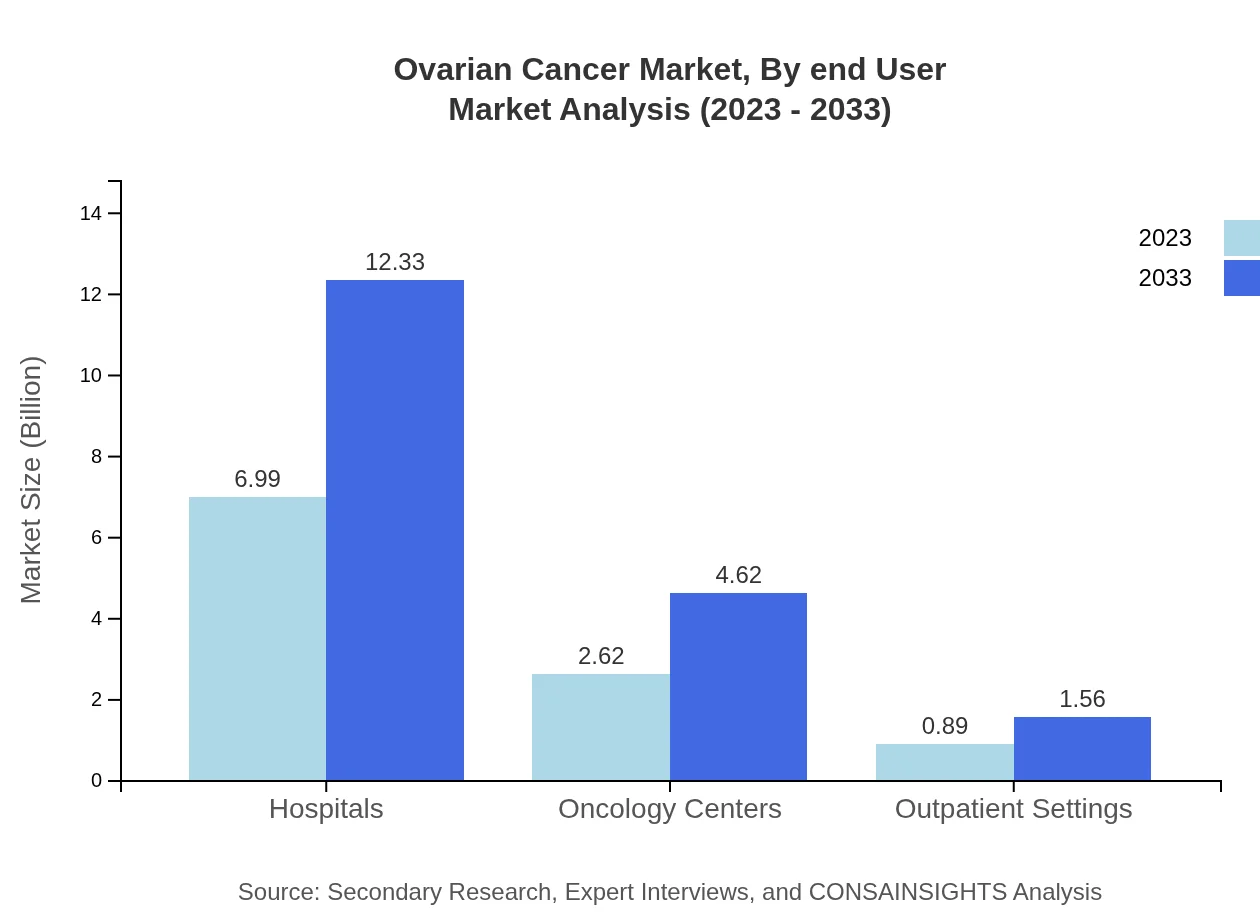
Hospitals and oncology centers are the primary end-users, holding substantial market shares. In 2023, hospitals accounted for 66.6% of the total market share, while oncology centers comprised 24.97%, reflecting their integral roles in comprehensive patient care and management.
Ovarian Cancer Market Analysis By Distribution Channel
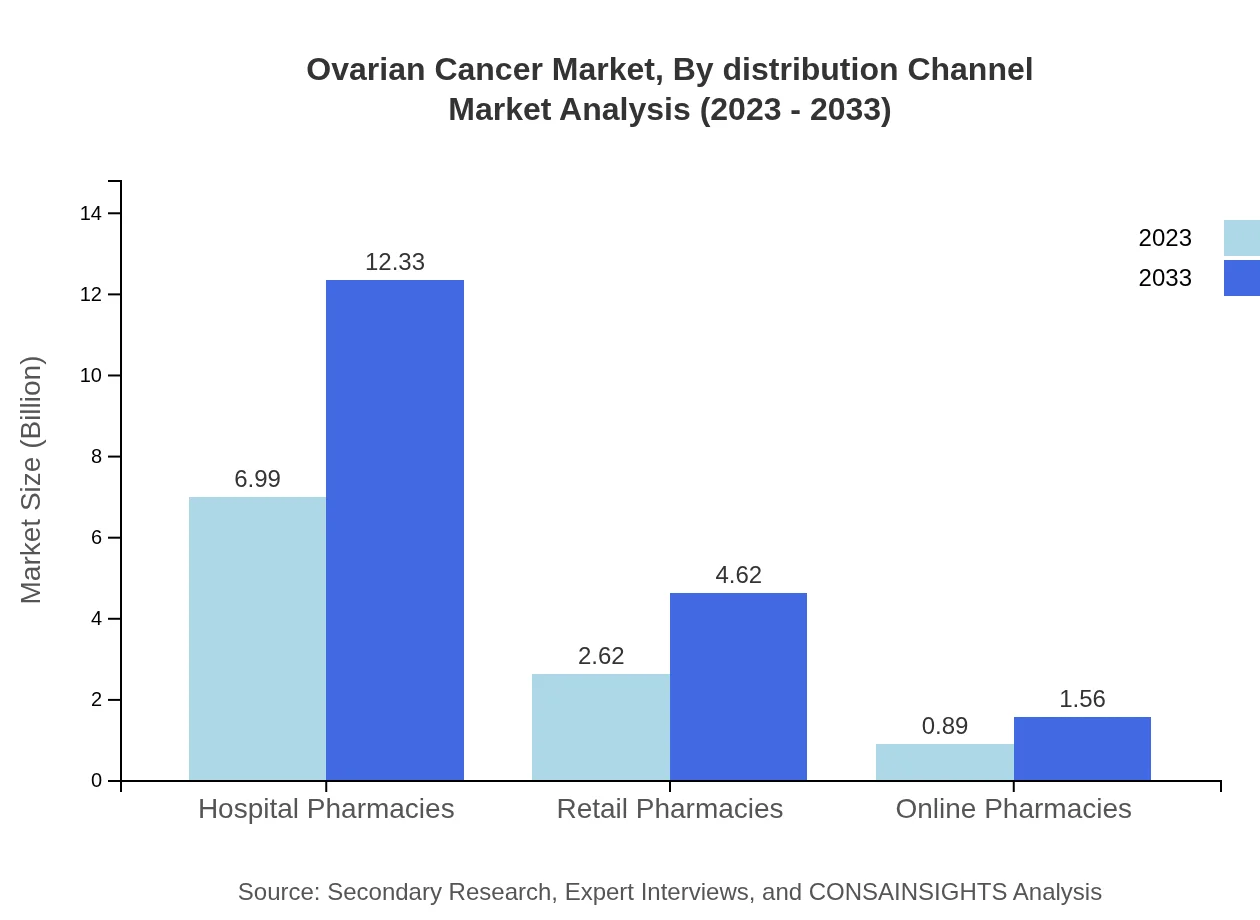
Hospital pharmacies represent the largest distribution channel, forecasting size from USD 6.99 billion in 2023 to USD 12.33 billion by 2033, comprising a major proportion of the market share. Retail pharmacies and online pharmacies also contribute to overall accessibility.
Ovarian Cancer Market Trends and Future Forecast
Tell us your focus area and get a customized research report.
Global Market Leaders and Top Companies in Ovarian Cancer Industry
Roche:
Roche is a leader in cancer treatment solutions, specializing in immunotherapies and personalized medicine initiatives tailored to ovarian cancer.Bristol-Myers Squibb:
This company has made significant advancements in developing targeted therapies and immunotherapies, enhancing treatment outcomes for ovarian cancer patients.Merck & Co.:
Merck is renowned for its innovative products in oncology, focusing on therapeutic advancements to improve the quality of care in ovarian cancer.Johnson & Johnson:
This multinational corporation plays a vital role in the development of medical treatments, including surgical applications for ovarian cancer management.Novartis:
Known for extensive research in the field of oncology, Novartis provides significantly impactful therapies that target ovarian cancer effectively.We're grateful to work with incredible clients.









FAQs
What is the market size of the ovarian cancer market in 2023?
The market size in 2023 is $10.50 Billion, as reported for the global ovarian cancer market.
How big will the ovarian cancer market be in 2033?
The market is projected to reach $18.52 Billion by 2033 according to the forecast provided for the 2023 to 2033 period.
What is CAGR for the ovarian cancer market from 2023 to 2033?
The compound annual growth rate (CAGR) for the forecast period 2023 to 2033 is 5.7%.
Is there a single fastest Growing region in the Ovarian Cancer Market Report market?
No single fastest-growing region is stated for the Ovarian Cancer Market Report market because the top regional implied CAGR values are within 0.15 percentage points of each other, making the ranking too close to call reliably.
Which companies are listed as top players in the market?
Top companies named in the report include Roche, Bristol-Myers Squibb, Merck & Co., Johnson & Johnson, and Novartis.
What are common treatment categories covered in the market?
The market encompasses surgical treatments, chemotherapy, targeted therapy, and immunotherapy among its primary treatment categories.
How are distribution channels categorized in the report?
Distribution channels identified include hospital pharmacies, retail pharmacies, and online pharmacies as primary routes to market.
What research methods supported the report conclusions?
The study used primary interviews with industry experts, secondary company reports and publications, data triangulation, and internal validation.