
Reports >
Life Sciences
>
Transdermal Patch Market Report

Transdermal Patch Market Report
First published: 07 October 2024 | Last updated: 28 May 2026 | Report Code: transdermal-patch
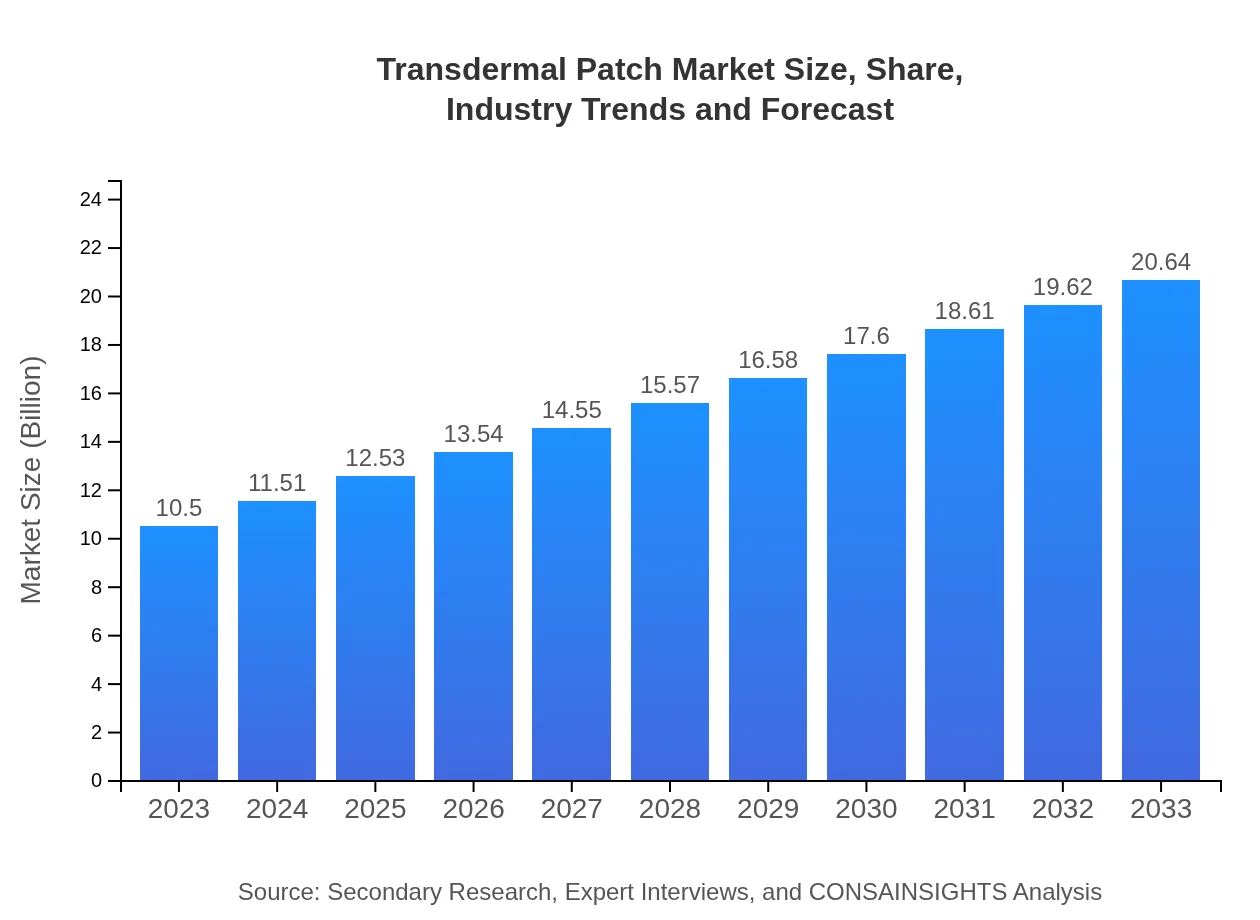
Transdermal Patch Market — USD 10.5 billion in 2023, Growing to USD 20.64B by 2033 at 6.8% CAGR
This report provides a comprehensive analysis of the Transdermal Patch market, exploring market dynamics, size, segmentation, and trends from 2023 to 2033. Key insights, including regional performance, industry leaders, and future forecasts, are included to offer a well-rounded understanding of this expanding market.
Key Takeaways
- Global market expands from $10.50 Billion in 2023 to $20.64 Billion in 2033 at a 6.8% CAGR.
- North America is largest regional market, while no single fastest-growing region is stated because regional CAGR differences remain within 0.15 percentage points.
- Regional growth is supported by chronic disease prevalence, rising healthcare spend, and innovation in patch materials and delivery methods.
- Key participants include Johnson & Johnson, Mylan N.V., Boehringer Ingelheim, and PatchAid.
- Product and technology advances such as microneedle techniques and polymer-based formulations underpin broader therapeutic adoption.
Transdermal Patch Market Report — Executive Summary
North America remains largest market by forecast-period value, while no single fastest-growing region is stated because top regional growth rates are separated by less than 0.15 percentage points. The market for transdermal patches is projected to more than double in value between 2023 and 2033, rising from $10.50 Billion to $20.64 Billion at a 6.8% CAGR over the forecast period. Demand is propelled by the need for non-invasive drug delivery, improved patient adherence, and controlled release formulations. Advances in microneedle technologies, polymer-based materials, and chemical enhancement methods have expanded therapeutic applications across pain relief, hormonal therapy, cardiovascular and neuropsychiatric treatments. Regional dynamics show notable scale in North America, supported by significant healthcare investment and strong clinical adoption. The competitive landscape features established pharmaceutical and device firms such as Johnson & Johnson, Mylan N.V., Boehringer Ingelheim, and PatchAid, focusing on product innovation and regulatory alignment. Ongoing R&D, combined with increased focus on chronic disease management and personalized medicine, is expected to sustain market momentum through 2033.
Key Growth Drivers
- Rising preference for non-invasive alternatives increases demand for transdermal delivery systems.
- Technological improvements in microneedles and polymer-based formulations enhance drug absorption and broaden application scope.
- Growing prevalence of chronic conditions and higher healthcare expenditure support expanded patch utilization.
- Regulatory support and clinical research activity accelerate product approvals and commercial adoption.
- Increased focus on patient adherence and controlled-release therapies drives uptake in hospitals, clinics, and homecare settings.
| Metric | Value |
|---|---|
| Study Period | 2023 - 2033 |
| 2023 Market Size | $10.50 Billion |
| CAGR (2023-2033) | 6.8% |
| 2033 Market Size | $20.64 Billion |
| Top Companies | Johnson & Johnson, Mylan N.V., Boehringer Ingelheim, PatchAid |
| Published Date | 07 October 2024 |
| Last Modified Date | 28 May 2026 |
Transdermal Patch Market Overview
Customize Transdermal Patch Market Report market research report
- ✔ Get in-depth analysis of Transdermal Patch market size, growth, and forecasts.
- ✔ Understand Transdermal Patch's regional dynamics and industry-specific trends.
- ✔ Identify potential applications, end-user demand, and growth segments in Transdermal Patch
What is the Market Size & CAGR of Transdermal Patch Market Report market in 2023?
Transdermal Patch Industry Analysis
Transdermal Patch Market Segmentation and Scope
Tell us your focus area and get a customized research report.
Transdermal Patch Market Report Market Analysis Report by Region
Europe Transdermal Patch Market Report:
Europe grows from $2.99 Billion in 2023 to $5.87 Billion in 2033. Growth is supported by R&D investment, regulatory pathways that enable product introductions, and growing use of patches in chronic disease management and specialized therapeutics.Asia Pacific Transdermal Patch Market Report:
Asia Pacific grows from $2.2 Billion in 2023 to $4.33 Billion in 2033. Market momentum reflects expanding healthcare access, increasing chronic disease burden, and growing interest in non-invasive delivery options alongside technology transfer and regional manufacturing.North America Transdermal Patch Market Report:
North America is largest regional market, rising from $3.54 Billion in 2023 to $6.95 Billion in 2033. Expansion is driven by substantial healthcare investment, active clinical research, and rapid adoption of advanced delivery technologies in clinical and outpatient settings.South America Transdermal Patch Market Report:
Latin America grows from $0.96 Billion in 2023 to $1.9 Billion in 2033. Adoption is influenced by expanding healthcare services, greater awareness of alternative delivery systems, and gradual uptake of new formulations in clinical practice.Middle East & Africa Transdermal Patch Market Report:
Middle East and Africa grows from $0.81 Billion in 2023 to $1.58 Billion in 2033. Development is supported by improving healthcare infrastructure, increased investment in therapeutics, and targeted adoption for chronic condition management across urban centers.Tell us your focus area and get a customized research report.
Research Methodology
Transdermal Patch Market Analysis By Product Type
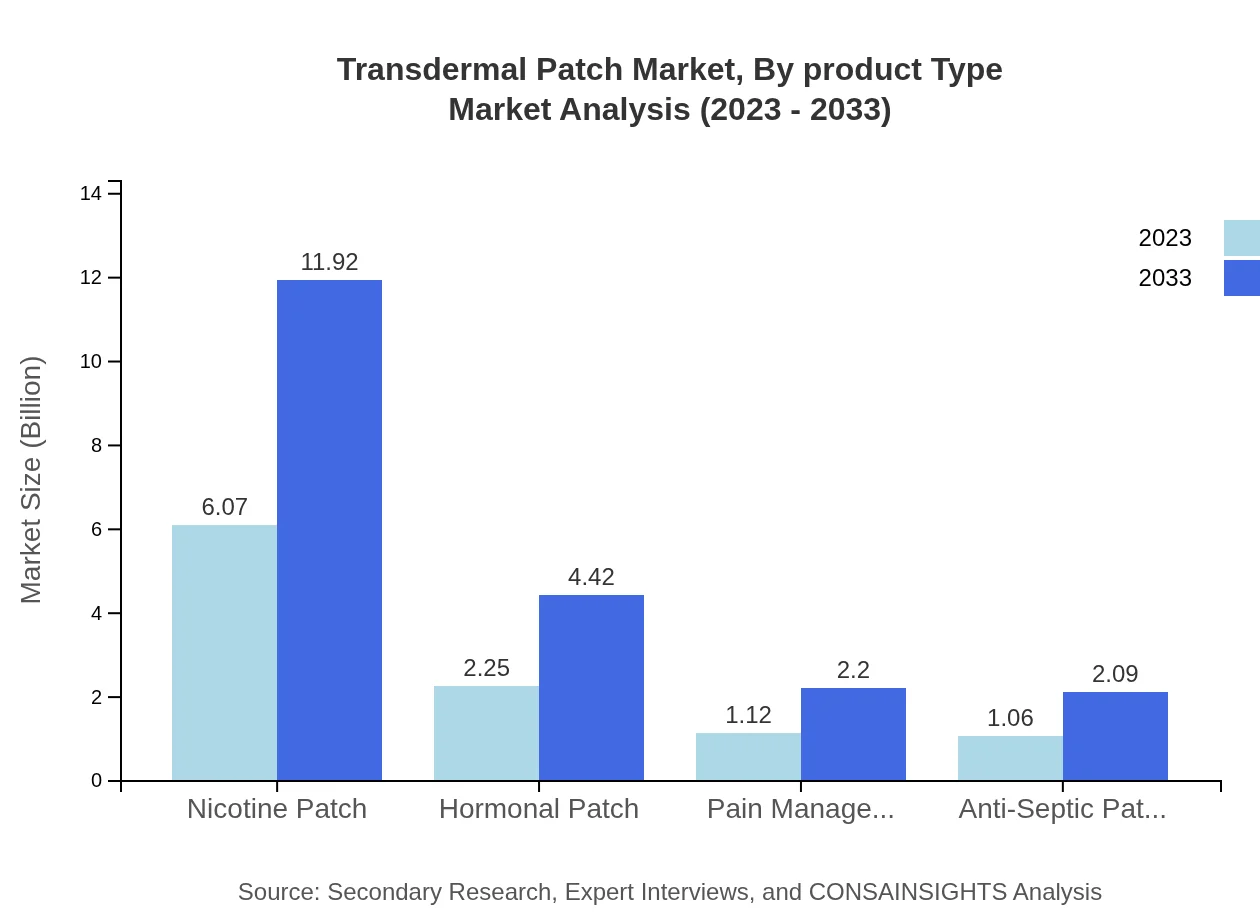
The market for Transdermal Patches is stratified based on product types, including nicotine patches, hormonal patches, pain management patches, and anti-septic patches. For instance, the nicotine patch segment holds a significant share with a market size of $6.07 billion in 2023 and is forecasted to reach $11.92 billion by 2033, driven by rising cessation efforts. Other segments like pain management patches also show substantial growth prospects, with an increase from $1.12 billion to $2.20 billion over the forecast period.
Transdermal Patch Market Analysis By Application
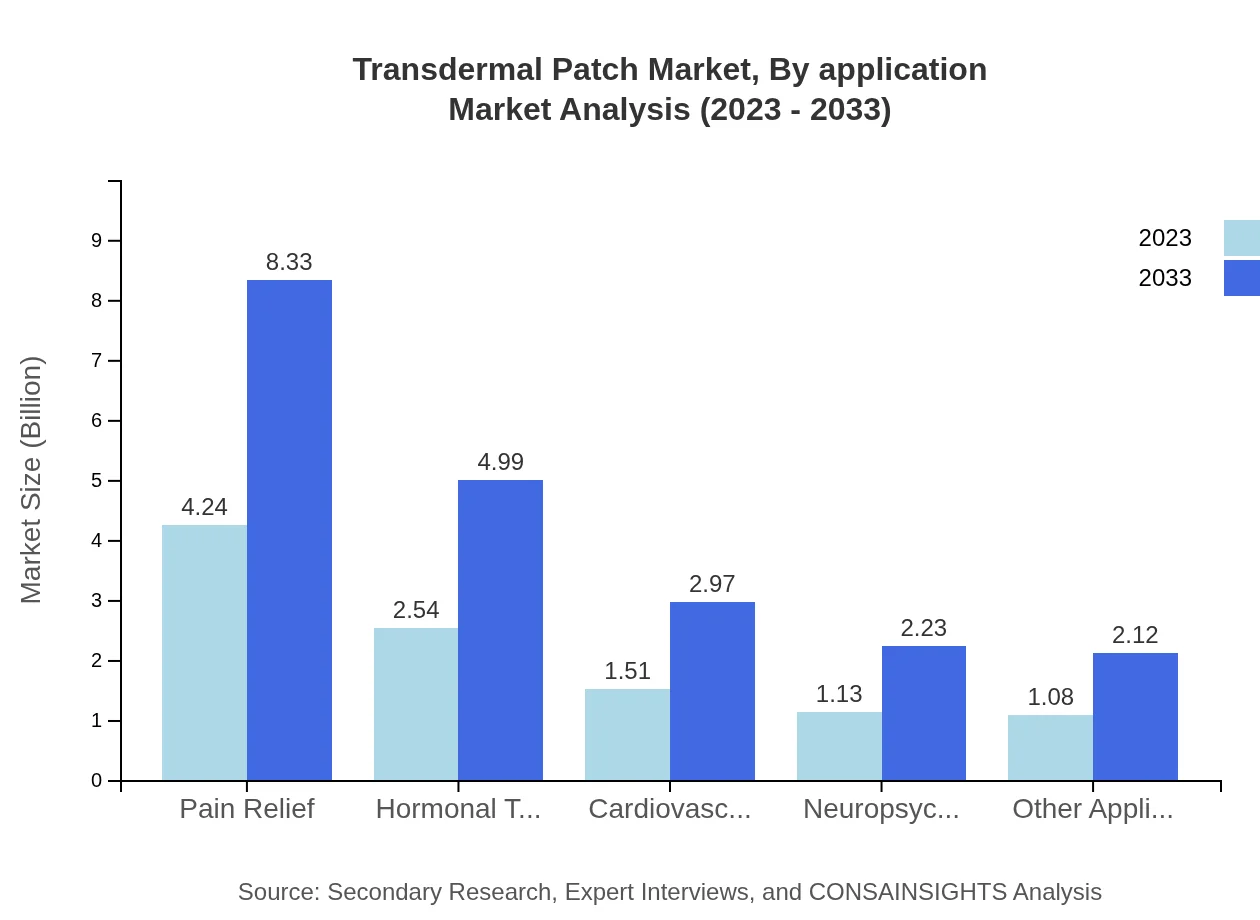
The application segments represent significant categories, with pain relief leading the market at $4.24 billion in 2023 and expected to grow to $8.33 billion by 2033. Hormonal therapy is another crucial segment, contributing $2.54 billion in 2023 and projecting an increase to $4.99 billion by 2033 as demand for effective contraceptive methods grows.
Transdermal Patch Market Analysis By Technology
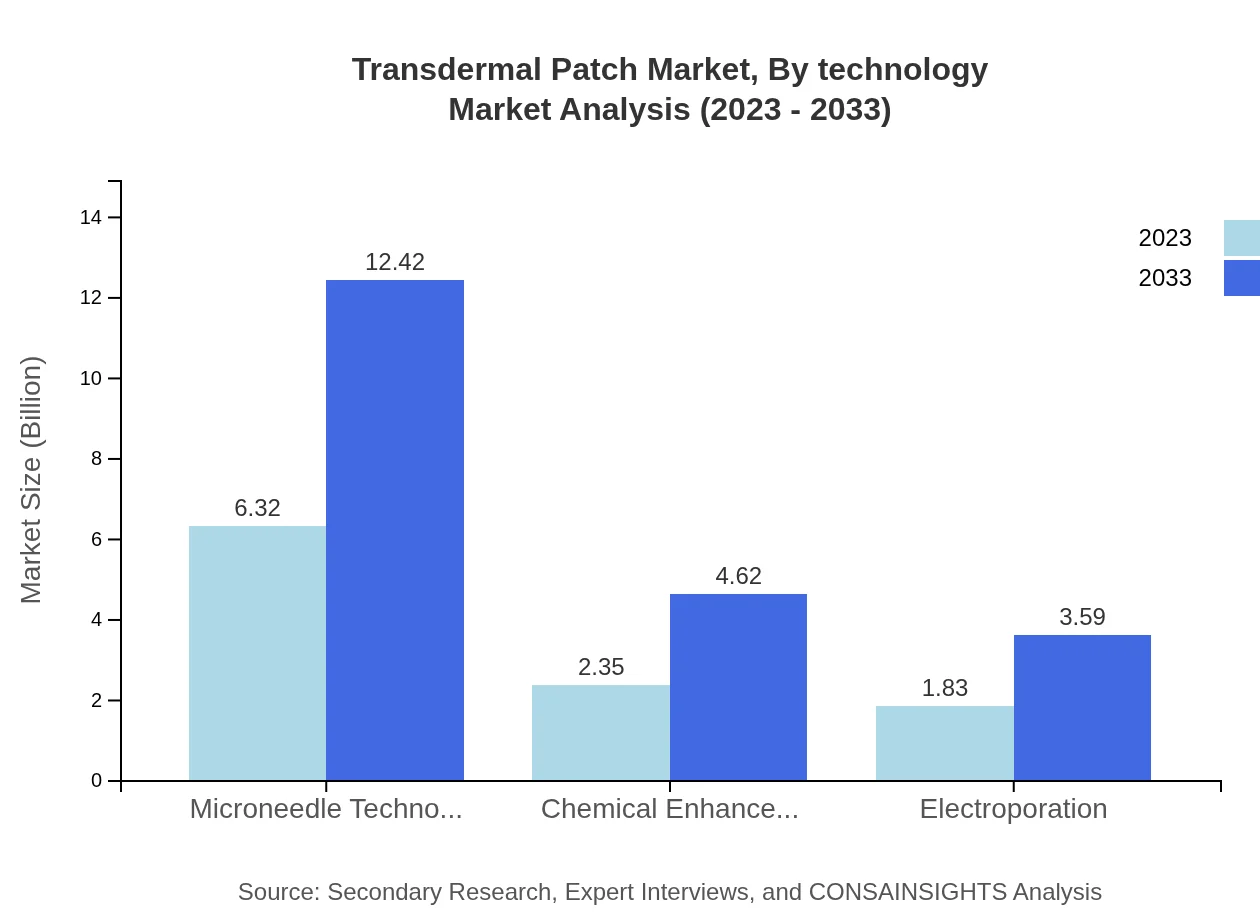
Technological segmentation highlights innovations such as microneedle technology and chemical enhancement methods. The polymer-based technology encompasses a major market share, valued at $6.32 billion in 2023 and expected to reach $12.42 billion by 2033. Microneedle technologies are emerging as a key player due to their ability to improve drug absorption and patient compliance.
Transdermal Patch Market Analysis By Material
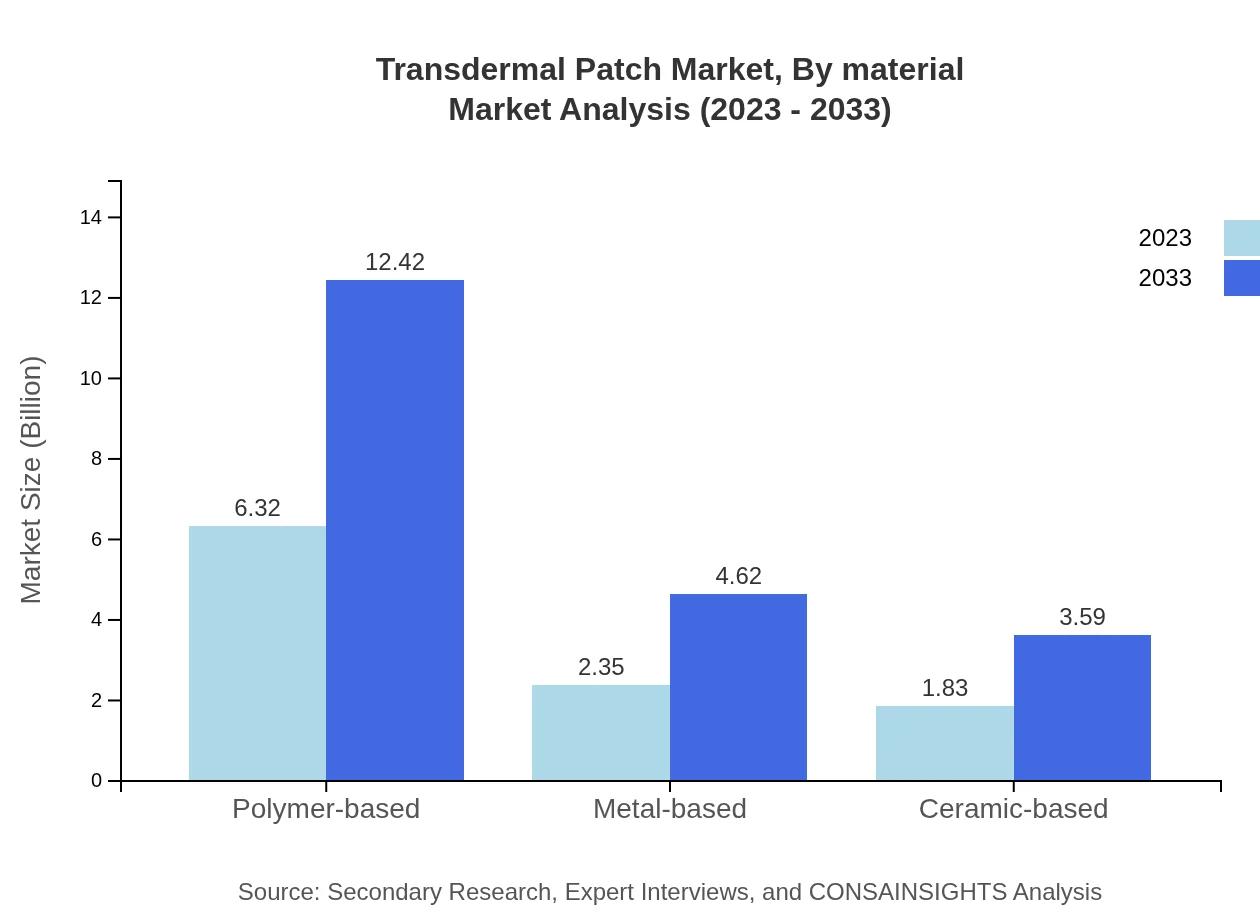
In terms of material composition, polymer-based patches lead the market, capturing a share of 60.19% in 2023 with a growing segment projected to yield $12.42 billion by 2033. Metal-based materials and ceramic-based patches also contribute but remain smaller in market size; with respective growth from $2.35 billion to $4.62 billion for metal-based patches.
Transdermal Patch Market Analysis By End User
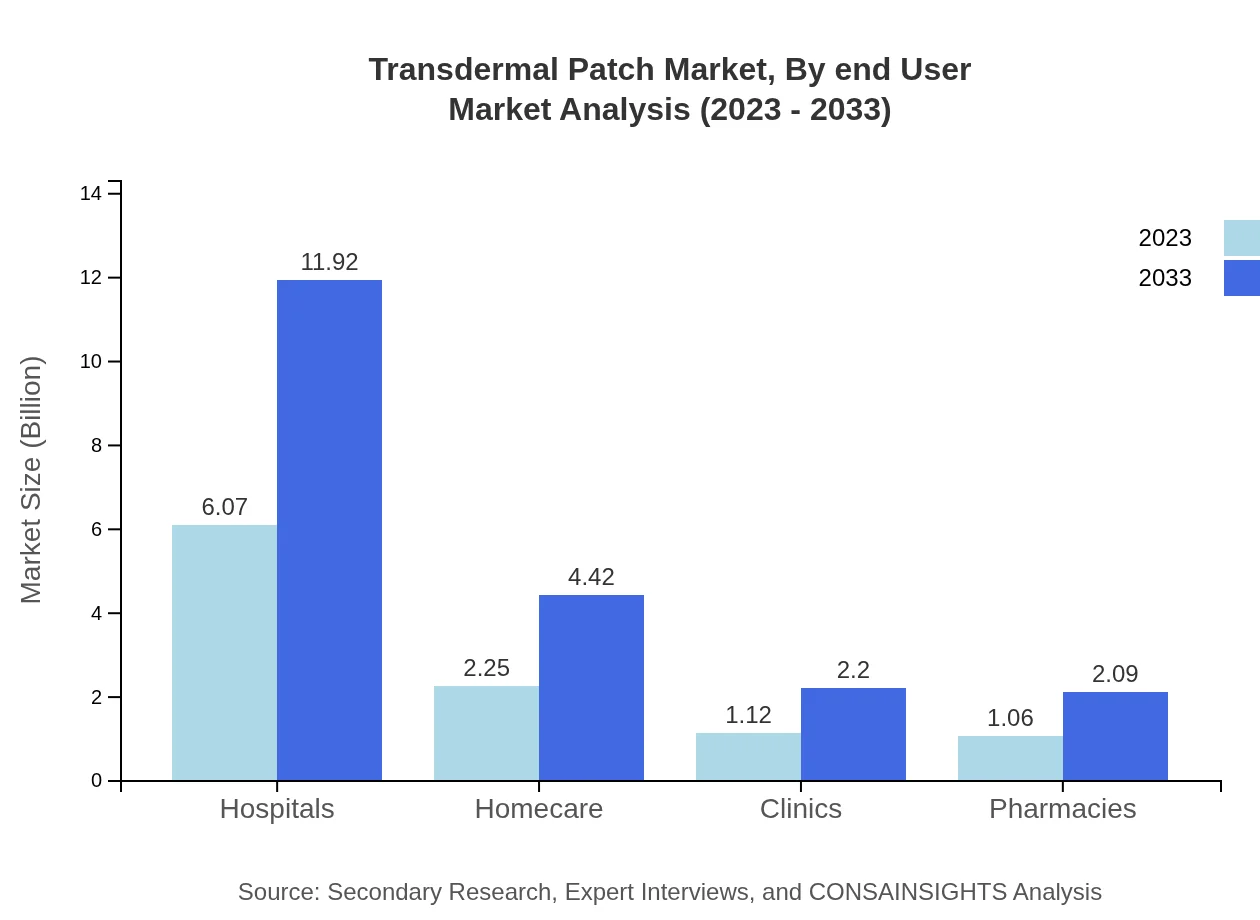
End-user segmentation shows hospitals leading with a substantial market size of $6.07 billion in 2023 and forecasted growth to $11.92 billion by 2033. Homecare settings are becoming increasingly relevant, growing from $2.25 billion to $4.42 billion, highlighting a shift toward patient-centered care and management.
Transdermal Patch Market Trends and Future Forecast
Tell us your focus area and get a customized research report.
Global Market Leaders and Top Companies in Transdermal Patch Industry
Johnson & Johnson:
A leading player in the healthcare sector, Johnson & Johnson has developed various successful transdermal products, particularly in pain management and hormonal therapy.Mylan N.V.:
Mylan specializes in generic and specialty pharmaceuticals, including effective transdermal patches for pain relief and chronic disease management.Boehringer Ingelheim:
Boehringer Ingelheim invests heavily in research and development to innovate in the transdermal patch space, focusing on novel therapies for chronic diseases.PatchAid:
PatchAid is known for providing vitamin and supplement patches, utilizing innovative delivery systems that cater to various health needs.We're grateful to work with incredible clients.








FAQs
What is the market size of the transdermal patch market in 2023?
The market size in 2023 is $10.50 Billion, as reported. This baseline reflects global demand for non-invasive drug delivery across multiple therapeutic areas and settings.
How big will the transdermal patch market be in 2033?
By 2033 the market is projected to reach $20.64 Billion, representing expected expansion driven by product innovation, broader clinical applications, and increased healthcare investments.
What is CAGR for the forecast period?
The compound annual growth rate for the forecast period 2023 to 2033 is 6.8%, reflecting steady market growth influenced by technological and clinical adoption.
Is there a single fastest Growing region in the Transdermal Patch Market Report market?
No single fastest-growing region is stated for the Transdermal Patch Market Report market because the top regional implied CAGR values are within 0.15 percentage points of each other, making the ranking too close to call reliably.
Which companies are highlighted in the market report?
Top companies cited include Johnson & Johnson, Mylan N.V., Boehringer Ingelheim, and PatchAid, representing major commercial and R&D activities in transdermal technologies.
What applications drive demand for patches?
Applications such as pain relief, hormonal therapy, cardiovascular and neuropsychiatric treatments drive demand, supported by controlled-release requirements and improved patient adherence.
How do material and technology choices affect market growth?
Material options like polymer-based systems and technologies such as microneedles and chemical enhancement improve drug delivery efficiency, enabling broader therapeutic uses and commercial interest.
What end Users adopt transdermal patches most readily?
End-users include hospitals, homecare settings, clinics, and pharmacies, which benefit from ease of administration and adherence advantages in chronic and outpatient care.