
Reports >
Life Sciences
>
Transfection Technologies Market Report

Transfection Technologies Market Report
First published: 21 October 2024 | Last updated: 28 May 2026 | Report Code: transfection-technologies
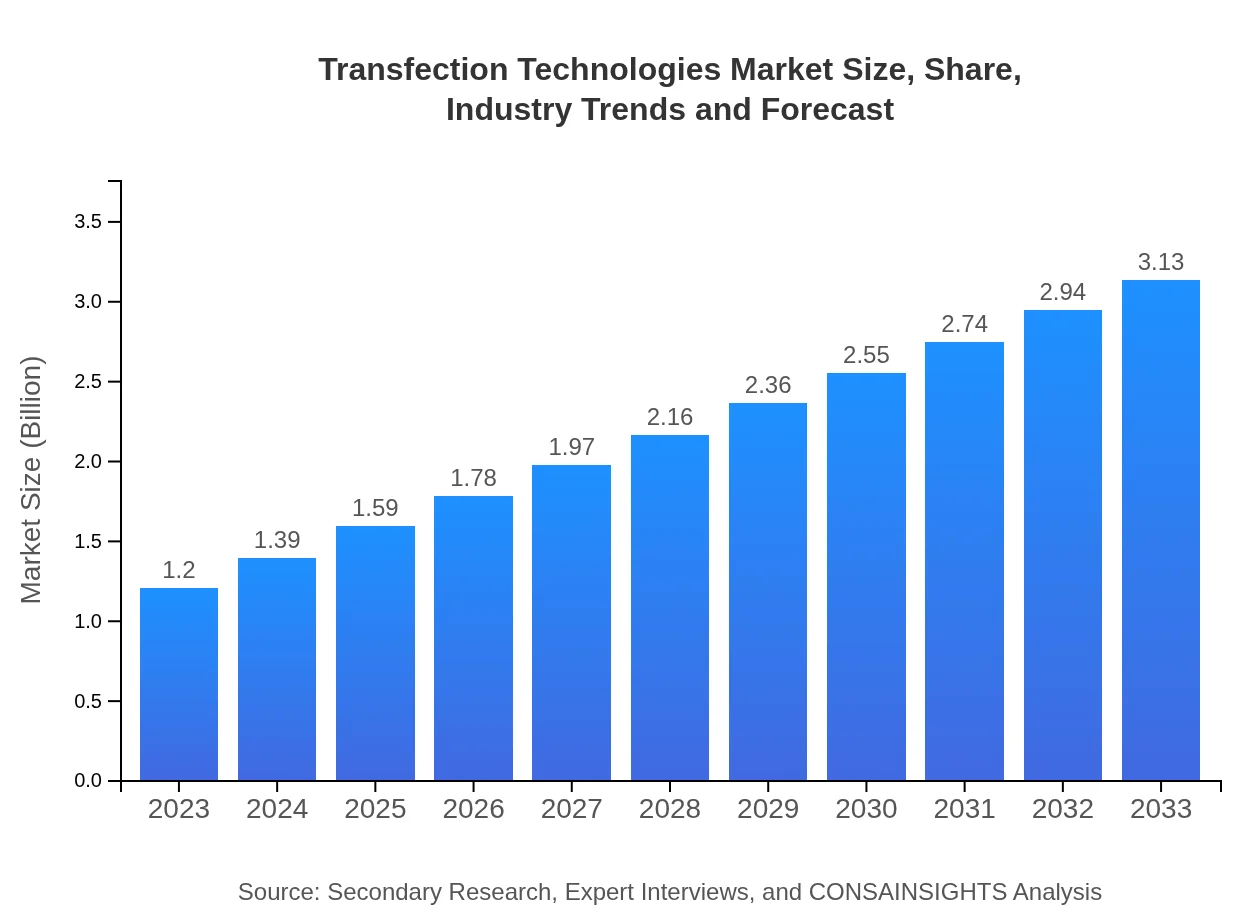
Transfection Technologies Market — USD 1.2 billion in 2023, Growing to USD 3.13B by 2033 at 9.7% CAGR
This report presents a comprehensive analysis of the Transfection Technologies market, covering insights into market size, growth forecasts, regional variances, technology advancements, and key players from 2023 to 2033.
Key Takeaways
- Global market value rises from $1.20 Billion in 2023 to $3.13 Billion in 2033 at a 9.7% CAGR.
- Europe is largest regional market; Latin America is regional market region based on implied CAGR across 2023 to 2033.
- Latin America is the regional market region, moving from $0.01 Billion in 2023 to $0.03 Billion in 2033 (11.61% implied CAGR).
- North America grows from $0.4 Billion in 2023 to $1.05 Billion in 2033, reflecting sustained research and industry investment.
- Key vendors include Thermo Fisher Scientific, Promega Corporation, Lonza Group, F. Hoffmann-La Roche AG, and Invitrogen (part of Thermo Fisher).
Transfection Technologies Market Report — Executive Summary
Regional analysis shows Europe as largest market and Latin America as fastest-growing region by implied CAGR. This report outlines market dynamics shaping transfection technologies, driven by growing gene therapy research, expanding molecular biology applications, and increasing R&D spending across public and private sectors. Market value is forecast to increase from $1.20 Billion in 2023 to $3.13 Billion in 2033 at a 9.7% CAGR during 2023 to 2033. Major trends include adoption of advanced delivery techniques and heightened collaboration between academic institutions and pharma companies. Regional patterns show distinct trajectories: Europe is the largest market, while Latin America records the highest implied growth rate among regions. Product and service segmentation highlights demand for reagents, instruments, and support services across research institutes, pharmaceutical companies, and clinical settings. The competitive landscape features established life-sciences firms alongside specialized providers, with Thermo Fisher Scientific, Promega Corporation, Lonza Group, F. Hoffmann-La Roche AG, and Invitrogen (part of Thermo Fisher) named as prominent players. The report is structured to present market sizing, regional breakdowns, segment-level analysis, and forward-looking trends to aid strategic planning and investment decisions.
Key Growth Drivers
- Expansion of gene therapy and personalized medicine research increasing demand for efficient nucleic acid delivery solutions.
- Rising R&D expenditure by pharmaceutical companies and research institutions driving purchases of reagents, instruments, and services.
- Technological progress in electroporation and lipid-based systems improving transfection efficiency and broadening application scope.
- Collaborations between academic centers and industry accelerating commercialization and adoption of novel transfection methods.
- Growing focus on molecular biology workflows and CRISPR-based applications boosting routine use of transfection platforms.
| Metric | Value |
|---|---|
| Study Period | 2023 - 2033 |
| 2023 Market Size | $1.20 Billion |
| CAGR (2023-2033) | 9.7% |
| 2033 Market Size | $3.13 Billion |
| Top Companies | Thermo Fisher Scientific, Promega Corporation, Lonza Group, F. Hoffmann-La Roche AG, Invitrogen (part of Thermo Fisher) |
| Published Date | 21 October 2024 |
| Last Modified Date | 28 May 2026 |
Transfection Technologies Market Overview
Customize Transfection Technologies Market Report market research report
- ✔ Get in-depth analysis of Transfection Technologies market size, growth, and forecasts.
- ✔ Understand Transfection Technologies's regional dynamics and industry-specific trends.
- ✔ Identify potential applications, end-user demand, and growth segments in Transfection Technologies
What is the Market Size & CAGR of Transfection Technologies Market Report market in 2023?
Transfection Technologies Industry Analysis
Transfection Technologies Market Segmentation and Scope
Tell us your focus area and get a customized research report.
Transfection Technologies Market Report Market Analysis Report by Region
Europe Transfection Technologies Market Report:
Europe is largest regional market, rising from $0.43 Billion in 2023 to $1.11 Billion in 2033. 43 Billion in 2023 to $1.11 Billion in 2033 and is the largest regional market. Robust biotechnology clusters, academic-industry partnerships, and regulatory pathways for therapeutics contribute to regional uptake of transfection solutions.Asia Pacific Transfection Technologies Market Report:
Asia Pacific grows from $0.22 Billion in 2023 to $0.56 Billion in 2033. Rising research expenditure, expanding biotech firms, and growing adoption of gene-editing and molecular biology applications drive regional market expansion.North America Transfection Technologies Market Report:
North America grows from $0.4 Billion in 2023 to $1.05 Billion in 2033. Strong research infrastructure, substantial pharmaceutical R&D investment, and clinical translational activities support demand for advanced transfection reagents, instruments, and services.South America Transfection Technologies Market Report:
Latin America is fastest-growing region by implied CAGR, increasing from $0.01 Billion in 2023 to $0.03 Billion in 2033. 01 Billion in 2023 to $0.03 Billion in 2033 and is identified as the regional growth market by the provided data. Emerging research programs and increasing collaborations are supporting gradual market development.Middle East & Africa Transfection Technologies Market Report:
Middle East and Africa grows from $0.14 Billion in 2023 to $0.38 Billion in 2033. Investment in healthcare infrastructure and growing academic research initiatives are encouraging uptake of transfection reagents, instruments, and services.Tell us your focus area and get a customized research report.
Research Methodology
Transfection Technologies Market Analysis By Product
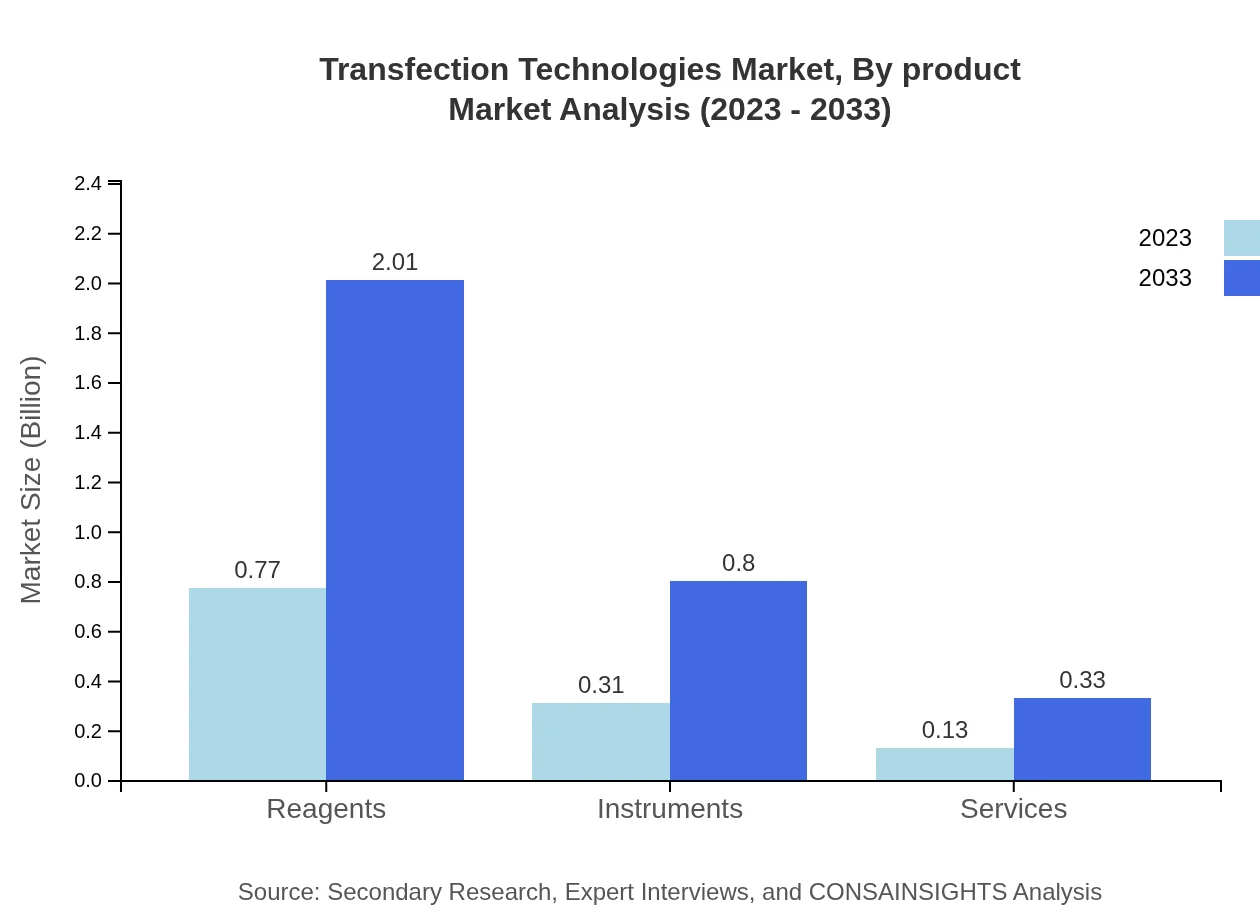
The Reagents segment holds the largest market share, with a size of $0.77 billion in 2023, expected to grow to $2.01 billion by 2033, accounting for 64.15% of the market share. Instruments generate revenue of $0.31 billion in 2023 and are expected to reach $0.80 billion by 2033, comprising 25.42% of the share. The Services segment, valued at $0.13 billion in 2023, is anticipated to grow to $0.33 billion by 2033, capturing 10.43% market share.
Transfection Technologies Market Analysis By Application
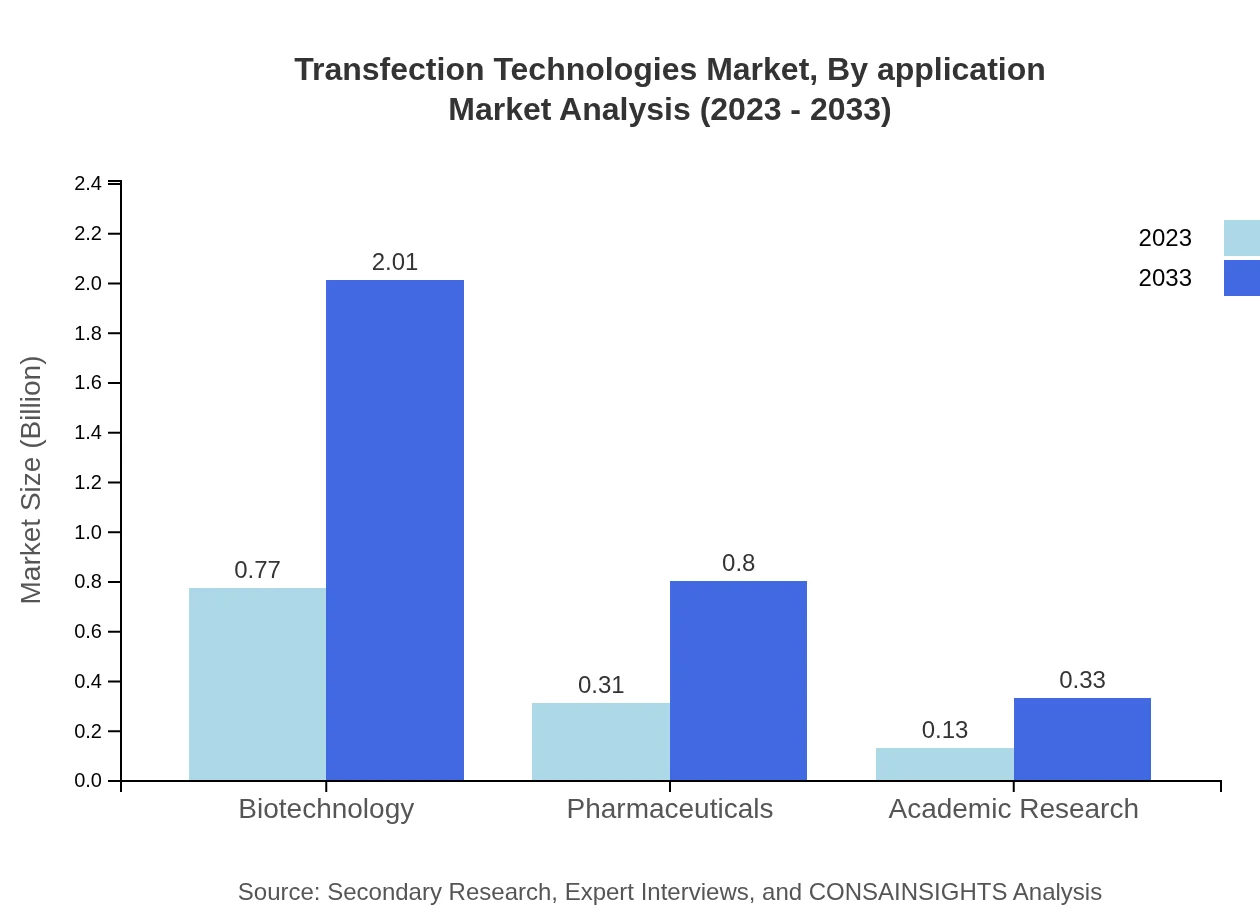
The market is primarily driven by applications in Research Institutes, Pharmaceutical Companies, and Hospitals & Clinics, with Research Institutes dominating the market due to their ongoing projects focused on genetic studies and therapies.
Transfection Technologies Market Analysis By Cell Type
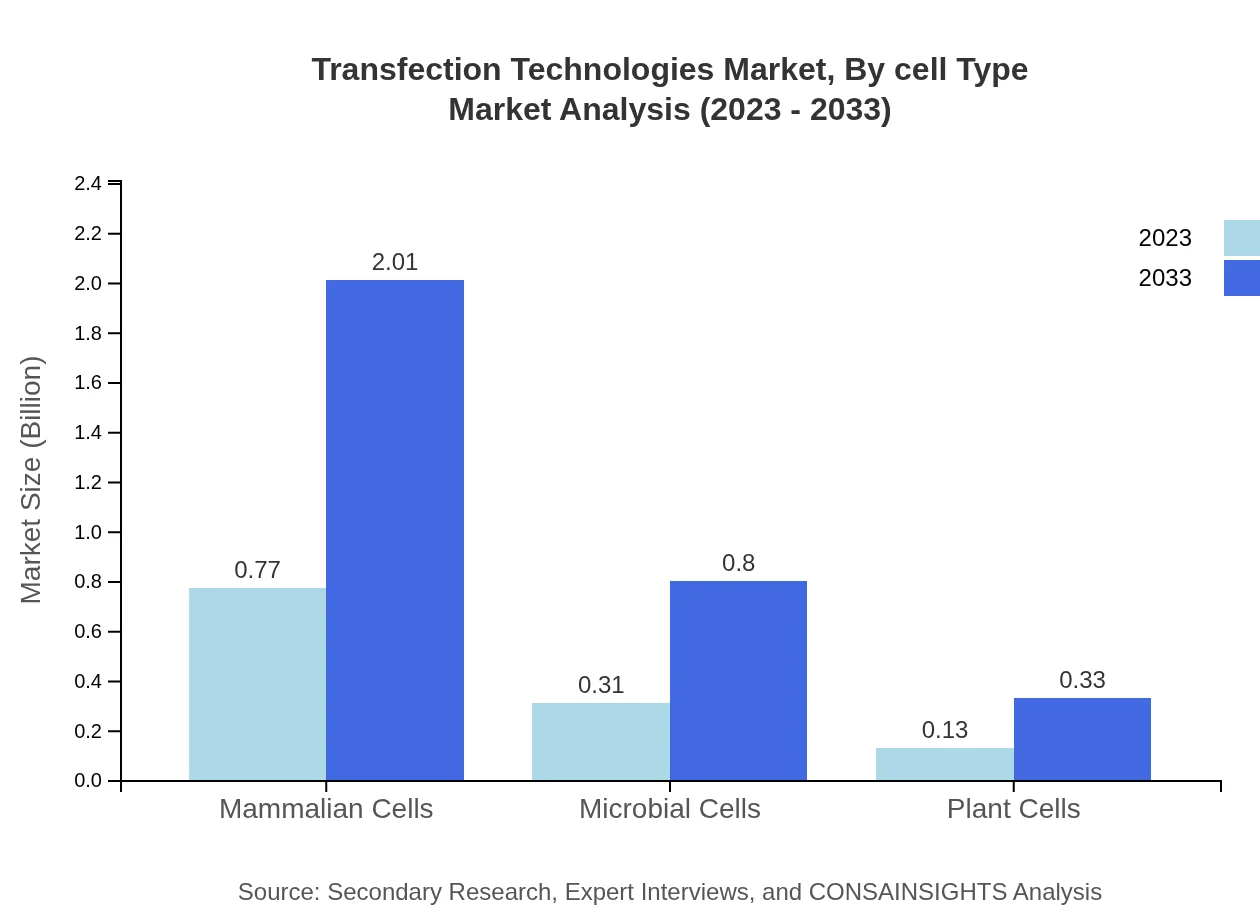
Mammalian Cells represent the leading cell type segment, valued at $0.77 billion in 2023 and expected to grow to $2.01 billion by 2033, accounting for 64.15% of market share. This is followed by Microbial Cells and Plant Cells, with market sizes of $0.31 billion and $0.13 billion respectively in 2023.
Transfection Technologies Market Analysis By End User
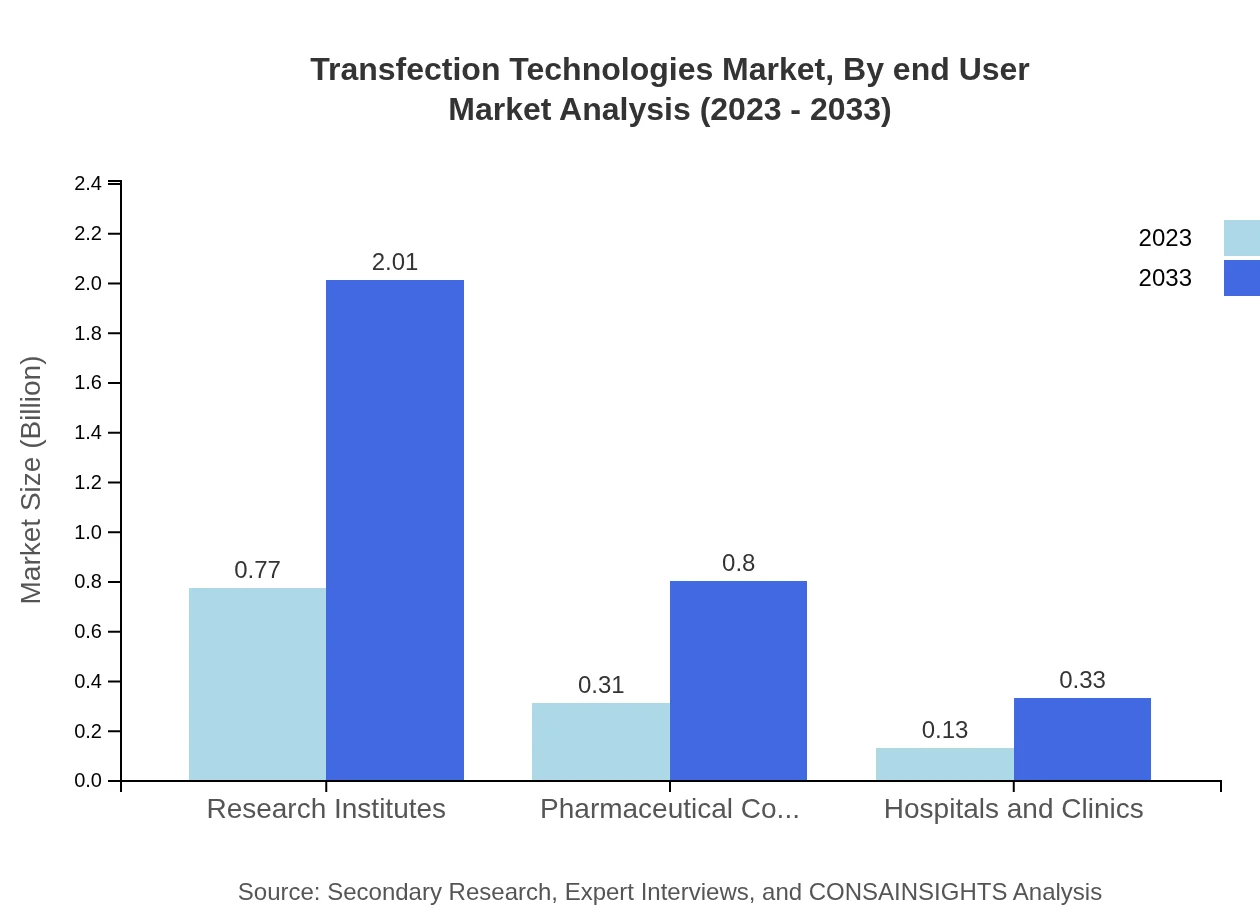
The leading end-users include Academic Research Institutions, Pharmaceutical Companies, Hospitals, and Clinics, with Academic Research Institutions leading at $0.77 billion in 2023, driven by continuous advancements in genetic research and drug development.
Transfection Technologies Market Analysis By Region Application
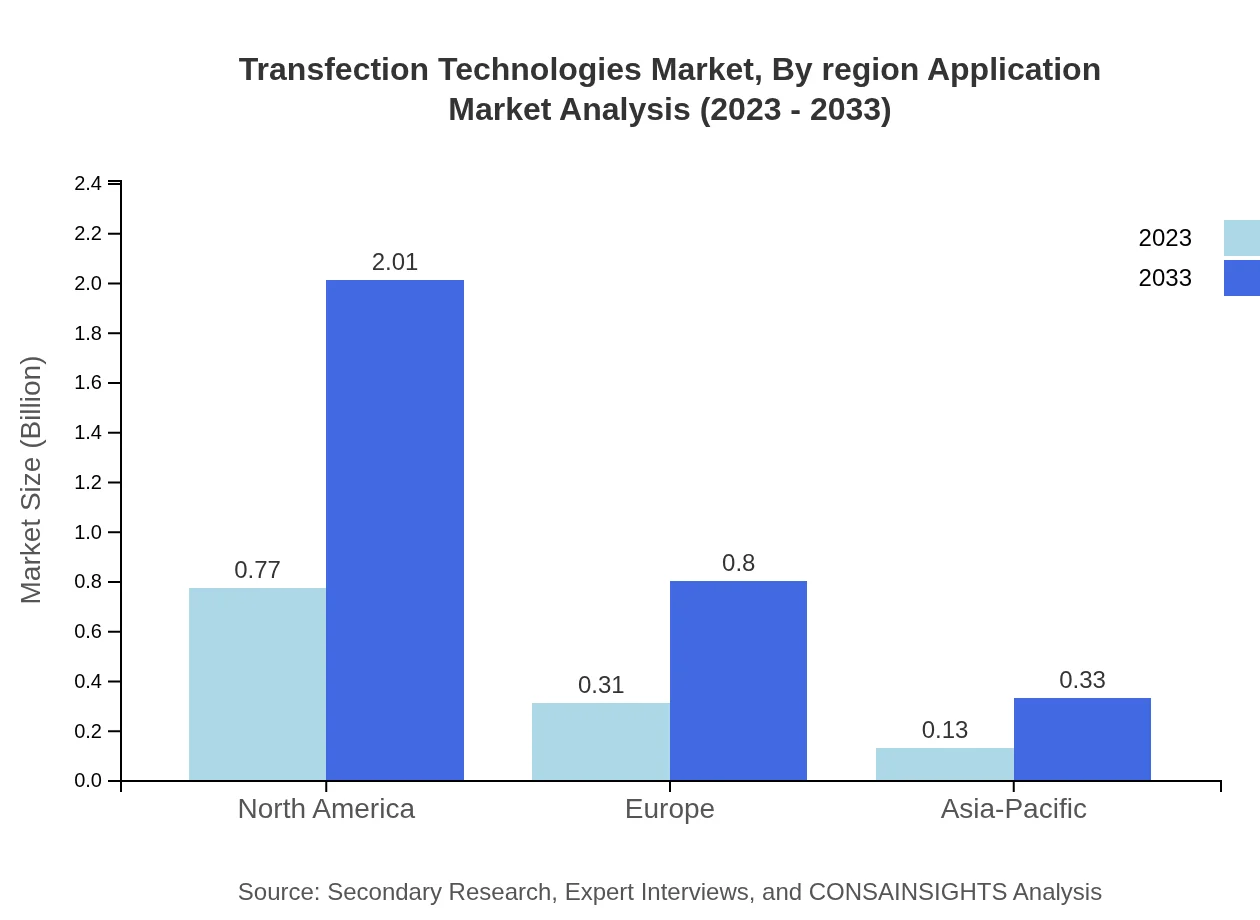
The North American region accounts for the largest market share with significant contributions from both research institutions and pharmaceutical companies. Europe follows closely, with strong growth owing to its innovative healthcare landscape and research capabilities.
Transfection Technologies Market Trends and Future Forecast
Tell us your focus area and get a customized research report.
Global Market Leaders and Top Companies in Transfection Technologies Industry
Thermo Fisher Scientific:
A leader in scientific research tools, providing a range of transfection reagents and services designed for optimal gene delivery efficacy.Promega Corporation:
Known for its innovative solutions in life sciences, Promega offers a comprehensive portfolio of transfection reagents and kits for various cell types.Lonza Group:
Lonza specializes in biopharmaceutical production technologies, offering advanced transfection technologies alongside development services.F. Hoffmann-La Roche AG:
Roche leverages its expertise in biotechnology to deliver effective transfection systems, particularly in drug development and genomic research.Invitrogen (part of Thermo Fisher):
Offers a wide range of transfection products and solutions aimed at both academic and commercial research laboratories.We're grateful to work with incredible clients.









FAQs
What is the market size of Transfection Technologies in 2023?
The market size of Transfection Technologies in 2023 is $1.20 Billion as stated in the report, serving as the baseline for the 2023 to 2033 forecast period.
How big is the Transfection Technologies market expected to be in 2033?
By 2033 the market is projected to reach $3.13 Billion according to the provided forecast data, reflecting growth over the 2023 baseline.
What is CAGR for the forecast period?
The compound annual growth rate (CAGR) for the market over the forecast period 2023 to 2033 is 9.7% as specified in the input data.
Which region is the fastest Growing in the Transfection Technologies Market Report market?
Latin America is the fastest-growing region, projected to expand from $0.01 Billion in 2023 to $0.03 Billion in 2033, reflecting an implied 11.61% CAGR over the forecast period.
Which region is the fastest Growing?
Latin America is noted as the regional market region with an implied 11.61% CAGR, increasing from $0.01 Billion in 2023 to $0.03 Billion in 2033.
Who are the top companies operating in this market?
Top companies listed include Thermo Fisher Scientific, Promega Corporation, Lonza Group, F. Hoffmann-La Roche AG, and Invitrogen (part of Thermo Fisher).
Why is demand for transfection technologies increasing?
Demand is rising due to greater investment in gene therapy, expanded molecular biology applications, and advances in delivery methods that enhance efficiency and viability.
What end users drive market demand?
Primary end users include research institutes, pharmaceutical companies, and hospitals and clinics, which require reagents, instruments, and related services.
How are regional differences characterized?
Regional variations reflect differing R&D intensity, regulatory environments, and collaboration levels, with specific growth figures provided for each region.
What product segments are prominent?
Prominent product segments include reagents, instruments, and services, which support research and clinical transfection workflows across multiple cell types.