

Vasculitis Treatment Market Report
First published: 12 October 2024 | Last updated: 28 May 2026 | Report Code: vasculitis-treatment
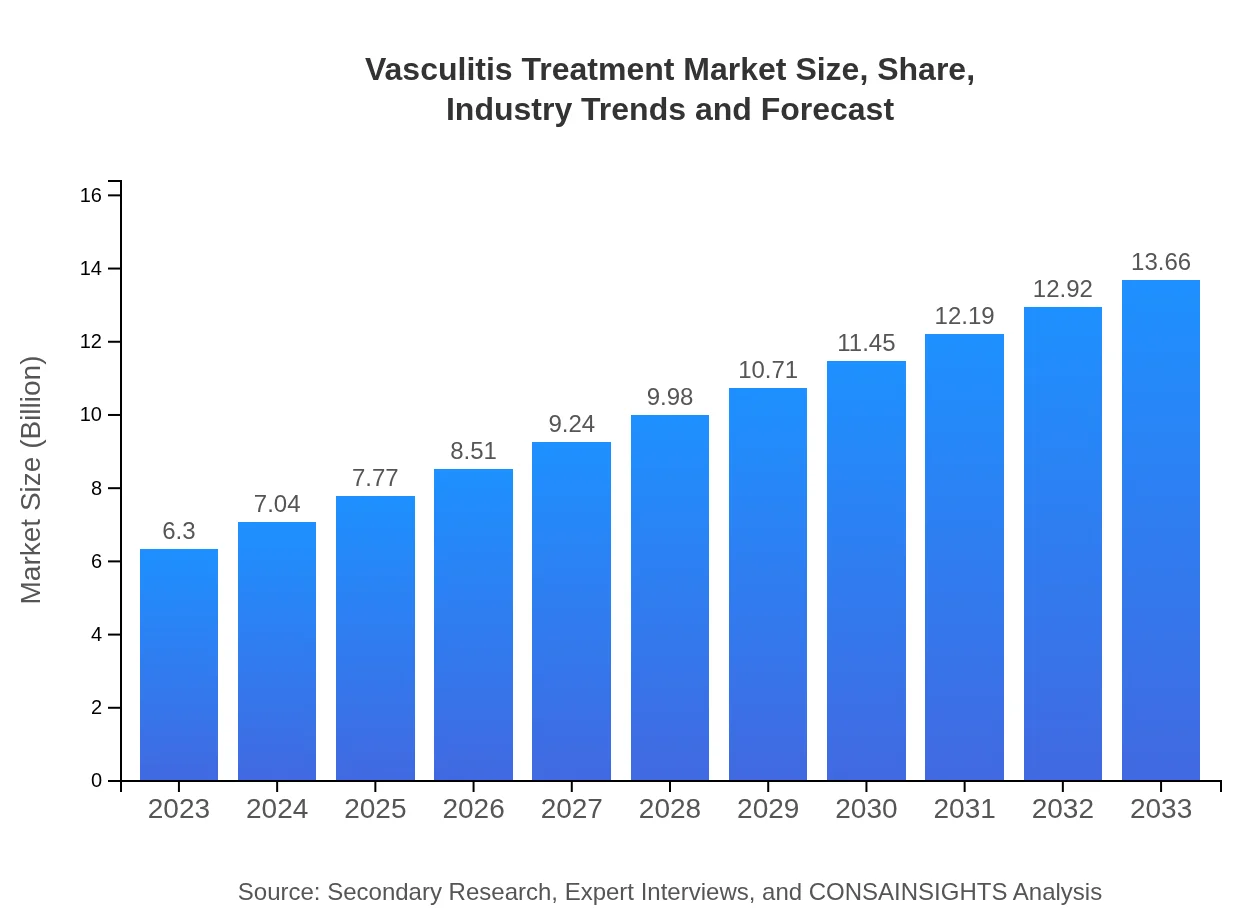
Vasculitis Treatment Market — USD $6.3 Billion in 2023, Growing to USD 13.66null by 2033 at 7.8% CAGR
This report provides a comprehensive analysis of the Vasculitis Treatment market, covering current trends, market size, growth potential, and regional insights from 2023 to 2033.
Key Takeaways
- Global market expands from $6.30 Billion in 2023 to $13.66 Billion in 2033 at a 7.8% CAGR.
- North America is largest regional market, while no single fastest-growing region is stated because regional CAGR differences remain within 0.15 percentage points.
- Key treatment categories include medications, surgical treatments, and supportive therapies, with multiple distribution and administration routes.
- Leading players shaping innovation include Roche, AbbVie, Bristol-Myers Squibb, and Amgen.
- Segment coverage spans end-users, indications, treatment types, routes, and distribution channels.
- Regional growth is supported by research investment, improved diagnostics, and increased healthcare access.
Vasculitis Treatment Market Report — Executive Summary
North America remains largest market by forecast-period value, while no single fastest-growing region is stated because top regional growth rates are separated by less than 0.15 percentage points. The Vasculitis Treatment market demonstrates substantial expansion driven by therapeutic advances and heightened clinical focus on autoimmune vascular diseases. Market size grows from $6.30 Billion in 2023 to $13.66 Billion in 2033 at a 7.8% CAGR, reflecting greater adoption of novel medications, supportive therapies, and surgical interventions. Major players such as Roche, AbbVie, Bristol-Myers Squibb, and Amgen are active in research and product development. Market segmentation covers treatment type, indication, route of administration, distribution channel, and end-user, including hospitals, clinics, home care settings, and research institutions. Regional performance varies: North America leads in absolute market value, supported by strong clinical infrastructure and investment. Europe, Asia Pacific, Latin America, and Middle East & Africa each show growth driven by diagnostics expansion, access improvements, and local healthcare spending. Key trends include a shift toward personalized approaches, an emphasis on targeted therapies, and expanded telemedicine use for chronic care management. Challenges remain around treatment affordability, regulatory complexities, and the need for broader access to advanced therapeutics.
Key Growth Drivers
- Rising investment in clinical research and development for targeted vasculitis therapies.
- Improved diagnostic capabilities enabling earlier detection and treatment initiation.
- Expanding healthcare infrastructure and access in multiple regions supporting treatment uptake.
- Broader adoption of diverse administration routes and distribution channels, including online pharmacies.
- Increased collaboration among pharmaceutical firms, research institutions, and healthcare providers.
| Metric | Value |
|---|---|
| Study Period | 2023 - 2033 |
| 2023 Market Size | $6.30 Billion |
| CAGR (2023-2033) | 7.8% |
| 2033 Market Size | $13.66 Billion |
| Top Companies | Roche, AbbVie, Bristol-Myers Squibb, Amgen |
| Published Date | 12 October 2024 |
| Last Modified Date | 28 May 2026 |
Vasculitis Treatment Market Overview
Customize Vasculitis Treatment Market Report market research report
- ✔ Get in-depth analysis of Vasculitis Treatment market size, growth, and forecasts.
- ✔ Understand Vasculitis Treatment's regional dynamics and industry-specific trends.
- ✔ Identify potential applications, end-user demand, and growth segments in Vasculitis Treatment
What is the Market Size & CAGR of Vasculitis Treatment Market Report market in 2023?
Vasculitis Treatment Industry Analysis
Vasculitis Treatment Market Segmentation and Scope
Tell us your focus area and get a customized research report.
Vasculitis Treatment Market Report Market Analysis Report by Region
Europe Vasculitis Treatment Market Report:
Europe grows from $1.55 Billion in 2023 to $3.36 Billion in 2033. Regional growth is supported by advanced diagnostics, ongoing clinical research, and healthcare policies that facilitate access to specialized therapies for autoimmune vascular conditions.Asia Pacific Vasculitis Treatment Market Report:
Asia Pacific grows from $1.37 Billion in 2023 to $2.97 Billion in 2033. Expansion reflects improving healthcare infrastructure, increased diagnostic capacity, and rising investment in treatment access and clinical studies across multiple markets.North America Vasculitis Treatment Market Report:
North America is largest regional market, rising from $2.29 Billion in 2023 to $4.97 Billion in 2033. Market momentum is underpinned by strong clinical research infrastructure, substantial investment in therapeutic development, and well-established healthcare delivery systems that accelerate adoption of new treatments.South America Vasculitis Treatment Market Report:
Latin America grows from $0.46 Billion in 2023 to $0.99 Billion in 2033. Growth drivers include expanding healthcare services, greater disease awareness, and incremental access to medications and supportive care in urban centers.Middle East & Africa Vasculitis Treatment Market Report:
Middle East and Africa grows from $0.64 Billion in 2023 to $1.38 Billion in 2033. Development is facilitated by improving healthcare access, growing diagnostic capabilities, and targeted investments in chronic disease management.Tell us your focus area and get a customized research report.
Research Methodology
Vasculitis Treatment Market Analysis By Treatment Type
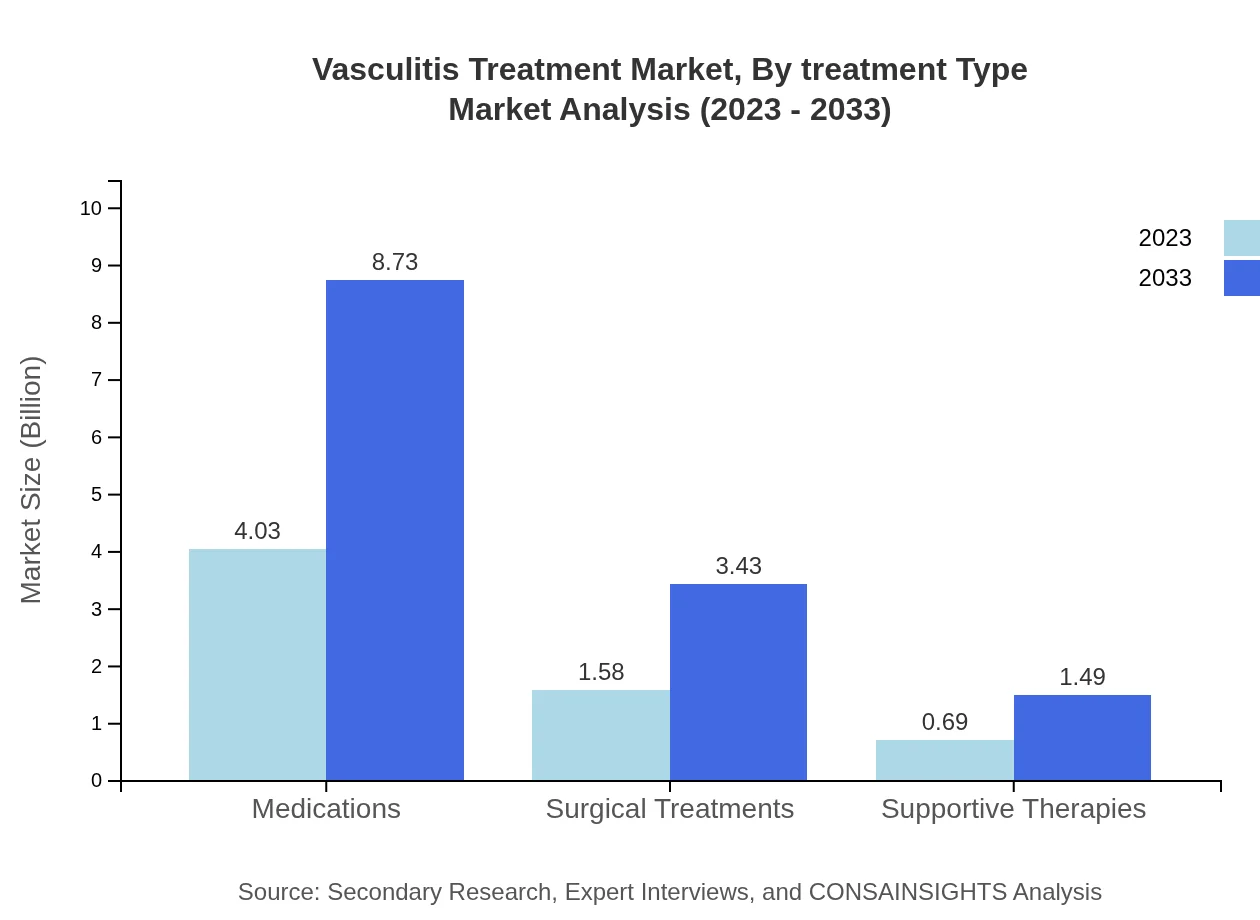
The Vasculitis Treatment market is led by medications, which accounted for $6.36 billion in 2023. Surgical treatments and supportive therapies represent other key segments, with revenues of $1.58 billion and $0.69 billion, respectively. The continued research into targeted therapies and biological agents is expected to bolster outlooks for each segment.
Vasculitis Treatment Market Analysis By Indication

Granulomatosis dominates the indications segment, valued at $3.08 billion in 2023, followed by Pemphigus and ANCA-associated vasculitides. These categories reflect significant parts of the treatment spectrum, with expected growth driven by increased awareness and diagnosis.
Vasculitis Treatment Market Analysis By Route Of Administration
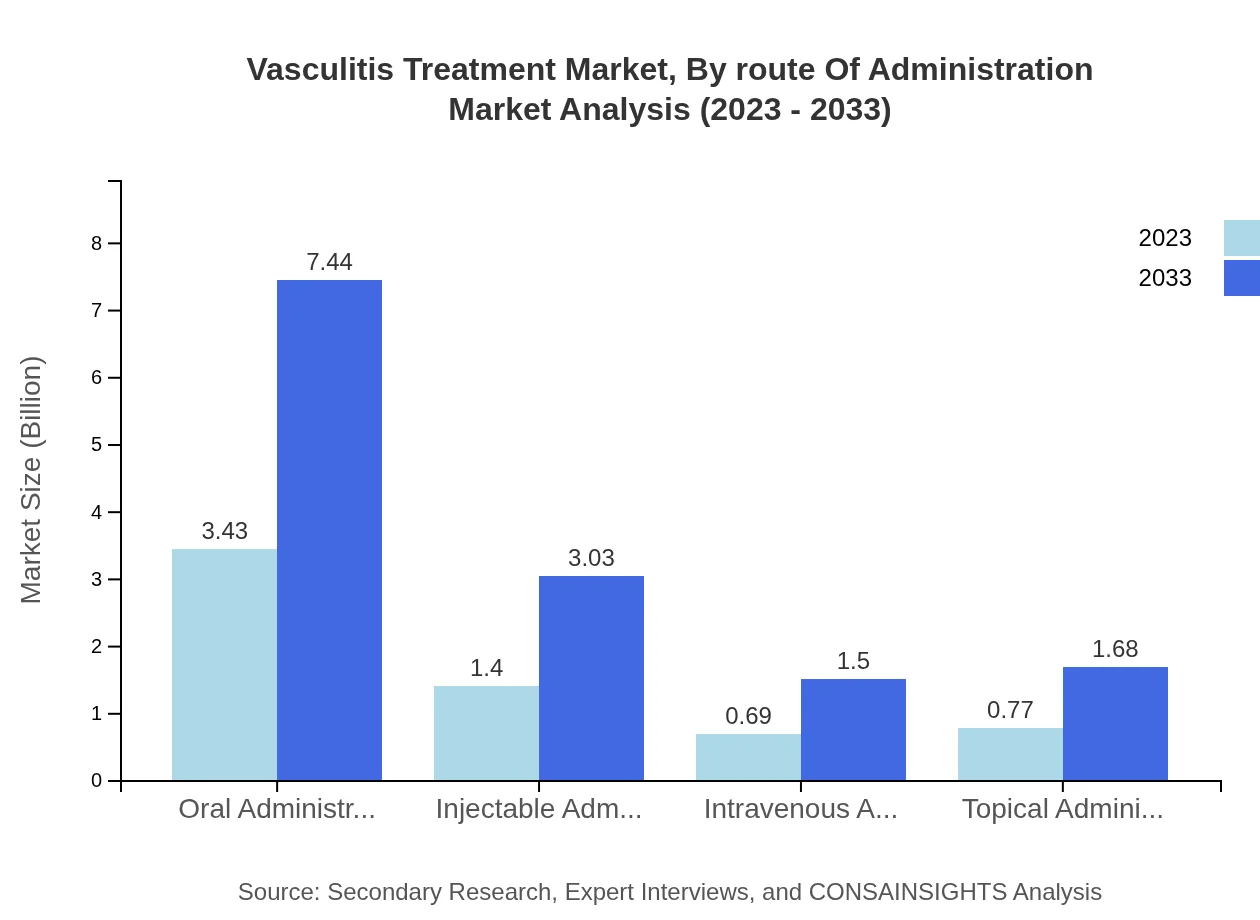
Oral administration holds the largest market share, accounting for $3.43 billion in 2023. Injectable and intravenous routes are gaining traction alongside a growing acceptance of outpatient strategies to enhance patient compliance and treatment outcomes.
Vasculitis Treatment Market Analysis By Distribution Channel
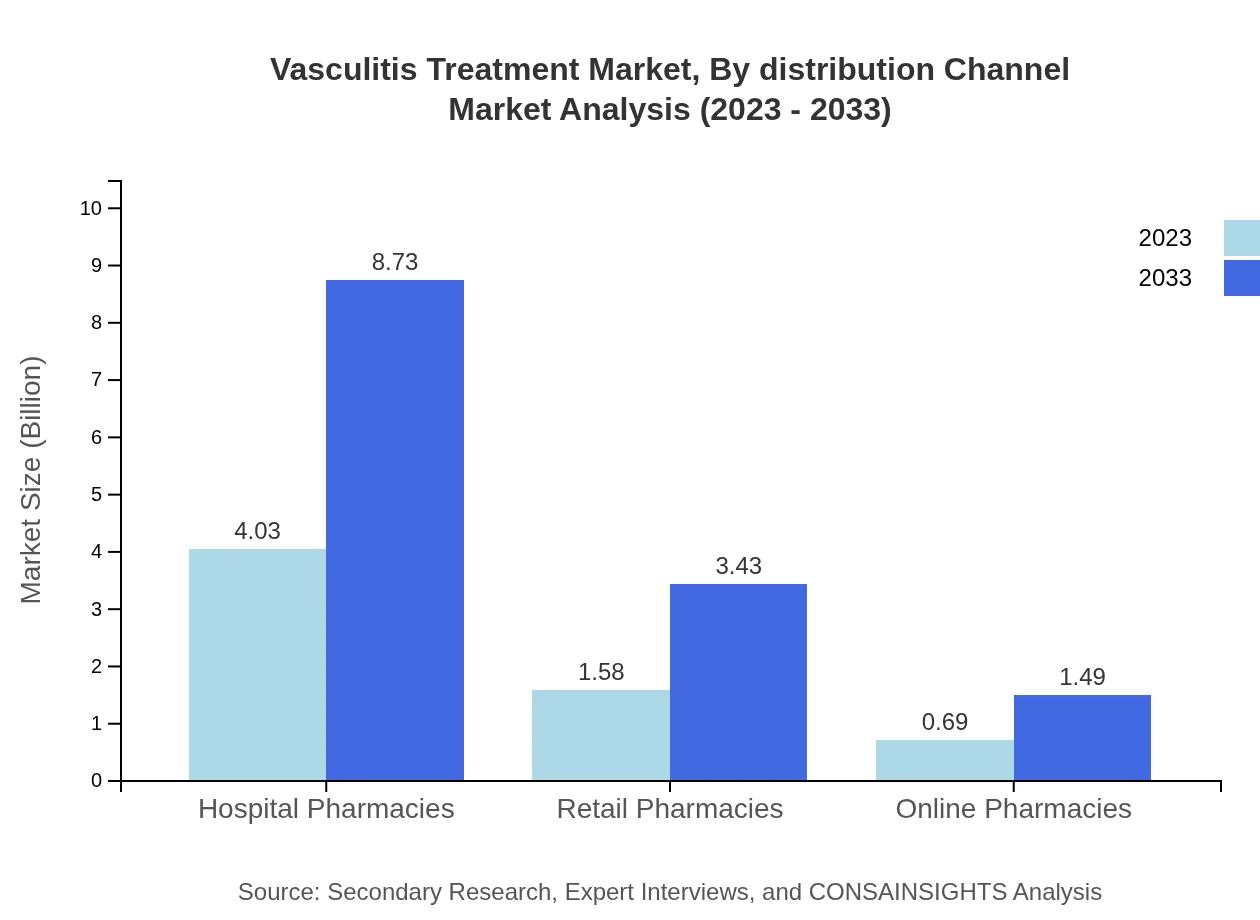
Hospital pharmacies dominate the distribution channel segment with a revenue of $4.03 billion in 2023, supported by practice patterns where patients receive care within hospital settings, although retail and online pharmacies are increasingly significant.
Vasculitis Treatment Market Analysis By End User
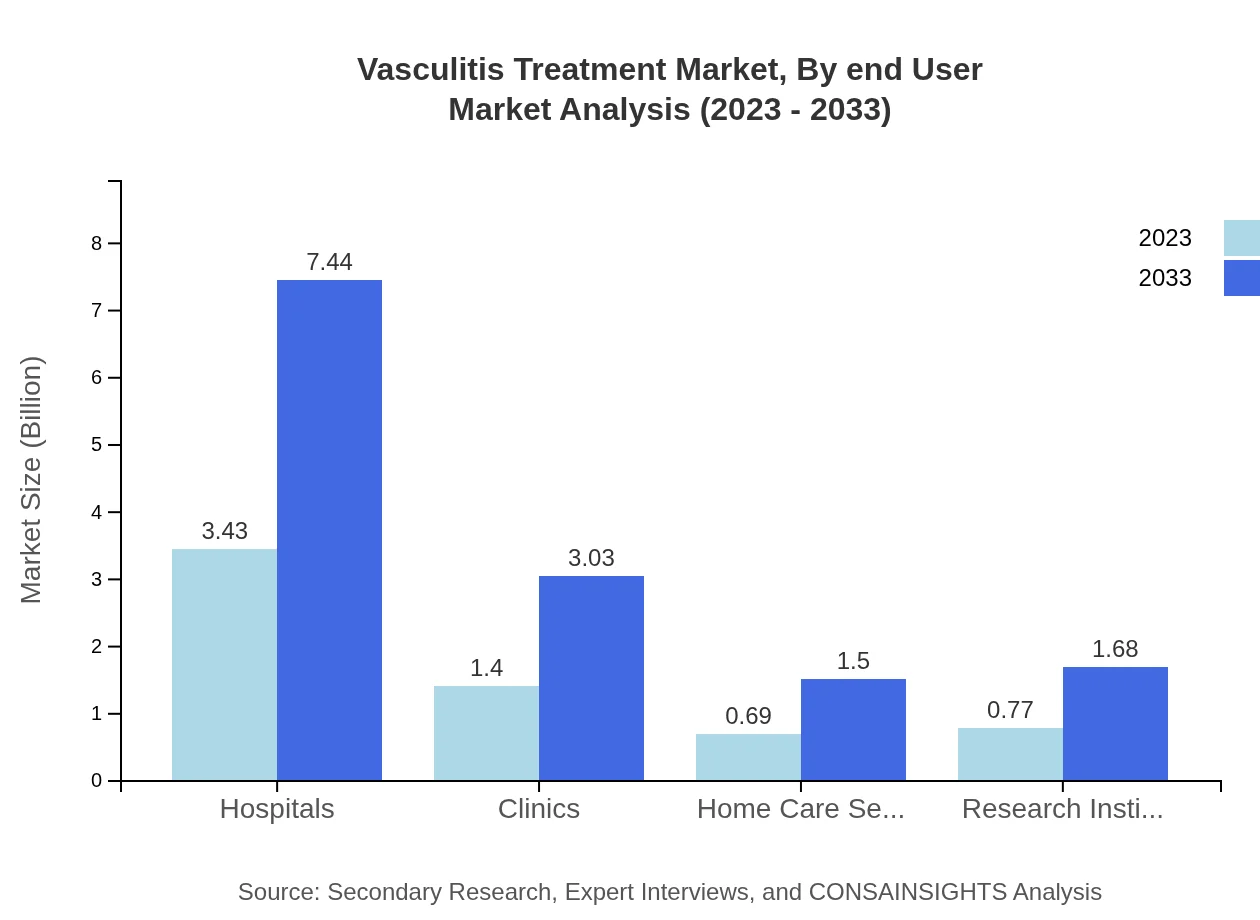
The end-user segment is primarily facilitated through hospitals, accounting for $3.43 billion, followed by clinics, which represent a growing preference for more localized treatment settings. Home care settings are also becoming prominent as treatments can be effectively administered outside traditional settings.
Vasculitis Treatment Market Trends and Future Forecast
Tell us your focus area and get a customized research report.
Global Market Leaders and Top Companies in Vasculitis Treatment Industry
Roche:
Roche is a global pioneer in pharmaceuticals and diagnostics, focusing on innovative treatment solutions in the field of autoimmune diseases, including vasculitis.AbbVie:
AbbVie is recognized for its biologic therapies, offering several leading treatments for autoimmune conditions, including vasculitis.Bristol-Myers Squibb:
Bristol-Myers Squibb specializes in immune-oncology and immunology research, contributing significant advancements in the treatment landscape for autoimmune diseases.Amgen:
Amgen is dedicated to transforming the treatment paradigm of autoimmune diseases with its innovative biopharmaceuticals, addressing critical patient needs.We're grateful to work with incredible clients.






FAQs
What is the market size of the Vasculitis Treatment market in 2023?
The market size in 2023 is $6.30 Billion, reflecting base-year valuation used for forecasts covering the 2023 to 2033 period.
How big will the Vasculitis Treatment market be in 2033?
The projected market value for 2033 is $13.66 Billion, based on the forecast period spanning 2023 to 2033 and assumed growth dynamics.
What is CAGR for the Vasculitis Treatment market?
The compound annual growth rate for the forecast period 2023 to 2033 is 7.8%, as specified for the overall market projection.
Is there a single fastest Growing region in the Vasculitis Treatment Market Report market?
No single fastest-growing region is stated for the Vasculitis Treatment Market Report market because the top regional implied CAGR values are within 0.15 percentage points of each other, making the ranking too close to call reliably.
Who are the top companies in the Vasculitis Treatment market?
Top companies listed include Roche, AbbVie, Bristol-Myers Squibb, and Amgen, noted for active roles in drug development and research.
What are the primary treatment segments included?
Treatment segments include medications, surgical treatments, and supportive therapies, along with various administration routes and distribution channels.
Why is the market growing during 2023 to 2033?
Growth is driven by advances in targeted therapies, increased research activity, improved diagnostics, and wider healthcare access across regions.
Which end User segments are covered in the market?
End-user segments specified are hospitals, clinics, home care settings, and research institutions, reflecting service delivery and care settings.
What factors could constrain market expansion?
Key constraints include treatment costs, regulatory challenges, and complexities in managing chronic autoimmune conditions, as noted in industry context.
How is segmentation by route of administration defined?
Routes specified include oral, injectable, intravenous, and topical administration, covering common delivery methods for vasculitis therapies.