
Reports >
Life Sciences
>
Ai In Pharmaceuticals

Ai In Pharmaceuticals
First published: 20 May 2025 | Last updated: 25 May 2026 | Report Code: ai-in-pharmaceuticals
Ai In Pharmaceuticals Market — USD $10 Billion in 2024, Growing to USD 28.95null by 2033 at 12.0% CAGR
This comprehensive report provides an in-depth analysis of the AI in Pharmaceuticals market, covering market size, CAGR, segmentation, regional performance, technological innovations, and product dynamics. The analysis includes forecast insights for the period 2024 to 2033, offering valuable perspectives for stakeholders to drive strategic decisions in this transformative industry.
Key Takeaways
- Global market expands from $10.00 Billion (2023) to $28.95 Billion (2033) at a 12% CAGR for 2024 to 2033.
- North America is largest regional market, while no single fastest-growing region is stated because regional CAGR differences remain within 0.15 percentage points.
- Europe grows from $2.73 Billion in 2024 to $7.91 Billion in 2033, reflecting steady investment in drug development tools.
- Asia Pacific increases from $1.98 Billion in 2024 to $5.74 Billion in 2033 amid rising digital transformation in life sciences.
- Market structure spans product software, hardware, and services with applications in drug discovery, clinical trials, and market access.
Ai In Pharmaceuticals — Executive Summary
North America remains largest market by forecast-period value, while no single fastest-growing region is stated because top regional growth rates are separated by less than 0.15 percentage points. This report presents a focused assessment of the Ai In Pharmaceuticals market, tracing growth from $10.00 Billion in 2023 to $28.95 Billion by 2033 at a 12% CAGR for 2024 to 2033. Adoption is propelled by higher R&D investment, digital transformation in pharma, and improved machine-learning methods applied to drug discovery and trials. The analysis covers product categories—software, hardware, and services—deployment models, therapeutic-area use cases such as oncology and neurology, and regional market trajectories. Key players include PharmaTech Innovations, AIDrug Solutions, and NeuroPharm AI. The research integrates expert interviews and triangulated secondary sources to deliver actionable insights for stakeholders exploring partnerships, in-house development, or outsourcing strategies.
Key Growth Drivers
- Rising R&D expenditures in pharmaceutical companies accelerating demand for AI-powered drug discovery and development tools.
- Widespread digital transformation initiatives in life sciences that enable integration of machine-learning workflows.
- Collaborative models between technology vendors and pharma firms facilitating faster deployment of AI solutions.
- Regulatory focus on efficiency and evidence-based approvals prompting adoption of AI for trial optimization and market access strategies.
- Diverse product offerings—software, hardware, and services—supporting end-to-end implementation across therapeutic areas.
| Metric | Value |
|---|---|
| Study Period | 2024 - 2033 |
| 2024 Market Size | $10.00 Billion |
| CAGR (2024-2033) | 12.0% |
| 2033 Market Size | $28.95 Billion |
| Top Companies | PharmaTech Innovations, AIDrug Solutions, NeuroPharm AI |
| Published Date | 20 May 2025 |
| Last Modified Date | 25 May 2026 |
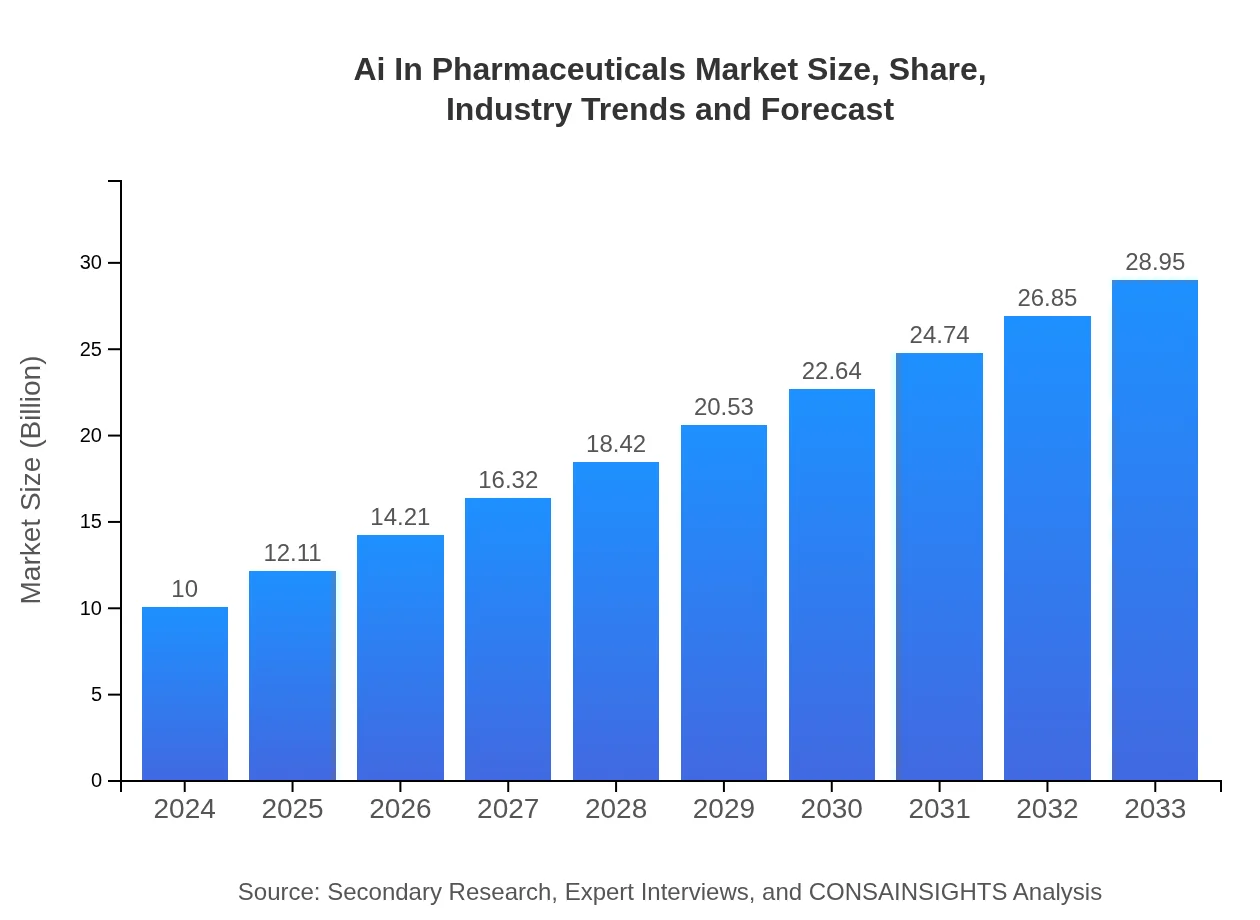
Ai In Pharmaceuticals Market Overview
Customize Ai In Pharmaceuticals market research report
- ✔ Get in-depth analysis of Ai In Pharmaceuticals market size, growth, and forecasts.
- ✔ Understand Ai In Pharmaceuticals's regional dynamics and industry-specific trends.
- ✔ Identify potential applications, end-user demand, and growth segments in Ai In Pharmaceuticals
What is the Market Size & CAGR of Ai In Pharmaceuticals market in 2024?
Ai In Pharmaceuticals Industry Analysis
Ai In Pharmaceuticals Market Segmentation and Scope
Tell us your focus area and get a customized research report.
Ai In Pharmaceuticals Market Analysis Report by Region
Europe Ai In Pharmaceuticals:
Europe grows from $2.73 Billion in 2024 to $7.91 Billion in 2033. 73 Billion in 2024 to $7.91 Billion in 2033, reflecting targeted investment in drug development tools and regulatory emphasis on evidence-driven approvals. Growth is supported by cross-border collaborations and modernization of clinical research infrastructures.Asia Pacific Ai In Pharmaceuticals:
Asia Pacific grows from $1.98 Billion in 2024 to $5.74 Billion in 2033. 98 Billion in 2024 to $5.74 Billion in 2033 as governments and private firms pursue digital transformation in life sciences. Rising investment in clinical research and expanding adoption of AI-driven discovery platforms drive regional uptake.North America Ai In Pharmaceuticals:
North America is largest regional market, rising from $3.76 Billion in 2024 to $10.88 Billion in 2033. Regional momentum is supported by substantial R&D investment, strong technology adoption in biopharma, and partnerships between tech vendors and pharmaceutical companies.South America Ai In Pharmaceuticals:
Latin America grows from $0.47 Billion in 2024 to $1.35 Billion in 2033. 47 Billion in 2024 to $1.35 Billion in 2033, driven by incremental investment in pharmaceutical R&D and gradual deployment of AI-enabled solutions to enhance clinical trial design and market access strategies.Middle East & Africa Ai In Pharmaceuticals:
Middle East and Africa grows from $1.06 Billion in 2024 to $3.06 Billion in 2033. 06 Billion in 2024 to $3.06 Billion in 2033, supported by increasing interest in digital health initiatives and partnerships that introduce AI capabilities for drug development and regulatory submission workflows.Tell us your focus area and get a customized research report.
Research Methodology
Ai In Pharmaceuticals Market Analysis By Application
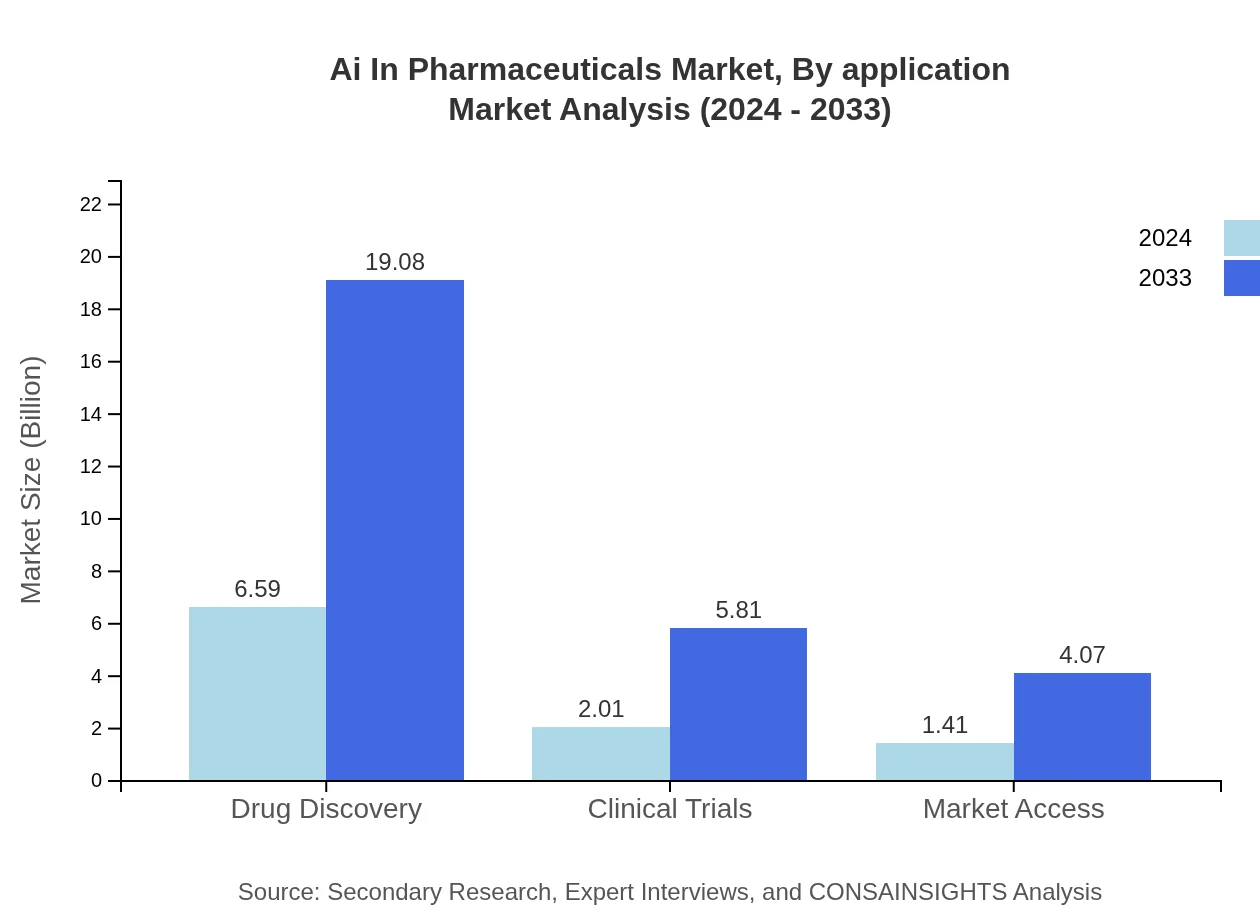
The segmentation by application within the AI in Pharmaceuticals market focuses on key operational areas including drug discovery, clinical trials, and market access. In the drug discovery segment, advancements in computational algorithms have dramatically improved outcomes by enabling predictive modeling and efficient candidate screening. The clinical trials segment benefits from AI technologies that optimize patient recruitment, real-time monitoring, and data integration for enhanced trial success rates. Meanwhile, market access strategies are increasingly supported by AI-driven analytics that streamline pricing, regulatory compliance, and reimbursement processes. Each application segment plays a pivotal role in reducing time-to-market and improving the overall efficiency of pharmaceutical development cycles.
Ai In Pharmaceuticals Market Analysis By Product Type
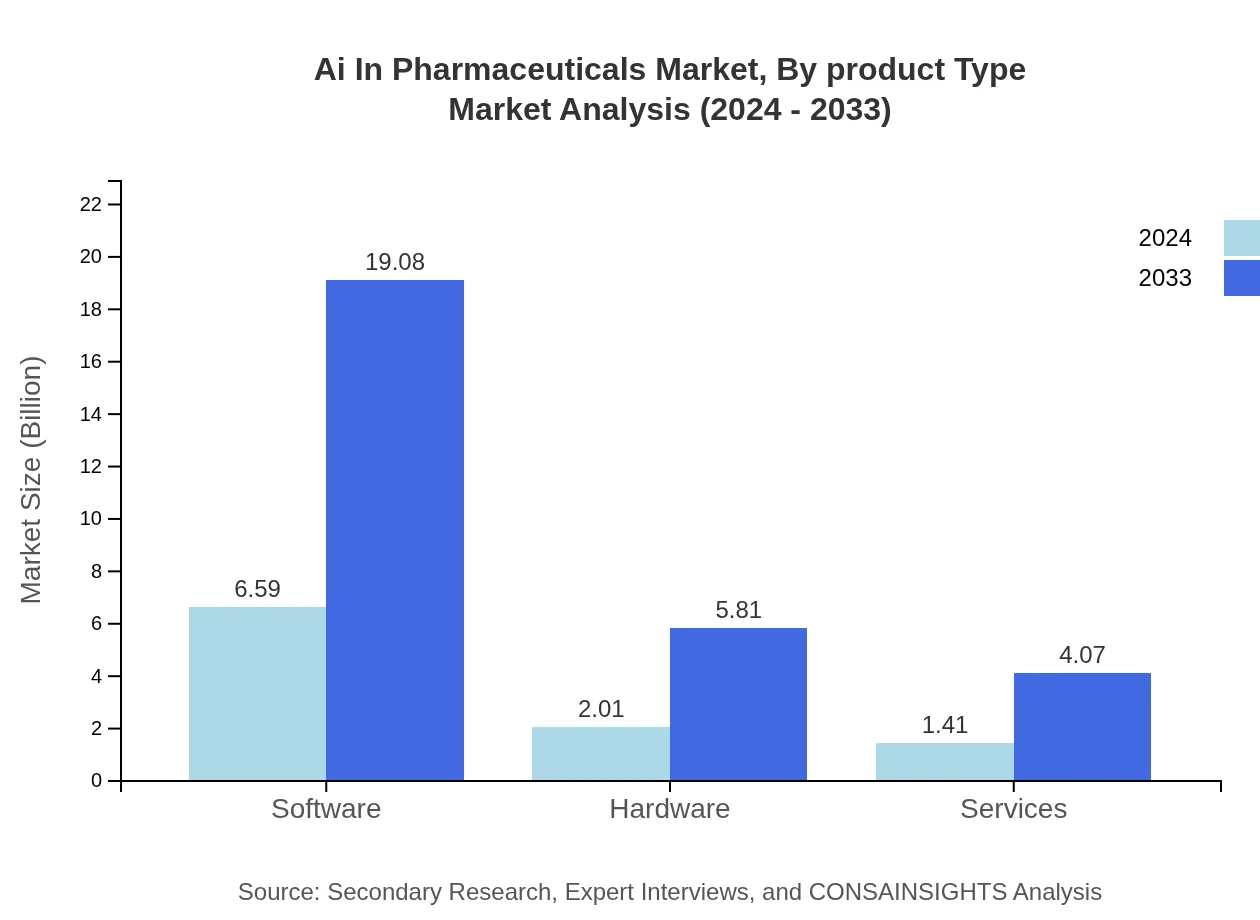
The market analysis by product type scrutinizes the variety and performance of AI solutions deployed within the pharmaceutical industry. Predominantly, the market is segmented into advanced software solutions, hardware integrations, and associated service offerings. Software products incorporate machine learning and deep learning algorithms to enhance drug discovery and clinical administration processes. Hardware solutions serve as a tactical support system that ensures seamless integration between digital platforms and clinical trial operations. Complementary services, including data analytics and consultancy, provide robust support infrastructure that bolsters technological adoption. This segmentation underlines the diverse range of AI tools available and highlights the impact of each product type on enhancing operational efficiency and overall patient outcomes.
Ai In Pharmaceuticals Market Analysis By Strategy
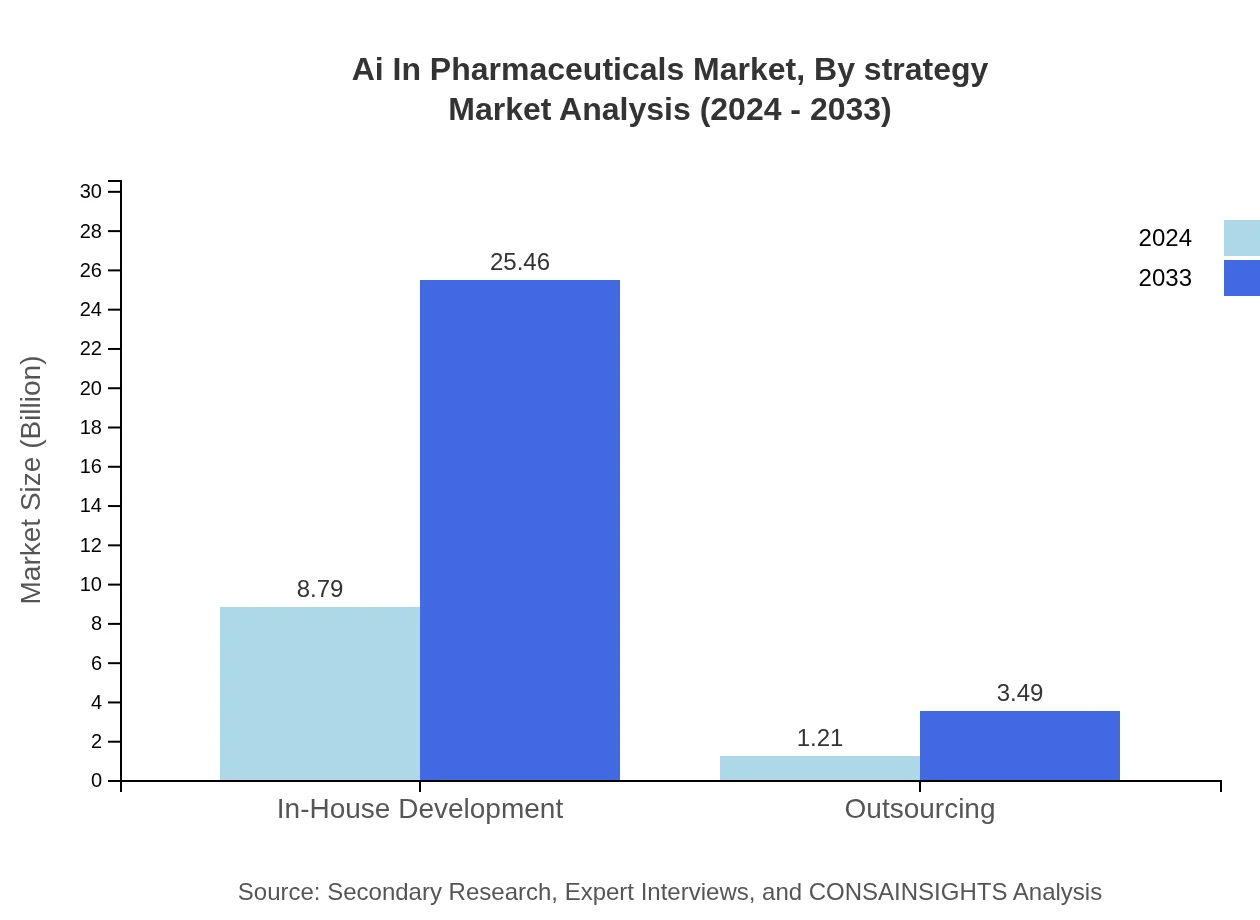
In the realm of development strategies, the market is bifurcated into in-house development and outsourcing approaches. The in-house development segment, which currently commands a substantial market share, benefits from deeper integration of proprietary data and tailored solutions that align with organizational research priorities. Outsourcing, on the other hand, offers flexibility and access to specialized expertise without the need for significant upfront investments in infrastructure. Companies opting for outsourcing can leverage external expertise to rapidly scale operations and achieve cost efficiencies. Both strategies offer unique advantages that are influencing how pharmaceutical companies structure their R&D operations, driving innovation while ensuring regulatory compliance and operational excellence.
Ai In Pharmaceuticals Market Analysis By Phase
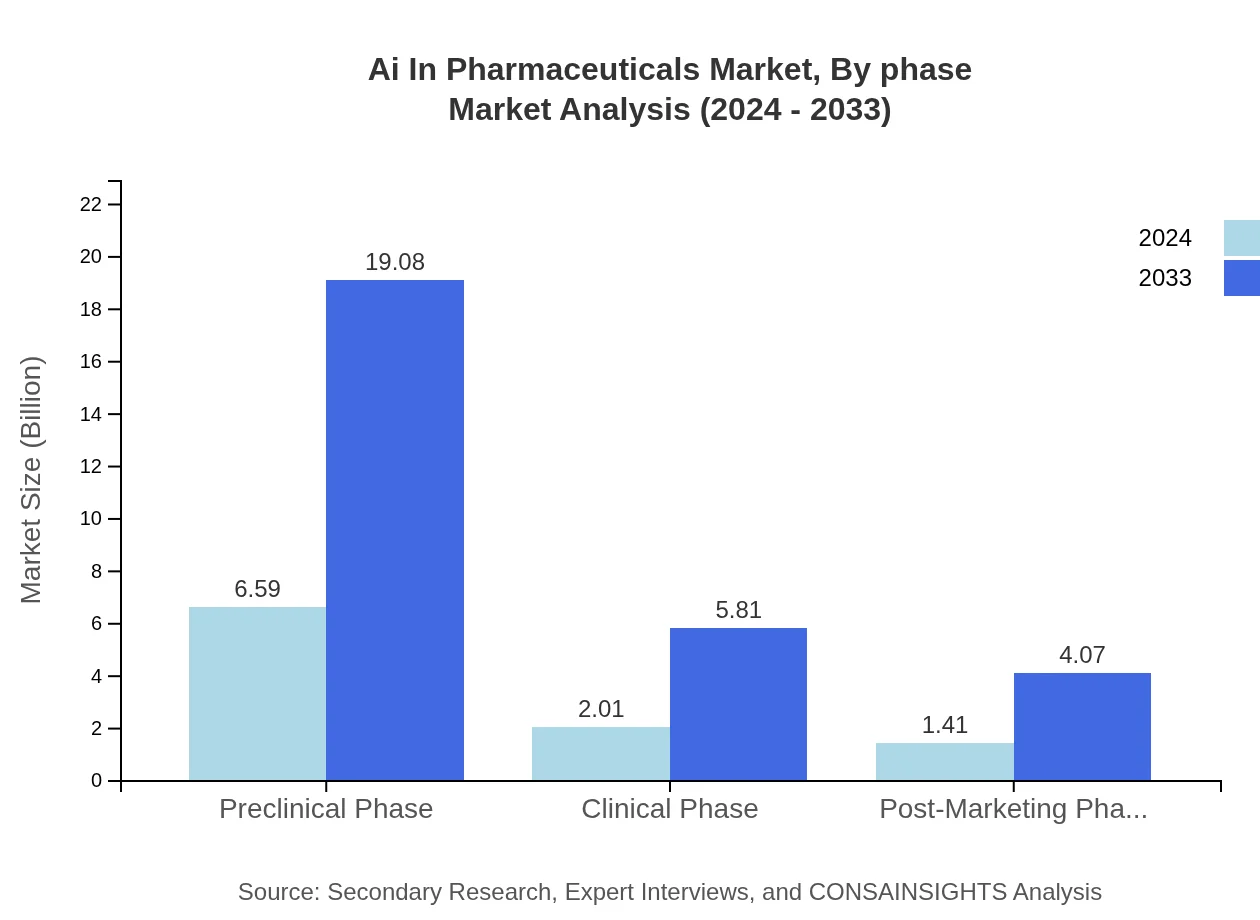
The market segmentation by development phase covers critical stages ranging from preclinical to clinical and post-marketing phases. In the preclinical phase, AI technologies facilitate the early identification of promising therapeutic candidates, thereby setting a strong foundation for subsequent research. The clinical phase leverages AI for enhanced trial design and improved patient stratification, ensuring that data-driven decisions lead to higher success rates in clinical evaluations. Post-marketing efforts are increasingly adopting AI for real-time monitoring and adverse event analysis, enabling pharmaceutical firms to fine-tune treatment protocols based on real-world evidence. This phased approach highlights the continuous impact of AI at every stage of drug development, underscoring its role in ensuring both innovation and safety throughout the product lifecycle.
Ai In Pharmaceuticals Market Analysis By Therapeutic Area
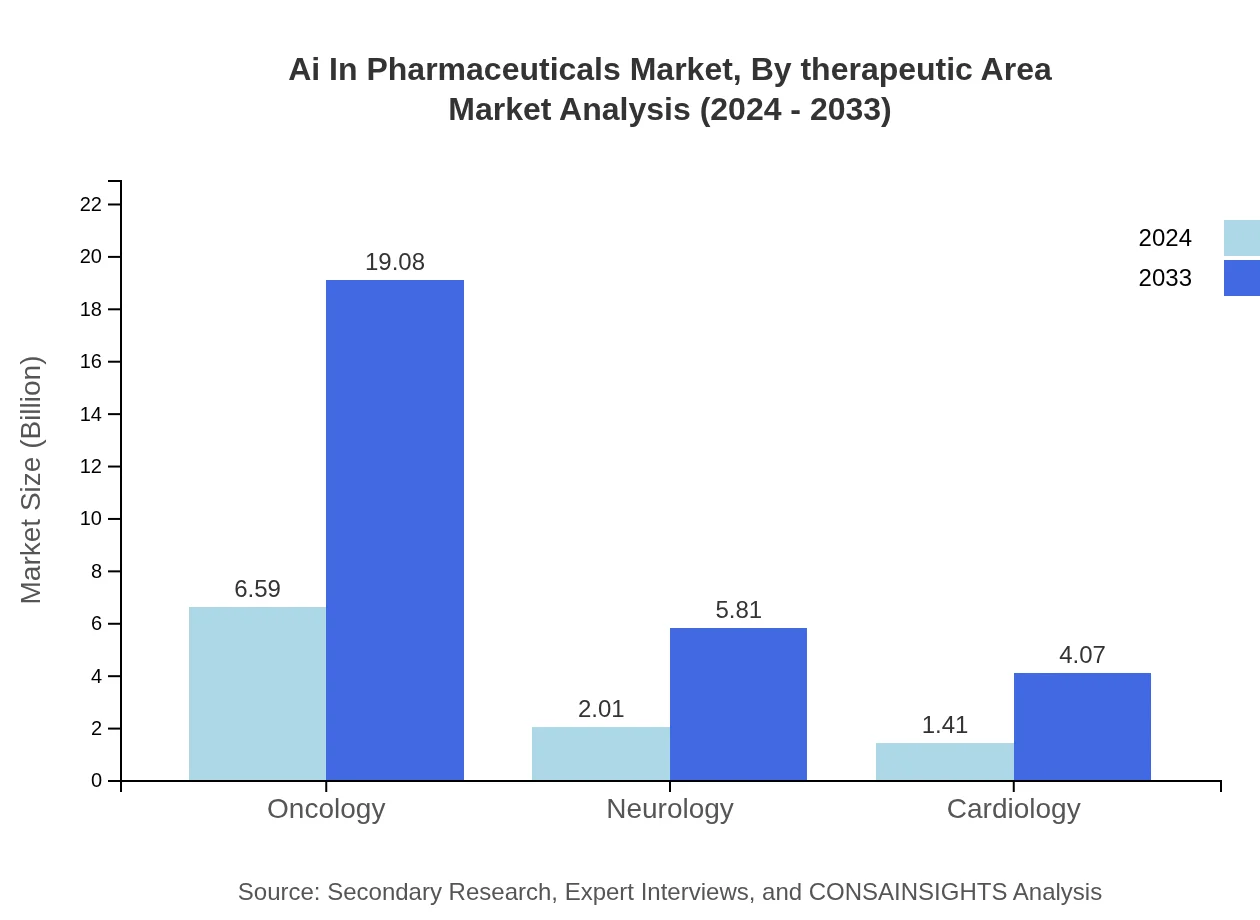
Segmentation by therapeutic area concentrates on the pivotal applications of AI in addressing specific health challenges across diverse medical domains such as oncology, neurology, and cardiology. In oncology, AI is instrumental in optimizing treatment protocols and personalizing therapies, resulting in improved survival rates for cancer patients. Neurology benefits from AI-driven diagnostics that enhance the precision of neurological assessments and enable early intervention strategies. Similarly, the cardiology segment utilizes advanced algorithms to predict cardiac events and assist in the management of chronic cardiovascular conditions. The targeted application of AI within these therapeutic areas exemplifies the transformative potential of technology in revolutionizing patient care and expanding the horizons of personalized medicine.
Ai In Pharmaceuticals Market Trends and Future Forecast
Tell us your focus area and get a customized research report.
Global Market Leaders and Top Companies in Ai In Pharmaceuticals Industry
PharmaTech Innovations:
A global pioneer in integrating AI technologies into pharmaceutical R&D, PharmaTech Innovations leads the industry by offering cutting-edge software solutions that streamline drug discovery and clinical trials. Their robust platform supports data analytics and regulatory compliance, making them a key influencer in market transformations.AIDrug Solutions:
AIDrug Solutions is recognized for developing state-of-the-art AI systems that enhance pharmacovigilance and patient monitoring. With significant investments in machine learning and predictive analytics, the company has successfully partnered with major pharmaceutical firms to accelerate the development and approval processes of novel therapies.NeuroPharm AI:
Specializing in neurological applications, NeuroPharm AI leverages AI-driven diagnostic tools to support the early detection and treatment of neurological disorders. Their innovative models are widely adopted by top research institutions and clinical centers, driving advancements in personalized medicine.We're grateful to work with incredible clients.









FAQs
What is the market size of Ai In Pharmaceuticals in 2023?
The market size for Ai In Pharmaceuticals in 2023 is $10.00 Billion, as stated in the report data provided for the global sector.
How big is the market expected to be in 2033?
By 2033 the Ai In Pharmaceuticals market is projected to reach $28.95 Billion according to the provided forecast figures.
What is the CAGR for the forecast period 2024 to 2033?
The reported compound annual growth rate (CAGR) for 2024 to 2033 is 12%, as specified in the input market data.
Is there a single fastest Growing region in the Ai In Pharmaceuticals market?
No single fastest-growing region is stated for the Ai In Pharmaceuticals market because the top regional implied CAGR values are within 0.15 percentage points of each other, making the ranking too close to call reliably.
Which companies are listed as key players?
Top companies named in the dataset are PharmaTech Innovations, AIDrug Solutions, and NeuroPharm AI; these firms represent notable participants in the market landscape.
What are the primary applications for AI in this sector?
Primary applications cited include drug discovery, clinical trials, and market access, reflecting where AI tools are being integrated across the pharmaceutical value chain.
What is the regional ranking summary?
The regional ranking summary states North America as the largest region and notes that no single regional market region is declared because top regional growth rates are within 0.15 percentage points.
Who contributed to the research methodology?
Research incorporated primary interviews with industry experts and secondary sources such as company reports and publications, along with data triangulation and internal validation.