
Reports >
Life Sciences
>
Animal Hormone Therapy Market Report

Animal Hormone Therapy Market Report
First published: 23 October 2024 | Last updated: 25 May 2026 | Report Code: animal-hormone-therapy
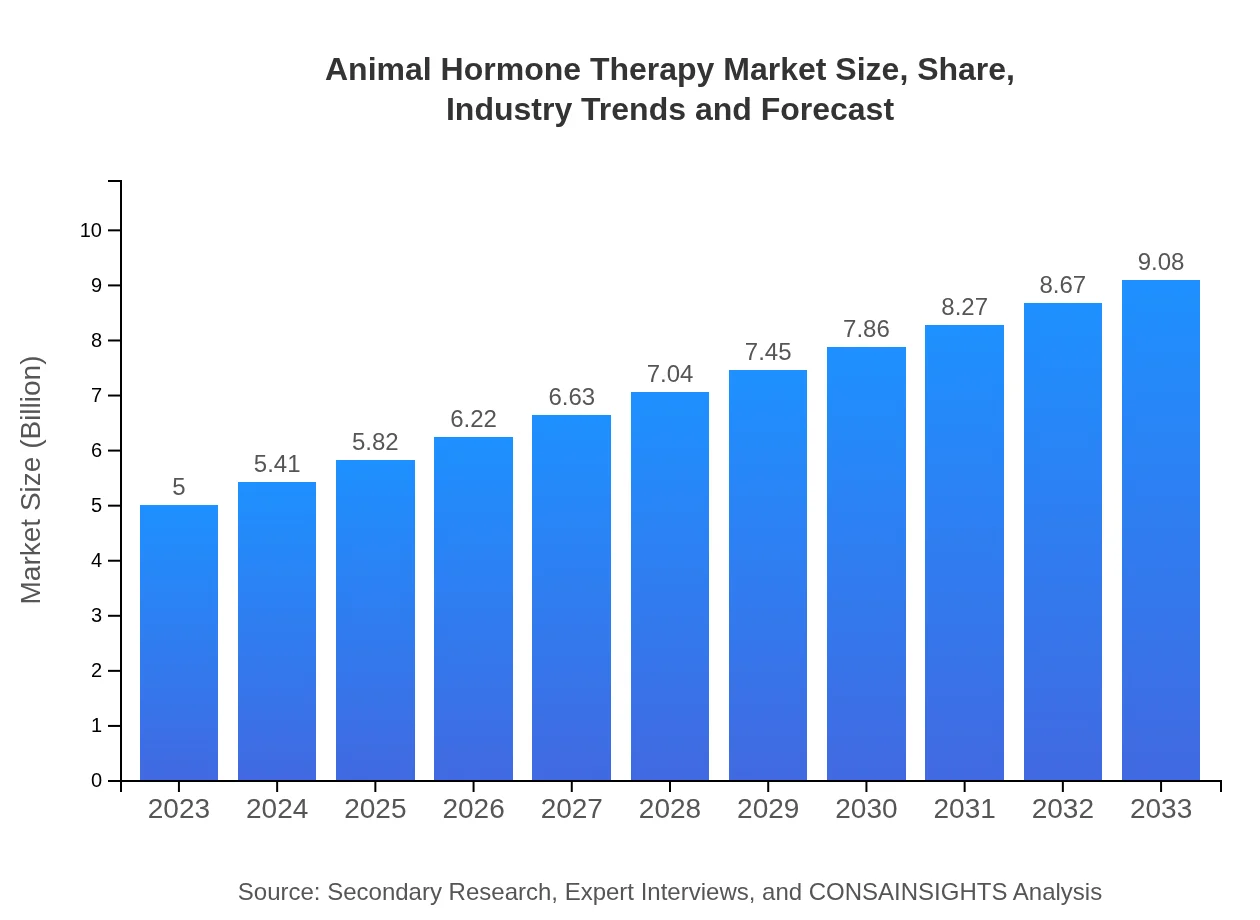
Animal Hormone Therapy Market — USD 5 billion in 2023, Growing to USD 9.08B by 2033 at 6% CAGR
This report provides an in-depth analysis of the Animal Hormone Therapy market from 2023 to 2033, focusing on market trends, opportunities, and growth drivers. Key insights are provided for every segment and regional analysis, highlighting potential for future developments.
Key Takeaways
- Global market expands from $5.00 Billion in 2023 to $9.08 Billion in 2033, reflecting a 6% CAGR over 2023 to 2033.
- North America is largest regional market, while no single fastest-growing region is stated because regional CAGR differences remain within 0.15 percentage points.
- Europe grows from $1.24 Billion in 2023 to $2.26 Billion in 2033, supported by advanced veterinary infrastructure.
- Asia Pacific increases from $1.05 Billion in 2023 to $1.90 Billion in 2033 amid rising pet ownership and livestock health investment.
- Key participants include Zoetis Inc., Boehringer Ingelheim, Merck Animal Health, and Elanco Animal Health.
Animal Hormone Therapy Market Report — Executive Summary
North America remains largest market by forecast-period value, while no single fastest-growing region is stated because top regional growth rates are separated by less than 0.15 percentage points. The Animal Hormone Therapy Market Report outlines a decade of steady expansion driven by increased pet ownership, demand for animal protein, and innovation in drug delivery systems. The market rises from $5.00 Billion in 2023 to $9.08 Billion in 2033 at a 6% CAGR for 2023 to 2033. North America is the largest regional market, while other regions including Europe and Asia Pacific show notable gains. Product and therapy segmentation spans steroid, peptide and thyroid hormones, with delivery routes such as injections, oral and transdermal therapies. End users cover veterinary clinics, research institutes and pet owners, reflecting a mix of clinical and consumer demand. Major companies named in the report are Zoetis Inc., Boehringer Ingelheim, Merck Animal Health and Elanco Animal Health. The analysis highlights regulatory evolution, investment in novel formulations, and channel shifts including online distribution as influencing future adoption and market structure.
Key Growth Drivers
- Rising pet ownership increases demand for veterinary hormonal treatments and long-term animal care solutions.
- Greater consumption of animal protein boosts investment in livestock health and hormone-based growth and reproductive management.
- Advancements in delivery technologies, including improved injections and transdermal systems, enhance therapeutic adoption.
- Regulatory and clinical research activity encourages development of new hormone formulations and evidence-based protocols.
- Expansion of veterinary service networks and e-commerce channels improves access to therapies for diverse end users.
| Metric | Value |
|---|---|
| Study Period | 2023 - 2033 |
| 2023 Market Size | $5.00 Billion |
| CAGR (2023-2033) | 6% |
| 2033 Market Size | $9.08 Billion |
| Top Companies | Zoetis Inc., Boehringer Ingelheim, Merck Animal Health, Elanco Animal Health |
| Published Date | 23 October 2024 |
| Last Modified Date | 25 May 2026 |
Animal Hormone Therapy Market Overview
Customize Animal Hormone Therapy Market Report market research report
- ✔ Get in-depth analysis of Animal Hormone Therapy market size, growth, and forecasts.
- ✔ Understand Animal Hormone Therapy's regional dynamics and industry-specific trends.
- ✔ Identify potential applications, end-user demand, and growth segments in Animal Hormone Therapy
What is the Market Size & CAGR of Animal Hormone Therapy Market Report market in 2023?
Animal Hormone Therapy Industry Analysis
Animal Hormone Therapy Market Segmentation and Scope
Tell us your focus area and get a customized research report.
Animal Hormone Therapy Market Report Market Analysis Report by Region
Europe Animal Hormone Therapy Market Report:
Europe grows from $1.24 Billion in 2023 to $2.26 Billion in 2033. Regional advancement in veterinary infrastructure, regulatory oversight and clinical research helps promote therapeutic development and wider clinical adoption.Asia Pacific Animal Hormone Therapy Market Report:
Asia Pacific grows from $1.05 Billion in 2023 to $1.9 Billion in 2033. Rising pet ownership, expanding livestock industries and growing veterinary services are key local drivers supporting market expansion in this region.North America Animal Hormone Therapy Market Report:
North America is largest regional market, rising from $1.84 Billion in 2023 to $3.35 Billion in 2033. The region benefits from mature veterinary services, strong R&D capabilities, and established commercial channels that support adoption of hormone therapies.South America Animal Hormone Therapy Market Report:
Latin America grows from $0.32 Billion in 2023 to $0.57 Billion in 2033. Investment in livestock health management and improving access to veterinary care contribute to market growth across the region.Middle East & Africa Animal Hormone Therapy Market Report:
Middle East and Africa grows from $0.55 Billion in 2023 to $1 Billion in 2033. Increasing focus on animal health, livestock productivity and adoption of modern therapies supports demand in this region.Tell us your focus area and get a customized research report.
Research Methodology
Animal Hormone Therapy Market Analysis By Species
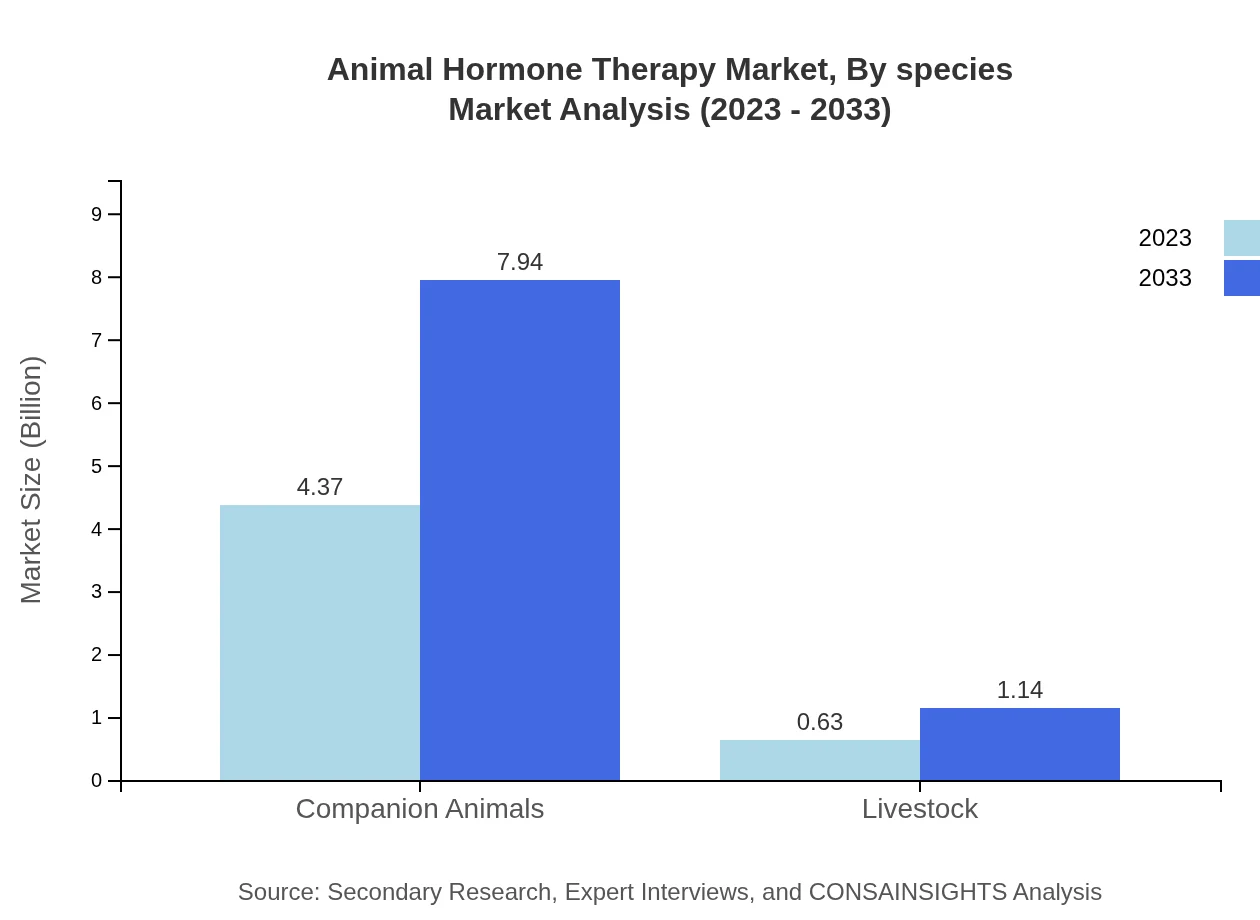
The companion animals segment is expected to dominate, growing from $4.37 billion in 2023 to $7.94 billion by 2033, capturing approximately 87.4% share of the market. The livestock segment is anticipated to increase from $0.63 billion to $1.14 billion, holding a 12.6% share. This reflects the growing focus on improving animal welfare and health in both companion and livestock categories.
Animal Hormone Therapy Market Analysis By Hormone Type
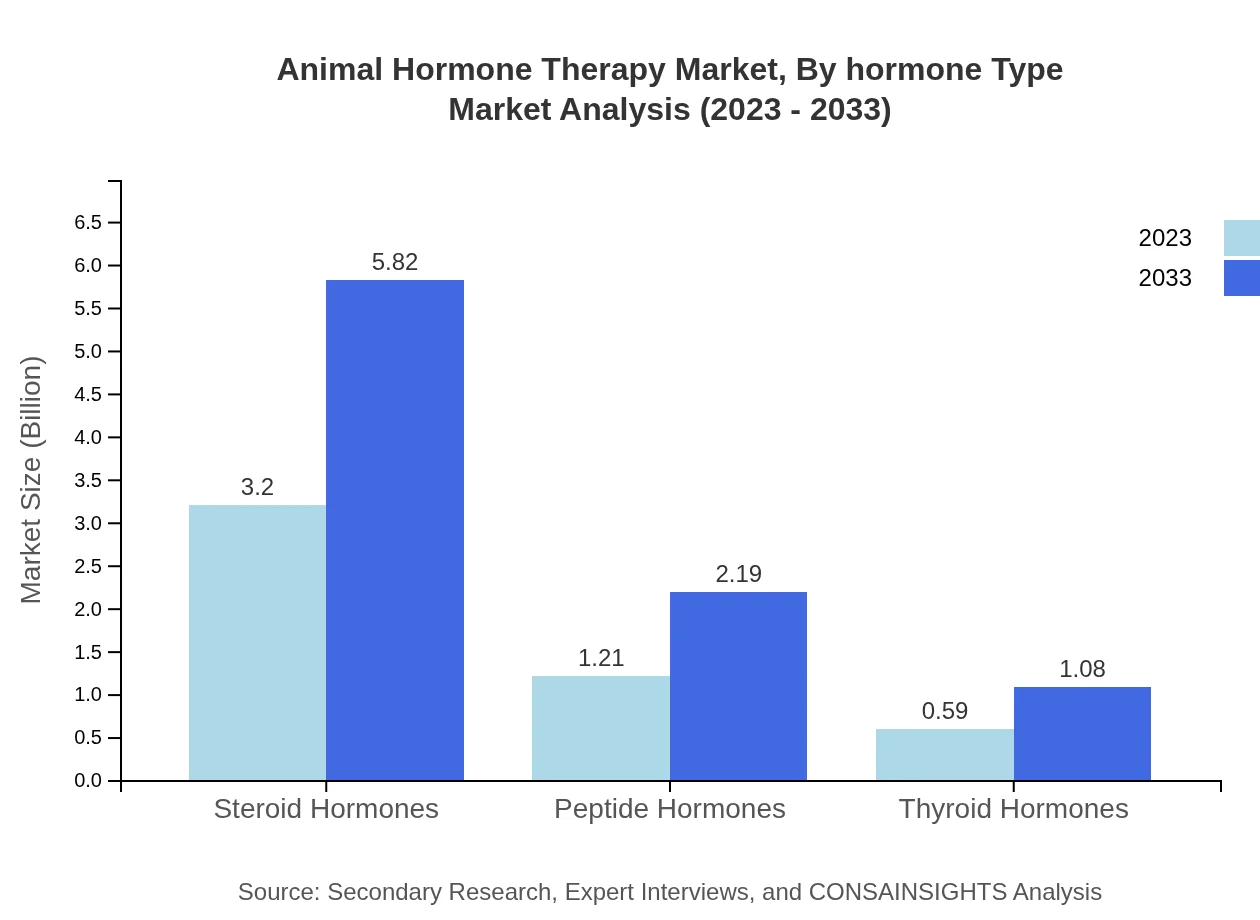
In terms of hormone types, steroid hormones are projected to remain the largest segment, valued at $3.20 billion in 2023 and growing to $5.82 billion by 2033. Other segments include peptide hormones ($1.21 billion in 2023) and thyroid hormones ($0.59 billion), indicating a diversifying approach in hormone treatments for animals.
Animal Hormone Therapy Market Analysis By Therapy Type
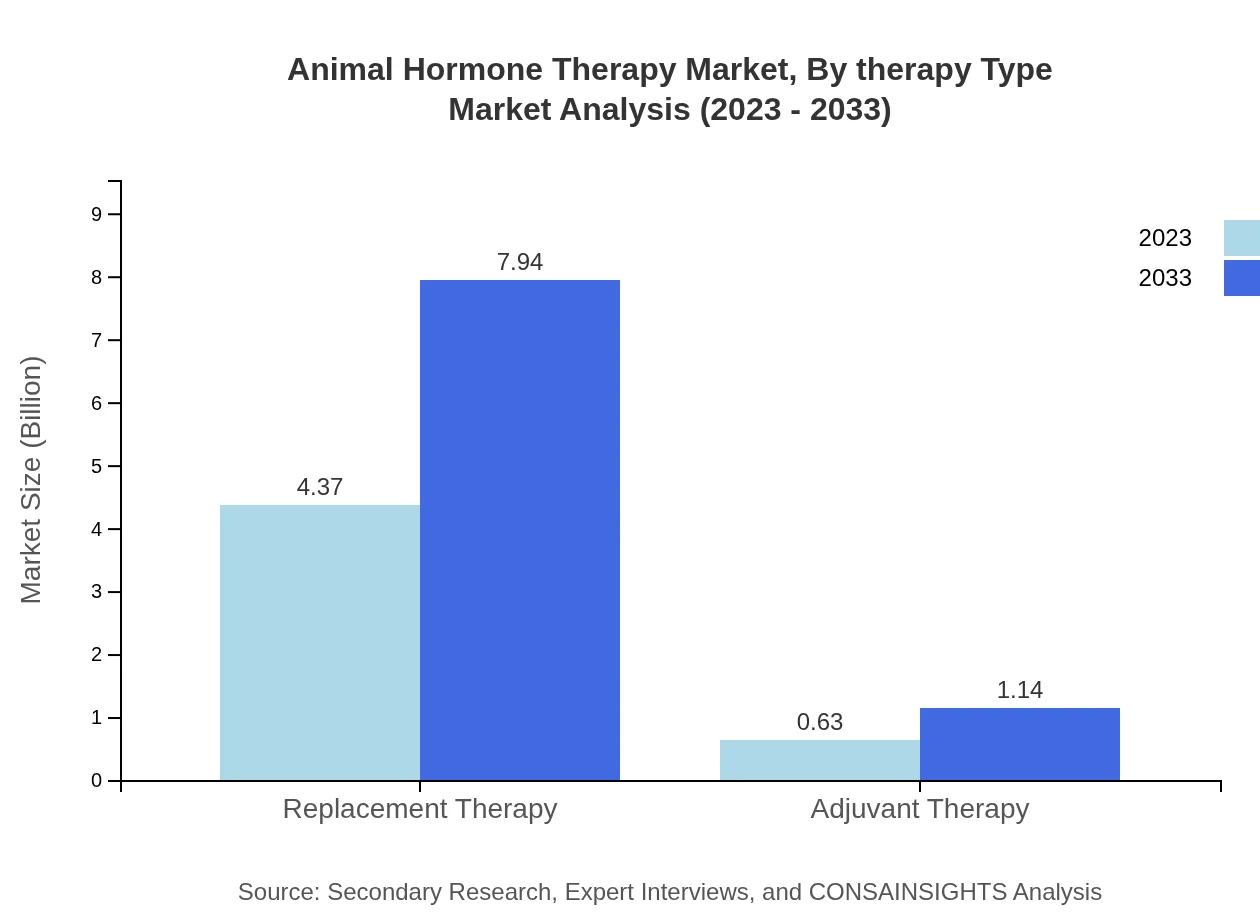
Replacement therapy dominates, valued at $4.37 billion in 2023 and expected to grow to $7.94 billion by 2033, holding an 87.4% market share. Adjuvant therapy is smaller, increasing from $0.63 billion to $1.14 billion and maintaining a 12.6% share, indicating its supportive role in animal health management.
Animal Hormone Therapy Market Analysis By Delivery Route
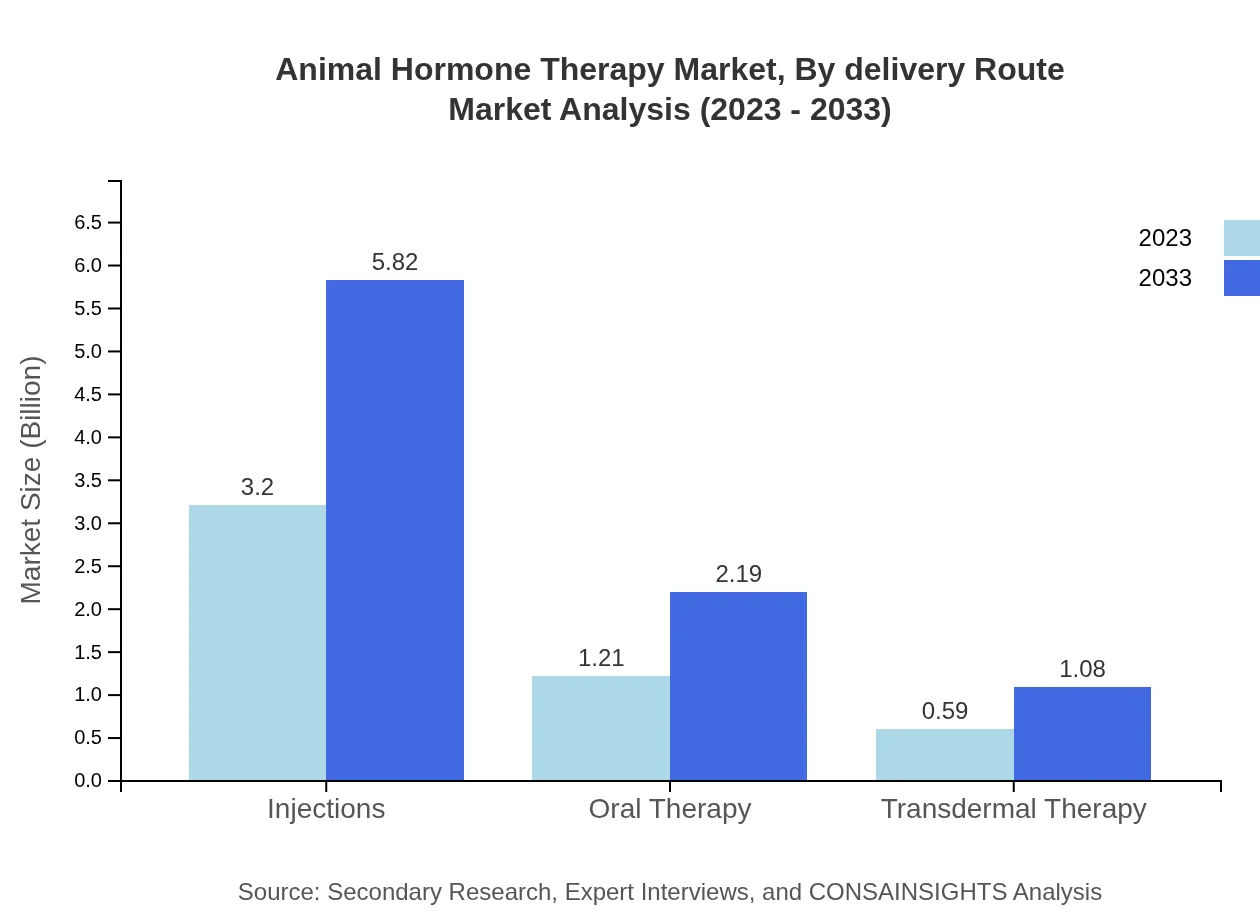
Injection-based delivery remains the most common route, with a market size of $3.20 billion in 2023 growing to $5.82 billion by 2033. Oral therapy and transdermal methods follow, pointing to ongoing innovations enhancing the choice and efficacy of delivery methods used in veterinary practice.
Animal Hormone Therapy Market Analysis By End User
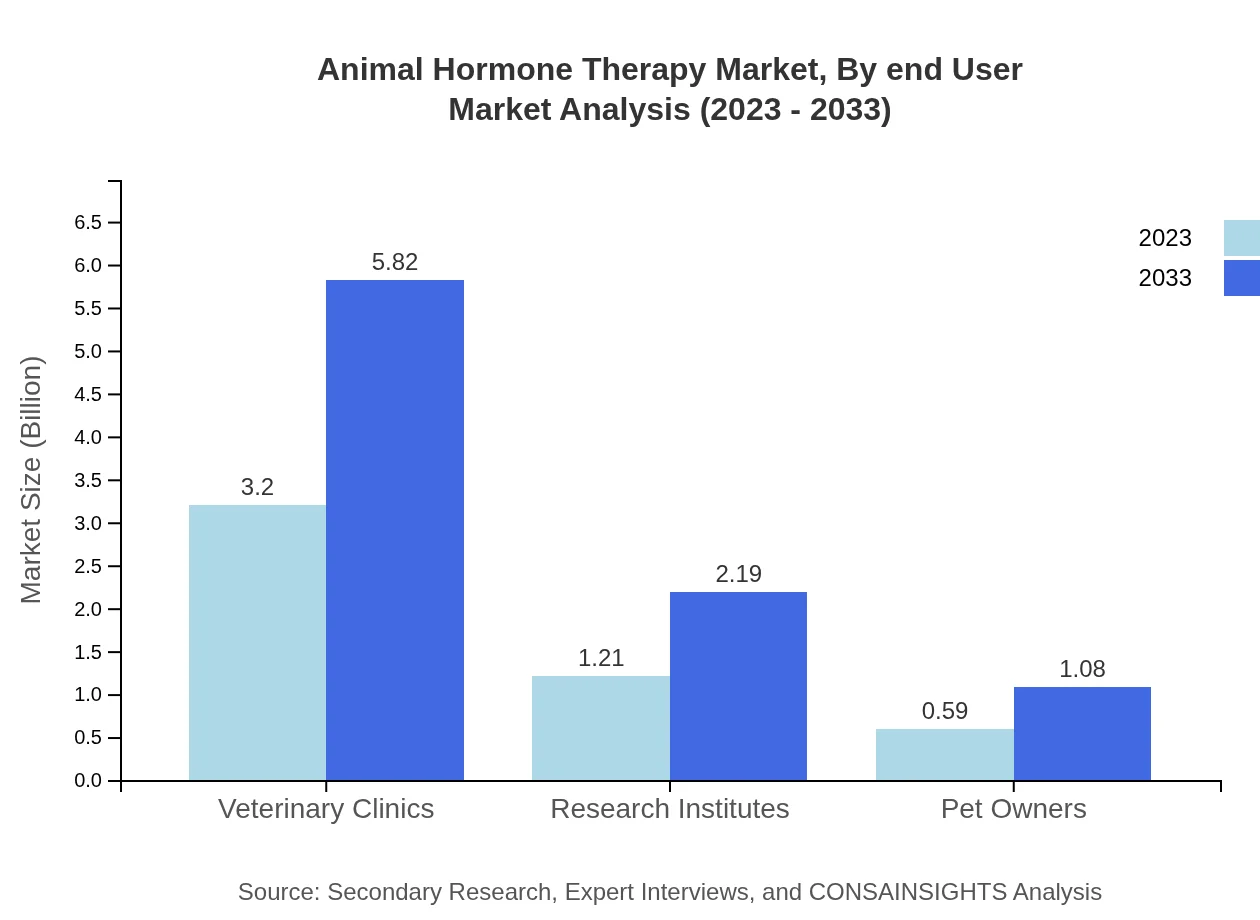
Veterinary clinics are the leading end-users of hormonal therapies, constituting a sizable portion of the market, with projected growth from $3.20 billion in 2023 to $5.82 billion by 2033. Research institutes and pet owners are critical segments too, reflecting varying needs and strategies in therapeutic applications.
Animal Hormone Therapy Market Trends and Future Forecast
Tell us your focus area and get a customized research report.
Global Market Leaders and Top Companies in Animal Hormone Therapy Industry
Zoetis Inc.:
A leader in animal health, Zoetis develops a wide range of animal vaccines, medicines, and diagnostics, contributing significantly to the advancement of hormone therapy.Boehringer Ingelheim:
Known for its innovative approach, Boehringer Ingelheim offers a broad portfolio of animal health products, including hormone therapies for livestock and pets.Merck Animal Health:
With a strong emphasis on research and development, Merck Animal Health advances various therapeutic areas, including hormonal treatments for both companion and food animals.Elanco Animal Health:
Elanco focuses on delivering impactful solutions in animal health, developing hormone therapies aimed at improving animal welfare and enhancing productivity.We're grateful to work with incredible clients.







FAQs
What is the market size of Animal Hormone Therapy in 2023?
The market size for Animal Hormone Therapy in 2023 is $5.00 Billion, based on the report's baseline valuation for the start of the 2023 to 2033 forecast period.
How big will the Animal Hormone Therapy market be in 2033?
By 2033 the market is projected to reach $9.08 Billion according to the report's forecast covering 2023 to 2033, reflecting continued expansion over the decade.
What is CAGR for the Animal Hormone Therapy market?
The reported compound annual growth rate (CAGR) for the market is 6% for the 2023 to 2033 forecast period as stated in the report.
Is there a single fastest Growing region in the Animal Hormone Therapy Market Report market?
No single fastest-growing region is stated for the Animal Hormone Therapy Market Report market because the top regional implied CAGR values are within 0.15 percentage points of each other, making the ranking too close to call reliably.
Which companies are profiled in the report?
Top companies listed include Zoetis Inc., Boehringer Ingelheim, Merck Animal Health and Elanco Animal Health as key industry participants referenced in the report.
What product segments are included in the analysis?
The report covers hormone types such as steroid, peptide and thyroid hormones, along with therapy types and delivery routes including injections, oral and transdermal options.
How does pet ownership affect market growth?
Rising pet ownership drives demand for diagnostic and therapeutic veterinary services, increasing uptake of hormone therapies for companion animal health and care.
Why does animal protein demand matter for this market?
Growth in animal protein consumption stimulates investment in livestock health and reproductive management, which supports demand for hormone-based interventions.
What end users are covered in the market segmentation?
End users in the report include veterinary clinics, research institutes and pet owners, reflecting both clinical delivery and consumer-level use cases.
Who conducted the research behind the report?
Research incorporated primary interviews with industry experts and secondary sources including company reports, with data triangulation and internal validation to ensure accuracy.